
Celebrating 75 Years of Old Car Festival
| Written by | |
|---|---|
| Published | 10/15/2026 |
Celebrating 75 Years of Old Car Festival
| Written by | |
|---|---|
| Published | 10/15/2026 |
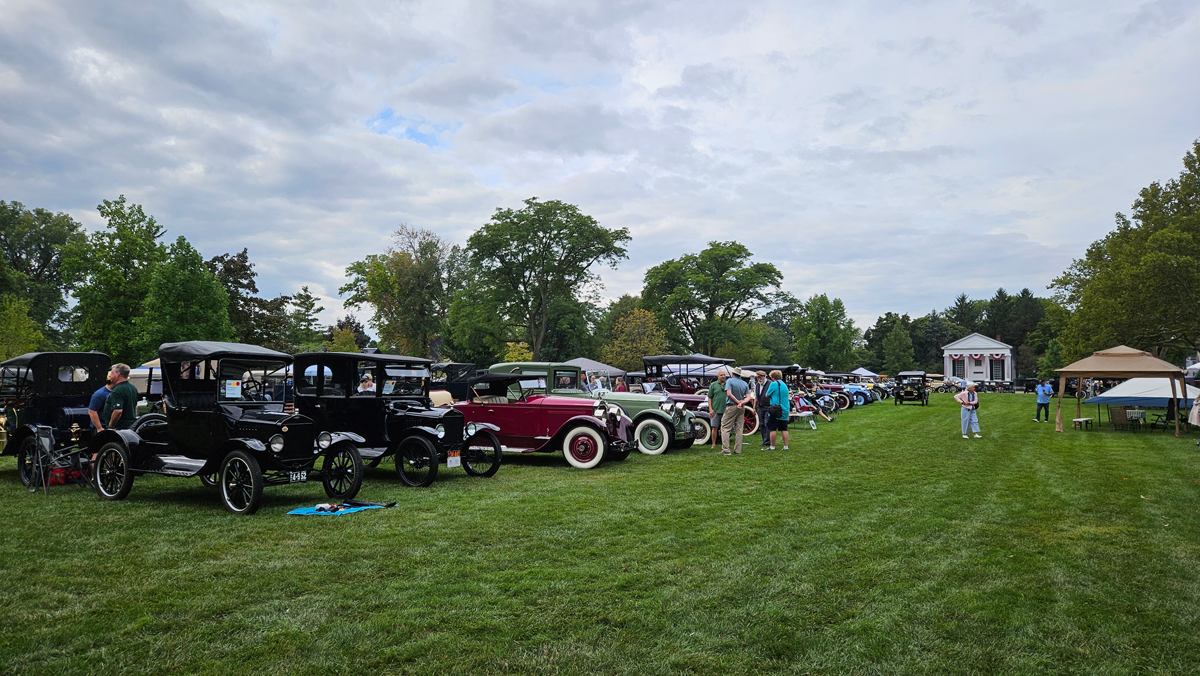 Antique automobiles, including a pair of Ford Model Ts on the end, line the Village Green at the 2026 Old Car Festival. / Photo by staff of The Henry Ford
Old Car Festival marked a major milestone this year as vintage vehicle owners and enthusiasts gathered to commemorate the event's 75th anniversary. The first show, a three-hour affair held on September 8, 1951, featured 88 automobiles. This year's Old Car Festival, held over the weekend of September 12-13, 2026, had nearly ten times that many registered participants. It was a stellar turnout for the event celebrating automobiles from the late 19th century through 1932.
In lieu of a conventional show theme, where we spotlight a particular make or model, this year we made the anniversary itself the focus of the show. Detroit Central Market became the hub of our commemoration, with a selection of longtime participant cars. And when we say "longtime," we mean it. Every participant car in the market had attended Old Car Festival for more than 40 years, and most of them had been coming for more than 50 years. Two featured cars, a 1919 Ford Model T and a 1920 Overland Model 4, had been a part of the show since that very first year in 1951. Several of the market cars were displayed alongside memorabilia and photos from previous shows, and a nearby television played wonderful home movies of the 1952 Old Car Festival. Many would agree that the tradition of Old Car Festival—families and cars returning year after year—is a big part of what makes the show so special.
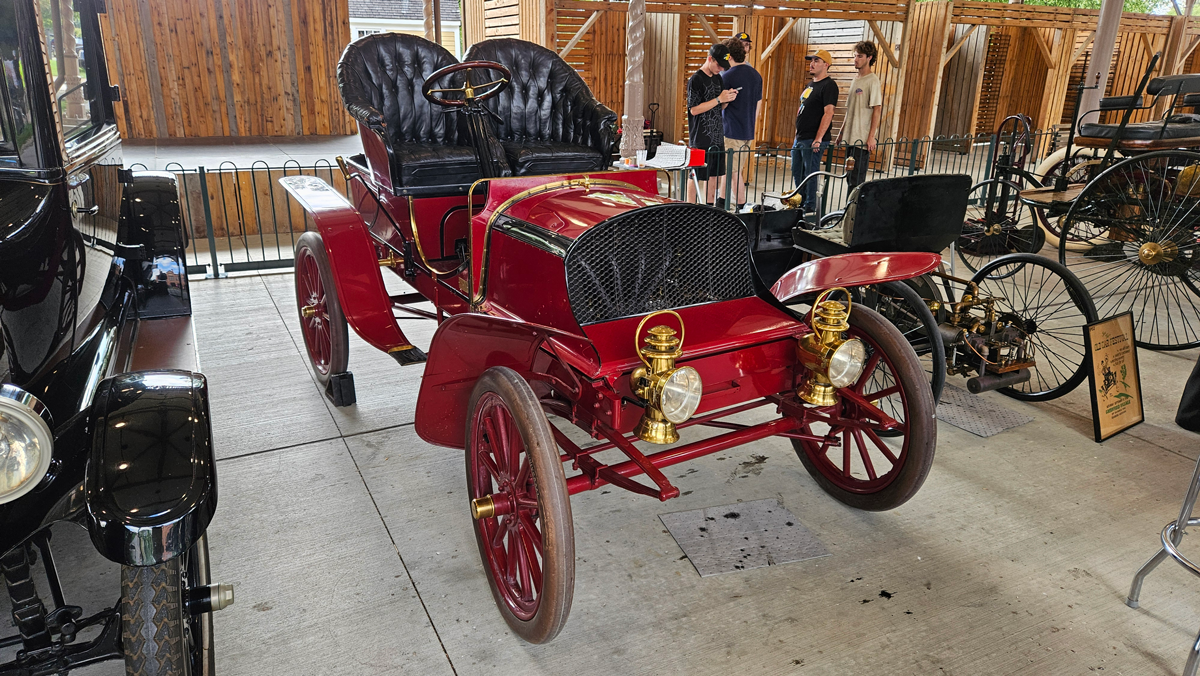 The Henry Ford's 1905 Franklin, presented to us at the 1960 Old Car Festival, on view in Detroit Central Market. / Photo by staff of The Henry Ford
In keeping with the anniversary theme, two of The Henry Ford's own vehicles with Old Car Festival history were on view in the market. Our 1905 Franklin Runabout is an early example of the air-cooled cars that distinguished Franklin from competitors and kept it in the automobile business until 1934. It was presented to us by none other than Carl Doman, Franklin's former chief engineer, at the 1960 Old Car Festival. Coincidentally, the other car, our 1923 Chevrolet Coupe, also features an air-cooled engine. But in the Chevy's case, the power plant wasn't so successful. General Motors research head Charles Kettering championed the air-cooled Chevrolet, but GM couldn't work out various design and production issues. Chevy recalled and destroyed nearly all of the approximately 750 or so examples built. Our car survives because it was purchased in 1923 by Ford Motor Company, so Ford engineers could examine their rivals' new engine. Ford Motor subsequently gifted the car to us. In the early 1960s, Chevrolet and GM's Fisher Body Division treated our car to a restoration. The refreshed car was then presented to us at the 1962 Old Car Festival.
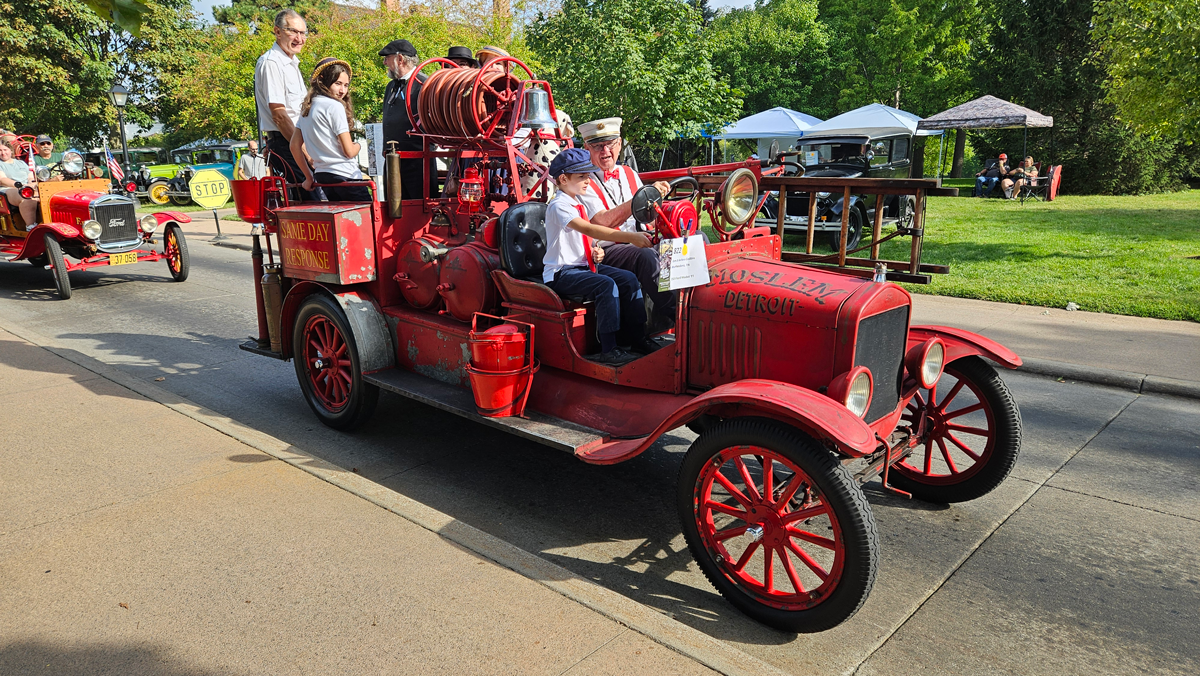 Fire trucks are among the most popular commercial vehicles at Old Car Festival. This 1924 Ford Model TT features firefighting equipment by Obenchain-Boyer. / Photo by staff of The Henry Ford
Christie Street was lined with Old Car Festival's usual assortment of commercial vehicles. Fire engines, delivery cars and depot hacks filled both sides of the street, along with less conventional vehicles like a set of Fords converted into snowmobiles, and a flatbed truck with a hollow stack of lumber hiding bottles of bathtub gin—a tribute to the rumrunners of the Prohibition era. One of this year's highlights was an operating 1924 power grader manufactured by the Galion Iron Works of Galion, Ohio. This unusual machine is akin to a giant motorized scraper, and it would have been used to level the surface of a roadbed before the top layer of pavement was applied. Internal combustion engines revolutionized the vehicles on our roads, but they also transformed the machines that built them.
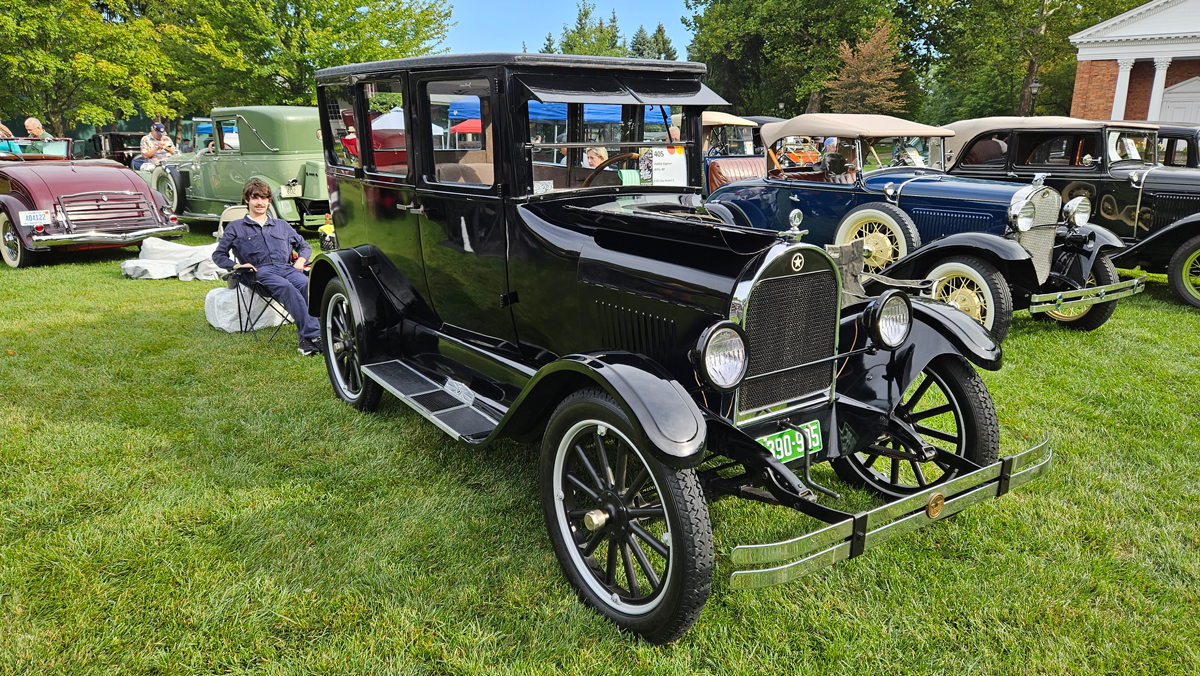 This 1923 Star was the entry-level auto from Durant Motors, formed by Billy Durant after his second (and last) ouster from General Motors. / Photo by staff of The Henry Ford
Those looking for insights and explanations on the various vehicles could attend one of Old Car Festival's pass-in-review sessions, held along Main Street throughout the weekend. In a chronological progression, participating vehicles were driven past a grandstand where expert historians provided commentary on each one. Narrators answered the popular questions—how many were made and how much did they cost—and offered context on the technological evolution and societal impacts seen in the first decades of American motordom.
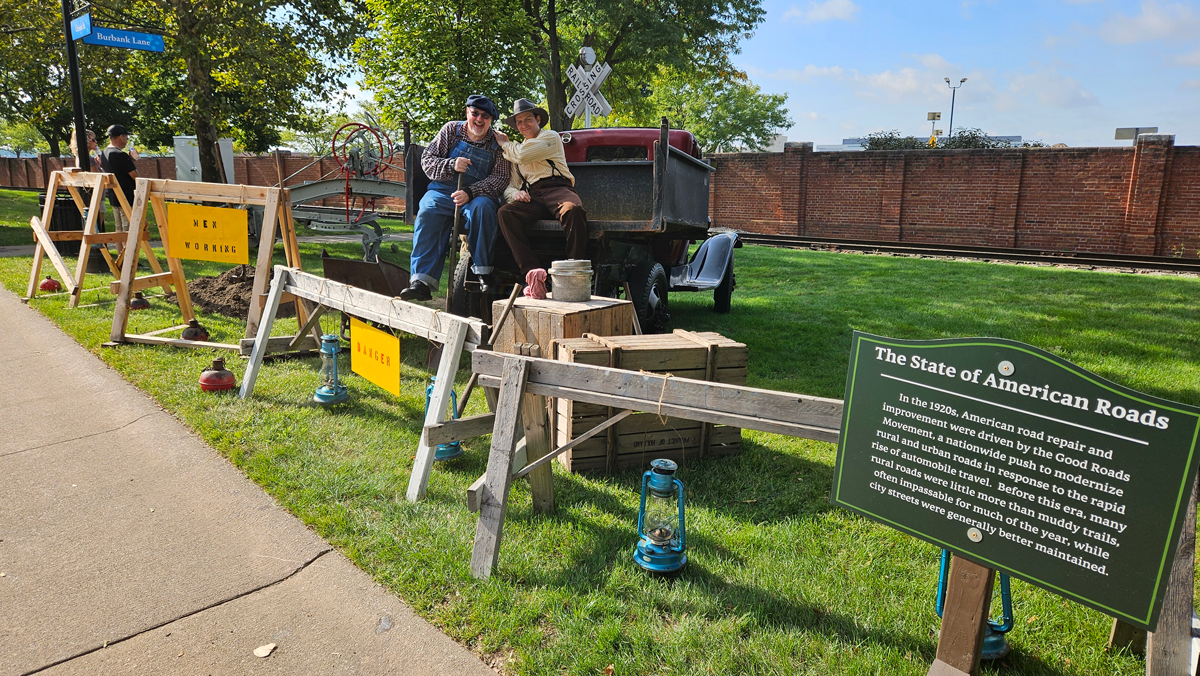 Two workers mug for the camera at the road construction vignette near Ackley Covered Bridge. / Photo by staff of The Henry Ford
Historical vignettes throughout Greenfield Village added to the charm and nostalgia surrounding the 75th anniversary. American "doughboys" recalled World War I at Cotswold Cottage, suffragists fought for women's right to vote on Washington Boulevard, and Rev. Robert Jones evoked the hard times of the Great Depression with blues music at the Mattox Family Home. New for 2026 was our 1920s road construction vignette near Ackley Covered Bridge. One hundred years ago, with the automobile an established part of daily life, Americans clamored for improved roads. Federal and state governments responded with an ambitious program that gave birth to the country's system of numbered highways, from US 1 in the east to US 101 in the west.
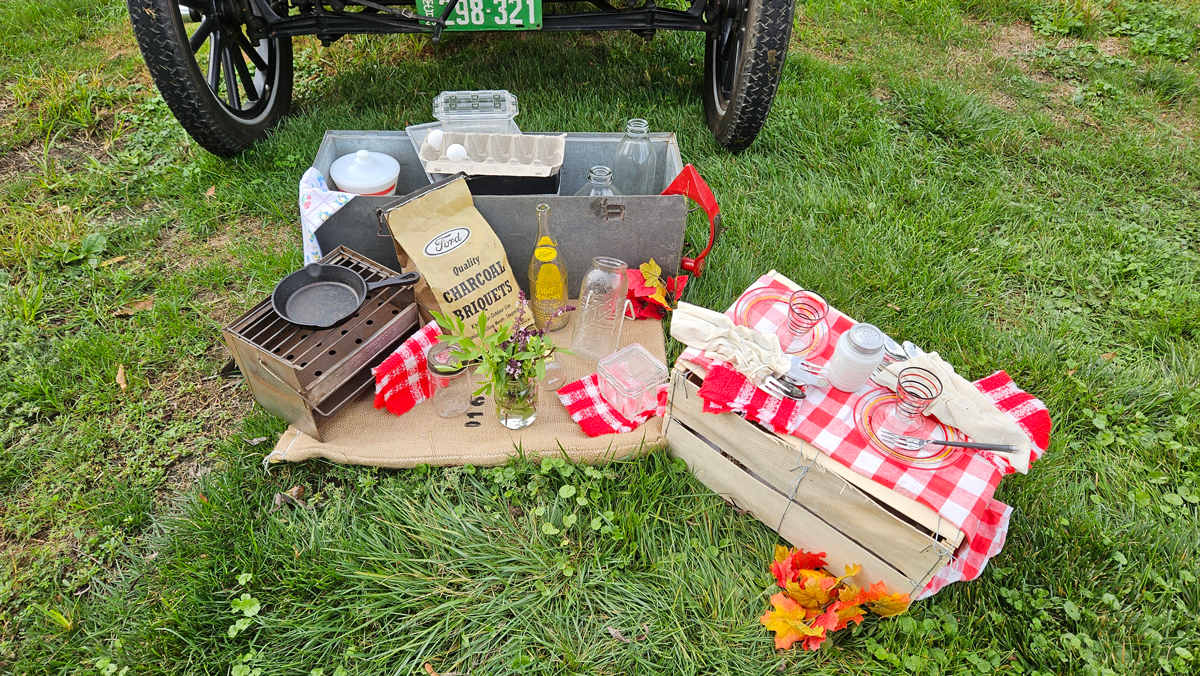 The simple pleasures of a roadside picnic come to mind when seeing this portable grill, complete with a bag of Ford charcoal briquettes (which were a thing). / Photo by staff of The Henry Ford
Martha-Mary Chapel hosted multiple programs throughout the weekend. Automobile historian Andy Dervan presented his findings on US automobile production in four key years of the Old Car Festival period: 1896, 1906, 1916, and 1926. Historian Ray Swetman explored the fascinating life and work of James Couzens, who managed Ford Motor Company's business operations in the early 1910s—the crucial years of the moving assembly line and the five-dollar day. Couzens later resigned from Ford and pursued a successful second career in politics, serving as Detroit's mayor and as a US senator from Michigan. Near the chapel, roadside historian Daniel Hershberger explored automobile touring and camping in the first decades of the 20th century with his collection of vintage camping equipment staged by Scotch Settlement School.
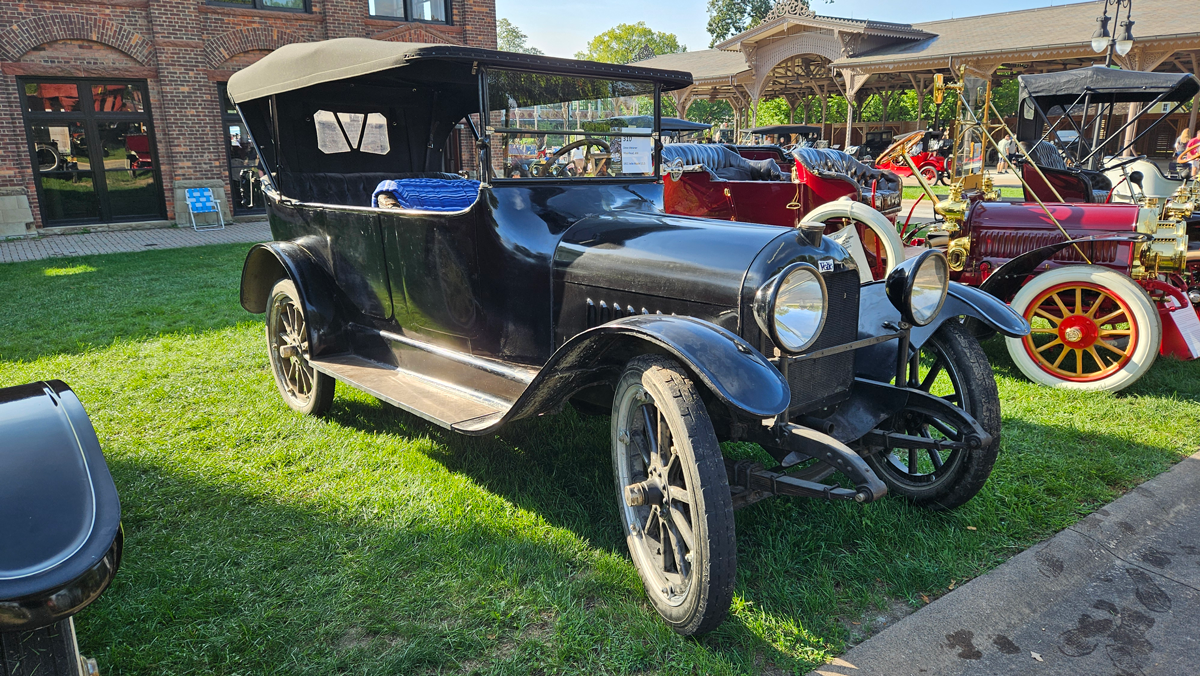 This unrestored, Illinois-built 1915 Velie took home a Curator’s Choice Award. / Photo by staff of The Henry Ford
Awards are another longstanding feature at Old Car Festival, dating to the first show in 1951. While the number and type of prizes have varied over the years, judged cars have generally been evaluated based on their authenticity, the quality of any restoration work done to them, and the care with which they are maintained and presented. First-, second-, and third-place prizes were awarded in eight classes, and two overall Grand Champions were selected—one for each day of the festival. This year's Henry Austin Clark Jr. Grand Champion Awards went to a 1932 Packard Deluxe Victoria and a 1908 Mitchell Model G. Likewise, we gave two Curator's Choice Awards to unrestored vehicles. This year's winners were a 1915 Velie Model 15 and a 1930 Ford Model A. The complete list of 2026 Old Car Festival award winners is available here.
Seventy-five years of tradition are well worth celebrating. We extend a sincere "thank-you" to all the participants and visitors who made this year's diamond anniversary Old Car Festival so meaningful. We look forward to making more memories together next year.
Matt Anderson is Curator of Transportation at The Henry Ford.
Keywords | |
|---|---|
Themes |