
The Hello Girls: the Lives of the Women who Manned the Switchboards
| Written by | |
|---|---|
| Published | 10/21/2026 |
The Hello Girls: the Lives of the Women who Manned the Switchboards
| Written by | |
|---|---|
| Published | 10/21/2026 |
Mary Kennedy—New York City's first female telephone operator—started her career in 1878, just two years after Alexander Graham Bell invented the first practical telephone. To place a call in those days and for years to come, the caller first had to reach an operator at the central exchange office. The operator worked at a switchboard, connecting the caller's jack plug to their transmitter to talk to them. The customer provided the name, location, or phone number of requested party, and the operator would then "insert the calling plug into the jack associated with the line" of the callee, as a 1923 operators' guide explained. As a woman in 1878, Kennedy was in uncharted territory; even her parents "were horrified" that she had a job "in a noisy place, with boys all around" as she said in a 1920s interview. She, however, loved being an operator, saying: "It was fascinating business, and once I heard the miraculous sound of human voice over wire it was irresistible." Kennedy spent the next three decades working for the telephone company. In the very beginning of commercial telephony, the operators were primarily men; however, by 1910, 90% of all operators in the United States were women. Known as "hello girls," these women manned the switchboard, connected people to their communities, and changed the way we all communicate.
Switchboards from Michigan Bell


Early telephone operators were in a unique space as working women in a time when women were not expected to hold jobs or were even barred from doing so. "It took nerve to be the first girl operator and girls in those days weren't expected to have any." Kennedy said. One New York City-based operator named Katherine Schmitt, who began her career in 1882, could not leave the central office at lunchtime when she started working because crowds gathered at the door to gawk at a woman with a job. These first "hello girls" paved the way for more women to enter the work force. By 1929, one in six American women—both unmarried and married—had a job outside of the home, and over 175,000 of them were switchboard operators. They even defied the era's expectations of womanhood outside of the workplace by camping, visiting dude ranches, and starting sports teams together. Towards the end of her life, Schmitt referred to herself and other telephone operators as pioneers of women’s place in society.
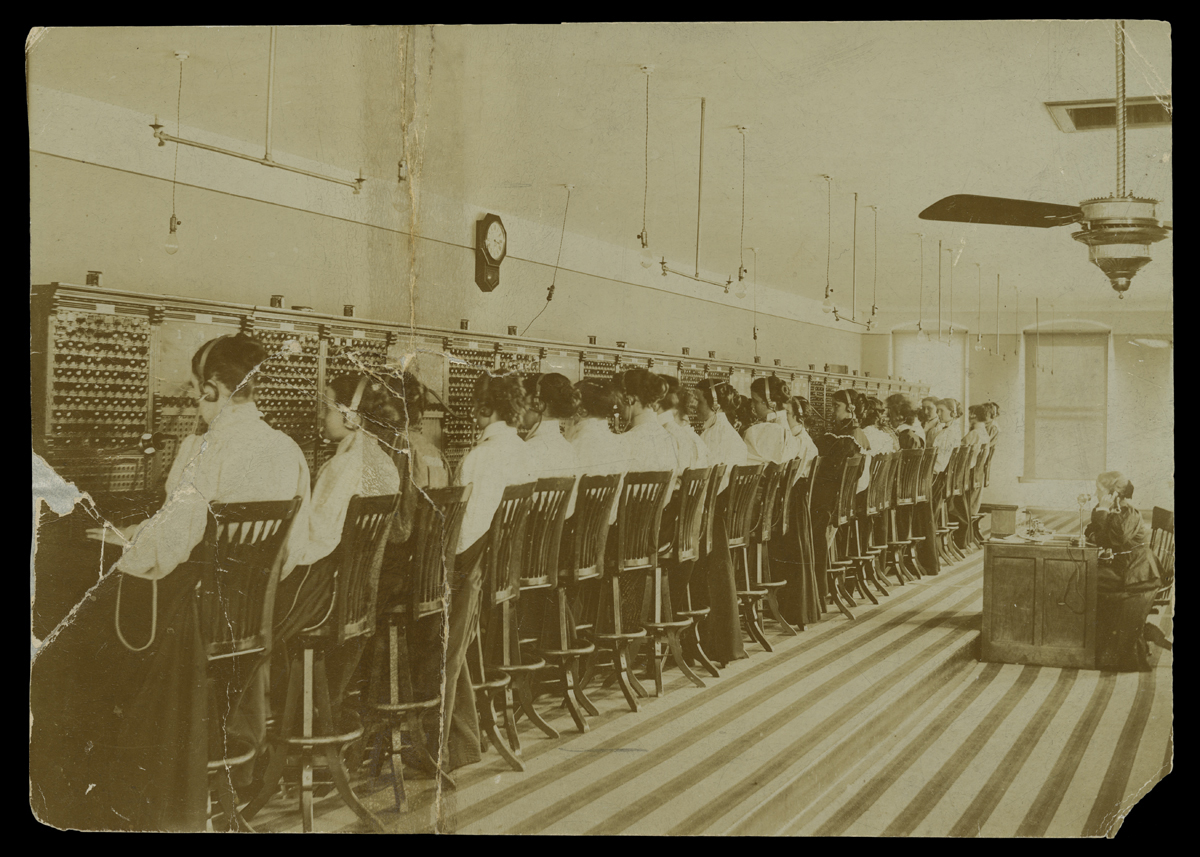
Telephone switchboard operators at Citizens Telephone Company, 1896. The women's supervisor, chief operator Amanda Hitchcock, sits at the desk behind them. Chief operators supervised their staff and often troubleshot line problems. / THF126911
There were several reasons telephone companies began hiring women. First, telegraph offices already had some women operators, and the skillset was seen as transferable. In fact, pioneering "hello girls" like Kennedy and Emma Nutt—the world’s first female telephone operator—had previous experience in telegraphy. Also, women were perceived as more friendly than their male counterparts who sometimes went “tit-for-tat to the subscribers in language and abuse," as New York Telephone Company employee Cecil Mackenzie noted. Mackenzie, who was a switchboard operator as a young man, even got into a physical altercation with a customer in 1879. Within three decades, telephone companies had replaced most of the men with women, who were nicknamed "the voice with the smile."
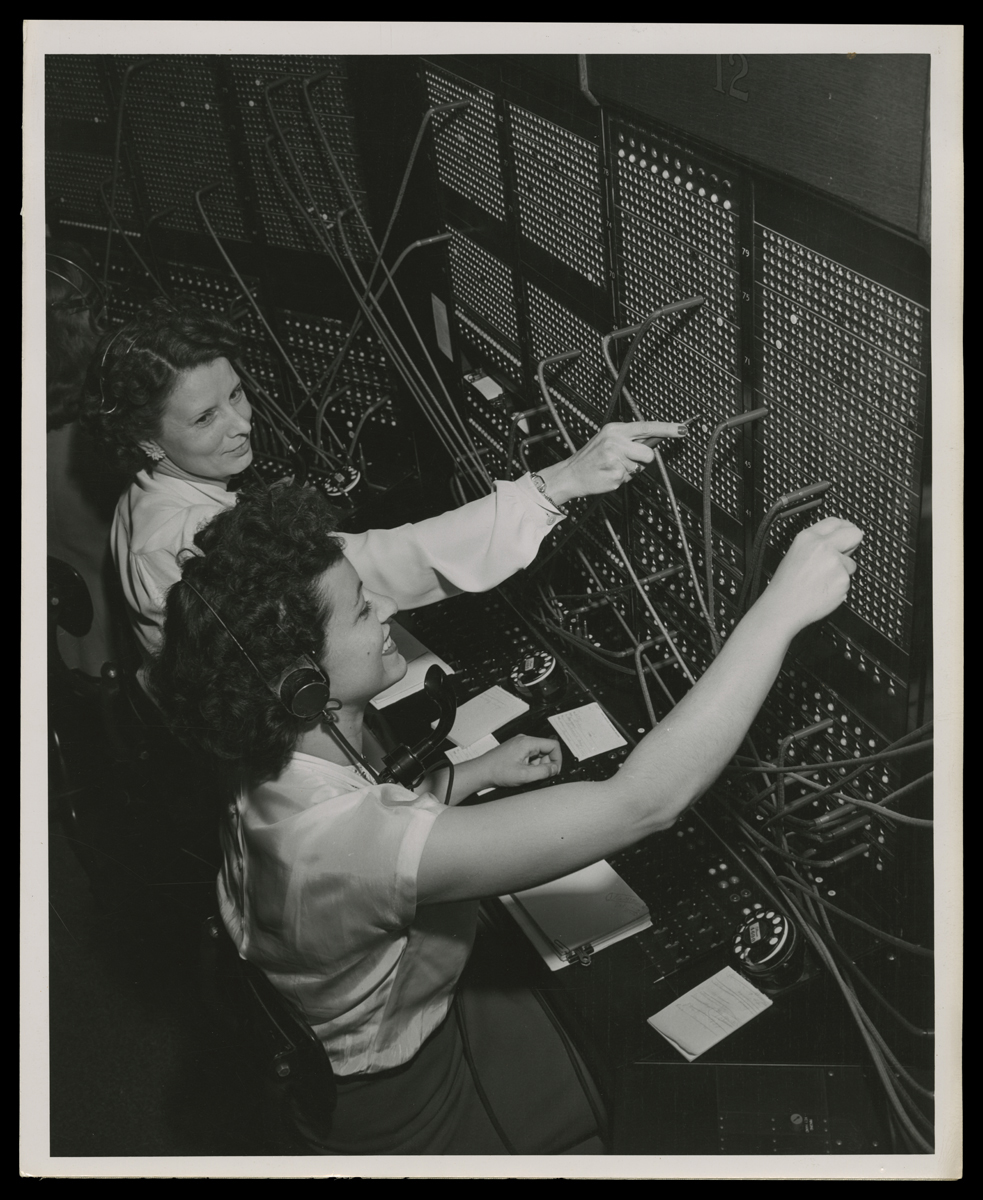
Two telephone operators working at the switchboard at the Ford Rouge plant in 1947. Katherine Schmitt, an early operator who later trained thousands of others on behalf of Bell System, taught "hello girls" to embody a "spirit of service" and to "smile though she feels more like crying." / THF132625
Lastly, telephone companies did not feel compelled to pay women as much as men. In the early days of telephony, company managers justified this pay gap by saying that women were more likely to arrive late or skip work for family reasons and less capable of keeping up with the demands of a fast-paced office environment than men. These ideas were repeated in literature of the day, including the New York Telephone Company's internal staff magazine, Telephone Review. Even as those stereotypes fell out of favor and more women entered the work force, the pay gap remained. According to a 1946 study by the US Department of Labor, the average woman who worked as an operator made only 58% of what the average man made doing the same job. The Department of Labor concluded that this pay gap was "definitely affected by the fact that history and tradition have evaluated women's help as lower priced than men's."
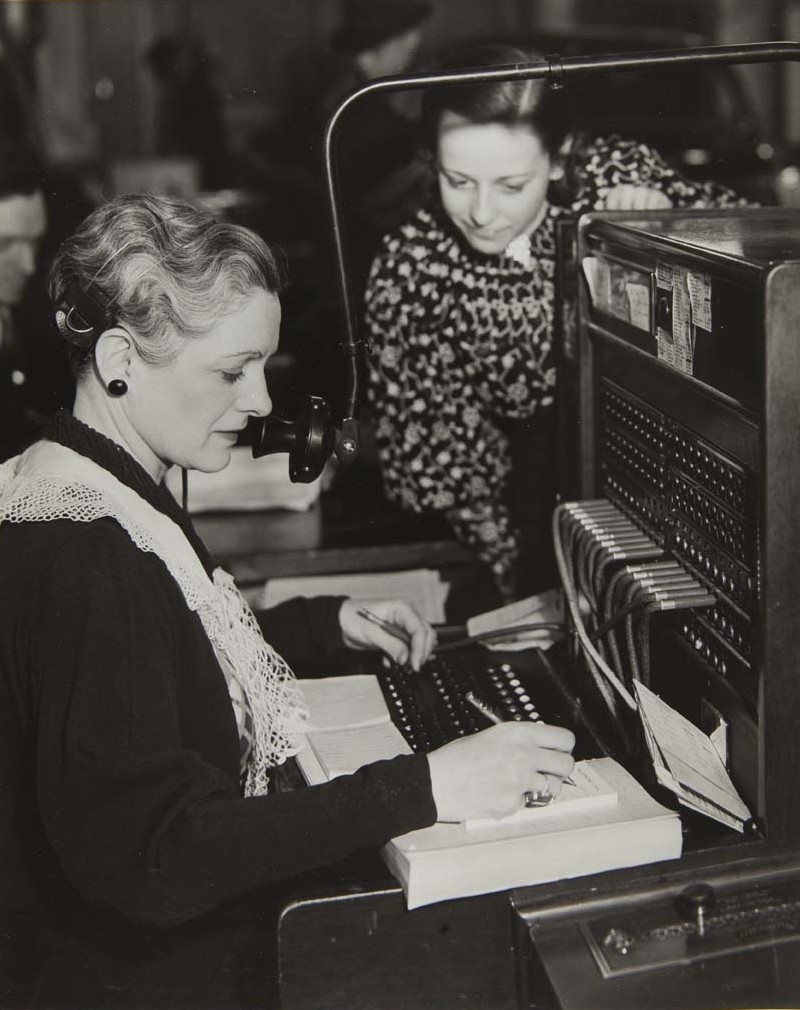
Switchboard operator at George Holzbaugh Ford dealership in Detroit, Michigan, 1936. / THF267575
Some argued that the work of a telephone operator was easy as she sat in her chair and connected calls; the work was allegedly less laborious than factory work or domestic labor. However, an operator was expected to handle incoming and outgoing calls, intercept incomplete calls, transfer to the correct exchanges, and keep track of call length using a device called a calculagraph. Up to a dozen women were working the switchboards at a time, so operating stations were often cramped. Central offices were often poorly ventilated and unheated to protect uninsulated wires. Operators worked an average of eight to ten hours a day, often without any breaks. Work conditions were especially difficult during emergencies. For example, when the Hotel Coolidge in White River Junction, Vermont, burned to the ground in January 1925, the telephone operators in the building next door kept working; some even worked without pay. The women were advised to wear coats at their workstations in case the burning hotel collapsed on top of the central office and they had to evacuate.
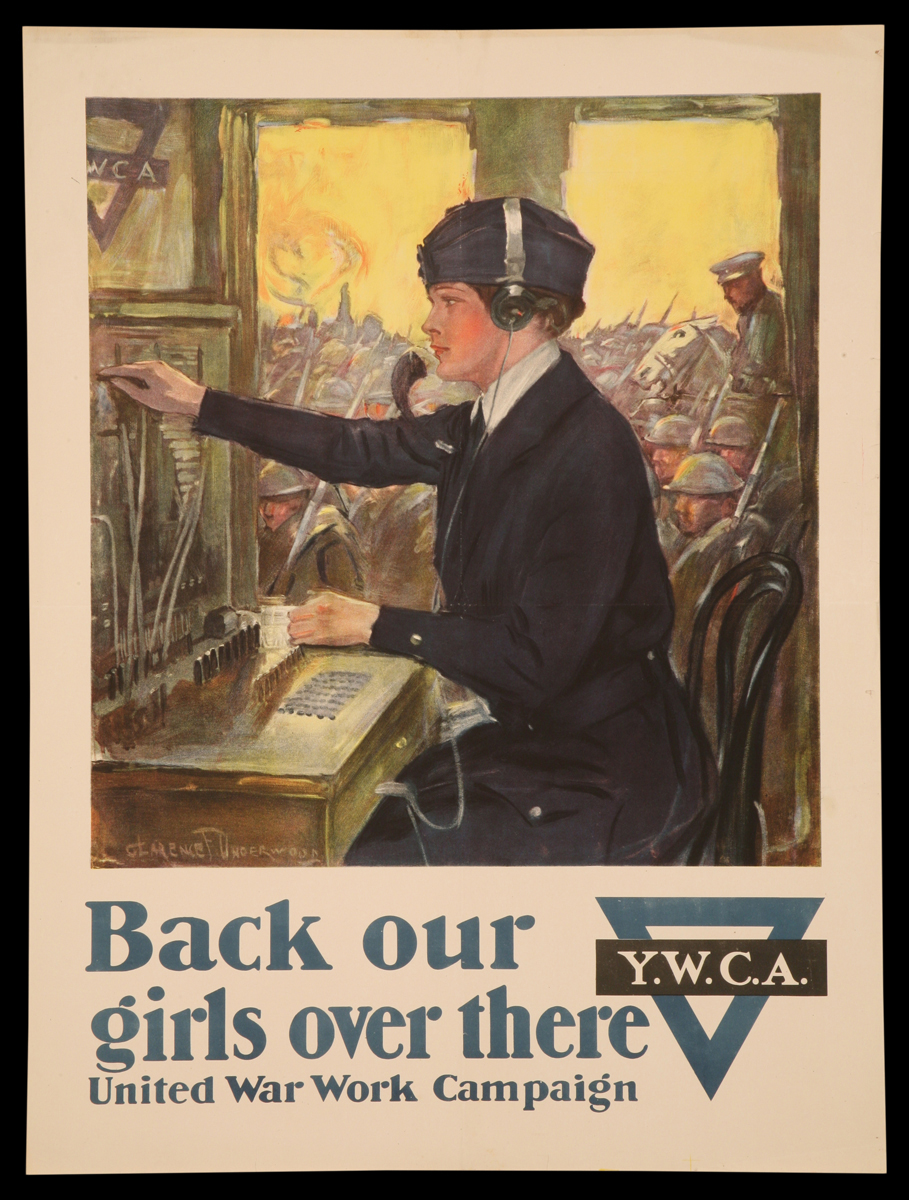
This 1918 poster shows a telephone operator supporting military communication. The Signal Corps Female Telephone Operators Unit, which operated telephones for the US army, deployed 250 women overseas in World War I. During the Battle of Saint-Mihiel in September 1918, six operators—all women—ran a central exchange from the trenches as bombs fell, thunderstorms interrupted telephone service, and the threat of mustard gas attack loomed. / THF112607
These difficult conditions, coupled with low pay, caused concerns for workers. In 1911, a group of Boston-based “hello girls” formed a union, and over the next several years, unionizing efforts spread across the country as women organized for more habitable workspaces, better training, and higher pay. In December 1918, a charter for a national union—the Telephone Operators’ Union—was established. The following April, the Telephone Operators’ Union won their first major victory after a successful strike of Boston operators led to a pay increase and the right to collective bargaining. In October 1919, the union—already 30,000 members strong—held its first national convention in New Orleans, which was also the first convention for any women's national labor organization in US history. As a reporter who covered the convention noted, these young women had "fought their battles their own way without male help."
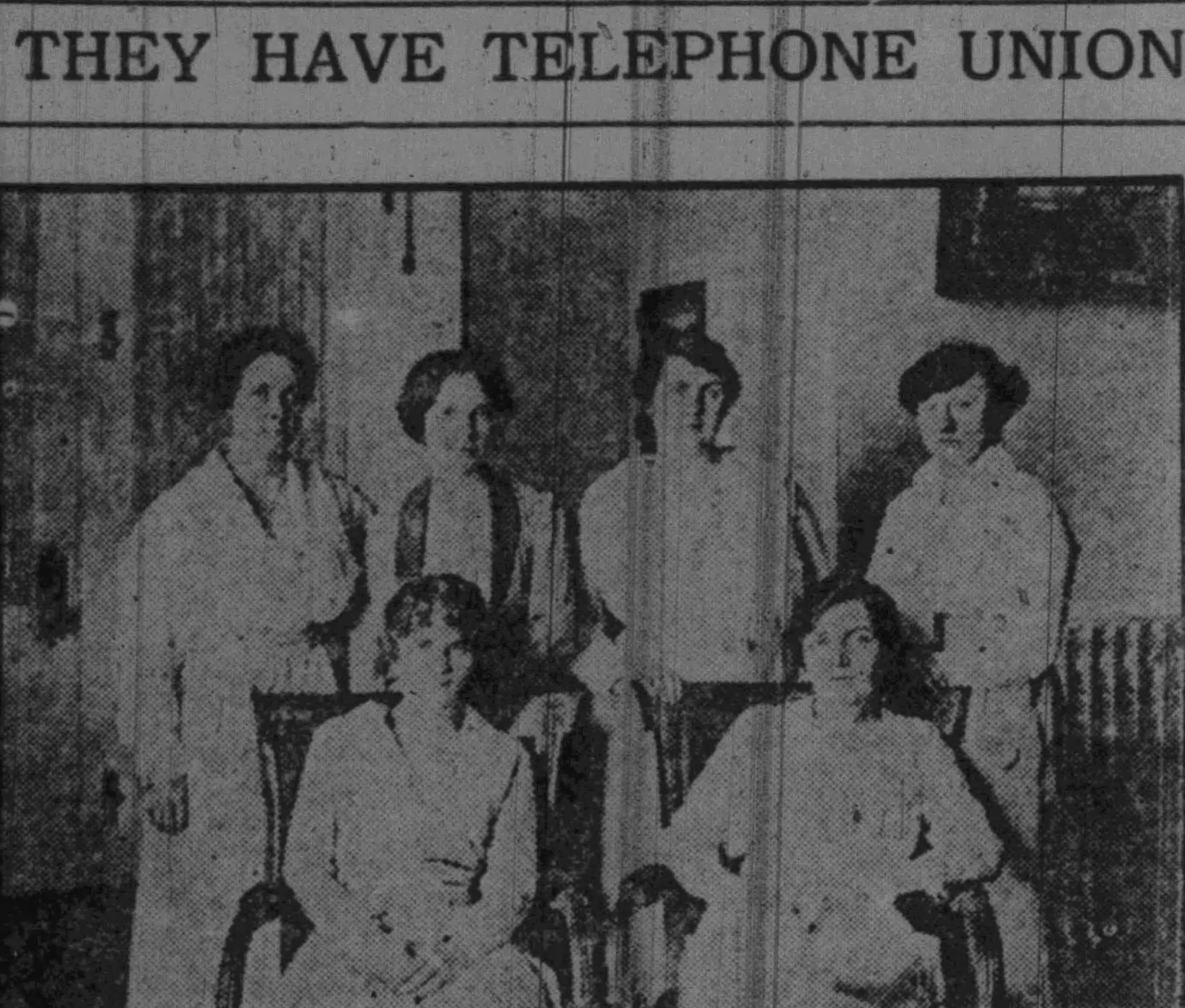
Photo of six officers of the Telephone Operators’ Union, printed in the October 1, 1919, issue of The Times-Picayune newspaper from New Orleans. This photo was published on the first day of the union's inaugural national convention. / Via Newspapers.com
However, by the end of the 20th century, what was once a reliable career for women was eradicated due to the invention of the automatic telephone exchange switch. Almon Brown Strowger patented the first commercially available automatic exchange switch, allowing callers to dial people directly, in 1891. Automatic switches were advertised to businesses as being hassle-free because they were "girl"-less; newspaper reporters praised the invention's ingenuity while simultaneously dismissing, or even mocking, the work of female operators. Smaller companies adopted them first; then in 1919, Bell System, one of the largest phone companies in the United States, introduced its first automatic exchange. This was just the beginning of the end of the “hello girls.”
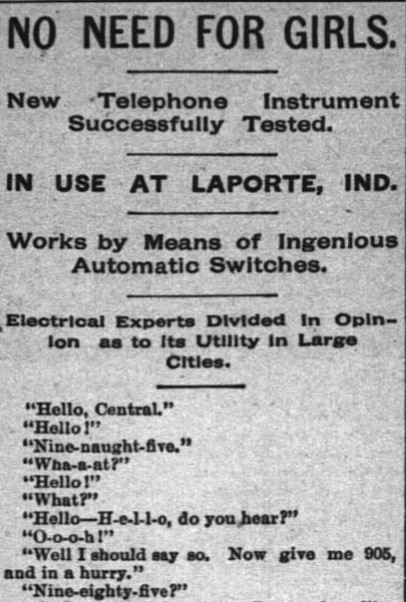
This article from the Chicago Inter Ocean newspaper—dated November 4, 1892—is about the invention of the automatic exchange switch. It begins with a fictional conversation between a telephone operator and caller that highlights the alleged inconvenience of central exchange. The writer later declares "Telephone girls must go" as they praise the speed and efficiency of automatic exchange./ Via Newspapers.Com
In 1929, when Bell System started automatic exchange service for Butte, Montana, Julia O’Connor Parker—founder and president of the Telephone Operators’ Union—lamented the jobs that had been lost to “the heaven of business success and efficiency,” saying, “Butte is only one instance. It is happening all over the land, in your city and mine.” O’Connor Parker’s words were especially prescient during the 1950s, 1960s, and 1970s, which saw a sharp decline in operator service. In 1983, America’s last central switchboard operation—located in Bryant Pond, Maine—went offline.
In the first century of telephone service, hundreds of thousands of women were telephone operators. Whether they worked in busy telephone exchanges in a big city or at a board in the back office of a small-town general store, the “hello girls” connected all of America through their hard work.
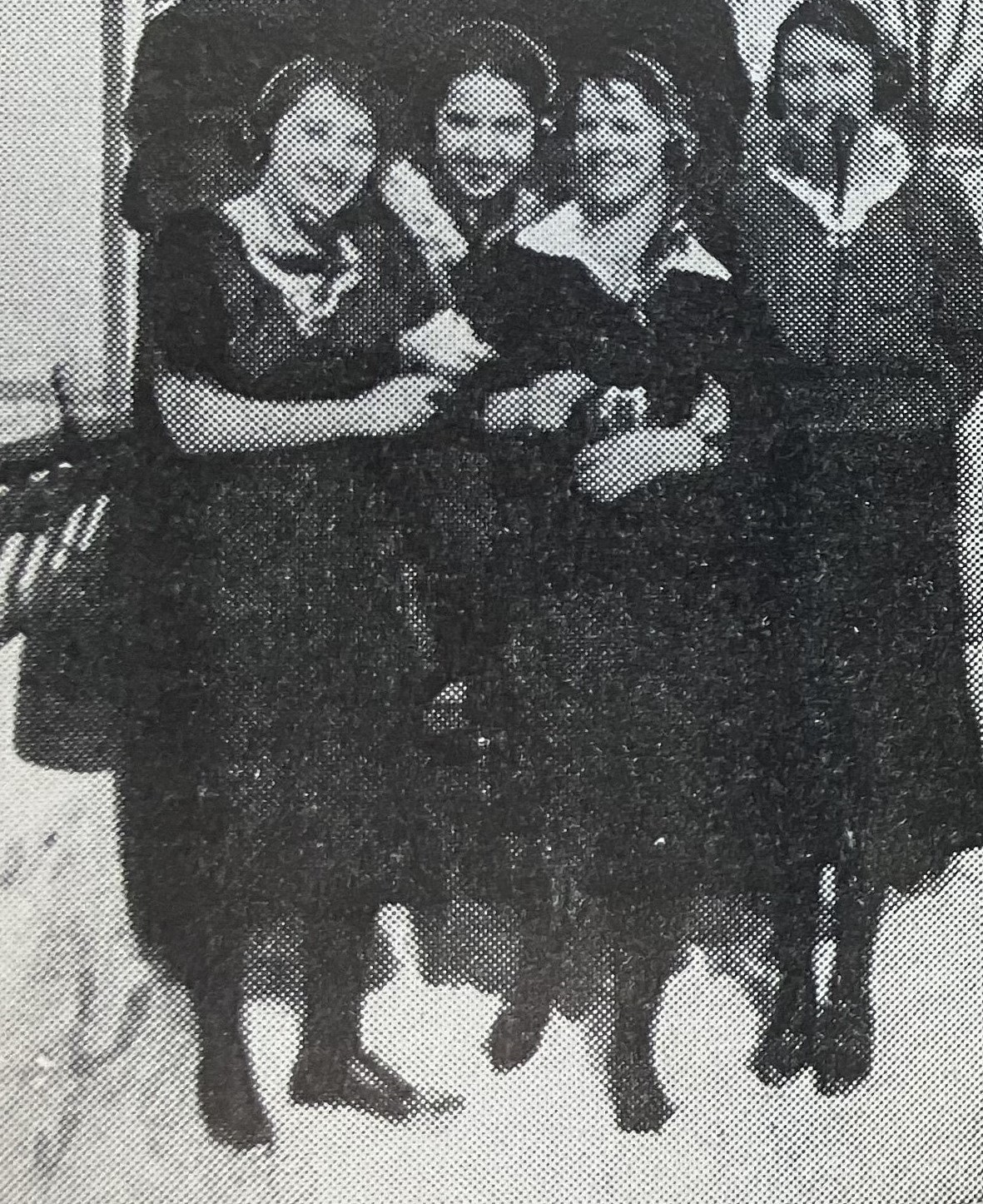
Four switchboard operators (L to R: Freda Albright, Mary Amerman, Magdelene Madison, and Gertrude Jones) in Niles, Michigan, early 1922. This photo was published in The Mouthpiece, Michigan Bell telephone company's employee magazine that often highlighted switchboard operators from across the state. / Photo by staff of The Henry Ford
The Henry Ford's switchboards were conserved, rehoused, and digitized thanks to a grant from the Institute of Museum and Library Services (IMLS).
Kayla Chenault is an Associate Curator at the Henry Ford.
Keywords | |
|---|---|
Series | |
Themes |