
The Long Legacy of Voter Registration, 1865-1965
| Written by | |
|---|---|
| Published | 11/3/2026 |
The Long Legacy of Voter Registration, 1865-1965
| Written by | |
|---|---|
| Published | 11/3/2026 |
The story we share at the Jackson Home in Greenfield Village focuses primarily on Dr. Sullivan and Richie Jean Sherrod Jackson’s role in the Selma voting rights movement in 1965. However, the Selma to Montgomery marches planned at the Jackson Home represent a particular moment that draws on the long legacy of community organizing against voter suppression. Looking through the Jackson family's ancestors, we can see how this struggle stretches all the way back to 1865.
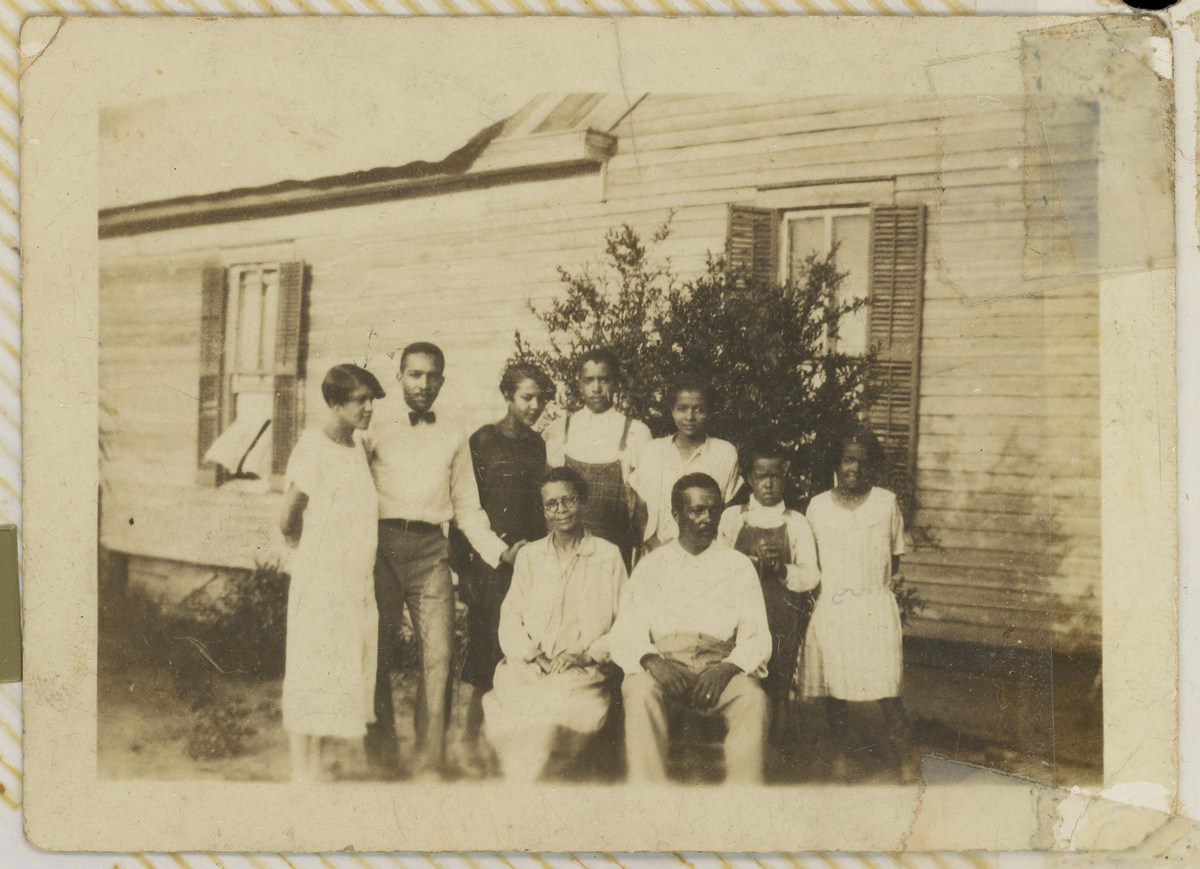
Thomas Knight and Emma Calhoun Richardson (seated) with their children, including Juanita Richardson Sherrod (in black), mother of Richie Jean Sherrod Jackson. / THF730498
The United States constitution originally left the responsibility for determining who could vote to individual states, resulting in centuries of expansion and contraction of voting access. The foremost example of this followed the Civil War, as the struggle for political power during Reconstruction and its aftermath played out prominently across the South. A Republican-majority Congress required former rebel states to ratify the thirteenth, fourteenth, and fifteenth amendments as conditions of their readmission to the Union. These changes promised to guarantee freedoms, rights, and protections that Black people began to explore and exercise. For Black men, this meant not only the vote, but also the chance to run for public office. An estimated two thousand Black men were elected across the South during Reconstruction. However, these actions threatened a dramatic shift to the social order that many Southern Democrats and ex-Confederates were still unwilling to accept. Immediately following the war, white supremacist groups frequently terrorized Black communities with organized, racist violence, requiring federal military intervention.
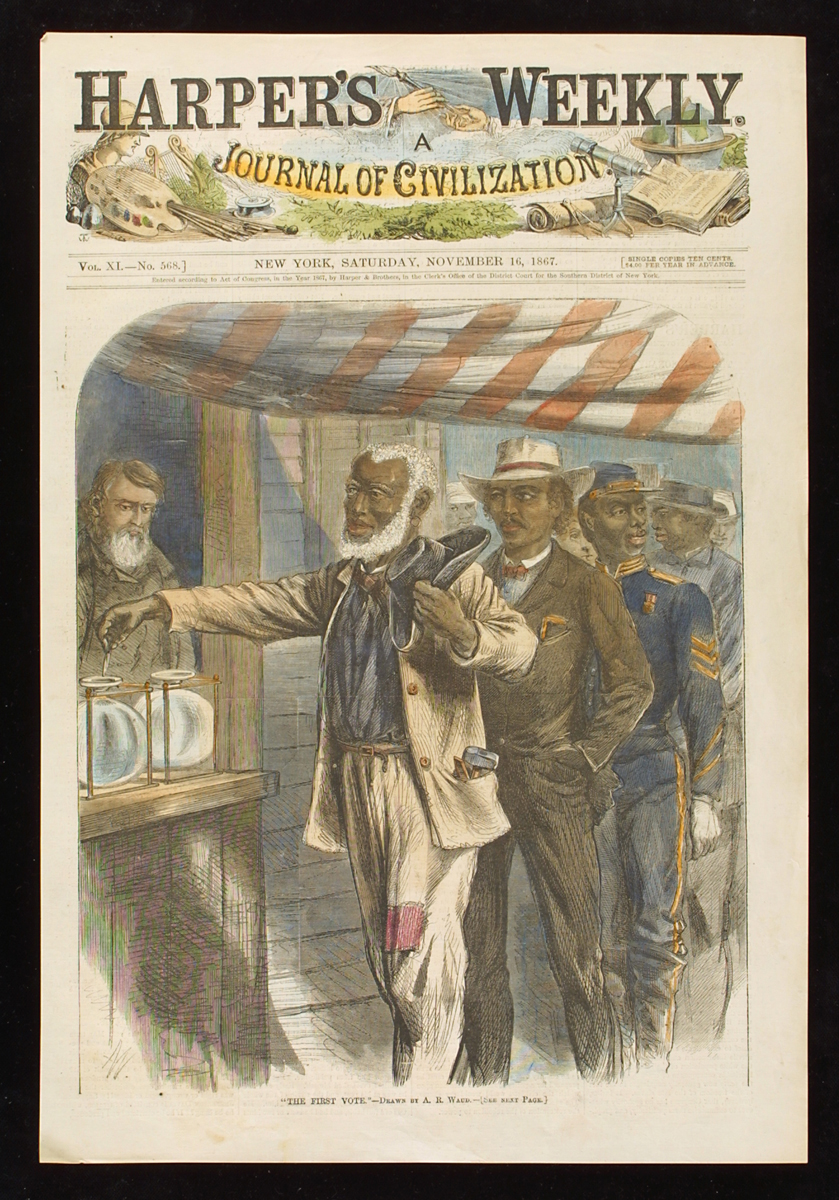
Several African American men line up to vote for the first time on this cover of Harper’s Weekly, November 16, 1867. / THF11673
In Alabama, the successes of Reconstruction were met with firm legal opposition alongside this pressure of violence. The Alabama Constitution of 1875 leveraged the existing poll tax to disenfranchise the Black vote, slowly eroding the advances made by the recent constitutional amendments without drawing further pushback by the federal government. By the turn of the century, Reconstruction had long since collapsed under the violent backlash and compounding political and economic turmoil from attempting to enforce the rule of law, and the newly issued Alabama Constitution of 1901 was unrestrained in its discrimination. In addition to the poll taxes already in place, the new voter requirements included literacy tests that disproportionately affected Black and working-class white voters. While what came to be known as “grandfather clauses” allowed some whites to avoid these restrictions, the overall voting population shrank substantially. By 1903, the white male voting population declined by nearly 40,000, and a study by the Alabama Policy Institute estimated that by the 1940s more whites were disenfranchised by the constitution's restrictions in most counties than were registered to vote.
This concerted backlash against Black voting rights makes the 1902 Life Certificate of Registration for Thomas Knight Richardson all the more curious. His granddaughter, Richie Jean Sherrod Jackson, described the Richardson family in her memoir as having “a very different experience than most blacks in the South at that time.” Anthony Richardson, Thomas’s father, was born in 1843 or 1844 to Rosa Knight, a Black woman, and Thomas Knight, a white plantation owner, most likely in Sumter County, Alabama. He came of age just as slavery was abolished and eventually acquired land and established himself as a blacksmith and a merchant. His youngest son, Thomas Knight Richardson, also worked as a local merchant, registering to vote at age twenty-three, according to this certificate. Unfortunately, it is unclear how often, if ever, he was able to exercise his right to vote in a state that actively sought to repress his voice. 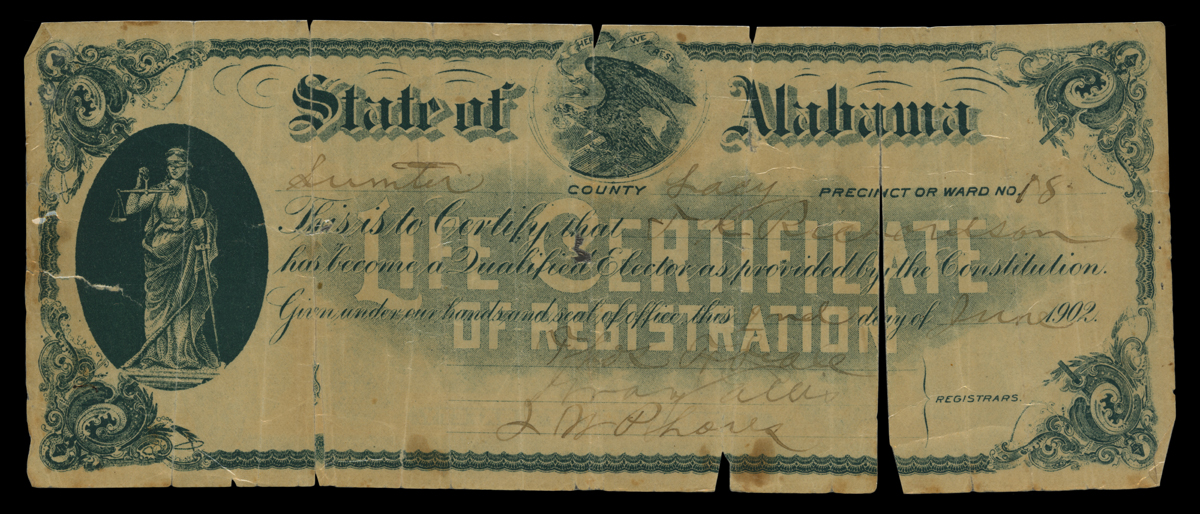
The 1902 Life Certificate of Registration issued to Thomas Knight Richardson. / THF731904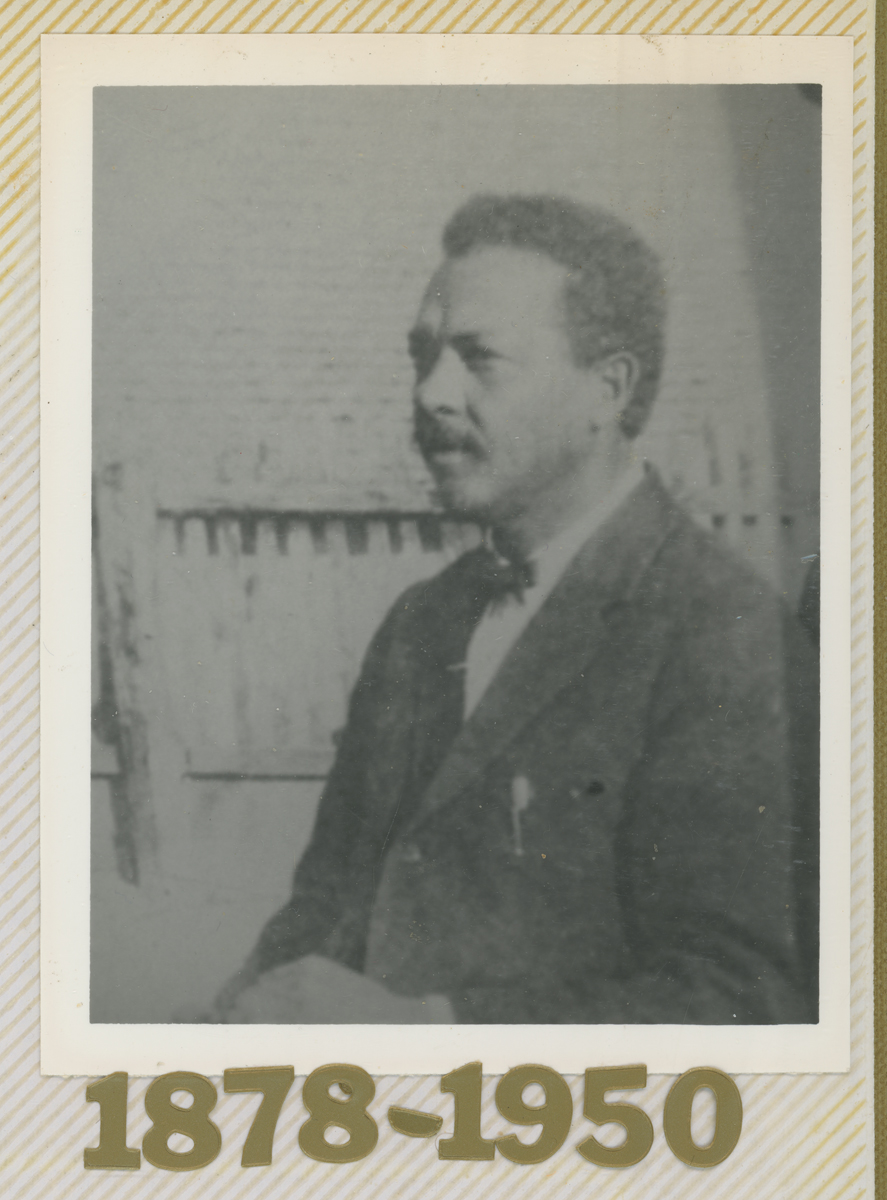
Portrait of Thomas Knight Richardson from a Jackson family photo album. / THF730500.
Thomas Knight Richardson was one of only 2,980 African Americans registered to vote in Alabama in 1903—a sharp decline from the 181,000 registered in 1900. The ratification of the 1901 constitution was a crowning achievement of the “Redeemer” Democrats, who sought to rid the South of all remnants of Reconstruction, supported by paramilitary groups to accomplish this by any means necessary. Historian Wayne Flynt described this period as “an unparalleled era of political corruption and violence.” The final tally in 1901 was 108,613 in favor of the revised Alabama state constitution to 81,734 against. Interestingly, while many white counties voted in opposition, somehow twelve majority-Black counties all voted overwhelmingly in favor, 32,224 to 5,471. If these results were to be believed, tens of thousands of Black voters had supposedly joined with white supremacists to deny themselves the right to vote. In the years to follow, historians largely concluded this could only have been the result of considerable fraud.
This is the depth of corruption and massive voter disenfranchisement in which the Jackson family found themselves entrenched, leading directly to Dr. Sullivan Jackson’s 1958 testimony on voting rights before the US Commission on Civil Rights on Voting Rights. After he attempted to register to vote in Selma in 1955 and 1956 and was quietly denied both times, Dr. Jackson expressed his frustration during the hearing: “I just get tired of going back, because I feel if—I am an American citizen. I believe I have a right to vote. I have fought for my country. I believe in the principles in it, and I don’t see any reason why I should have to run back and forth to register.”
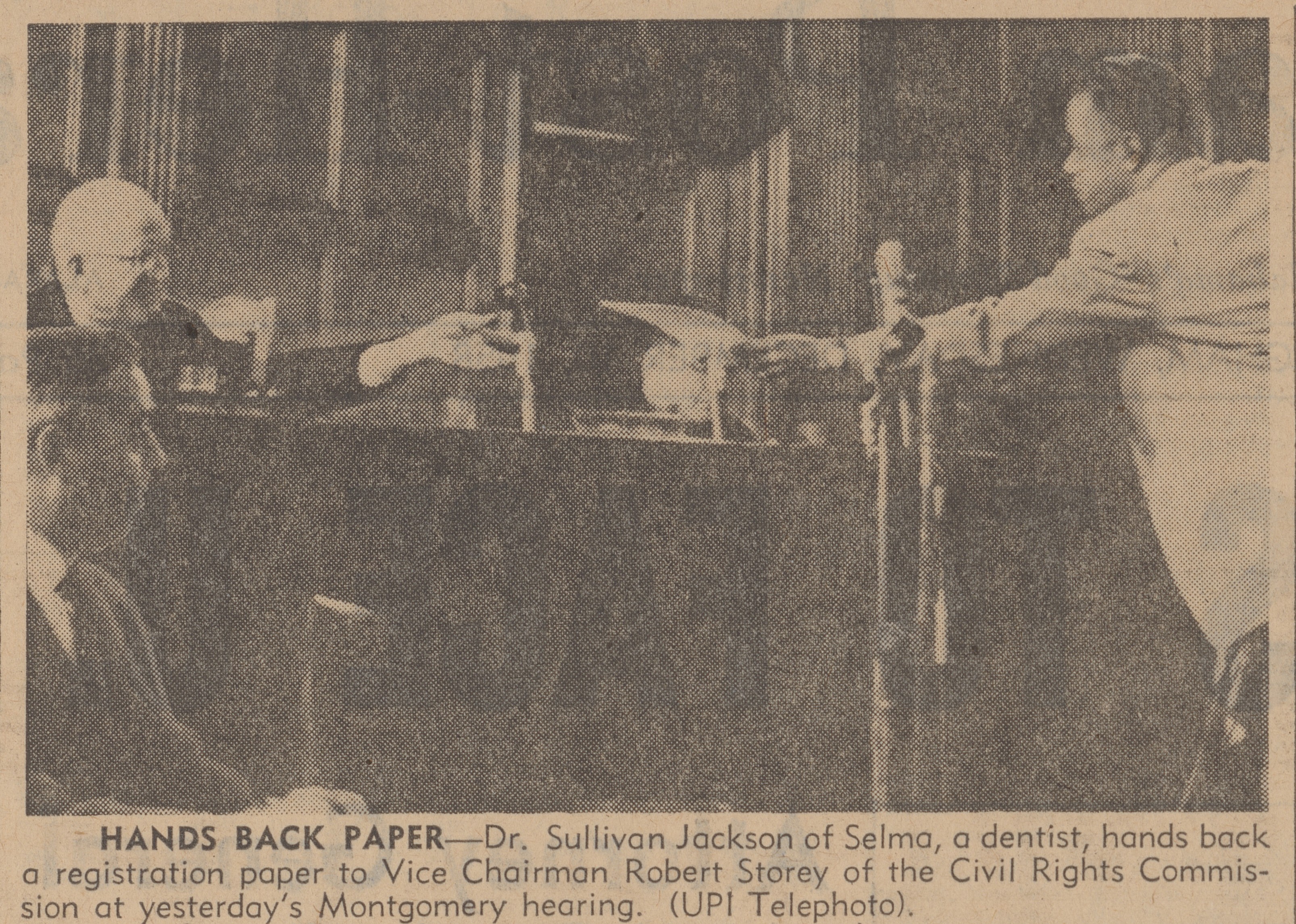
Dr. Sullivan Jackson providing his testimony before the US Commission on Civil Rights. / Alabama Department of Archives and History. / Photo by UPI Telephoto, Birmingham Post Herald.
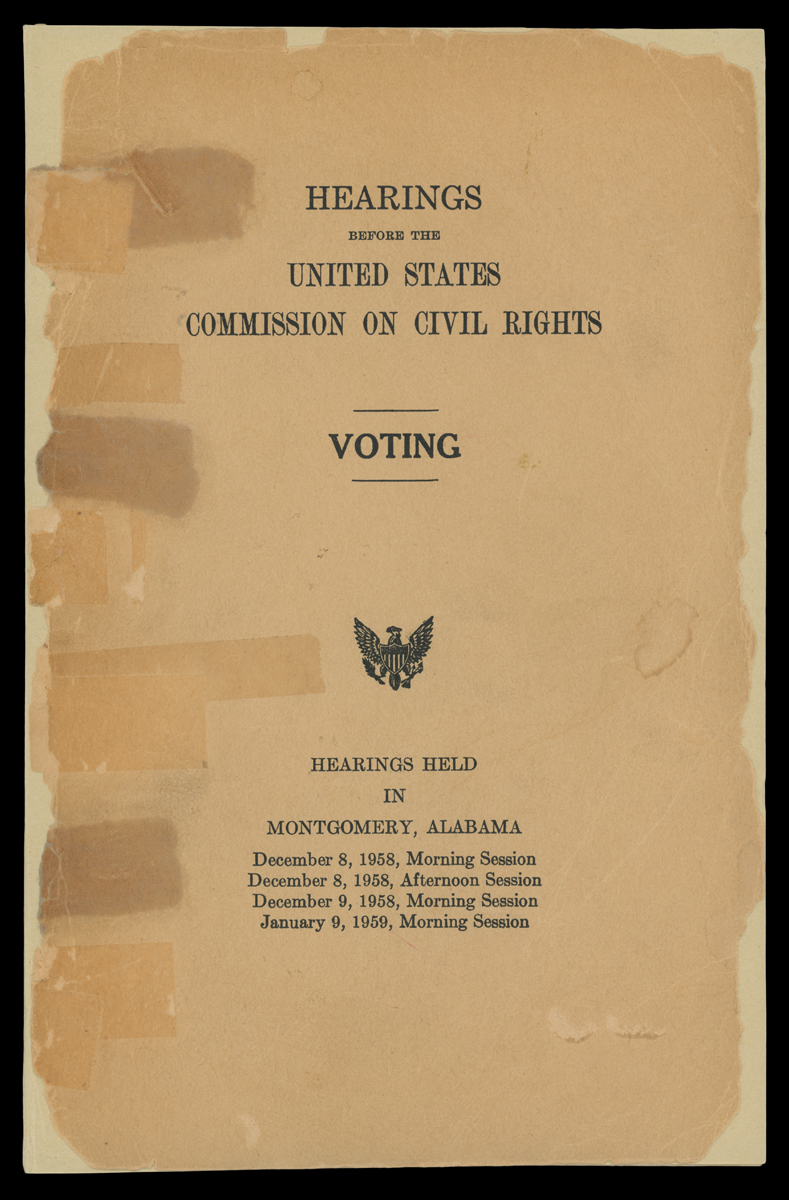
Transcript of the hearings before the United States Commission on Civil Rights. / THF732735
Dr. Jackson’s testimony resulted in significant repercussions for both him and his wife. The city of Selma cancelled his contract to provide dental services to inmates at the city jail, and Richie Jean Sherrod Jackson was abruptly fired from her position at the Selma Housing Authority. But despite these risks, and whatever risks Thomas Knight Richardson may have faced generations earlier, Americans have fought across generations to obtain and retain the rights they deserved and to hold our country accountable to its founder’s proclaimed ideals. Thomas Knight Richardson’s voter registration certificate is a captivating, tangible expression of those efforts.
Jack Schmitt is a Processing Archivist at The Henry Ford.
Series | |
|---|---|
Themes |