
Search
- Trade Card for Spool Cotton, Willimantic Linen Co., circa 1881 - In the last third of the nineteenth century, an unprecedented variety of consumer goods and services flooded the American market. Advertisers, armed with new methods of color printing, bombarded potential customers with trade cards. Americans enjoyed and often saved the vibrant little advertisements found in product packages or distributed by local merchants. Many survive as historical records of commercialism in the United States.
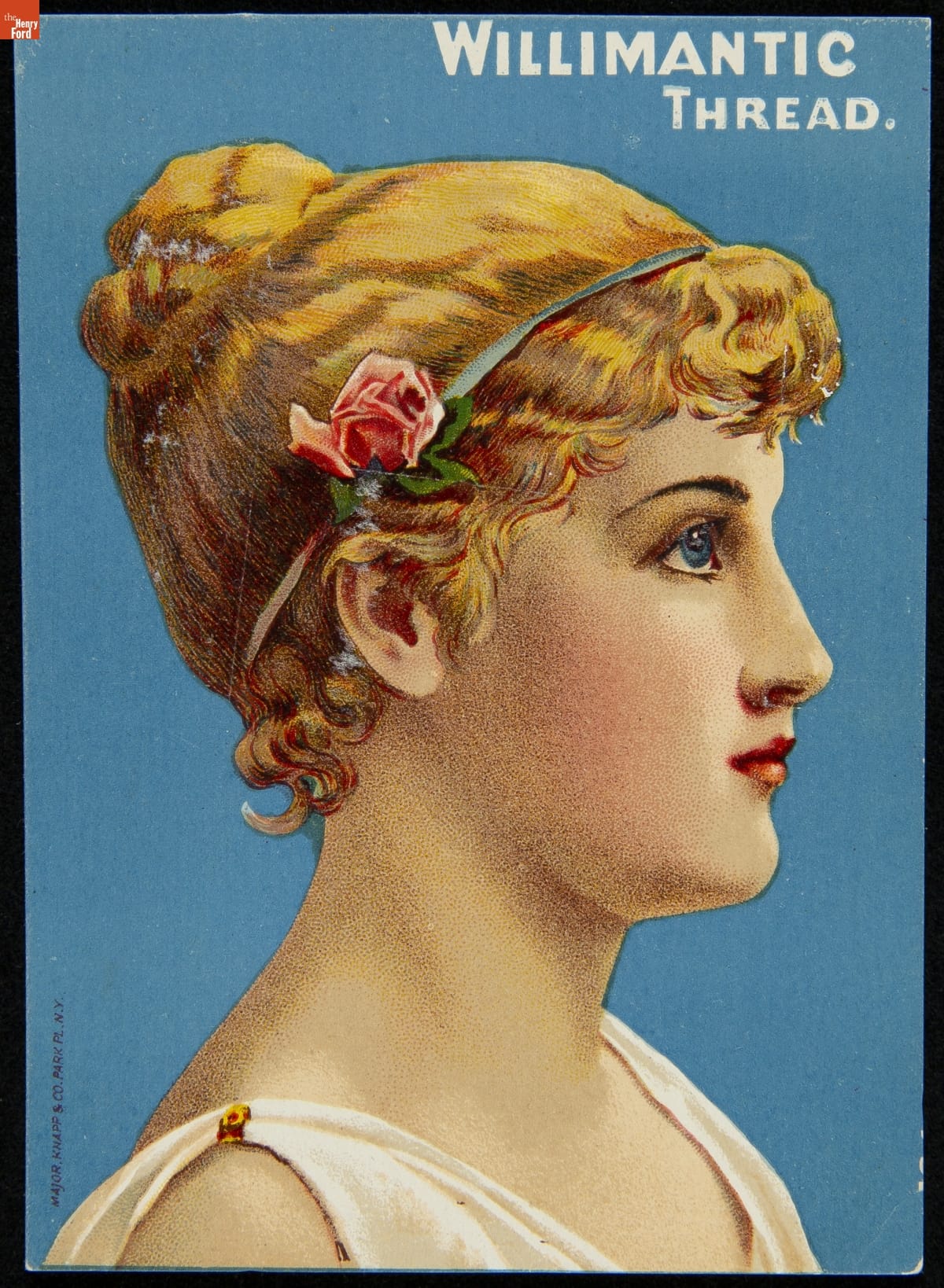
- circa 1881
- Collections - Artifact
Trade Card for Spool Cotton, Willimantic Linen Co., circa 1881
In the last third of the nineteenth century, an unprecedented variety of consumer goods and services flooded the American market. Advertisers, armed with new methods of color printing, bombarded potential customers with trade cards. Americans enjoyed and often saved the vibrant little advertisements found in product packages or distributed by local merchants. Many survive as historical records of commercialism in the United States.
- Trade Card for Six Cord Spool Cotton, Willimantic Linen Co., circa 1881 - In the last third of the nineteenth century, an unprecedented variety of consumer goods and services flooded the American market. Advertisers, armed with new methods of color printing, bombarded potential customers with trade cards. Americans enjoyed and often saved the vibrant little advertisements found in product packages or distributed by local merchants. Many survive as historical records of commercialism in the United States.
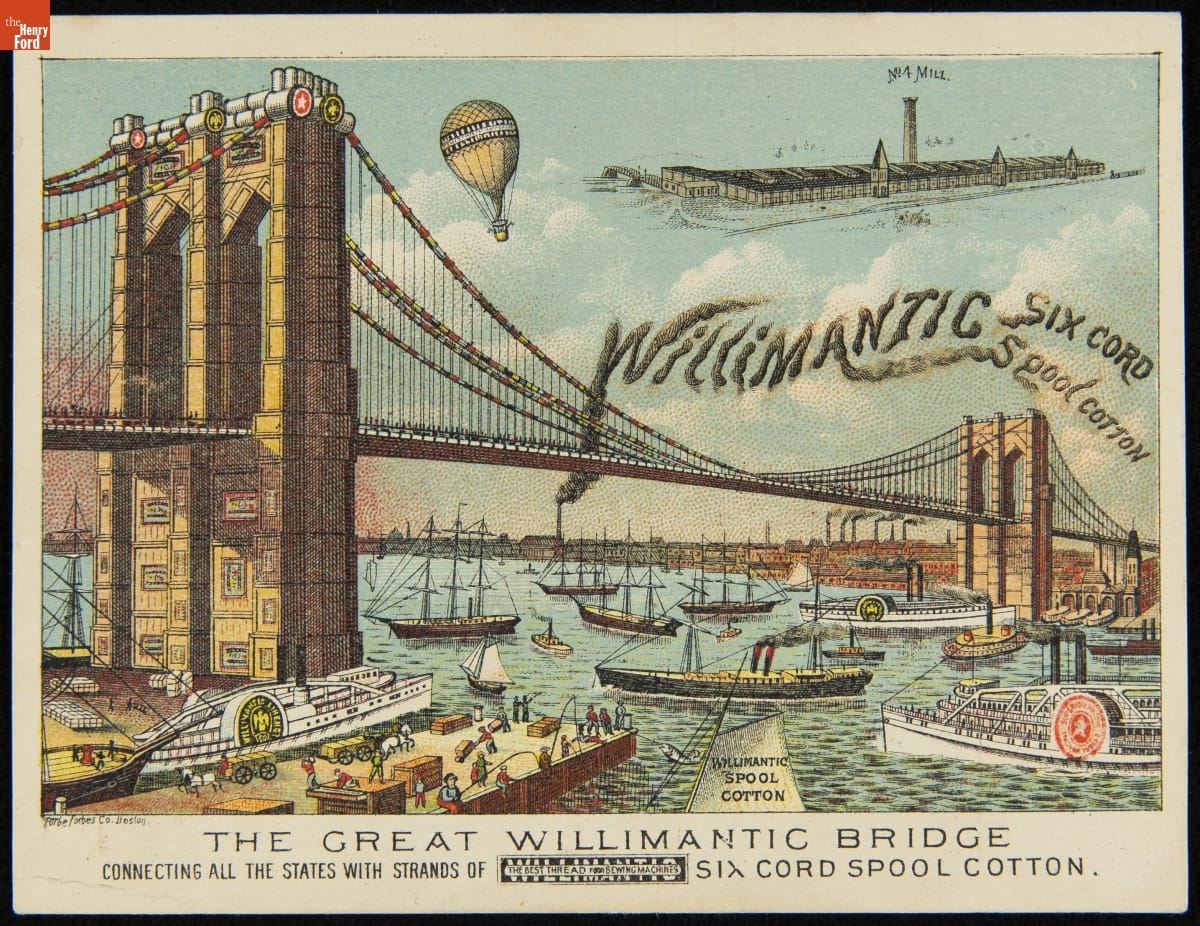
- circa 1881
- Collections - Artifact
Trade Card for Six Cord Spool Cotton, Willimantic Linen Co., circa 1881
In the last third of the nineteenth century, an unprecedented variety of consumer goods and services flooded the American market. Advertisers, armed with new methods of color printing, bombarded potential customers with trade cards. Americans enjoyed and often saved the vibrant little advertisements found in product packages or distributed by local merchants. Many survive as historical records of commercialism in the United States.
- Trade Card for Spool Cotton, Willimantic Linen Co., 1882-1885 - Showman P. T. Barnum purchased Jumbo, an 11-foot, 6-ton African elephant, from the London Zoo in 1882. Barnum shipped the giant pachyderm to America to star in his circus. Jumbo became a national sensation. Manufacturers capitalized on Jumbo's popularity by using the elephant's image in their advertising. This fanciful trade card depicts a reluctant Jumbo pulled to America with strong Willimatic Thread.
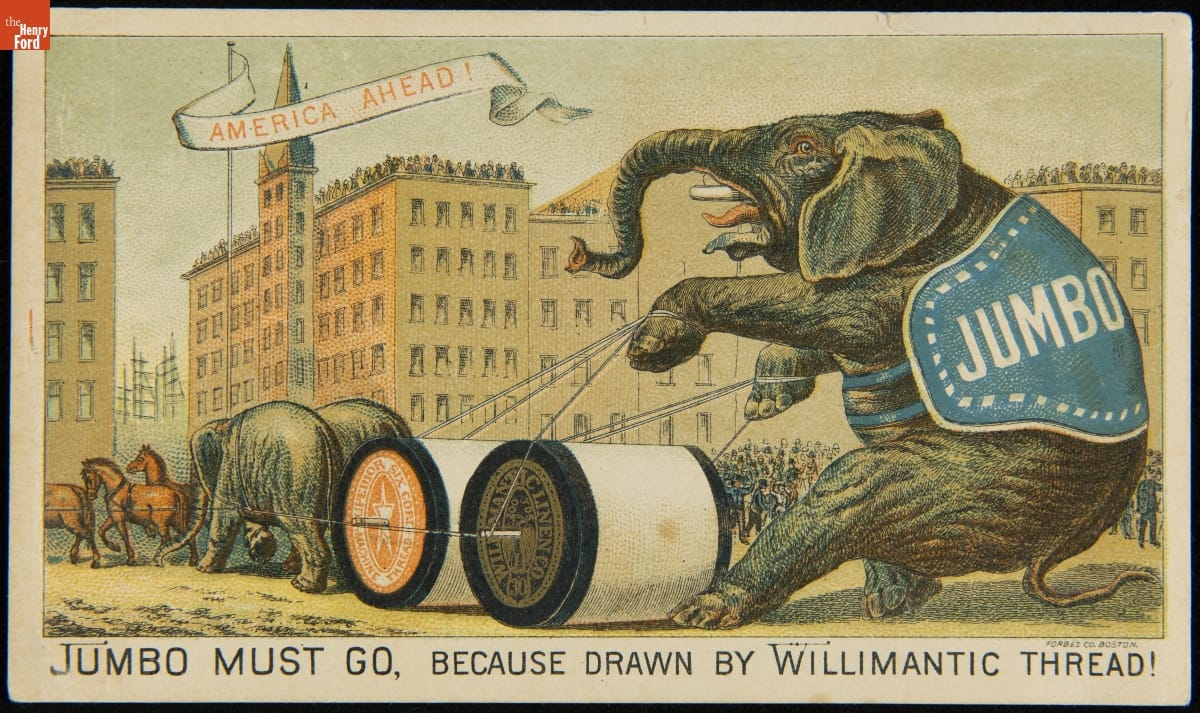
- 1882-1885
- Collections - Artifact
Trade Card for Spool Cotton, Willimantic Linen Co., 1882-1885
Showman P. T. Barnum purchased Jumbo, an 11-foot, 6-ton African elephant, from the London Zoo in 1882. Barnum shipped the giant pachyderm to America to star in his circus. Jumbo became a national sensation. Manufacturers capitalized on Jumbo's popularity by using the elephant's image in their advertising. This fanciful trade card depicts a reluctant Jumbo pulled to America with strong Willimatic Thread.
- Trade Card for Spool Cotton, Willimantic Linen Co., circa 1881 - In the last third of the nineteenth century, an unprecedented variety of consumer goods and services flooded the American market. Advertisers, armed with new methods of color printing, bombarded potential customers with trade cards. Americans enjoyed and often saved the vibrant little advertisements found in product packages or distributed by local merchants. Many survive as historical records of commercialism in the United States.
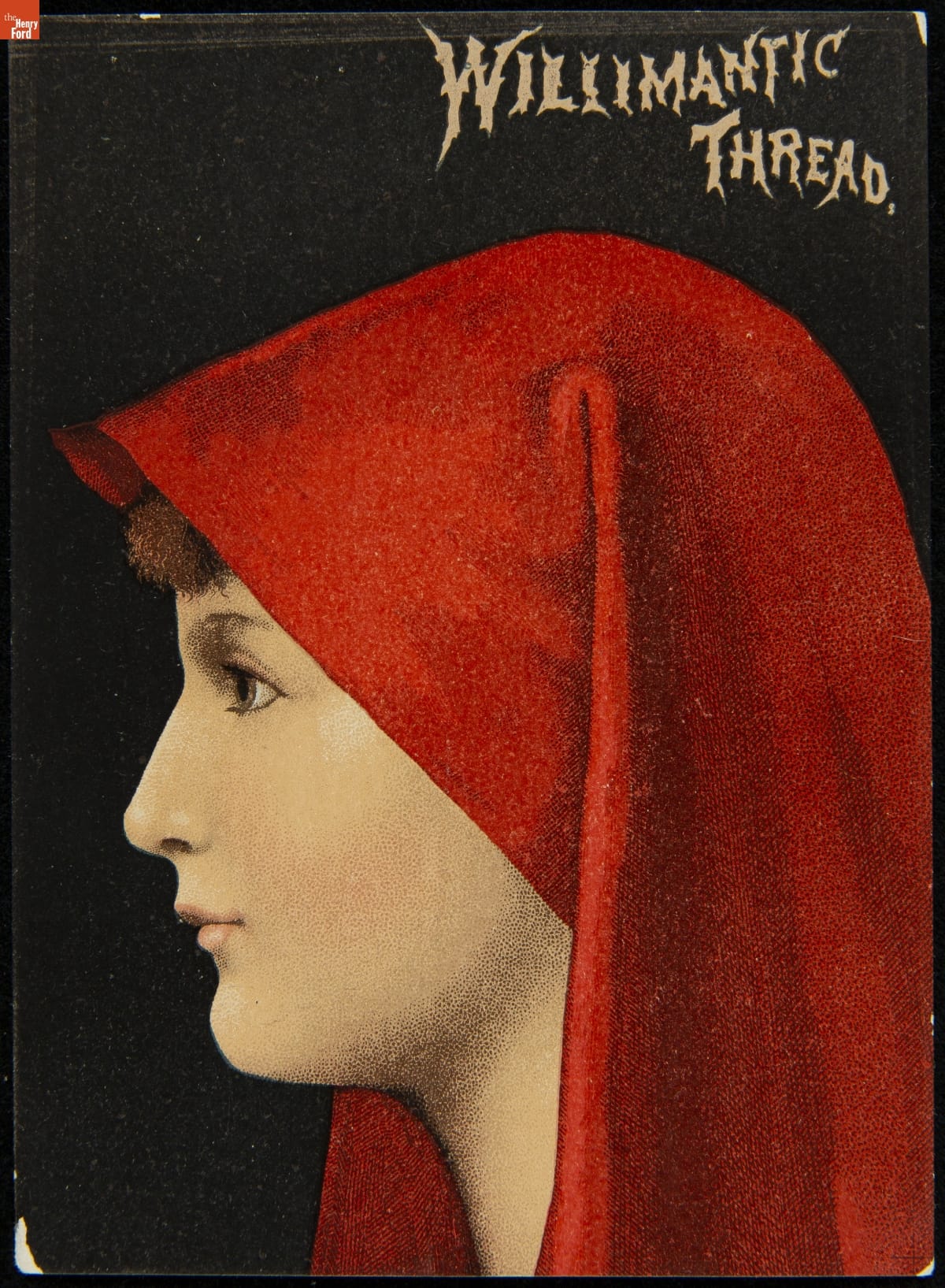
- circa 1881
- Collections - Artifact
Trade Card for Spool Cotton, Willimantic Linen Co., circa 1881
In the last third of the nineteenth century, an unprecedented variety of consumer goods and services flooded the American market. Advertisers, armed with new methods of color printing, bombarded potential customers with trade cards. Americans enjoyed and often saved the vibrant little advertisements found in product packages or distributed by local merchants. Many survive as historical records of commercialism in the United States.
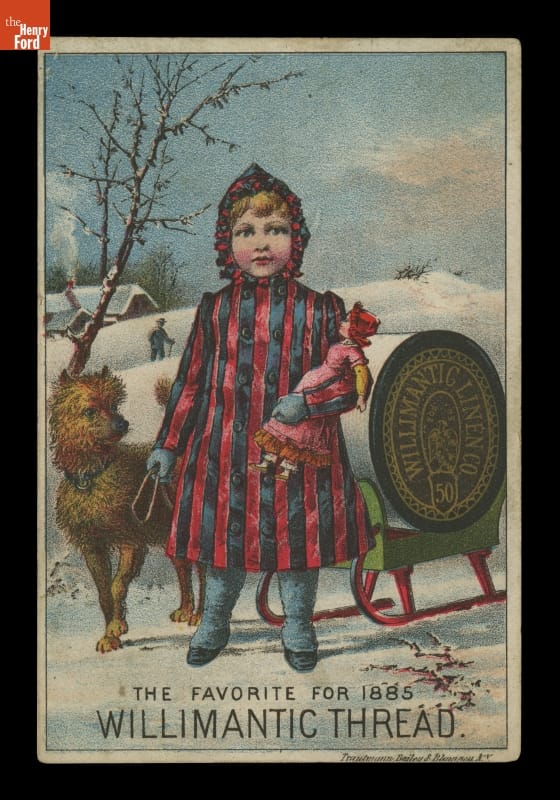
- Trade Card for Thread, Willimantic Linen Co., 1885 - In the last third of the nineteenth century, an unprecedented variety of consumer goods and services flooded the American market. Advertisers, armed with new methods of color printing, bombarded potential customers with trade cards. Americans enjoyed and often saved the vibrant little advertisements found in product packages or distributed by local merchants. Many survive as historical records of commercialism in the United States.
- 1885
- Collections - Artifact
Trade Card for Thread, Willimantic Linen Co., 1885
In the last third of the nineteenth century, an unprecedented variety of consumer goods and services flooded the American market. Advertisers, armed with new methods of color printing, bombarded potential customers with trade cards. Americans enjoyed and often saved the vibrant little advertisements found in product packages or distributed by local merchants. Many survive as historical records of commercialism in the United States.
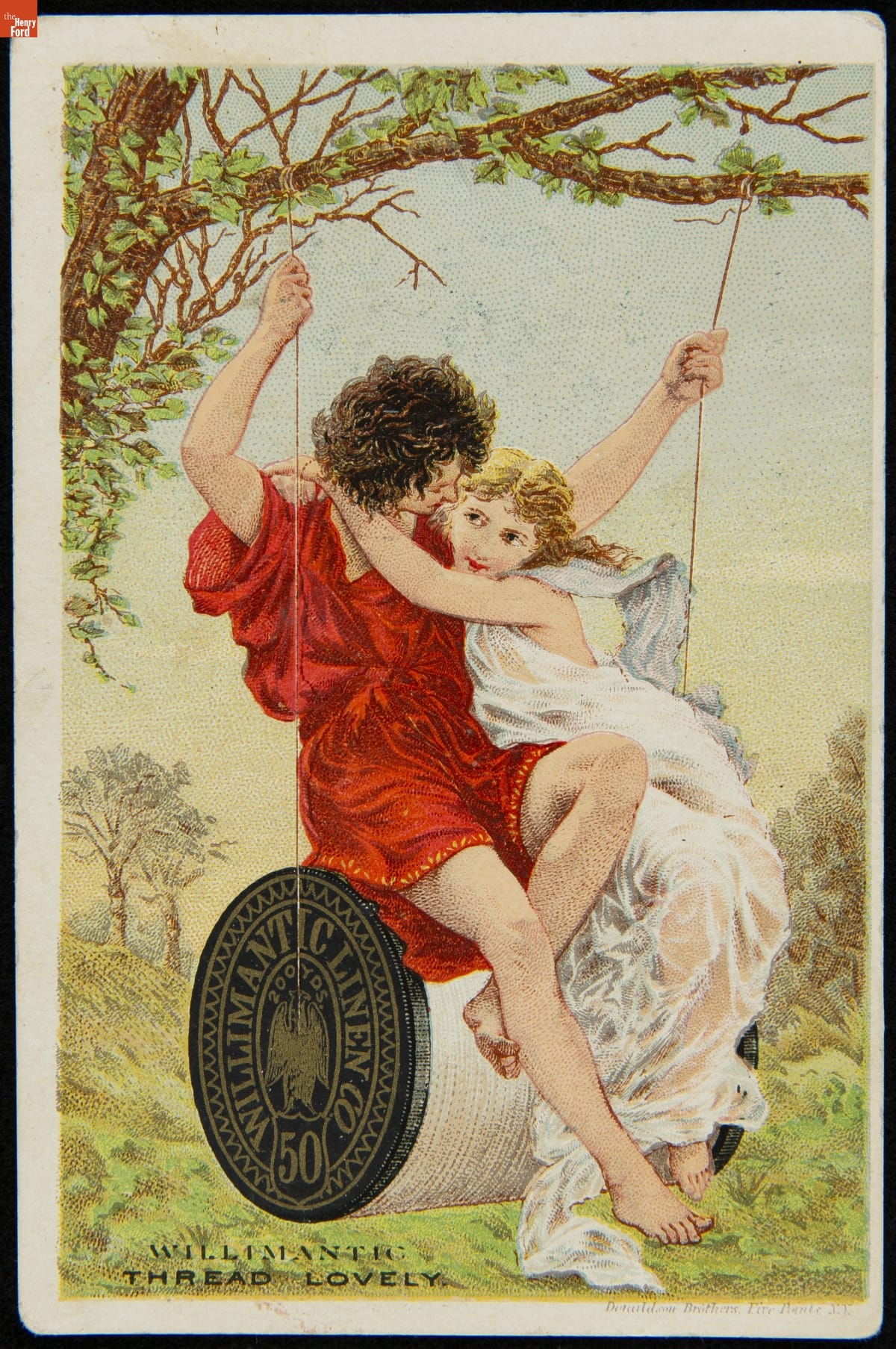
- Trade Card for Six Cord Cotton Thread, Willimantic Linen Co., circa 1881 - In the last third of the nineteenth century, an unprecedented variety of consumer goods and services flooded the American market. Advertisers, armed with new methods of color printing, bombarded potential customers with trade cards. Americans enjoyed and often saved the vibrant little advertisements found in product packages or distributed by local merchants. Many survive as historical records of commercialism in the United States.
- circa 1881
- Collections - Artifact
Trade Card for Six Cord Cotton Thread, Willimantic Linen Co., circa 1881
In the last third of the nineteenth century, an unprecedented variety of consumer goods and services flooded the American market. Advertisers, armed with new methods of color printing, bombarded potential customers with trade cards. Americans enjoyed and often saved the vibrant little advertisements found in product packages or distributed by local merchants. Many survive as historical records of commercialism in the United States.
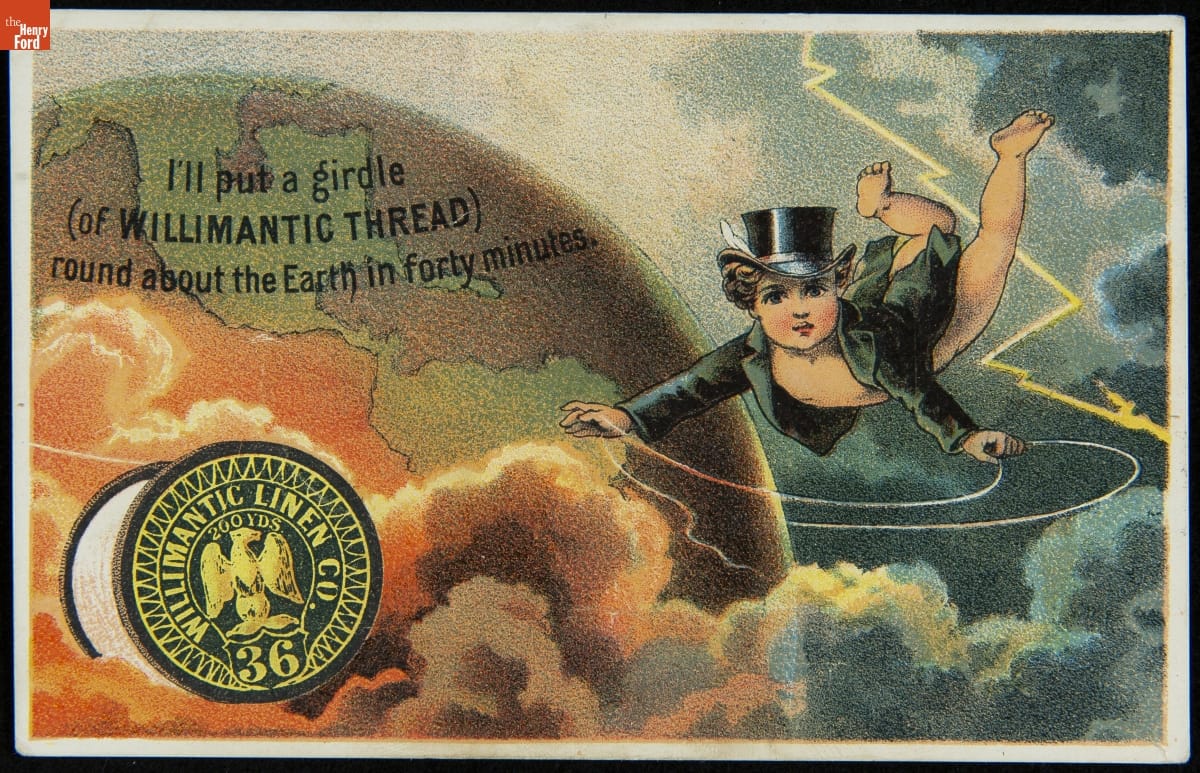
- Trade Card for Six Cord Spool Cotton, Willimantic Linen Co., circa 1881 - In the last third of the nineteenth century, an unprecedented variety of consumer goods and services flooded the American market. Advertisers, armed with new methods of color printing, bombarded potential customers with trade cards. Americans enjoyed and often saved the vibrant little advertisements found in product packages or distributed by local merchants. Many survive as historical records of commercialism in the United States.
- circa 1881
- Collections - Artifact
Trade Card for Six Cord Spool Cotton, Willimantic Linen Co., circa 1881
In the last third of the nineteenth century, an unprecedented variety of consumer goods and services flooded the American market. Advertisers, armed with new methods of color printing, bombarded potential customers with trade cards. Americans enjoyed and often saved the vibrant little advertisements found in product packages or distributed by local merchants. Many survive as historical records of commercialism in the United States.
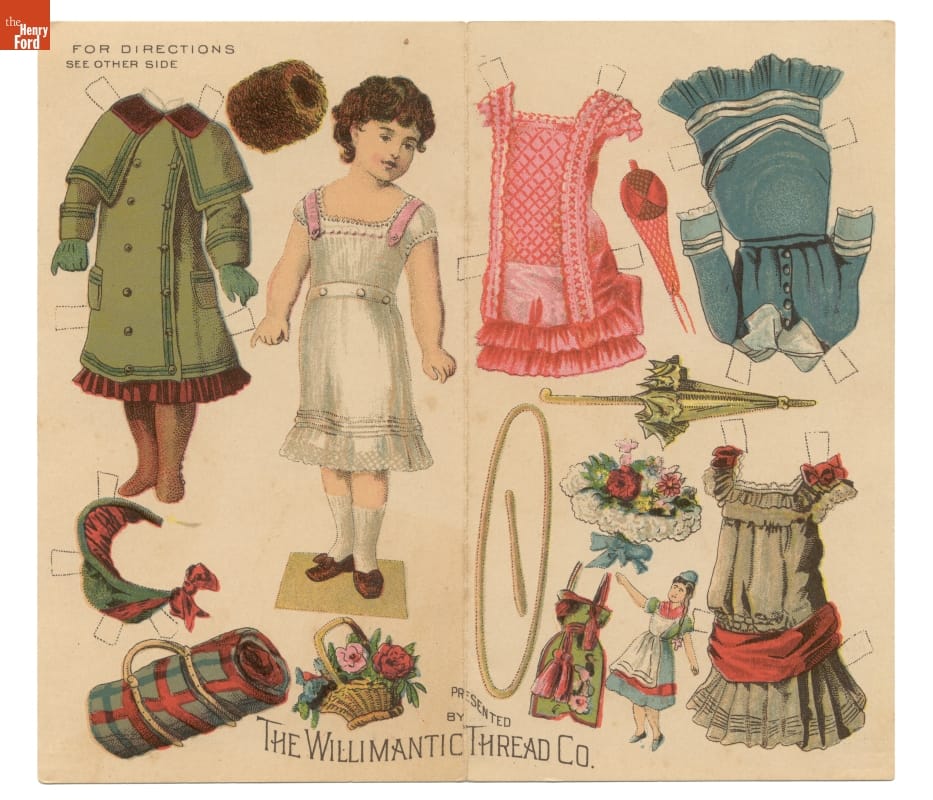
- Paper Doll, circa 1885 - By the mid-1800s, paper dolls were being produced in England, France, and Germany as well as the United States. The figures, along with costumes and accessories, were printed and sold in sheets that could be cut apart and assembled. The paper doll cutout on the back of this trade card also serves as an advertisement for the Willimantic Thread Company.
- circa 1885
- Collections - Artifact
Paper Doll, circa 1885
By the mid-1800s, paper dolls were being produced in England, France, and Germany as well as the United States. The figures, along with costumes and accessories, were printed and sold in sheets that could be cut apart and assembled. The paper doll cutout on the back of this trade card also serves as an advertisement for the Willimantic Thread Company.
- Trade Card for Spool Cotton, Willimantic Linen Co., 1882-1885 - Showman P. T. Barnum purchased Jumbo, an 11-foot, 6-ton African elephant, from the London Zoo in 1882. Barnum shipped the giant pachyderm to America to star in his circus. Jumbo became a national sensation. Manufacturers capitalized on Jumbo's popularity by using the elephant's image in their advertising. This fanciful trade card depicts a reluctant Jumbo pulled to America with strong Willimatic Thread.
- 1882-1885
- Collections - Artifact
Trade Card for Spool Cotton, Willimantic Linen Co., 1882-1885
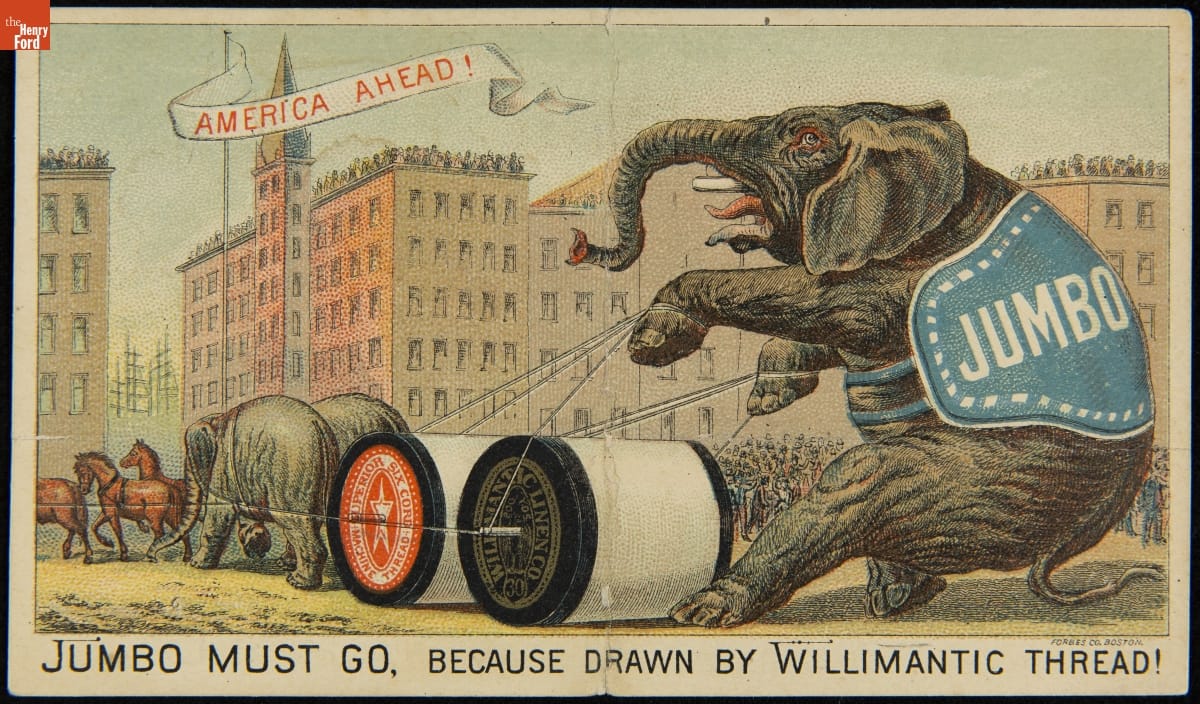
Showman P. T. Barnum purchased Jumbo, an 11-foot, 6-ton African elephant, from the London Zoo in 1882. Barnum shipped the giant pachyderm to America to star in his circus. Jumbo became a national sensation. Manufacturers capitalized on Jumbo's popularity by using the elephant's image in their advertising. This fanciful trade card depicts a reluctant Jumbo pulled to America with strong Willimatic Thread.
- Trade Card for Spool Cotton, Willimantic Linen Co., circa 1881 - In the last third of the nineteenth century, an unprecedented variety of consumer goods and services flooded the American market. Advertisers, armed with new methods of color printing, bombarded potential customers with trade cards. Americans enjoyed and often saved the vibrant little advertisements found in product packages or distributed by local merchants. Many survive as historical records of commercialism in the United States.
- circa 1881
- Collections - Artifact
Trade Card for Spool Cotton, Willimantic Linen Co., circa 1881
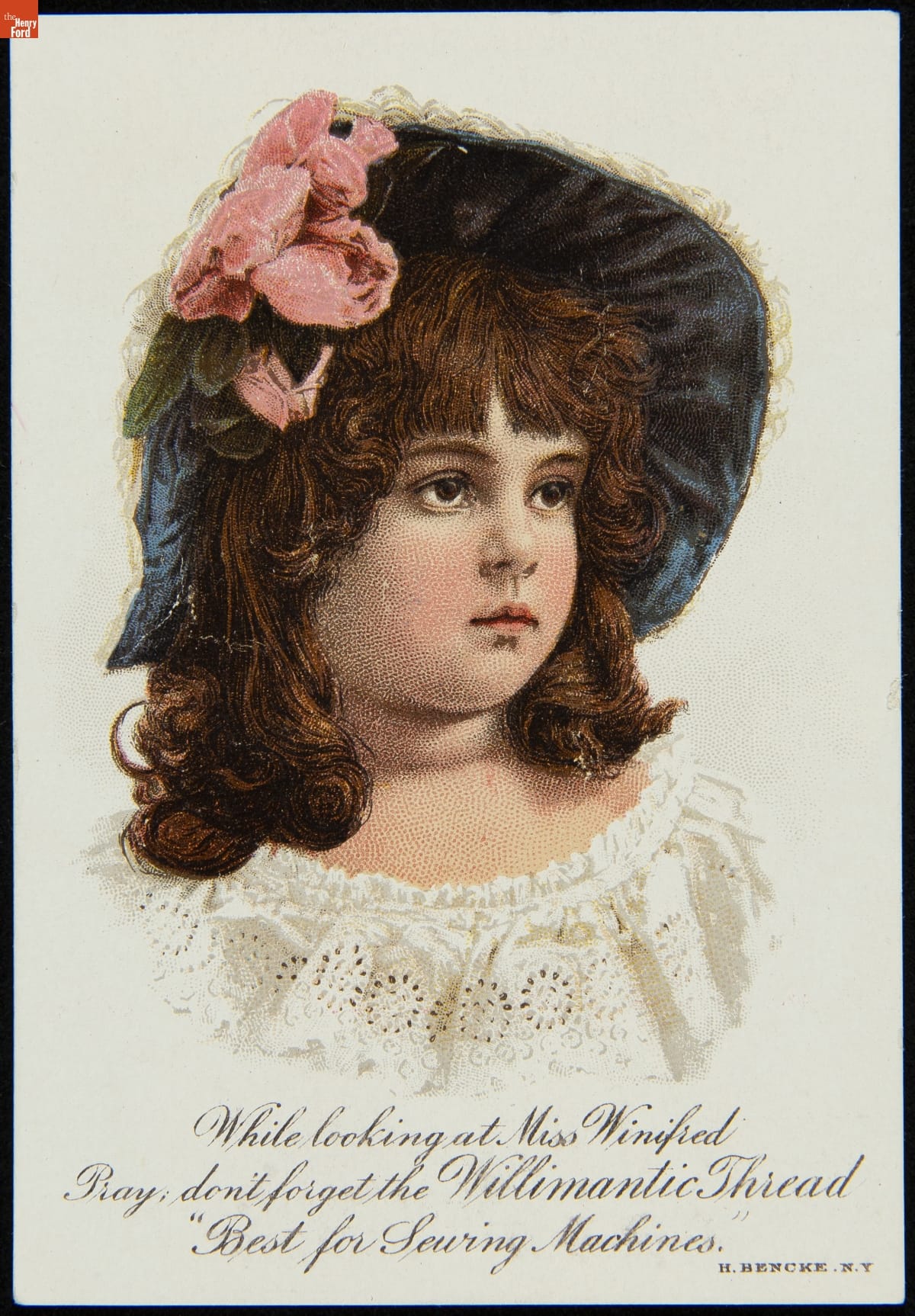
In the last third of the nineteenth century, an unprecedented variety of consumer goods and services flooded the American market. Advertisers, armed with new methods of color printing, bombarded potential customers with trade cards. Americans enjoyed and often saved the vibrant little advertisements found in product packages or distributed by local merchants. Many survive as historical records of commercialism in the United States.