
Search
- Plaster Bust of Charles Richard Drew -
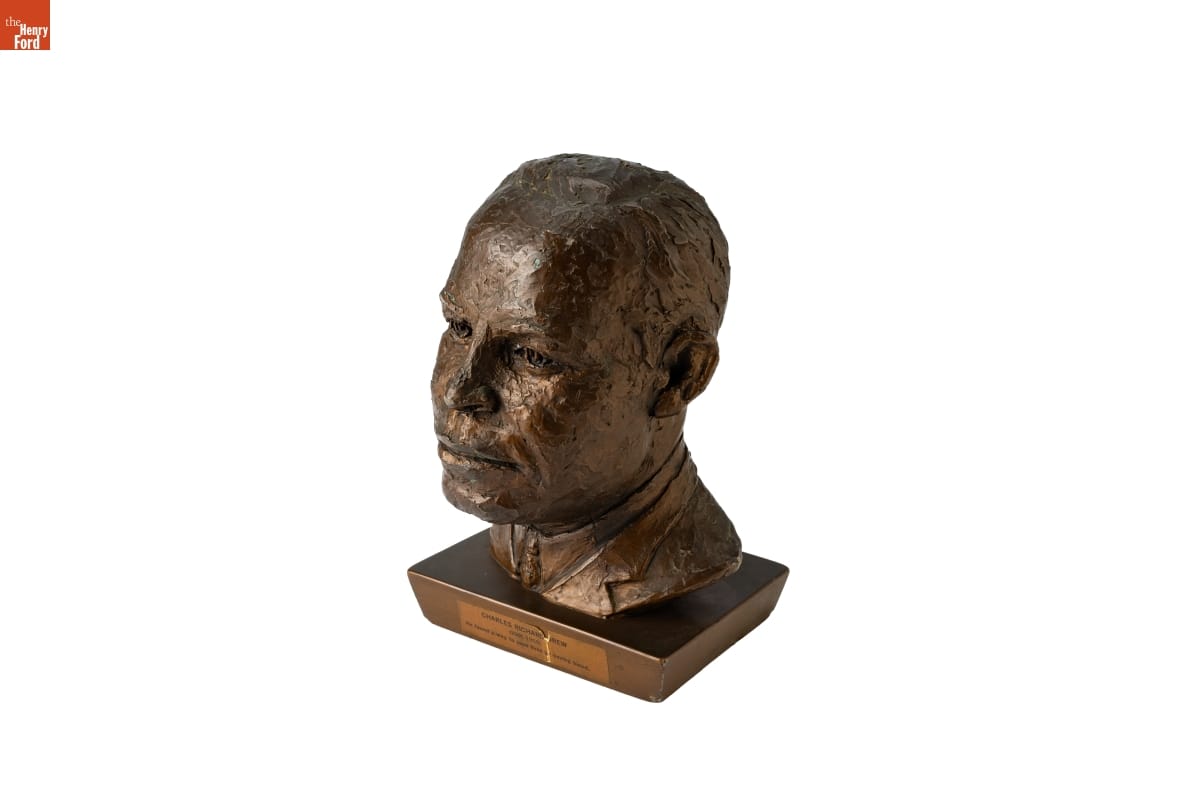
- 1967
- Collections - Artifact
Plaster Bust of Charles Richard Drew
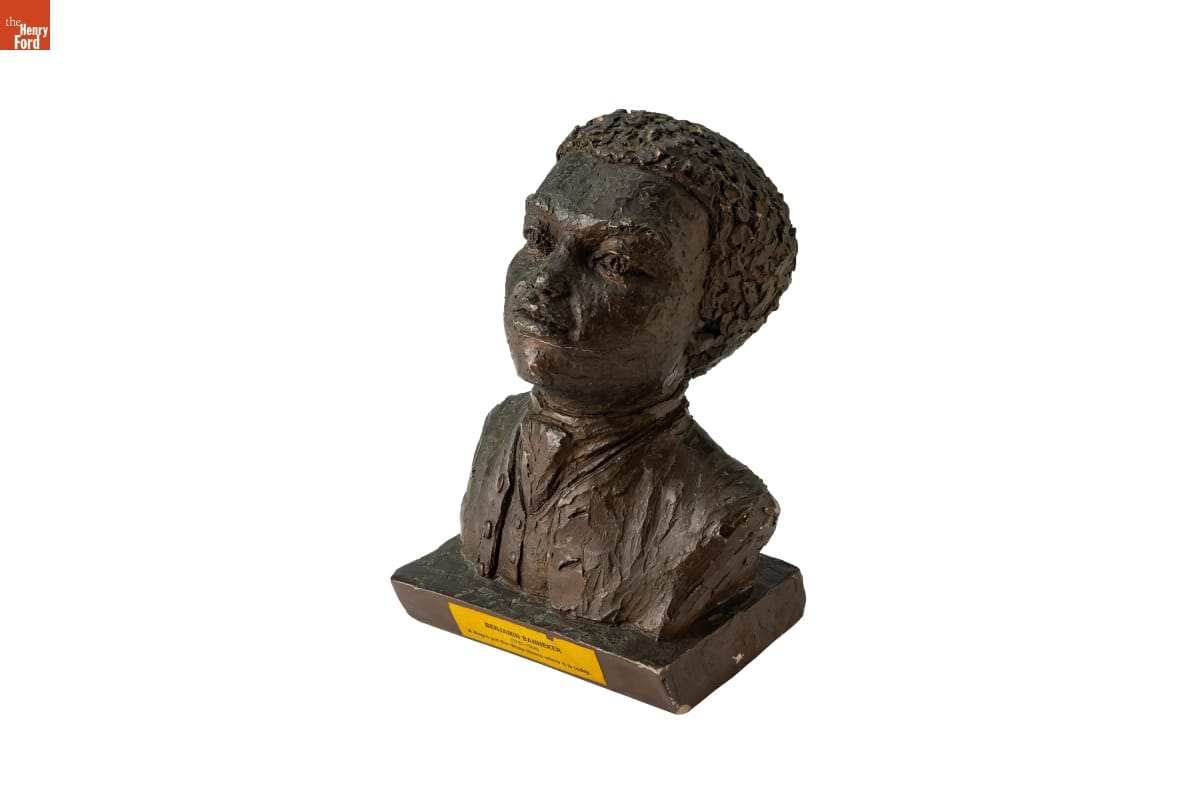
- Plaster Bust of Benjamin Banneker - Benjamin Banneker (1731-1806) was born to a free Black mother and a formerly enslaved father. Despite having little to no formal education, he wrote several almanacs based on his own astronomical calculations, constructed a striking clock based on his own design, and corresponded with Thomas Jefferson about abolition. Banneker also worked as a surveyor, assisting in setting the boundaries for the District of Columbia.
- Collections - Artifact
Plaster Bust of Benjamin Banneker
Benjamin Banneker (1731-1806) was born to a free Black mother and a formerly enslaved father. Despite having little to no formal education, he wrote several almanacs based on his own astronomical calculations, constructed a striking clock based on his own design, and corresponded with Thomas Jefferson about abolition. Banneker also worked as a surveyor, assisting in setting the boundaries for the District of Columbia.
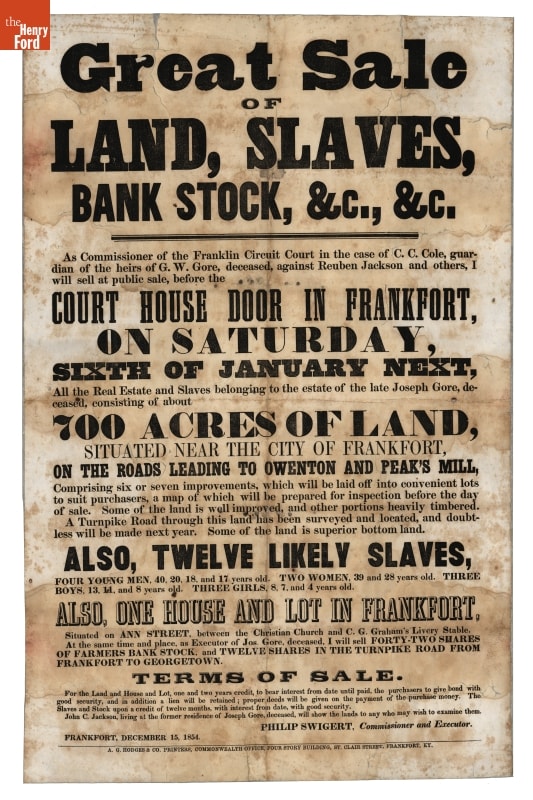
- "Great Sale of Land, Slaves, Bank Stock, &c., &c.," 1855 - The wealth and power of Southern plantation owners depended upon a large labor force of enslaved people. They justified their actions by considering enslaved people to be mere pieces of property. Slaves are included in this public sale of the personal possessions of a G. W. Gore of Frankfort, Kentucky.
- January 06, 1855
- Collections - Artifact
"Great Sale of Land, Slaves, Bank Stock, &c., &c.," 1855
The wealth and power of Southern plantation owners depended upon a large labor force of enslaved people. They justified their actions by considering enslaved people to be mere pieces of property. Slaves are included in this public sale of the personal possessions of a G. W. Gore of Frankfort, Kentucky.
- Plaster Bust of Norbert Rillieux -

- Collections - Artifact
Plaster Bust of Norbert Rillieux
- Plaster Bust of Dr. Daniel Hale Williams -
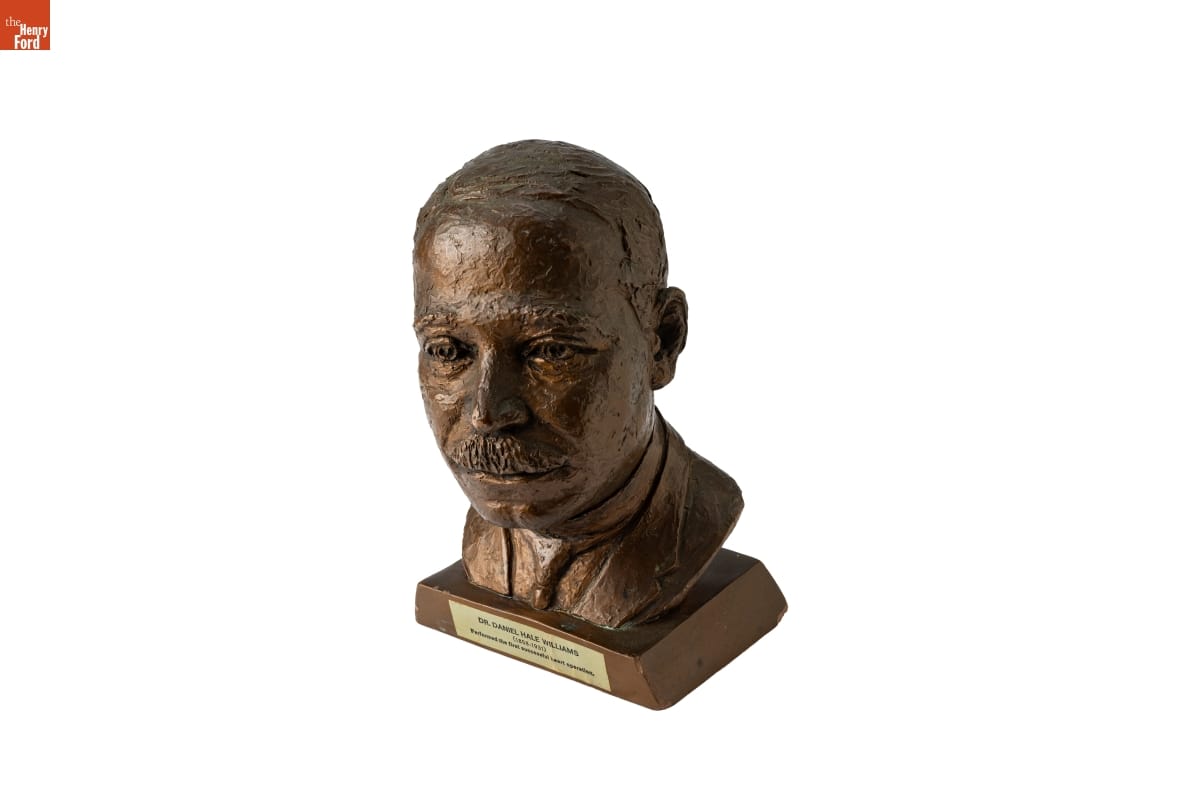
- 1966
- Collections - Artifact
Plaster Bust of Dr. Daniel Hale Williams