
Search
- Set of Keys for a Studio Apartment in the Haight-Ashbury District of San Francisco, 1969 -

- 1969
- Collections - Artifact
Set of Keys for a Studio Apartment in the Haight-Ashbury District of San Francisco, 1969
- Brown Steam Engine Model, 1865-1875 -

- 1865-1875
- Collections - Artifact
Brown Steam Engine Model, 1865-1875
- Cradle Scythe, circa 1830 - Nineteenth-century farmers needed to harvest grain quickly before time or weather could destroy it. Harvesters would swing the cradle scythe's blade through ripened fields. The cut grain would fall onto the wooden fingers -- the cradle -- where it would be dumped in neat rows ready for gathering. Skilled cradlers could harvest more grain than those using traditional sickles.

- circa 1830
- Collections - Artifact
Cradle Scythe, circa 1830
Nineteenth-century farmers needed to harvest grain quickly before time or weather could destroy it. Harvesters would swing the cradle scythe's blade through ripened fields. The cut grain would fall onto the wooden fingers -- the cradle -- where it would be dumped in neat rows ready for gathering. Skilled cradlers could harvest more grain than those using traditional sickles.
- "Fitchburg Sentinel," February 20, 1965 -
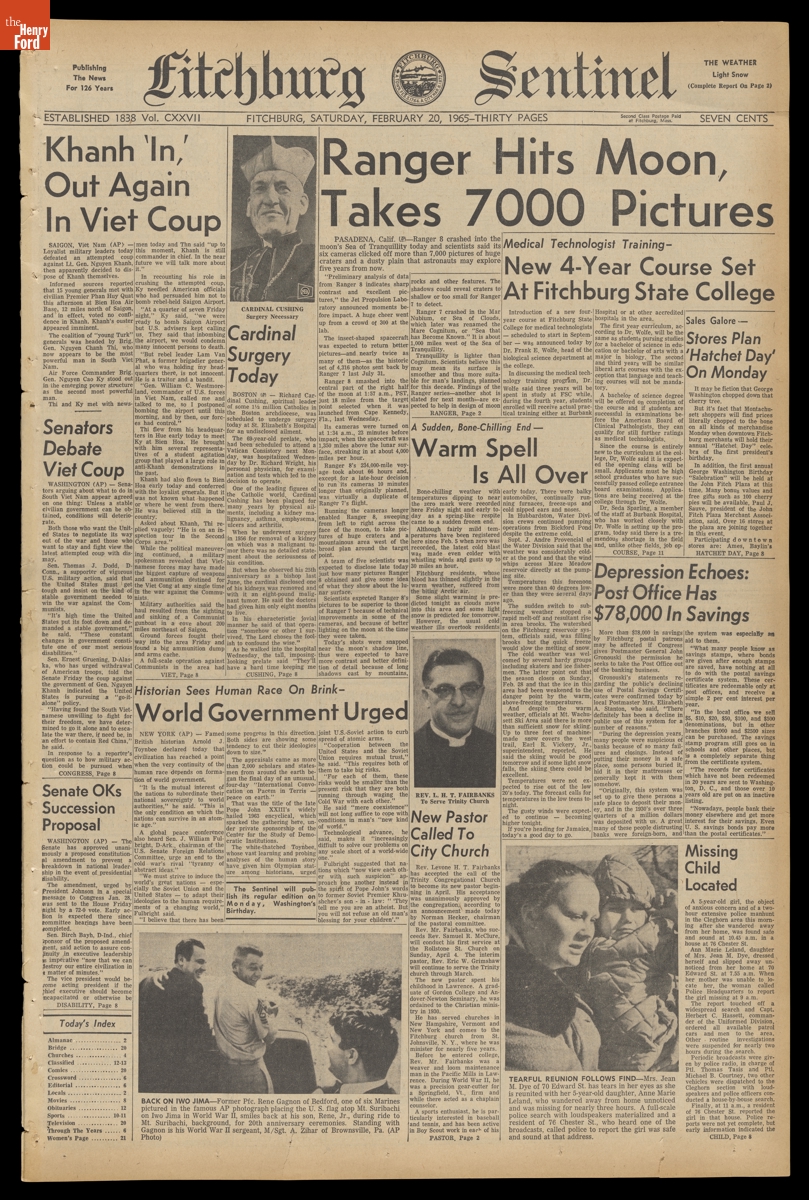
- February 20, 1965
- Collections - Artifact
"Fitchburg Sentinel," February 20, 1965
- Oil Painting, "Portrait of Torrey Sisters" by John S. Blunt, circa 1835 -

- circa 1835
- Collections - Artifact
Oil Painting, "Portrait of Torrey Sisters" by John S. Blunt, circa 1835
- C. H. Brown, Designer of Brown Steam Engine, with Son and Grandson, 1905 - C.H. Brown and Company, founded in the late 1860s, built steam engines used by mill owners and machine manufacturers throughout America. Thomas Edison even purchased a Brown steam engine to run electric dynamos at Menlo Park. Pictured in this 1905 photograph is founder Charles. H. Brown, Sr., his son Charles, Jr., and his grandson Charles III standing in the center.

- 1905
- Collections - Artifact
C. H. Brown, Designer of Brown Steam Engine, with Son and Grandson, 1905
C.H. Brown and Company, founded in the late 1860s, built steam engines used by mill owners and machine manufacturers throughout America. Thomas Edison even purchased a Brown steam engine to run electric dynamos at Menlo Park. Pictured in this 1905 photograph is founder Charles. H. Brown, Sr., his son Charles, Jr., and his grandson Charles III standing in the center.
- Lathe, Used by the Wright Brothers, circa 1895 - The Wright brothers' bicycle shop contained several large power tools primarily used for making and repairing bikes. Some were also used to build their early gliders and airplanes. The shop building did not have electricity, so the Putnam lathe, Crescent band saw and Barnes drill press were powered by overhead belts and shafts connected to a single-cylinder gas engine.
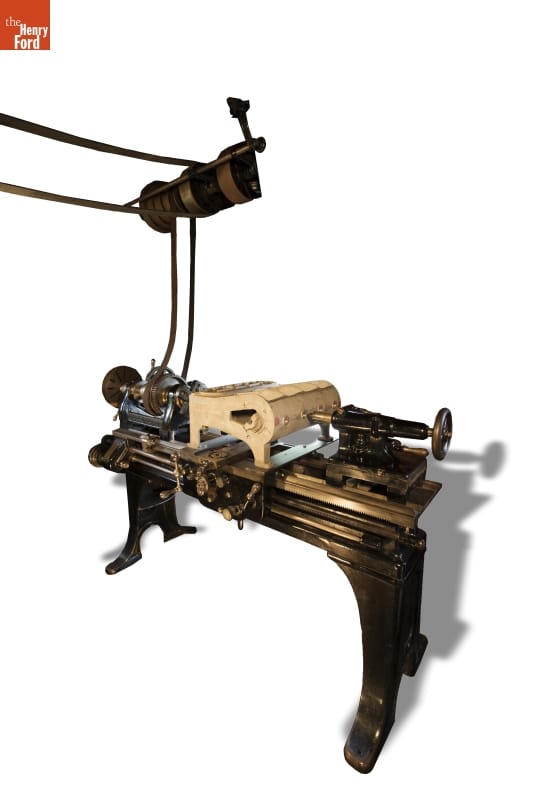
- circa 1895
- Collections - Artifact
Lathe, Used by the Wright Brothers, circa 1895
The Wright brothers' bicycle shop contained several large power tools primarily used for making and repairing bikes. Some were also used to build their early gliders and airplanes. The shop building did not have electricity, so the Putnam lathe, Crescent band saw and Barnes drill press were powered by overhead belts and shafts connected to a single-cylinder gas engine.
- Bicycle Drivetrain, 1890-1910 - The bicycle industry of the late 19th century became a model and resource for automobile builders everywhere. Inventors used bicycle technology -- such as chain drives, wire-spoked wheels, and pneumatic tires -- in many early autos. These drivetrain components came from an Iver Johnson bicycle made between 1890 and 1910.
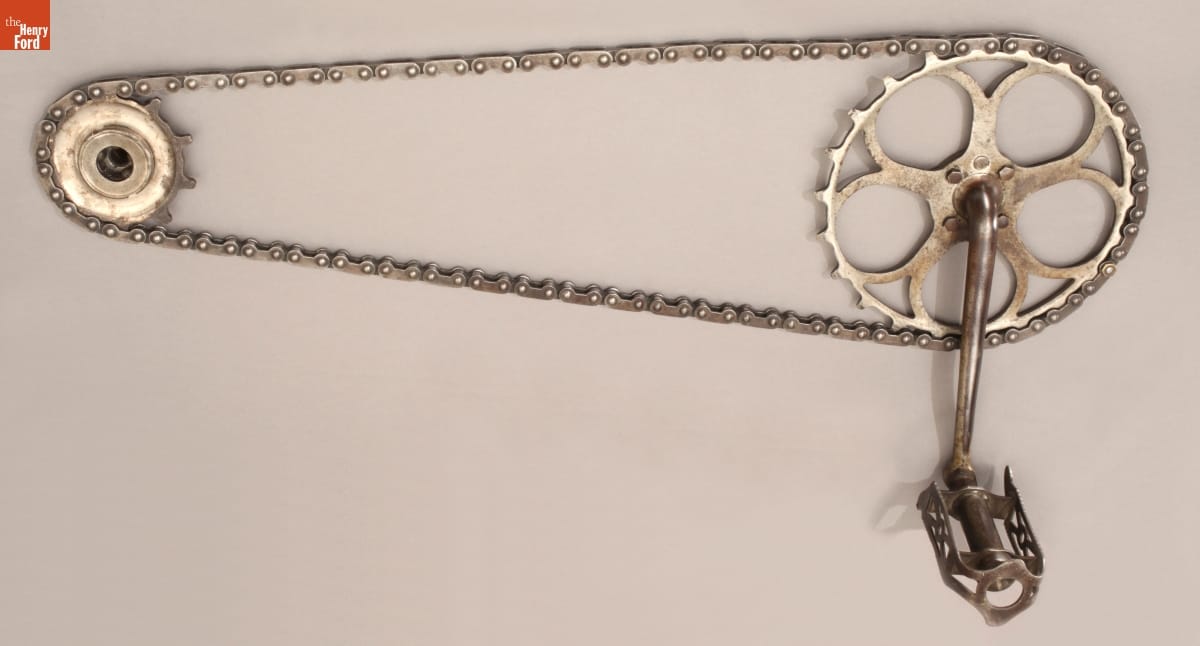
- 1890-1910
- Collections - Artifact
Bicycle Drivetrain, 1890-1910
The bicycle industry of the late 19th century became a model and resource for automobile builders everywhere. Inventors used bicycle technology -- such as chain drives, wire-spoked wheels, and pneumatic tires -- in many early autos. These drivetrain components came from an Iver Johnson bicycle made between 1890 and 1910.
- Trade Card for Barry's Tricopherous Hair Tonic, 1870-1900 - In the last third of the nineteenth century, an unprecedented variety of consumer goods and services flooded the American market. Advertisers, armed with new methods of color printing, bombarded potential customers with trade cards. Americans enjoyed and often saved the vibrant little advertisements found in product packages or distributed by local merchants. Many survive as historical records of commercialism in the United States.
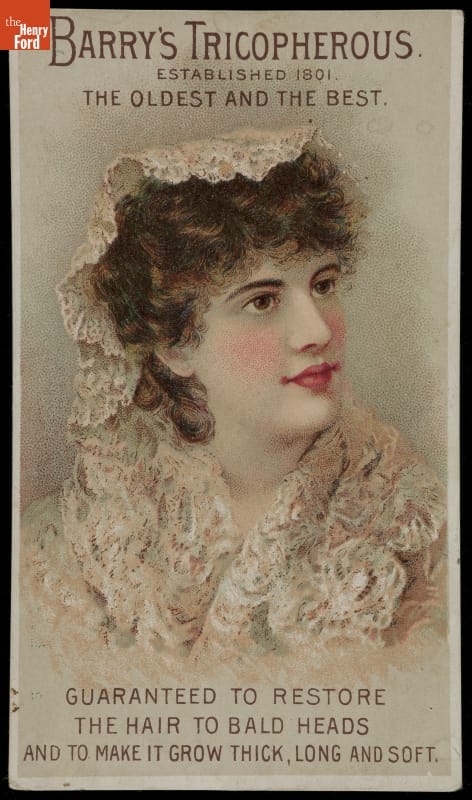
- 1870-1900
- Collections - Artifact
Trade Card for Barry's Tricopherous Hair Tonic, 1870-1900
In the last third of the nineteenth century, an unprecedented variety of consumer goods and services flooded the American market. Advertisers, armed with new methods of color printing, bombarded potential customers with trade cards. Americans enjoyed and often saved the vibrant little advertisements found in product packages or distributed by local merchants. Many survive as historical records of commercialism in the United States.
- Metal Planer, circa 1860 -

- circa 1860
- Collections - Artifact
Metal Planer, circa 1860