
Search
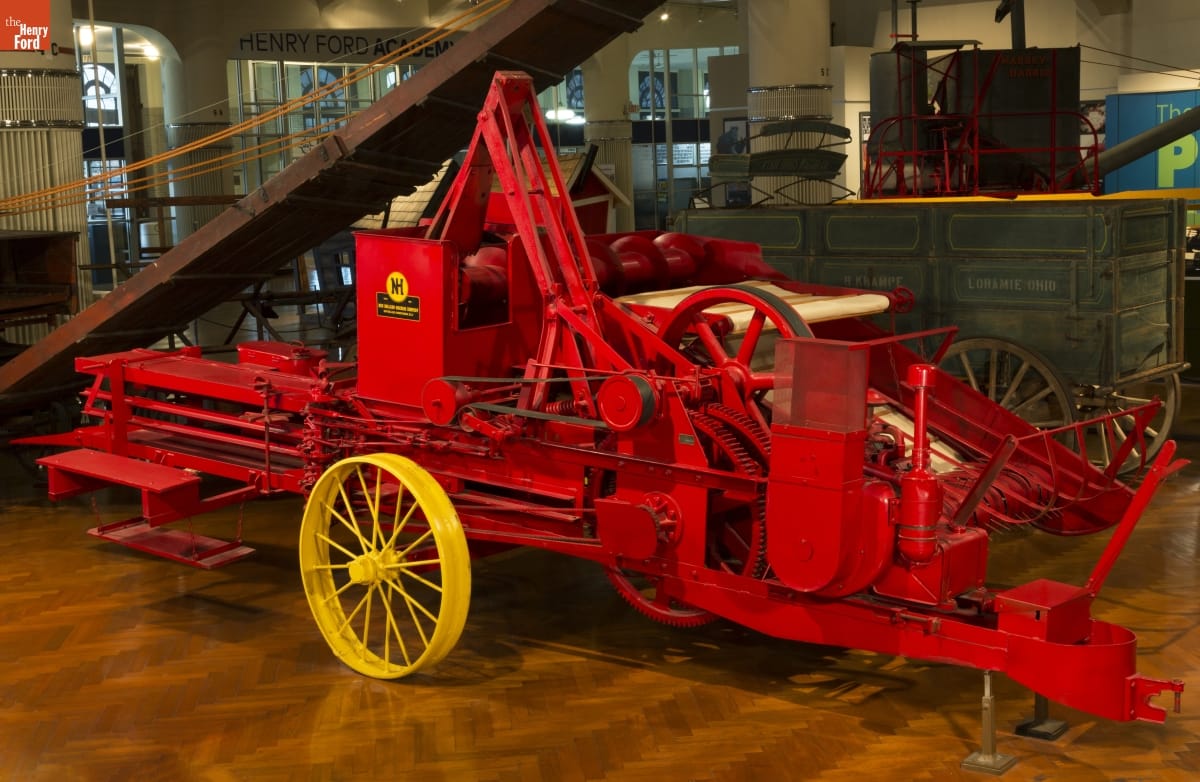
- Automatic Pick-Up Baler, circa 1943 - This tractor-drawn baler changed the way farmers made hay. Before pick-up balers, farmers hauled hay to the stationary baler. This baler went to the hayfield where it picked up cured grass, pressed it into rectangular bales, and automatically tied the compressed grasses into a hay bale. Farmers could pick up and move these bales, and they had a higher market value as fresh hay.
- circa 1943
- Collections - Artifact
Automatic Pick-Up Baler, circa 1943
This tractor-drawn baler changed the way farmers made hay. Before pick-up balers, farmers hauled hay to the stationary baler. This baler went to the hayfield where it picked up cured grass, pressed it into rectangular bales, and automatically tied the compressed grasses into a hay bale. Farmers could pick up and move these bales, and they had a higher market value as fresh hay.
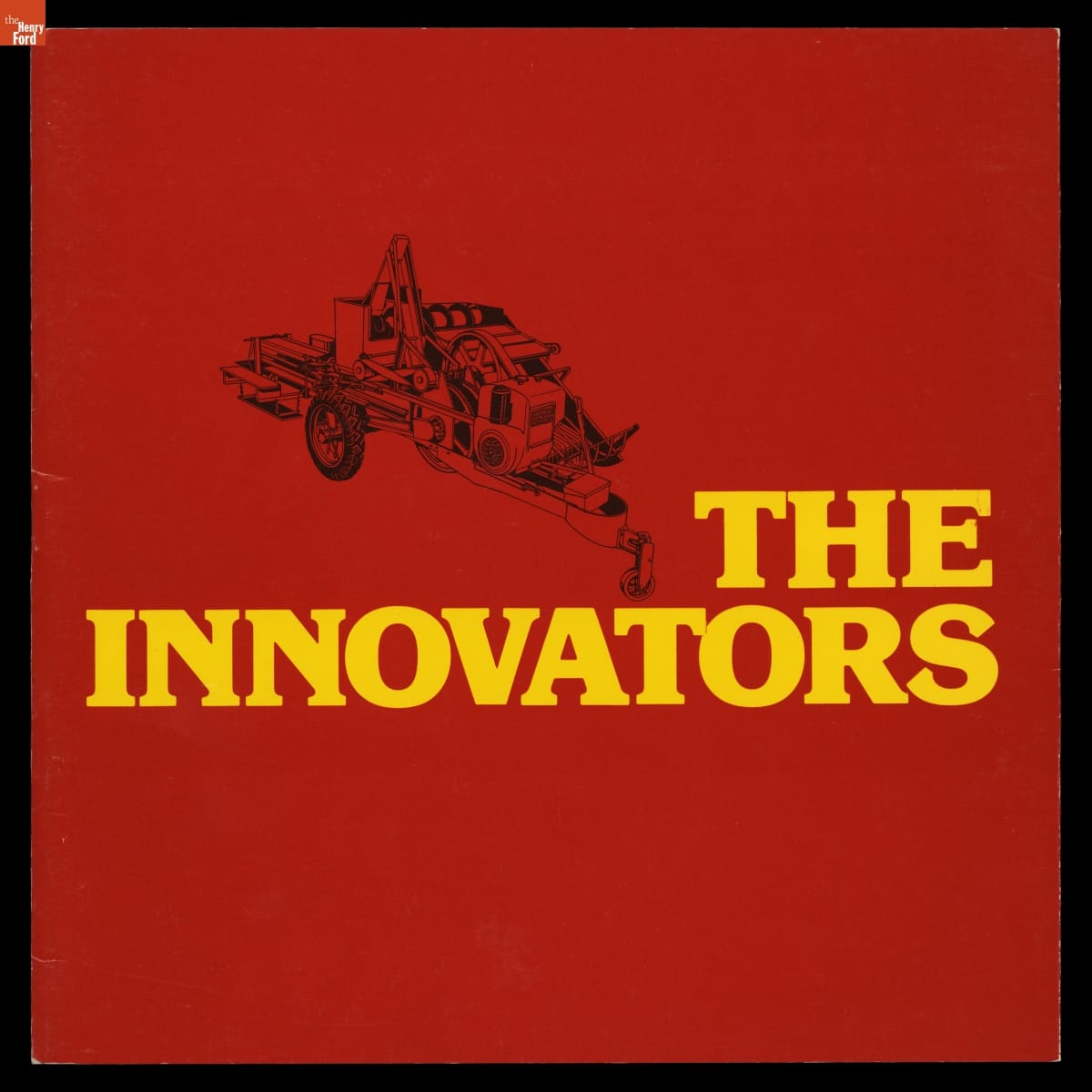
- Sperry-New Holland Catalog, "The Innovators," 1977 - For centuries, manufacturers have worked to perfect machinery that combines the three major steps of harvesting grain: reaping, or cutting the crop; threshing to loosen the grain from the chaff; and disposing of the straw while retaining the grain. Since self-propelled combines were introduced in the 1930s, competitors have produced ever-improving models. This catalog advertised a range of combines from Sperry Rand Corporation's New Holland Division.
- 1977
- Collections - Artifact
Sperry-New Holland Catalog, "The Innovators," 1977
For centuries, manufacturers have worked to perfect machinery that combines the three major steps of harvesting grain: reaping, or cutting the crop; threshing to loosen the grain from the chaff; and disposing of the straw while retaining the grain. Since self-propelled combines were introduced in the 1930s, competitors have produced ever-improving models. This catalog advertised a range of combines from Sperry Rand Corporation's New Holland Division.
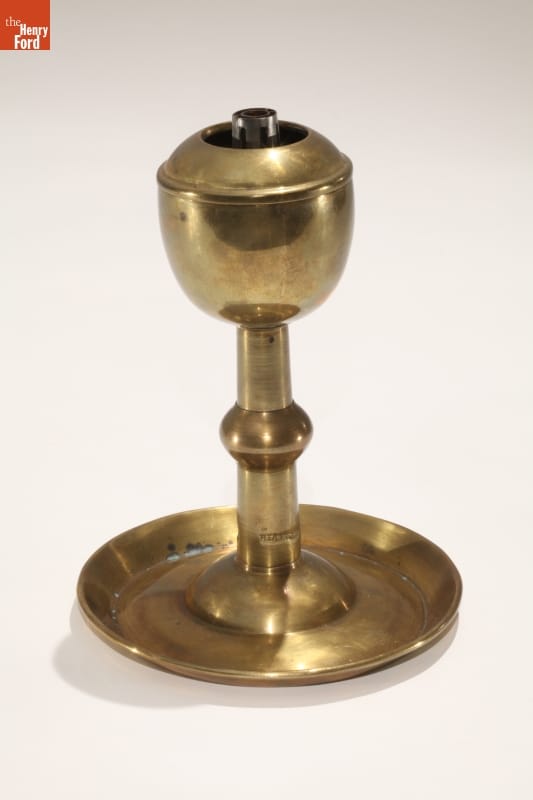
- Patent Model of Lard Lamp, 1856 - From 1790 to 1880, the U.S. Patent Office required applicants to submit a miniature model along with diagrams and written descriptions detailing the operation of their invention. Patent models could be no larger than 12" by 12" by 12". Though they were usually not operational, these models helped explain an inventor's idea and protect it from competitors.
- May 06, 1856
- Collections - Artifact
Patent Model of Lard Lamp, 1856
From 1790 to 1880, the U.S. Patent Office required applicants to submit a miniature model along with diagrams and written descriptions detailing the operation of their invention. Patent models could be no larger than 12" by 12" by 12". Though they were usually not operational, these models helped explain an inventor's idea and protect it from competitors.
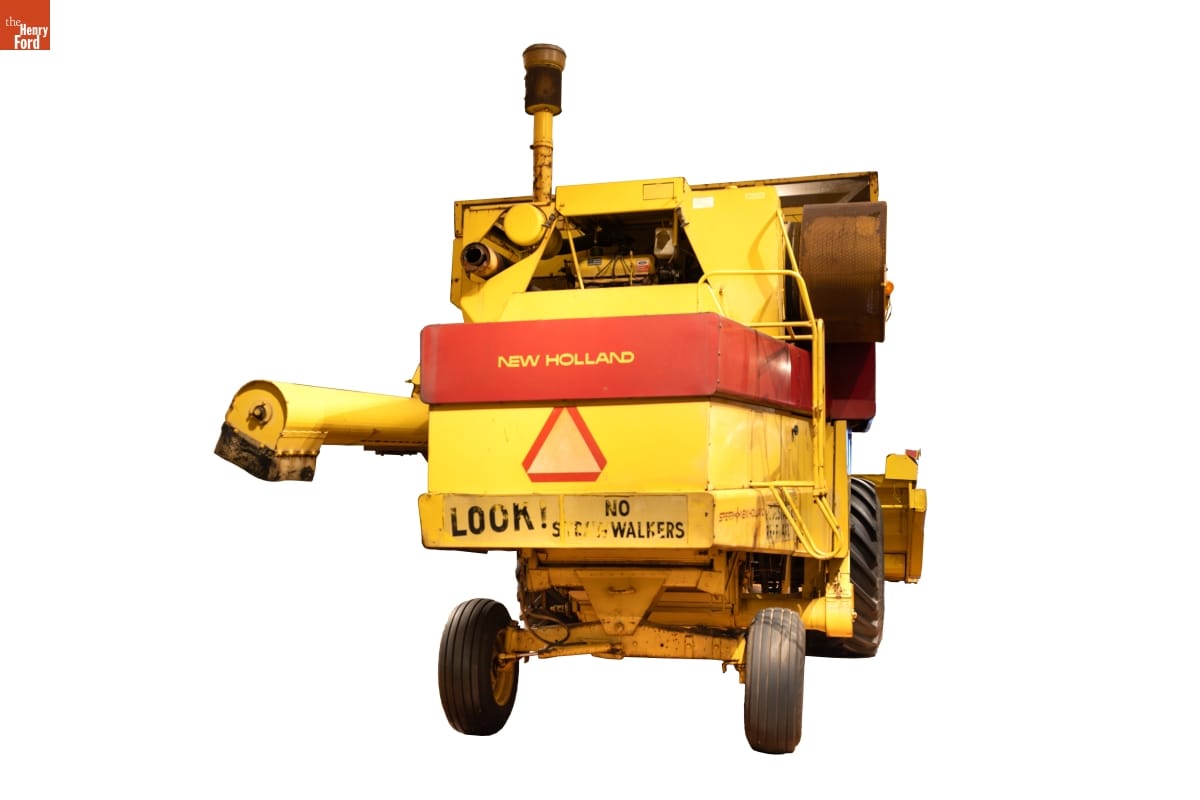
- New Holland TR70 Axial Flow Combine, 1975 - Engineers designed the TR70 as a compact machine suitable for hilly terrain. The twin rotors (TR) shelled corn or threshed grain and moved it through the combine's body. Setting the rotors at an angle (axial) shortened the machine. Farmers changed the front-end attachment to harvest corn, beans, or wheat. Stencils on this prototype, exhibited at trade shows, explained additional features.
- 1975
- Collections - Artifact
New Holland TR70 Axial Flow Combine, 1975
Engineers designed the TR70 as a compact machine suitable for hilly terrain. The twin rotors (TR) shelled corn or threshed grain and moved it through the combine's body. Setting the rotors at an angle (axial) shortened the machine. Farmers changed the front-end attachment to harvest corn, beans, or wheat. Stencils on this prototype, exhibited at trade shows, explained additional features.
- New Holland Model 600 Forage Harvester, circa 1952 -
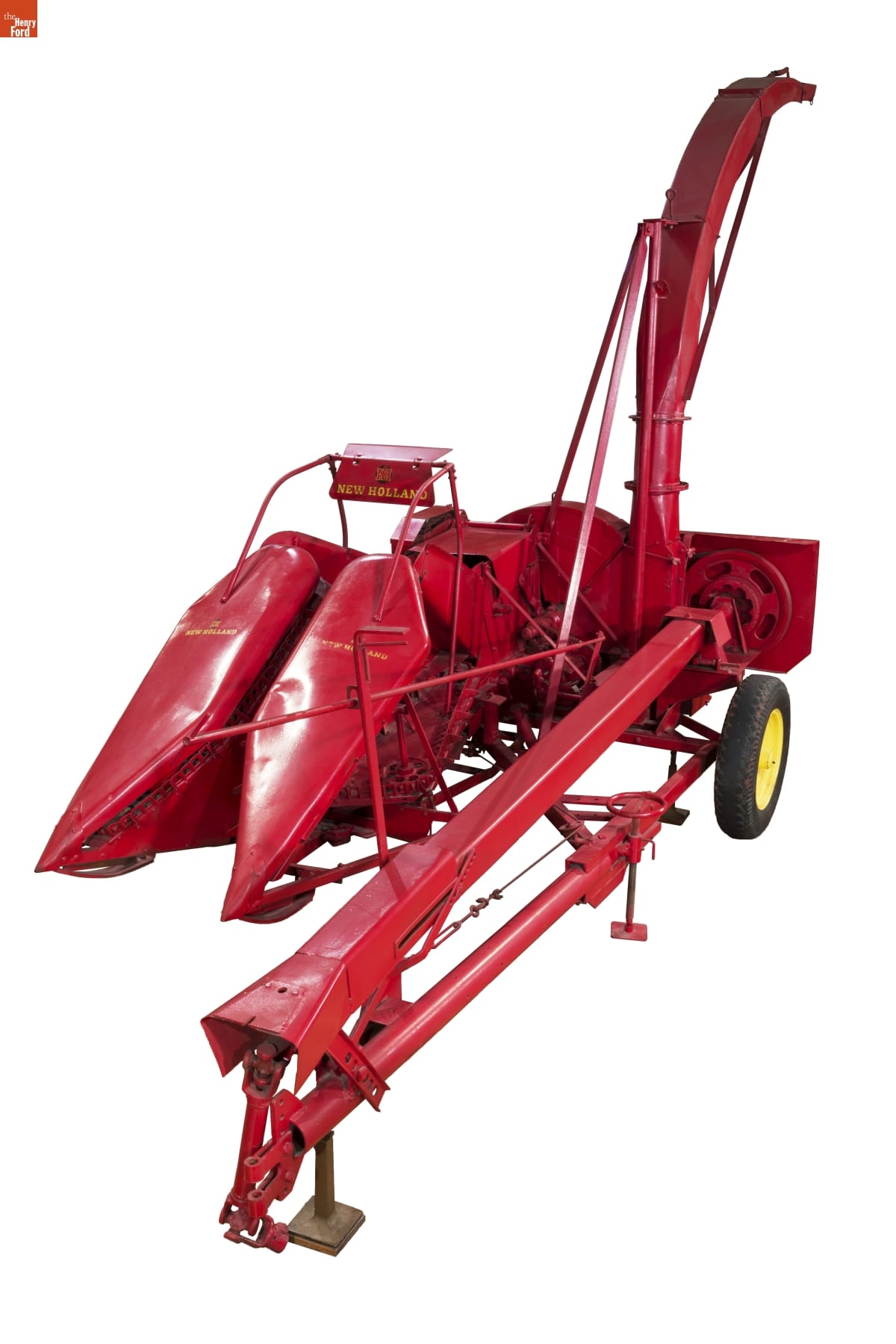
- circa 1952
- Collections - Artifact
New Holland Model 600 Forage Harvester, circa 1952