
Search
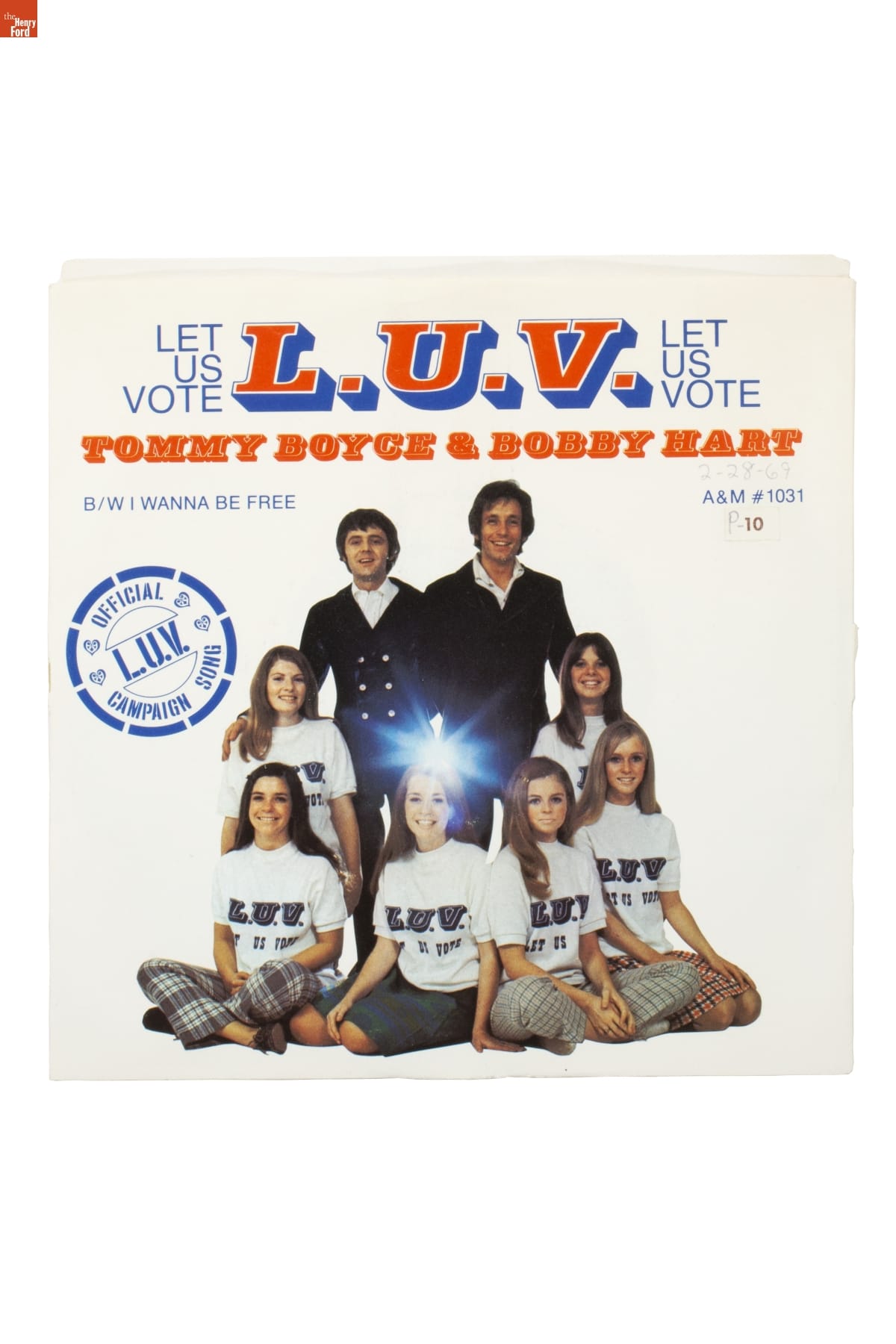
- Record Album, "L.U.V (Let Us Vote)," 1969 - During the height of the Vietnam War in the 1960s, America's youth fought to lower the voting age from 21. At the time, most draft-aged 18-year-olds could not vote. Student-led organizations, such as Let Us Vote (L.U.V.), lobbied for change. In late 1969, the singer-songwriting duo "Tommy" Boyce and Bobby Hart composed "L.U.V. (Let Us Vote)," which became the organization's official campaign song.
- 1969
- Collections - Artifact
Record Album, "L.U.V (Let Us Vote)," 1969
During the height of the Vietnam War in the 1960s, America's youth fought to lower the voting age from 21. At the time, most draft-aged 18-year-olds could not vote. Student-led organizations, such as Let Us Vote (L.U.V.), lobbied for change. In late 1969, the singer-songwriting duo "Tommy" Boyce and Bobby Hart composed "L.U.V. (Let Us Vote)," which became the organization's official campaign song.
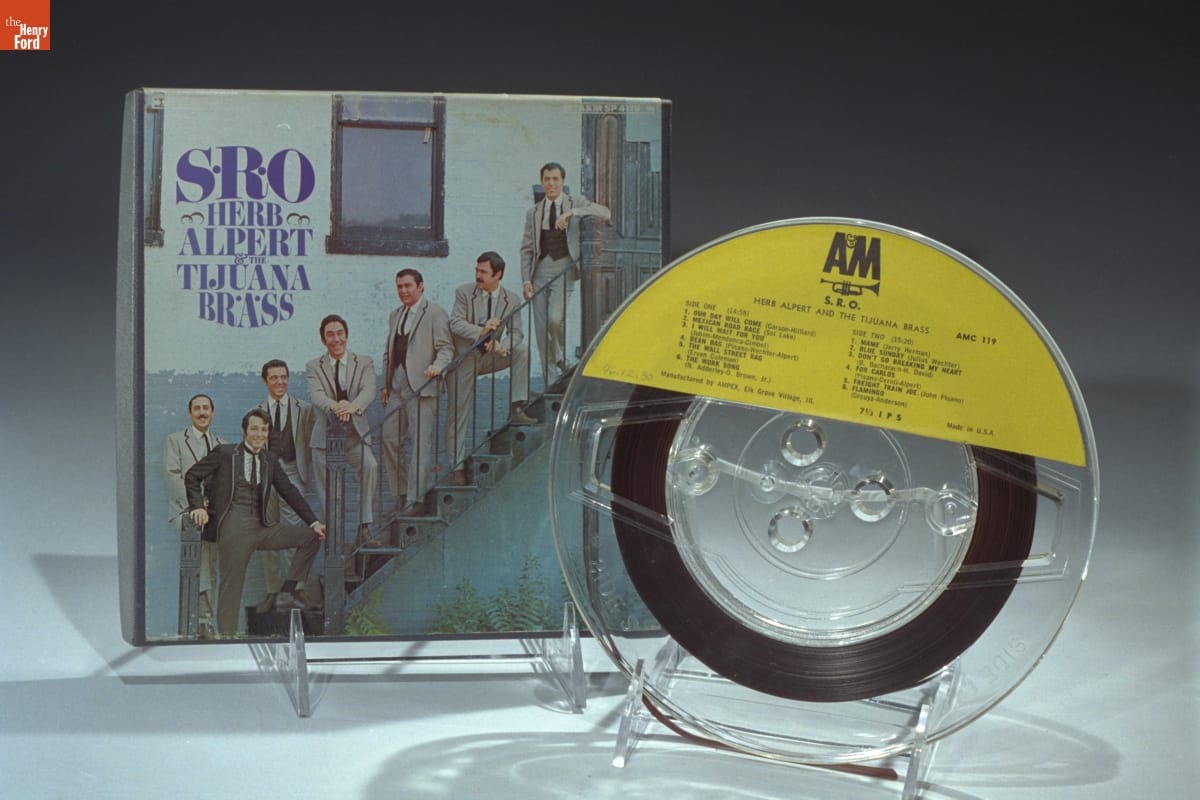
- Reel to Reel Audiotape, "S.R.O," by Herb Alpert and the Tijuana Brass, 1966 - The transformative effects of magnetic tape upon sound, broadcast, and computing history cannot be overstated. In 1930, German companies AEG and BASF revised wire recording technology by using a new material: plastic tape coated with magnetic iron pigment. Its proposed applications were varied, idealistic and practical: recording music and radio, factory automation, data storage, media lending libraries, and many others.
- 1966
- Collections - Artifact
Reel to Reel Audiotape, "S.R.O," by Herb Alpert and the Tijuana Brass, 1966
The transformative effects of magnetic tape upon sound, broadcast, and computing history cannot be overstated. In 1930, German companies AEG and BASF revised wire recording technology by using a new material: plastic tape coated with magnetic iron pigment. Its proposed applications were varied, idealistic and practical: recording music and radio, factory automation, data storage, media lending libraries, and many others.