
Search
- Trade Card for AMC Perfect Cereals, Akron Milling Company, 1880-1900 - In the last third of the nineteenth century, an unprecedented variety of consumer goods and services flooded the American market. Advertisers, armed with new methods of color printing, bombarded potential customers with trade cards. Americans enjoyed and often saved the vibrant little advertisements found in product packages or distributed by local merchants. Many survive as historical records of commercialism in the United States.
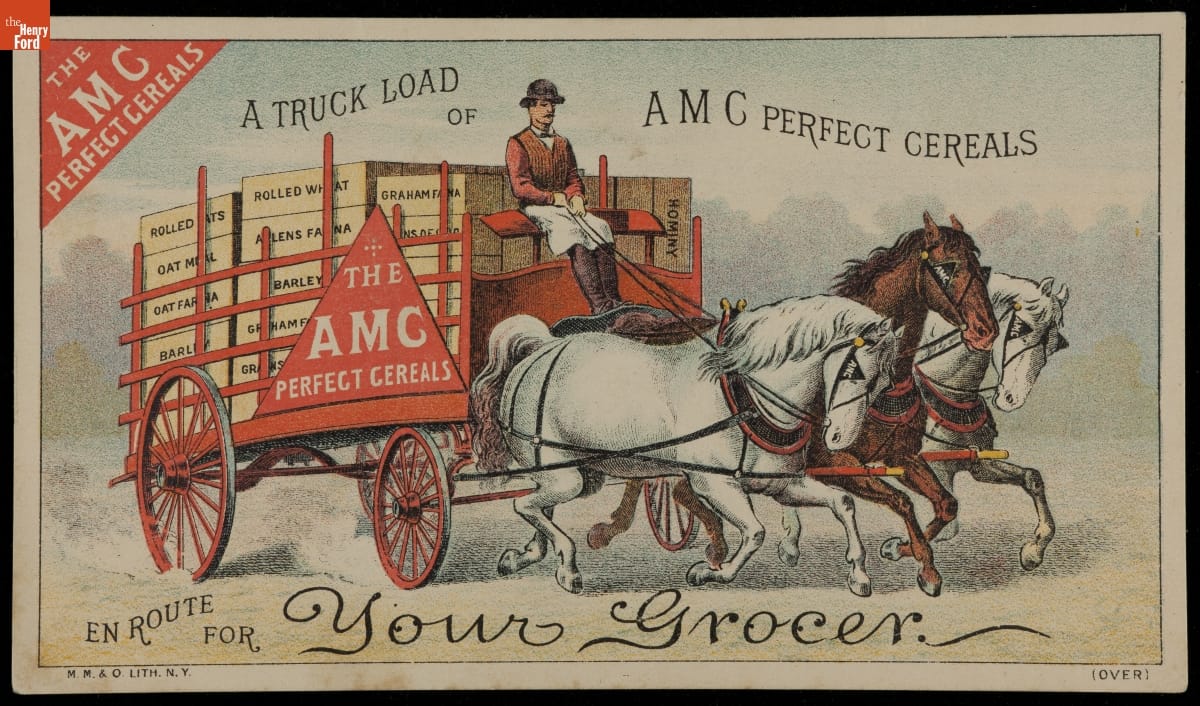
- 1880-1900
- Collections - Artifact
Trade Card for AMC Perfect Cereals, Akron Milling Company, 1880-1900
In the last third of the nineteenth century, an unprecedented variety of consumer goods and services flooded the American market. Advertisers, armed with new methods of color printing, bombarded potential customers with trade cards. Americans enjoyed and often saved the vibrant little advertisements found in product packages or distributed by local merchants. Many survive as historical records of commercialism in the United States.
- Trade Card for Live Acorn Stoves and Ranges, Rathbone, Sard & Co., 1875-1885 - In the last third of the nineteenth century, an unprecedented variety of consumer goods and services flooded the American market. Advertisers, armed with new methods of color printing, bombarded potential customers with trade cards. Americans enjoyed and often saved the vibrant little advertisements found in product packages or distributed by local merchants. Many survive as historical records of commercialism in the United States.
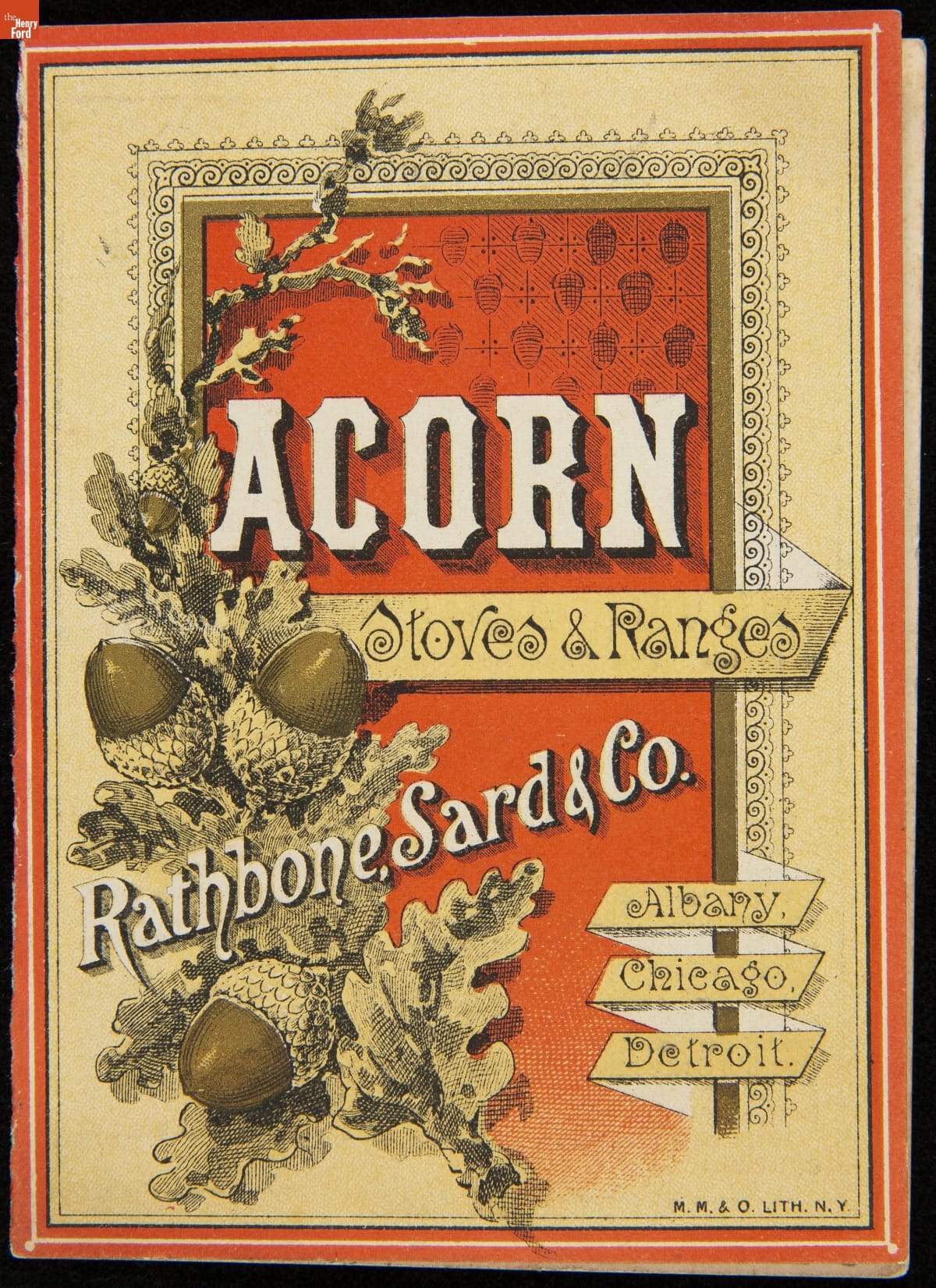
- 1875-1885
- Collections - Artifact
Trade Card for Live Acorn Stoves and Ranges, Rathbone, Sard & Co., 1875-1885
In the last third of the nineteenth century, an unprecedented variety of consumer goods and services flooded the American market. Advertisers, armed with new methods of color printing, bombarded potential customers with trade cards. Americans enjoyed and often saved the vibrant little advertisements found in product packages or distributed by local merchants. Many survive as historical records of commercialism in the United States.
- Trade Card for Knapp's Throat Cure and Packer's All Healing Tar Soap, H. W. Knapp, Packer Manufacturing Co., 1882 - In the last third of the nineteenth century, an unprecedented variety of consumer goods and services flooded the American market. Advertisers, armed with new methods of color printing, bombarded potential customers with trade cards. Americans enjoyed and often saved the vibrant little advertisements found in product packages or distributed by local merchants. Many survive as historical records of commercialism in the United States.
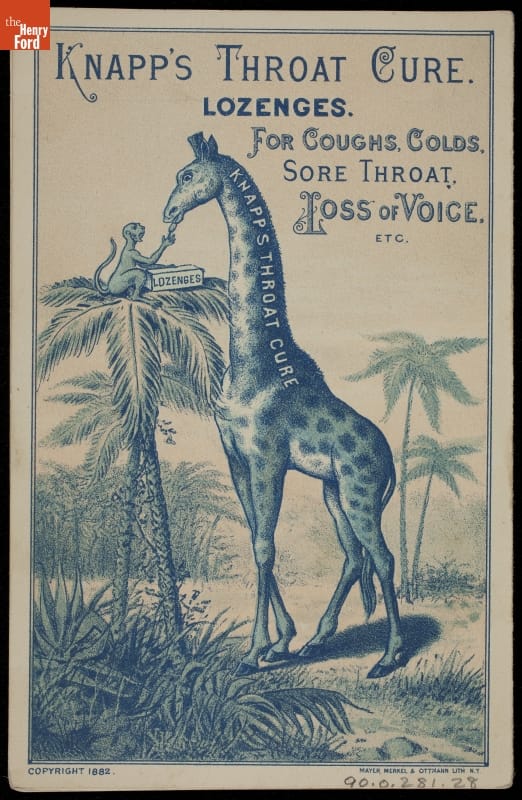
- 1882
- Collections - Artifact
Trade Card for Knapp's Throat Cure and Packer's All Healing Tar Soap, H. W. Knapp, Packer Manufacturing Co., 1882
In the last third of the nineteenth century, an unprecedented variety of consumer goods and services flooded the American market. Advertisers, armed with new methods of color printing, bombarded potential customers with trade cards. Americans enjoyed and often saved the vibrant little advertisements found in product packages or distributed by local merchants. Many survive as historical records of commercialism in the United States.
- Political Campaign Card, "We May Differ in Politics but We All Agree That...," 1884 -
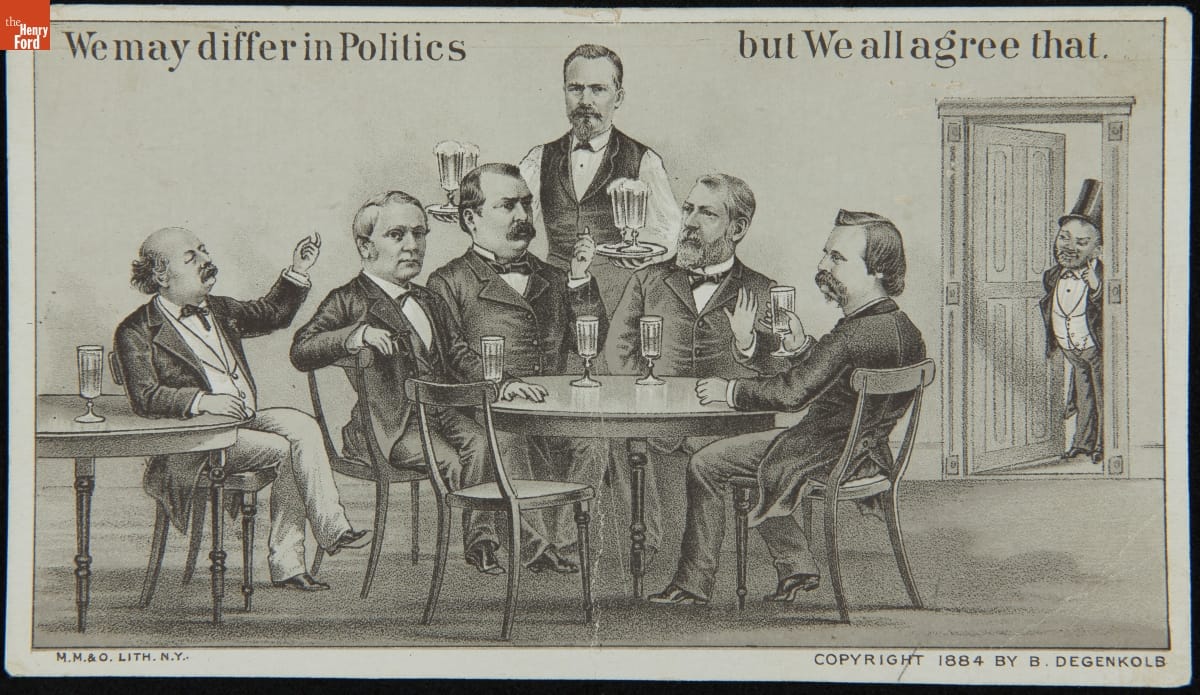
- 1884
- Collections - Artifact
Political Campaign Card, "We May Differ in Politics but We All Agree That...," 1884
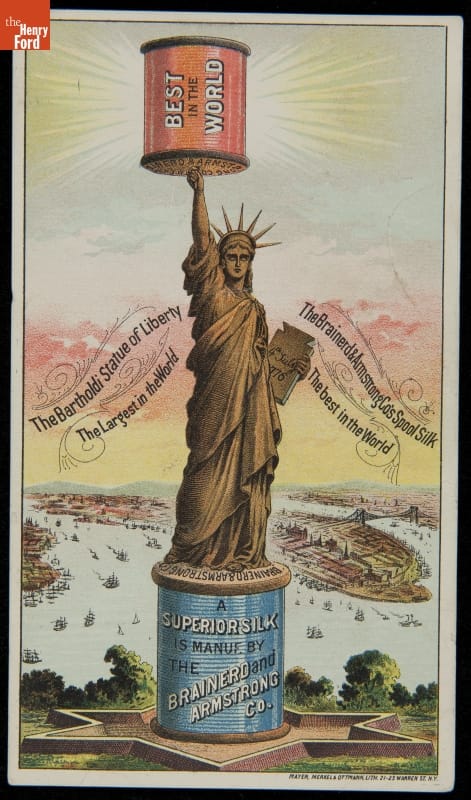
- Trade Card for Sewing Thread, Brainerd & Armstrong Company, 1885 - In the last third of the nineteenth century, an unprecedented variety of consumer goods and services flooded the American market. Advertisers, armed with new methods of color printing, bombarded potential customers with trade cards. Americans enjoyed and often saved the vibrant little advertisements found in product packages or distributed by local merchants. Many survive as historical records of commercialism in the United States.
- 1885
- Collections - Artifact
Trade Card for Sewing Thread, Brainerd & Armstrong Company, 1885
In the last third of the nineteenth century, an unprecedented variety of consumer goods and services flooded the American market. Advertisers, armed with new methods of color printing, bombarded potential customers with trade cards. Americans enjoyed and often saved the vibrant little advertisements found in product packages or distributed by local merchants. Many survive as historical records of commercialism in the United States.
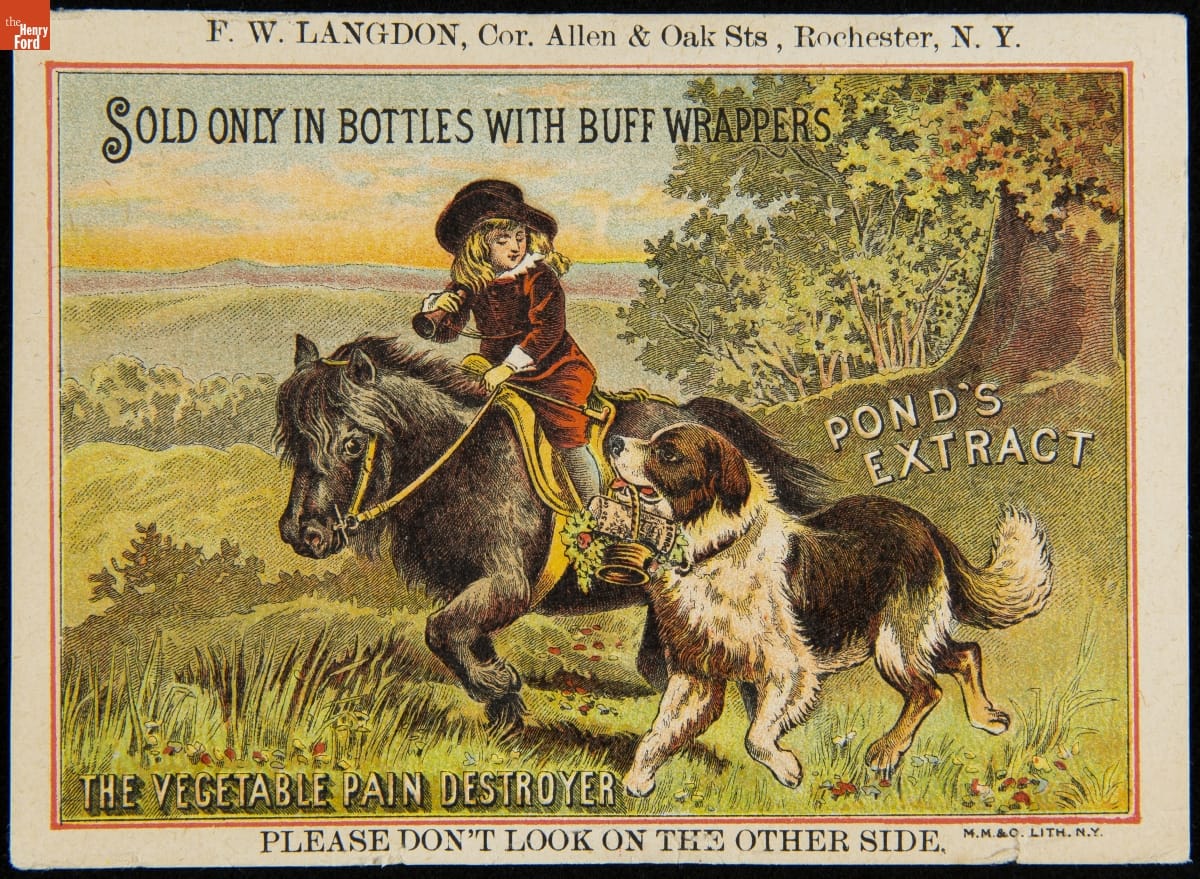
- Trade Card for Pond's Extract, Pond's Extract Co., 1886-1910 - In the last third of the nineteenth century, an unprecedented variety of consumer goods and services flooded the American market. Advertisers, armed with new methods of color printing, bombarded potential customers with trade cards. Americans enjoyed and often saved the vibrant little advertisements found in product packages or distributed by local merchants. Many survive as historical records of commercialism in the United States.
- 1886-1910
- Collections - Artifact
Trade Card for Pond's Extract, Pond's Extract Co., 1886-1910
In the last third of the nineteenth century, an unprecedented variety of consumer goods and services flooded the American market. Advertisers, armed with new methods of color printing, bombarded potential customers with trade cards. Americans enjoyed and often saved the vibrant little advertisements found in product packages or distributed by local merchants. Many survive as historical records of commercialism in the United States.
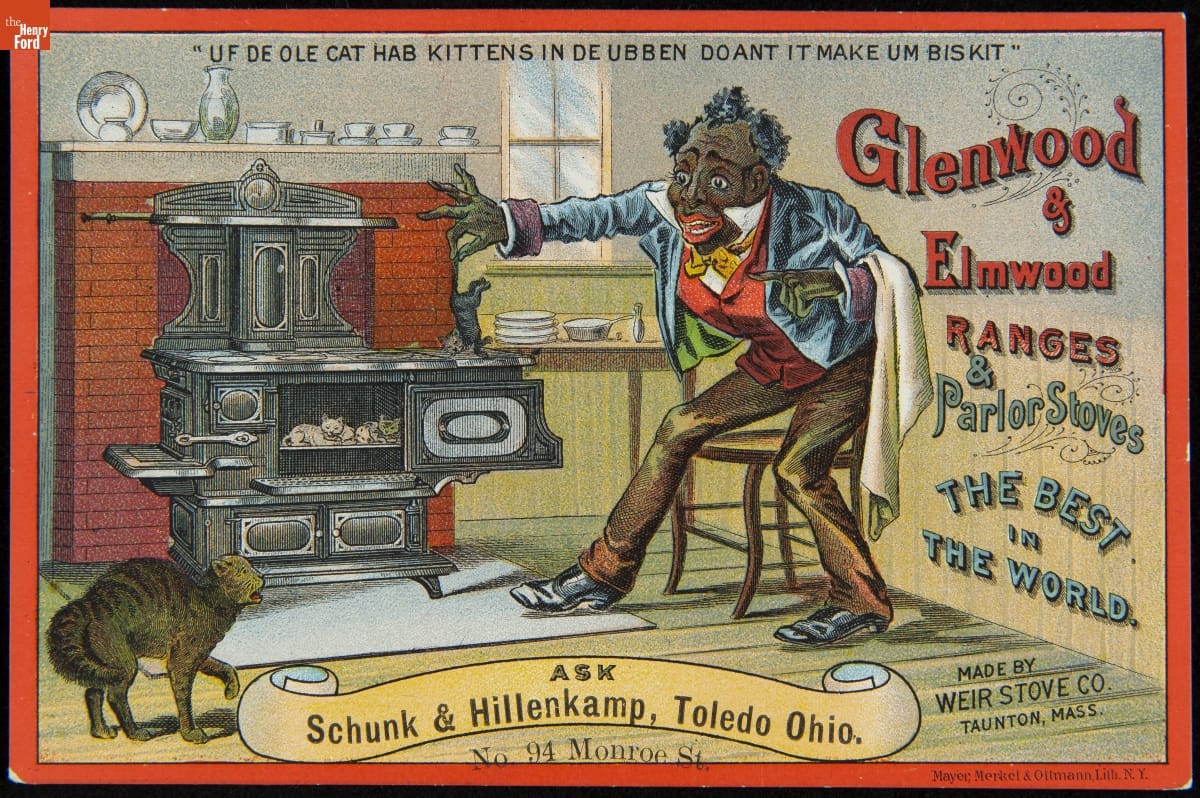
- Trade Card for Glenwood & Elmwood Ranges & Parlor Stoves, Weir Stove Co., 1886-1893 - Late-nineteenth-century manufacturers used trade cards to promote and sell products. These colorful advertisements also reflected the racial prejudices of the time. Card illustrators typically depicted African Americans with enlarged or distorted features, speaking with stereotypical language and often involved in some comical mishap. These images dehumanized blacks and affirmed the discriminatory biases many white Americans -- consumers of these trade cards -- held.
- 1886-1893
- Collections - Artifact
Trade Card for Glenwood & Elmwood Ranges & Parlor Stoves, Weir Stove Co., 1886-1893
Late-nineteenth-century manufacturers used trade cards to promote and sell products. These colorful advertisements also reflected the racial prejudices of the time. Card illustrators typically depicted African Americans with enlarged or distorted features, speaking with stereotypical language and often involved in some comical mishap. These images dehumanized blacks and affirmed the discriminatory biases many white Americans -- consumers of these trade cards -- held.
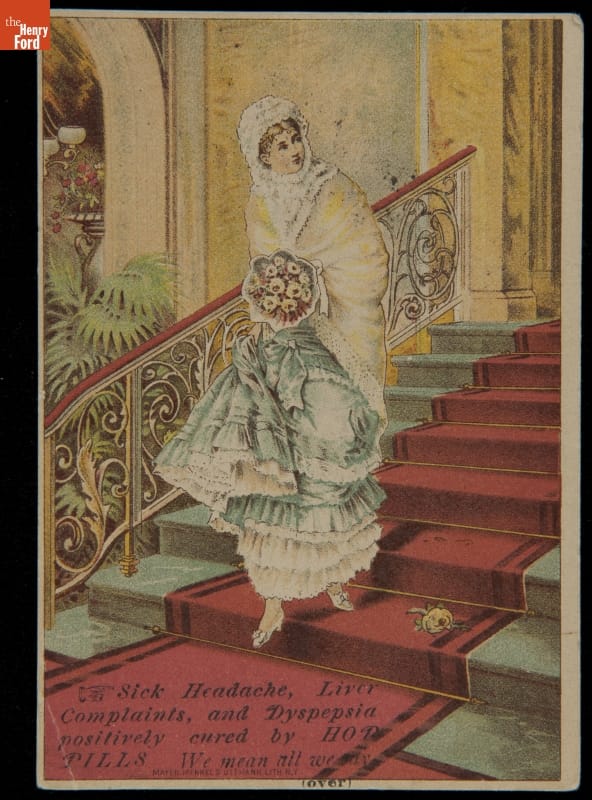
- Trade Card for Hop Pills, Hop Pill Manufacturing Co., 1880-1890 - In the last third of the nineteenth century, an unprecedented variety of consumer goods and services flooded the American market. Advertisers, armed with new methods of color printing, bombarded potential customers with trade cards. Americans enjoyed and often saved the vibrant little advertisements found in product packages or distributed by local merchants. Many survive as historical records of commercialism in the United States.
- 1880-1890
- Collections - Artifact
Trade Card for Hop Pills, Hop Pill Manufacturing Co., 1880-1890
In the last third of the nineteenth century, an unprecedented variety of consumer goods and services flooded the American market. Advertisers, armed with new methods of color printing, bombarded potential customers with trade cards. Americans enjoyed and often saved the vibrant little advertisements found in product packages or distributed by local merchants. Many survive as historical records of commercialism in the United States.
- Trade Card for Live Acorn Stoves and Ranges, Rathbone, Sard & Co., 1875-1885 - In the last third of the nineteenth century, an unprecedented variety of consumer goods and services flooded the American market. Advertisers, armed with new methods of color printing, bombarded potential customers with trade cards. Americans enjoyed and often saved the vibrant little advertisements found in product packages or distributed by local merchants. Many survive as historical records of commercialism in the United States.
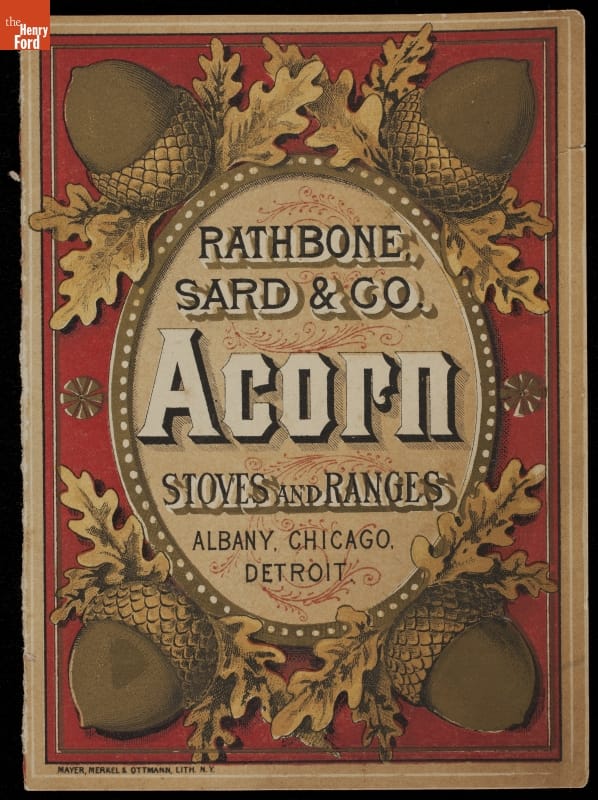
- 1875-1885
- Collections - Artifact
Trade Card for Live Acorn Stoves and Ranges, Rathbone, Sard & Co., 1875-1885
In the last third of the nineteenth century, an unprecedented variety of consumer goods and services flooded the American market. Advertisers, armed with new methods of color printing, bombarded potential customers with trade cards. Americans enjoyed and often saved the vibrant little advertisements found in product packages or distributed by local merchants. Many survive as historical records of commercialism in the United States.
- Trade Card for Red Star Cough Cure, February 1885 - In the last third of the nineteenth century, an unprecedented variety of consumer goods and services flooded the American market. Advertisers, armed with new methods of color printing, bombarded potential customers with trade cards. Americans enjoyed and often saved the vibrant little advertisements found in product packages or distributed by local merchants. Many survive as historical records of commercialism in the United States.
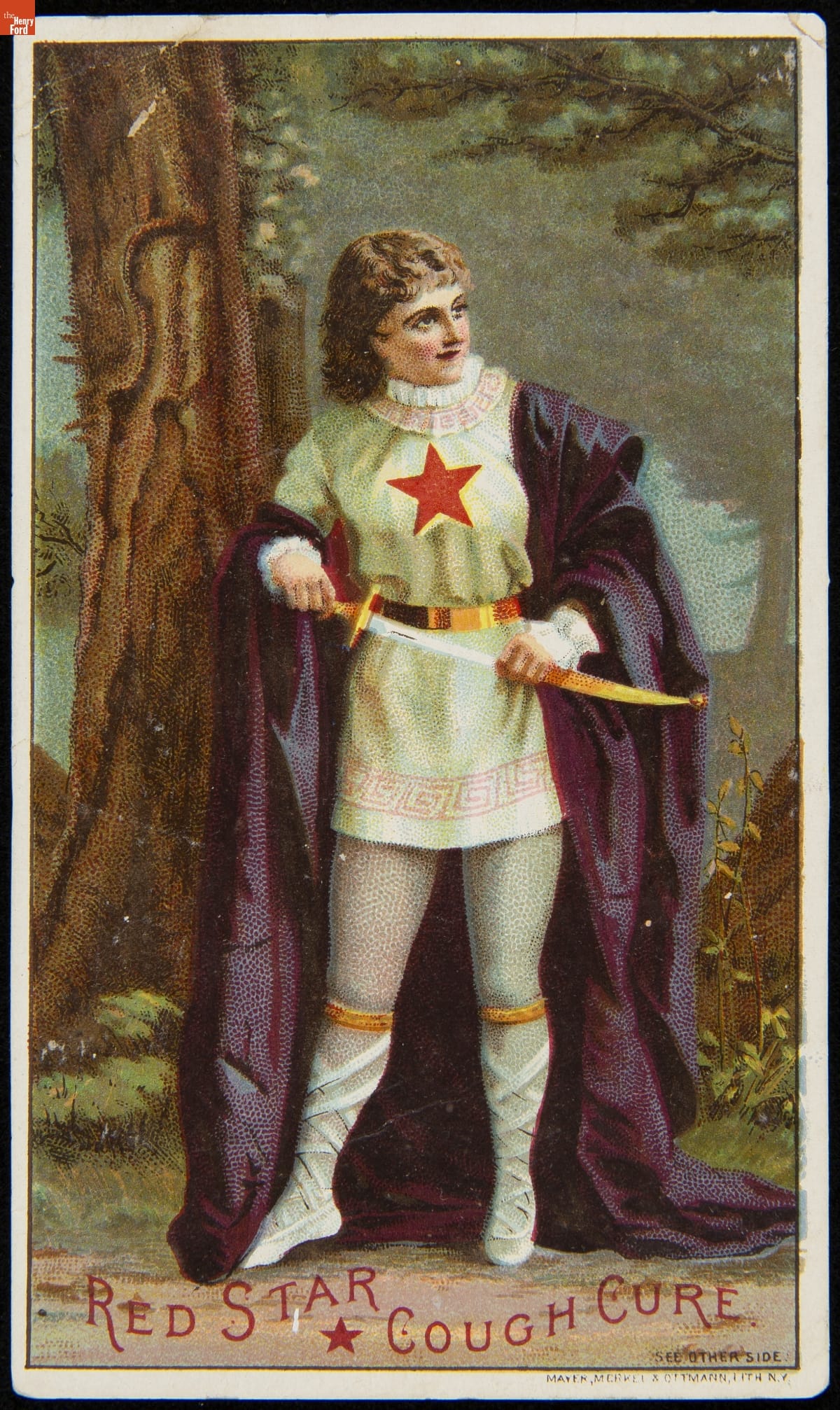
- February 01, 1885
- Collections - Artifact
Trade Card for Red Star Cough Cure, February 1885
In the last third of the nineteenth century, an unprecedented variety of consumer goods and services flooded the American market. Advertisers, armed with new methods of color printing, bombarded potential customers with trade cards. Americans enjoyed and often saved the vibrant little advertisements found in product packages or distributed by local merchants. Many survive as historical records of commercialism in the United States.