
Search
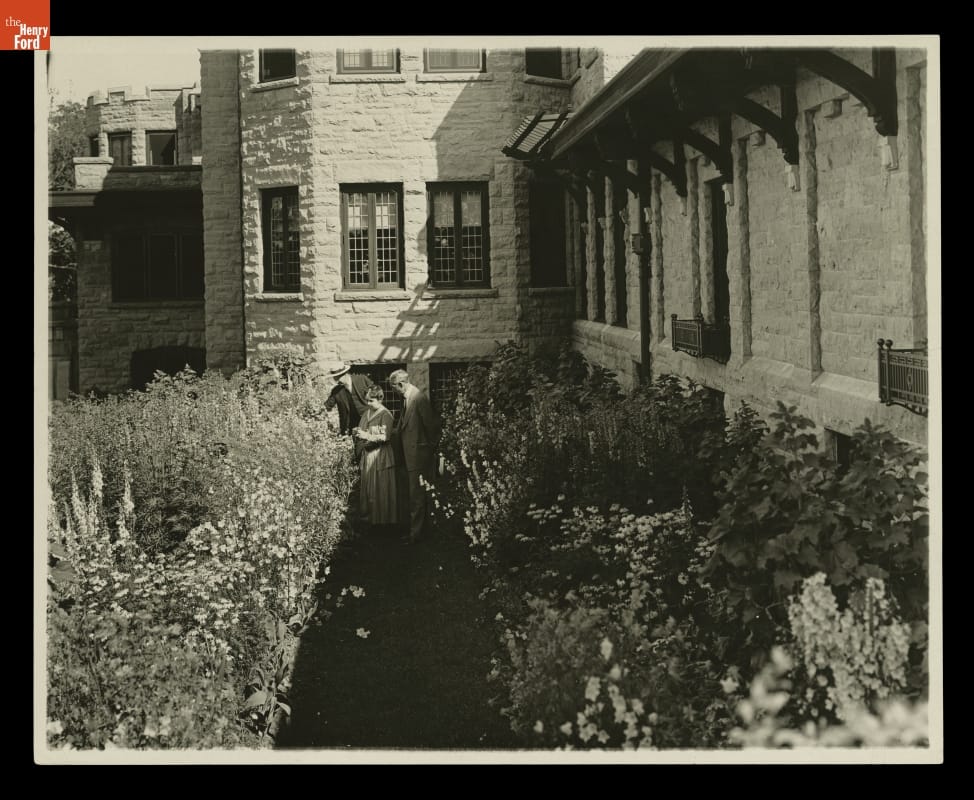
- Milton Bryant, Clara Ford and Henry Ford in Blue Garden at Fair Lane, Dearborn, Michigan, circa 1918 - In the early 1910s, Henry and Clara Ford selected 1,300 acres of farmland in Dearborn, Michigan, as the site for a new home. They would call the estate Fair Lane. In 1916 the couple moved into the newly constructed, 56-room mansion. Henry and Clara would find their new home a peaceful respite -- surrounded by woods, meadows, gardens, and the nature they loved.
- circa 1918
- Collections - Artifact
Milton Bryant, Clara Ford and Henry Ford in Blue Garden at Fair Lane, Dearborn, Michigan, circa 1918
In the early 1910s, Henry and Clara Ford selected 1,300 acres of farmland in Dearborn, Michigan, as the site for a new home. They would call the estate Fair Lane. In 1916 the couple moved into the newly constructed, 56-room mansion. Henry and Clara would find their new home a peaceful respite -- surrounded by woods, meadows, gardens, and the nature they loved.
- Milton Bryant with Nephew Edsel Ford in a Horse-Drawn Buggy, 1894 - Farmers especially enjoyed owning buggies -- designed to carry people -- rather than having to go everywhere in a farm wagon made to haul goods. This photograph shows Milton Bryant with his sister Clara's son, Edsel Ford, posing in a typical farm buggy.

- 1894
- Collections - Artifact
Milton Bryant with Nephew Edsel Ford in a Horse-Drawn Buggy, 1894
Farmers especially enjoyed owning buggies -- designed to carry people -- rather than having to go everywhere in a farm wagon made to haul goods. This photograph shows Milton Bryant with his sister Clara's son, Edsel Ford, posing in a typical farm buggy.
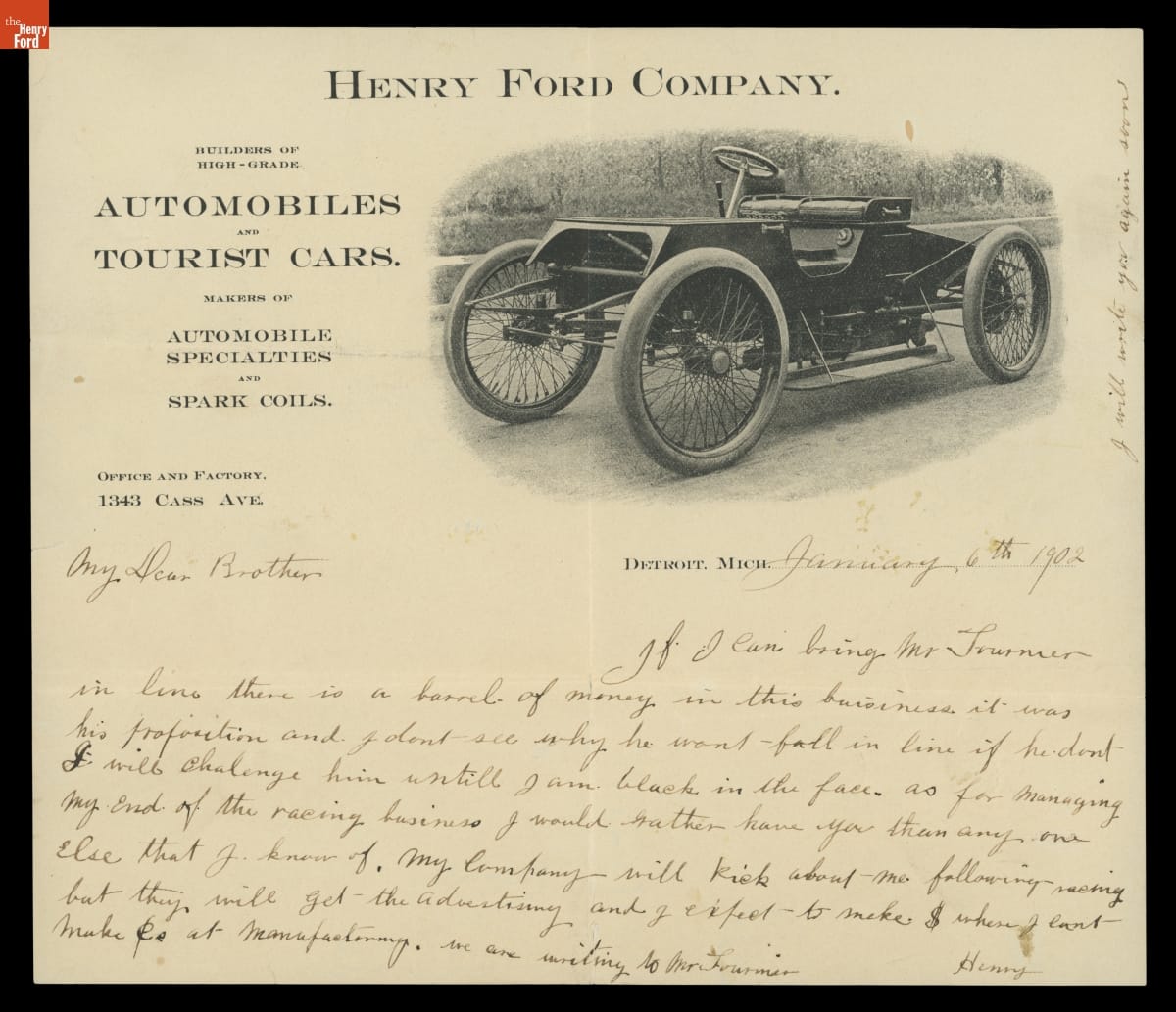
- Letter from Henry Ford to Milton Bryant Concerning Auto Racing, 1902 - Less than three months after defeating Alexander Winton, Henry Ford was anxious to stay in the forefront of American racing. In this letter, he explains to his brother-in-law, Milton Bryant, the potential for big money and advertising in match races and his desire to run a race against Henri Fournier, one of the world's fastest drivers at the time. Ford's interest in racing, however, soon put him at odds with the investors of the Henry Ford Company, Ford's second automobile company. Before the end of 1902, Henry was bought out of the company (which changed its name to Cadillac under the guidance of Henry Leland) and on his way to forming Ford Motor Company in June 1903.
- January 06, 1902
- Collections - Artifact
Letter from Henry Ford to Milton Bryant Concerning Auto Racing, 1902
Less than three months after defeating Alexander Winton, Henry Ford was anxious to stay in the forefront of American racing. In this letter, he explains to his brother-in-law, Milton Bryant, the potential for big money and advertising in match races and his desire to run a race against Henri Fournier, one of the world's fastest drivers at the time. Ford's interest in racing, however, soon put him at odds with the investors of the Henry Ford Company, Ford's second automobile company. Before the end of 1902, Henry was bought out of the company (which changed its name to Cadillac under the guidance of Henry Leland) and on his way to forming Ford Motor Company in June 1903.
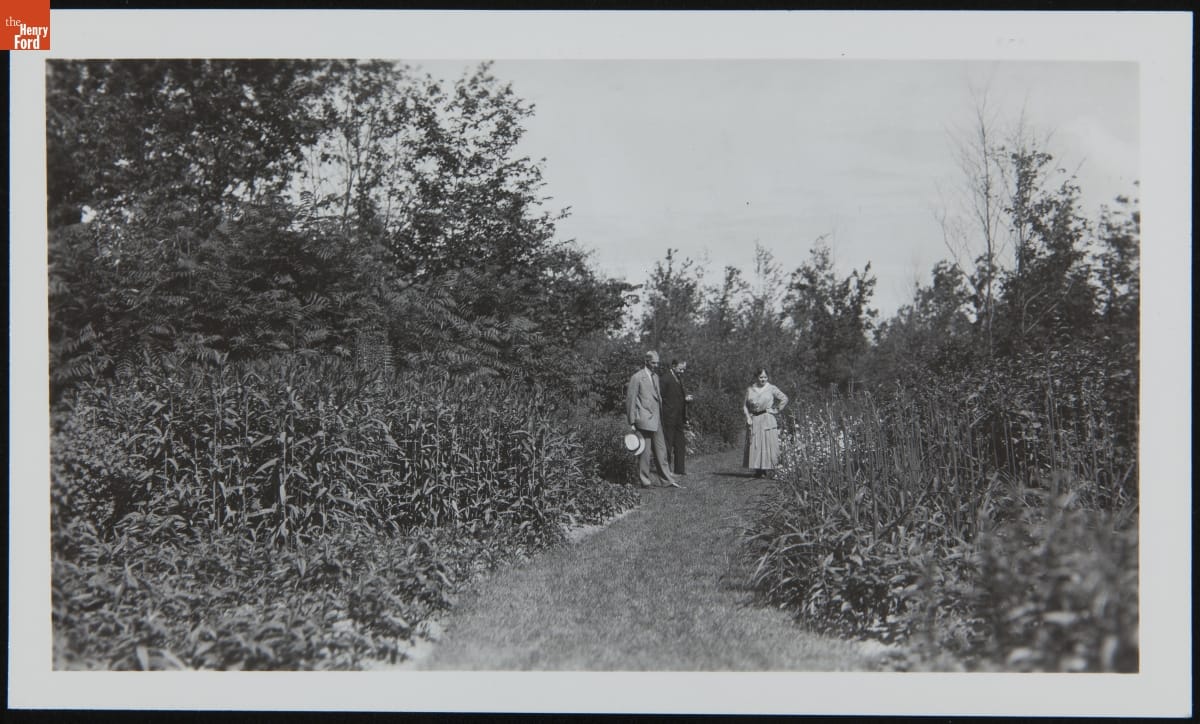
- Henry Ford, Clara Ford, and Milton Bryant in Fair Lane Garden, circa 1918 - In the early 1910s, Henry and Clara Ford selected 1300 acres of farmland in Dearborn, Michigan, as the site for a new home. They called the estate Fair Lane. Surrounded by woods, meadows, gardens, and the nature they loved, Henry and Clara found this home a peaceful respite. Here they could wander the landscaped grounds, entertain guests, and play with grandchildren.
- circa 1918
- Collections - Artifact
Henry Ford, Clara Ford, and Milton Bryant in Fair Lane Garden, circa 1918
In the early 1910s, Henry and Clara Ford selected 1300 acres of farmland in Dearborn, Michigan, as the site for a new home. They called the estate Fair Lane. Surrounded by woods, meadows, gardens, and the nature they loved, Henry and Clara found this home a peaceful respite. Here they could wander the landscaped grounds, entertain guests, and play with grandchildren.
- James Gleason, Henry Ford and Others with Westinghouse Portable Steam Engine No. 345 at Ford Homestead, circa 1920 - Portable steam engines could be hauled from farm to farm to power grain threshers, sawmills, or corn shellers. While working on a farm in 1882, nineteen-year-old Henry Ford powered a portable Westinghouse engine - similar to the one seen here - more effectively than his boss. The accomplishment had a lasting effect--Ford continued to restore and operate portable steam engines well into the 20th century.

- circa 1920
- Collections - Artifact
James Gleason, Henry Ford and Others with Westinghouse Portable Steam Engine No. 345 at Ford Homestead, circa 1920
Portable steam engines could be hauled from farm to farm to power grain threshers, sawmills, or corn shellers. While working on a farm in 1882, nineteen-year-old Henry Ford powered a portable Westinghouse engine - similar to the one seen here - more effectively than his boss. The accomplishment had a lasting effect--Ford continued to restore and operate portable steam engines well into the 20th century.
- Henry Ford, Clara Ford and Milton Bryant on the Rouge River Dam at Fair Lane Estate, 1915-1920 - Henry and Clara Ford's estate along the Rouge River reflected the couple's dual interest in nature and industry. They hired celebrated landscape architect Jens Jensen to camouflage the hydroelectric dam that powered Fair Lane. His completed design appeared as natural rapids. Jensen's stepping stone bridge and cascades are the most extensive of his renowned river-edge rock creations.

- 1915-1920
- Collections - Artifact
Henry Ford, Clara Ford and Milton Bryant on the Rouge River Dam at Fair Lane Estate, 1915-1920
Henry and Clara Ford's estate along the Rouge River reflected the couple's dual interest in nature and industry. They hired celebrated landscape architect Jens Jensen to camouflage the hydroelectric dam that powered Fair Lane. His completed design appeared as natural rapids. Jensen's stepping stone bridge and cascades are the most extensive of his renowned river-edge rock creations.