
Search
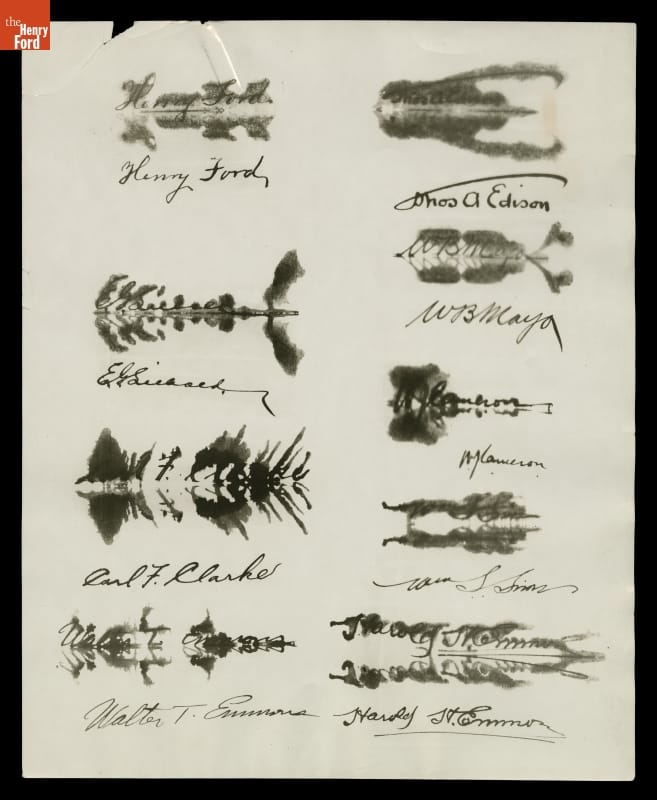
- Signatures of Henry Ford, Thomas Edison, and Other Business Associates, 1922 - Like the Walt Disney Company, Ford Motor Company's logo features its founder's name in a flowing script. Also like Disney, Ford's logo isn't a direct copy of its founder's handwriting. C. Harold Wills, a Ford engineer and a former letterpress printer, created the distinctive logo script with his typesetting kit in 1906. Henry Ford's actual signature is seen here.
- February 16, 1922
- Collections - Artifact
Signatures of Henry Ford, Thomas Edison, and Other Business Associates, 1922
Like the Walt Disney Company, Ford Motor Company's logo features its founder's name in a flowing script. Also like Disney, Ford's logo isn't a direct copy of its founder's handwriting. C. Harold Wills, a Ford engineer and a former letterpress printer, created the distinctive logo script with his typesetting kit in 1906. Henry Ford's actual signature is seen here.
- Henry Ford and Ford Motor Company Executives, March 29, 1932 - Ford Motor Company executives posed for this photograph in 1932. Left to right: P.E. Martin, vice president of manufacturing; Henry Ford; Charles Sorensen, production superintendent; B.J. Craig, secretary and treasurer; Eddie Maylon; Laurence Sheldrick, engineer; Ray Dahlinger, Ford Farms manager; William J. Cameron, public relations; Louis Walters; Harold Hicks, engineer; and A.M. Wiebel, vice president of purchasing.

- March 29, 1932
- Collections - Artifact
Henry Ford and Ford Motor Company Executives, March 29, 1932
Ford Motor Company executives posed for this photograph in 1932. Left to right: P.E. Martin, vice president of manufacturing; Henry Ford; Charles Sorensen, production superintendent; B.J. Craig, secretary and treasurer; Eddie Maylon; Laurence Sheldrick, engineer; Ray Dahlinger, Ford Farms manager; William J. Cameron, public relations; Louis Walters; Harold Hicks, engineer; and A.M. Wiebel, vice president of purchasing.
- Talks Given on The Ford Sunday Evening Hour, September 1940-May 1941 - Launched in 1934, the <em>Ford Sunday Evening Hour</em> radio program featured classical music, guest soloists and conductors, and a weekly talk during intermission. Henry Ford asked his friend and advisor William J. Cameron to write and deliver these messages. Cameron, who composed the anti-Semitic articles for <em>The Dearborn Independent</em>, now peddled softer populist views--avoiding extremes and any direct attacks on politicians, ethnic groups, or Wall Street financiers.
- June 01, 1941
- Collections - Artifact
Talks Given on The Ford Sunday Evening Hour, September 1940-May 1941
Launched in 1934, the Ford Sunday Evening Hour radio program featured classical music, guest soloists and conductors, and a weekly talk during intermission. Henry Ford asked his friend and advisor William J. Cameron to write and deliver these messages. Cameron, who composed the anti-Semitic articles for The Dearborn Independent, now peddled softer populist views--avoiding extremes and any direct attacks on politicians, ethnic groups, or Wall Street financiers.
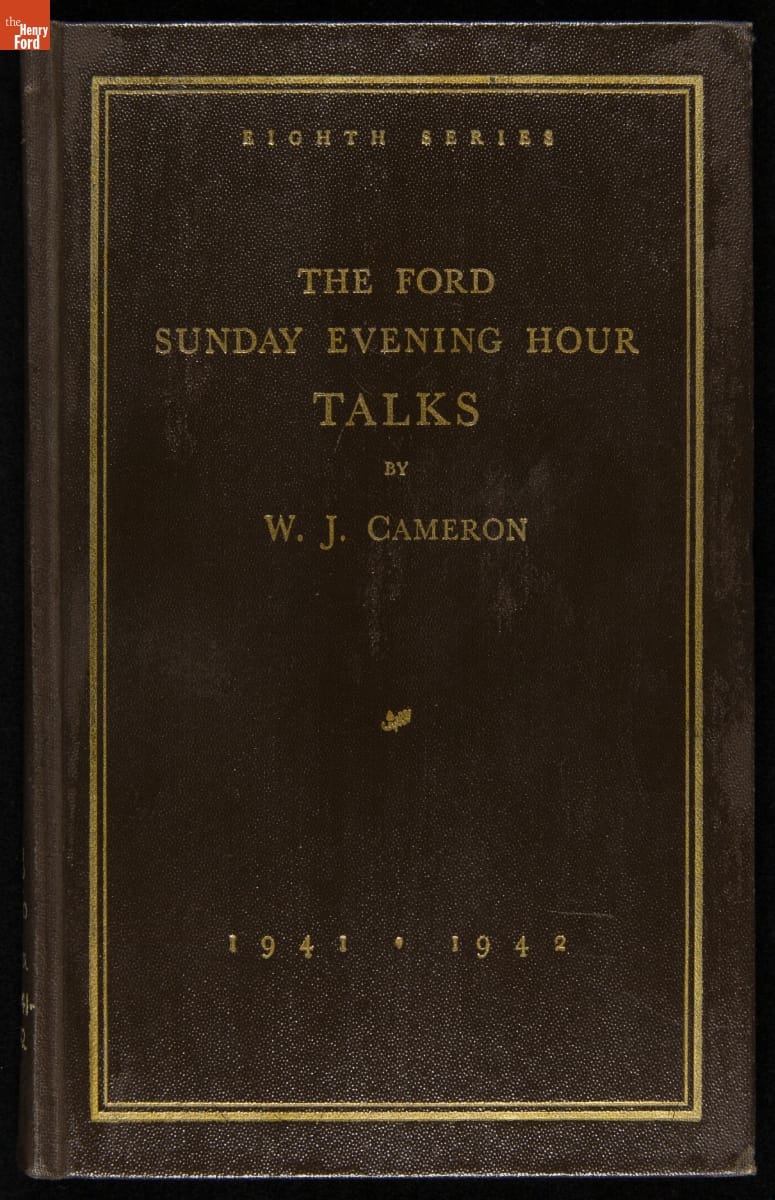
- Talks Given on The Ford Sunday Evening Hour, September 1941-March 1942 - Launched in 1934, the <em>Ford Sunday Evening Hour</em> radio program featured classical music, guest soloists and conductors, and a weekly talk during intermission. Henry Ford asked his friend and advisor William J. Cameron to write and deliver these messages. Cameron, who composed the anti-Semitic articles for <em>The Dearborn Independent</em>, now peddled softer populist views--avoiding extremes and any direct attacks on politicians, ethnic groups, or Wall Street financiers.
- April 01, 1942
- Collections - Artifact
Talks Given on The Ford Sunday Evening Hour, September 1941-March 1942
Launched in 1934, the Ford Sunday Evening Hour radio program featured classical music, guest soloists and conductors, and a weekly talk during intermission. Henry Ford asked his friend and advisor William J. Cameron to write and deliver these messages. Cameron, who composed the anti-Semitic articles for The Dearborn Independent, now peddled softer populist views--avoiding extremes and any direct attacks on politicians, ethnic groups, or Wall Street financiers.
- Signatures of William B. Mayo, Ernest Liebold, and Other Business Associates of Henry Ford, 1922 - The signatures of some of Henry Ford's key associates are seen on this document. William B. Mayo designed the massive steam-gas generators that powered Ford's Highland Park plant, and later he was heavily involved in planning the Rouge complex. Ernest Liebold, Henry Ford's executive secretary, managed many of Ford's non-automotive enterprises, from Henry Ford Hospital to the DT&I Railroad.

- February 16, 1922
- Collections - Artifact
Signatures of William B. Mayo, Ernest Liebold, and Other Business Associates of Henry Ford, 1922
The signatures of some of Henry Ford's key associates are seen on this document. William B. Mayo designed the massive steam-gas generators that powered Ford's Highland Park plant, and later he was heavily involved in planning the Rouge complex. Ernest Liebold, Henry Ford's executive secretary, managed many of Ford's non-automotive enterprises, from Henry Ford Hospital to the DT&I Railroad.
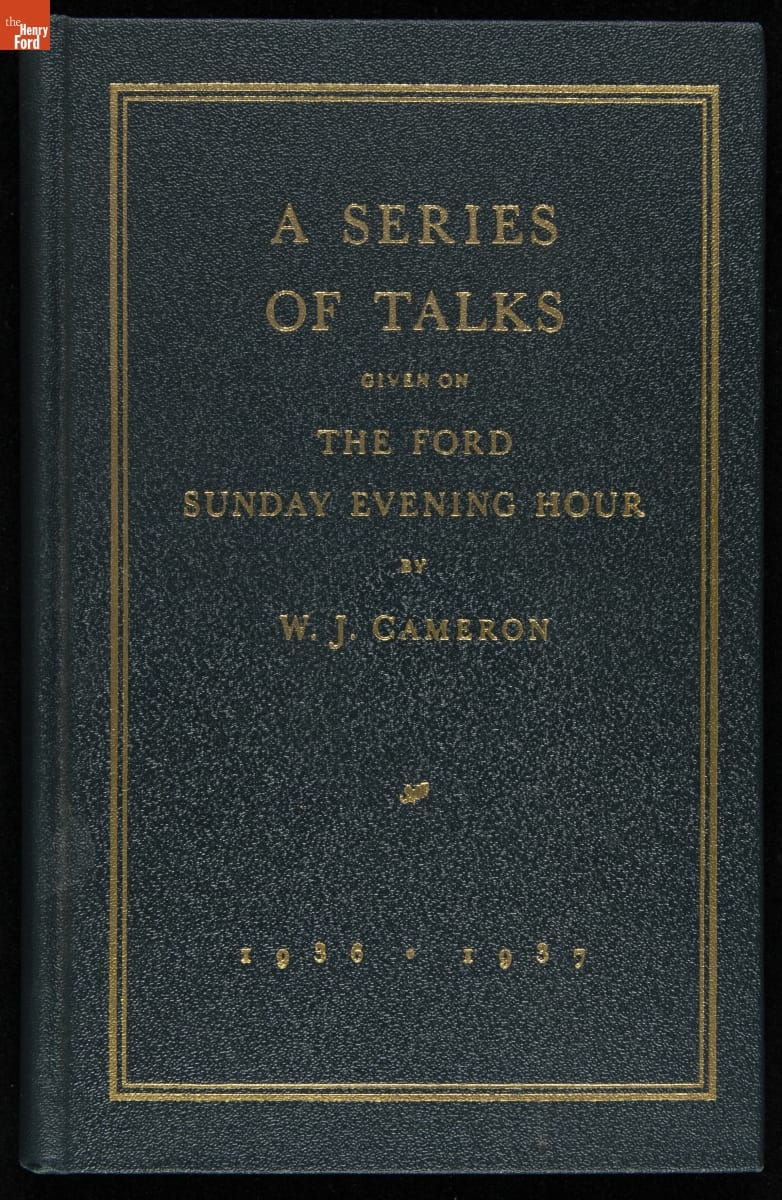
- Talks Given on The Ford Sunday Evening Hour, September 1936-June 1937 - Launched in 1934, the <em>Ford Sunday Evening Hour</em> radio program featured classical music, guest soloists and conductors, and a weekly talk during intermission. Henry Ford asked his friend and advisor William J. Cameron to write and deliver these messages. Cameron, who composed the anti-Semitic articles for <em>The Dearborn Independent</em>, now peddled softer populist views--avoiding extremes and any direct attacks on politicians, ethnic groups, or Wall Street financiers.
- July 01, 1937
- Collections - Artifact
Talks Given on The Ford Sunday Evening Hour, September 1936-June 1937
Launched in 1934, the Ford Sunday Evening Hour radio program featured classical music, guest soloists and conductors, and a weekly talk during intermission. Henry Ford asked his friend and advisor William J. Cameron to write and deliver these messages. Cameron, who composed the anti-Semitic articles for The Dearborn Independent, now peddled softer populist views--avoiding extremes and any direct attacks on politicians, ethnic groups, or Wall Street financiers.
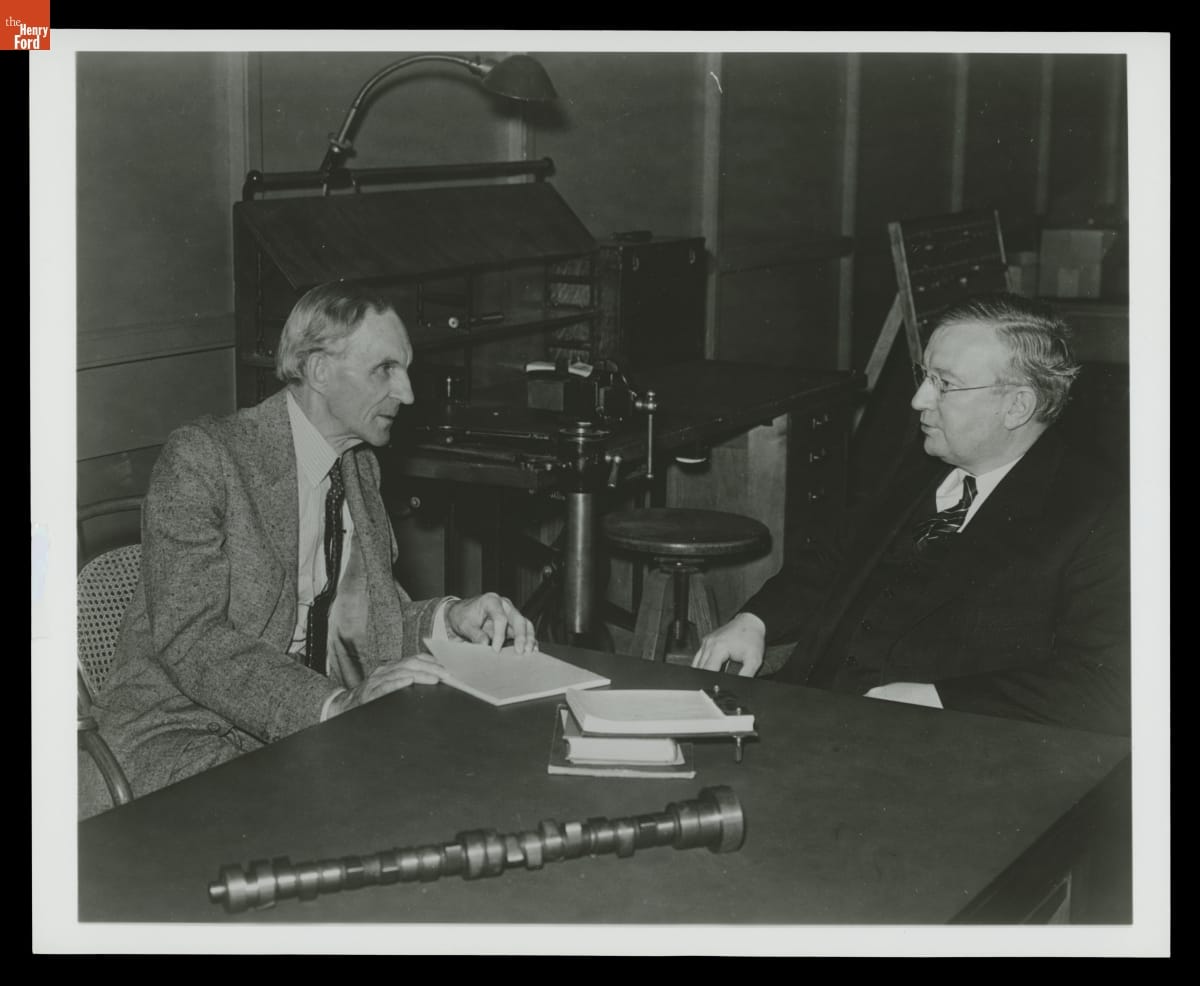
- Henry Ford and W.J. Cameron at the Ford Engineering Laboratory, 1933 - William J. Cameron became editor of the <em>Dearborn Independent</em>, Henry Ford's weekly newspaper, in 1920. He ghostwrote editorials that appeared under Ford's name and published articles that promoted Ford's anti-Semitic views. After the <em>Dearborn Independent</em> closed in 1927, Cameron remained with Ford Motor Company as a spokesperson and representative for Mr. Ford.
- 1933
- Collections - Artifact
Henry Ford and W.J. Cameron at the Ford Engineering Laboratory, 1933
William J. Cameron became editor of the Dearborn Independent, Henry Ford's weekly newspaper, in 1920. He ghostwrote editorials that appeared under Ford's name and published articles that promoted Ford's anti-Semitic views. After the Dearborn Independent closed in 1927, Cameron remained with Ford Motor Company as a spokesperson and representative for Mr. Ford.
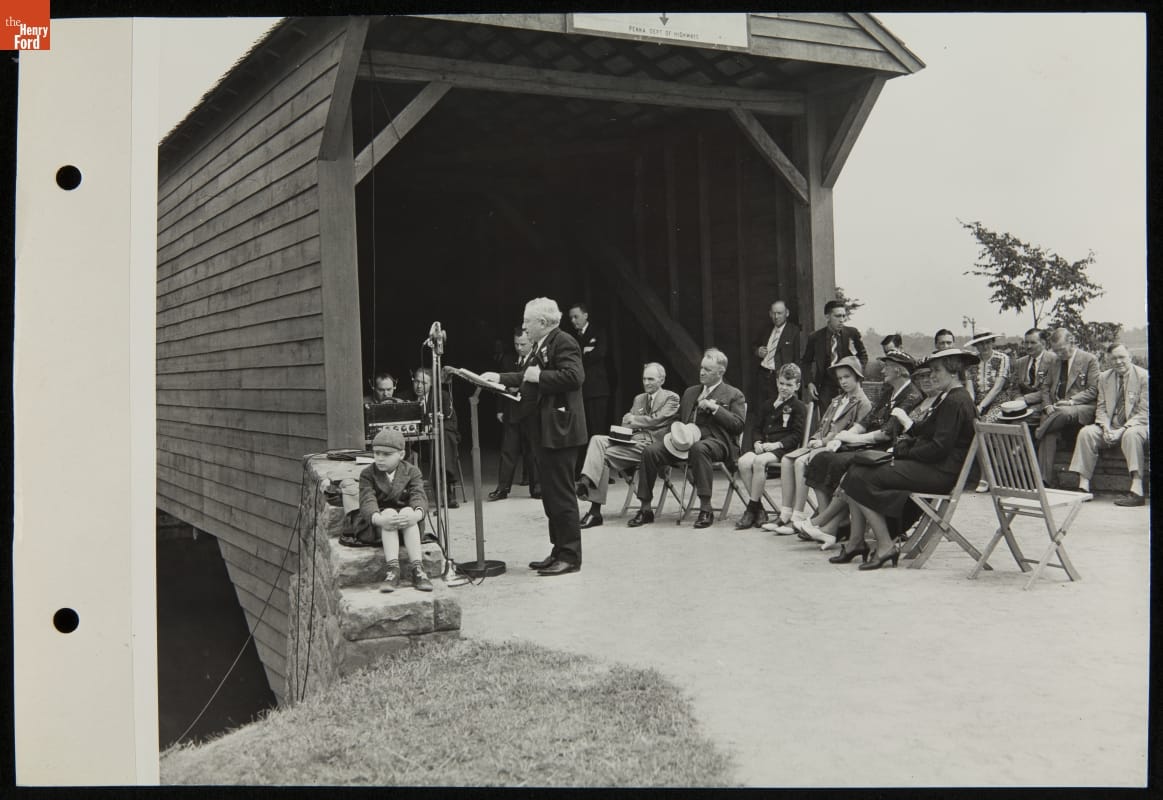
- Dedication of Ackley Covered Bridge in Greenfield Village, July 2, 1938 - The Ackley Covered Bridge originally spanned Wheeling Creek in southwestern Pennsylvania. Henry Ford acquired the then 105-year-old bridge in 1937 and had it moved to Greenfield Village. Descendants of Joshua Ackley, one of the original bridge builders, and other invited guests joined Ford in the dedication ceremonies held on July 2, 1938.
- July 02, 1938
- Collections - Artifact
Dedication of Ackley Covered Bridge in Greenfield Village, July 2, 1938
The Ackley Covered Bridge originally spanned Wheeling Creek in southwestern Pennsylvania. Henry Ford acquired the then 105-year-old bridge in 1937 and had it moved to Greenfield Village. Descendants of Joshua Ackley, one of the original bridge builders, and other invited guests joined Ford in the dedication ceremonies held on July 2, 1938.
- Ford Motor Company Executive William J. Cameron Speaking at a Banquet, circa 1935 - William J. Cameron became editor of the <em>Dearborn Independent</em>, Henry Ford's weekly newspaper, in 1920. He ghostwrote editorials that appeared under Ford's name and published articles that promoted Ford's anti-Semitic views. After the <em>Dearborn Independent</em> closed in 1927, Cameron remained with Ford Motor Company as a spokesperson and representative for Mr. Ford.

- circa 1935
- Collections - Artifact
Ford Motor Company Executive William J. Cameron Speaking at a Banquet, circa 1935
William J. Cameron became editor of the Dearborn Independent, Henry Ford's weekly newspaper, in 1920. He ghostwrote editorials that appeared under Ford's name and published articles that promoted Ford's anti-Semitic views. After the Dearborn Independent closed in 1927, Cameron remained with Ford Motor Company as a spokesperson and representative for Mr. Ford.
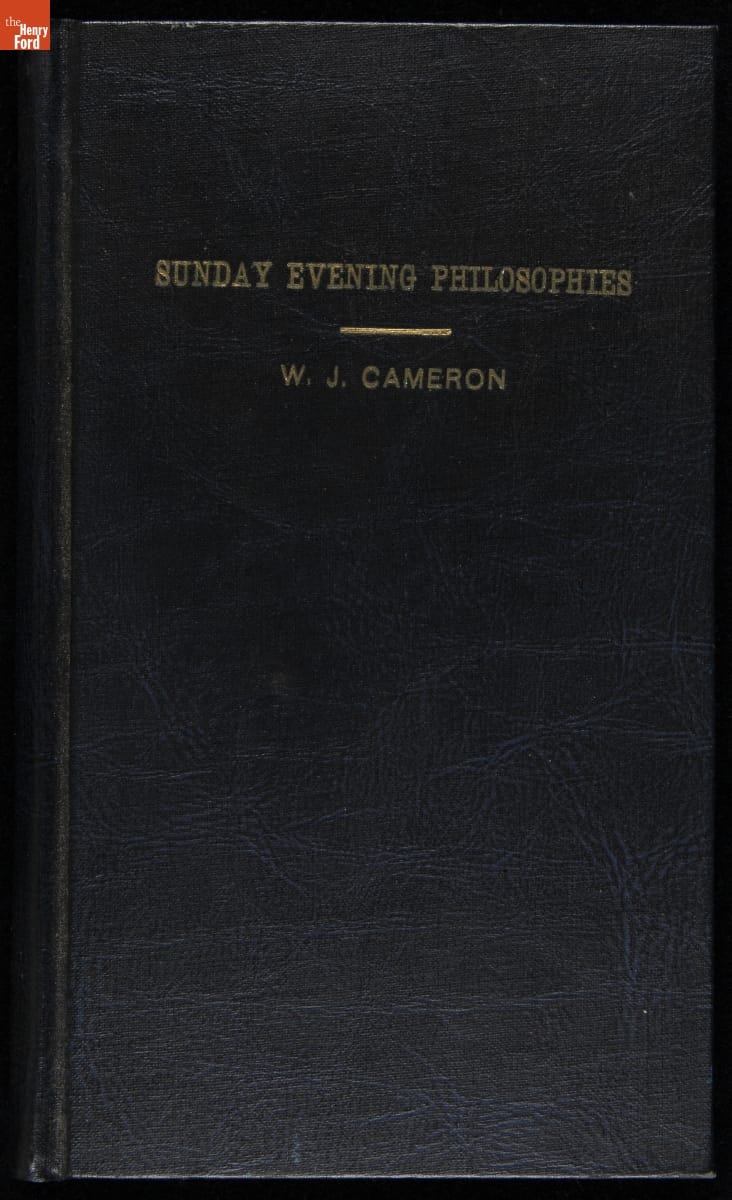
- Talks Given on The Ford Sunday Evening Hour, September 1937-June 1938 - Launched in 1934, the <em>Ford Sunday Evening Hour</em> radio program featured classical music, guest soloists and conductors, and a weekly talk during intermission. Henry Ford asked his friend and advisor William J. Cameron to write and deliver these messages. Cameron, who composed the anti-Semitic articles for <em>The Dearborn Independent</em>, now peddled softer populist views--avoiding extremes and any direct attacks on politicians, ethnic groups, or Wall Street financiers.
- July 01, 1938
- Collections - Artifact
Talks Given on The Ford Sunday Evening Hour, September 1937-June 1938
Launched in 1934, the Ford Sunday Evening Hour radio program featured classical music, guest soloists and conductors, and a weekly talk during intermission. Henry Ford asked his friend and advisor William J. Cameron to write and deliver these messages. Cameron, who composed the anti-Semitic articles for The Dearborn Independent, now peddled softer populist views--avoiding extremes and any direct attacks on politicians, ethnic groups, or Wall Street financiers.