
Search
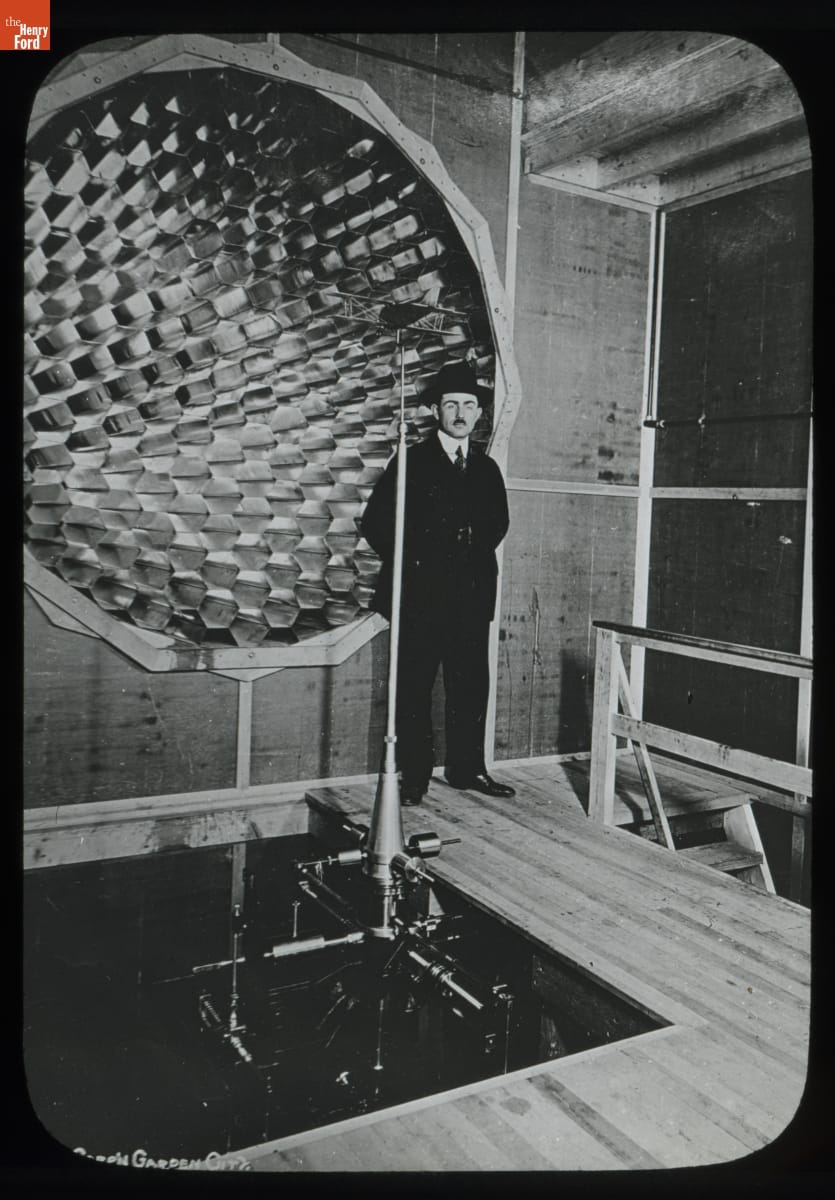
- Man with Wind Tunnel at Curtiss Engineering Corporation, Garden City, New York, 1917-1931 - Aircraft manufacturer Glenn Curtiss established the Curtiss Engineering Corporation at Garden City, New York, in 1917. He built a cutting-edge facility that became the center of Curtiss's research and development activities. Amenities included three wind tunnels, the largest of which was 70 feet long and could produce wind speeds near 100 miles per hour.
- 1917-1931
- Collections - Artifact
Man with Wind Tunnel at Curtiss Engineering Corporation, Garden City, New York, 1917-1931
Aircraft manufacturer Glenn Curtiss established the Curtiss Engineering Corporation at Garden City, New York, in 1917. He built a cutting-edge facility that became the center of Curtiss's research and development activities. Amenities included three wind tunnels, the largest of which was 70 feet long and could produce wind speeds near 100 miles per hour.
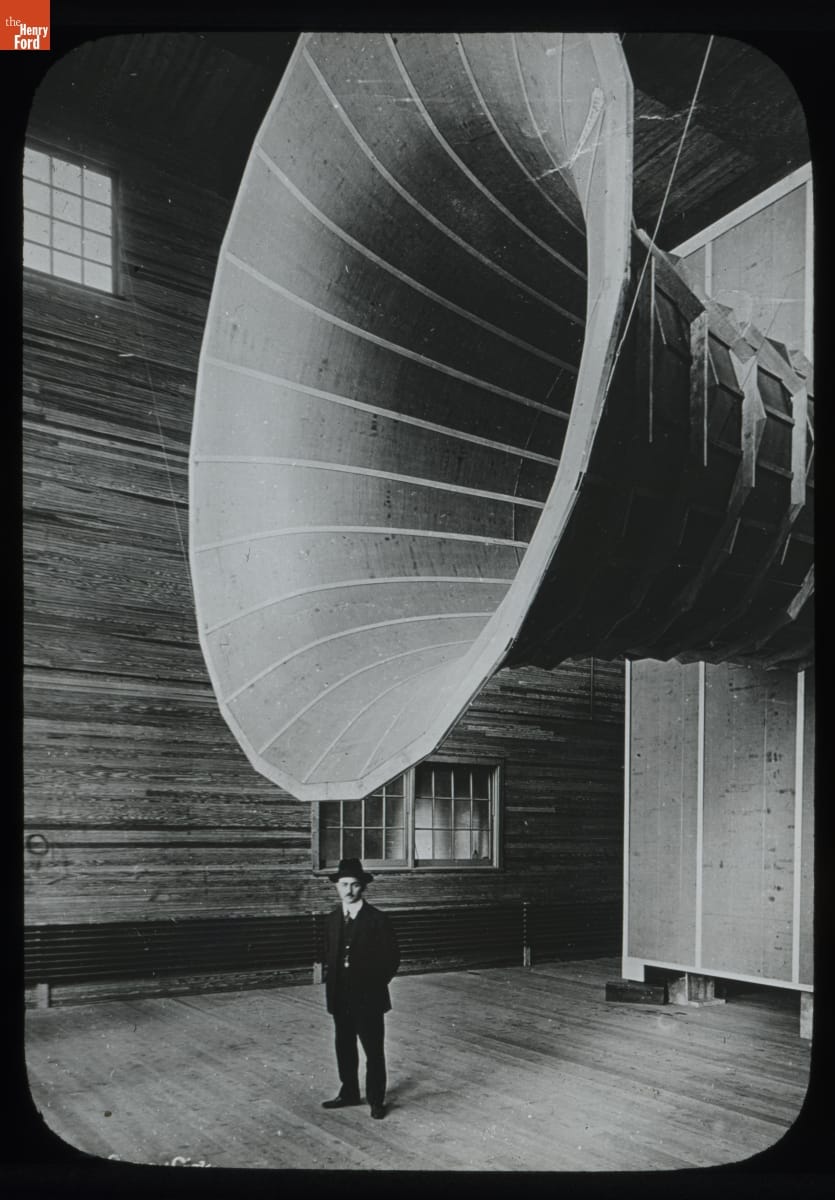
- Man Standing in the Experimental Chamber at Curtiss Engineering Corporation, Garden City, New York, 1917-1931 - Aircraft manufacturer Glenn Curtiss established the Curtiss Engineering Corporation at Garden City, New York, in 1917. He built a cutting-edge facility that became the center of Curtiss's research and development activities. Amenities included three wind tunnels, the largest of which was 70 feet long and could produce wind speeds near 100 miles per hour.
- 1917-1931
- Collections - Artifact
Man Standing in the Experimental Chamber at Curtiss Engineering Corporation, Garden City, New York, 1917-1931
Aircraft manufacturer Glenn Curtiss established the Curtiss Engineering Corporation at Garden City, New York, in 1917. He built a cutting-edge facility that became the center of Curtiss's research and development activities. Amenities included three wind tunnels, the largest of which was 70 feet long and could produce wind speeds near 100 miles per hour.
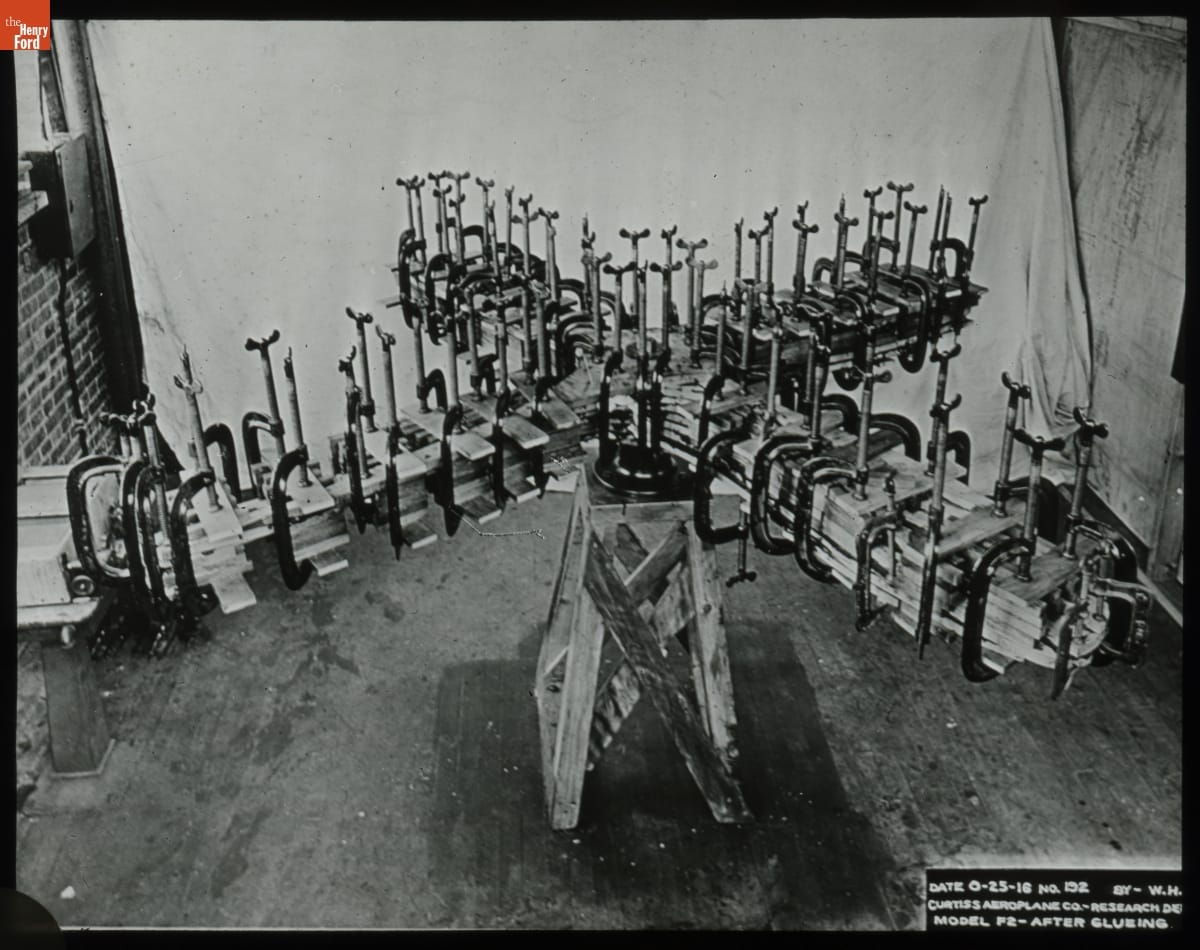
- Propeller for a Curtiss Model F-2 Flying Boat after Gluing, 1916 - Most early airplane propellers were made from laminated wood. The material was light, resilient, and easy to form into the complex shapes required. This photograph shows a propeller for a Curtiss Model F-2 flying boat under construction in 1916. Several layers of wood have been stacked and glued together, and then clamped tight while the glue cures.
- August 25, 1916
- Collections - Artifact
Propeller for a Curtiss Model F-2 Flying Boat after Gluing, 1916
Most early airplane propellers were made from laminated wood. The material was light, resilient, and easy to form into the complex shapes required. This photograph shows a propeller for a Curtiss Model F-2 flying boat under construction in 1916. Several layers of wood have been stacked and glued together, and then clamped tight while the glue cures.