
Search
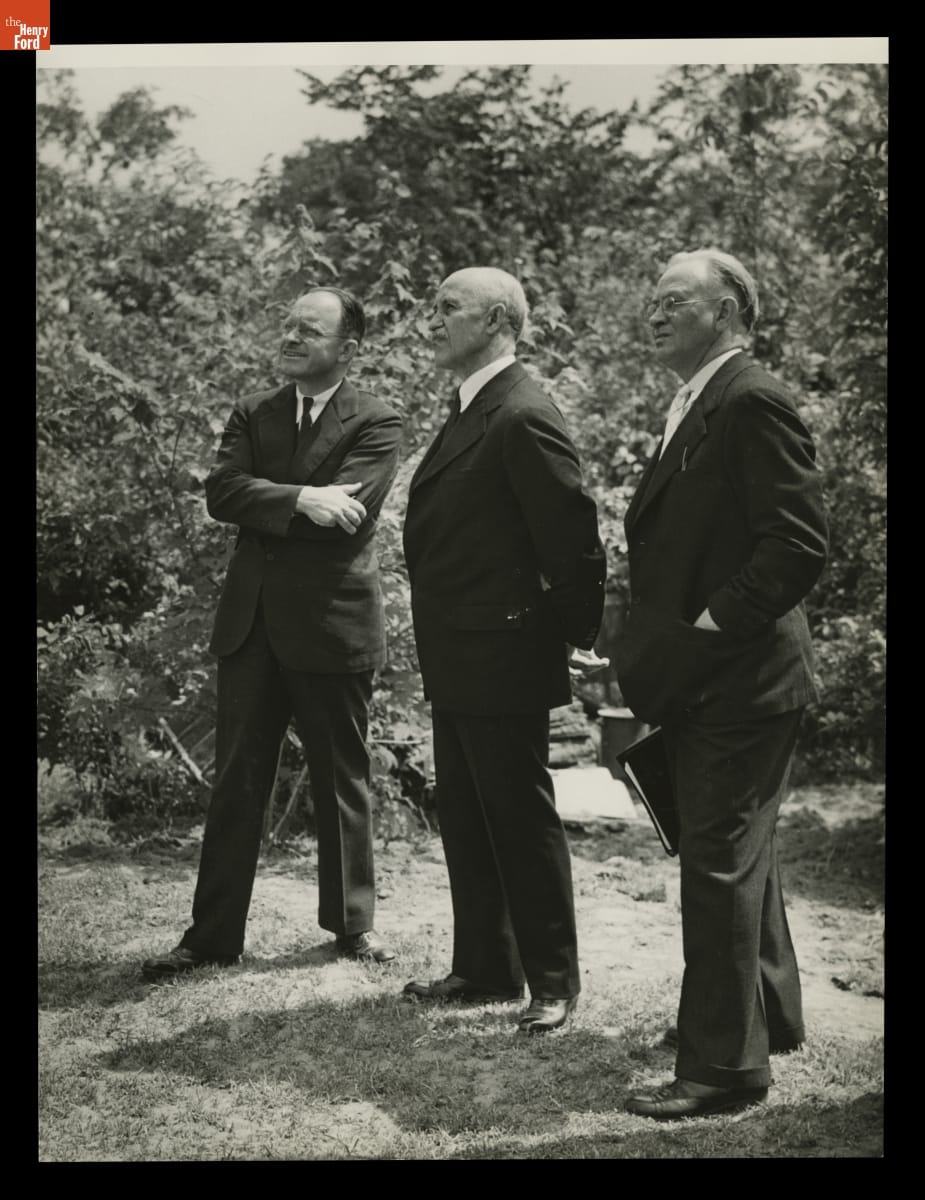
- Fred Black, Orville Wright, and Edward Cutler during Reconstruction of Wright Home in Greenfield Village, June 1937 - Fred Black headed Ford Motor Company's advertising department. As a pilot and aviation enthusiast, Black coordinated relocation of Wright Cycle Shop and the Wright Home from Dayton, Ohio, to Henry Ford's Greenfield Village in Dearborn, Michigan. Architect Edward Cutler oversaw reassembly of the buildings. Orville Wright shared his own unique insights to ensure the project's accuracy.
- June 26, 1937
- Collections - Artifact
Fred Black, Orville Wright, and Edward Cutler during Reconstruction of Wright Home in Greenfield Village, June 1937
Fred Black headed Ford Motor Company's advertising department. As a pilot and aviation enthusiast, Black coordinated relocation of Wright Cycle Shop and the Wright Home from Dayton, Ohio, to Henry Ford's Greenfield Village in Dearborn, Michigan. Architect Edward Cutler oversaw reassembly of the buildings. Orville Wright shared his own unique insights to ensure the project's accuracy.
- Marking the Supports of Charles Steinmetz Cabin before Dismantling for the Move to Greenfield Village, February 22, 1930 - Charles Steinmetz owned this cabin overlooking a tributary of the Mohawk River, just outside of Schenectady, New York. The cabin's simplicity was a contrast to the General Electric laboratories where Steinmetz spent his workweek. It served as a getaway -- for quiet study or writing, but also for more animated weekend camp gatherings for selected friends and associates.

- February 22, 1930
- Collections - Artifact
Marking the Supports of Charles Steinmetz Cabin before Dismantling for the Move to Greenfield Village, February 22, 1930
Charles Steinmetz owned this cabin overlooking a tributary of the Mohawk River, just outside of Schenectady, New York. The cabin's simplicity was a contrast to the General Electric laboratories where Steinmetz spent his workweek. It served as a getaway -- for quiet study or writing, but also for more animated weekend camp gatherings for selected friends and associates.
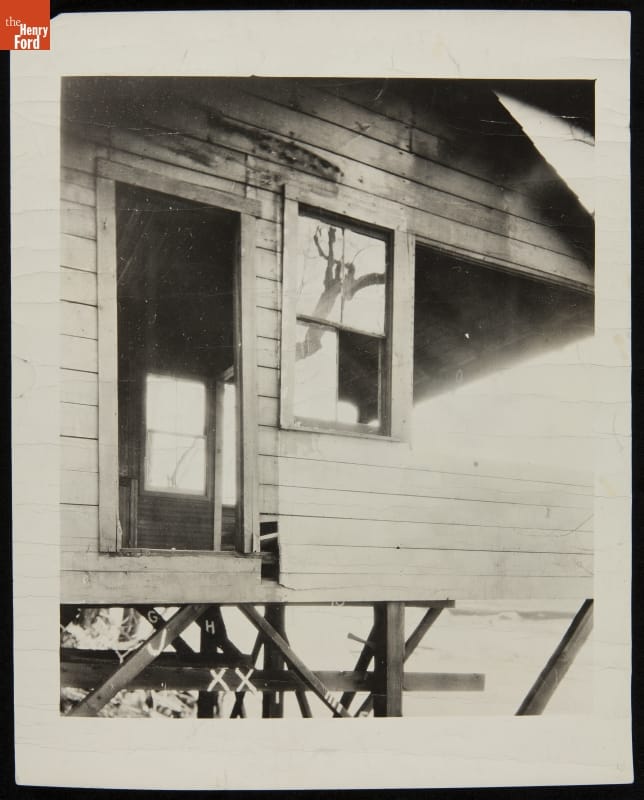
- Preparing Charles Steinmetz Cabin for Dismantling before the Move to Greenfield Village, February 22, 1930 - Charles Steinmetz owned this cabin overlooking a tributary of the Mohawk River, just outside of Schenectady, New York. The cabin's simplicity was a contrast to the General Electric laboratories where Steinmetz spent his workweek. It served as a getaway -- for quiet study or writing, but also for more animated weekend camp gatherings for selected friends and associates.
- February 22, 1930
- Collections - Artifact
Preparing Charles Steinmetz Cabin for Dismantling before the Move to Greenfield Village, February 22, 1930
Charles Steinmetz owned this cabin overlooking a tributary of the Mohawk River, just outside of Schenectady, New York. The cabin's simplicity was a contrast to the General Electric laboratories where Steinmetz spent his workweek. It served as a getaway -- for quiet study or writing, but also for more animated weekend camp gatherings for selected friends and associates.
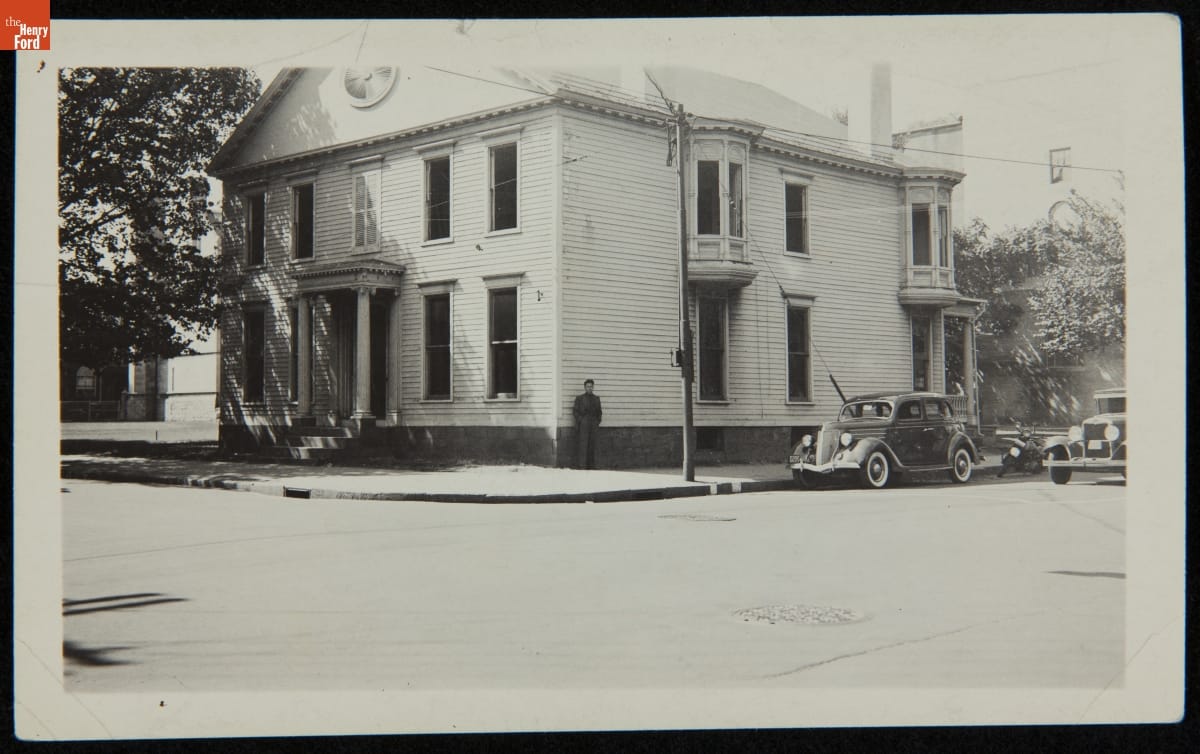
- Documentary Photograph of Noah Webster Home before Dismantling and Relocation to Greenfield Village, 1936 - This is textbook pioneer and spelling reformer Noah Webster's home on its original site in New Haven, Connecticut. Henry Ford admired Webster and recognized his house as an important piece of American history. Ford had the building moved to Greenfield Village - his historical outdoor museum in Dearborn, Michigan. This view documents architectural details, including second floor bay windows not moved with the house.
- 1936
- Collections - Artifact
Documentary Photograph of Noah Webster Home before Dismantling and Relocation to Greenfield Village, 1936
This is textbook pioneer and spelling reformer Noah Webster's home on its original site in New Haven, Connecticut. Henry Ford admired Webster and recognized his house as an important piece of American history. Ford had the building moved to Greenfield Village - his historical outdoor museum in Dearborn, Michigan. This view documents architectural details, including second floor bay windows not moved with the house.
- Proposed Layout for Henry Ford Museum Collections Exhibits, 1930-1935 -

- 1930-1935
- Collections - Artifact
Proposed Layout for Henry Ford Museum Collections Exhibits, 1930-1935
- Documentary Photograph of Noah Webster Home before Dismantling and Relocation to Greenfield Village, 1936 - This is textbook pioneer and spelling reformer Noah Webster's home on its original site in New Haven, Connecticut. Henry Ford admired Webster and recognized his house as an important piece of American history. Ford had the building moved to Greenfield Village - his historical outdoor museum in Dearborn, Michigan. This view documents the house shortly before the move to Greenfield Village.

- 1936
- Collections - Artifact
Documentary Photograph of Noah Webster Home before Dismantling and Relocation to Greenfield Village, 1936
This is textbook pioneer and spelling reformer Noah Webster's home on its original site in New Haven, Connecticut. Henry Ford admired Webster and recognized his house as an important piece of American history. Ford had the building moved to Greenfield Village - his historical outdoor museum in Dearborn, Michigan. This view documents the house shortly before the move to Greenfield Village.
- Orville Wright and Henry Ford with Greenfield Village Architect Edward Cutler in Dayton, Ohio, October 1936 - Henry Ford admired brothers Wilbur and Orville Wright. They were all sons of the Midwest (Ford from Michigan, the Wrights from Ohio) who achieved great success in the early 20th century. After Ford purchased the Wrights' home and cycle shop in 1936, Orville Wright helped him locate original family furnishings, books and equipment to outfit the buildings.

- October 27, 1936
- Collections - Artifact
Orville Wright and Henry Ford with Greenfield Village Architect Edward Cutler in Dayton, Ohio, October 1936
Henry Ford admired brothers Wilbur and Orville Wright. They were all sons of the Midwest (Ford from Michigan, the Wrights from Ohio) who achieved great success in the early 20th century. After Ford purchased the Wrights' home and cycle shop in 1936, Orville Wright helped him locate original family furnishings, books and equipment to outfit the buildings.
- Documentary Photograph of Noah Webster Home before Dismantling and Relocation to Greenfield Village, 1936 - This is textbook pioneer and spelling reformer Noah Webster's home on its original site in New Haven, Connecticut. Henry Ford admired Webster and recognized his house as an important piece of American history. Ford had the building moved to Greenfield Village - his historical outdoor museum in Dearborn, Michigan. This view documents the original back porch and additions not moved with the house.

- 1936
- Collections - Artifact
Documentary Photograph of Noah Webster Home before Dismantling and Relocation to Greenfield Village, 1936
This is textbook pioneer and spelling reformer Noah Webster's home on its original site in New Haven, Connecticut. Henry Ford admired Webster and recognized his house as an important piece of American history. Ford had the building moved to Greenfield Village - his historical outdoor museum in Dearborn, Michigan. This view documents the original back porch and additions not moved with the house.
- The Reminiscences of Edward J. Cutler, Volumes I and II - As part of Ford Motor Company's 50th anniversary commemoration in 1953, company archivists conducted an extensive oral history project. During the 1950s, they interviewed over 300 individuals who had a connection to Henry Ford or his company. Edward Cutler was the initial architect for Henry Ford's Greenfield Village. He also designed or adapted other buildings found within Ford's collection of historic structures.

- March 01, 1952
- Collections - Artifact
The Reminiscences of Edward J. Cutler, Volumes I and II
As part of Ford Motor Company's 50th anniversary commemoration in 1953, company archivists conducted an extensive oral history project. During the 1950s, they interviewed over 300 individuals who had a connection to Henry Ford or his company. Edward Cutler was the initial architect for Henry Ford's Greenfield Village. He also designed or adapted other buildings found within Ford's collection of historic structures.
- Preparing Charles Steinmetz Cabin for Dismantling before the Move to Greenfield Village, February 22, 1930 - Charles Steinmetz owned this cabin overlooking a tributary of the Mohawk River, just outside of Schenectady, New York. The cabin's simplicity was a contrast to the General Electric laboratories where Steinmetz spent his workweek. It served as a getaway -- for quiet study or writing, but also for more animated weekend camp gatherings for selected friends and associates.

- February 22, 1930
- Collections - Artifact
Preparing Charles Steinmetz Cabin for Dismantling before the Move to Greenfield Village, February 22, 1930
Charles Steinmetz owned this cabin overlooking a tributary of the Mohawk River, just outside of Schenectady, New York. The cabin's simplicity was a contrast to the General Electric laboratories where Steinmetz spent his workweek. It served as a getaway -- for quiet study or writing, but also for more animated weekend camp gatherings for selected friends and associates.