
Search
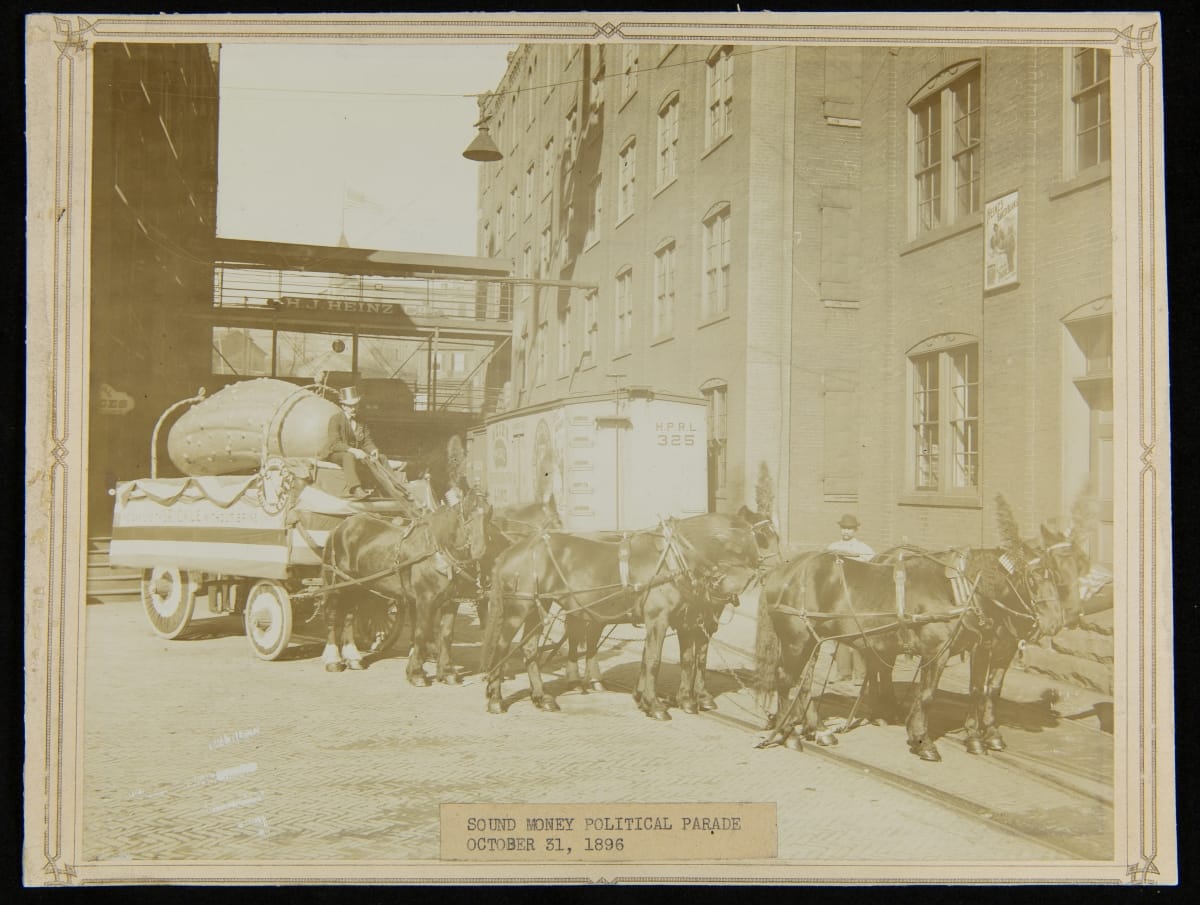
- Heinz Float for the Sound Money Political Parade in Pittsburgh, Pennsylvania, October 31, 1896 - During the 1896 election campaign, "Sound Money" political parades were held in San Francisco and New York City in support of presidential candidate William McKinley. The H.J. Heinz Company participated in the parade held in New York with this float featuring a giant pickle. McKinley would go on to defeat candidate William Jennings Bryan to become President.
- October 31, 1896
- Collections - Artifact
Heinz Float for the Sound Money Political Parade in Pittsburgh, Pennsylvania, October 31, 1896
During the 1896 election campaign, "Sound Money" political parades were held in San Francisco and New York City in support of presidential candidate William McKinley. The H.J. Heinz Company participated in the parade held in New York with this float featuring a giant pickle. McKinley would go on to defeat candidate William Jennings Bryan to become President.
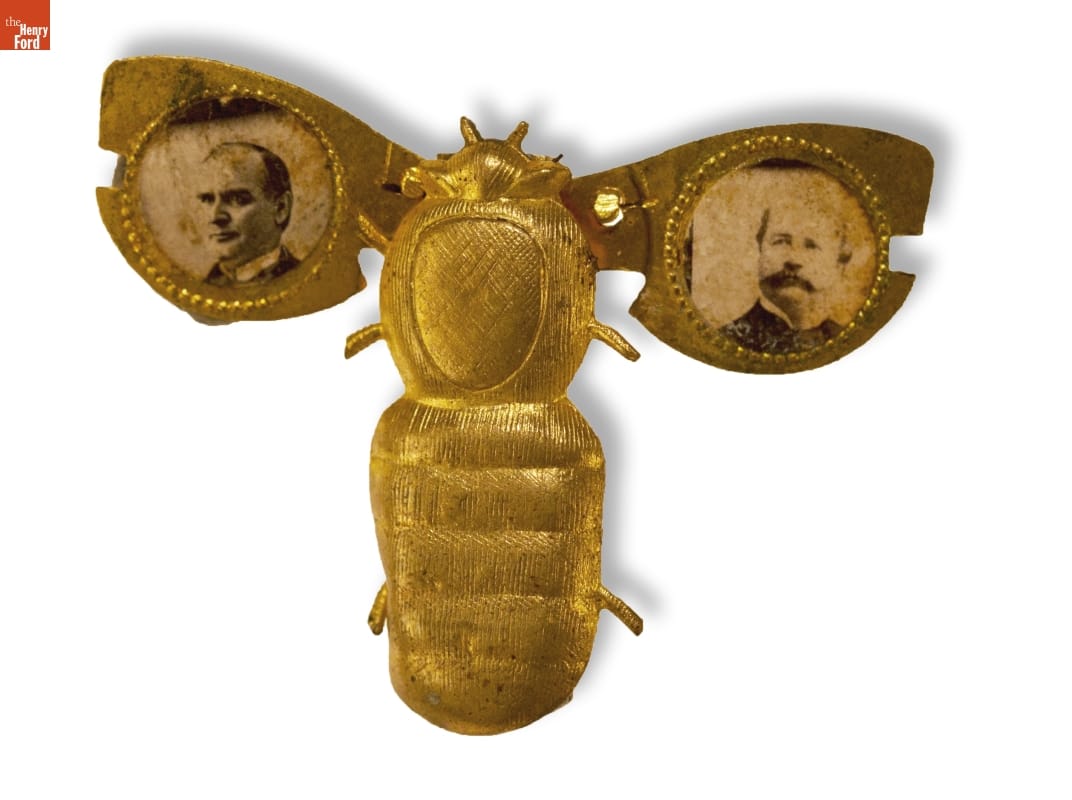
- McKinley-Hobart Campaign Badge, 1896 - In 1896, voters who favored a currency backed by gold were called "gold bugs." They used a gold-colored bug as a symbol of their support for this policy. The wings of this mechanical button are hidden beneath the insect's body. Pressing the spring releases images of the Republican presidential ticket and "gold bug" favorites, William McKinley and Garret Hobart.
- 1896
- Collections - Artifact
McKinley-Hobart Campaign Badge, 1896
In 1896, voters who favored a currency backed by gold were called "gold bugs." They used a gold-colored bug as a symbol of their support for this policy. The wings of this mechanical button are hidden beneath the insect's body. Pressing the spring releases images of the Republican presidential ticket and "gold bug" favorites, William McKinley and Garret Hobart.
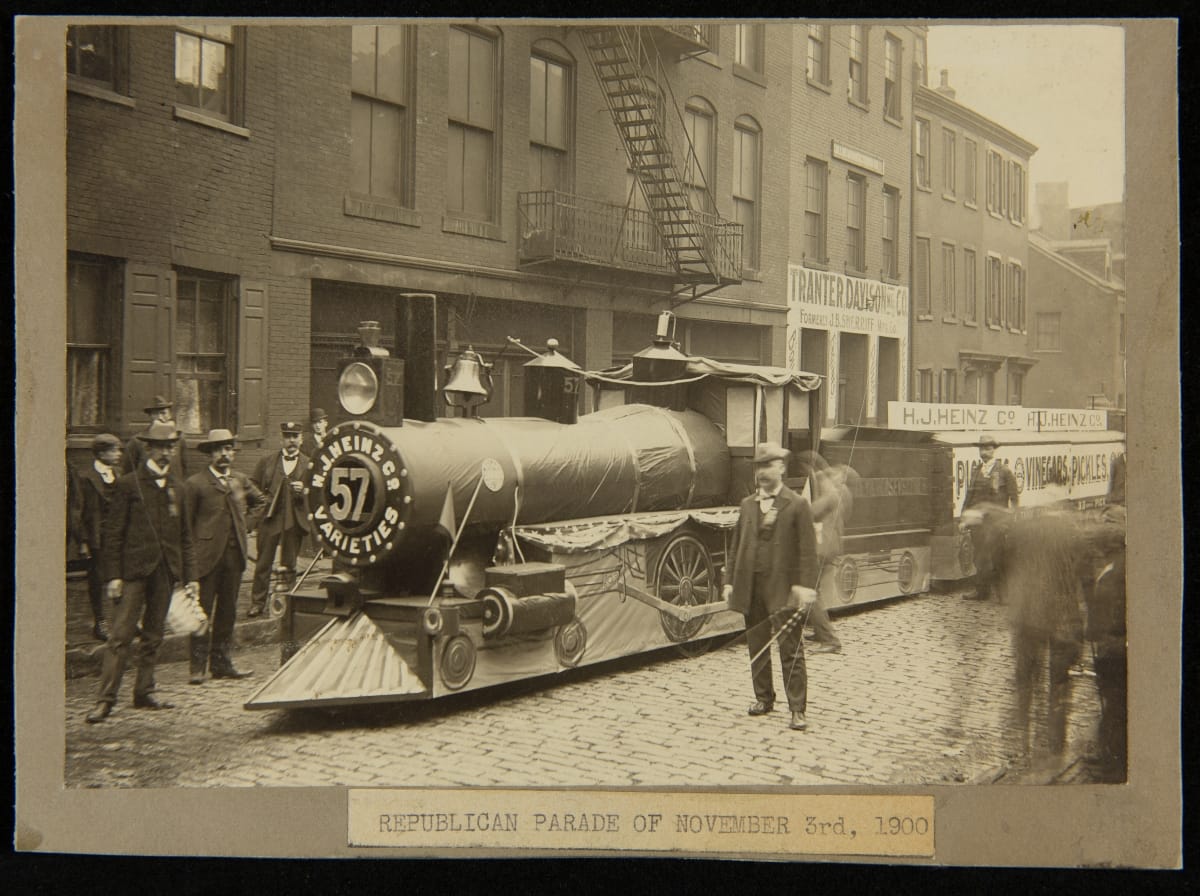
- H. J. Heinz Company Float at a Republican Parade, November 3, 1900 - The presidential election of 1900 saw Republican candidate William McKinley run for reelection against Democratic candidate William Jennings Bryan, a repeat of the 1896 election. The H.J. Heinz Company participated in a political parade on November 3, 1900, in support of William McKinley with a float pulled by horses and another resembling a train advertising Heinz's "57 Varieties." McKinley defeated Bryan three days later.
- November 03, 1900
- Collections - Artifact
H. J. Heinz Company Float at a Republican Parade, November 3, 1900
The presidential election of 1900 saw Republican candidate William McKinley run for reelection against Democratic candidate William Jennings Bryan, a repeat of the 1896 election. The H.J. Heinz Company participated in a political parade on November 3, 1900, in support of William McKinley with a float pulled by horses and another resembling a train advertising Heinz's "57 Varieties." McKinley defeated Bryan three days later.
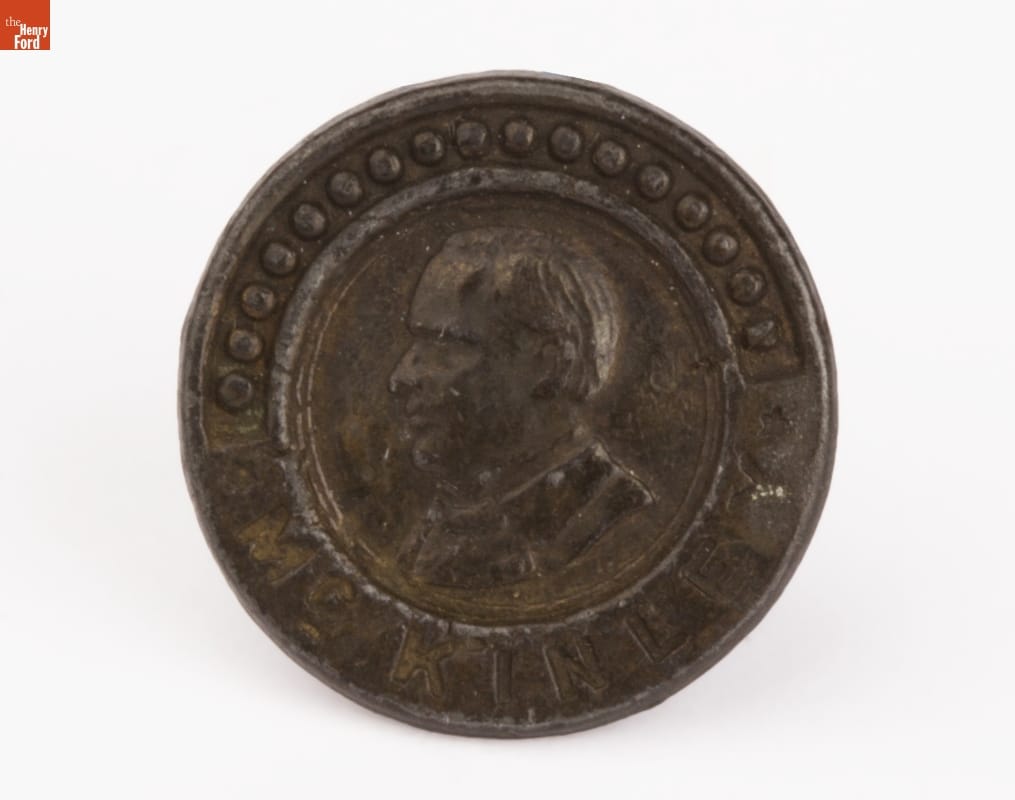
- William McKinley Campaign Button, ca. 1896 - William McKinley was elected president in 1896 and 1900. In each election, McKinley employed a "front porch campaign" -- a strategy where supporters visited the candidate's home to hear the nominee speak. It worked. Thousands came and then returned to their own homes to get out the vote. McKinley defeated Democratic Party candidate William Jennings Bryan both times.
- ca. 1896-1900
- Collections - Artifact
William McKinley Campaign Button, ca. 1896
William McKinley was elected president in 1896 and 1900. In each election, McKinley employed a "front porch campaign" -- a strategy where supporters visited the candidate's home to hear the nominee speak. It worked. Thousands came and then returned to their own homes to get out the vote. McKinley defeated Democratic Party candidate William Jennings Bryan both times.
- McKinley-Hobart Campaign Button, 1896 - In 1896, the Republicans nominated William McKinley for president. McKinley and the Republican Party advocated for the continued use of a stable, gold-backed dollar and protective tariffs to pull the country out of its economic depression. Supporters touted McKinley and his twin campaign themes of "Sound Money" and "Protection." It must have worked -- McKinley won.

- 1896
- Collections - Artifact
McKinley-Hobart Campaign Button, 1896
In 1896, the Republicans nominated William McKinley for president. McKinley and the Republican Party advocated for the continued use of a stable, gold-backed dollar and protective tariffs to pull the country out of its economic depression. Supporters touted McKinley and his twin campaign themes of "Sound Money" and "Protection." It must have worked -- McKinley won.
- McKinley and Hobart Campaign Umbrella, 1896 - In 1896, the Republicans nominated William McKinley for president. McKinley and the Republican Party advocated for the continued use of a stable, gold-backed dollar and protective tariffs to pull the country out of its economic depression. Supporters touted McKinley and his twin campaign themes of "Sound Money" and "Protection." It must have worked -- McKinley won.

- 1896
- Collections - Artifact
McKinley and Hobart Campaign Umbrella, 1896
In 1896, the Republicans nominated William McKinley for president. McKinley and the Republican Party advocated for the continued use of a stable, gold-backed dollar and protective tariffs to pull the country out of its economic depression. Supporters touted McKinley and his twin campaign themes of "Sound Money" and "Protection." It must have worked -- McKinley won.
- McKinley-Hobart Campaign Button, 1896 - In 1896, America was still reeling from a depression that began in 1893 during the previous Democratic administration. The Republican Party promised a return to prosperity and nominated William McKinley for president. Thousands visited the nominee at his home in Canton, Ohio, where he delivered his campaign speeches. Voters approved and sent McKinley and his running mate, Garret Hobart, to Washington.
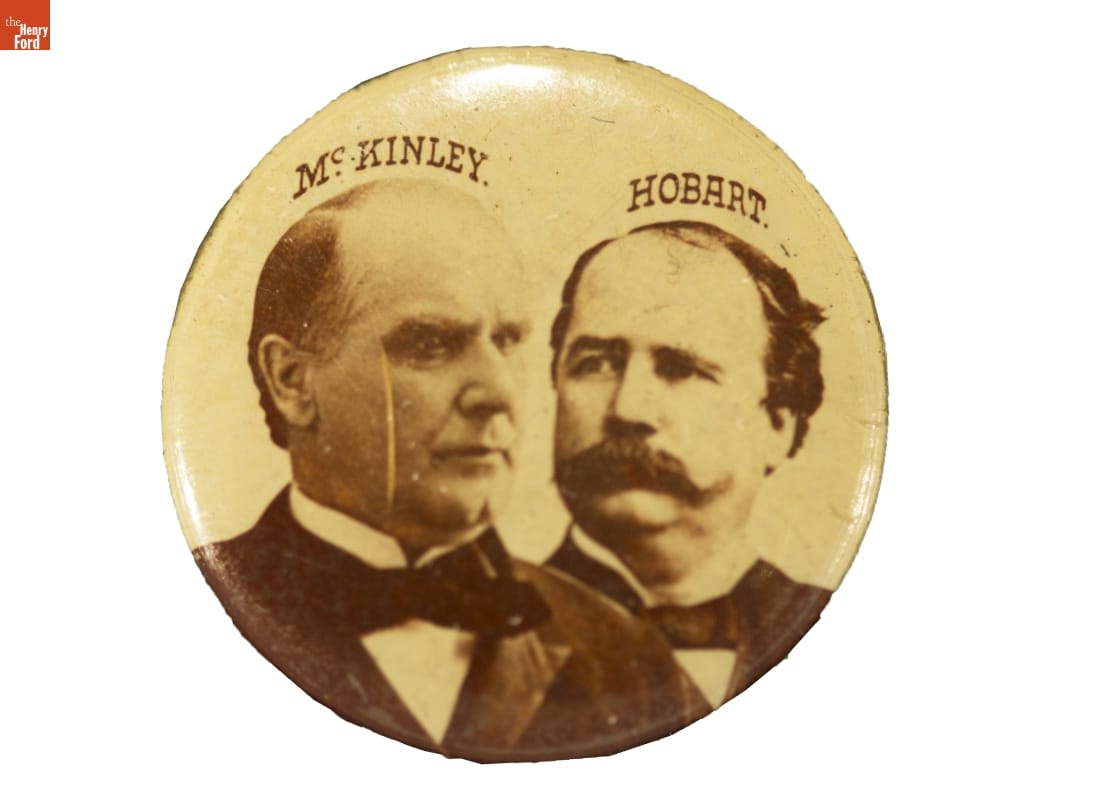
- 1896
- Collections - Artifact
McKinley-Hobart Campaign Button, 1896
In 1896, America was still reeling from a depression that began in 1893 during the previous Democratic administration. The Republican Party promised a return to prosperity and nominated William McKinley for president. Thousands visited the nominee at his home in Canton, Ohio, where he delivered his campaign speeches. Voters approved and sent McKinley and his running mate, Garret Hobart, to Washington.
- McKinley-Hobart Campaign Button, 1896 - In 1896, America was still reeling from a depression that began in 1893 during the previous Democratic administration. The Republican Party promised a return to prosperity and nominated William McKinley for president. Thousands visited the nominee at his home in Canton, Ohio, where he delivered his campaign speeches. Voters approved and sent McKinley and his running mate, Garret Hobart, to Washington.
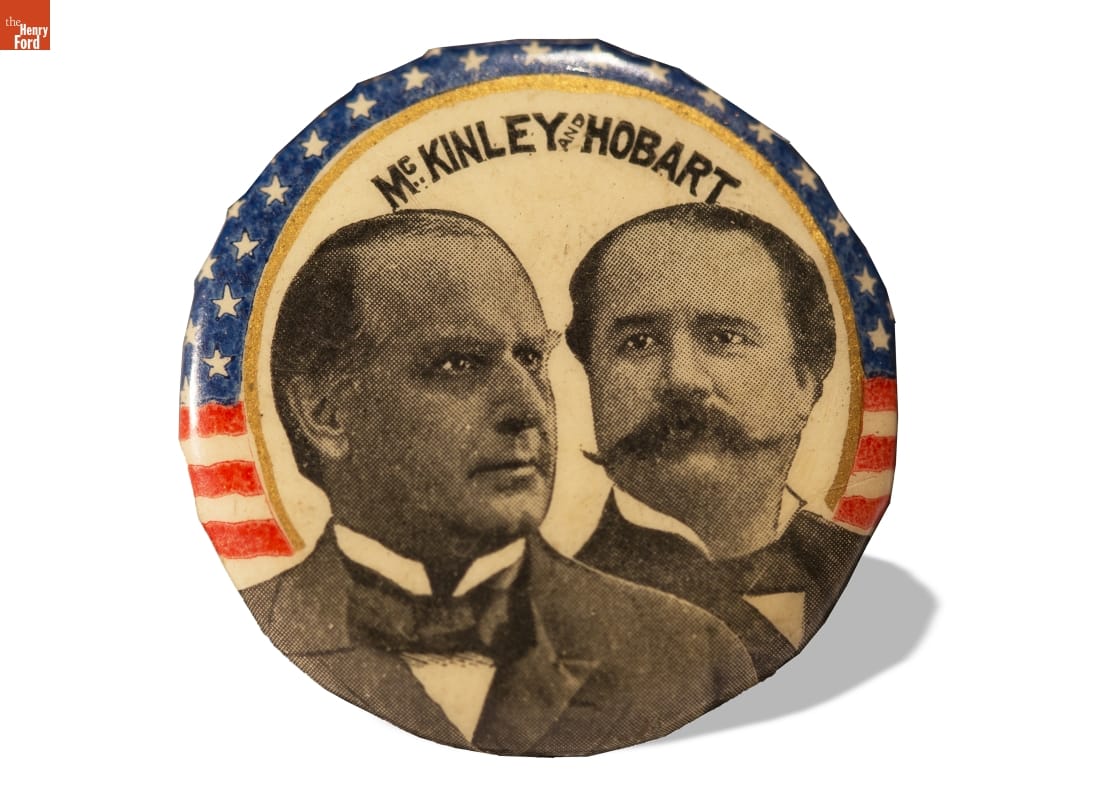
- 1896
- Collections - Artifact
McKinley-Hobart Campaign Button, 1896
In 1896, America was still reeling from a depression that began in 1893 during the previous Democratic administration. The Republican Party promised a return to prosperity and nominated William McKinley for president. Thousands visited the nominee at his home in Canton, Ohio, where he delivered his campaign speeches. Voters approved and sent McKinley and his running mate, Garret Hobart, to Washington.
- McKinley-Hobart Campaign Button, 1896 - In 1896, America was still reeling from a depression that began in 1893 during the previous Democratic administration. The Republican Party promised a return to prosperity and nominated William McKinley for president. Thousands visited the nominee at his home in Canton, Ohio, where he delivered his campaign speeches. Voters approved and sent McKinley and his running mate, Garret Hobart, to Washington.
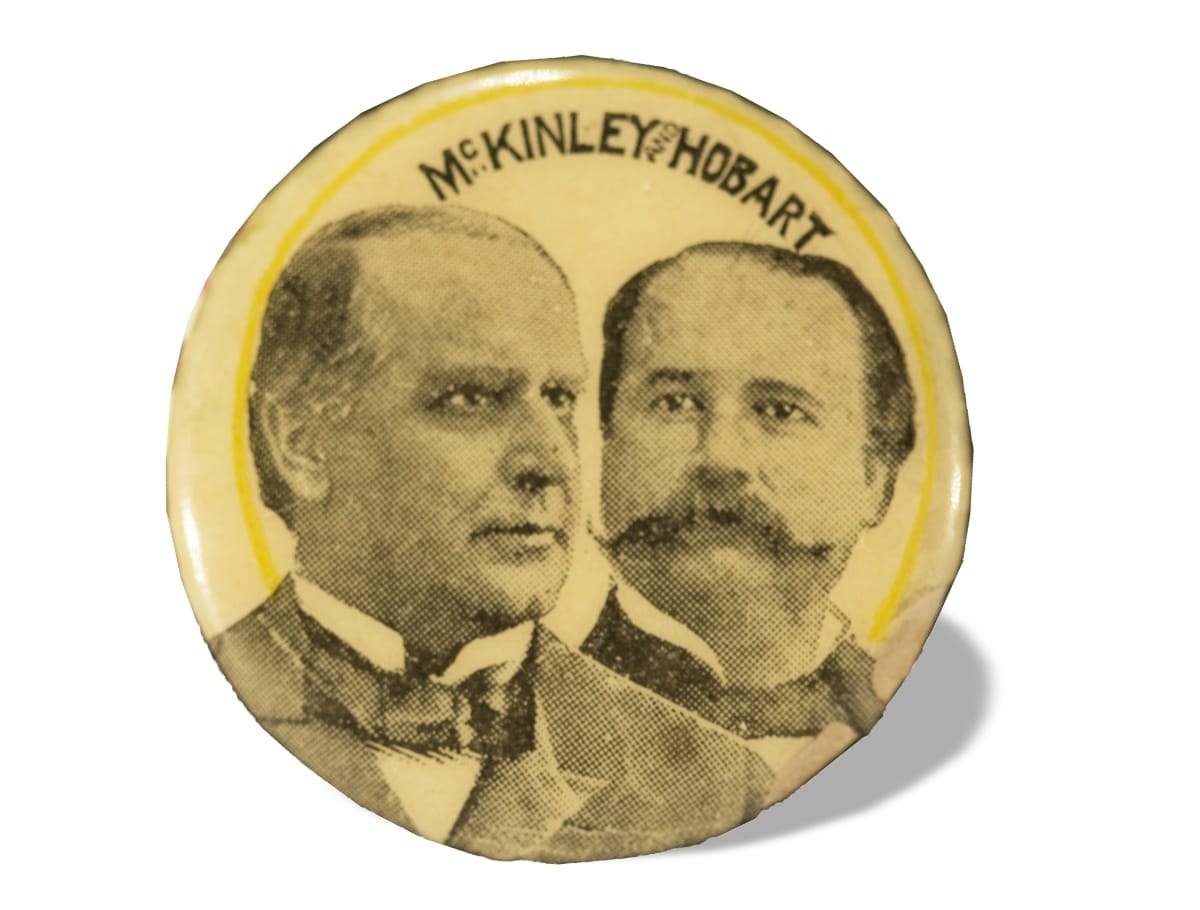
- 1896
- Collections - Artifact
McKinley-Hobart Campaign Button, 1896
In 1896, America was still reeling from a depression that began in 1893 during the previous Democratic administration. The Republican Party promised a return to prosperity and nominated William McKinley for president. Thousands visited the nominee at his home in Canton, Ohio, where he delivered his campaign speeches. Voters approved and sent McKinley and his running mate, Garret Hobart, to Washington.
- McKinley-Hobart Campaign Button, 1896 - In 1896, America was still reeling from a depression that began in 1893 during the previous Democratic administration. The Republican Party promised a return to prosperity and nominated William McKinley for president. Thousands visited the nominee at his home in Canton, Ohio, where he delivered his campaign speeches. Voters approved and sent McKinley and his running mate, Garret Hobart, to Washington.

- 1896
- Collections - Artifact
McKinley-Hobart Campaign Button, 1896
In 1896, America was still reeling from a depression that began in 1893 during the previous Democratic administration. The Republican Party promised a return to prosperity and nominated William McKinley for president. Thousands visited the nominee at his home in Canton, Ohio, where he delivered his campaign speeches. Voters approved and sent McKinley and his running mate, Garret Hobart, to Washington.