
Search
- Edsel Ford and William B. Stout at Ford Airport, Dearborn, Michigan, April 1925 -

- April 01, 1925
- Collections - Artifact
Edsel Ford and William B. Stout at Ford Airport, Dearborn, Michigan, April 1925
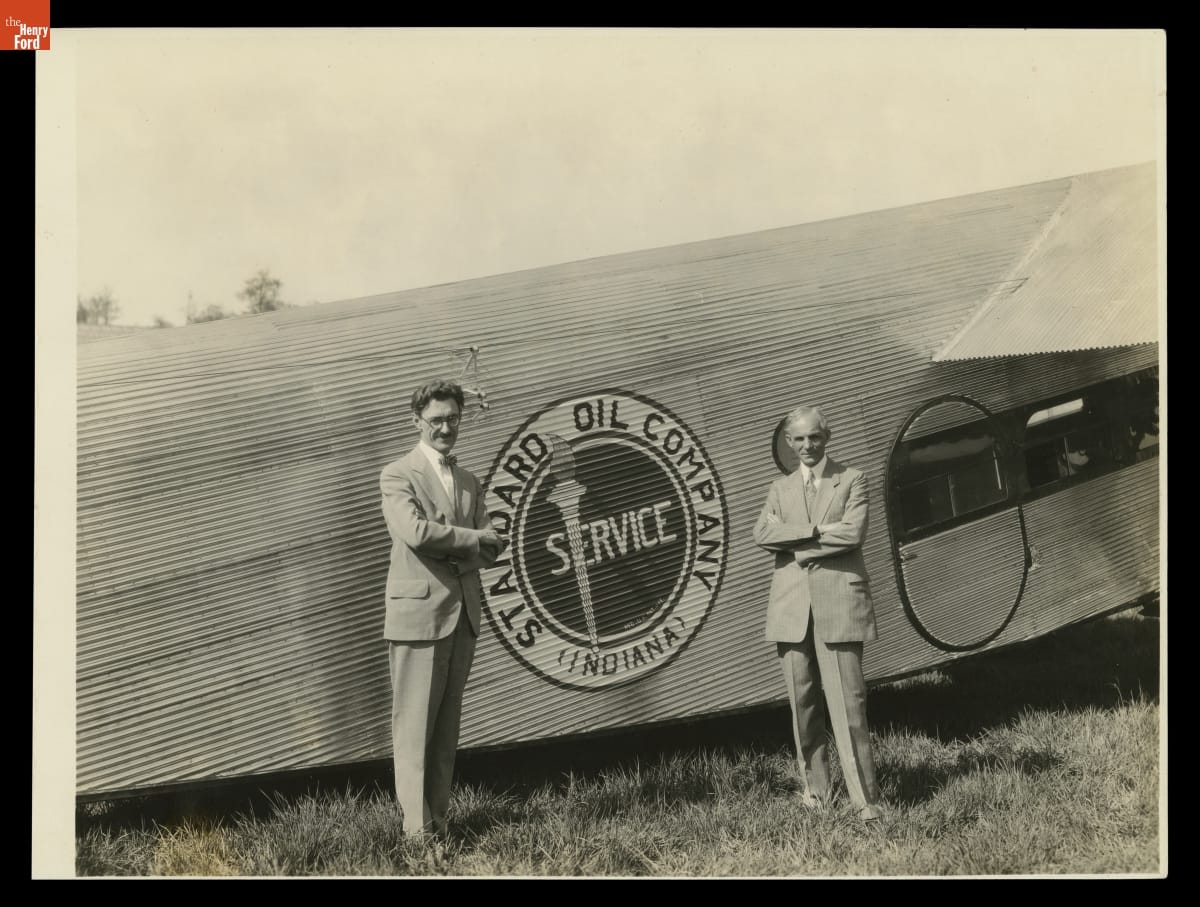
- William B. Stout and Henry Ford with a Ford Tri-Motor Airplane, circa 1927 - William B. Stout and Henry Ford pose beside a Ford Tri-Motor in this circa 1927 photo. Ford purchased the Stout Metal Aircraft Company in 1925, and Stout's tri-motor 3-AT airplane influenced the design of the successful Ford Tri-Motor aircraft produced from 1926 to 1933.
- circa 1927
- Collections - Artifact
William B. Stout and Henry Ford with a Ford Tri-Motor Airplane, circa 1927
William B. Stout and Henry Ford pose beside a Ford Tri-Motor in this circa 1927 photo. Ford purchased the Stout Metal Aircraft Company in 1925, and Stout's tri-motor 3-AT airplane influenced the design of the successful Ford Tri-Motor aircraft produced from 1926 to 1933.
- William B. Stout, Charles Lindbergh, Henry Ford, and Edsel Ford at Ford Airport, Dearborn, Michigan, August 10, 1927 - Months after his historic solo flight across the Atlantic, Charles Lindbergh began a national tour to promote commercial aviation. In August 1927, the "Lone Eagle" touched down in Dearborn, Michigan. This photograph shows Lindbergh (second from the left) standing with William Stout and Henry and Edsel Ford. Stout operated a passenger airline after selling his airplane manufacturing business to the Fords.

- 10 August 1927-12 August 1927
- Collections - Artifact
William B. Stout, Charles Lindbergh, Henry Ford, and Edsel Ford at Ford Airport, Dearborn, Michigan, August 10, 1927
Months after his historic solo flight across the Atlantic, Charles Lindbergh began a national tour to promote commercial aviation. In August 1927, the "Lone Eagle" touched down in Dearborn, Michigan. This photograph shows Lindbergh (second from the left) standing with William Stout and Henry and Edsel Ford. Stout operated a passenger airline after selling his airplane manufacturing business to the Fords.
- Henry Ford and William Stout, October 5, 1925 - Henry and Edsel Ford had an early interest in commercial aviation and believed it might become as important as the automobile. The Fords invested in William Stout's metal airplane company and soon built an airport and airplane factory for his use. By the time this photograph was taken, Ford Motor Company had purchased the Stout Metal Airplane Company.

- October 05, 1925
- Collections - Artifact
Henry Ford and William Stout, October 5, 1925
Henry and Edsel Ford had an early interest in commercial aviation and believed it might become as important as the automobile. The Fords invested in William Stout's metal airplane company and soon built an airport and airplane factory for his use. By the time this photograph was taken, Ford Motor Company had purchased the Stout Metal Airplane Company.
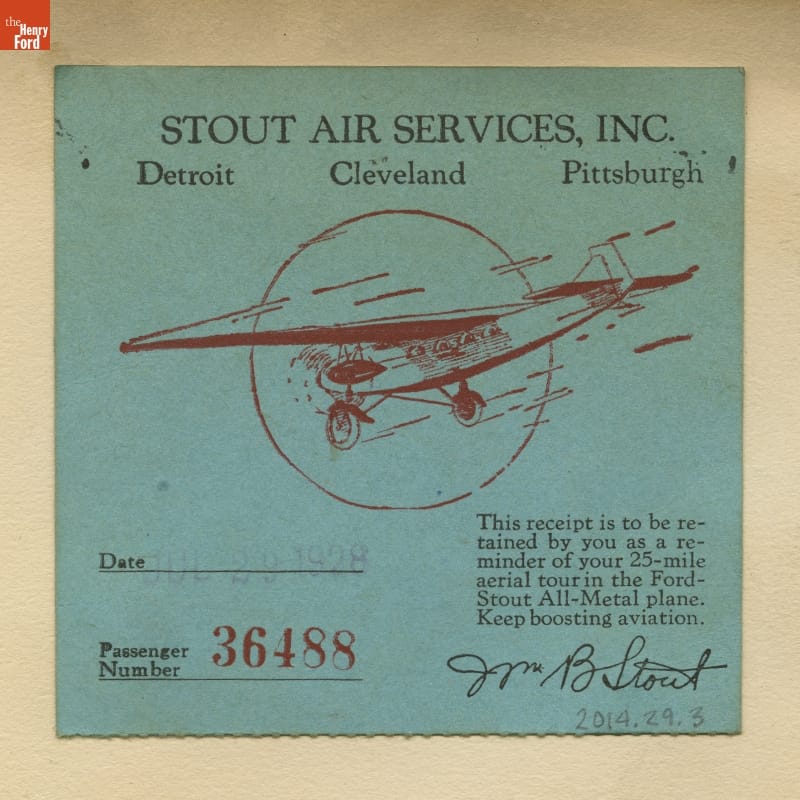
- Souvenir Receipt from a 25-Mile Aerial Tour in the Ford-Stout All-Metal Plane, circa 1928 - Early airlines encouraged interest in airplane travel by offering short aerial tours at relatively low prices. Perhaps the passenger who took this 25-mile tour, via Stout Air Services, in July 1928 later became a full-fare passenger on one of the company's regular flights between Detroit, Cleveland and Pittsburgh.
- circa 1928
- Collections - Artifact
Souvenir Receipt from a 25-Mile Aerial Tour in the Ford-Stout All-Metal Plane, circa 1928
Early airlines encouraged interest in airplane travel by offering short aerial tours at relatively low prices. Perhaps the passenger who took this 25-mile tour, via Stout Air Services, in July 1928 later became a full-fare passenger on one of the company's regular flights between Detroit, Cleveland and Pittsburgh.
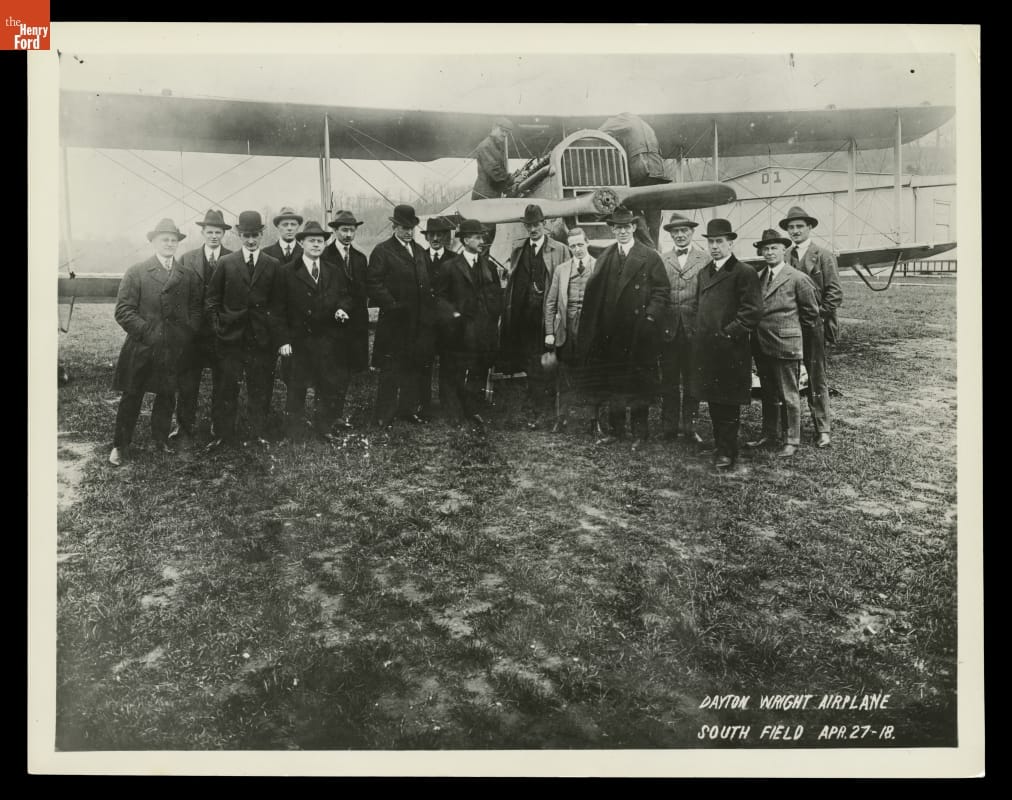
- Orville Wright, William B. Stout, Charles Kettering with De Havilland DH-4, Dayton-Wright Company, South Field, Dayton, Ohio, 1918 - Charles Kettering was one of a group of investors who formed the Dayton-Wright Company in 1917. Orville Wright lent the use of his name and served as a consultant to the firm. Dayton-Wright manufactured some 3,000 DH-4 military airplanes during World War I. General Motors purchased the company in 1919, and Dayton-Wright ended operations in 1923.
- April 27, 1918
- Collections - Artifact
Orville Wright, William B. Stout, Charles Kettering with De Havilland DH-4, Dayton-Wright Company, South Field, Dayton, Ohio, 1918
Charles Kettering was one of a group of investors who formed the Dayton-Wright Company in 1917. Orville Wright lent the use of his name and served as a consultant to the firm. Dayton-Wright manufactured some 3,000 DH-4 military airplanes during World War I. General Motors purchased the company in 1919, and Dayton-Wright ended operations in 1923.
- Henry Ford and William Stout at National Air Tour, Ford Airport, Dearborn, Michigan, October 5, 1925 - From 1925-1931, Ford Motor Company sponsored annual air tours to promote safety and reliability in commercial aircraft. Participating airplanes were rated on their ability to take off and land quickly and maintain consistent speeds. The 1925 contest included 17 planes from 11 different manufacturers. Participants traveled to 13 cities and covered 1,775 miles in six days.

- October 05, 1925
- Collections - Artifact
Henry Ford and William Stout at National Air Tour, Ford Airport, Dearborn, Michigan, October 5, 1925
From 1925-1931, Ford Motor Company sponsored annual air tours to promote safety and reliability in commercial aircraft. Participating airplanes were rated on their ability to take off and land quickly and maintain consistent speeds. The 1925 contest included 17 planes from 11 different manufacturers. Participants traveled to 13 cities and covered 1,775 miles in six days.
- Edsel B. Ford, Richard E. Byrd and William B. Stout with Royal Typewriter's Ford Tri-Motor 4-AT-8, 1927 - One of the most unusual uses of a Tri-Motor was by Royal Typewriter Company of Hartford, Connecticut. Royal purchased its plane in 1927 to deliver typewriters to the company's distributors. To avoid time-consuming landings, Royal dropped the typewriters, three at a time, by parachute. Royal ended the experimental program and sold its Tri-Motor before year's end.

- August 01, 1927
- Collections - Artifact
Edsel B. Ford, Richard E. Byrd and William B. Stout with Royal Typewriter's Ford Tri-Motor 4-AT-8, 1927
One of the most unusual uses of a Tri-Motor was by Royal Typewriter Company of Hartford, Connecticut. Royal purchased its plane in 1927 to deliver typewriters to the company's distributors. To avoid time-consuming landings, Royal dropped the typewriters, three at a time, by parachute. Royal ended the experimental program and sold its Tri-Motor before year's end.
- William Stout with a Model of the "Skycar" Flying Automobile, 1941-1944 - William B. Stout left his Stout Metal Airplane Company in 1930, five years after its purchase by Ford Motor Company. But he never lost his interest in aviation. Stout built a series of four Skycar prototypes between 1931 and 1944. These weren't roadable vehicles but comparatively easy-to-fly small airplanes modeled after automobiles. Skycars were never put into commercial production.

- 1941-1944
- Collections - Artifact
William Stout with a Model of the "Skycar" Flying Automobile, 1941-1944
William B. Stout left his Stout Metal Airplane Company in 1930, five years after its purchase by Ford Motor Company. But he never lost his interest in aviation. Stout built a series of four Skycar prototypes between 1931 and 1944. These weren't roadable vehicles but comparatively easy-to-fly small airplanes modeled after automobiles. Skycars were never put into commercial production.
- Portrait of William B. Stout, 1929 - Engineer William B. Stout established the Stout Metal Airplane Company in 1922 and introduced the first successful all-metal commercial American airplane two years later. Ford Motor Company purchased Stout's firm in 1925. Stout's work contributed to the development of the Ford Tri-Motor, one of the most popular aircraft in early commercial aviation.

- December 04, 1929
- Collections - Artifact
Portrait of William B. Stout, 1929
Engineer William B. Stout established the Stout Metal Airplane Company in 1922 and introduced the first successful all-metal commercial American airplane two years later. Ford Motor Company purchased Stout's firm in 1925. Stout's work contributed to the development of the Ford Tri-Motor, one of the most popular aircraft in early commercial aviation.