
Search
- Map, "Active Ford Plants in Upper Michigan," January 1945 - Through the 1940s, Ford Motor Company maintained significant facilities in Michigan's Upper Peninsula. Sawmills at Iron Mountain, Pequaming, L'Anse, and Alberta produced wood for car bodies. Another mill was planned at Munising but never put into production. Ford owned nearly the entire town of Big Bay and operated its inn as a summer retreat for company executives.

- January 01, 1945
- Collections - Artifact
Map, "Active Ford Plants in Upper Michigan," January 1945
Through the 1940s, Ford Motor Company maintained significant facilities in Michigan's Upper Peninsula. Sawmills at Iron Mountain, Pequaming, L'Anse, and Alberta produced wood for car bodies. Another mill was planned at Munising but never put into production. Ford owned nearly the entire town of Big Bay and operated its inn as a summer retreat for company executives.
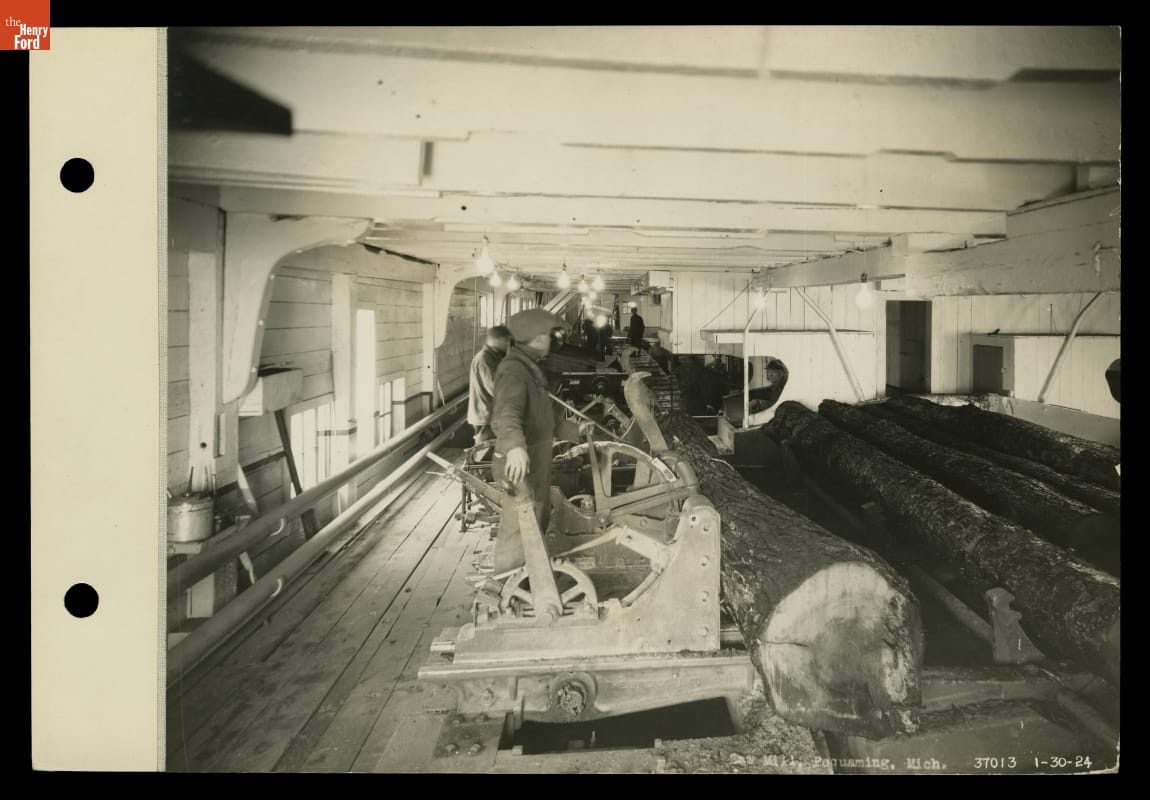
- Lumber Mill at Ford Plant in Pequaming, Michigan, 1924 - In 1919, Henry Ford began buying vast amounts of forestland in Michigan's Upper Peninsula. These prime hardwood forests supplied the lumber used to create vehicle bodies and parts. Other products such as railroad ties, shipping containers and chemical byproducts were also made -- all to support Ford's automobile operations and his goal of manufacturing self-sufficiency.
- January 30, 1924
- Collections - Artifact
Lumber Mill at Ford Plant in Pequaming, Michigan, 1924
In 1919, Henry Ford began buying vast amounts of forestland in Michigan's Upper Peninsula. These prime hardwood forests supplied the lumber used to create vehicle bodies and parts. Other products such as railroad ties, shipping containers and chemical byproducts were also made -- all to support Ford's automobile operations and his goal of manufacturing self-sufficiency.
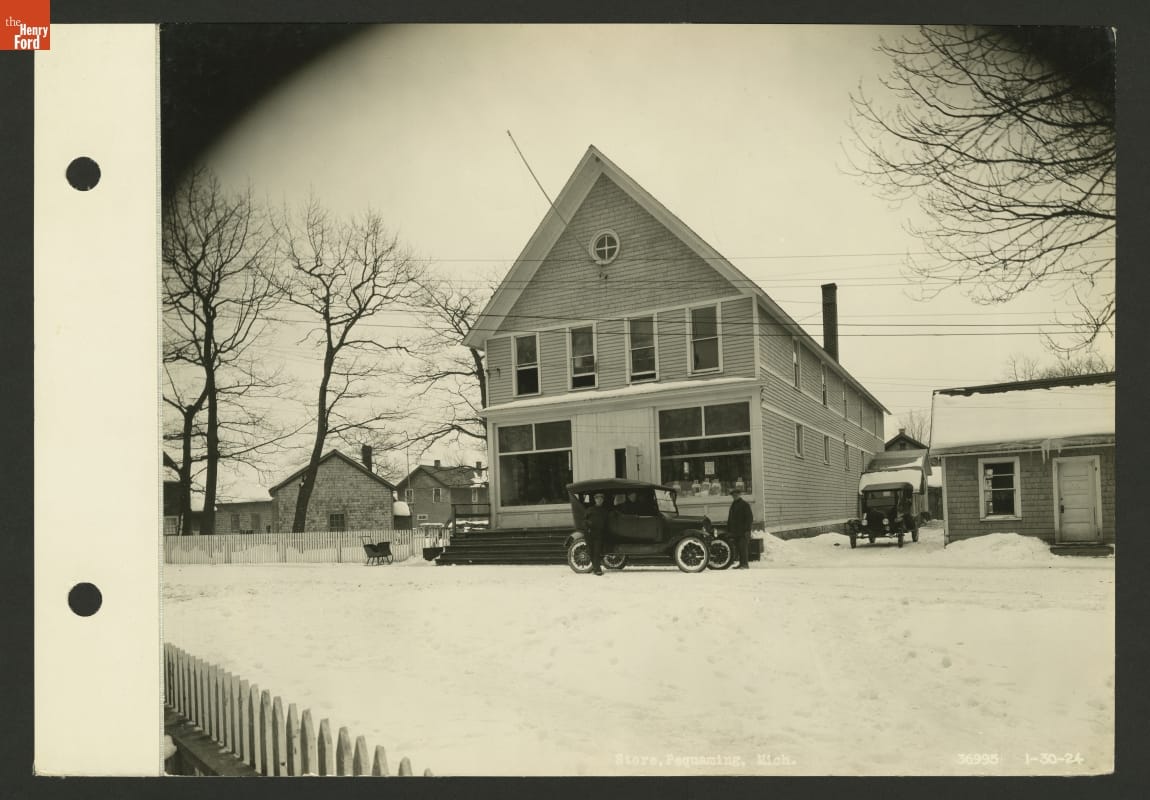
- General Store in Pequaming, Michigan, 1924 - Ford Motor Company opened its first employee commissary in 1919. By purchasing groceries, dry goods and over-the-counter medicines in bulk, Ford obtained better prices -- savings which it then passed on to employees through its company stores. The lumbering village of Pequaming, essentially a Ford company town, was especially dependent on its commissary; it was the only store in the area.
- January 30, 1924
- Collections - Artifact
General Store in Pequaming, Michigan, 1924
Ford Motor Company opened its first employee commissary in 1919. By purchasing groceries, dry goods and over-the-counter medicines in bulk, Ford obtained better prices -- savings which it then passed on to employees through its company stores. The lumbering village of Pequaming, essentially a Ford company town, was especially dependent on its commissary; it was the only store in the area.
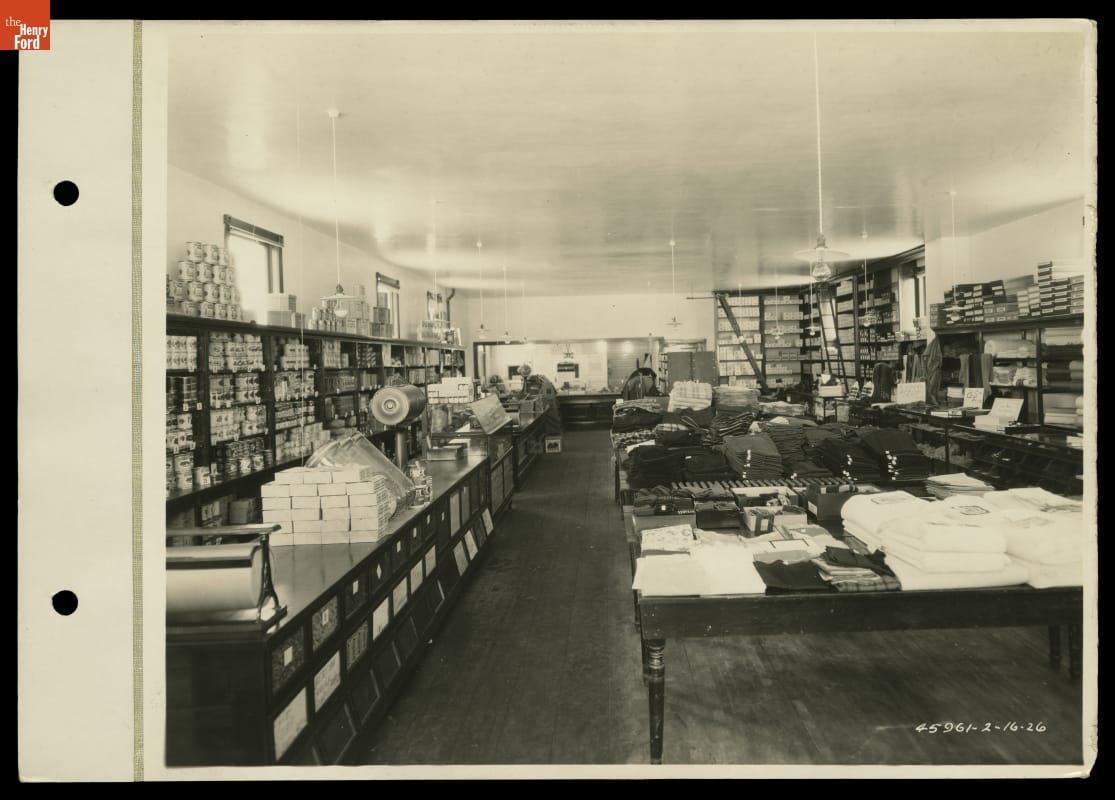
- Dry Goods Store, Ford Motor Company Plant, Pequaming, Michigan, 1926 - Ford Motor Company opened its first employee commissary in 1919. By purchasing groceries, dry goods and over-the-counter medicines in bulk, Ford obtained better prices -- savings which it then passed on to employees through its company stores. The lumbering village of Pequaming, essentially a Ford company town, was especially dependent on its commissary; it was the only store in the area.
- February 16, 1926
- Collections - Artifact
Dry Goods Store, Ford Motor Company Plant, Pequaming, Michigan, 1926
Ford Motor Company opened its first employee commissary in 1919. By purchasing groceries, dry goods and over-the-counter medicines in bulk, Ford obtained better prices -- savings which it then passed on to employees through its company stores. The lumbering village of Pequaming, essentially a Ford company town, was especially dependent on its commissary; it was the only store in the area.
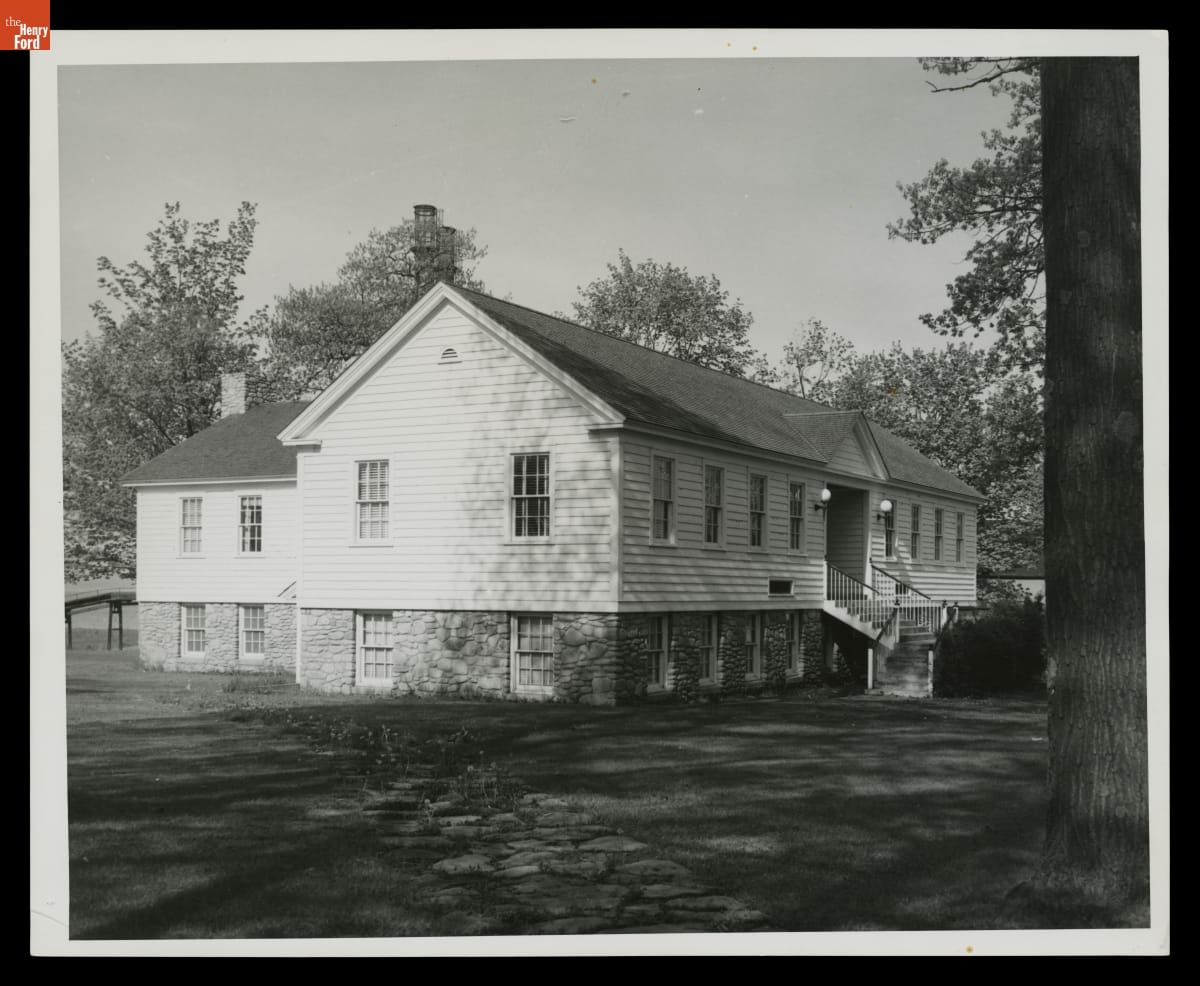
- Pequaming High School, Pequaming, Michigan, circa 1935 -
- circa 1935
- Collections - Artifact
Pequaming High School, Pequaming, Michigan, circa 1935
- The "Ford Bungalow," on Keweenaw Bay, Pequaming, Michigan, 1946 - In 1923, Henry Ford purchased the entire lumbering town of Pequaming, located in Michigan's Upper Peninsula. The picturesque community was surrounded by 40,000 acres of hardwood that could be processed by an on-site sawmill for use in Ford vehicles. A spacious bungalow was available as a summer home for Henry and Clara Ford. Henry visited the bungalow but never stayed overnight.

- August 06, 1946
- Collections - Artifact
The "Ford Bungalow," on Keweenaw Bay, Pequaming, Michigan, 1946
In 1923, Henry Ford purchased the entire lumbering town of Pequaming, located in Michigan's Upper Peninsula. The picturesque community was surrounded by 40,000 acres of hardwood that could be processed by an on-site sawmill for use in Ford vehicles. A spacious bungalow was available as a summer home for Henry and Clara Ford. Henry visited the bungalow but never stayed overnight.
- Ford Barge "Lake Louise" Docked in Pequaming, Michigan, January 11, 1928 - Henry Ford purchased 199 surplus World War I merchant ships from the United States government in 1925. Most of these ships were scrapped and the materials were used at Ford's new automobile manufacturing complex on the Rouge River. But 13 were converted into barges, like the <em>Lake Louise</em>. These barges transported products and material as part of Ford's operation.

- January 11, 1928
- Collections - Artifact
Ford Barge "Lake Louise" Docked in Pequaming, Michigan, January 11, 1928
Henry Ford purchased 199 surplus World War I merchant ships from the United States government in 1925. Most of these ships were scrapped and the materials were used at Ford's new automobile manufacturing complex on the Rouge River. But 13 were converted into barges, like the Lake Louise. These barges transported products and material as part of Ford's operation.
- Ford Motor Company Plant, Pequaming, Michigan, 1924 - In 1919, Henry Ford began buying vast amounts of forestland in Michigan's Upper Peninsula. These prime hardwood forests supplied the lumber used to create vehicle bodies and parts. Other products such as railroad ties, shipping containers and chemical byproducts were also made -- all to support Ford's automobile operations and his goal of manufacturing self-sufficiency.

- January 30, 1924
- Collections - Artifact
Ford Motor Company Plant, Pequaming, Michigan, 1924
In 1919, Henry Ford began buying vast amounts of forestland in Michigan's Upper Peninsula. These prime hardwood forests supplied the lumber used to create vehicle bodies and parts. Other products such as railroad ties, shipping containers and chemical byproducts were also made -- all to support Ford's automobile operations and his goal of manufacturing self-sufficiency.