
Search
- Elgin Diner, Camden, New Jersey, 1993 -
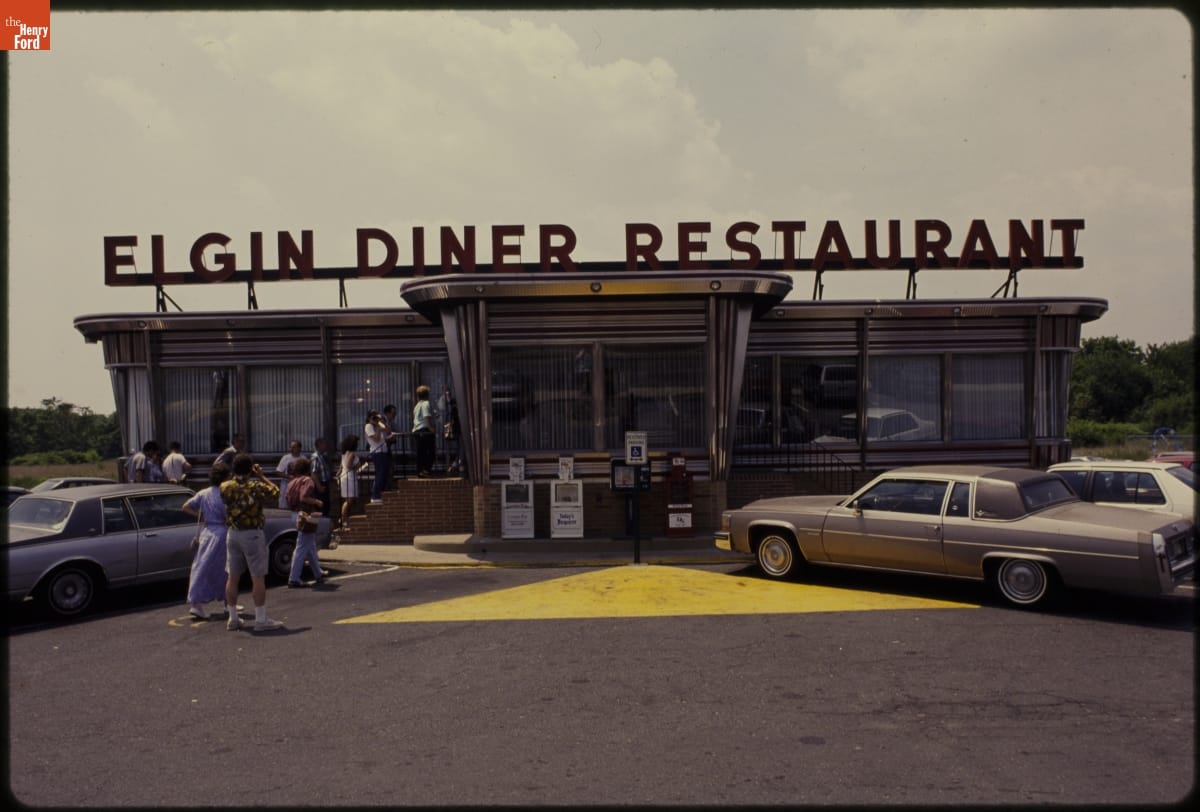
- 1993
- Collections - Artifact
Elgin Diner, Camden, New Jersey, 1993
- Fragment From Tree Purportedly Used As Hitching Post by George Washington in 1776 - According to the donor, this piece of wood came from a sycamore tree used as a hitching post by George Washington in 1776. The Camden, New Jersey, tree was cut down in 1932 and this piece was donated. While some relics' historical connections may have doubtful importance, to some that circuitous connection to the past or ties to famous individuals is significance enough.

- 1776
- Collections - Artifact
Fragment From Tree Purportedly Used As Hitching Post by George Washington in 1776
According to the donor, this piece of wood came from a sycamore tree used as a hitching post by George Washington in 1776. The Camden, New Jersey, tree was cut down in 1932 and this piece was donated. While some relics' historical connections may have doubtful importance, to some that circuitous connection to the past or ties to famous individuals is significance enough.
- Menu from Elgin Diner, Camden, New Jersey, 1993 -

- 1993
- Collections - Artifact
Menu from Elgin Diner, Camden, New Jersey, 1993
- Recipe Booklet, "Campbell's Soups," 1935 - The company that would eventually be known as Campbell's Soup Company began in 1869, canning tomatoes, vegetables, and preserves, among other products. Co-founder Joseph Campbell soon partnered with Arthur Dorrance, whose nephew, J.T., introduced the idea for condensed soup upon joining the company in 1897. Since then, Campbell's soups have become a versatile food, served as a meal or included in a variety of dishes.

- 1935
- Collections - Artifact
Recipe Booklet, "Campbell's Soups," 1935
The company that would eventually be known as Campbell's Soup Company began in 1869, canning tomatoes, vegetables, and preserves, among other products. Co-founder Joseph Campbell soon partnered with Arthur Dorrance, whose nephew, J.T., introduced the idea for condensed soup upon joining the company in 1897. Since then, Campbell's soups have become a versatile food, served as a meal or included in a variety of dishes.
- "The Haddon Car," 1859 - Horse-drawn streetcars provided a convenient and affordable way to get around a growing city. These streetcars traveled the main urban thoroughfares and took passengers to their workplaces, local shops and businesses, parks and other destinations. Alexander Easton designed the "Haddon Car" for the Camden Haddonfield Passenger Railway in New Jersey. He later helped organize the Toronto (Canada) Street Railway in 1861.

- 1859
- Collections - Artifact
"The Haddon Car," 1859
Horse-drawn streetcars provided a convenient and affordable way to get around a growing city. These streetcars traveled the main urban thoroughfares and took passengers to their workplaces, local shops and businesses, parks and other destinations. Alexander Easton designed the "Haddon Car" for the Camden Haddonfield Passenger Railway in New Jersey. He later helped organize the Toronto (Canada) Street Railway in 1861.
- "Greetings From Camden, New Jersey," 1951 -

- 1943
- Collections - Artifact
"Greetings From Camden, New Jersey," 1951
- Recipe Booklet, "Cooking With V-8," circa 1960 -

- circa 1960
- Collections - Artifact
Recipe Booklet, "Cooking With V-8," circa 1960
- Elgin Diner, Camden, New Jersey, June 1993 -

- June 01, 1993
- Collections - Artifact
Elgin Diner, Camden, New Jersey, June 1993
- Richard J.S. Gutman at Elgin Diner, Camden, New Jersey, June 1993 -

- June 01, 1993
- Collections - Artifact
Richard J.S. Gutman at Elgin Diner, Camden, New Jersey, June 1993
- Recipe Booklet, "Campbell Soup Company Selected Recipe Edition: Cooking with Condensed Soups," circa 1950 - The company that would eventually be known as Campbell's Soup Company began in 1869, canning tomatoes, vegetables, and preserves, among other products. Co-founder Joseph Campbell soon partnered with Arthur Dorrance, whose nephew, J.T., introduced the idea for condensed soup upon joining the company in 1897. Since then, Campbell's soups have become a versatile food, served as a meal or included in a variety of dishes.

- circa 1950
- Collections - Artifact
Recipe Booklet, "Campbell Soup Company Selected Recipe Edition: Cooking with Condensed Soups," circa 1950
The company that would eventually be known as Campbell's Soup Company began in 1869, canning tomatoes, vegetables, and preserves, among other products. Co-founder Joseph Campbell soon partnered with Arthur Dorrance, whose nephew, J.T., introduced the idea for condensed soup upon joining the company in 1897. Since then, Campbell's soups have become a versatile food, served as a meal or included in a variety of dishes.