

01
Daily Activities

Games on the Green
- Village Green
- June 22-August 9
- 9:30 a.m.-5 p.m.
Timeless and ingenious outdoor games from the early 1900s still captivate children of all ages. Play graces, skittles, hoop-rolling and stilts.

Market Season
- Detroit Central Market
- Jun 25-Sept 6 (Thur-Sun), Sept 26-27
- Performance times vary
As you visit the market in Greenfield Village, learn how it emerged as one of the city’s most successful hubs for multicultural communities in Detroit. Performances run about 15 minutes at 10:30 a.m., 11:45 a.m., 1:15 p.m., 2:30 p.m. Weather dependent.

Historic Base Ball Parade
- Parade starts at Town Hall
- Saturdays June 13-September 7
- 1:15 p.m.
Meet the featured base ball clubs at Town Hall and follow them to Walnut Grove for a Historic Base Ball game at 1:30 p.m.

Village Trio or Greenfield Quartet Musical Performances
- Scotch Settlement Schoolyard
- June 22-August 23
- 11:30 a.m.-3:30 p.m.; times vary
Near Scotch Settlement School, enjoy a performance by either the Village Trio or the Greenfield Quartet as they sing popular music from the early 20th century. The Village Trio features songs from 1900 to 1940. Soprano, mezzo-soprano and alto delight with lovely harmonies. The Greenfield Quartet features songs from 1900 to 1930. High tenor, tenor, baritone and bass create masterful barbershop harmonies.

Elijah: The Real McCoy
- Near Town Hall and Phoenixville Post Office
- May 24-Aug 31 (Sat-Tue)
- 11a.m., 12:30 p.m., 2 p.m., 3:15 p.m. weather dependent.
Meet Elijah McCoy, an iconic American inventor who created 57 patents over 80 years. He revolutionized the Industrial Age and brought trains in ahead of time. The performance is approximately 15 minutes.
02
about this historic district
Discover the center of community and commerce from the J.R. Jones General Store and Cohen Millinery to the Logan County Courthouse brimming with American history and heritage. As you stroll down this busy thoroughfare, you'll also encounter a bustling place of Early American automobiles and horse-drawn carriages, as well as some favorite historical figures.
Highlights
Artifact
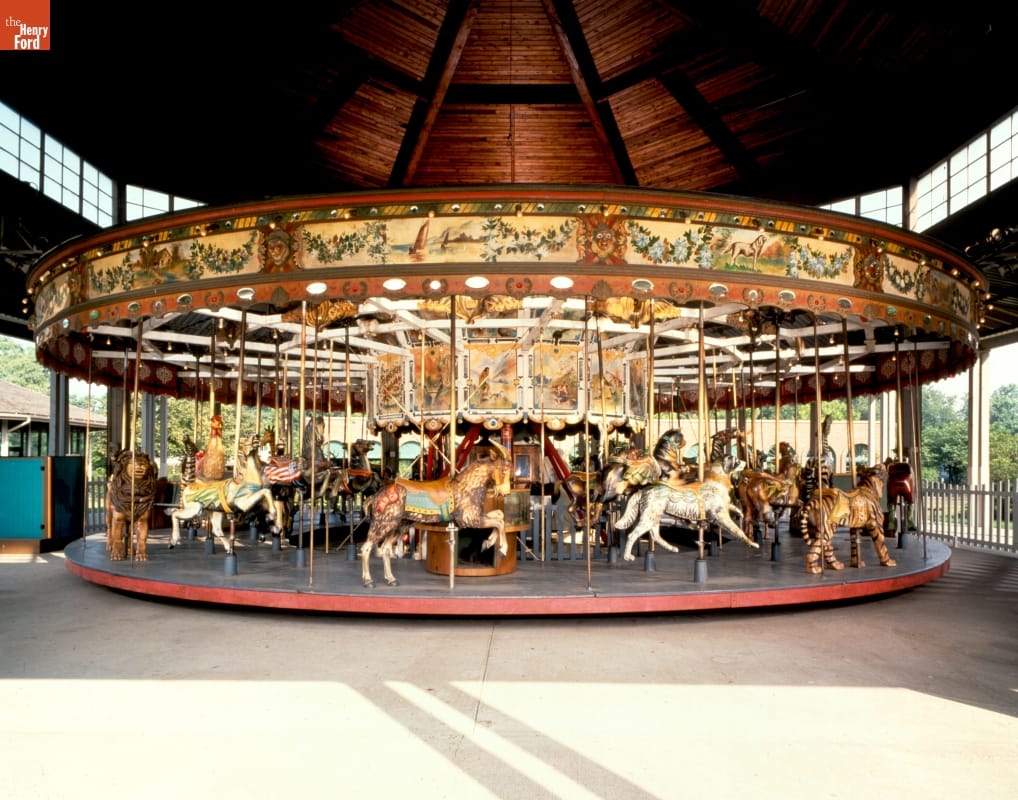
Herschell-Spillman Carousel
Colorful carousels were at the height of their popularity during the early 1900s and could be found all across America in amusement parks, city parks, and seaside resorts. Built in 1913, this "menagerie" carousel's hand-carved animals include storks, goats, zebras, dogs, and even a frog. Although its original location is uncertain, this carousel operated in Spokane, Washington, from 1923 to 1961.
Artifact
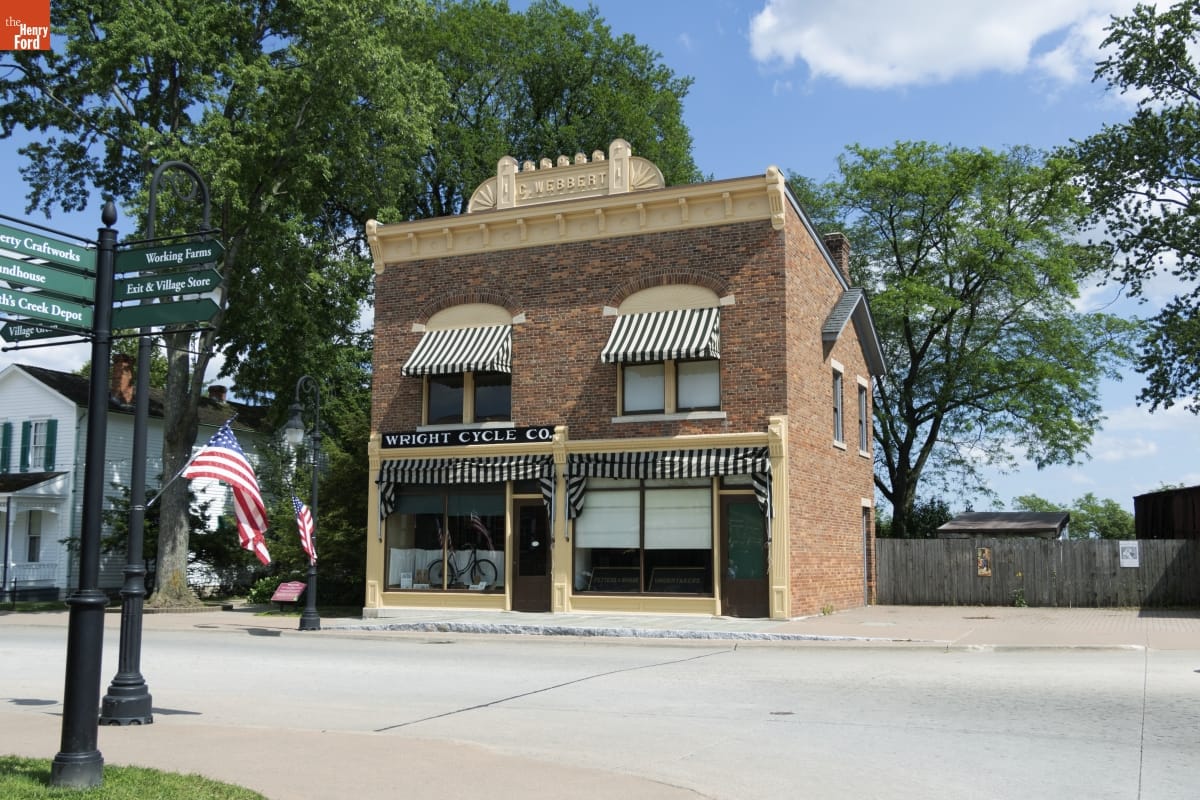
Wright Cycle Shop
Wilbur and Orville Wright operated their bicycle business in this building from 1897 to 1908 in Dayton, Ohio. The brothers sold and repaired bikes, and they even produced models under their own brands. It was also in this shop that the Wright brothers built their earliest flying machines, including the 1903 Flyer that became the first successful heavier-than-air, powered, controlled aircraft.
Artifact
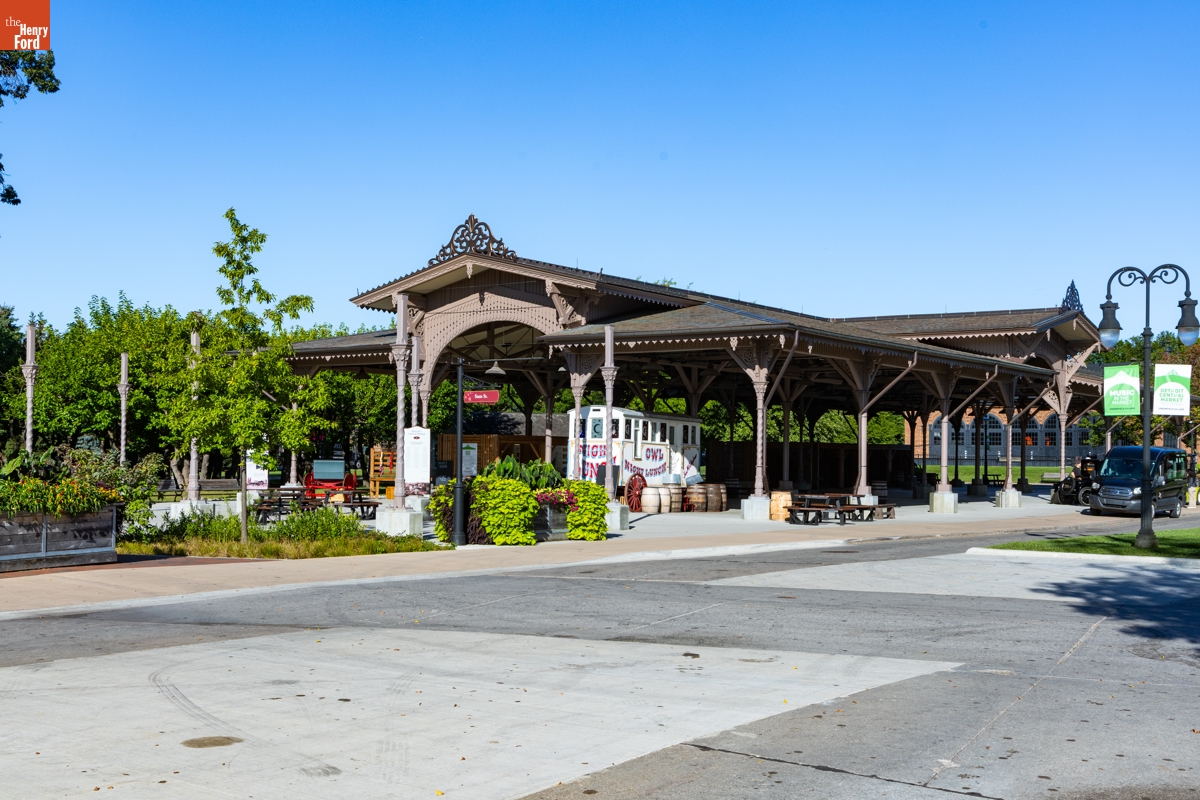
Detroit Central Market, Built 1860
The Detroit Central Market's vegetable shed sheltered vendors and customers from 1861 to 1894. The structure was then removed to Belle Isle and was slated for demolition in 2003 when The Henry Ford acquired it. The reconstructed building--which opened in Greenfield Village in 2022--includes several original cast-iron columns and ornamental woodwork, siding, and other details that convey the Swiss-Chalet aesthetic of the original design.
Artifact
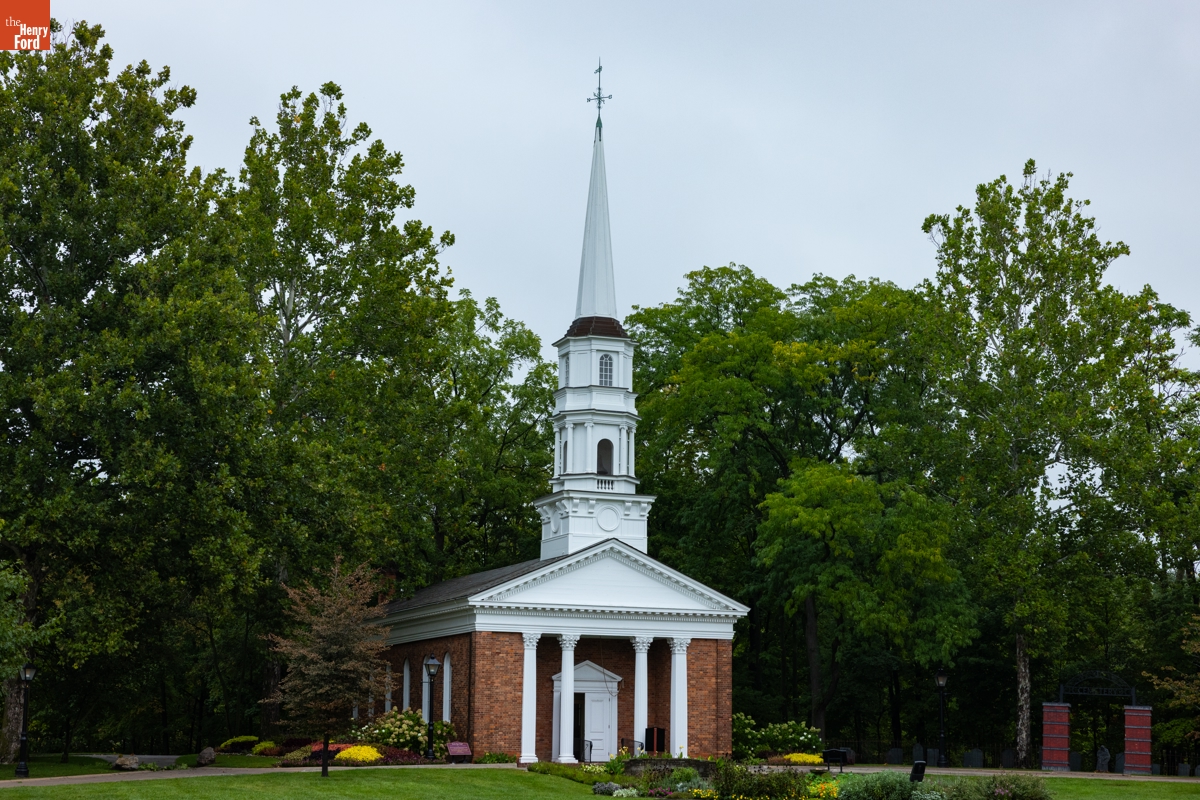
Martha-Mary Chapel
Churches were a center of community life in the 1700s, a place where townspeople came together to attend services and socialize. The Martha-Mary Chapel, with its architecture inspired by New England's colonial-era churches, was built in Greenfield Village in 1929. This chapel was named after Henry Ford's mother, Mary Litogot Ford, and his mother-in-law, Martha Bench Bryant.
Artifact
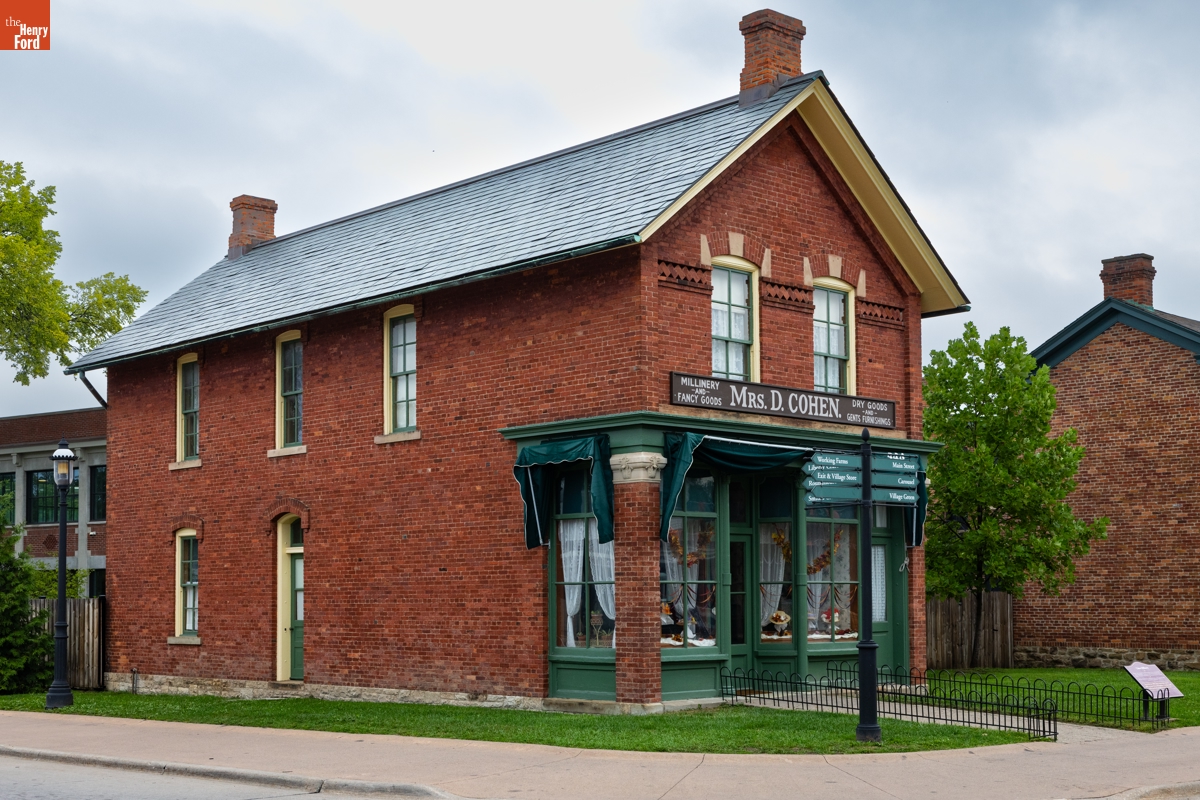
Cohen Millinery
Specialized retail stores like this one served the needs of city dwellers in the late 19th century. During the 1880s, a series of shops selling fancy goods, groceries, dry goods, and flour and feed occupied the building. In the mid-1890s, widow Elizabeth Cohen operated a millinery shop here, offering customers fashionable headwear while supporting her young family. Like other shopkeepers, Mrs. Cohen lived above her store.
Artifact
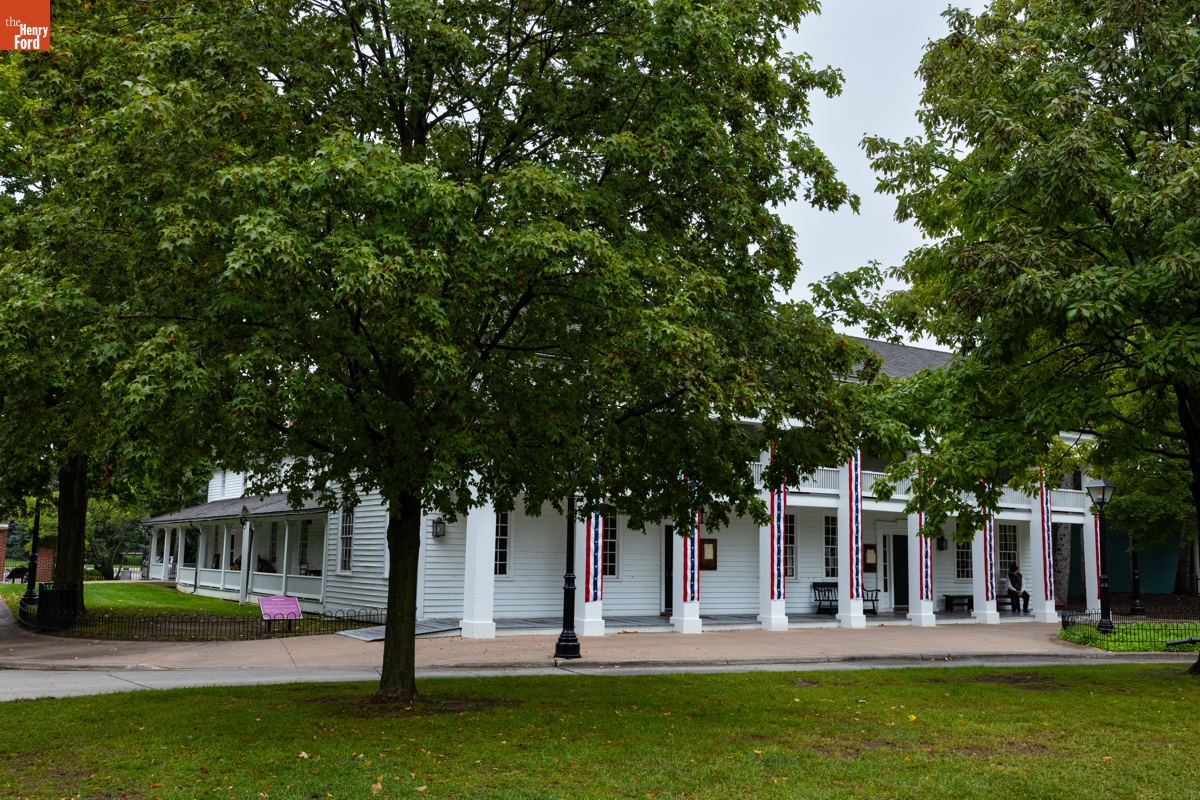
Eagle Tavern
This stagecoach tavern was built in 1831 in Clinton, Michigan, 50 miles west of Detroit. Taverns dotted the American countryside during the first half of the 1800s, a period of massive migration, new settlement, and rapid change in a young America. From 1849-1854, farmer Calvin Wood operated this tavern, offering food, drink, and accommodations to travelers who passed through his village.
Artifact
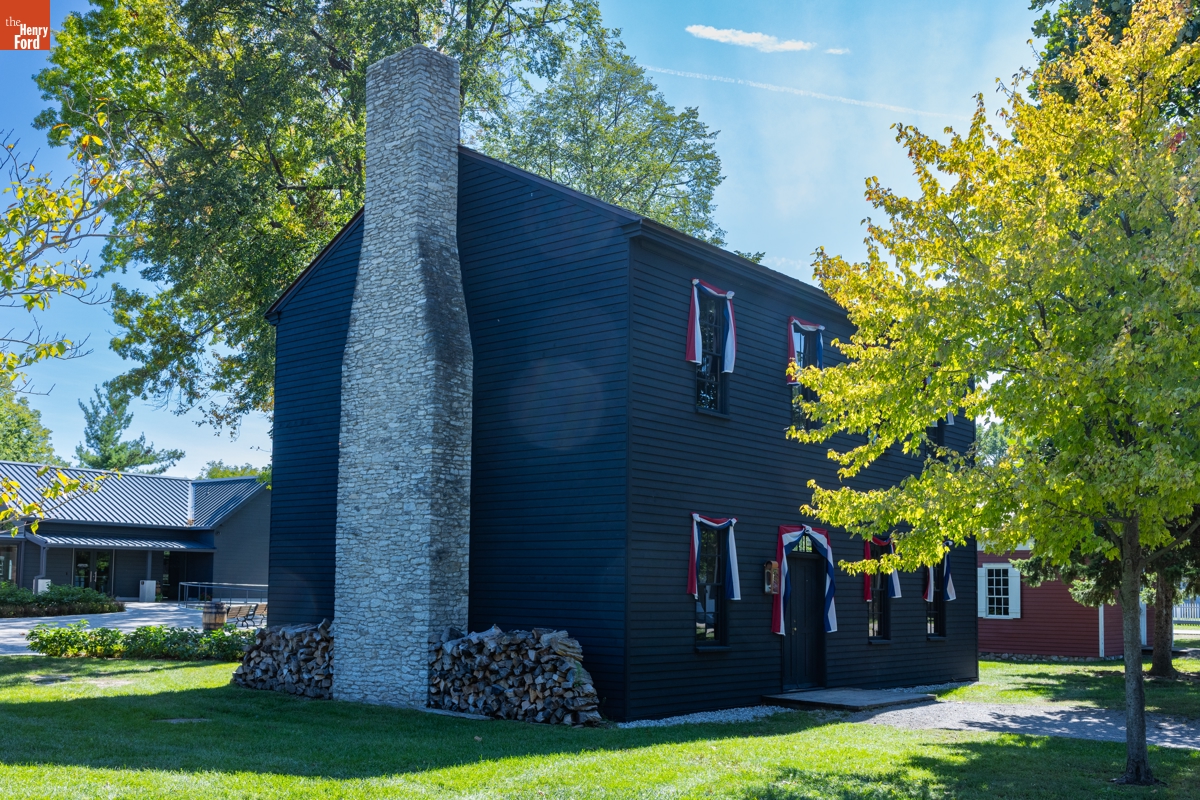
Logan County Courthouse
Between 1840 and 1847, Abraham Lincoln tried cases here as a traveling lawyer. Visiting once or twice a year, he worked mostly on cases resolving neighbors' disagreements over land, contracts, and debts. As Lincoln traveled, people got to know him because he always took time to talk to them. This helped him earn votes later when he went into politics.
Artifact
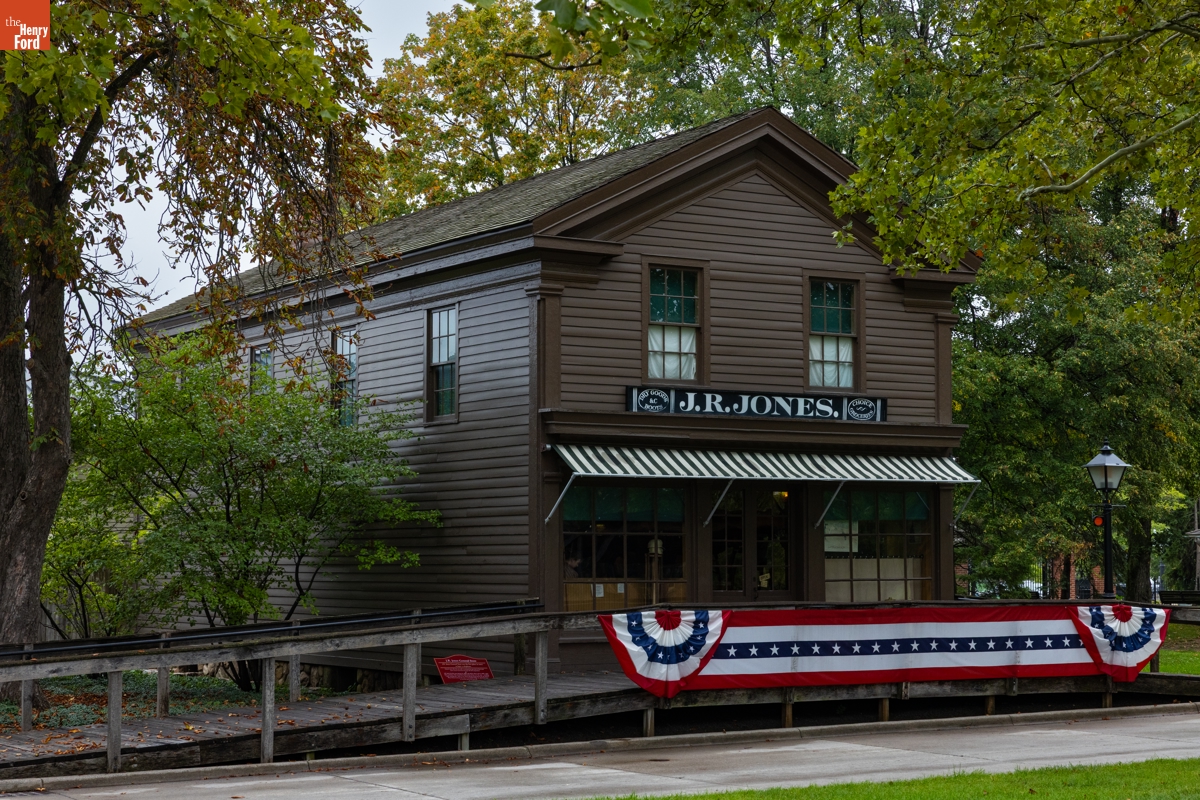
J.R. Jones General Store
James R. Jones was one of nine different proprietors who operated a general merchandise store in this building between 1857 and 1927. From 1882 to 1888, Jones sold products like coffee, sugar, fabric, and shoes. He also boasted the first telephone in town. General stores were organized shopping spaces. Long shelves with groupings of similar products lined each side.
Main Street
Check out some of the sights you'll enjoy first-hand when you journey through the Main Street district in Greenfield Village.


More to Explore

Historic District
Working Farms in Greenfield Village
Immerse yourself in actual settings of 19th-century farm life.

Historic District
Edison at Work
Visit the legendary inventor's Menlo Park complex and see where he made some of his greatest inventions.