
Search
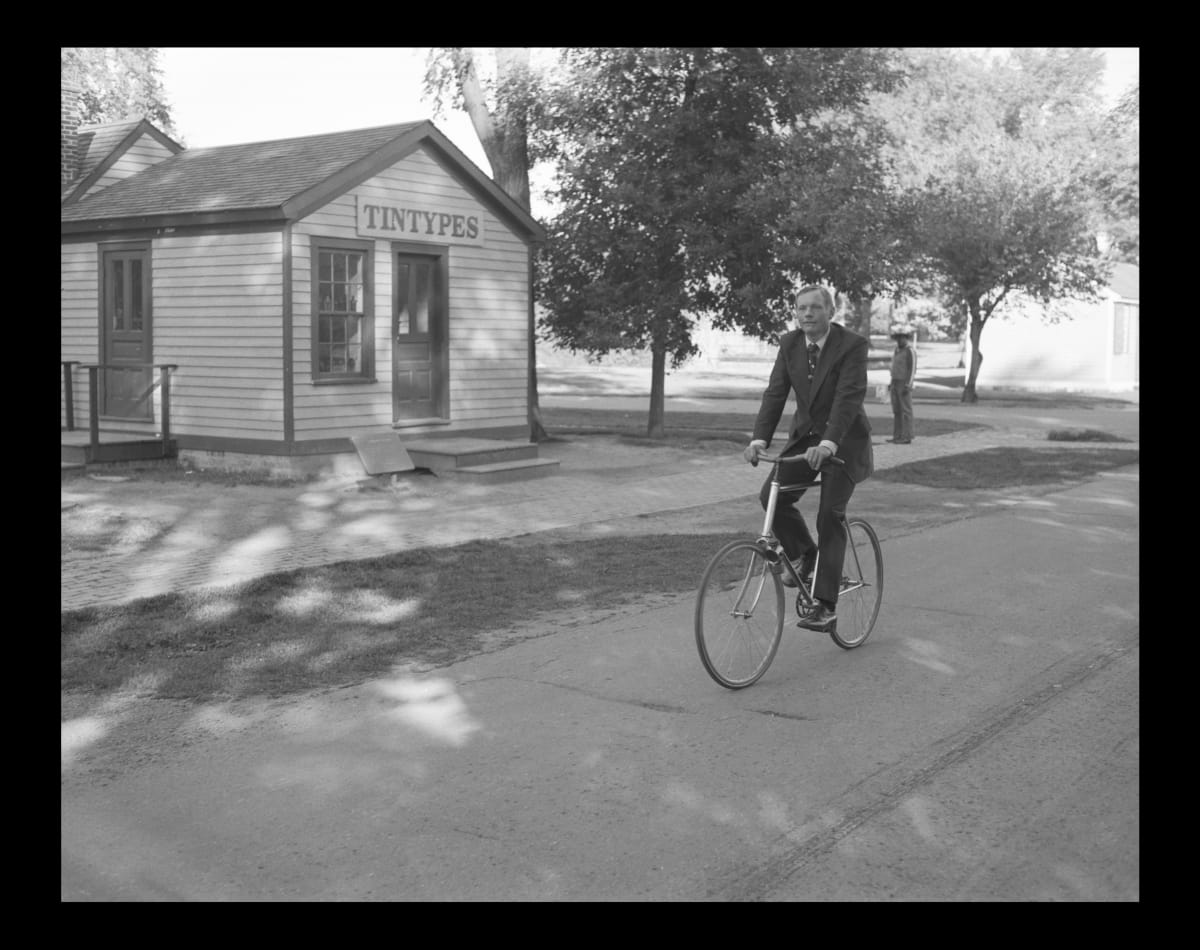
- Neil Armstrong Visiting Greenfield Village, August 16, 1979 - Astronaut Neil Armstrong, the first person to walk on the Moon, rode a bicycle around Greenfield Village during a 1979 visit. Armstrong and his Apollo 11 crewmates took pieces of the 1903 Wright Flyer on their 1969 mission -- to emphasize the incredible progress made in the 66 years between the Wright brothers' first flight and the lunar landing.
- August 16, 1979
- Collections - Artifact
Neil Armstrong Visiting Greenfield Village, August 16, 1979
Astronaut Neil Armstrong, the first person to walk on the Moon, rode a bicycle around Greenfield Village during a 1979 visit. Armstrong and his Apollo 11 crewmates took pieces of the 1903 Wright Flyer on their 1969 mission -- to emphasize the incredible progress made in the 66 years between the Wright brothers' first flight and the lunar landing.
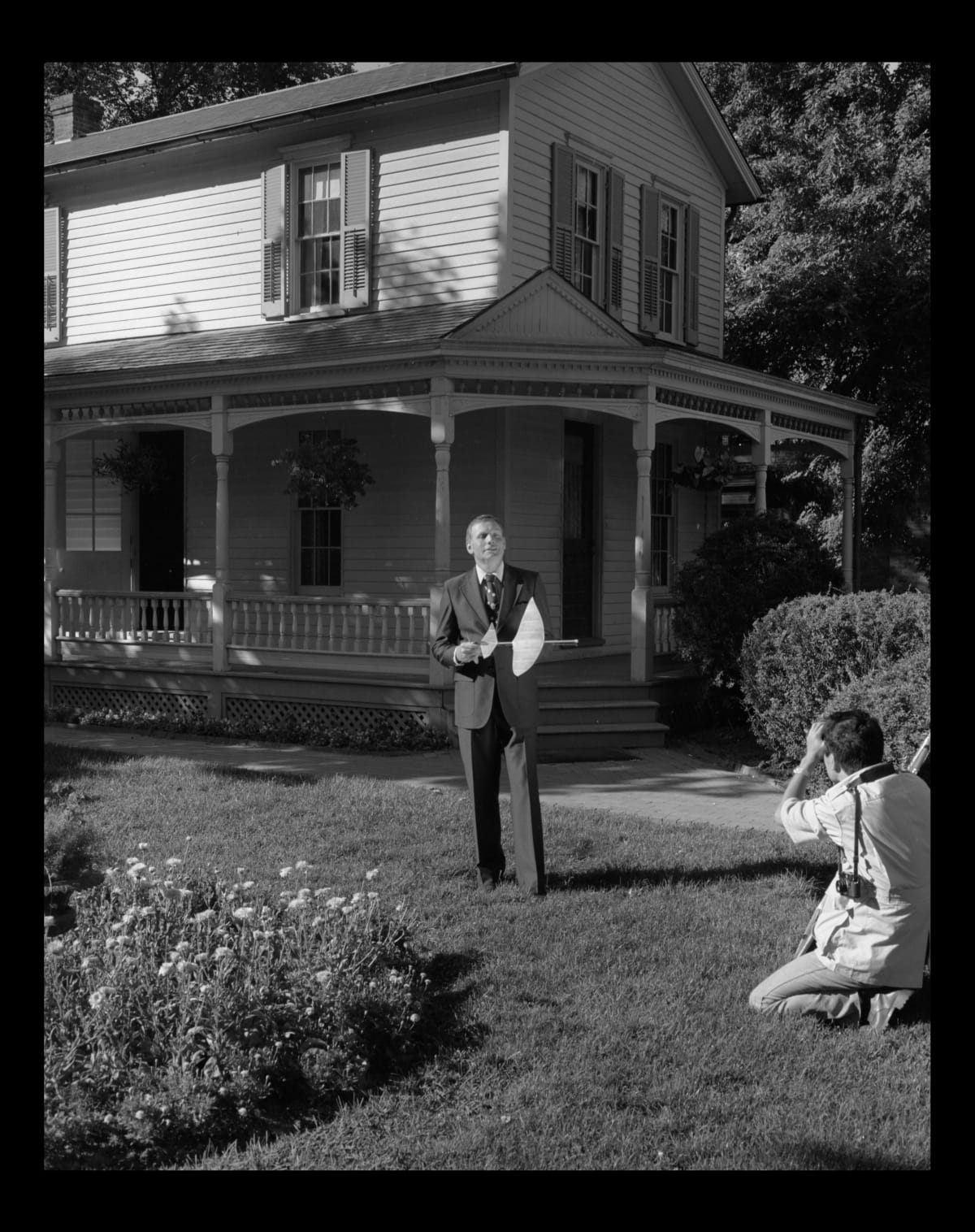
- Neil Armstrong outside Wright Family Home in Greenfield Village, August 16, 1979 - Astronaut Neil Armstrong, the first person to walk on the Moon, posed near the Wright brothers' home during a 1979 visit to Greenfield Village. Armstrong and his Apollo 11 crewmates took pieces of the 1903 Wright Flyer on their 1969 mission -- to emphasize the incredible progress made in the 66 years between the Wrights' first flight and the lunar landing.
- August 16, 1979
- Collections - Artifact
Neil Armstrong outside Wright Family Home in Greenfield Village, August 16, 1979
Astronaut Neil Armstrong, the first person to walk on the Moon, posed near the Wright brothers' home during a 1979 visit to Greenfield Village. Armstrong and his Apollo 11 crewmates took pieces of the 1903 Wright Flyer on their 1969 mission -- to emphasize the incredible progress made in the 66 years between the Wrights' first flight and the lunar landing.
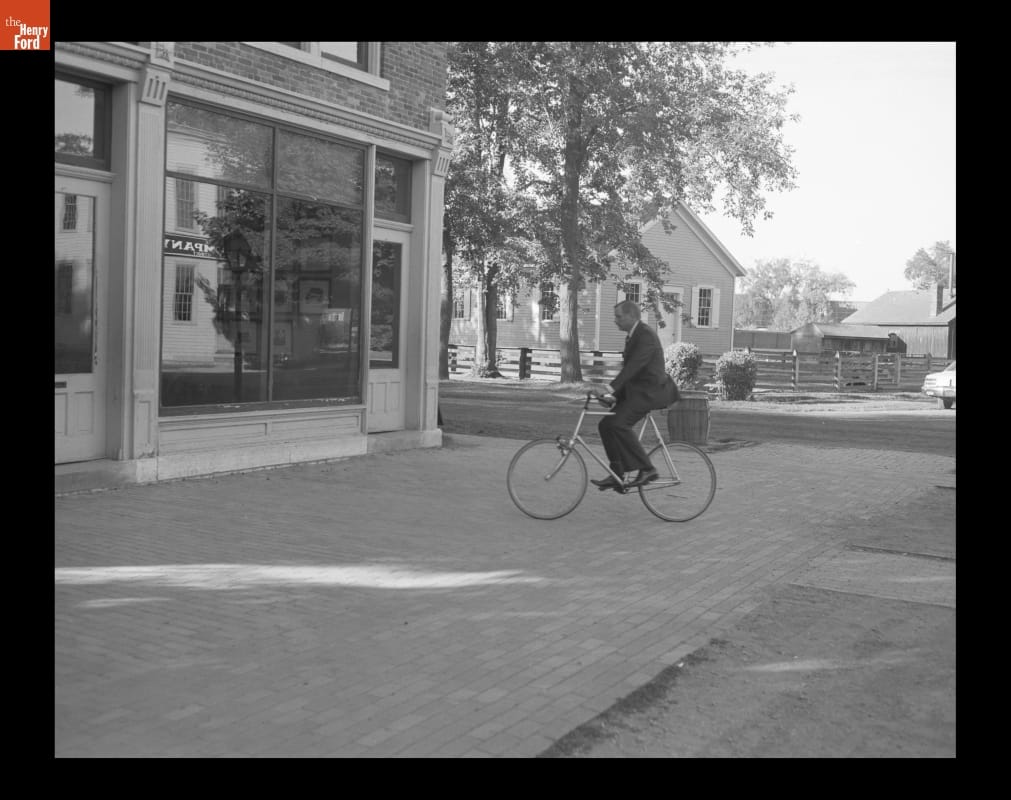
- Neil Armstrong at the Wright Cycle Shop in Greenfield Village, August 16, 1979 - Astronaut Neil Armstrong, the first person to walk on the Moon, rode a bicycle around Greenfield Village during a 1979 visit. Armstrong and his Apollo 11 crewmates took pieces of the 1903 Wright Flyer on their 1969 mission -- to emphasize the incredible progress made in the 66 years between the Wright brothers' first flight and the lunar landing.
- August 16, 1979
- Collections - Artifact
Neil Armstrong at the Wright Cycle Shop in Greenfield Village, August 16, 1979
Astronaut Neil Armstrong, the first person to walk on the Moon, rode a bicycle around Greenfield Village during a 1979 visit. Armstrong and his Apollo 11 crewmates took pieces of the 1903 Wright Flyer on their 1969 mission -- to emphasize the incredible progress made in the 66 years between the Wright brothers' first flight and the lunar landing.
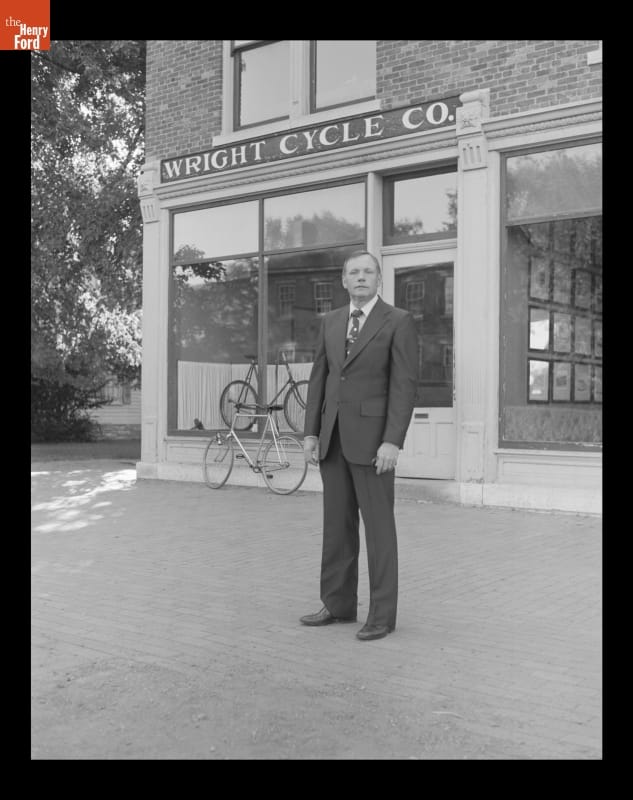
- Neil Armstrong at the Wright Cycle Shop in Greenfield Village, August 16, 1979 - Astronaut Neil Armstrong, the first person to walk on the Moon, posed near the Wright Cycle Shop during a 1979 visit to The Henry Ford. Armstrong and his Apollo 11 crewmates took pieces of the 1903 Wright Flyer on their 1969 mission -- to emphasize the incredible progress made in the 66 years between the Wrights' first flight and the lunar landing.
- August 16, 1979
- Collections - Artifact
Neil Armstrong at the Wright Cycle Shop in Greenfield Village, August 16, 1979
Astronaut Neil Armstrong, the first person to walk on the Moon, posed near the Wright Cycle Shop during a 1979 visit to The Henry Ford. Armstrong and his Apollo 11 crewmates took pieces of the 1903 Wright Flyer on their 1969 mission -- to emphasize the incredible progress made in the 66 years between the Wrights' first flight and the lunar landing.
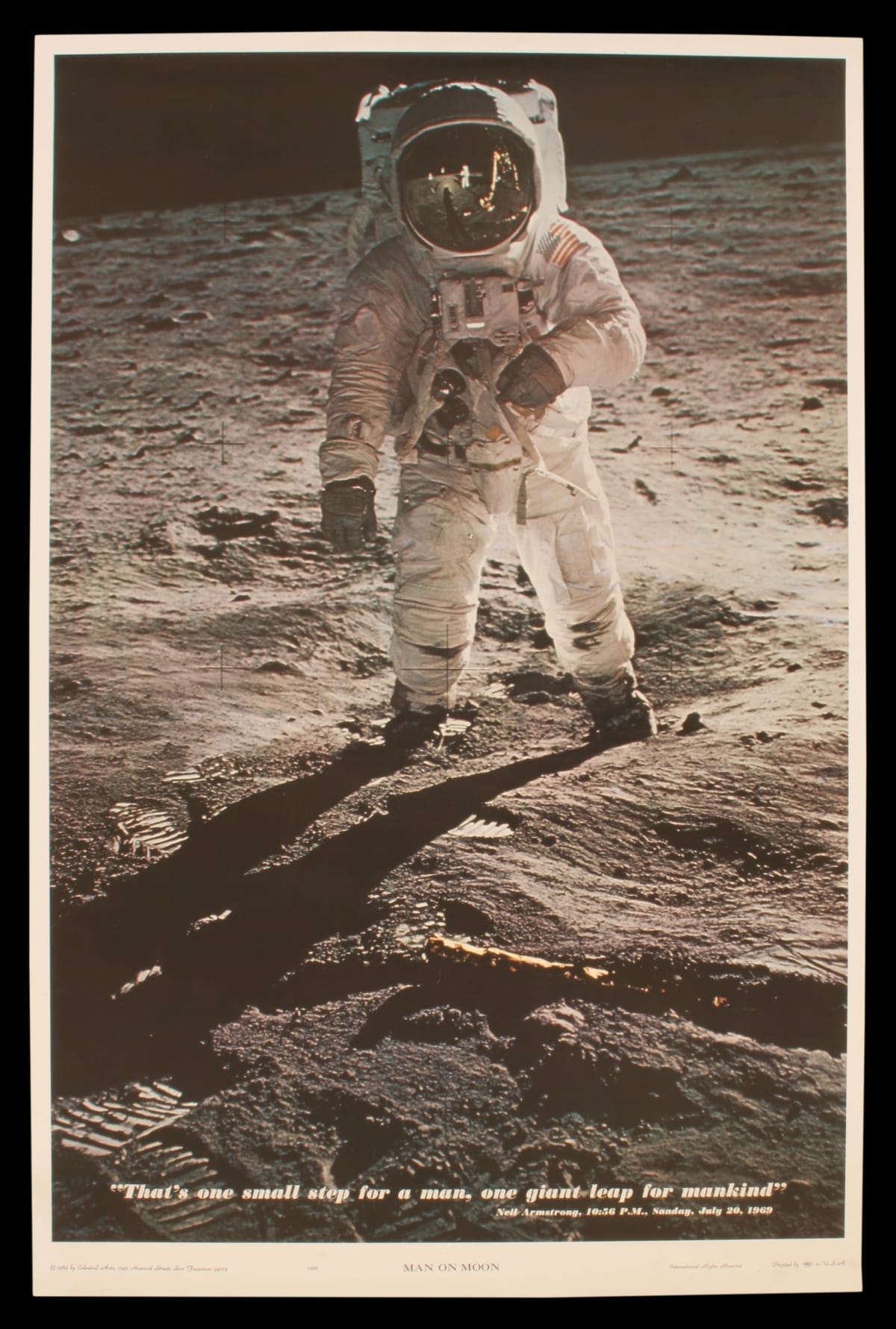
- Commemorative Poster, "That's One Small Step for a Man, One Giant Leap for Mankind," 1969 - This poster depicts Edwin A. "Buzz" Aldrin Jr. walking on the moon's surface, a photo taken by Neil Armstrong. The quote at the bottom contains the line that Armstrong had intended to say on July 20, 1969: "That's one small step for a man, one giant leap for mankind." Instead, his line came out "one small step for man."
- 1969
- Collections - Artifact
Commemorative Poster, "That's One Small Step for a Man, One Giant Leap for Mankind," 1969
This poster depicts Edwin A. "Buzz" Aldrin Jr. walking on the moon's surface, a photo taken by Neil Armstrong. The quote at the bottom contains the line that Armstrong had intended to say on July 20, 1969: "That's one small step for a man, one giant leap for mankind." Instead, his line came out "one small step for man."
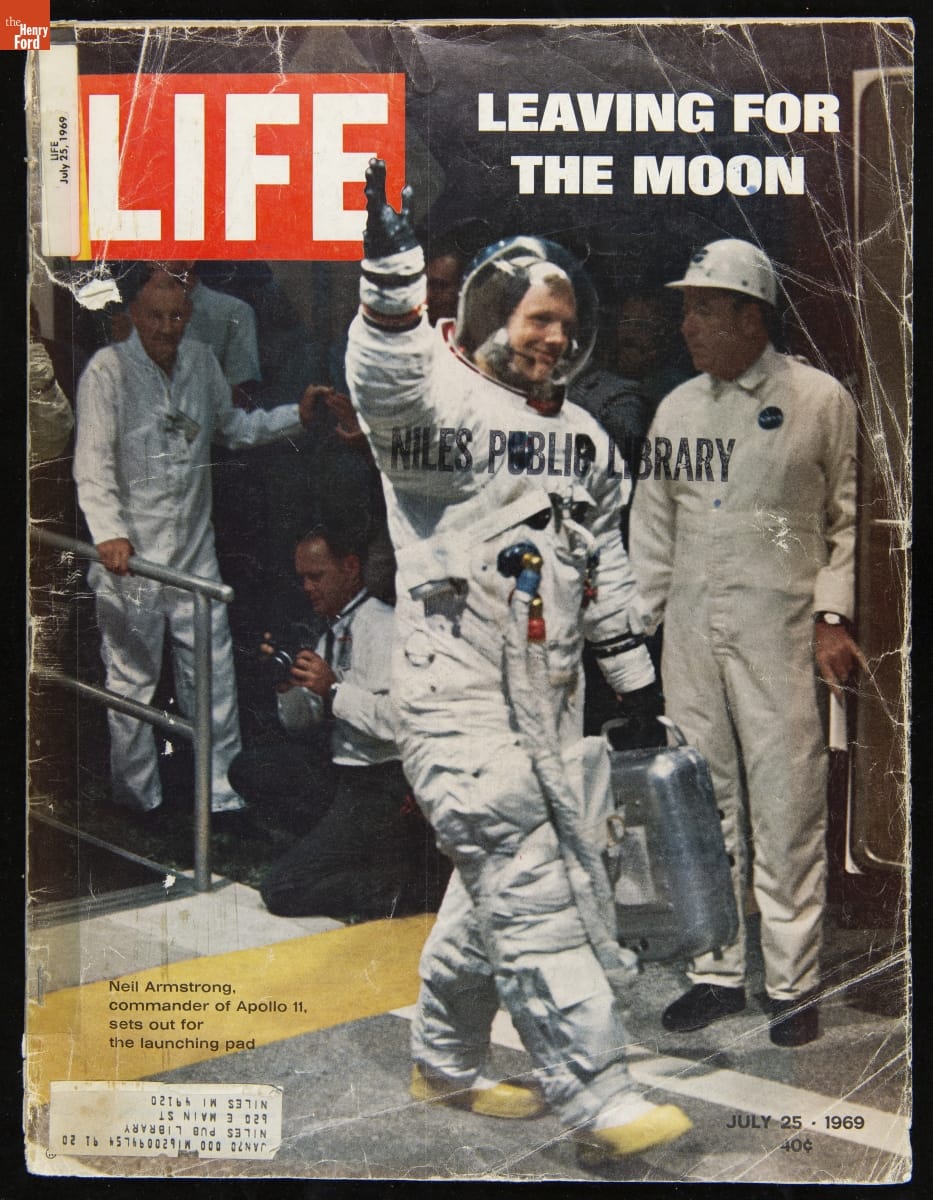
- Life Magazine, "Leaving for the Moon," July 25, 1969 - In July 1969, the ambitious plan to land a person on the Moon--laid out by President John F. Kennedy less than a decade earlier--neared reality. Americans eagerly anticipated the Apollo 11 mission, during which astronauts would walk on the Moon. <em>Life</em> magazine produced several issues before and after the event to keep the public informed on this historic undertaking.
- July 25, 1969
- Collections - Artifact
Life Magazine, "Leaving for the Moon," July 25, 1969
In July 1969, the ambitious plan to land a person on the Moon--laid out by President John F. Kennedy less than a decade earlier--neared reality. Americans eagerly anticipated the Apollo 11 mission, during which astronauts would walk on the Moon. Life magazine produced several issues before and after the event to keep the public informed on this historic undertaking.
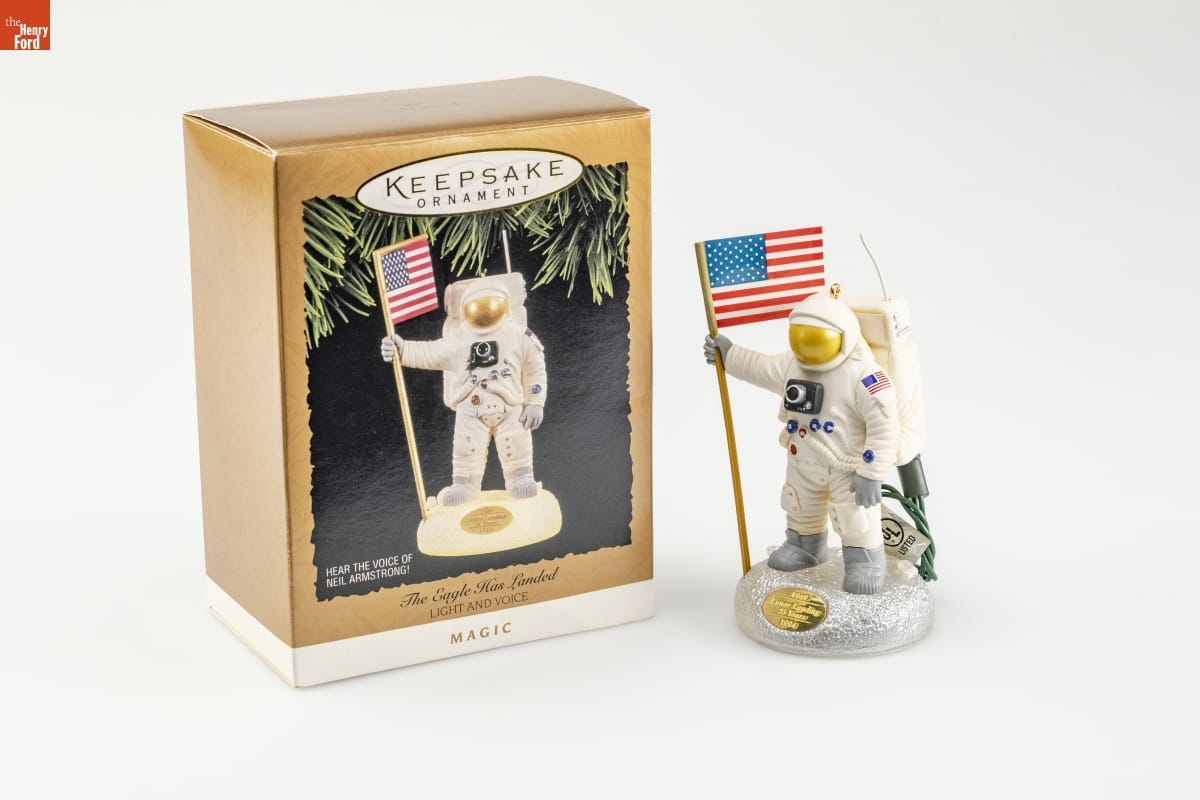
- Hallmark "The Eagle has Landed" Christmas Ornament, 1994 - Already known for greeting cards, Hallmark introduced a line of Christmas ornaments in 1973. The company's annual release of an increasing array of ornaments revolutionized Christmas decorating, appealing to customers' interest in marking memories and milestones as well as expressing one's personality and unique tastes.
- 1969
- Collections - Artifact
Hallmark "The Eagle has Landed" Christmas Ornament, 1994
Already known for greeting cards, Hallmark introduced a line of Christmas ornaments in 1973. The company's annual release of an increasing array of ornaments revolutionized Christmas decorating, appealing to customers' interest in marking memories and milestones as well as expressing one's personality and unique tastes.
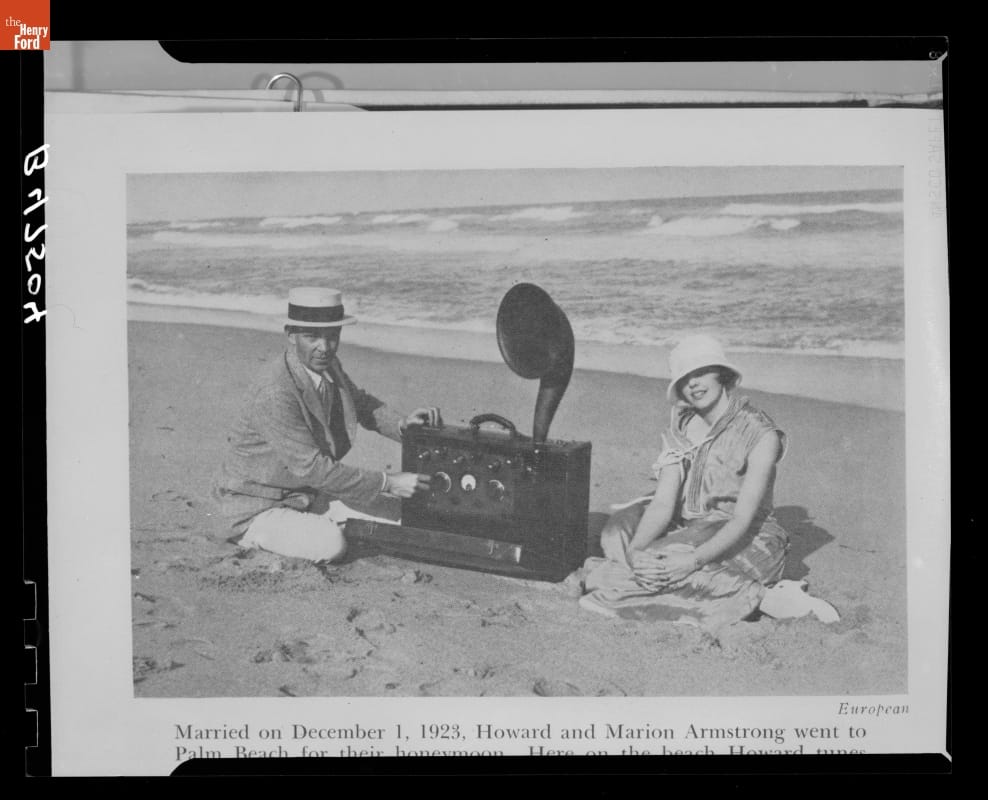
- Edwin H. Armstrong and Marion Armstrong with the First Portable Superheterodyne Radio Receiver, 1923 - Edwin H. Armstrong was a pioneer of radio engineering, credited as the inventor of FM radio. In 1918 he filed a patent for the superheterodyne radio circuit. This technology increased the sensitivity and selectivity of radio receivers. The radio depicted is the first portable superheterodyne radio receiver ever made. Armstrong gave it to his wife, Marion, on their 1923 honeymoon.
- January 01, 1923
- Collections - Artifact
Edwin H. Armstrong and Marion Armstrong with the First Portable Superheterodyne Radio Receiver, 1923
Edwin H. Armstrong was a pioneer of radio engineering, credited as the inventor of FM radio. In 1918 he filed a patent for the superheterodyne radio circuit. This technology increased the sensitivity and selectivity of radio receivers. The radio depicted is the first portable superheterodyne radio receiver ever made. Armstrong gave it to his wife, Marion, on their 1923 honeymoon.
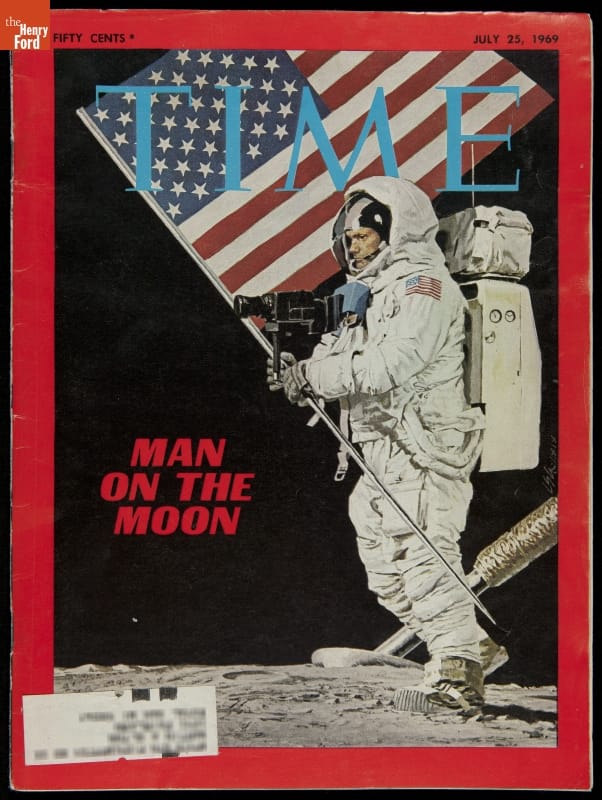
- Time Magazine for July 25, 1969, "Man on the Moon" - This milestone in space exploration began with President John F. Kennedy's request to increase funding for the U.S. space program on May 25 1961, "Special Message to Congress on Urgent National Needs." He stated, "I believe this nation should commit itself to achieving the goal, before this decade is out, of landing a man on the moon and returning him safely to the earth."
- July 25, 1969
- Collections - Artifact
Time Magazine for July 25, 1969, "Man on the Moon"
This milestone in space exploration began with President John F. Kennedy's request to increase funding for the U.S. space program on May 25 1961, "Special Message to Congress on Urgent National Needs." He stated, "I believe this nation should commit itself to achieving the goal, before this decade is out, of landing a man on the moon and returning him safely to the earth."
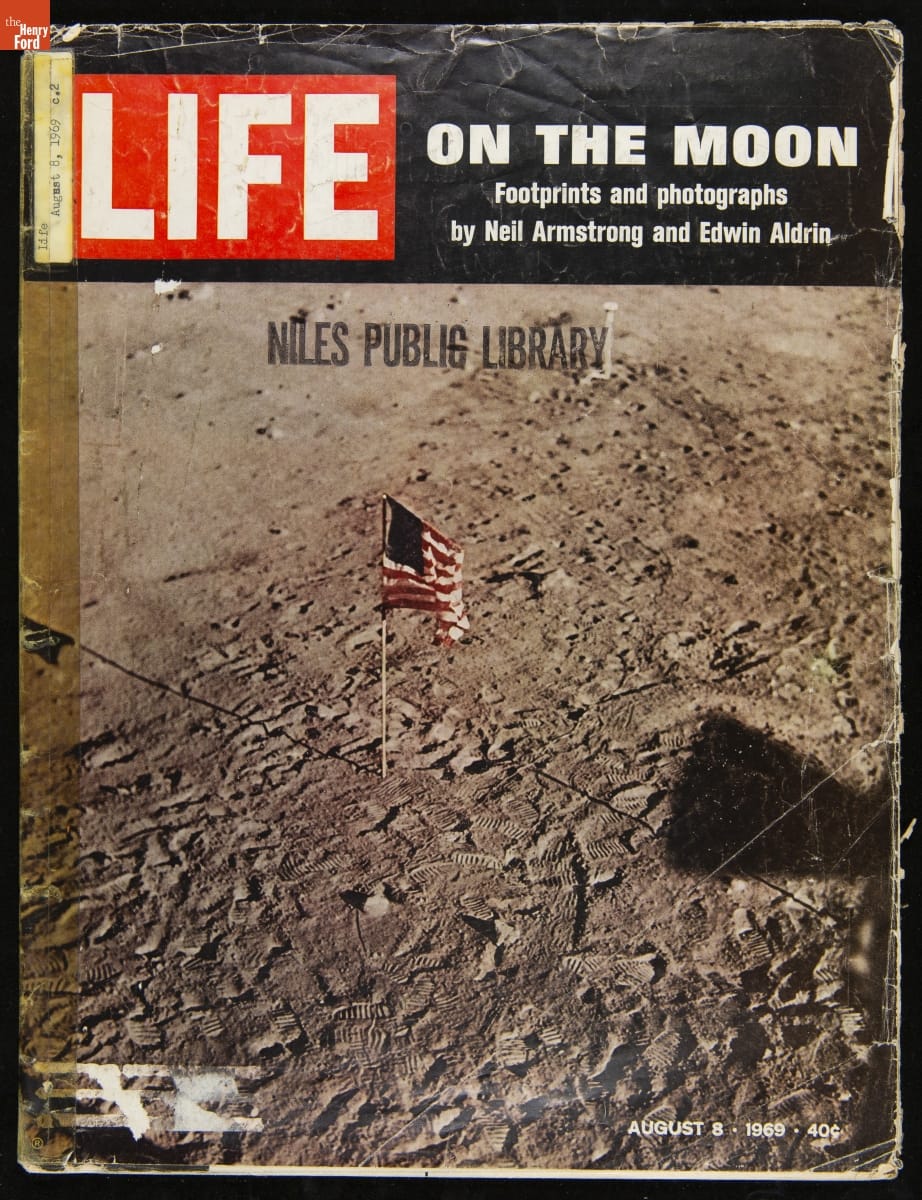
- Life Magazine, "On the Moon," August 8, 1969 - In July 1969, the ambitious plan to land a person on the Moon--laid out by President John F. Kennedy less than a decade earlier--neared reality. Americans eagerly anticipated the Apollo 11 mission, during which astronauts would walk on the Moon. <em>Life</em> magazine produced several issues before and after the event to keep the public informed on this historic undertaking.
- August 08, 1969
- Collections - Artifact
Life Magazine, "On the Moon," August 8, 1969
In July 1969, the ambitious plan to land a person on the Moon--laid out by President John F. Kennedy less than a decade earlier--neared reality. Americans eagerly anticipated the Apollo 11 mission, during which astronauts would walk on the Moon. Life magazine produced several issues before and after the event to keep the public informed on this historic undertaking.