
Search
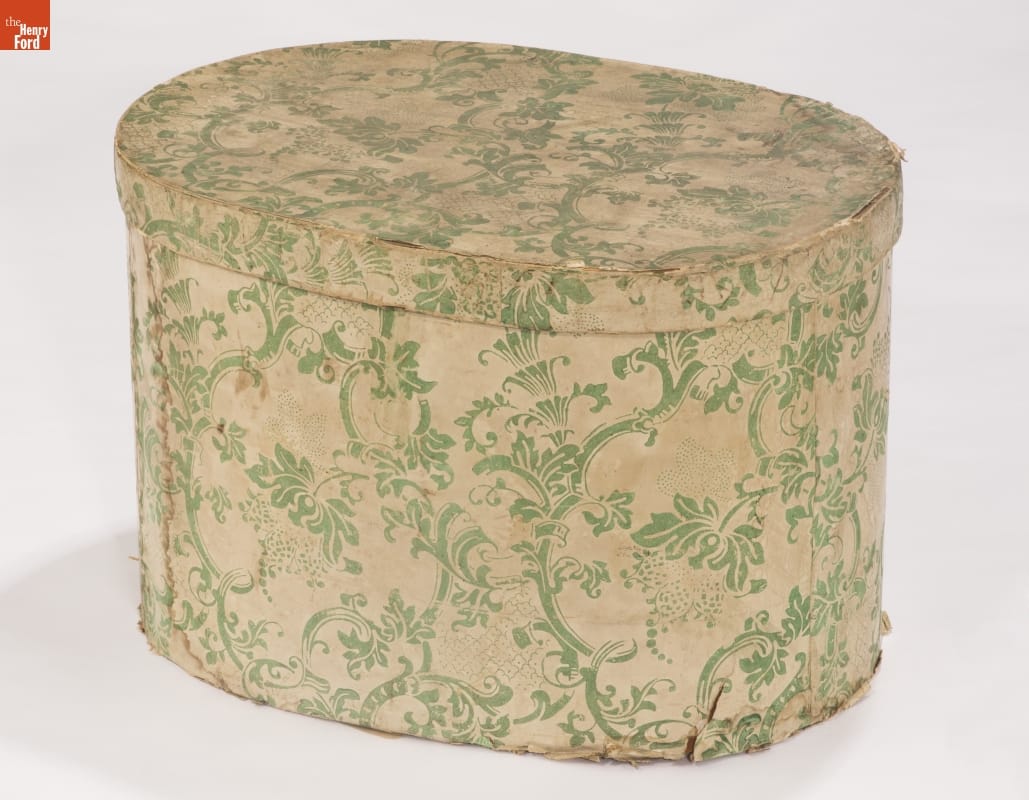
- Bandbox, 1830 - In the early 1800s, Americans used bandboxes to store clothing, accessories, and other small items. Bandboxes were handy containers in the home, or when traveling by stage, boat, or rail. Manufacturers covered these inexpensive pasteboard or wooden boxes with colorful papers. Some bandboxes were covered with papers depicting animals, places or specific scenes. Others, such as this one, were covered with decorative wallpaper of the day.
- 1830
- Collections - Artifact
Bandbox, 1830
In the early 1800s, Americans used bandboxes to store clothing, accessories, and other small items. Bandboxes were handy containers in the home, or when traveling by stage, boat, or rail. Manufacturers covered these inexpensive pasteboard or wooden boxes with colorful papers. Some bandboxes were covered with papers depicting animals, places or specific scenes. Others, such as this one, were covered with decorative wallpaper of the day.
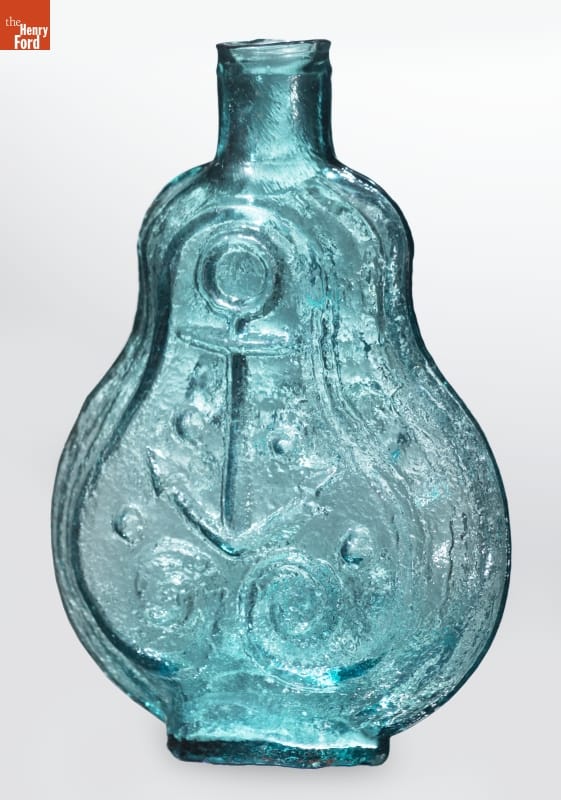
- Flask, 1830-1834 - Glass factories in America began producing inexpensive, mold-formed flasks in the early 1800s. These figured flasks appealed to America's common man. Many of these flasks contained symbols of national pride or political or cultural affiliation. Embellishments on other flasks, like this one, were purely decorative, though you will find an anchor -- a symbol of hope -- on the reverse.
- 1830-1834
- Collections - Artifact
Flask, 1830-1834
Glass factories in America began producing inexpensive, mold-formed flasks in the early 1800s. These figured flasks appealed to America's common man. Many of these flasks contained symbols of national pride or political or cultural affiliation. Embellishments on other flasks, like this one, were purely decorative, though you will find an anchor -- a symbol of hope -- on the reverse.
- Bowl, 1830-1835 -
- 1830-1835
- Collections - Artifact
Bowl, 1830-1835
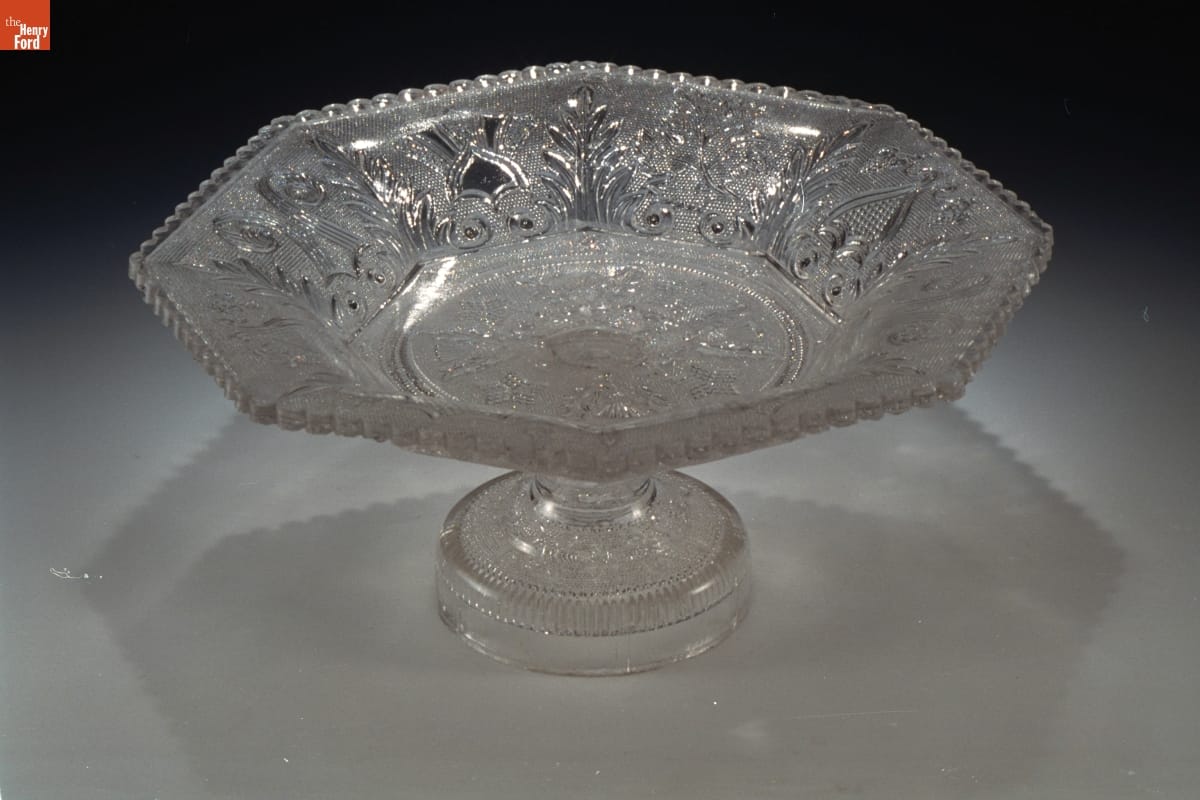
- Compote, 1830-1840 - Compotes are all-purpose serving dishes. These usually footed bowls -- with or without lids or covers -- held special desserts, fruits, candies or sauces, jellies and other foods. Blown or pressed glass compotes provided a culinary presentation method suitable to 19th-century middle-class households.
- 1830-1840
- Collections - Artifact
Compote, 1830-1840
Compotes are all-purpose serving dishes. These usually footed bowls -- with or without lids or covers -- held special desserts, fruits, candies or sauces, jellies and other foods. Blown or pressed glass compotes provided a culinary presentation method suitable to 19th-century middle-class households.
- Jar, circa 1830 -
- circa 1830
- Collections - Artifact
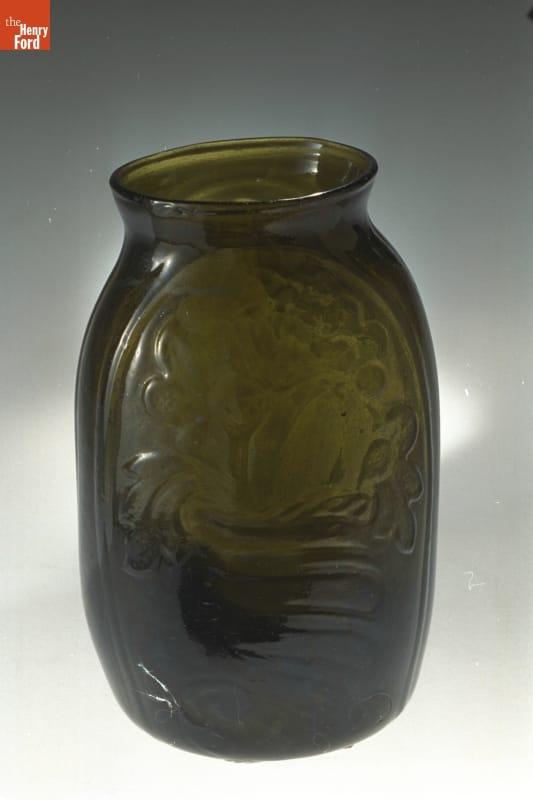
Jar, circa 1830
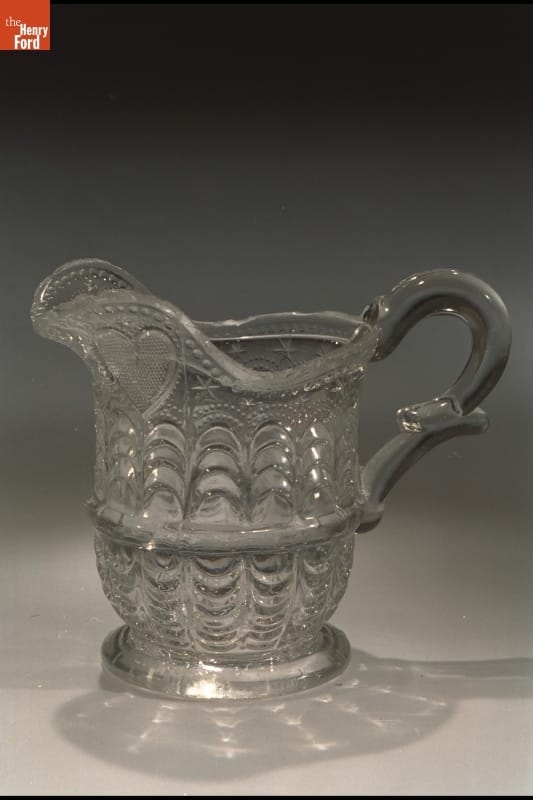
- Creamer, 1830-1845 - Mechanically pressed glass was an innovation in glass history, making decorative, "patterned" glass available to a broad audience. One of the earliest types of pressed glass, dating to the 1830s is known as "Lacy Glass". Complex stippled patterns were developed to help hide technical defects caused by early presses, when the glass gather was cut off and dropped into a mold.
- 1830-1845
- Collections - Artifact
Creamer, 1830-1845
Mechanically pressed glass was an innovation in glass history, making decorative, "patterned" glass available to a broad audience. One of the earliest types of pressed glass, dating to the 1830s is known as "Lacy Glass". Complex stippled patterns were developed to help hide technical defects caused by early presses, when the glass gather was cut off and dropped into a mold.
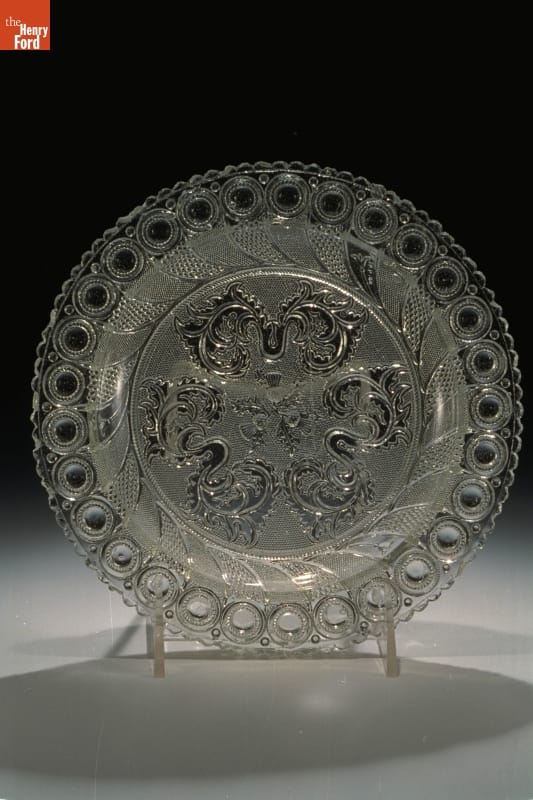
- Plate, 1830-1845 - Mechanically pressed glass was an innovation in glass history, making decorative, "patterned" glass available to a broad audience. One of the earliest types of pressed glass, dating to the 1830s is known as "Lacy Glass". Complex stippled patterns were developed to help hide technical defects caused by early presses, when the glass gather was cut off and dropped into a mold.
- 1830-1845
- Collections - Artifact
Plate, 1830-1845
Mechanically pressed glass was an innovation in glass history, making decorative, "patterned" glass available to a broad audience. One of the earliest types of pressed glass, dating to the 1830s is known as "Lacy Glass". Complex stippled patterns were developed to help hide technical defects caused by early presses, when the glass gather was cut off and dropped into a mold.
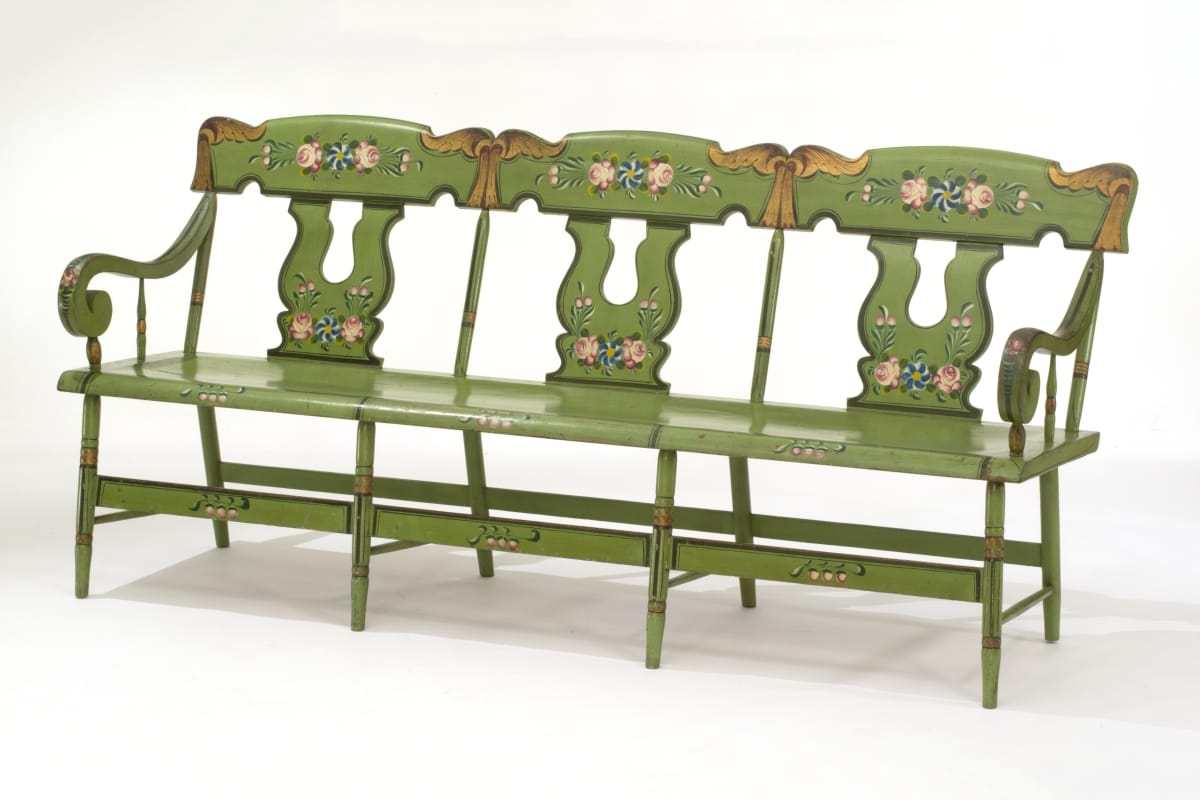
- Settee, 1830-1860 - This settee is eye-catching. Americans during the first half of the 19th century -- including German-Americans in Pennsylvania, where this piece originates -- prized exuberantly painted furniture and other "fancy" things. This brightly colored settee with its gilded accents and hand-painted floral forms was part of a set that included six chairs. Would you decorate your parlor or other public room with such a bold set of furniture?
- 1830-1860
- Collections - Artifact
Settee, 1830-1860
This settee is eye-catching. Americans during the first half of the 19th century -- including German-Americans in Pennsylvania, where this piece originates -- prized exuberantly painted furniture and other "fancy" things. This brightly colored settee with its gilded accents and hand-painted floral forms was part of a set that included six chairs. Would you decorate your parlor or other public room with such a bold set of furniture?
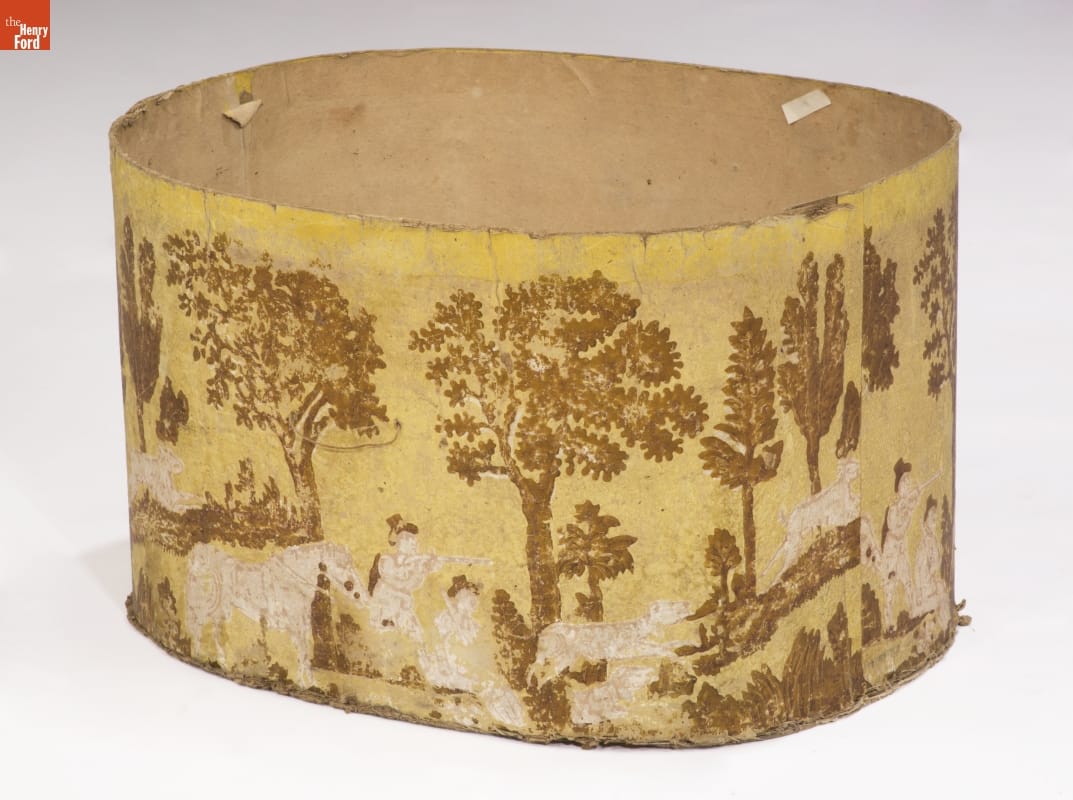
- Bandbox, 1830-1840 - In the early 1800s, Americans used bandboxes to store clothing, accessories, and other small items. Bandboxes were handy containers in the home or when traveling by stage, boat, or rail. Manufacturers covered these inexpensive pasteboard or wooden boxes with colorful papers that sometimes depicted idyllic rural scenes. This bandbox's paper depicts two hunters and their dogs pursuing a deer.
- 1830-1840
- Collections - Artifact
Bandbox, 1830-1840
In the early 1800s, Americans used bandboxes to store clothing, accessories, and other small items. Bandboxes were handy containers in the home or when traveling by stage, boat, or rail. Manufacturers covered these inexpensive pasteboard or wooden boxes with colorful papers that sometimes depicted idyllic rural scenes. This bandbox's paper depicts two hunters and their dogs pursuing a deer.
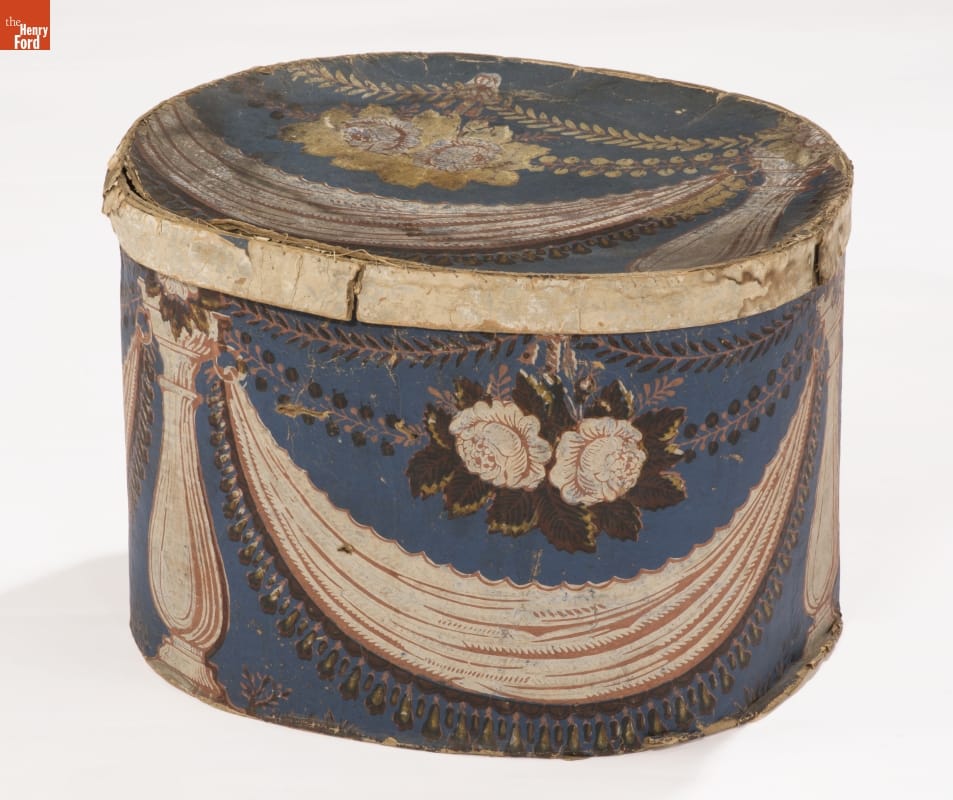
- Bandbox, circa 1830 - In the early 1800s, Americans used bandboxes to store clothing, accessories, and other small items. Bandboxes were handy containers in the home or when traveling by stage, boat, or rail. Manufacturers covered these inexpensive pasteboard or wooden boxes with colorful papers. This bandbox's paper consists of roses, drapery and vase-shaped pillars.
- circa 1830
- Collections - Artifact
Bandbox, circa 1830
In the early 1800s, Americans used bandboxes to store clothing, accessories, and other small items. Bandboxes were handy containers in the home or when traveling by stage, boat, or rail. Manufacturers covered these inexpensive pasteboard or wooden boxes with colorful papers. This bandbox's paper consists of roses, drapery and vase-shaped pillars.