
Search
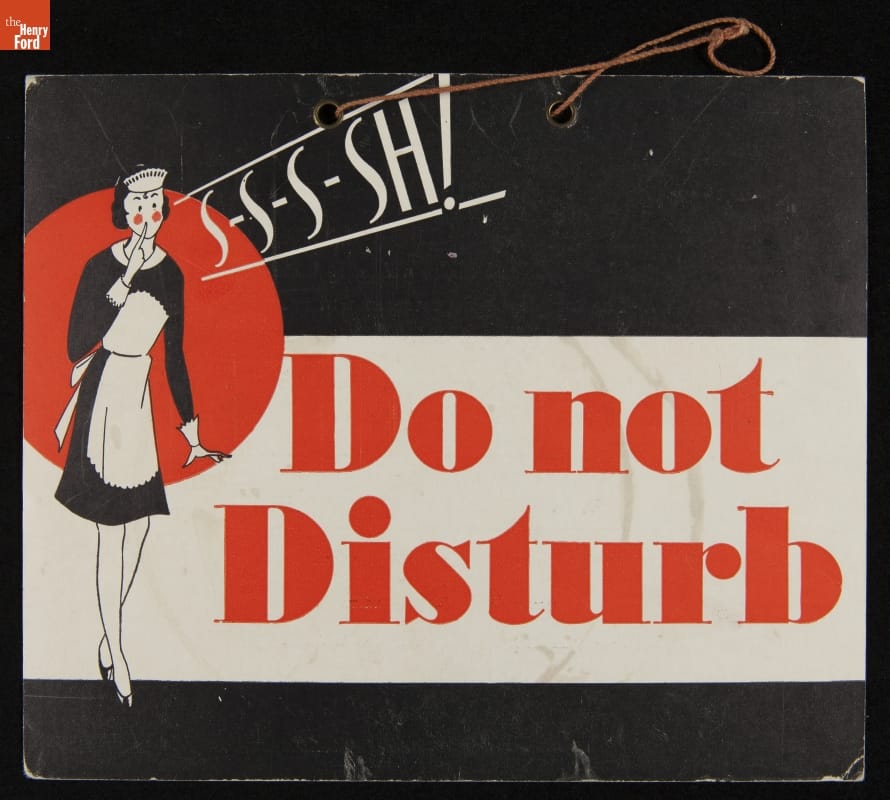
- Sign, "S-S-S-SH! Do Not Disturb," 1930-1945 - Like today, proprietors of mid-20th century hotels, motels and inns provided "Do Not Disturb" signs for weary travelers who wanted a restful stay. Guests placed the sign outside on their door to alert staff to please be quiet and not enter the room. This sign even included instructions that guests could use to stop unwanted telegrams or telephone calls.
- 1930-1945
- Collections - Artifact
Sign, "S-S-S-SH! Do Not Disturb," 1930-1945
Like today, proprietors of mid-20th century hotels, motels and inns provided "Do Not Disturb" signs for weary travelers who wanted a restful stay. Guests placed the sign outside on their door to alert staff to please be quiet and not enter the room. This sign even included instructions that guests could use to stop unwanted telegrams or telephone calls.
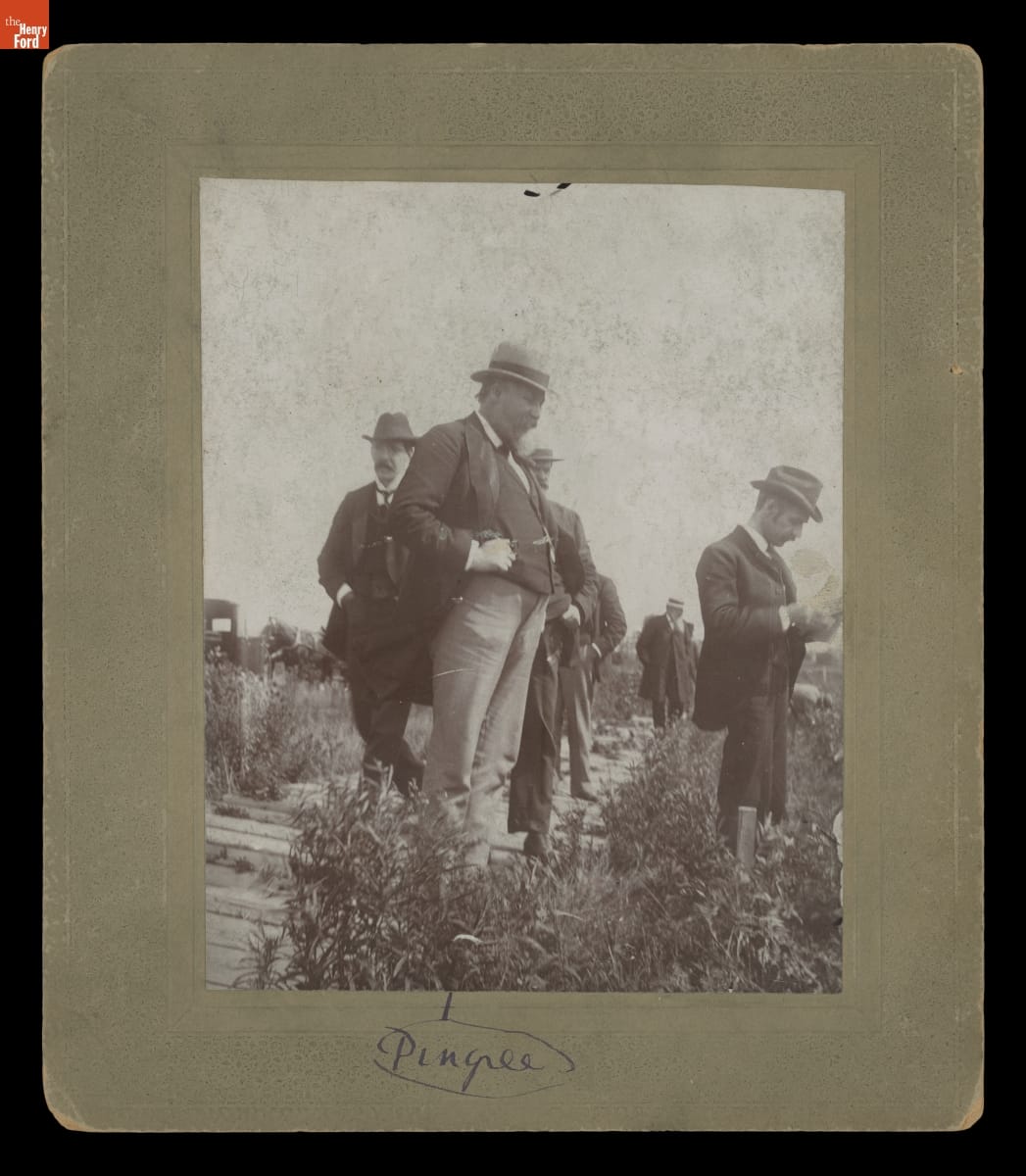
- Mayor Hazen Pingree Visiting Urban Garden Potato Patch, Detroit, Michigan, 1893 -
- 1893
- Collections - Artifact
Mayor Hazen Pingree Visiting Urban Garden Potato Patch, Detroit, Michigan, 1893
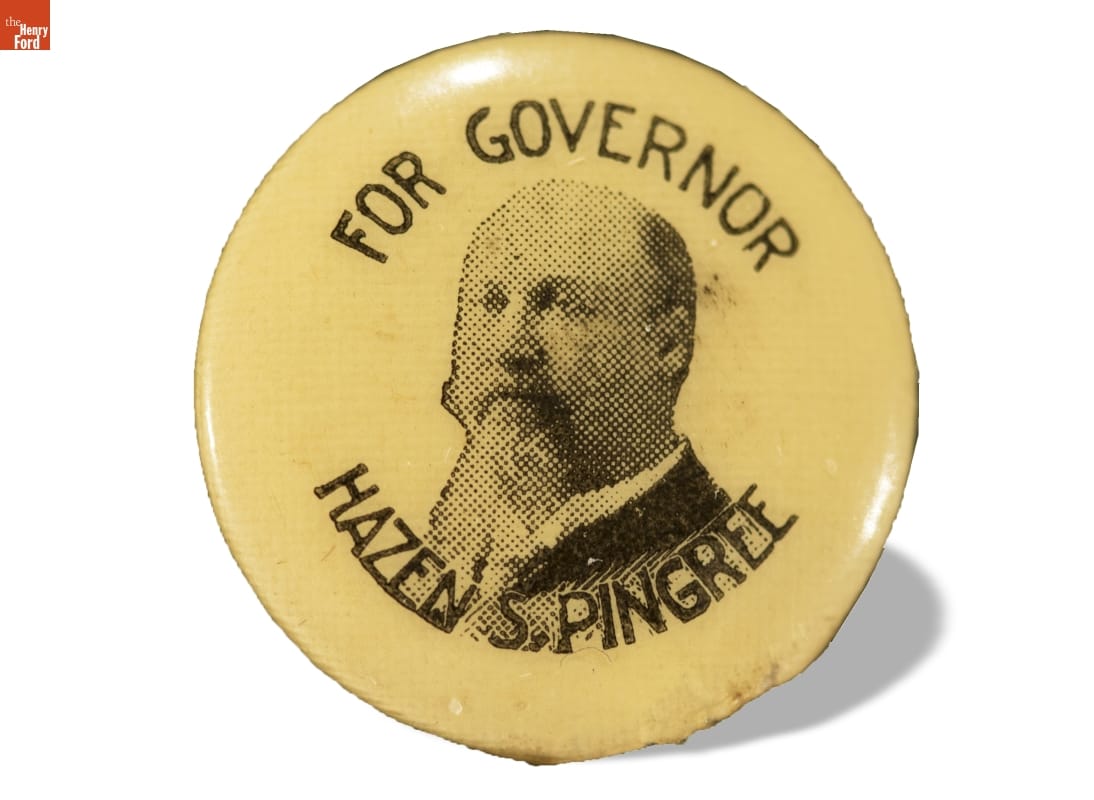
- Hazen Pingree Campaign Button, 1896, 1898 -
- 1896-1898
- Collections - Artifact
Hazen Pingree Campaign Button, 1896, 1898
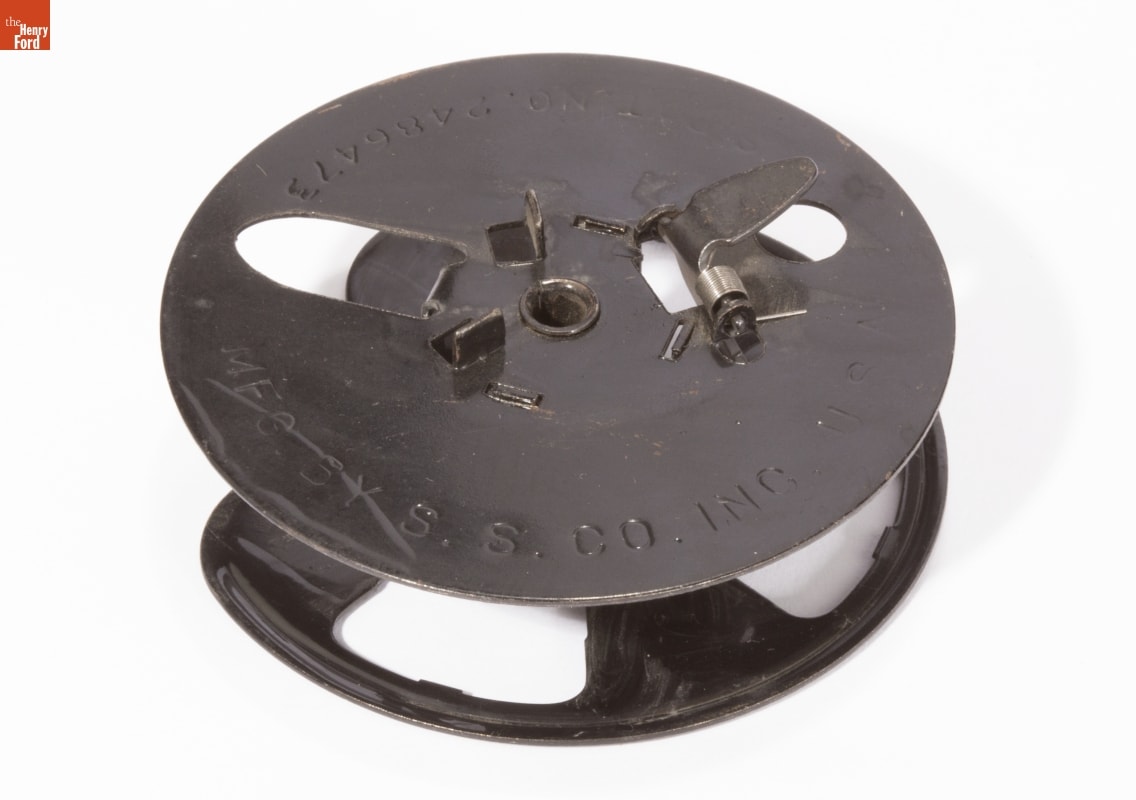
- S.S. Company Typewriter Spool, circa 1950 -
- circa 1950
- Collections - Artifact
S.S. Company Typewriter Spool, circa 1950
- Flask, 1840-1855 - Glass factories in America began producing inexpensive, mold-formed flasks in the early 1800s. These figured flasks, often decorated with symbols of national pride or political or cultural affiliation, appealed to America's common man. This Baltimore-made flask's slogan while referencing the alcoholic content also points to the importance of the Maryland city in the world grain trade.
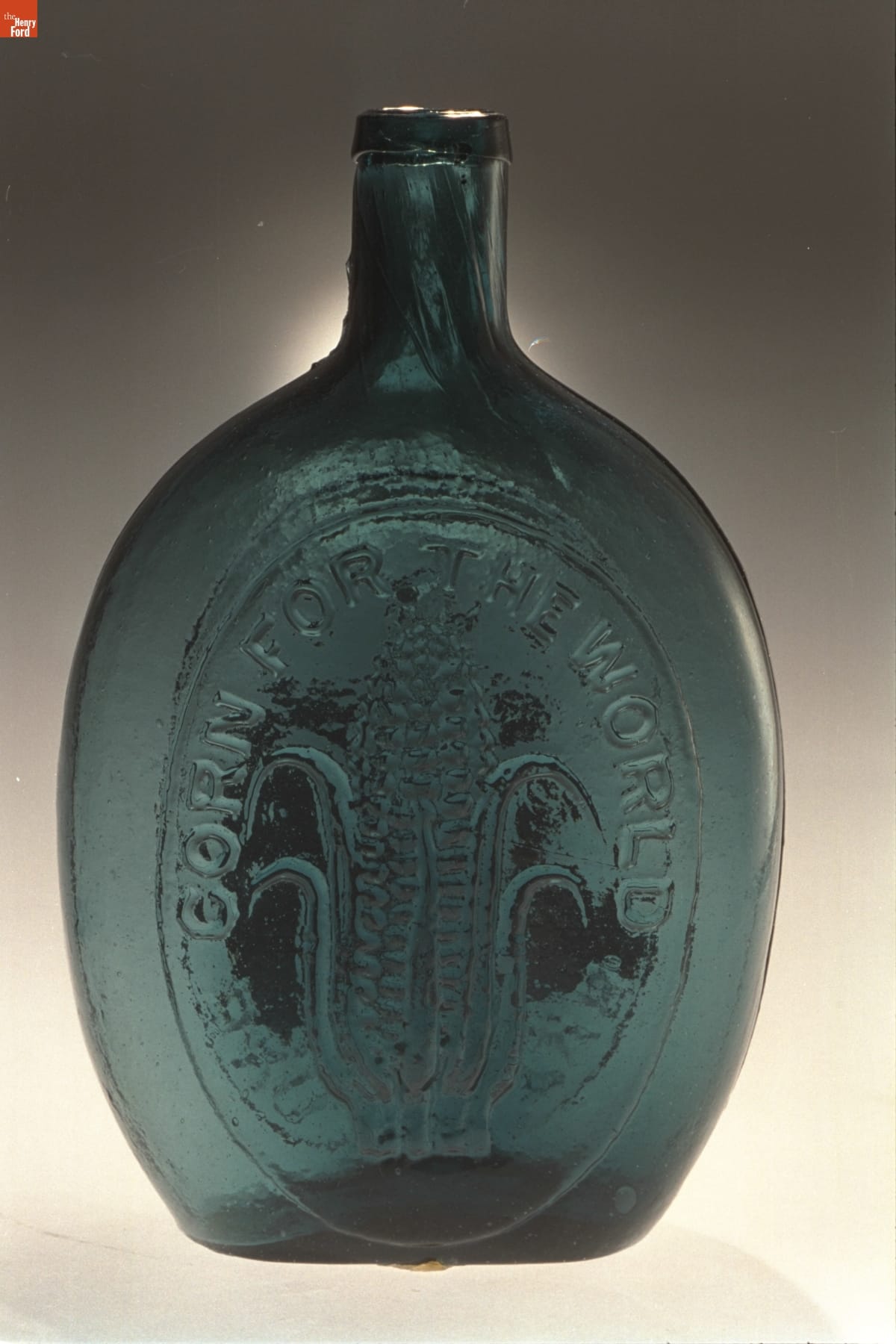
- 1840-1855
- Collections - Artifact
Flask, 1840-1855
Glass factories in America began producing inexpensive, mold-formed flasks in the early 1800s. These figured flasks, often decorated with symbols of national pride or political or cultural affiliation, appealed to America's common man. This Baltimore-made flask's slogan while referencing the alcoholic content also points to the importance of the Maryland city in the world grain trade.
- Flask, 1840-1855 - Glass factories in America began producing inexpensive, mold-formed flasks in the early 1800s. These figured flasks, often decorated with symbols of national pride or political or cultural affiliation, appealed to America's common man. This Baltimore-made flask's slogan while referencing the alcoholic content also points to the importance of the Maryland city in the world grain trade.
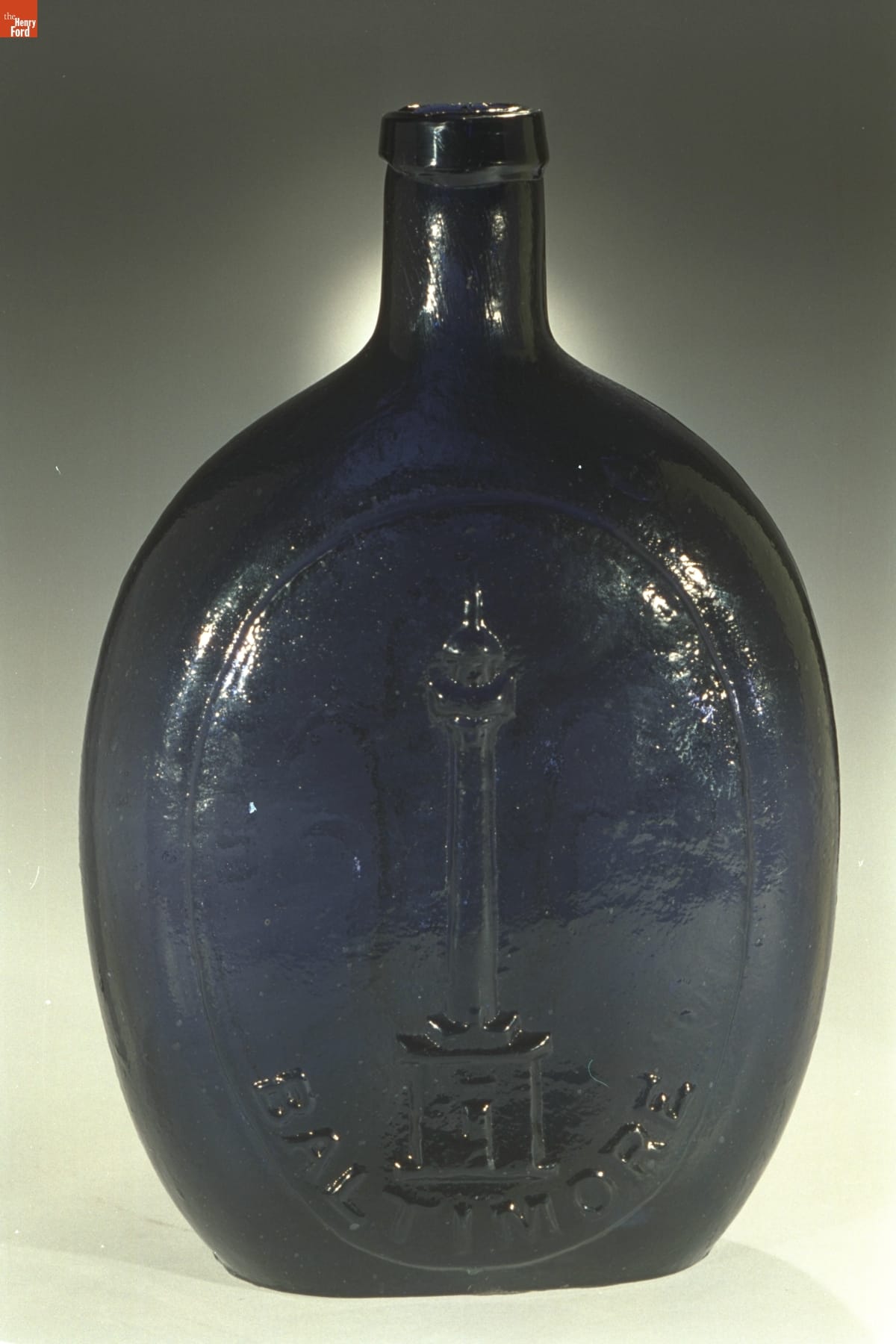
- 1840-1855
- Collections - Artifact
Flask, 1840-1855
Glass factories in America began producing inexpensive, mold-formed flasks in the early 1800s. These figured flasks, often decorated with symbols of national pride or political or cultural affiliation, appealed to America's common man. This Baltimore-made flask's slogan while referencing the alcoholic content also points to the importance of the Maryland city in the world grain trade.
- Mug, 1840-1850 -
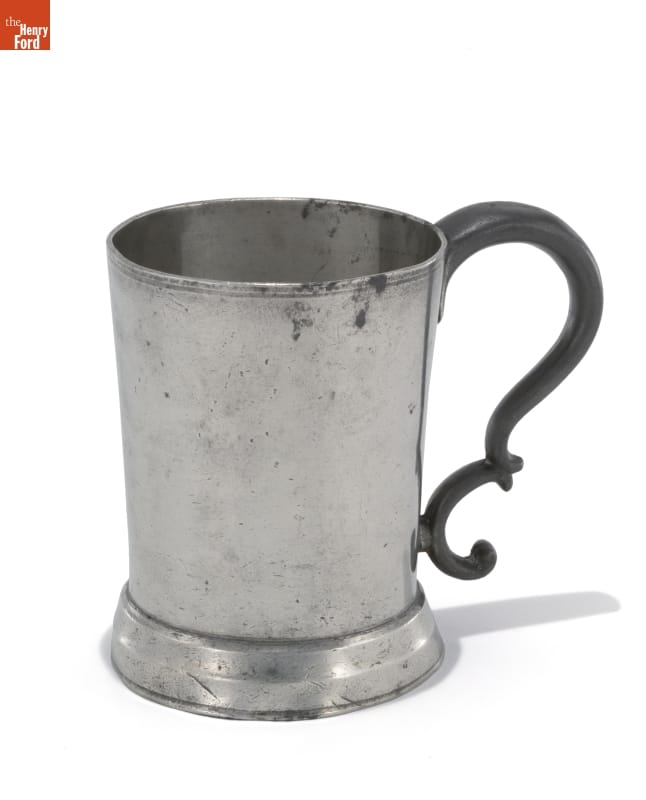
- 1840-1850
- Collections - Artifact
Mug, 1840-1850
- Flute, 1837-1840 -
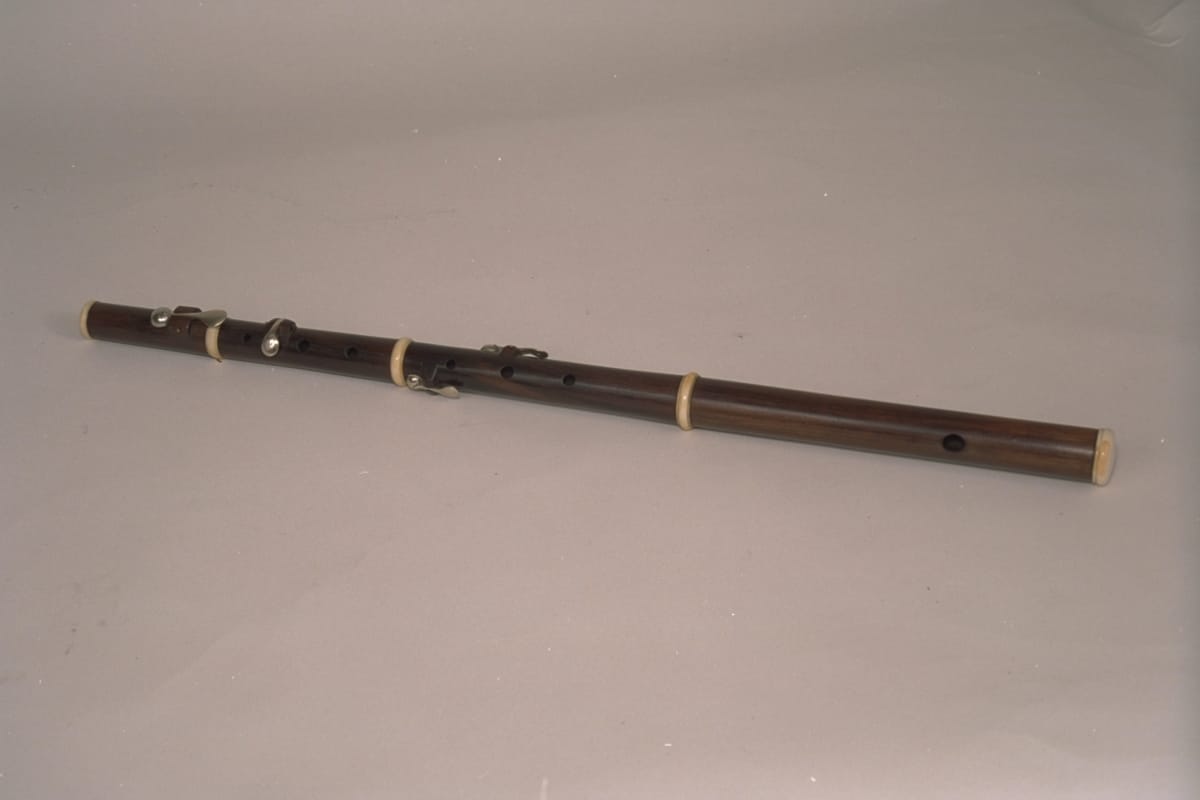
- 1837-1840
- Collections - Artifact
Flute, 1837-1840
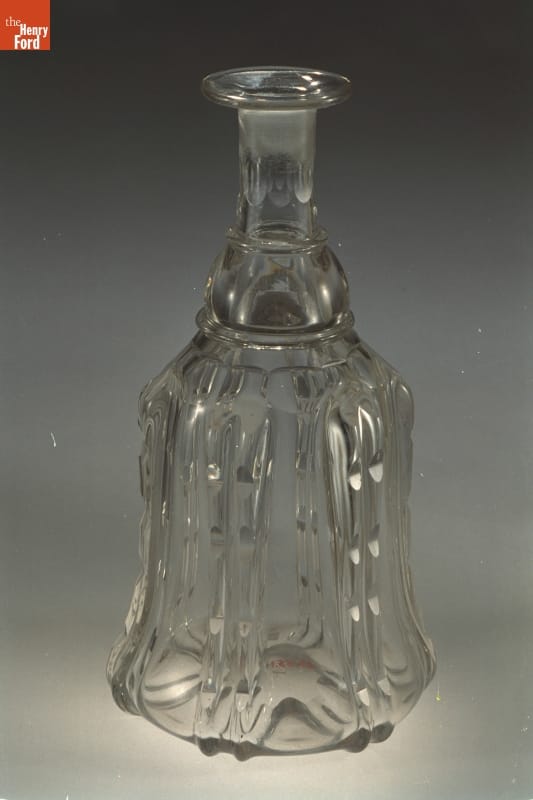
- Decanter, 1840-1870 - Nineteenth-century American glassmakers experimented with new methods to create products for a growing consumer market. In the 1820s, pressing glass into metal molds by machine was perfected, and by the mid-1800s, manufacturers were creating a variety of inexpensive pressed glass housewares. America's middle-class consumers could now decorate their homes with attractive glass bowls, creamers, dishes, plates, vases, and other tableware.
- 1840-1870
- Collections - Artifact
Decanter, 1840-1870
Nineteenth-century American glassmakers experimented with new methods to create products for a growing consumer market. In the 1820s, pressing glass into metal molds by machine was perfected, and by the mid-1800s, manufacturers were creating a variety of inexpensive pressed glass housewares. America's middle-class consumers could now decorate their homes with attractive glass bowls, creamers, dishes, plates, vases, and other tableware.
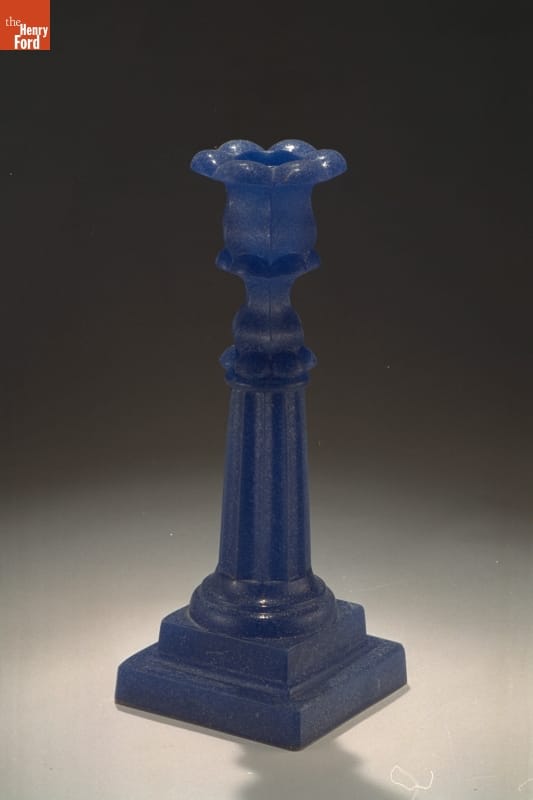
- Candlestick, 1840-1850 - Nineteenth-century American glassmakers experimented with new methods to create products for a growing consumer market. In the 1820s, pressing glass into metal molds by machine was perfected, and by the mid-1800s, manufacturers were creating a variety of inexpensive pressed glass housewares. America's middle-class consumers could now decorate their homes with attractive glass bowls, creamers, dishes, plates, vases, and even candlesticks.
- 1840-1850
- Collections - Artifact
Candlestick, 1840-1850
Nineteenth-century American glassmakers experimented with new methods to create products for a growing consumer market. In the 1820s, pressing glass into metal molds by machine was perfected, and by the mid-1800s, manufacturers were creating a variety of inexpensive pressed glass housewares. America's middle-class consumers could now decorate their homes with attractive glass bowls, creamers, dishes, plates, vases, and even candlesticks.