
Search
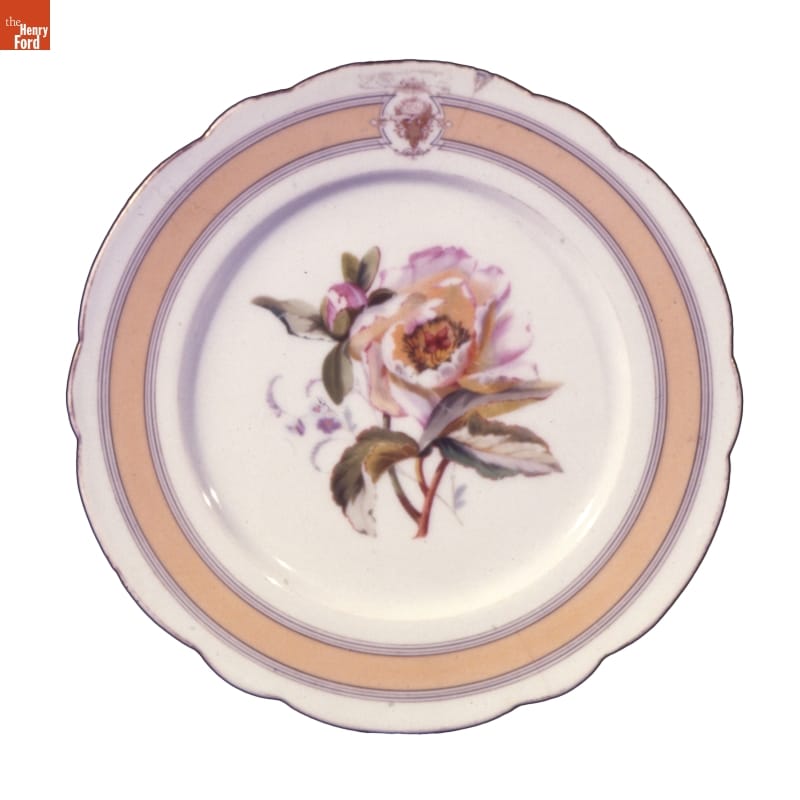
- Plate, Used by General U.S. Grant, 1869-1870 - Ever since the White House became the President's official home, dinnerware for state occasions was purchased in great quantities. Usually, the china was the choice of the President or his wife. The next administration sometimes added to the set or in many cases, disposed of the remnants and ordered new. Plates from the service used by President Ulysses Grant contained illustrations of different American flowers.
- 1869-1870
- Collections - Artifact
Plate, Used by General U.S. Grant, 1869-1870
Ever since the White House became the President's official home, dinnerware for state occasions was purchased in great quantities. Usually, the china was the choice of the President or his wife. The next administration sometimes added to the set or in many cases, disposed of the remnants and ordered new. Plates from the service used by President Ulysses Grant contained illustrations of different American flowers.
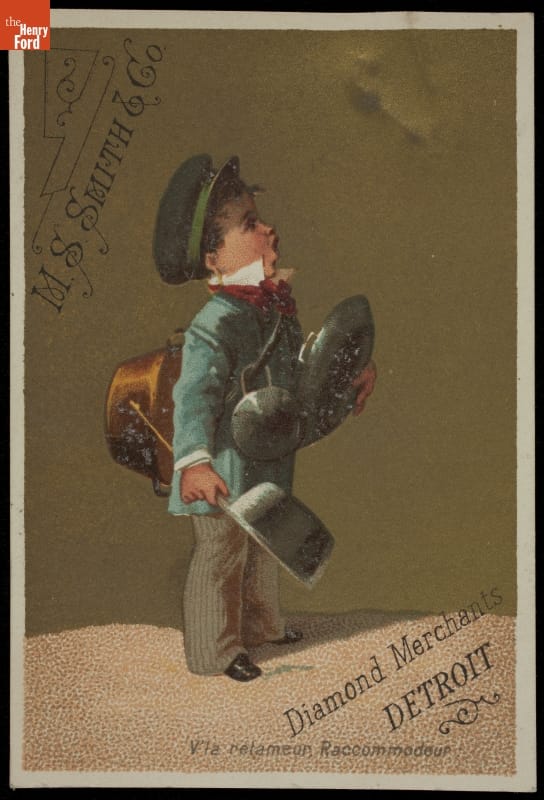
- Trade Card for M.S. Smith & Co., Jewelers, 1870-1890 - In the last third of the nineteenth century, an unprecedented variety of consumer goods and services flooded the American market. Advertisers, armed with new methods of color printing, bombarded potential customers with trade cards. Americans enjoyed and often saved the vibrant little advertisements found in product packages or distributed by local merchants. Many survive as historical records of commercialism in the United States.
- 1870-1890
- Collections - Artifact
Trade Card for M.S. Smith & Co., Jewelers, 1870-1890
In the last third of the nineteenth century, an unprecedented variety of consumer goods and services flooded the American market. Advertisers, armed with new methods of color printing, bombarded potential customers with trade cards. Americans enjoyed and often saved the vibrant little advertisements found in product packages or distributed by local merchants. Many survive as historical records of commercialism in the United States.
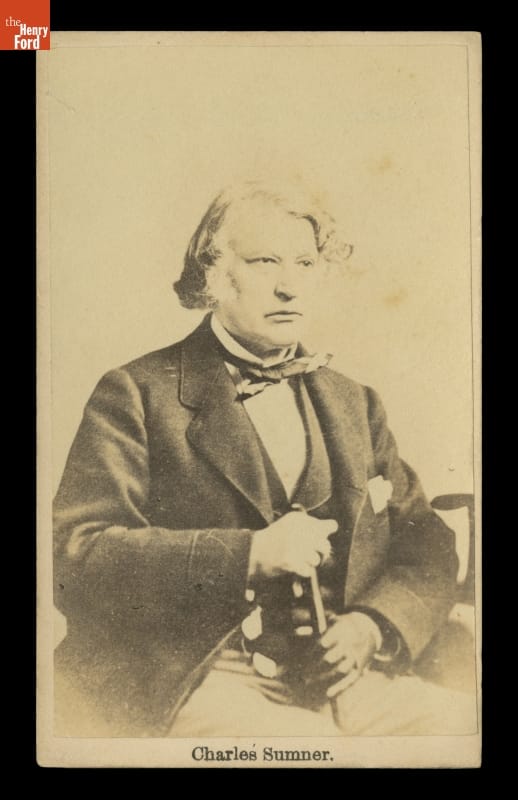
- Portrait of U.S. Senator Charles Sumner, circa 1870-1874 - Cartes-de-visite, small, professionally made photographs on cardboard stock, remained popular in the United States from the Civil War in the 1860s through the 1880s. Many were given to friends and loved ones, but enterprising photographers also produced images of famous individuals to sell to the collecting-crazed public. Celebrities, military officers and politicians, such as the elderly U.S. Senator Charles Sumner, were popular subjects.
- circa 1870-1874
- Collections - Artifact
Portrait of U.S. Senator Charles Sumner, circa 1870-1874
Cartes-de-visite, small, professionally made photographs on cardboard stock, remained popular in the United States from the Civil War in the 1860s through the 1880s. Many were given to friends and loved ones, but enterprising photographers also produced images of famous individuals to sell to the collecting-crazed public. Celebrities, military officers and politicians, such as the elderly U.S. Senator Charles Sumner, were popular subjects.
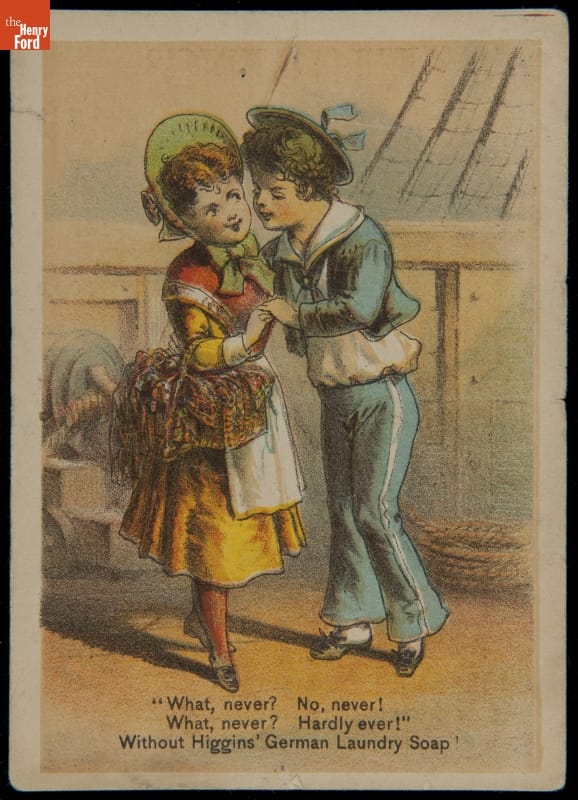
- Trade Card for Higgins' German Laundry Soap, Charles S. Higgins Company, 1870-1890 - In the last third of the nineteenth century, an unprecedented variety of consumer goods and services flooded the American market. Advertisers, armed with new methods of color printing, bombarded potential customers with trade cards. Americans enjoyed and often saved the vibrant little advertisements found in product packages or distributed by local merchants. Many survive as historical records of commercialism in the United States.
- 1870-1890
- Collections - Artifact
Trade Card for Higgins' German Laundry Soap, Charles S. Higgins Company, 1870-1890
In the last third of the nineteenth century, an unprecedented variety of consumer goods and services flooded the American market. Advertisers, armed with new methods of color printing, bombarded potential customers with trade cards. Americans enjoyed and often saved the vibrant little advertisements found in product packages or distributed by local merchants. Many survive as historical records of commercialism in the United States.
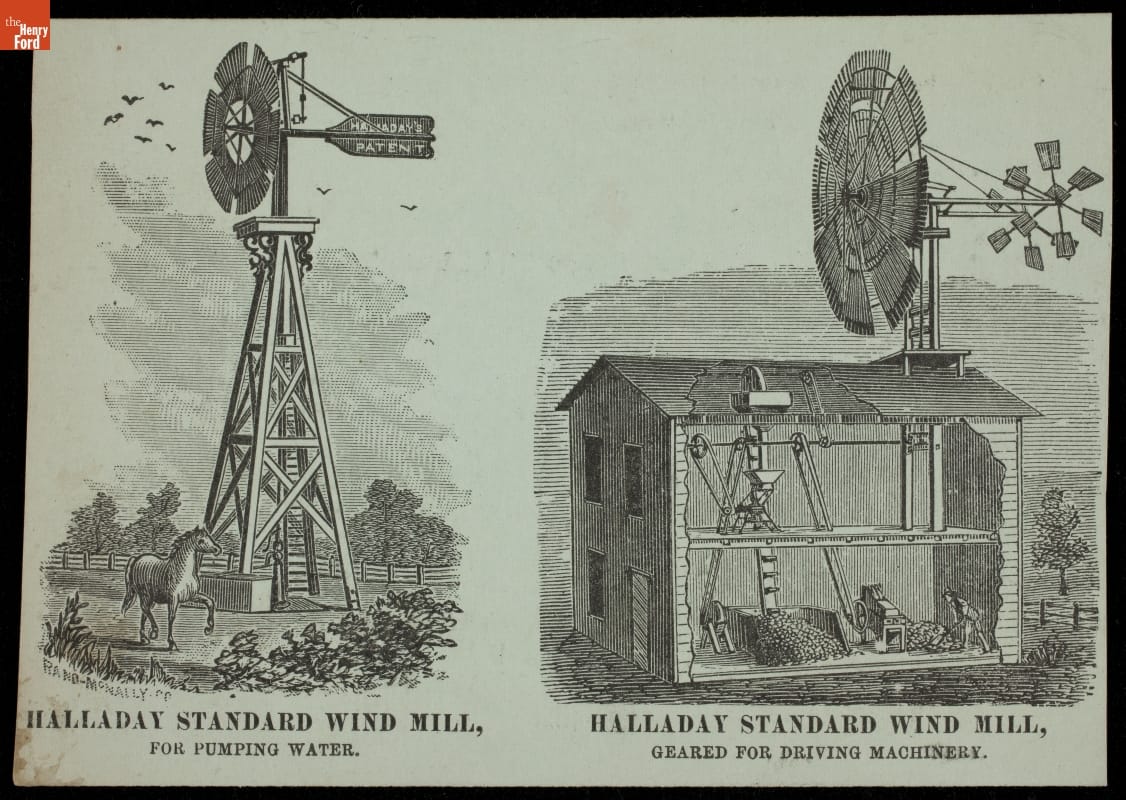
- Trade Card for Halladay Windmills, U.S. Wind Engine & Pump Co., 1870-1900 - In the last third of the nineteenth century, an unprecedented variety of consumer goods and services flooded the American market. Advertisers bombarded potential customers with trade cards. Americans enjoyed and saved the often illustrated little advertisements found in product packages or distributed by local merchants. Many survive as historical records of commercialism in the United States.
- 1870-1900
- Collections - Artifact
Trade Card for Halladay Windmills, U.S. Wind Engine & Pump Co., 1870-1900
In the last third of the nineteenth century, an unprecedented variety of consumer goods and services flooded the American market. Advertisers bombarded potential customers with trade cards. Americans enjoyed and saved the often illustrated little advertisements found in product packages or distributed by local merchants. Many survive as historical records of commercialism in the United States.
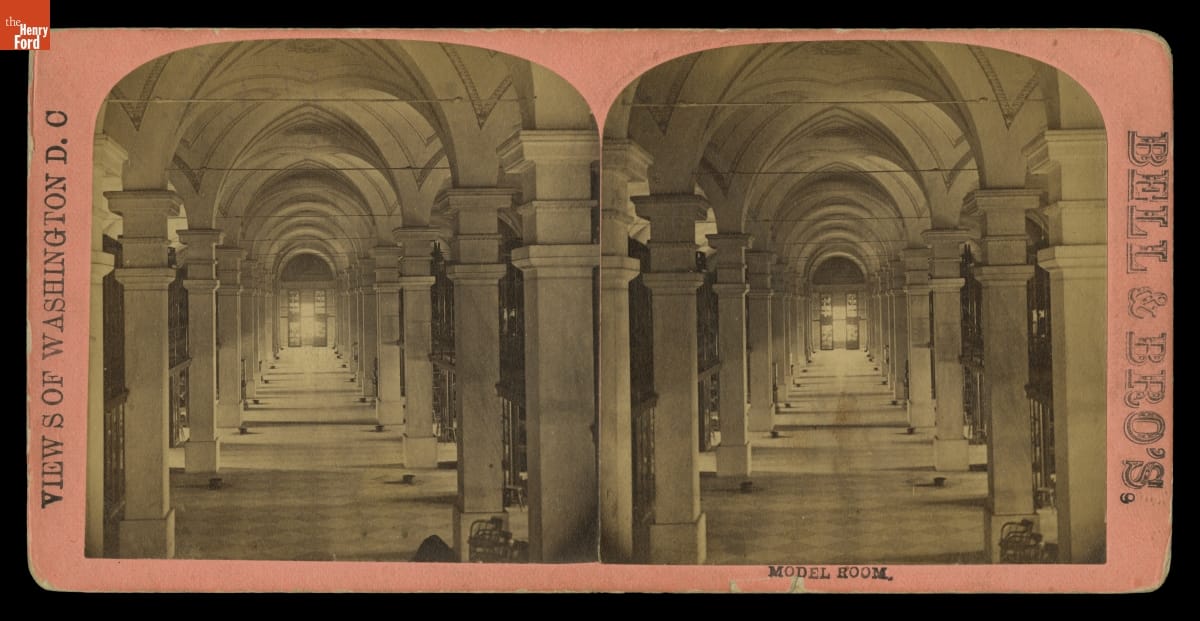
- Model Room of the U.S. Patent Office, Washington, D.C., circa 1870 - In 1836, the U.S. Congress authorized the building of a new patent office. The white marble neoclassical building, located in the center of Washington, D.C., was to be a general repository of American inventions and improvements in machinery and manufactures. Inside the three-story building, government officials displayed thousands of patent models along with other national treasures.
- circa 1870
- Collections - Artifact
Model Room of the U.S. Patent Office, Washington, D.C., circa 1870
In 1836, the U.S. Congress authorized the building of a new patent office. The white marble neoclassical building, located in the center of Washington, D.C., was to be a general repository of American inventions and improvements in machinery and manufactures. Inside the three-story building, government officials displayed thousands of patent models along with other national treasures.
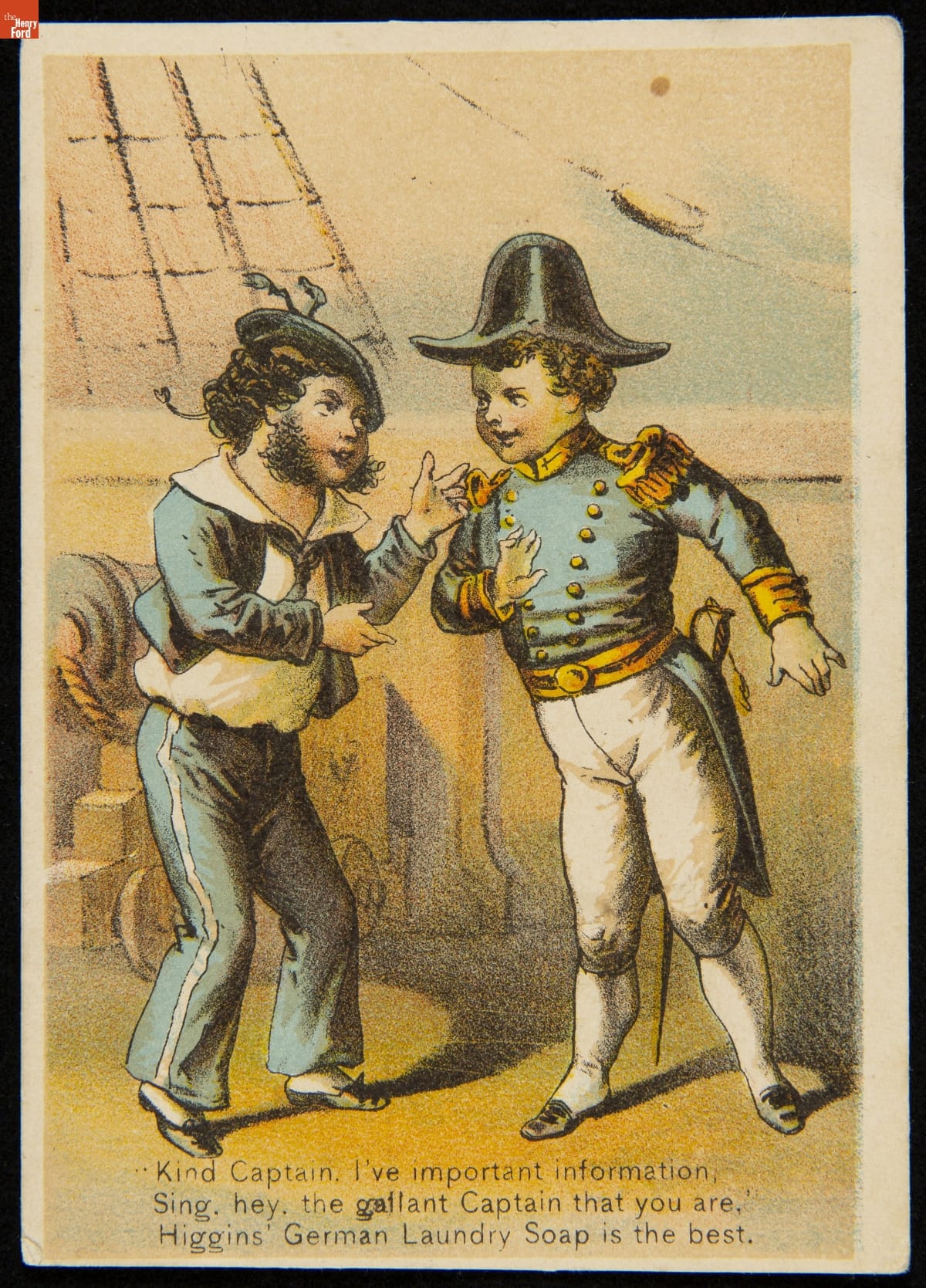
- Trade Card for Higgins' German Laundry Soap, Charles S. Higgins Company, 1870-1890 - In the last third of the nineteenth century, an unprecedented variety of consumer goods and services flooded the American market. Advertisers, armed with new methods of color printing, bombarded potential customers with trade cards. Americans enjoyed and often saved the vibrant little advertisements found in product packages or distributed by local merchants. Many survive as historical records of commercialism in the United States.
- 1870-1890
- Collections - Artifact
Trade Card for Higgins' German Laundry Soap, Charles S. Higgins Company, 1870-1890
In the last third of the nineteenth century, an unprecedented variety of consumer goods and services flooded the American market. Advertisers, armed with new methods of color printing, bombarded potential customers with trade cards. Americans enjoyed and often saved the vibrant little advertisements found in product packages or distributed by local merchants. Many survive as historical records of commercialism in the United States.
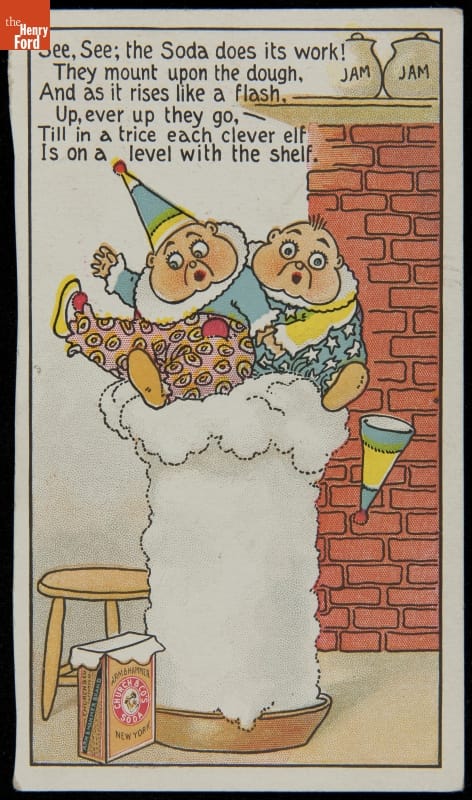
- Trade Card for Arm & Hammer Brand Church & Co.'s Baking Soda, 1870-1890 - In the last third of the nineteenth century, an unprecedented variety of consumer goods and services flooded the American market. Advertisers, armed with new methods of color printing, bombarded potential customers with trade cards. Americans enjoyed and often saved the vibrant little advertisements found in product packages or distributed by local merchants. Many survive as historical records of commercialism in the United States.
- 1870-1890
- Collections - Artifact
Trade Card for Arm & Hammer Brand Church & Co.'s Baking Soda, 1870-1890
In the last third of the nineteenth century, an unprecedented variety of consumer goods and services flooded the American market. Advertisers, armed with new methods of color printing, bombarded potential customers with trade cards. Americans enjoyed and often saved the vibrant little advertisements found in product packages or distributed by local merchants. Many survive as historical records of commercialism in the United States.
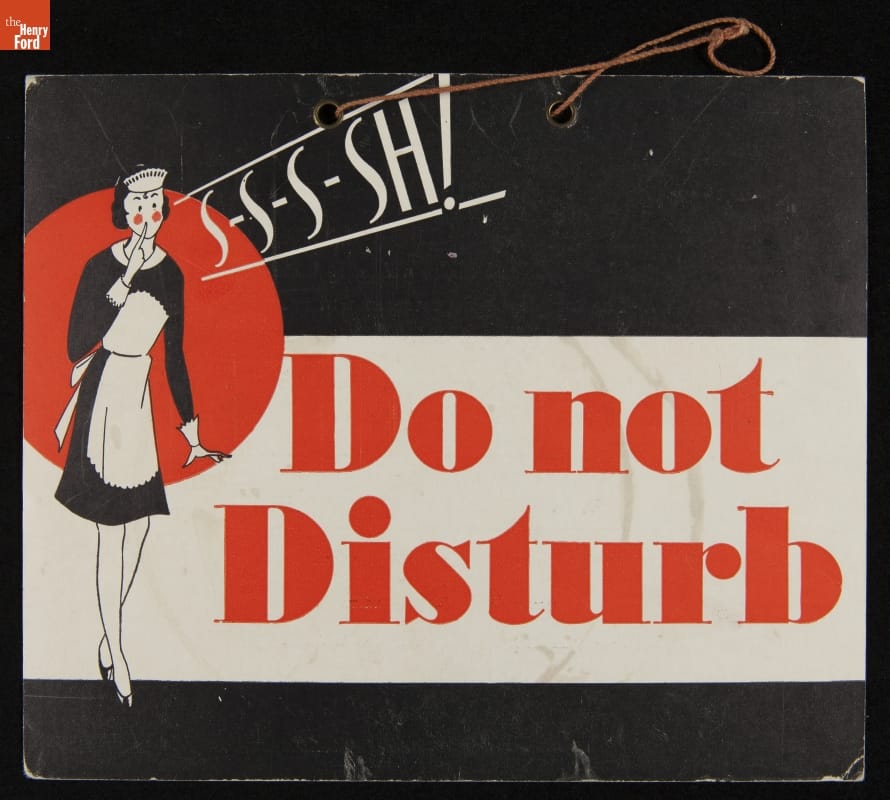
- Sign, "S-S-S-SH! Do Not Disturb," 1930-1945 - Like today, proprietors of mid-20th century hotels, motels and inns provided "Do Not Disturb" signs for weary travelers who wanted a restful stay. Guests placed the sign outside on their door to alert staff to please be quiet and not enter the room. This sign even included instructions that guests could use to stop unwanted telegrams or telephone calls.
- 1930-1945
- Collections - Artifact
Sign, "S-S-S-SH! Do Not Disturb," 1930-1945
Like today, proprietors of mid-20th century hotels, motels and inns provided "Do Not Disturb" signs for weary travelers who wanted a restful stay. Guests placed the sign outside on their door to alert staff to please be quiet and not enter the room. This sign even included instructions that guests could use to stop unwanted telegrams or telephone calls.
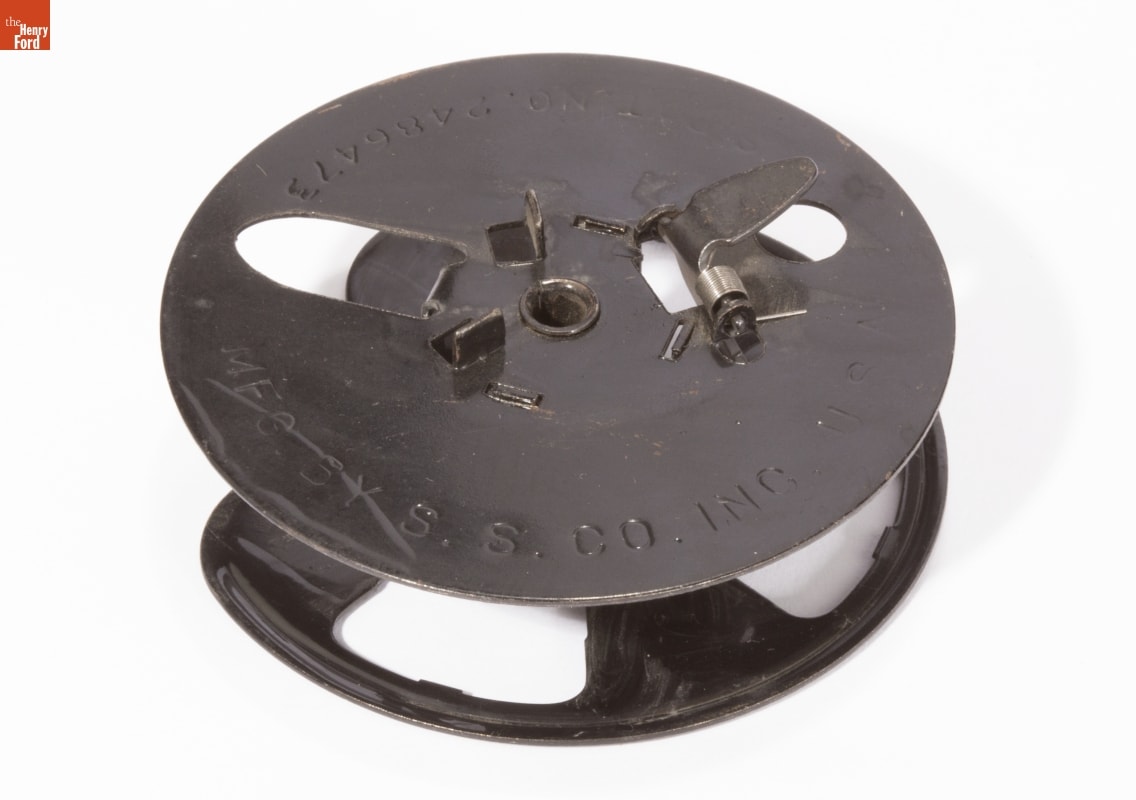
- S.S. Company Typewriter Spool, circa 1950 -
- circa 1950
- Collections - Artifact
S.S. Company Typewriter Spool, circa 1950