
Search
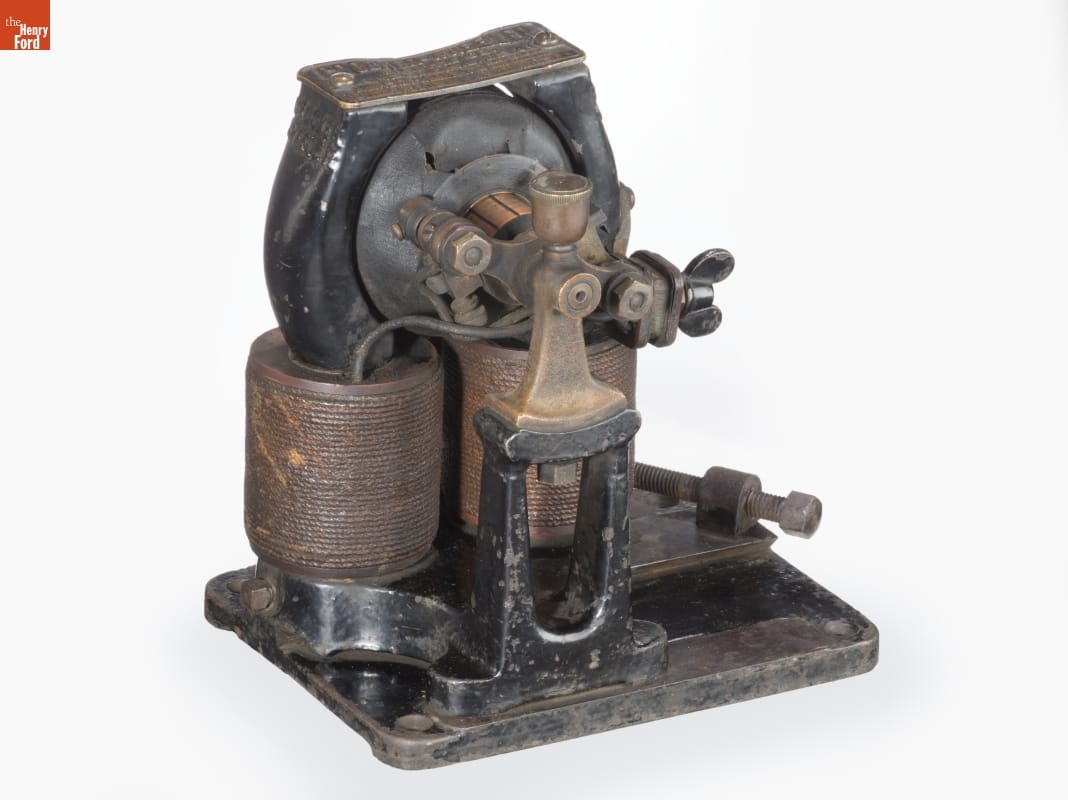
- Crocker-Wheeler Type S Motor, 1893-1900 - Francis Crocker teamed up with Schuyler Wheeler to form Crocker-Wheeler Electric Motor Company in 1888-89. Their company manufactured motors for use in factories, small shops, offices and homes. Their motors powered lathes, presses, and drills and ran elevators, fans, and sewing machines. The two men were well-respected engineers, both serving as president of the American Institute of Electrical Engineers.
- 1893-1900
- Collections - Artifact
Crocker-Wheeler Type S Motor, 1893-1900
Francis Crocker teamed up with Schuyler Wheeler to form Crocker-Wheeler Electric Motor Company in 1888-89. Their company manufactured motors for use in factories, small shops, offices and homes. Their motors powered lathes, presses, and drills and ran elevators, fans, and sewing machines. The two men were well-respected engineers, both serving as president of the American Institute of Electrical Engineers.
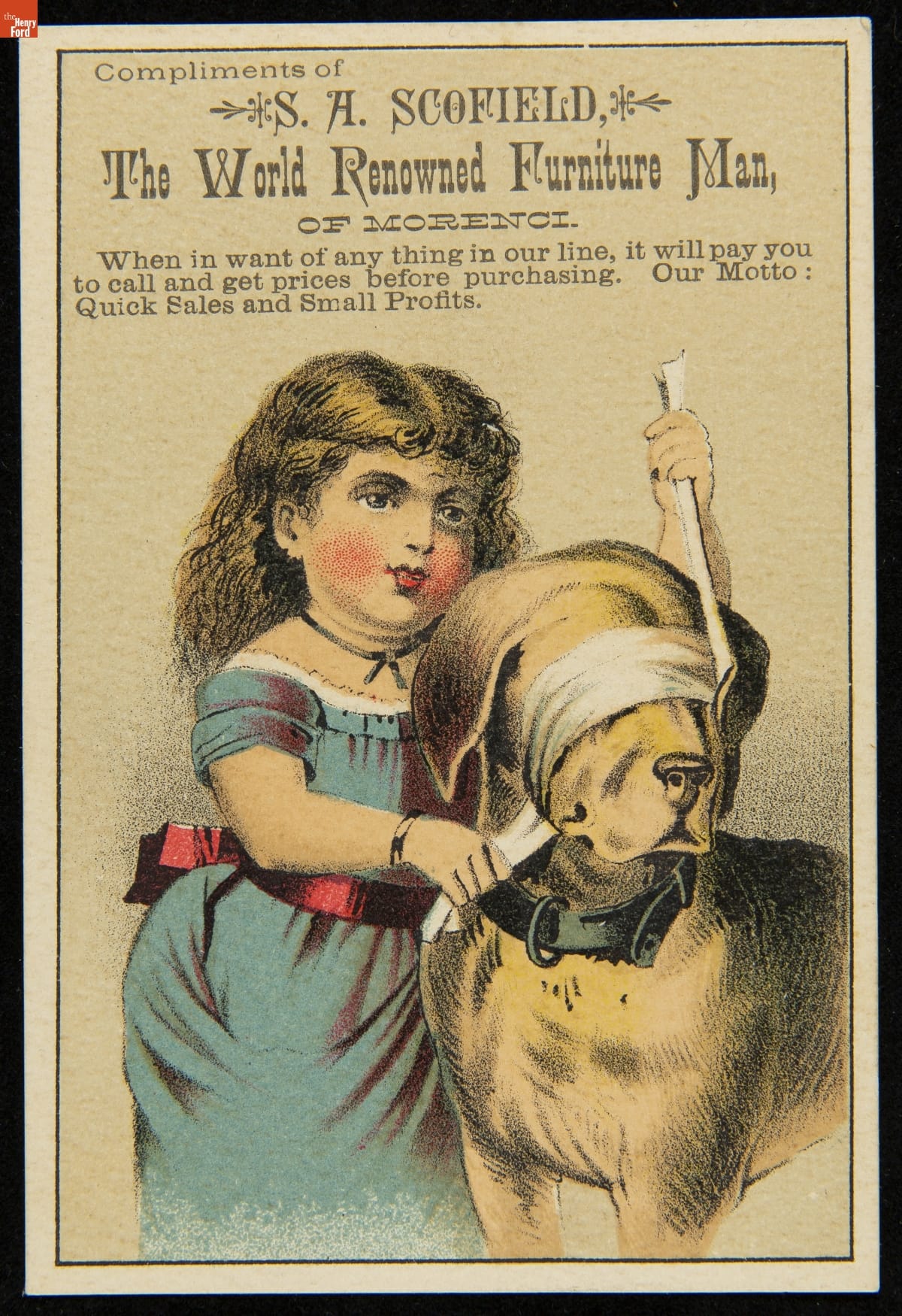
- Trade Card for S. A. Scofield Furniture, S.A. Scofield & Son, 1880-1900 - As color printing gained momentum in the late 19th century, trade cards became a major means of advertising goods and services. Americans enjoyed and often saved the little advertisements found in product packages or distributed by local merchants. This trade card advertises S.A. Scofield Furniture.
- 1880-1900
- Collections - Artifact
Trade Card for S. A. Scofield Furniture, S.A. Scofield & Son, 1880-1900
As color printing gained momentum in the late 19th century, trade cards became a major means of advertising goods and services. Americans enjoyed and often saved the little advertisements found in product packages or distributed by local merchants. This trade card advertises S.A. Scofield Furniture.
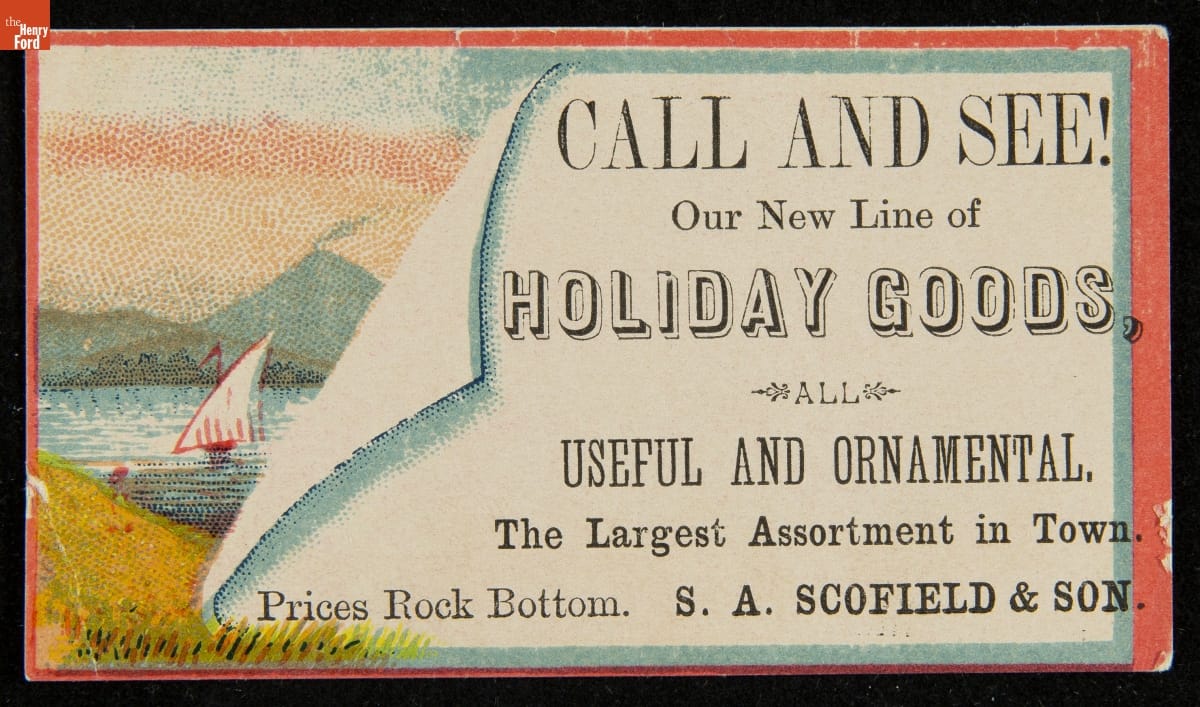
- Trade Card for S. A. Scofield Furniture, S.A. Scofield & Son, 1880-1900 - As color printing gained momentum in the late 19th century, trade cards became a major means of advertising goods and services. Americans enjoyed and often saved the little advertisements found in product packages or distributed by local merchants. This trade card advertises S.A. Scofield Furniture.
- 1880-1900
- Collections - Artifact
Trade Card for S. A. Scofield Furniture, S.A. Scofield & Son, 1880-1900
As color printing gained momentum in the late 19th century, trade cards became a major means of advertising goods and services. Americans enjoyed and often saved the little advertisements found in product packages or distributed by local merchants. This trade card advertises S.A. Scofield Furniture.
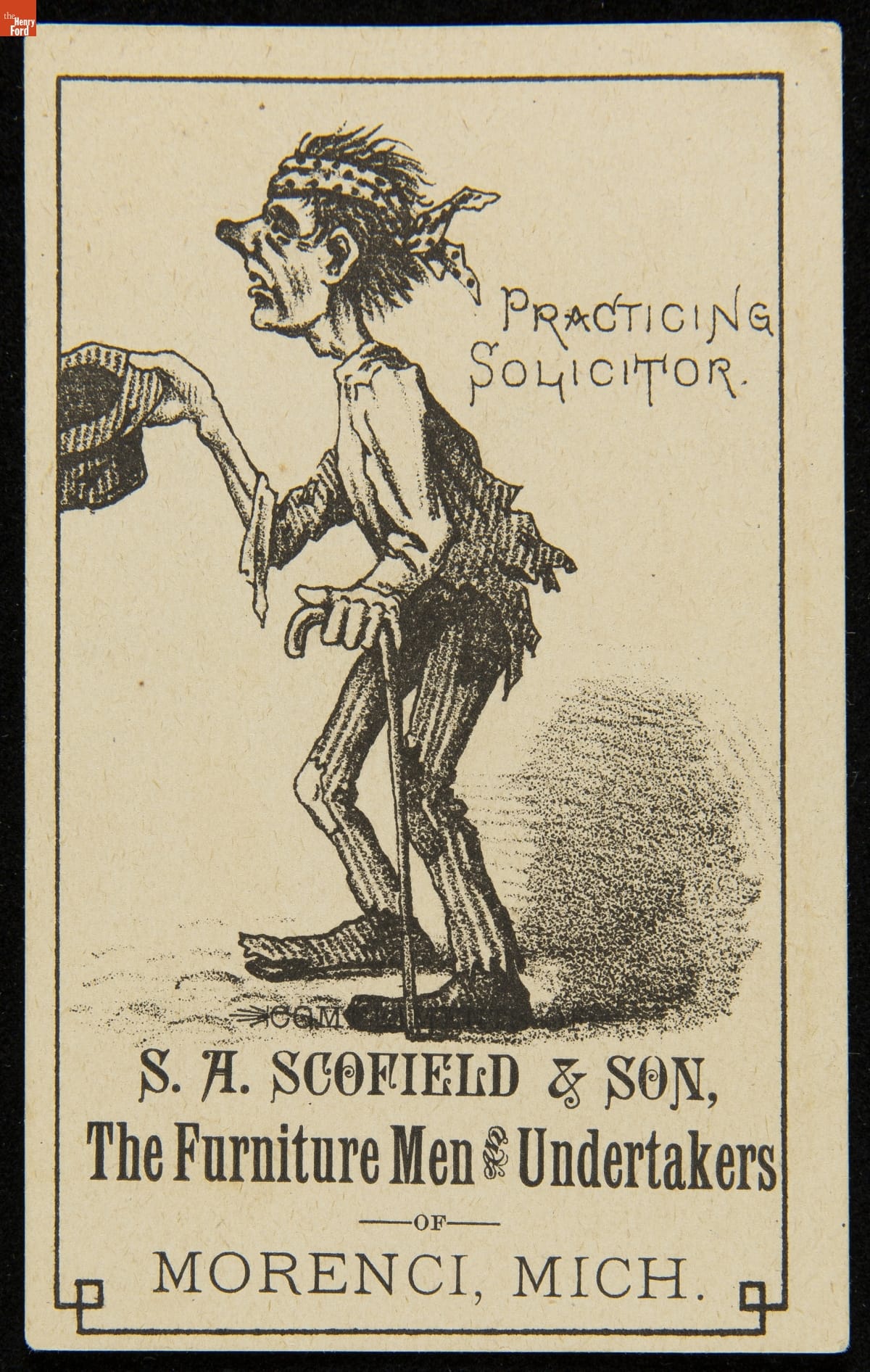
- Trade Card for S. A. Scofield Furniture, S.A. Scofield & Son, 1880-1900 - As color printing gained momentum in the late 19th century, trade cards became a major means of advertising goods and services. Americans enjoyed and often saved the little advertisements found in product packages or distributed by local merchants. This trade card advertises S.A. Scofield Furniture.
- 1880-1900
- Collections - Artifact
Trade Card for S. A. Scofield Furniture, S.A. Scofield & Son, 1880-1900
As color printing gained momentum in the late 19th century, trade cards became a major means of advertising goods and services. Americans enjoyed and often saved the little advertisements found in product packages or distributed by local merchants. This trade card advertises S.A. Scofield Furniture.
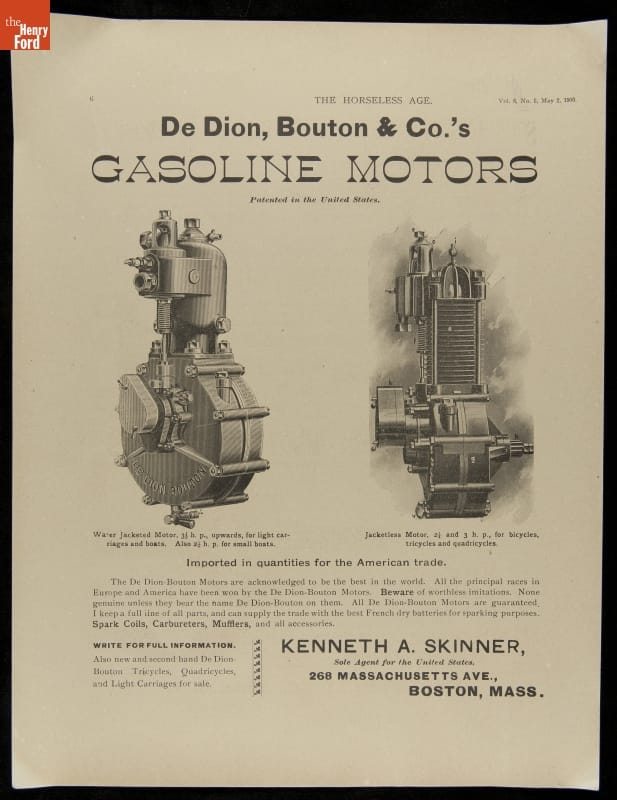
- Advertisement, "DeDion, Bouton & Co.'s Gasoline Motors," 1900 - Jules-Albert de Dion and George Bouton initially set out to build steam-powered automobiles, but they were soon convinced that gasoline was the future. Their company's one-cylinder gasoline engine, introduced in 1895, was perhaps the first high-speed, lightweight internal combustion engine -- operating at around 2,000 rpm and weighing 40 pounds. De Dion-Bouton supplied engines to other automakers throughout the world.
- 1900
- Collections - Artifact
Advertisement, "DeDion, Bouton & Co.'s Gasoline Motors," 1900
Jules-Albert de Dion and George Bouton initially set out to build steam-powered automobiles, but they were soon convinced that gasoline was the future. Their company's one-cylinder gasoline engine, introduced in 1895, was perhaps the first high-speed, lightweight internal combustion engine -- operating at around 2,000 rpm and weighing 40 pounds. De Dion-Bouton supplied engines to other automakers throughout the world.
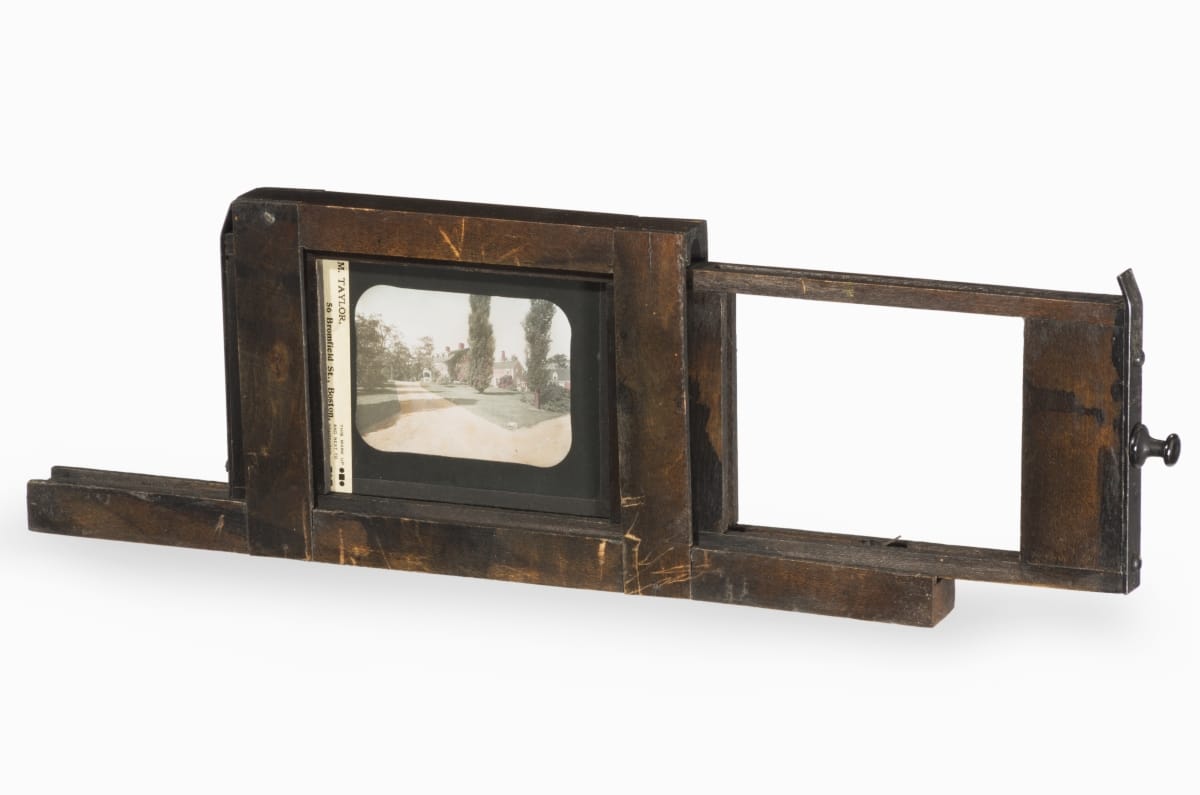
- S.M. Taylor Lantern Slide, Landscape, circa 1900 - Magic lanterns use a concave mirror and light source to project images on glass slides with painted or photographic scenes. Developed in the 17th century, magic lanterns predate slide projectors and motion pictures. In the hands of magicians, they became "lanterns of fright," projecting wondrous images and apparitions. Slide themes ranged widely: exotic travel, folklore, advertising, history, science, and art.
- circa 1900
- Collections - Artifact
S.M. Taylor Lantern Slide, Landscape, circa 1900
Magic lanterns use a concave mirror and light source to project images on glass slides with painted or photographic scenes. Developed in the 17th century, magic lanterns predate slide projectors and motion pictures. In the hands of magicians, they became "lanterns of fright," projecting wondrous images and apparitions. Slide themes ranged widely: exotic travel, folklore, advertising, history, science, and art.
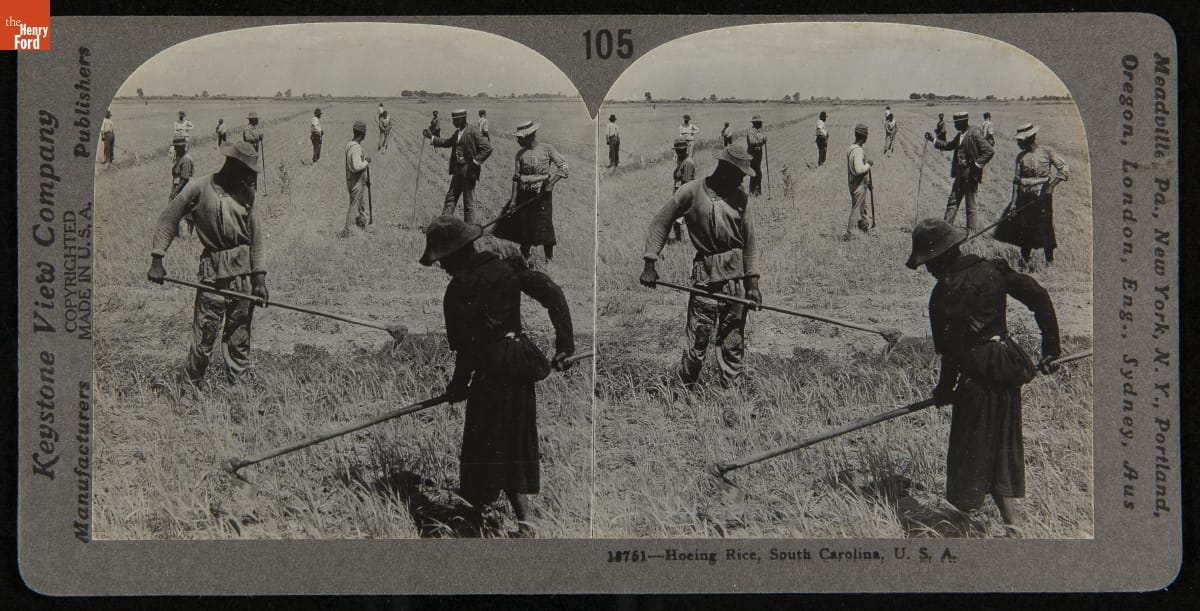
- Hoeing Rice, South Carolina, U.S.A., 1900-1910 - Rice grows best when fields are flooded at planting time and periodically during the growing season. Managing the water levels required an infrastructure as well as regular maintenance. This stereograph shows workers with a broad and heavy hoe, removing weeds and deepening the channel in a rice field.
- 1900-1910
- Collections - Artifact
Hoeing Rice, South Carolina, U.S.A., 1900-1910
Rice grows best when fields are flooded at planting time and periodically during the growing season. Managing the water levels required an infrastructure as well as regular maintenance. This stereograph shows workers with a broad and heavy hoe, removing weeds and deepening the channel in a rice field.
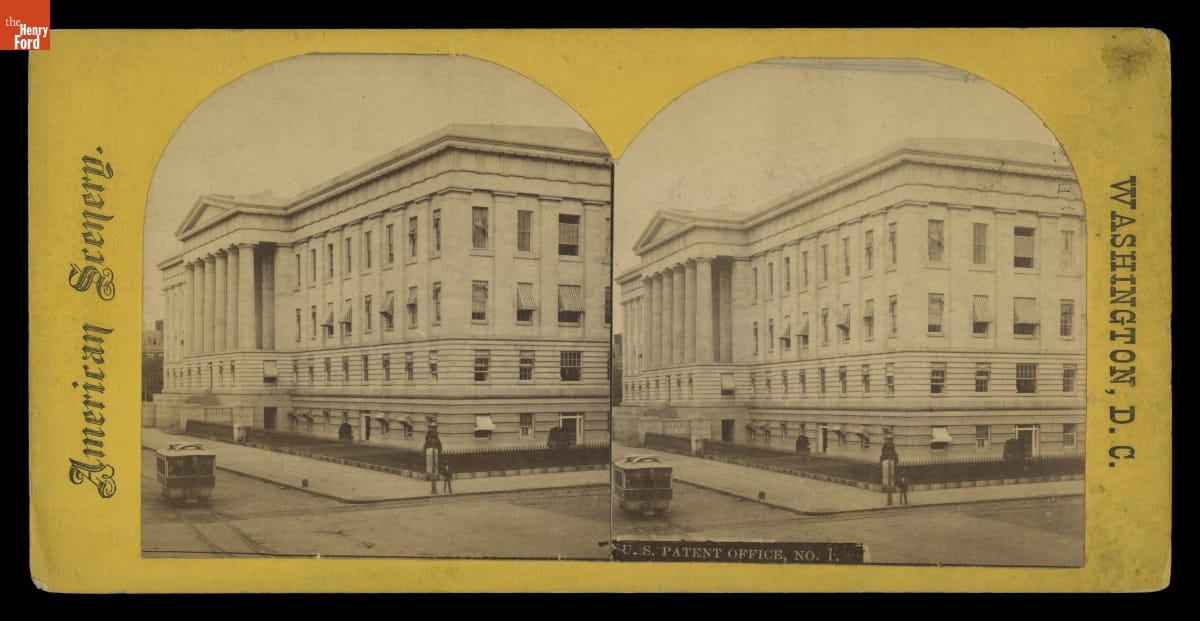
- The U.S. Patent Office, Washington, D.C., 1880-1900 - In 1836, the U.S. Congress authorized the building of a new patent office. The white marble neoclassical building, located in the center of Washington, D.C., was to be a general repository of American inventions and improvements in machinery and manufactures. Inside the three-story building, government officials displayed thousands of patent models along with other national treasures.
- 1880-1900
- Collections - Artifact
The U.S. Patent Office, Washington, D.C., 1880-1900
In 1836, the U.S. Congress authorized the building of a new patent office. The white marble neoclassical building, located in the center of Washington, D.C., was to be a general repository of American inventions and improvements in machinery and manufactures. Inside the three-story building, government officials displayed thousands of patent models along with other national treasures.
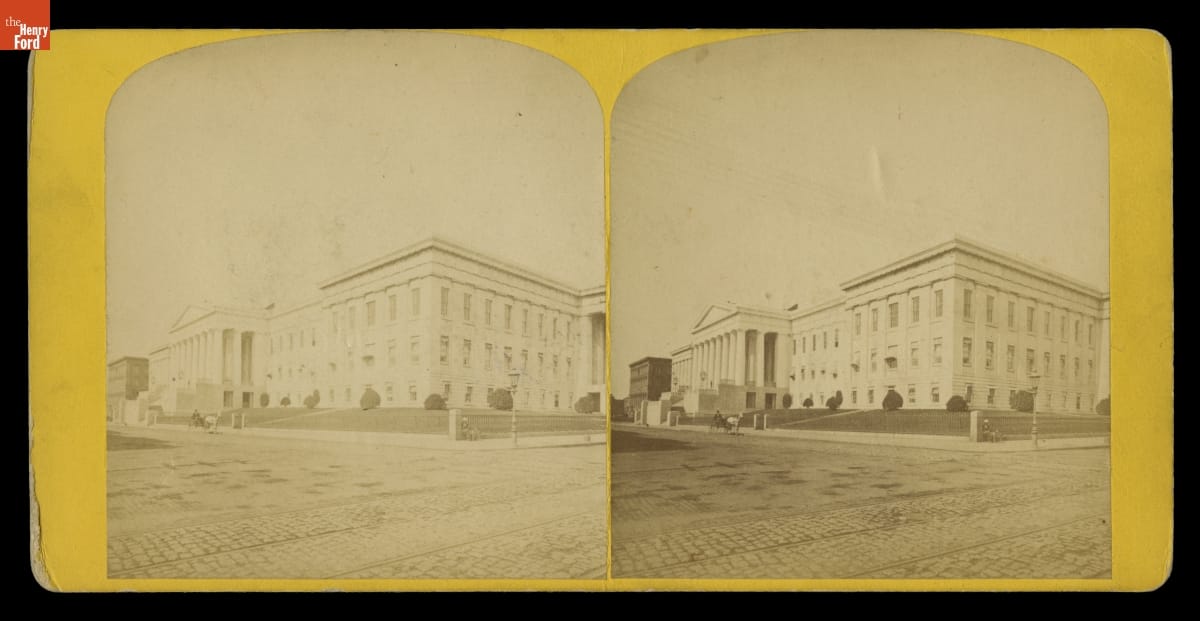
- The U.S. Patent Office, Washington, D.C., 1880-1900 - In 1836, the U.S. Congress authorized the building of a new patent office. The white marble neoclassical building, located in the center of Washington, D.C., was to be a general repository of American inventions and improvements in machinery and manufactures. Inside the three-story building, government officials displayed thousands of patent models along with other national treasures.
- 1880-1900
- Collections - Artifact
The U.S. Patent Office, Washington, D.C., 1880-1900
In 1836, the U.S. Congress authorized the building of a new patent office. The white marble neoclassical building, located in the center of Washington, D.C., was to be a general repository of American inventions and improvements in machinery and manufactures. Inside the three-story building, government officials displayed thousands of patent models along with other national treasures.
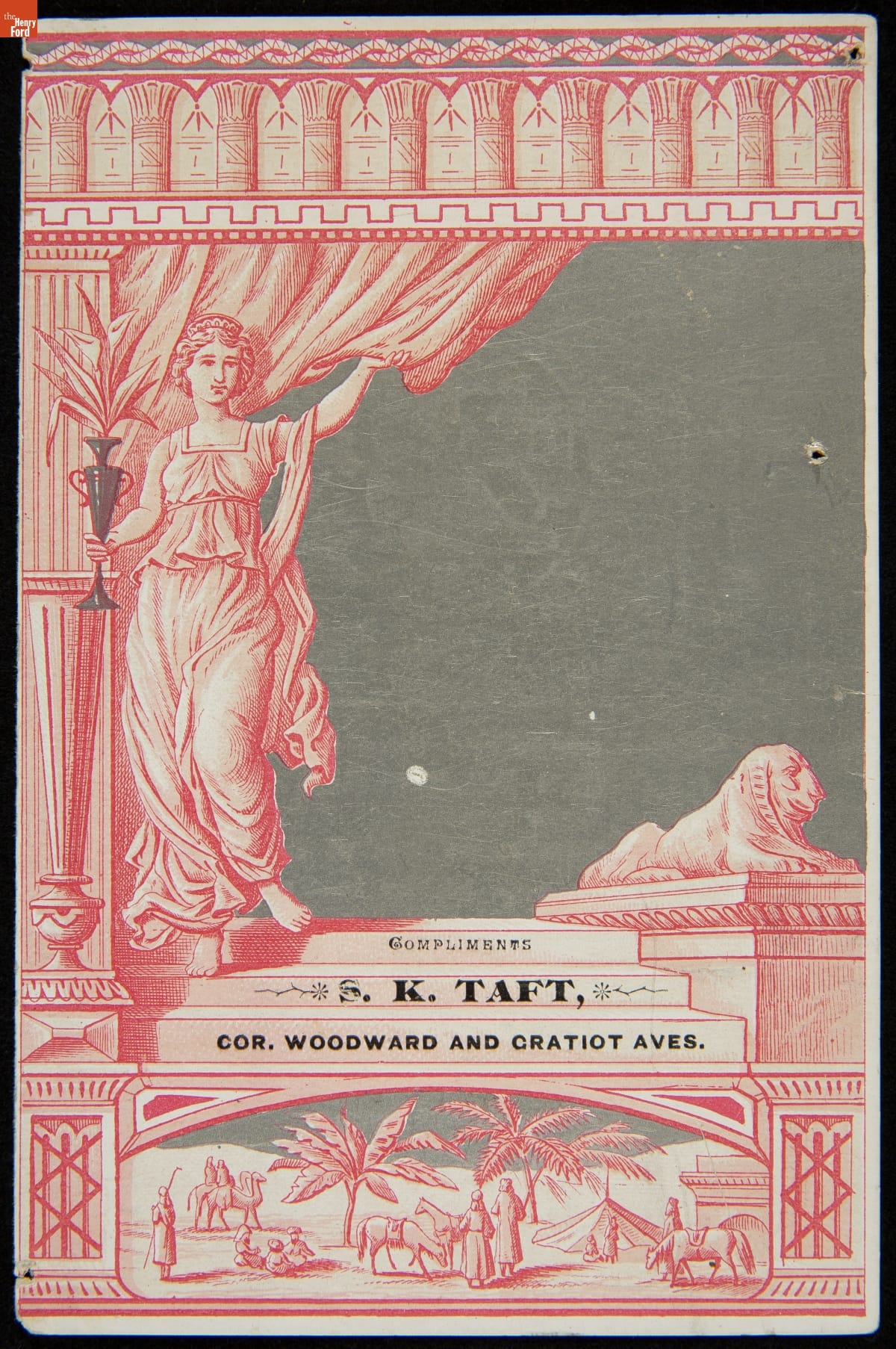
- Trade Card for Reynolds Brothers Fine Shoes, S.K. Taft, 1880-1900 - In the last third of the nineteenth century, an unprecedented variety of consumer goods and services flooded the American market. Advertisers, armed with new methods of color printing, bombarded potential customers with trade cards. Americans enjoyed and often saved the vibrant little advertisements found in product packages or distributed by local merchants. Many survive as historical records of commercialism in the United States.
- 1880-1900
- Collections - Artifact
Trade Card for Reynolds Brothers Fine Shoes, S.K. Taft, 1880-1900
In the last third of the nineteenth century, an unprecedented variety of consumer goods and services flooded the American market. Advertisers, armed with new methods of color printing, bombarded potential customers with trade cards. Americans enjoyed and often saved the vibrant little advertisements found in product packages or distributed by local merchants. Many survive as historical records of commercialism in the United States.