
Search
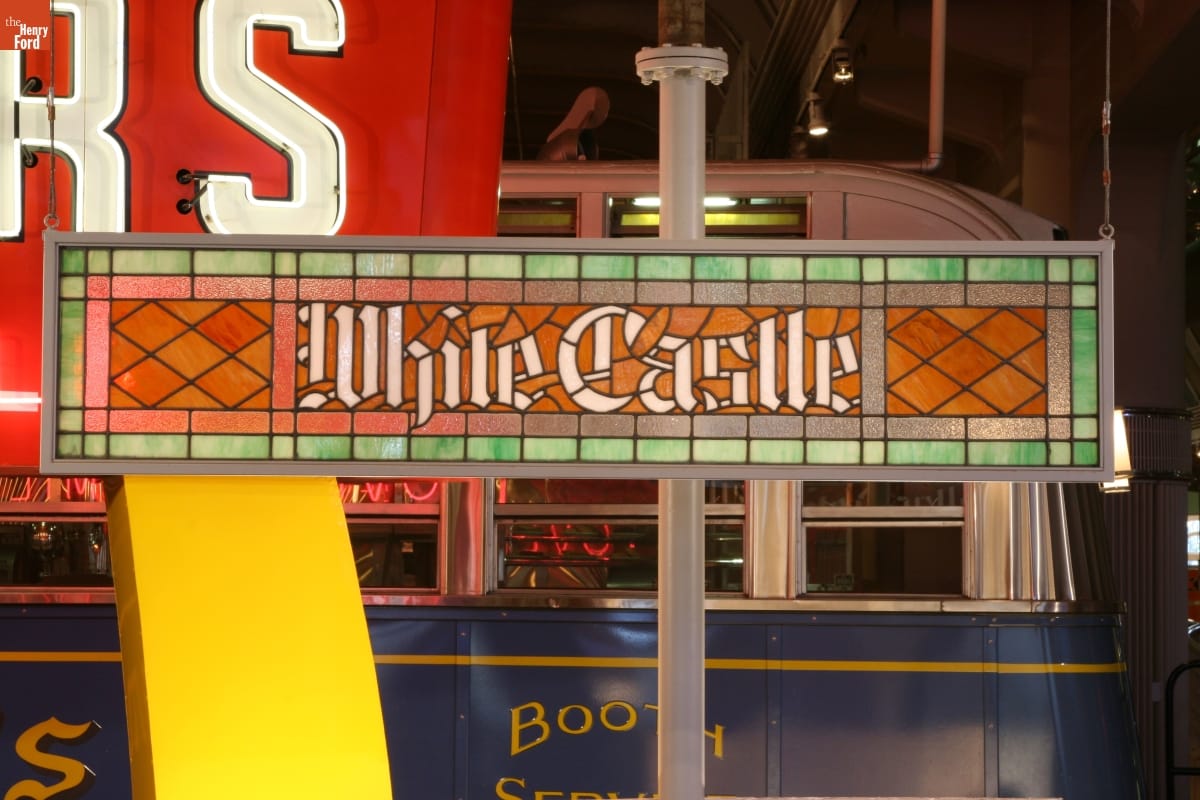
- Stained Glass White Castle Sign, 1930s - Restaurant owners, Walter Anderson and Billy Ingram, packaged their fast food concept in compact, castle-like structures. These "White Castles" conveyed cleanliness, stability, and permanence. This sign was used at a 1930s White Castle.
- 1930-1939
- Collections - Artifact
Stained Glass White Castle Sign, 1930s
Restaurant owners, Walter Anderson and Billy Ingram, packaged their fast food concept in compact, castle-like structures. These "White Castles" conveyed cleanliness, stability, and permanence. This sign was used at a 1930s White Castle.
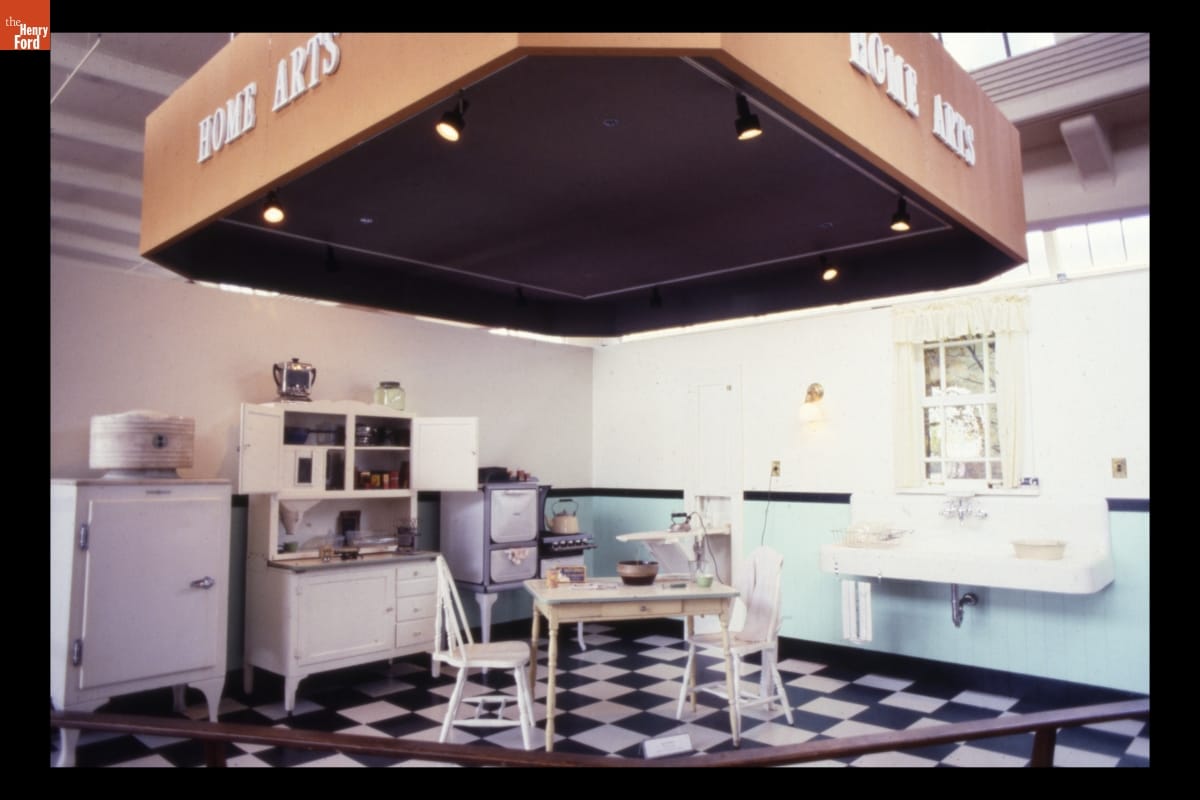
- 1930s Kitchen exhibit in Henry Ford Museum, circa 1980 -
- circa 1980
- Collections - Artifact
1930s Kitchen exhibit in Henry Ford Museum, circa 1980
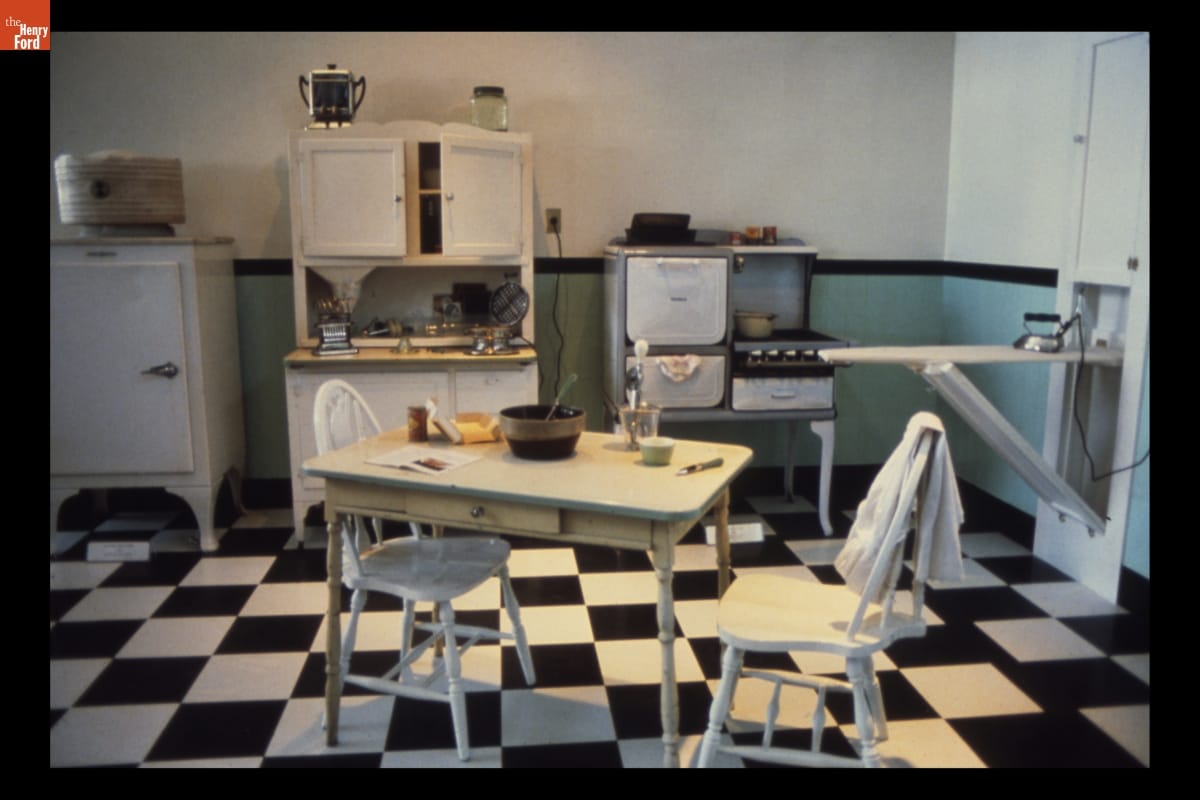
- 1930s Kitchen Exhibit in Henry Ford Museum, January 1980 -
- January 01, 1980
- Collections - Artifact
1930s Kitchen Exhibit in Henry Ford Museum, January 1980
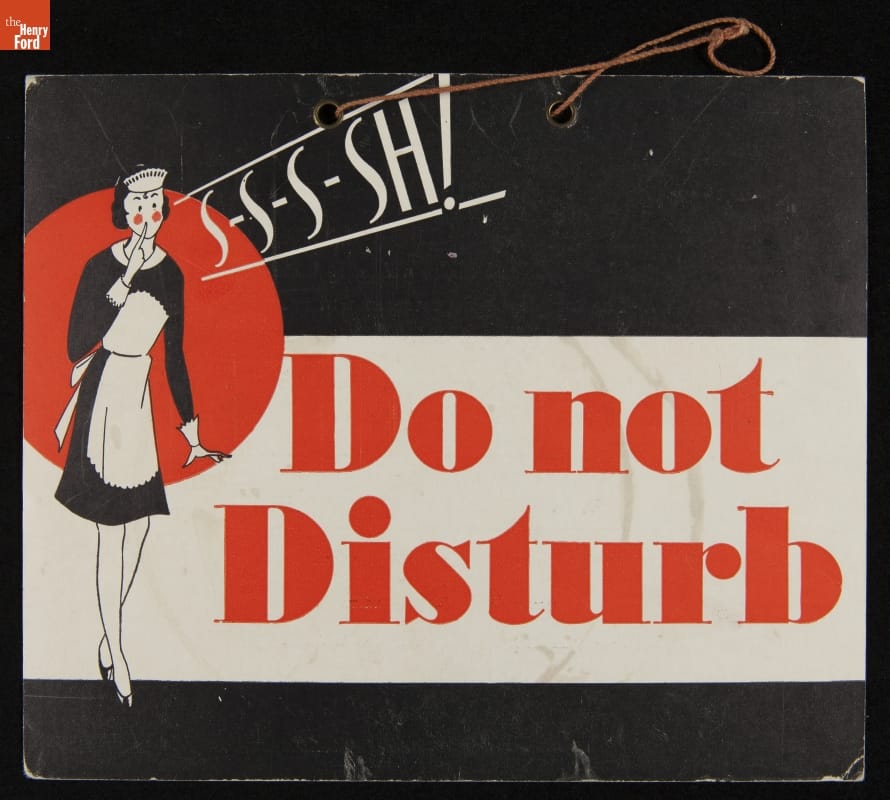
- Sign, "S-S-S-SH! Do Not Disturb," 1930-1945 - Like today, proprietors of mid-20th century hotels, motels and inns provided "Do Not Disturb" signs for weary travelers who wanted a restful stay. Guests placed the sign outside on their door to alert staff to please be quiet and not enter the room. This sign even included instructions that guests could use to stop unwanted telegrams or telephone calls.
- 1930-1945
- Collections - Artifact
Sign, "S-S-S-SH! Do Not Disturb," 1930-1945
Like today, proprietors of mid-20th century hotels, motels and inns provided "Do Not Disturb" signs for weary travelers who wanted a restful stay. Guests placed the sign outside on their door to alert staff to please be quiet and not enter the room. This sign even included instructions that guests could use to stop unwanted telegrams or telephone calls.
- 1930s Kitchen Exhibit in Henry Ford Museum, July 10, 2001 -
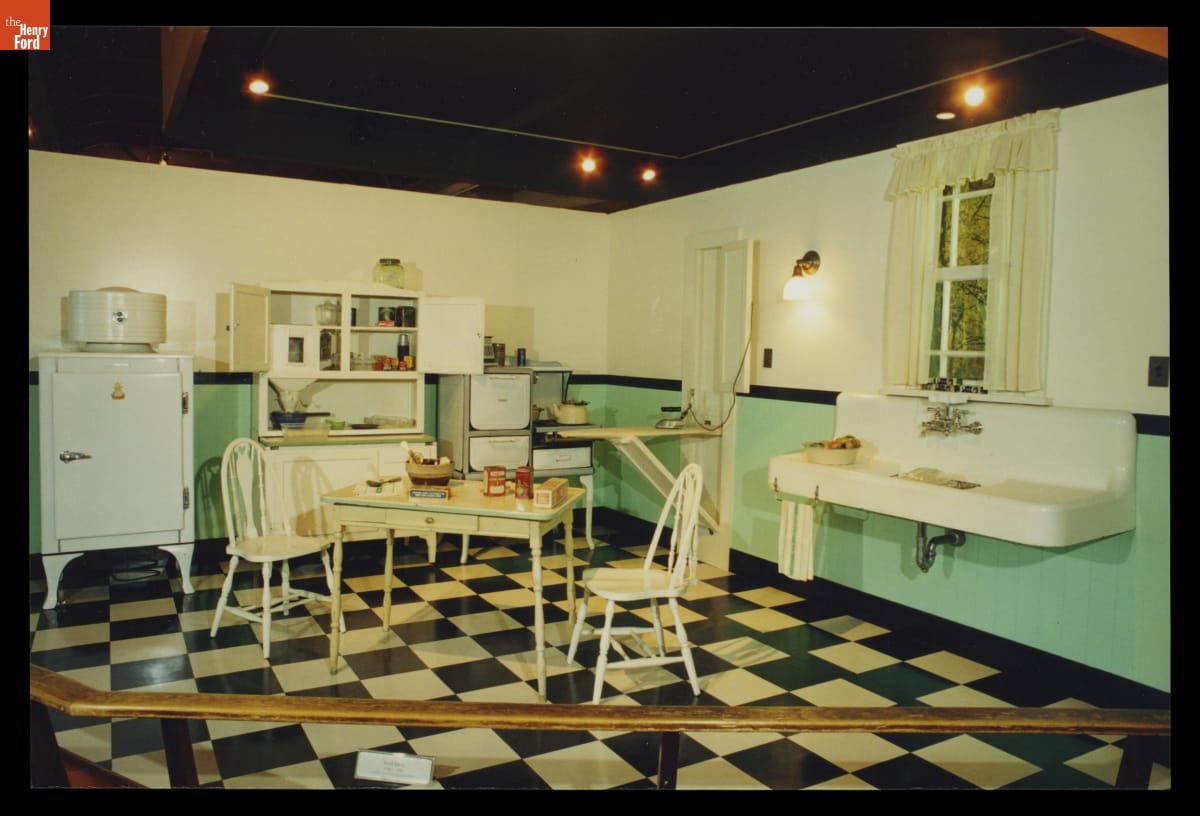
- July 10, 2001
- Collections - Artifact
1930s Kitchen Exhibit in Henry Ford Museum, July 10, 2001
- Portrait of Elihu S. Thomson, circa 1930 - Elihu Thomson (1853-1937) was an electrical engineer and prolific inventor, holding more than 600 patents. He moved to the United States from England at an early age. Thomson taught science in Philadelphia, Pennsylvania, before forming the Thomson-Houston Electric Company with a fellow professor. The company manufactured a variety of electrical equipment. In 1892, their company merged with Edison General Electric Company to form General Electric.
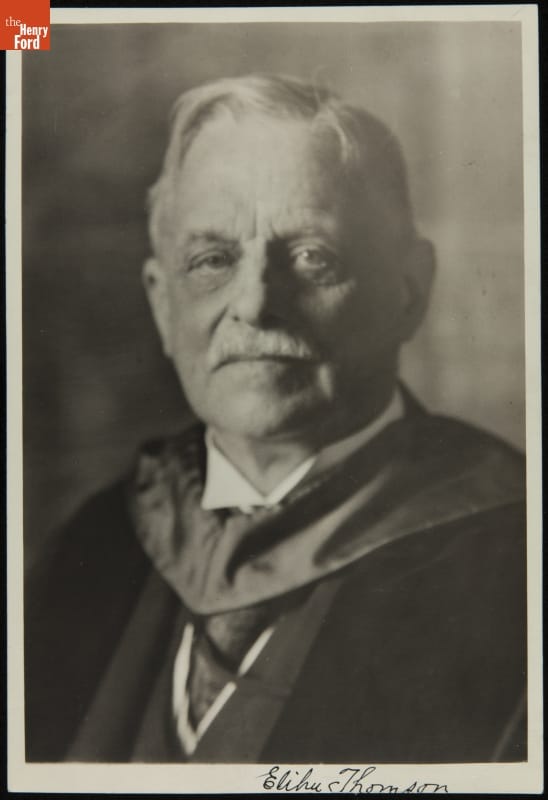
- circa 1930
- Collections - Artifact
Portrait of Elihu S. Thomson, circa 1930
Elihu Thomson (1853-1937) was an electrical engineer and prolific inventor, holding more than 600 patents. He moved to the United States from England at an early age. Thomson taught science in Philadelphia, Pennsylvania, before forming the Thomson-Houston Electric Company with a fellow professor. The company manufactured a variety of electrical equipment. In 1892, their company merged with Edison General Electric Company to form General Electric.
- Label, "S. W. Hollis & Co. Brand Raisins," 1890-1930 - Food companies sought ways to make their packaged goods stand out on store shelves from other similar products. Attractive labels, like this colorful floral design for S. W. Hollis & Company brand raisins, helped catch the attention of potential customers and encouraged them to purchase the company's product rather than that of a competitor.
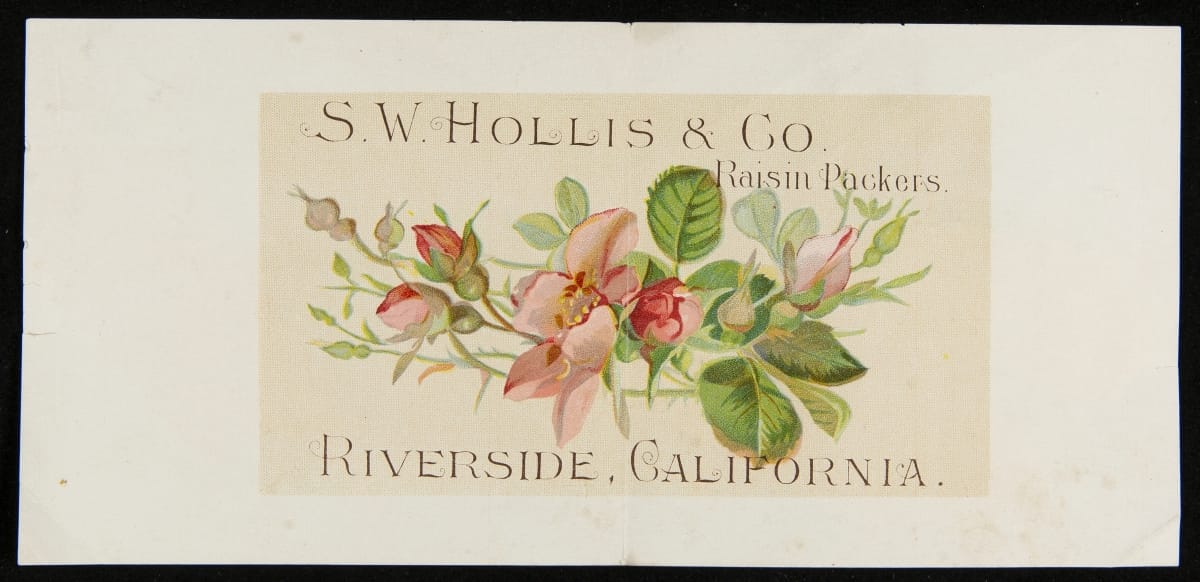
- 1890-1930
- Collections - Artifact
Label, "S. W. Hollis & Co. Brand Raisins," 1890-1930
Food companies sought ways to make their packaged goods stand out on store shelves from other similar products. Attractive labels, like this colorful floral design for S. W. Hollis & Company brand raisins, helped catch the attention of potential customers and encouraged them to purchase the company's product rather than that of a competitor.
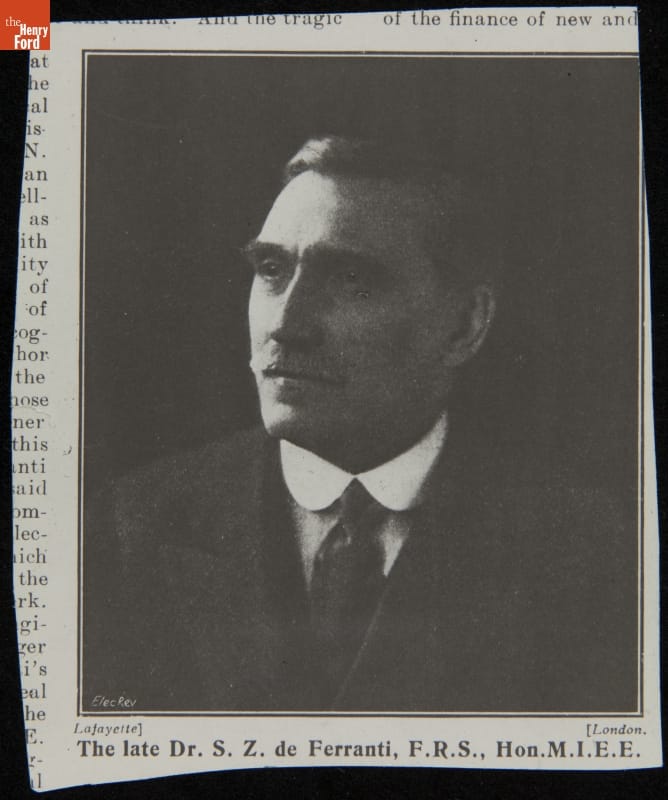
- Portrait of Dr. S. Z. de Ferranti, 1910-1930 -
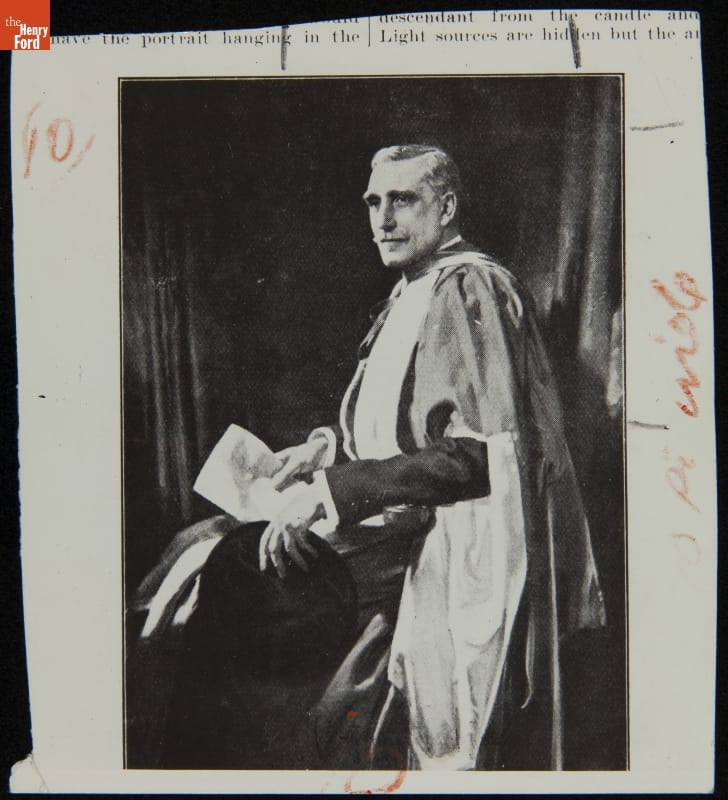
- 1910-1930
- Collections - Artifact
Portrait of Dr. S. Z. de Ferranti, 1910-1930
- Portrait of Dr. S. Z. de Ferranti, 1910-1930 -
- 1910-1930
- Collections - Artifact
Portrait of Dr. S. Z. de Ferranti, 1910-1930
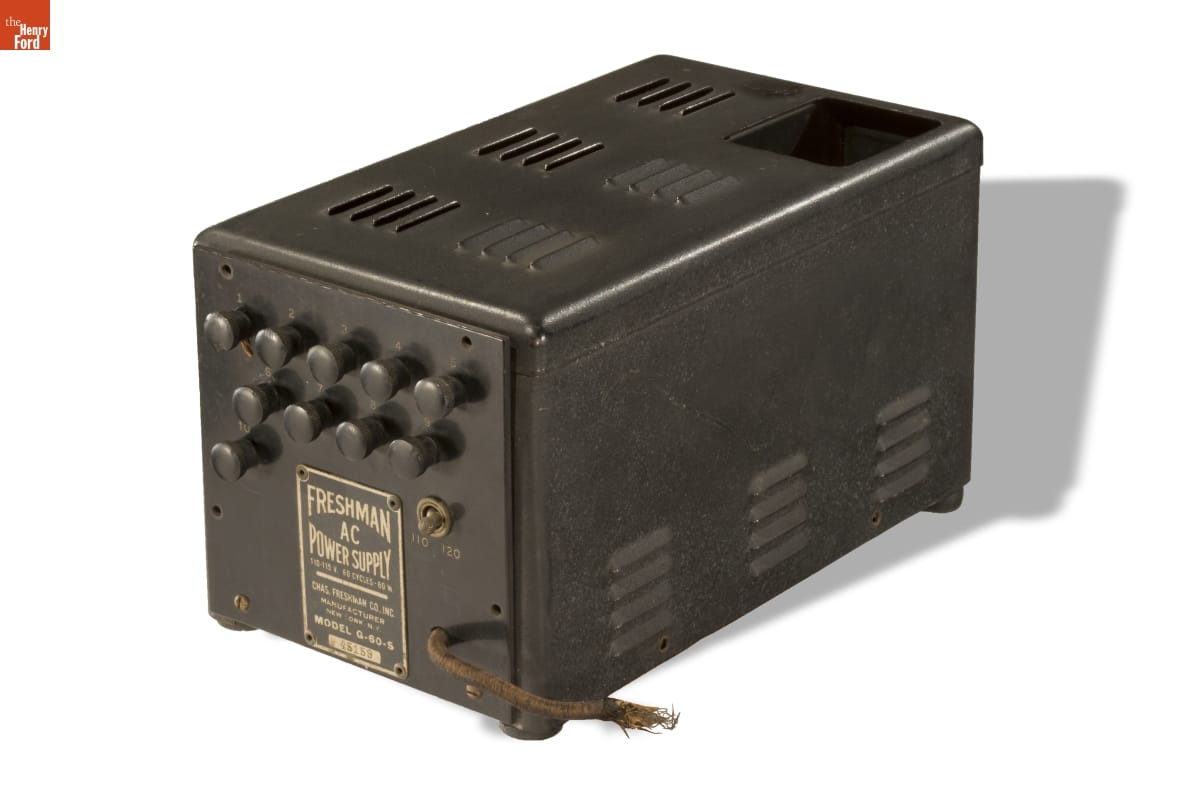
- Freshman AC Power Supply, Model G-60-S, 1927-1930 - The Freshman G-60-S was an external power supply for home radio receivers. It converted alternating current (AC) power from a home socket into the direct current (DC) necessary to power the radio receiver.
- 1927
- Collections - Artifact
Freshman AC Power Supply, Model G-60-S, 1927-1930
The Freshman G-60-S was an external power supply for home radio receivers. It converted alternating current (AC) power from a home socket into the direct current (DC) necessary to power the radio receiver.