
Search
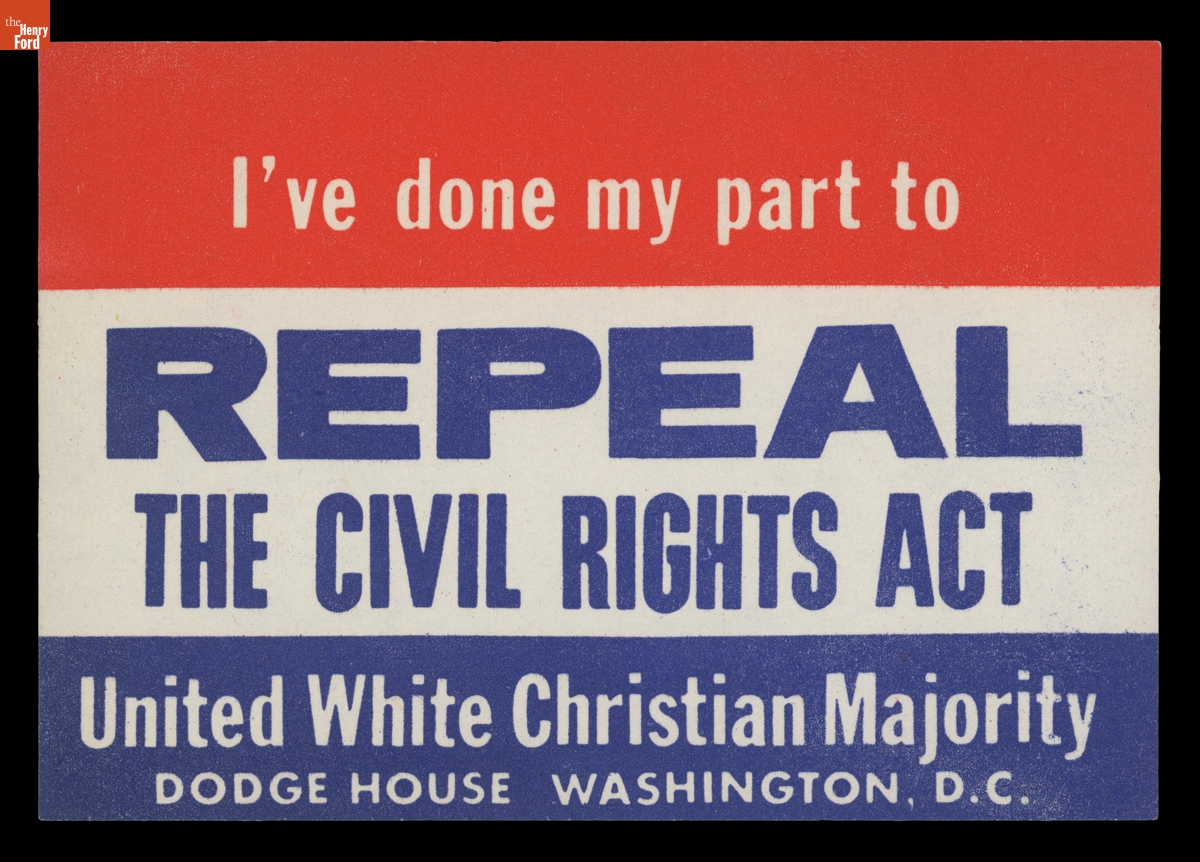
- "I've Done My Part to Repeal the Civil Rights Act" - Founded in 1959 by George Lincoln Rockwell, the American Nazi Party was initially the World Union of Free Enterprise National Socialists, based in Arlington, VA. In 1964, Rockwell ran for president, targeting white Christians with the United White Christian Majority Party, promoting racial superiority through Christian Identity theology. They opposed the 1964 Civil Rights Act, saw it as a threat, and organized protests with extreme racial rhetoric.
- 1964
- Collections - Artifact
"I've Done My Part to Repeal the Civil Rights Act"
Founded in 1959 by George Lincoln Rockwell, the American Nazi Party was initially the World Union of Free Enterprise National Socialists, based in Arlington, VA. In 1964, Rockwell ran for president, targeting white Christians with the United White Christian Majority Party, promoting racial superiority through Christian Identity theology. They opposed the 1964 Civil Rights Act, saw it as a threat, and organized protests with extreme racial rhetoric.
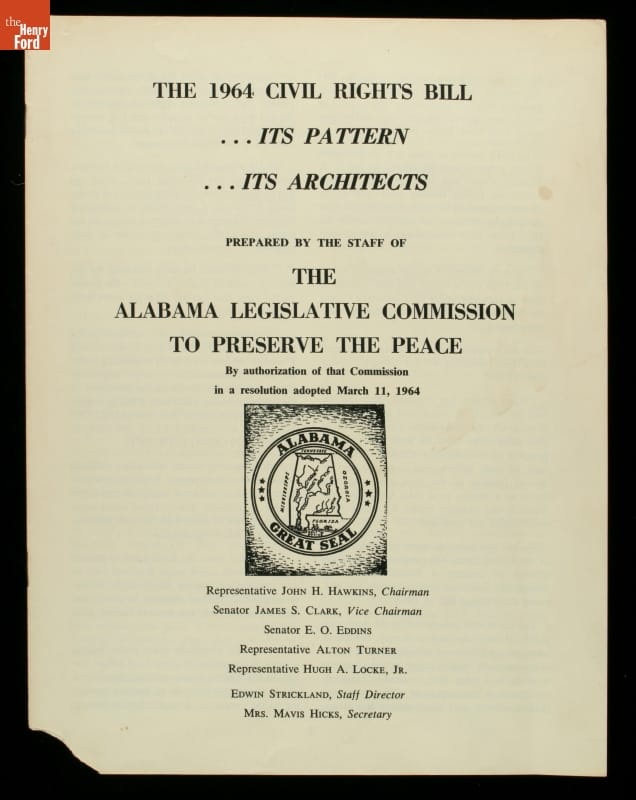
- "1964 Civil Rights Bill... Its Pattern... Its Architects" - Some of those opposed to civil rights during the 1960s tried to discredit the movement and its leaders. The Alabama Legislative Commission to Preserve the Peace produced this document to expose potential communist threats. This brochure spoke out against the 1964 Civil Rights Bill as a threat to America and the American way of life.
- 1964
- Collections - Artifact
"1964 Civil Rights Bill... Its Pattern... Its Architects"
Some of those opposed to civil rights during the 1960s tried to discredit the movement and its leaders. The Alabama Legislative Commission to Preserve the Peace produced this document to expose potential communist threats. This brochure spoke out against the 1964 Civil Rights Bill as a threat to America and the American way of life.
- 60 Years of the Civil Rights Act of 1964 - <p>2024 marks 60 years since the passage of the 1964 Civil Rights Act. In the culmination of decades-long grassroots activism from people of all colors and backgrounds, the act countered the racism of Jim Crow laws. This previously recorded presentation, led by Heather Bruegl (Oneida/Stockbridge-Munsee), Curator of Political and Civic Engagement, and Amber N. Mitchell, Curator of Black History, explores this act that changed the course of America, including its origins and legacy and the call to action that it still has for Americans today. </p>

- September 19, 2024
- Collections - Video
60 Years of the Civil Rights Act of 1964
2024 marks 60 years since the passage of the 1964 Civil Rights Act. In the culmination of decades-long grassroots activism from people of all colors and backgrounds, the act countered the racism of Jim Crow laws. This previously recorded presentation, led by Heather Bruegl (Oneida/Stockbridge-Munsee), Curator of Political and Civic Engagement, and Amber N. Mitchell, Curator of Black History, explores this act that changed the course of America, including its origins and legacy and the call to action that it still has for Americans today.
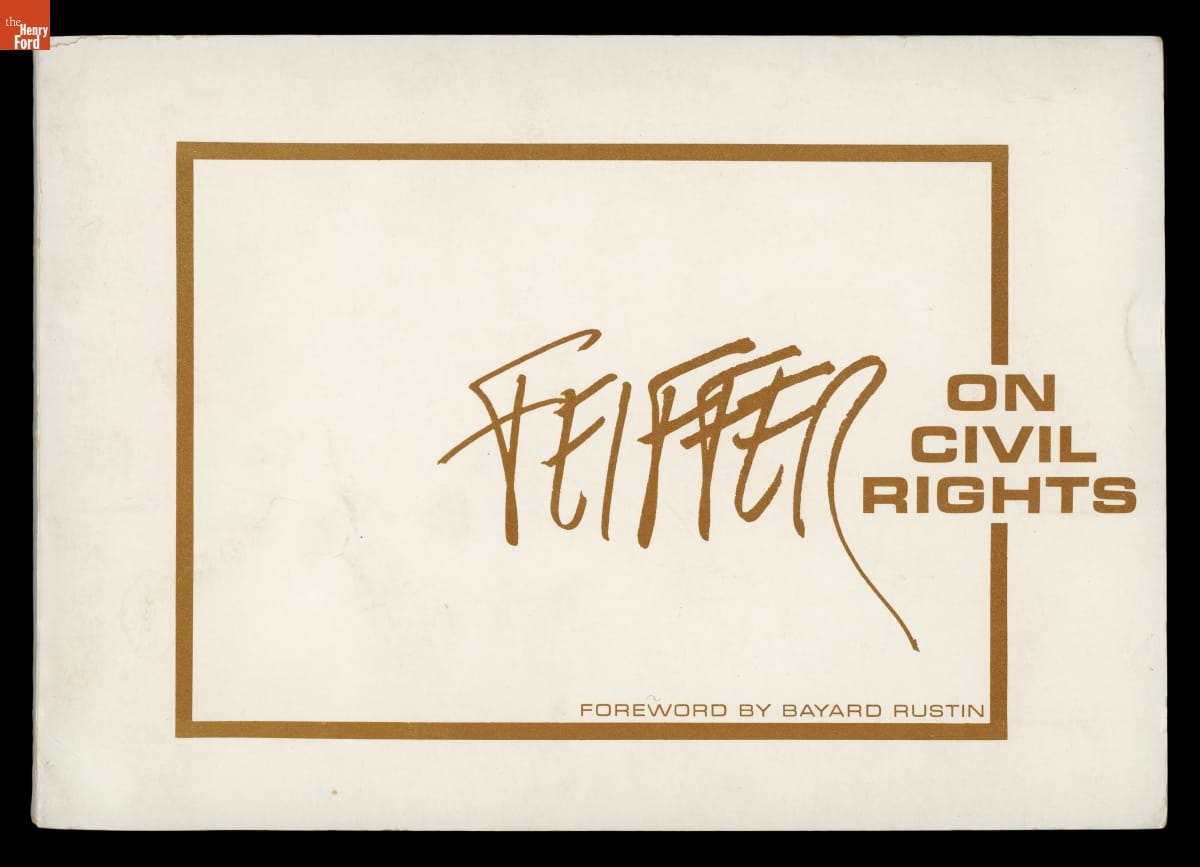
- "Feiffer on Civil Rights," 1966 -
- 1966
- Collections - Artifact
"Feiffer on Civil Rights," 1966
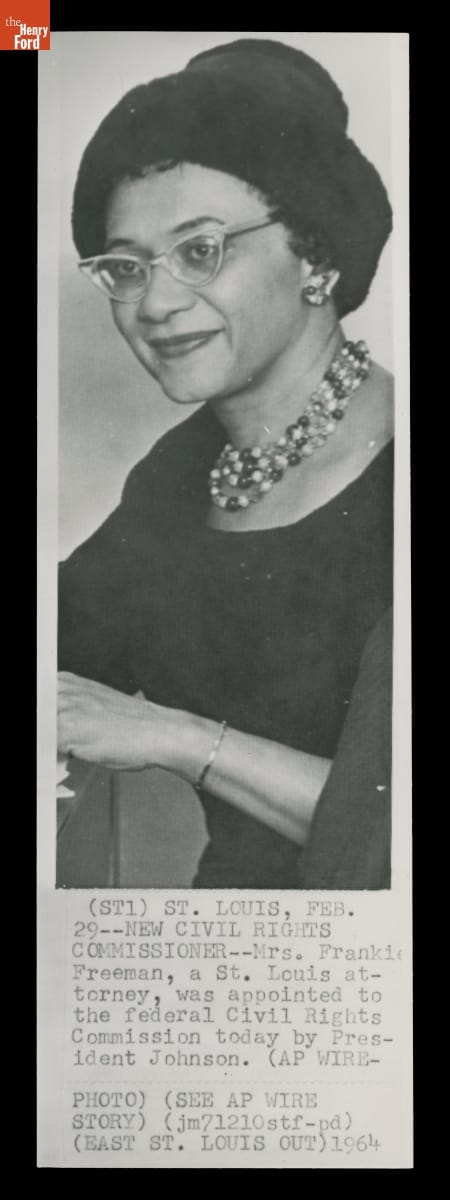
- Frankie Freeman, New Civil Rights Commissioner, February 29, 1964 -
- February 29, 1964
- Collections - Artifact
Frankie Freeman, New Civil Rights Commissioner, February 29, 1964
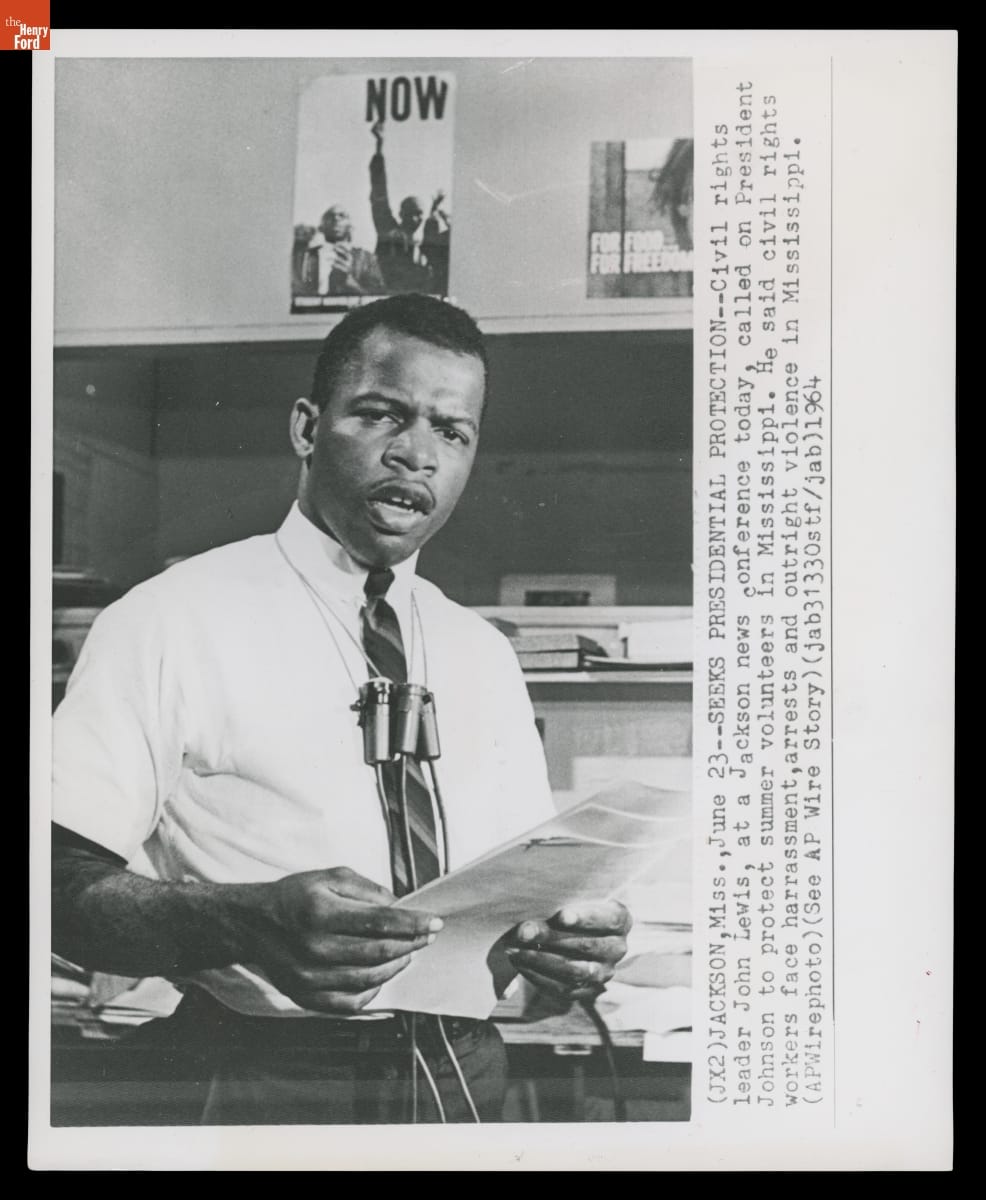
- Civil Rights Leader John Lewis Calls on President Johnson to Protect Summer Civil Rights Volunteers in Mississippi, June 23, 1964 -
- June 23, 1964
- Collections - Artifact
Civil Rights Leader John Lewis Calls on President Johnson to Protect Summer Civil Rights Volunteers in Mississippi, June 23, 1964
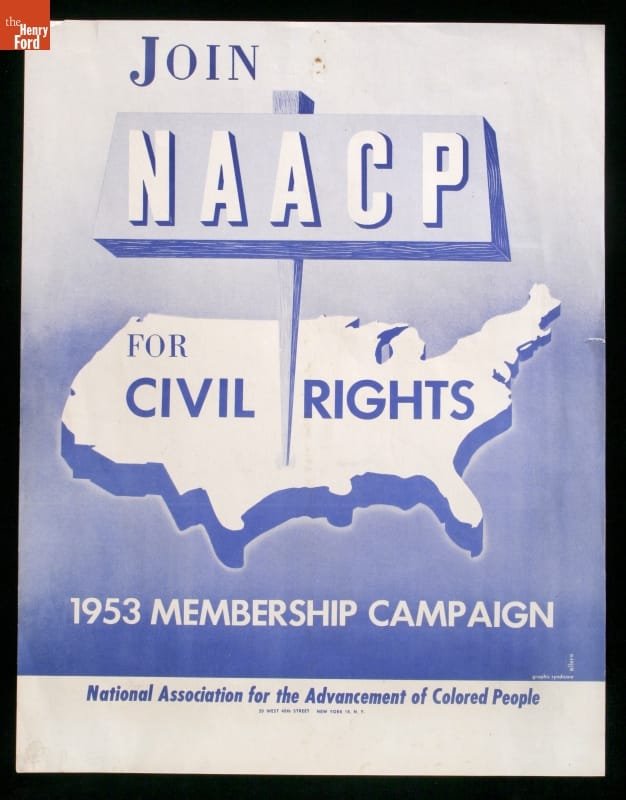
- "Join NAACP for Civil Rights 1953 Membership Campaign" - This 1953 membership campaign brochure solicited support for the National Association for the Advancement of Colored People (NAACP) and its causes. Formed in 1909, the NAACP emphasized fighting for racial equality through legal actions rather than political protest or economic agitation. A major victory occurred a year later when the Supreme Court struck down racial segregation in public schools.
- 1953
- Collections - Artifact
"Join NAACP for Civil Rights 1953 Membership Campaign"
This 1953 membership campaign brochure solicited support for the National Association for the Advancement of Colored People (NAACP) and its causes. Formed in 1909, the NAACP emphasized fighting for racial equality through legal actions rather than political protest or economic agitation. A major victory occurred a year later when the Supreme Court struck down racial segregation in public schools.
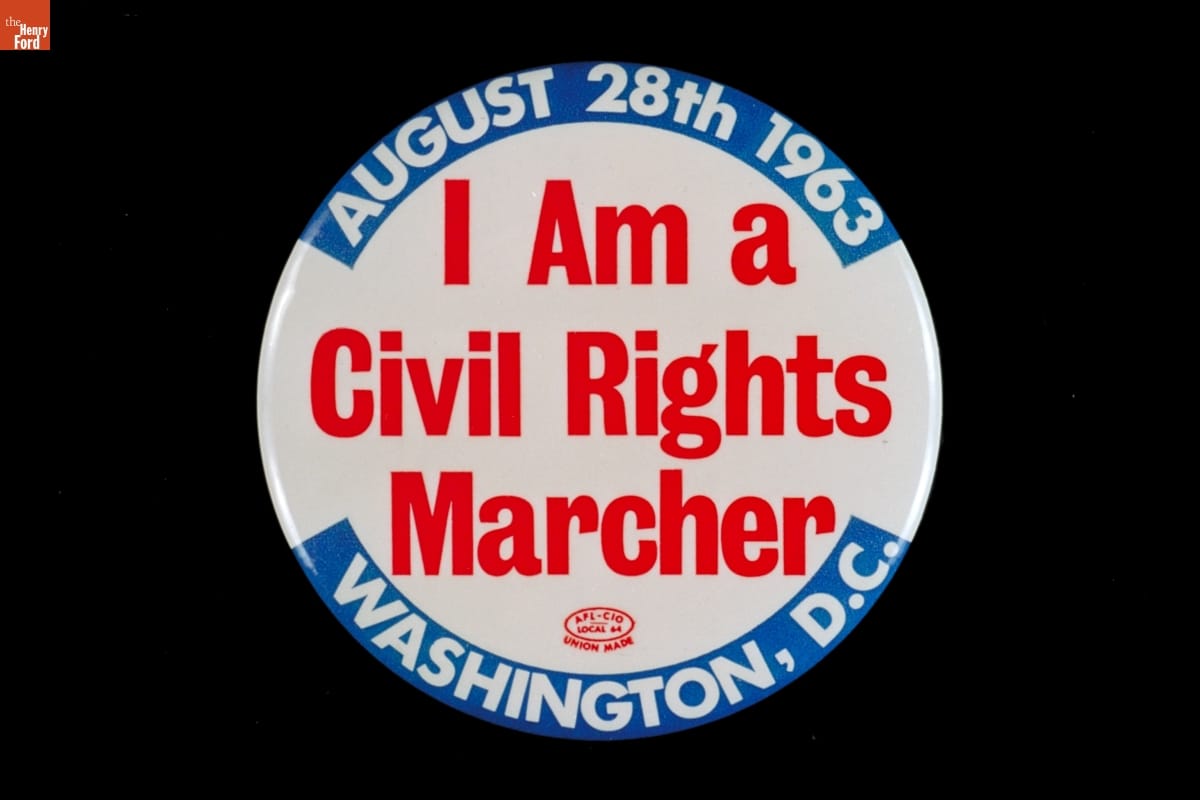
- Button, "I am a Civil Rights Marcher," 1963 - More than 250,000 civil rights advocates showed up at this peaceful march to support unity, jobs, and a new Civil Rights bill being proposed by President Kennedy. Television viewers nationwide watched African Americans and whites march together, united behind a common cause. Songs and speeches at this march included Martin Luther King, Jr.'s famous "I Have a Dream" speech.
- August 28, 1963
- Collections - Artifact
Button, "I am a Civil Rights Marcher," 1963
More than 250,000 civil rights advocates showed up at this peaceful march to support unity, jobs, and a new Civil Rights bill being proposed by President Kennedy. Television viewers nationwide watched African Americans and whites march together, united behind a common cause. Songs and speeches at this march included Martin Luther King, Jr.'s famous "I Have a Dream" speech.
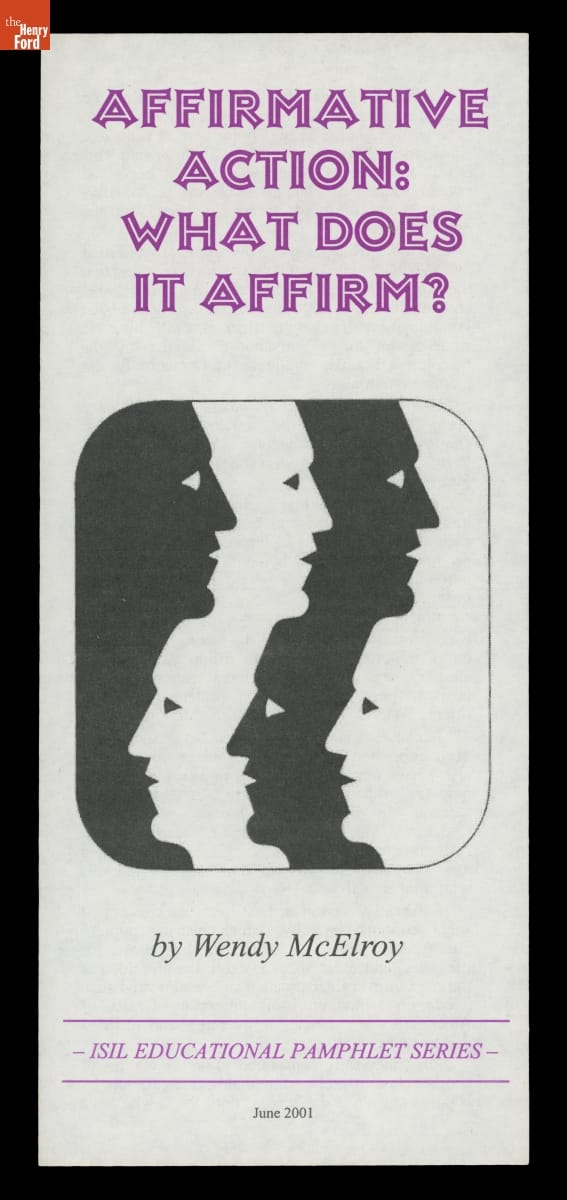
- "Affirmative Action: What Does it Affirm?," June 2001 - The Society for Individual Liberty (ISIL -- now Liberty International) was founded in 1969 by libertarian activists Don Ernsberger and Dave Walter. ISIL disseminates information that it believes champions individual rights and expands freedom. In 2001, it published this anti-affirmative action pamphlet. According to the author, it is affirmative action that is unfair, as it gives privilege to some (women) while disadvantaging others (men).
- June 01, 2001
- Collections - Artifact
"Affirmative Action: What Does it Affirm?," June 2001
The Society for Individual Liberty (ISIL -- now Liberty International) was founded in 1969 by libertarian activists Don Ernsberger and Dave Walter. ISIL disseminates information that it believes champions individual rights and expands freedom. In 2001, it published this anti-affirmative action pamphlet. According to the author, it is affirmative action that is unfair, as it gives privilege to some (women) while disadvantaging others (men).
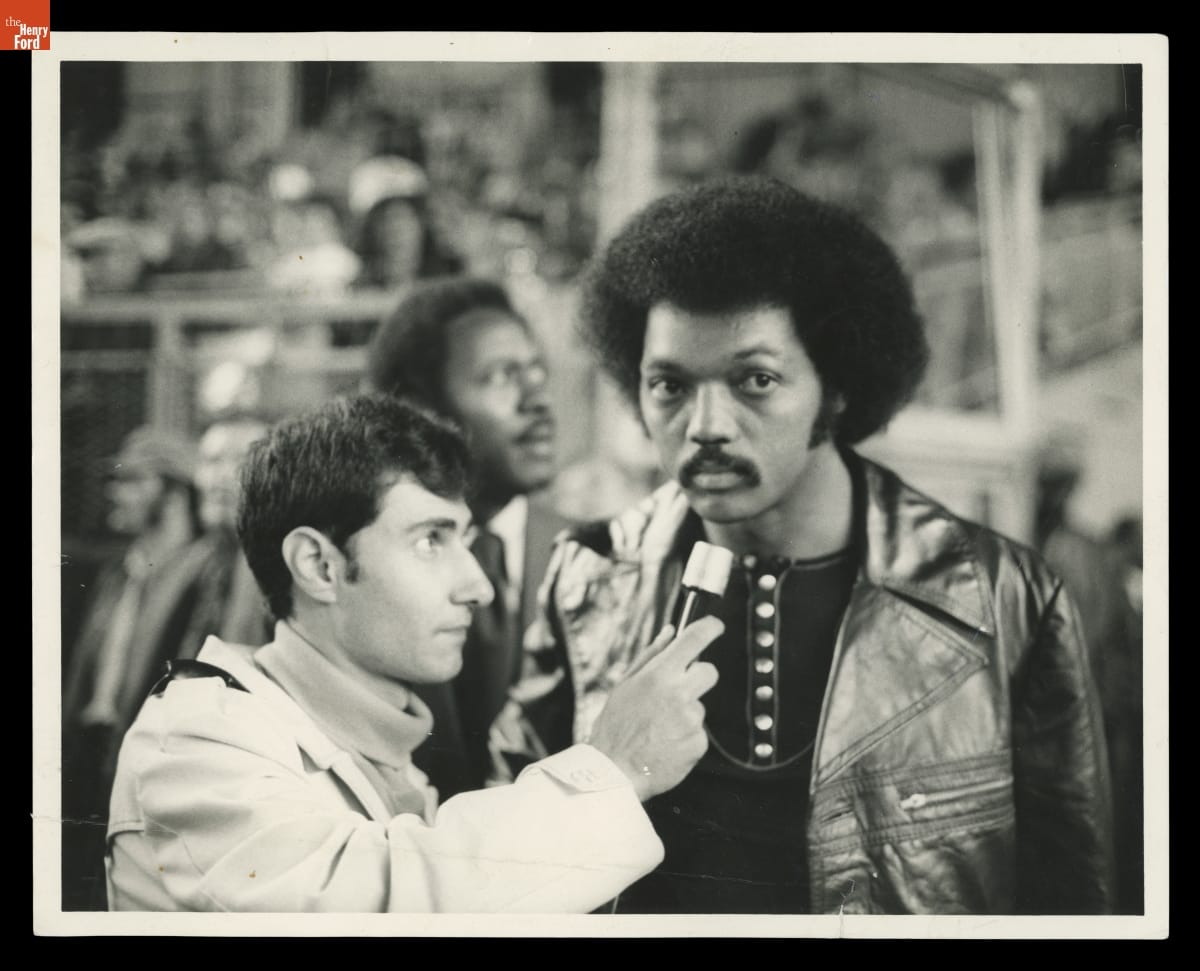
- Journalist Interviewing Jesse Jackson during the Civil Rights Movement -
- Collections - Artifact
Journalist Interviewing Jesse Jackson during the Civil Rights Movement