Search
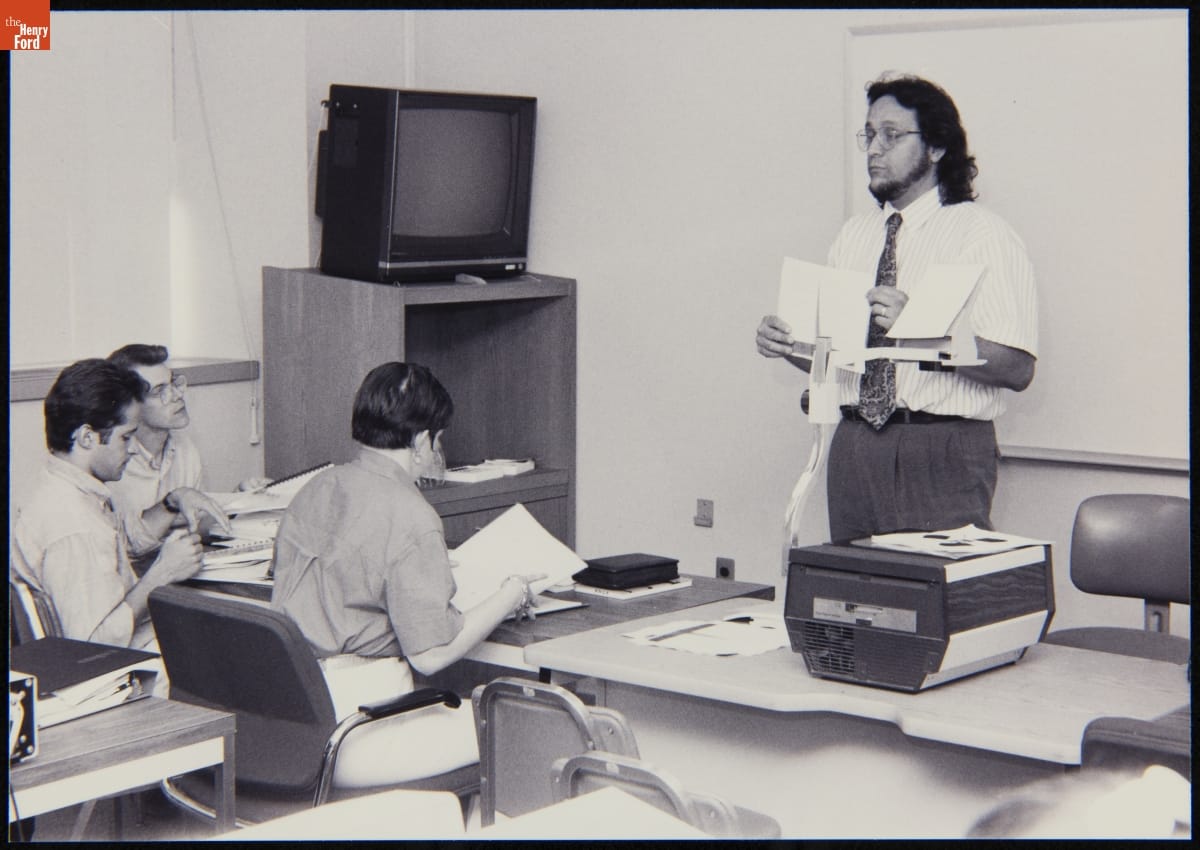
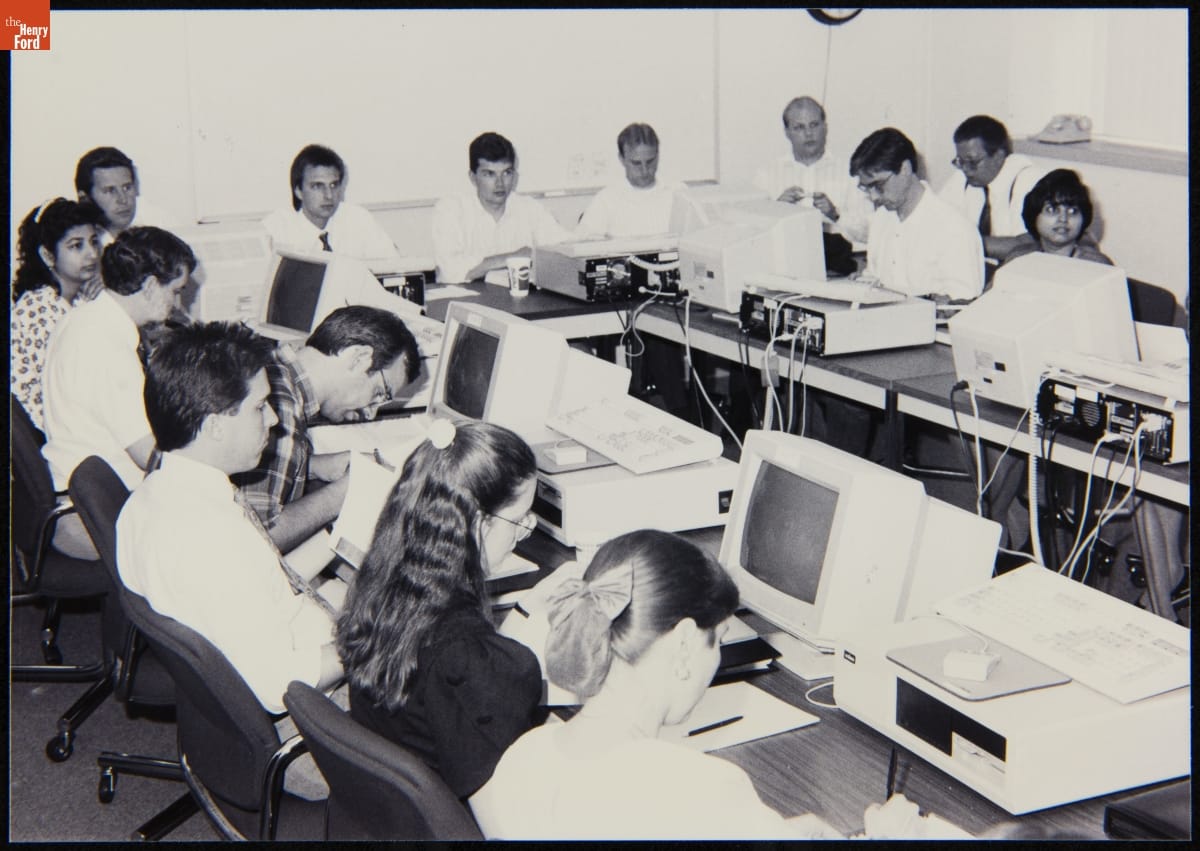
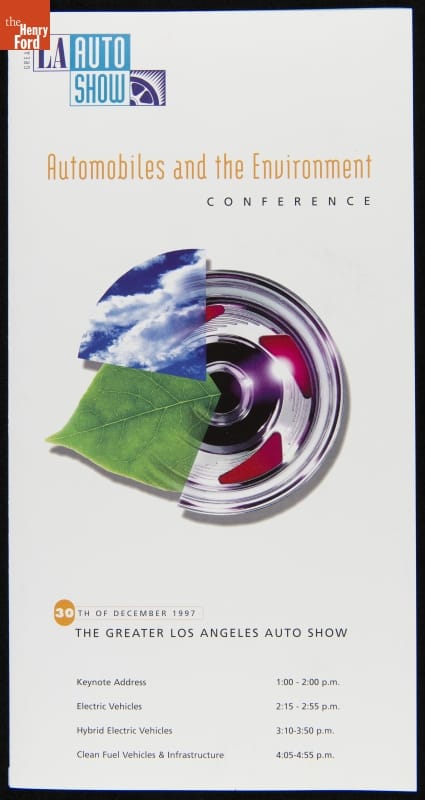
- Automobiles and the Environment Conference at the 1998 Greater Los Angeles Auto Show - Auto shows gave carmakers an opportunity to share their latest models with the press and the public. They also gave visitors a chance to research their next new-car purchase. The 1998 Los Angeles Auto Show featured a conference on a topic of growing concern in that decade: automobiles and their impact on the environment.
- December 30, 1997
- Collections - Artifact
Automobiles and the Environment Conference at the 1998 Greater Los Angeles Auto Show
Auto shows gave carmakers an opportunity to share their latest models with the press and the public. They also gave visitors a chance to research their next new-car purchase. The 1998 Los Angeles Auto Show featured a conference on a topic of growing concern in that decade: automobiles and their impact on the environment.
- Patent Model of Land Roller, 1867 - From 1790 to 1880, the U.S. Patent Office required applicants to submit a miniature model along with diagrams and written descriptions detailing the operation of their invention. Patent models could be no larger than 12" by 12" by 12". Though they were usually not operational, these models helped explain an inventor's idea and protect it from competitors.

- 1867
- Collections - Artifact
Patent Model of Land Roller, 1867
From 1790 to 1880, the U.S. Patent Office required applicants to submit a miniature model along with diagrams and written descriptions detailing the operation of their invention. Patent models could be no larger than 12" by 12" by 12". Though they were usually not operational, these models helped explain an inventor's idea and protect it from competitors.
- Oliver Model 7-A Tractor-Drawn Gang Plow, circa 1927 - Henry Ford included an Oliver Model 7 Plow (similar to this 7A) with each Fordson tractor he gave away. Oliver designed this plow for use with the Fordson. The farmer no longer had to dismount at the end of the field but instead could use the trip rope connected to a clutch on the plow's axle to lift the two plow shares (called "bottoms").

- circa 1927
- Collections - Artifact
Oliver Model 7-A Tractor-Drawn Gang Plow, circa 1927
Henry Ford included an Oliver Model 7 Plow (similar to this 7A) with each Fordson tractor he gave away. Oliver designed this plow for use with the Fordson. The farmer no longer had to dismount at the end of the field but instead could use the trip rope connected to a clutch on the plow's axle to lift the two plow shares (called "bottoms").
- International Harvester Manure Spreader, circa 1905 - Spreading manure to rejuvenate the soil is one of the most important, but least popular jobs on the farm. Mechanical manure spreaders made an awful job slightly less so. This circa 1905 International Harvester Manure Spreader No. 3 is a very rare survivor and an excellent example of the prevailing manure spreader design of the early 1900s.

- circa 1905
- Collections - Artifact
International Harvester Manure Spreader, circa 1905
Spreading manure to rejuvenate the soil is one of the most important, but least popular jobs on the farm. Mechanical manure spreaders made an awful job slightly less so. This circa 1905 International Harvester Manure Spreader No. 3 is a very rare survivor and an excellent example of the prevailing manure spreader design of the early 1900s.
- Battery Charger for "Agras MG-1" Drone, 2016 - Drones used in agriculture collect data for mapping farm fields, monitoring crops, or spot-spraying chemicals. This spray drone, when loaded, can weigh up to 30 pounds, including one 8.8-pound LiPo 12S battery. Operators had to purchase the batteries separately. The drone landed when power levels ebbed.

- 2016
- Collections - Artifact
Battery Charger for "Agras MG-1" Drone, 2016
Drones used in agriculture collect data for mapping farm fields, monitoring crops, or spot-spraying chemicals. This spray drone, when loaded, can weigh up to 30 pounds, including one 8.8-pound LiPo 12S battery. Operators had to purchase the batteries separately. The drone landed when power levels ebbed.
- Cutaway of Fordson Tractor, 1926 - The Ford Motor Company used cutaways to educate customers about internal combustion, power generation, and transmission. Antonio Stabile, a Ford distributor in Rosario, Argentina, instructed his service department manager, Bernardo Paglini, to make this cutaway of a 1926 Fordson tractor to display in his showroom and at exhibitions. Model changes made the cutaway obsolete and Mr. Stabile shipped it to Ford in late 1931.

- 1926
- Collections - Artifact
Cutaway of Fordson Tractor, 1926
The Ford Motor Company used cutaways to educate customers about internal combustion, power generation, and transmission. Antonio Stabile, a Ford distributor in Rosario, Argentina, instructed his service department manager, Bernardo Paglini, to make this cutaway of a 1926 Fordson tractor to display in his showroom and at exhibitions. Model changes made the cutaway obsolete and Mr. Stabile shipped it to Ford in late 1931.
- Corn Planter, circa 1875 - Farmers started a year-round effort to raise food for livestock and the farm family by planting corn in hills. Double-row planters cut the time required to plant in half. Farmers cultivated with a shovel plow until corn was knee-high. They then planted squash or pumpkins to retain soil moisture (a form of double cropping). At harvest they husked ears (to feed pigs) and shocked stalks (to feed cattle).

- circa 1875
- Collections - Artifact
Corn Planter, circa 1875
Farmers started a year-round effort to raise food for livestock and the farm family by planting corn in hills. Double-row planters cut the time required to plant in half. Farmers cultivated with a shovel plow until corn was knee-high. They then planted squash or pumpkins to retain soil moisture (a form of double cropping). At harvest they husked ears (to feed pigs) and shocked stalks (to feed cattle).
- Model of Moldboard Plow, circa 1850 - Salesmen used scale models to show customers details of equipment too big to haul from door to door. Farmers who purchased the full-scale plow had a new and indispensable tool to start the first step in seed-bed preparation.

- circa 1850
- Collections - Artifact
Model of Moldboard Plow, circa 1850
Salesmen used scale models to show customers details of equipment too big to haul from door to door. Farmers who purchased the full-scale plow had a new and indispensable tool to start the first step in seed-bed preparation.
- "Agras MG-1" Drone, 2016 - The first uncrewed aerial vehicles or drones began hovering over farm fields in 2000. Some collected data. Others applied agricultural chemicals. Industry-leading China-based DJI designed its Agras MG-1 drone for precision spraying. Northwestern Michigan College used it to train operators after the Federal Aviation Administration began regulating drone use in 2016.

- 2016
- Collections - Artifact
"Agras MG-1" Drone, 2016
The first uncrewed aerial vehicles or drones began hovering over farm fields in 2000. Some collected data. Others applied agricultural chemicals. Industry-leading China-based DJI designed its Agras MG-1 drone for precision spraying. Northwestern Michigan College used it to train operators after the Federal Aviation Administration began regulating drone use in 2016.
- Westinghouse Portable Steam Engine No. 345, Used by Henry Ford - Portable steam engines like this powered grain threshers, sawmills, or corn shellers. Horses pulled them from farm to farm. In 1882, 19-year-old Henry Ford was able to make this engine run well when an older man could not; his first accomplishment in the adult world. Thirty years later Ford tracked down the engine, bought it, and returned it to operating condition.

- circa 1881
- Collections - Artifact
Westinghouse Portable Steam Engine No. 345, Used by Henry Ford
Portable steam engines like this powered grain threshers, sawmills, or corn shellers. Horses pulled them from farm to farm. In 1882, 19-year-old Henry Ford was able to make this engine run well when an older man could not; his first accomplishment in the adult world. Thirty years later Ford tracked down the engine, bought it, and returned it to operating condition.