
Search
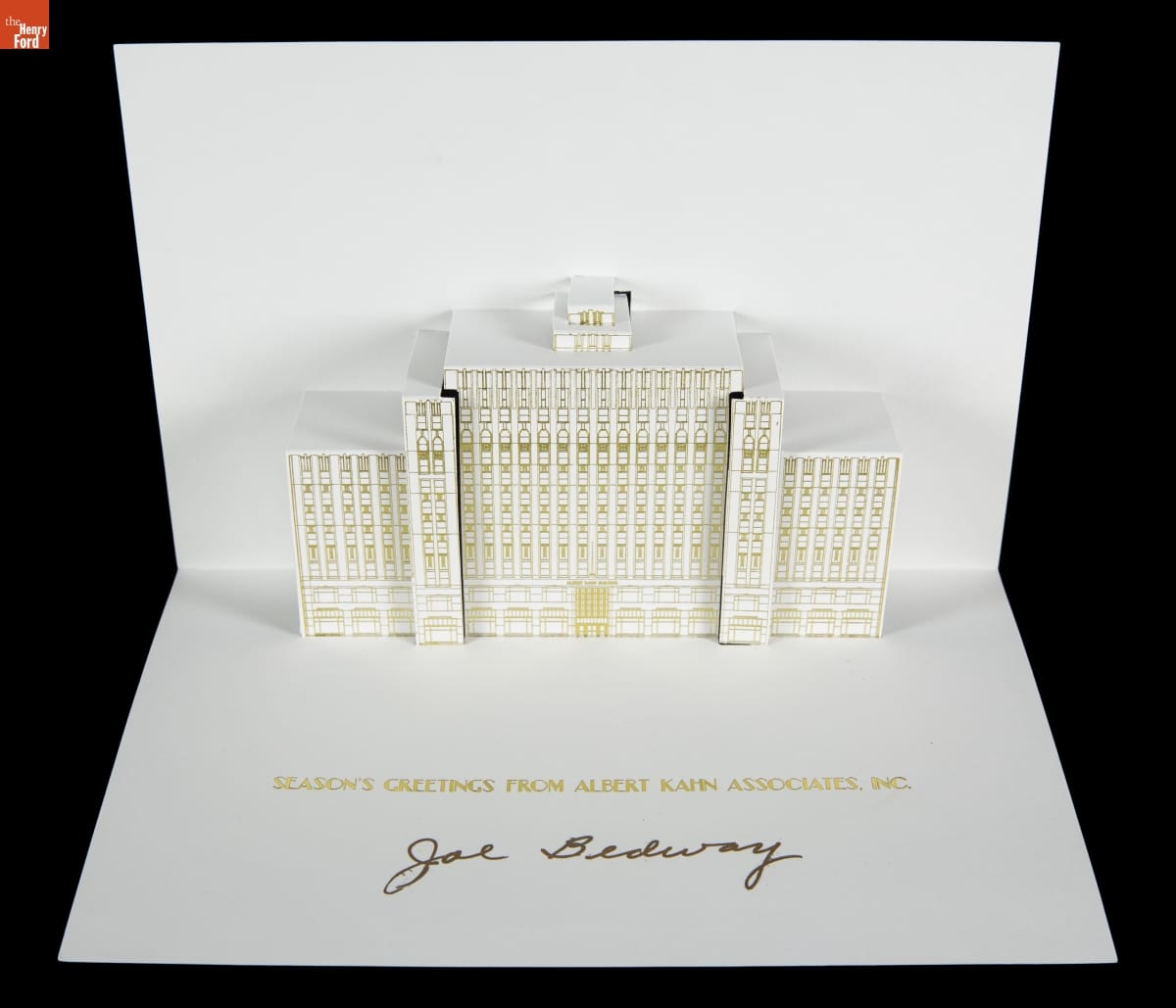
- "Season's Greetings from Albert Kahn Associates, Inc.," 1988 - This greeting card includes holiday well wishes and a pop-up version of the Albert Kahn Building in Detroit, Michigan. Albert Kahn designed the Art Deco-inspired building, originally known as the New Center Building, which opened in 1931. The building housed stores and offices, including becoming a home for Kahn's architectural practice. It was renamed in honor of its architect in 1988.
- 1988
- Collections - Artifact
"Season's Greetings from Albert Kahn Associates, Inc.," 1988
This greeting card includes holiday well wishes and a pop-up version of the Albert Kahn Building in Detroit, Michigan. Albert Kahn designed the Art Deco-inspired building, originally known as the New Center Building, which opened in 1931. The building housed stores and offices, including becoming a home for Kahn's architectural practice. It was renamed in honor of its architect in 1988.
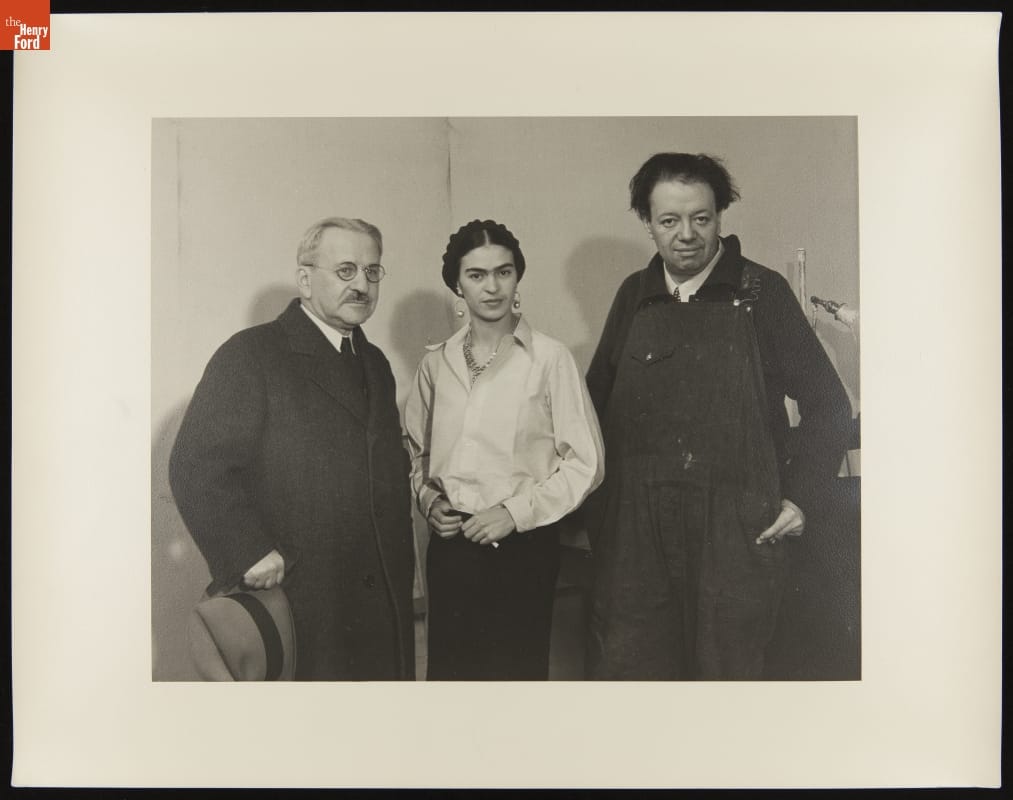
- Diego Rivera, Frida Kahlo and Albert Kahn, 1932 - Detroit architect Albert Kahn (left) posed for a photograph with Mexican artists Frida Kahlo and Diego Rivera in 1932. The couple was in Michigan while Rivera worked on his <i>Detroit Industry</i> murals, commissioned by the Detroit Institute of Arts and completed there in 1933.
- August 02, 1932
- Collections - Artifact
Diego Rivera, Frida Kahlo and Albert Kahn, 1932
Detroit architect Albert Kahn (left) posed for a photograph with Mexican artists Frida Kahlo and Diego Rivera in 1932. The couple was in Michigan while Rivera worked on his Detroit Industry murals, commissioned by the Detroit Institute of Arts and completed there in 1933.
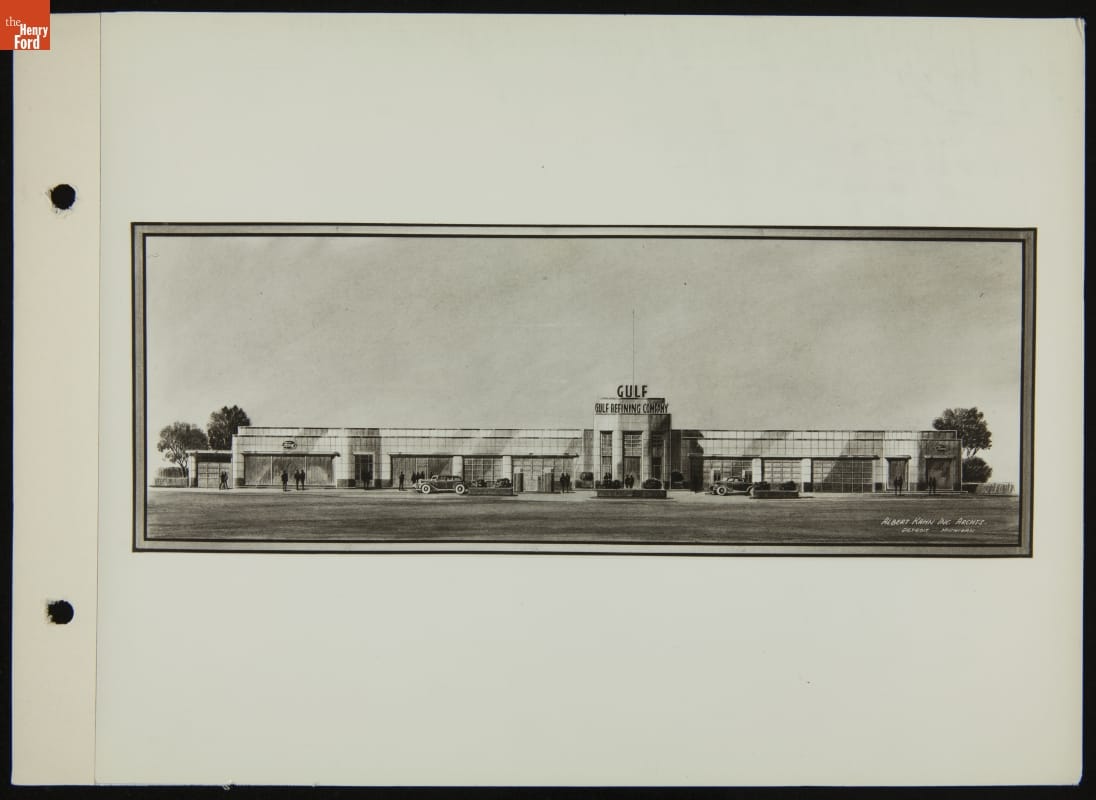
- Albert Kahn, Inc. Sketch of Gulf Refining Company, 1934 - Gulf Oil's origins were in the 1901 Spindletop oil strike at Beaumont, Texas, near the Gulf of Mexico. Gulf built a nationwide presence with its recognizable orange disc logo and products like No-Nox gasoline. The company was active in motorsports, too, using a distinctive blue and orange color scheme on race cars it sponsored. Gulf merged with Chevron in 1985.
- December 20, 1934
- Collections - Artifact
Albert Kahn, Inc. Sketch of Gulf Refining Company, 1934
Gulf Oil's origins were in the 1901 Spindletop oil strike at Beaumont, Texas, near the Gulf of Mexico. Gulf built a nationwide presence with its recognizable orange disc logo and products like No-Nox gasoline. The company was active in motorsports, too, using a distinctive blue and orange color scheme on race cars it sponsored. Gulf merged with Chevron in 1985.
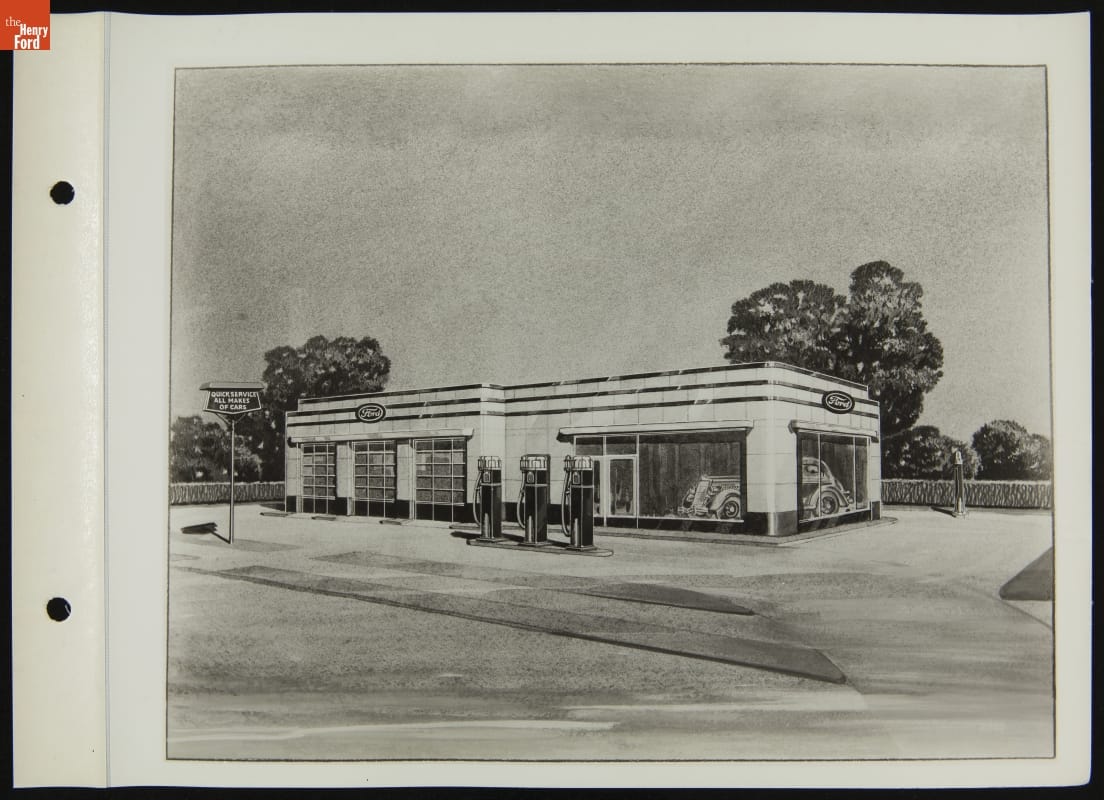
- Super Service Station Drawings by Albert Kahn Inc., May 1935 - In the 1930s, Ford Motor Company promoted the "Super Service Station" concept for its franchisee dealers. These stations provided one-stop shopping for motorists by selling gasoline, motor oil, parts, and accessories along with new Ford vehicles. The stations also provided service and repairs. Albert Kahn Associates prepared this drawing. Kahn designed many of Ford Motor Company's key buildings.
- May 15, 1935
- Collections - Artifact
Super Service Station Drawings by Albert Kahn Inc., May 1935
In the 1930s, Ford Motor Company promoted the "Super Service Station" concept for its franchisee dealers. These stations provided one-stop shopping for motorists by selling gasoline, motor oil, parts, and accessories along with new Ford vehicles. The stations also provided service and repairs. Albert Kahn Associates prepared this drawing. Kahn designed many of Ford Motor Company's key buildings.
- Super Service Station Drawings by Albert Kahn Inc., May 1935 - In the 1930s, Ford Motor Company promoted the "Super Service Station" concept for its franchisee dealers. These stations provided one-stop shopping for motorists by selling gasoline, motor oil, parts, and accessories along with new Ford vehicles. The stations also provided service and repairs. Albert Kahn Associates prepared this drawing. Kahn designed many of Ford Motor Company's key buildings.
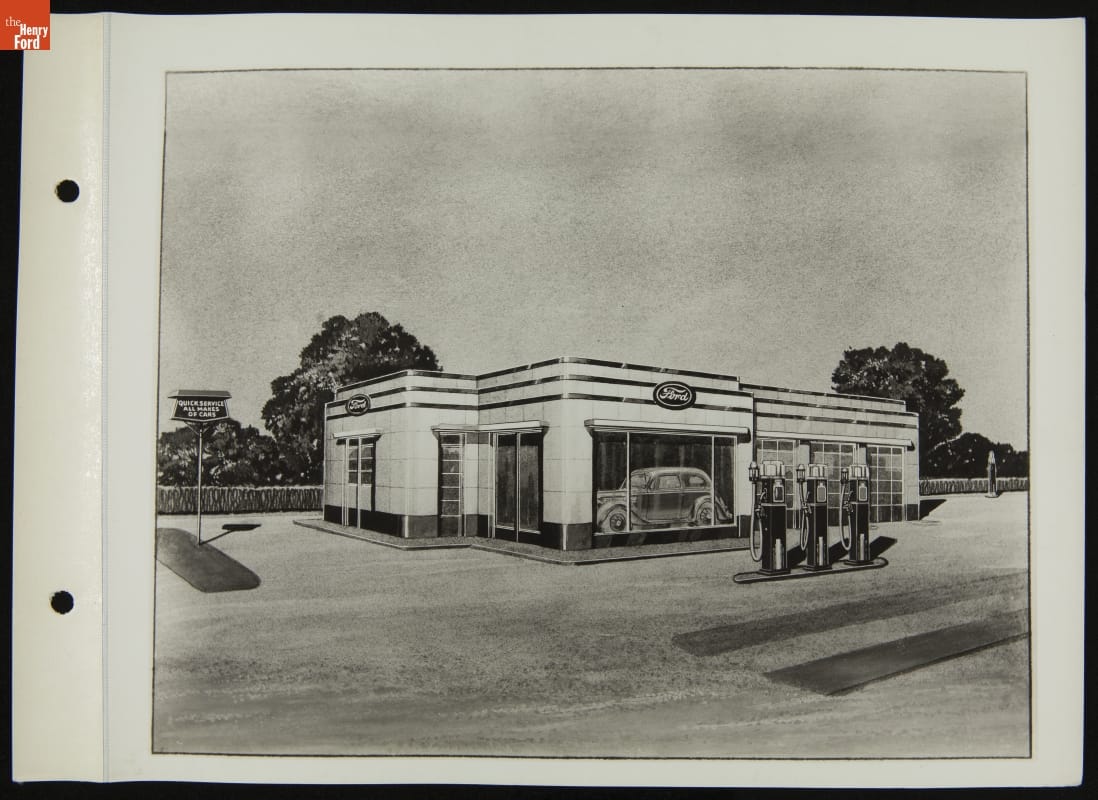
- May 15, 1935
- Collections - Artifact
Super Service Station Drawings by Albert Kahn Inc., May 1935
In the 1930s, Ford Motor Company promoted the "Super Service Station" concept for its franchisee dealers. These stations provided one-stop shopping for motorists by selling gasoline, motor oil, parts, and accessories along with new Ford vehicles. The stations also provided service and repairs. Albert Kahn Associates prepared this drawing. Kahn designed many of Ford Motor Company's key buildings.
- Super Service Station Drawings by Albert Kahn Inc., May 1935 - In the 1930s, Ford Motor Company promoted the "Super Service Station" concept for its franchisee dealers. These stations provided one-stop shopping for motorists by selling gasoline, motor oil, parts, and accessories along with new Ford vehicles. The stations also provided service and repairs. Albert Kahn Associates prepared this drawing. Kahn designed many of Ford Motor Company's key buildings.
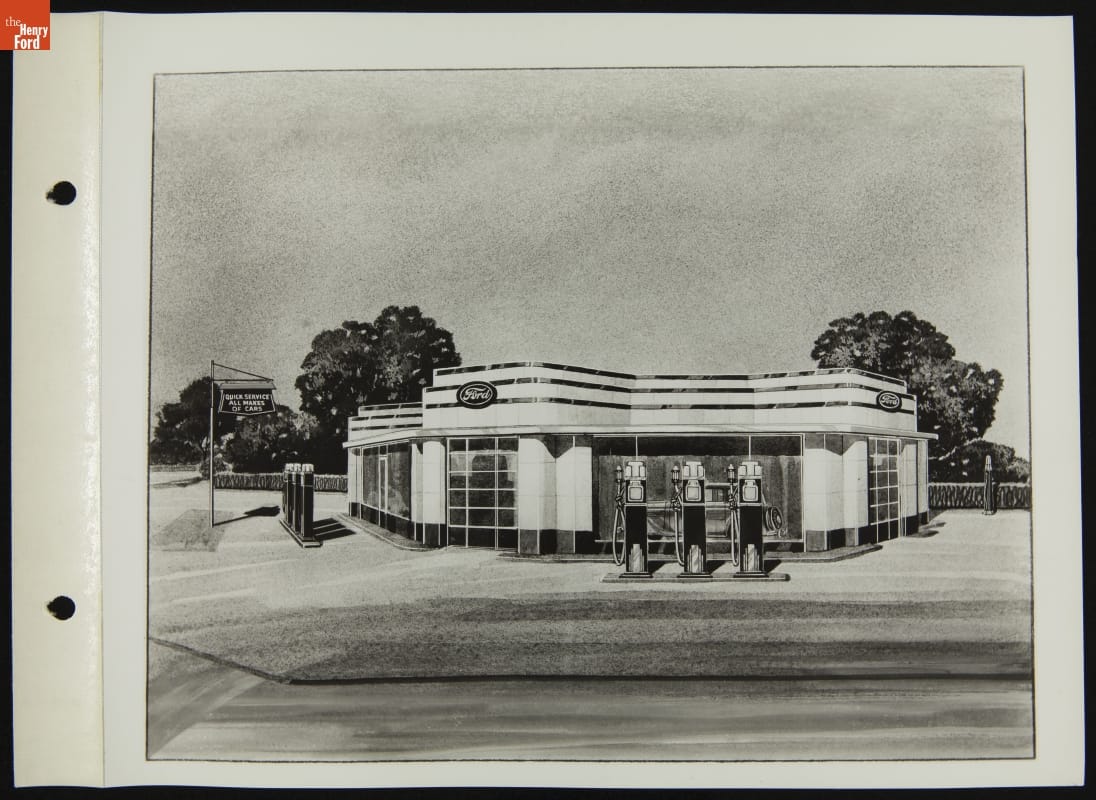
- May 15, 1935
- Collections - Artifact
Super Service Station Drawings by Albert Kahn Inc., May 1935
In the 1930s, Ford Motor Company promoted the "Super Service Station" concept for its franchisee dealers. These stations provided one-stop shopping for motorists by selling gasoline, motor oil, parts, and accessories along with new Ford vehicles. The stations also provided service and repairs. Albert Kahn Associates prepared this drawing. Kahn designed many of Ford Motor Company's key buildings.
- Portrait of Floyd V. Mow, Superintendent for Albert Kahn, undated - Floyd V. Mow was a superintendent for Albert Kahn Associates, among the most influential industrial architecture firms of the early 20th century. Kahn's airy and well-lit concrete buildings were particularly suited to automobile manufacture. The firm counted Packard, Ford, Hudson, Dodge Brothers and more among its clients. Kahn designed commercial and residential buildings as well.
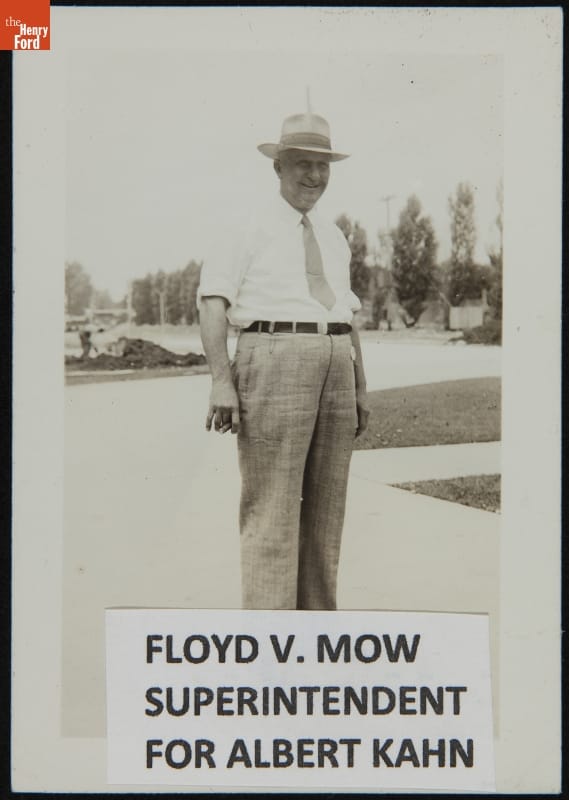
- circa 1940
- Collections - Artifact
Portrait of Floyd V. Mow, Superintendent for Albert Kahn, undated
Floyd V. Mow was a superintendent for Albert Kahn Associates, among the most influential industrial architecture firms of the early 20th century. Kahn's airy and well-lit concrete buildings were particularly suited to automobile manufacture. The firm counted Packard, Ford, Hudson, Dodge Brothers and more among its clients. Kahn designed commercial and residential buildings as well.
- Albert Kahn, Henry Ford, Mr. Martin, and Charles Sorensen in Ford Engineering Laboratory, April 1942 - Henry Ford stands with Albert Kahn, a Mr. Martin, and Charles Sorensen. Architect Kahn designed many important Ford buildings, including structures at the Highland Park and Rouge plants, as well as the Ford Engineering Laboratory -- where this photo was taken. Sorensen headed production for Ford though, by this time, he was mainly focused on wartime B-24 assembly at Willow Run.
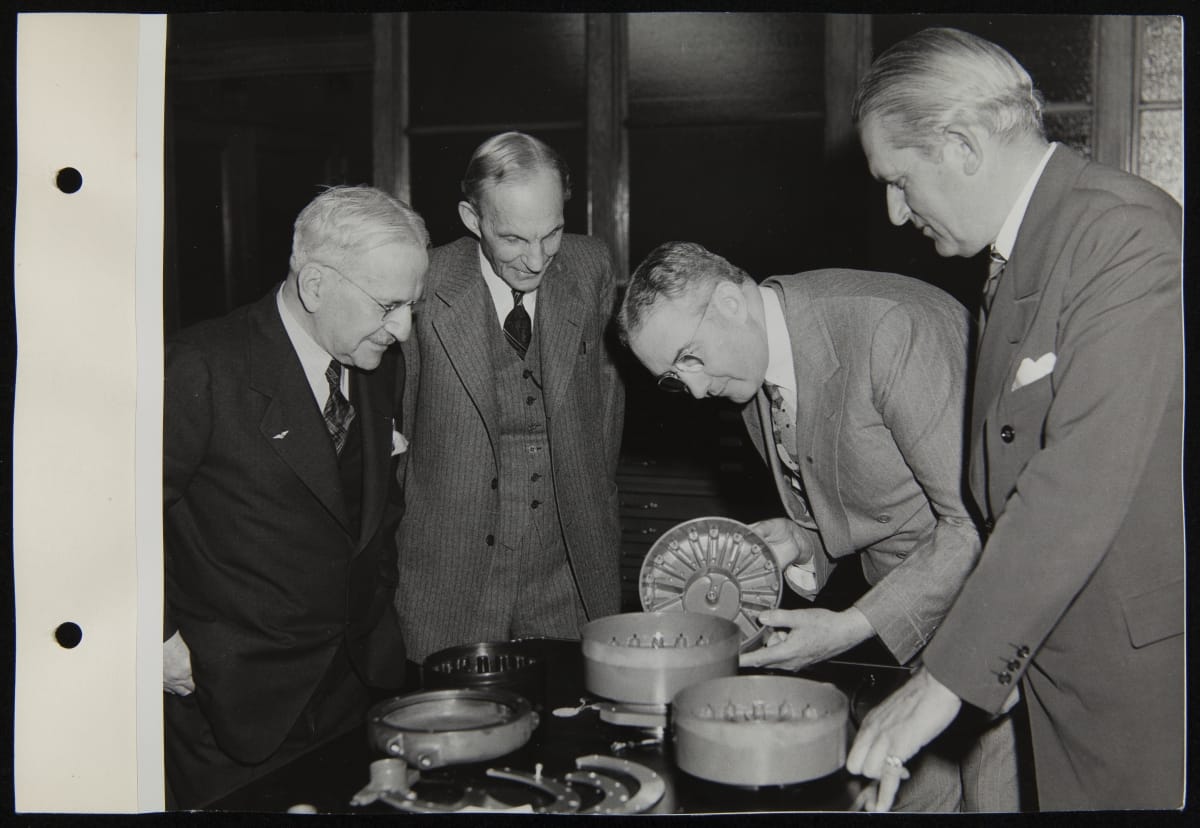
- April 08, 1942
- Collections - Artifact
Albert Kahn, Henry Ford, Mr. Martin, and Charles Sorensen in Ford Engineering Laboratory, April 1942
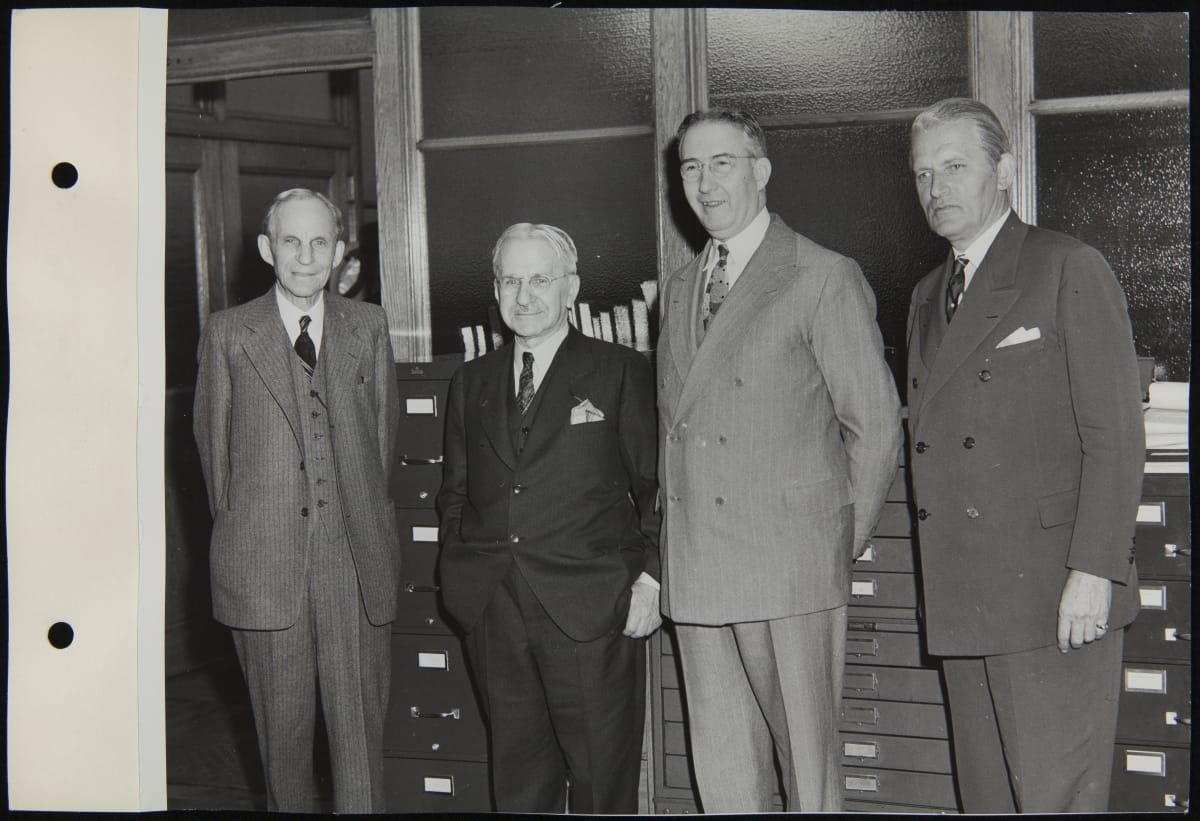
Henry Ford stands with Albert Kahn, a Mr. Martin, and Charles Sorensen. Architect Kahn designed many important Ford buildings, including structures at the Highland Park and Rouge plants, as well as the Ford Engineering Laboratory -- where this photo was taken. Sorensen headed production for Ford though, by this time, he was mainly focused on wartime B-24 assembly at Willow Run.
- Henry Ford, Albert Kahn, Mr. Martin, and Charles Sorensen in Ford Engineering Laboratory, April 1942 - Henry Ford stands with Albert Kahn, a Mr. Martin, and Charles Sorensen. Architect Kahn designed many important Ford buildings, including structures at the Highland Park and Rouge plants, as well as the Ford Engineering Laboratory -- where this photo was taken. Sorensen headed production for Ford though, by this time, he was mainly focused on wartime B-24 assembly at Willow Run.
- April 08, 1942
- Collections - Artifact
Henry Ford, Albert Kahn, Mr. Martin, and Charles Sorensen in Ford Engineering Laboratory, April 1942
Henry Ford stands with Albert Kahn, a Mr. Martin, and Charles Sorensen. Architect Kahn designed many important Ford buildings, including structures at the Highland Park and Rouge plants, as well as the Ford Engineering Laboratory -- where this photo was taken. Sorensen headed production for Ford though, by this time, he was mainly focused on wartime B-24 assembly at Willow Run.
- Albert Kahn Drawings for the "Plant in Which Henry Ford Will Employ 15,000 to Make Submarine Killers," April 1918 - During World War I, Ford Motor Company built Eagle anti-submarine patrol boats for the U.S. Navy. Henry Ford called on industrial architect Albert Kahn to design the Eagle factory, located at the mouth of the Rouge River. Kahn created three principal structures: a fabricating shop, a main assembly building, and a fit-out shop.
- April 22, 1918
- Collections - Artifact
Albert Kahn Drawings for the "Plant in Which Henry Ford Will Employ 15,000 to Make Submarine Killers," April 1918
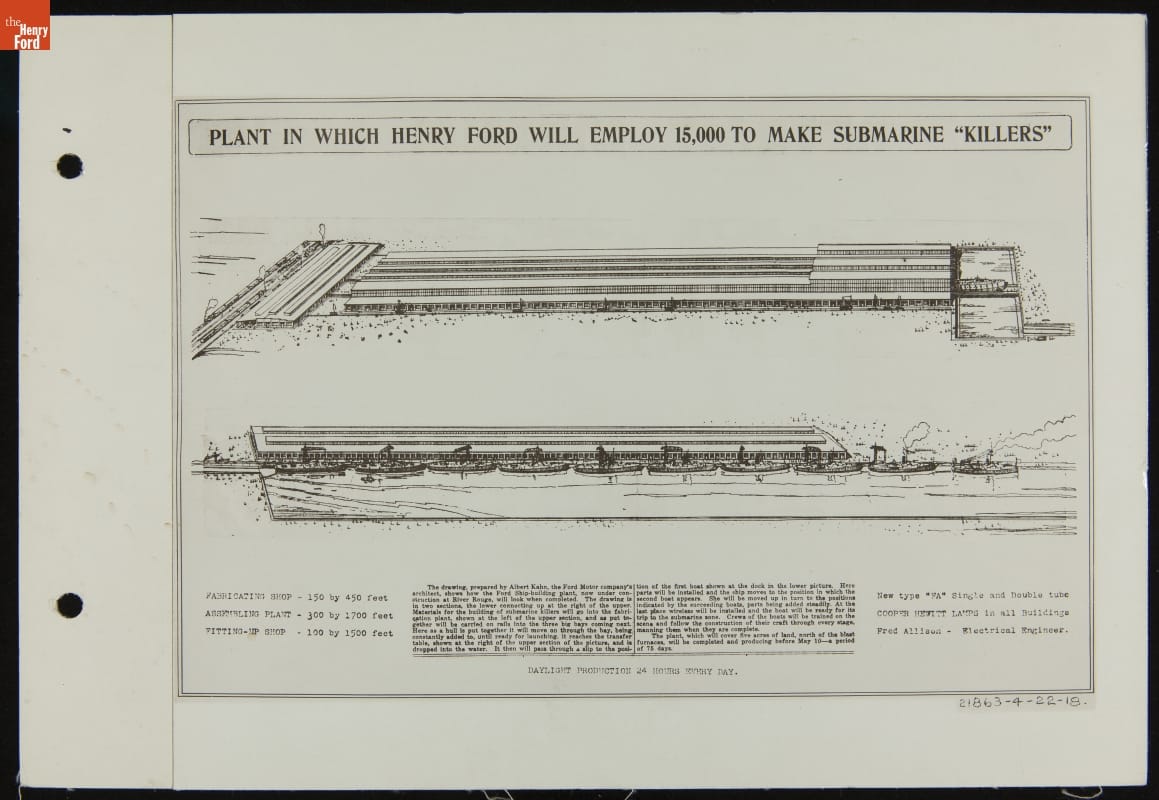
During World War I, Ford Motor Company built Eagle anti-submarine patrol boats for the U.S. Navy. Henry Ford called on industrial architect Albert Kahn to design the Eagle factory, located at the mouth of the Rouge River. Kahn created three principal structures: a fabricating shop, a main assembly building, and a fit-out shop.