
Search
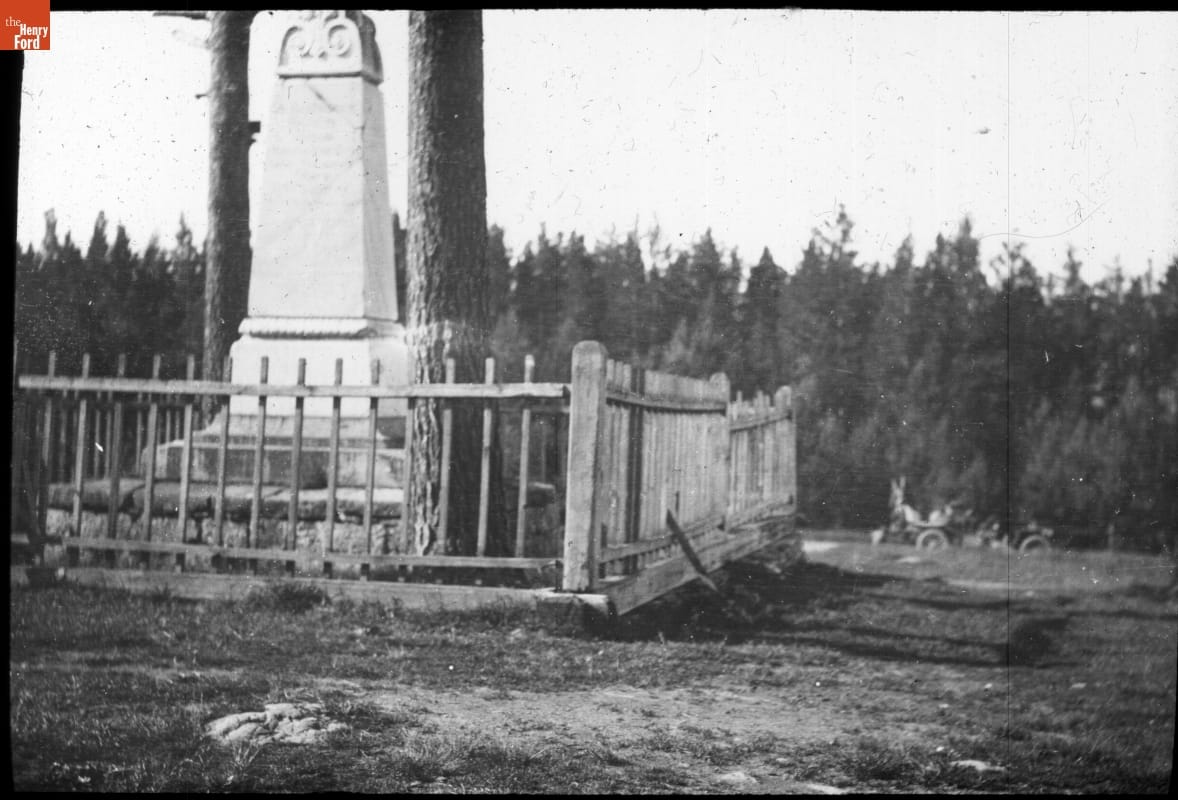
- Thomas Flyer and Obelisk Marking Border Between Asia and Europe, New York to Paris Race, 1908 - In February 1908, six automobiles began an around-the-world race from New York City to Paris, France. The contest took 169 days, covered 22,000 miles and spanned three continents. In May, the three remaining teams left Vladivostok, Russia. For the next two to three months the teams made their way west across the Russian countryside.
- 1908
- Collections - Artifact
Thomas Flyer and Obelisk Marking Border Between Asia and Europe, New York to Paris Race, 1908
In February 1908, six automobiles began an around-the-world race from New York City to Paris, France. The contest took 169 days, covered 22,000 miles and spanned three continents. In May, the three remaining teams left Vladivostok, Russia. For the next two to three months the teams made their way west across the Russian countryside.
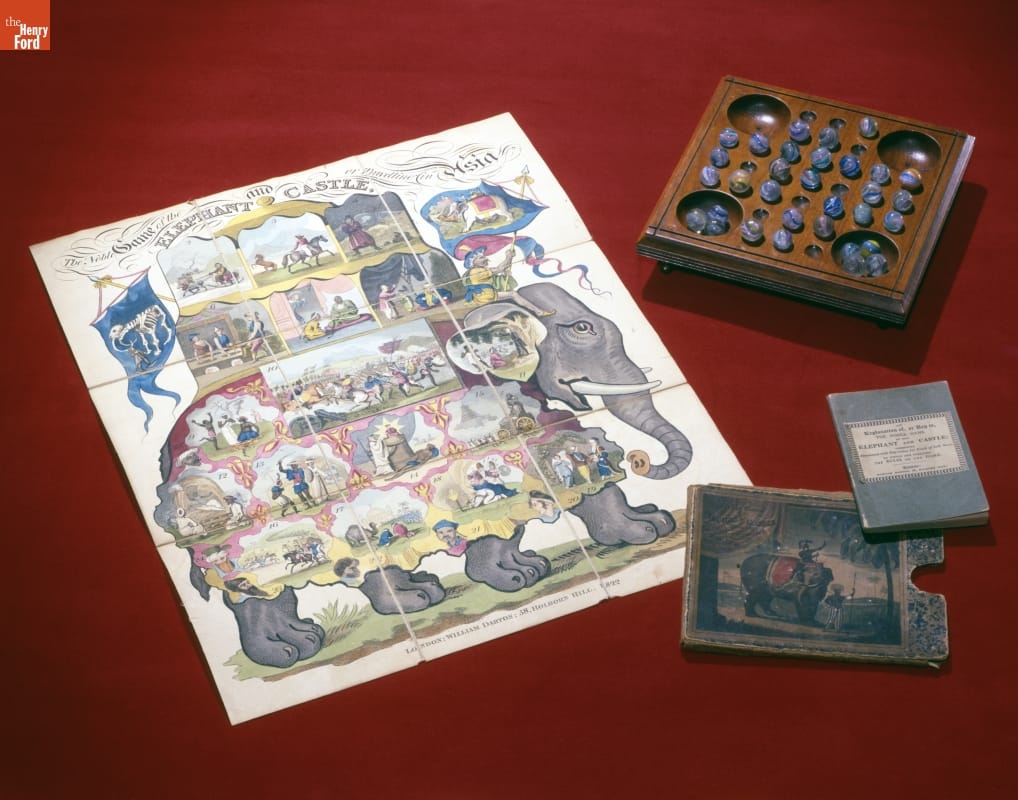
- The Noble Game of the Elephant and Castle, 1822-1840 - The educational game "The Noble Game of the Elephant and Castle" features a colorful board with the image of a stylized elephant and an 84-page rules booklet full of information about Asian customs. The twenty-four spaces across the elephant board depict customs, events, or people from Asia.
- 1822-1840
- Collections - Artifact
The Noble Game of the Elephant and Castle, 1822-1840
The educational game "The Noble Game of the Elephant and Castle" features a colorful board with the image of a stylized elephant and an 84-page rules booklet full of information about Asian customs. The twenty-four spaces across the elephant board depict customs, events, or people from Asia.
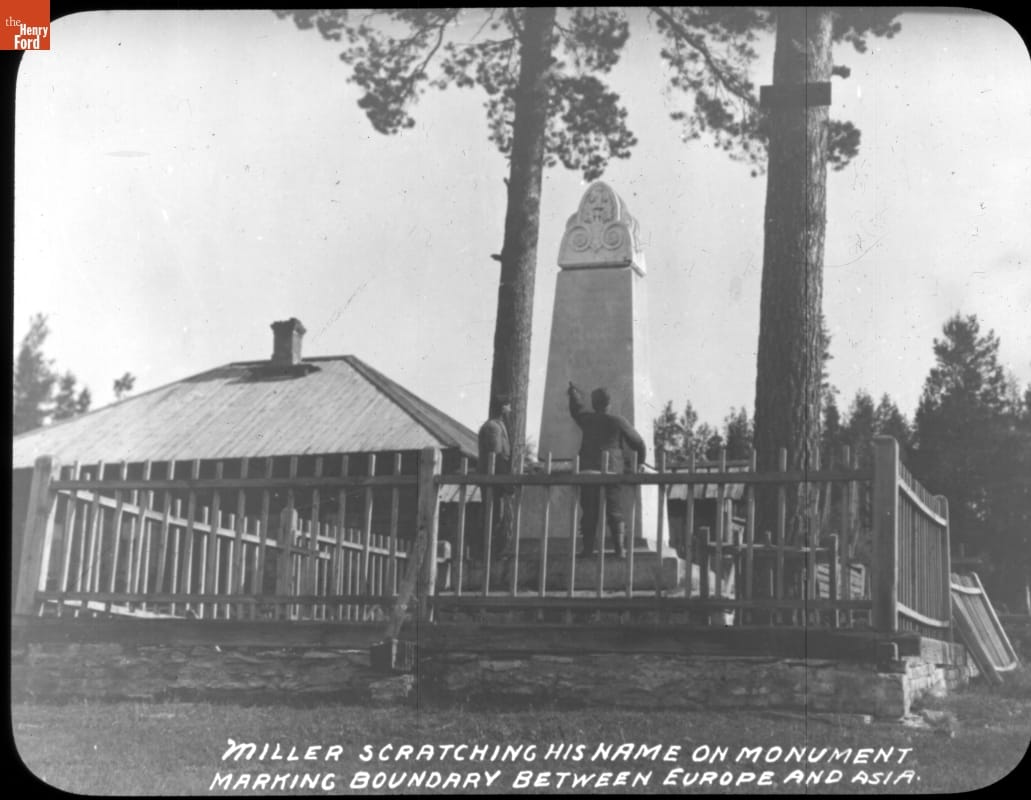
- "Miller Scratching His Name on Monument Marking Boundary Between Europe and Asia," New York to Paris Race, 1908 - In February 1908, six automobiles began an around-the-world race from New York City to Paris, France. The contest took 169 days, covered 22,000 miles and spanned three continents. In May, the three remaining teams left Vladivostok, Russia. For the next two to three months the teams made their way west across the Russian countryside.
- 1908
- Collections - Artifact
"Miller Scratching His Name on Monument Marking Boundary Between Europe and Asia," New York to Paris Race, 1908
In February 1908, six automobiles began an around-the-world race from New York City to Paris, France. The contest took 169 days, covered 22,000 miles and spanned three continents. In May, the three remaining teams left Vladivostok, Russia. For the next two to three months the teams made their way west across the Russian countryside.
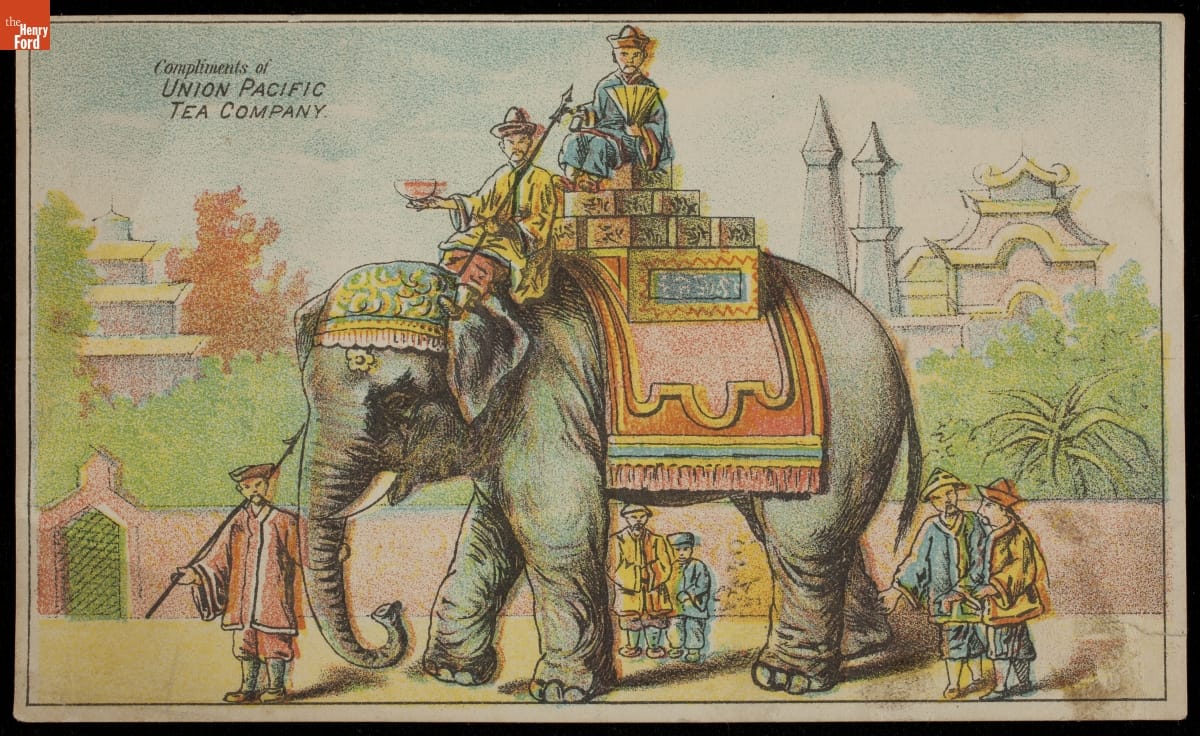
- Trade Card for Tea and Coffee, Union Pacific Tea Co., 1890-1900 - In the last third of the nineteenth century, an unprecedented variety of consumer goods and services flooded the American market. Advertisers, armed with new methods of color printing, bombarded potential customers with trade cards. Americans enjoyed and often saved the vibrant little advertisements found in product packages or distributed by local merchants. Many survive as historical records of commercialism in the United States.
- 1890-1900
- Collections - Artifact
Trade Card for Tea and Coffee, Union Pacific Tea Co., 1890-1900
In the last third of the nineteenth century, an unprecedented variety of consumer goods and services flooded the American market. Advertisers, armed with new methods of color printing, bombarded potential customers with trade cards. Americans enjoyed and often saved the vibrant little advertisements found in product packages or distributed by local merchants. Many survive as historical records of commercialism in the United States.
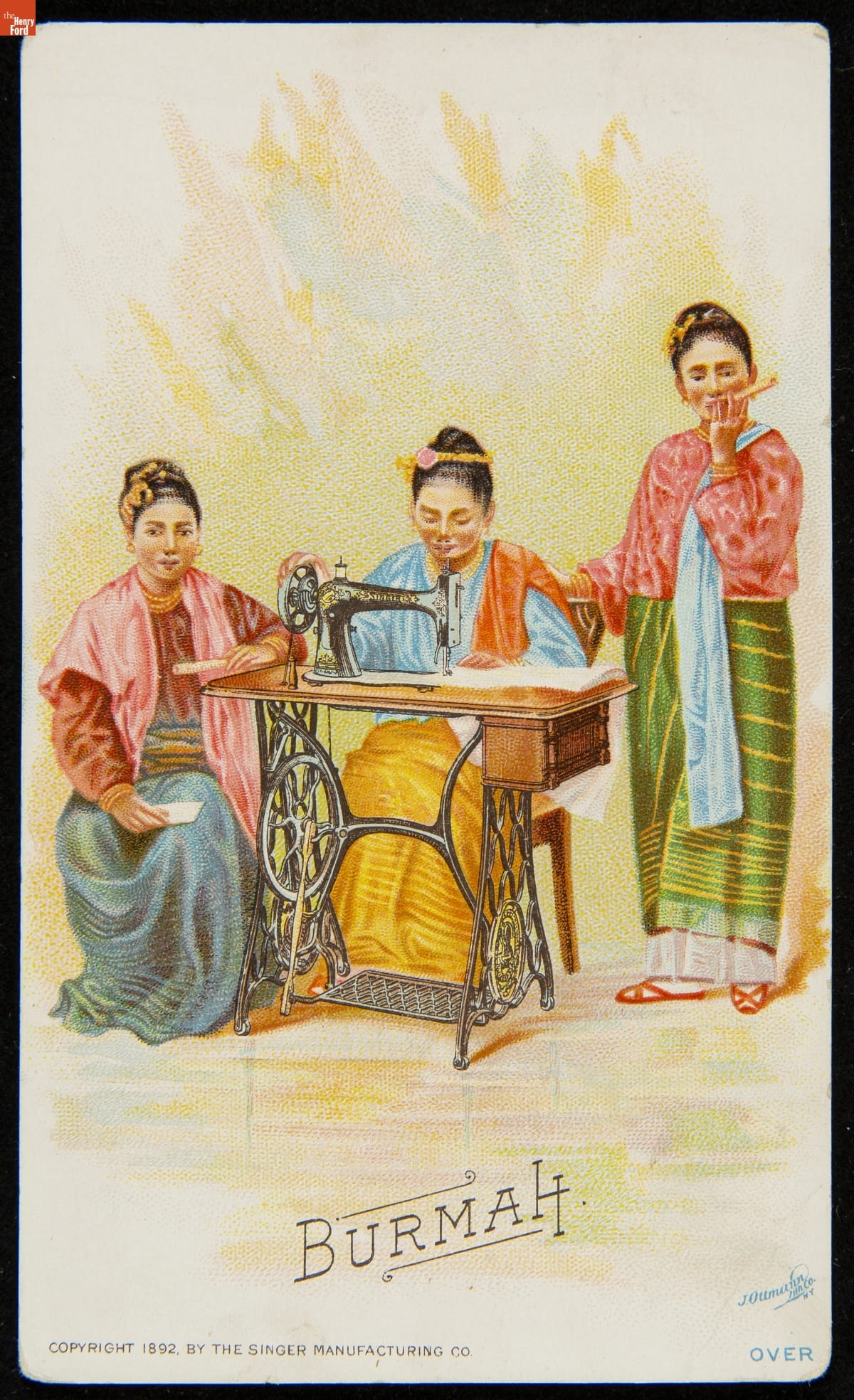
- Trade Card for Singer Sewing Machines, 1892 - As color printing gained momentum in the late 19th century, trade cards became a major means of advertising goods and services. Americans enjoyed and often saved the vibrant little advertisements found in product packages or distributed by local merchants. The Singer Sewing Machine Company had a series of trade cards, like this one, offering images of Singer machine users from around the world in their national dress.
- circa 1892
- Collections - Artifact
Trade Card for Singer Sewing Machines, 1892
As color printing gained momentum in the late 19th century, trade cards became a major means of advertising goods and services. Americans enjoyed and often saved the vibrant little advertisements found in product packages or distributed by local merchants. The Singer Sewing Machine Company had a series of trade cards, like this one, offering images of Singer machine users from around the world in their national dress.
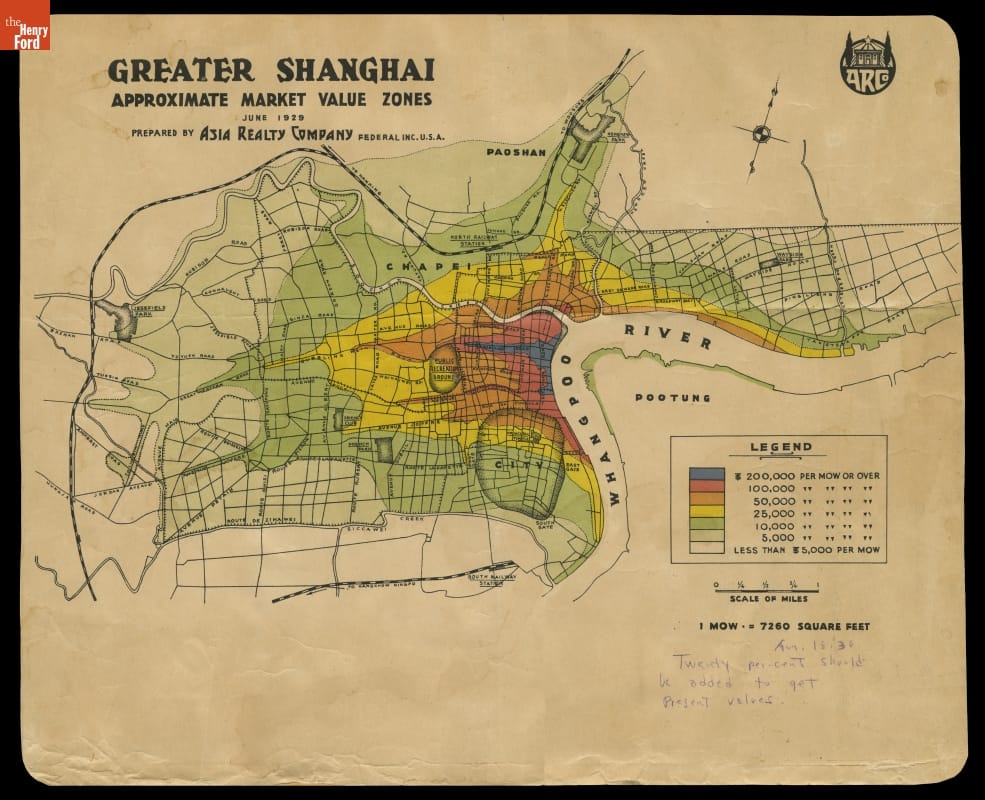
- Map, "Greater Shanghai Approximate Market Value Zones," June 1929 - Ford Motor Company operated sales and service branches in cities around the world. The company considered building an assembly plant in Shanghai, China. This map was collected during the study. Ford decided against the idea when it learned that Chinese law required the property to be owned by a citizen of China.
- June 01, 1929
- Collections - Artifact
Map, "Greater Shanghai Approximate Market Value Zones," June 1929
Ford Motor Company operated sales and service branches in cities around the world. The company considered building an assembly plant in Shanghai, China. This map was collected during the study. Ford decided against the idea when it learned that Chinese law required the property to be owned by a citizen of China.
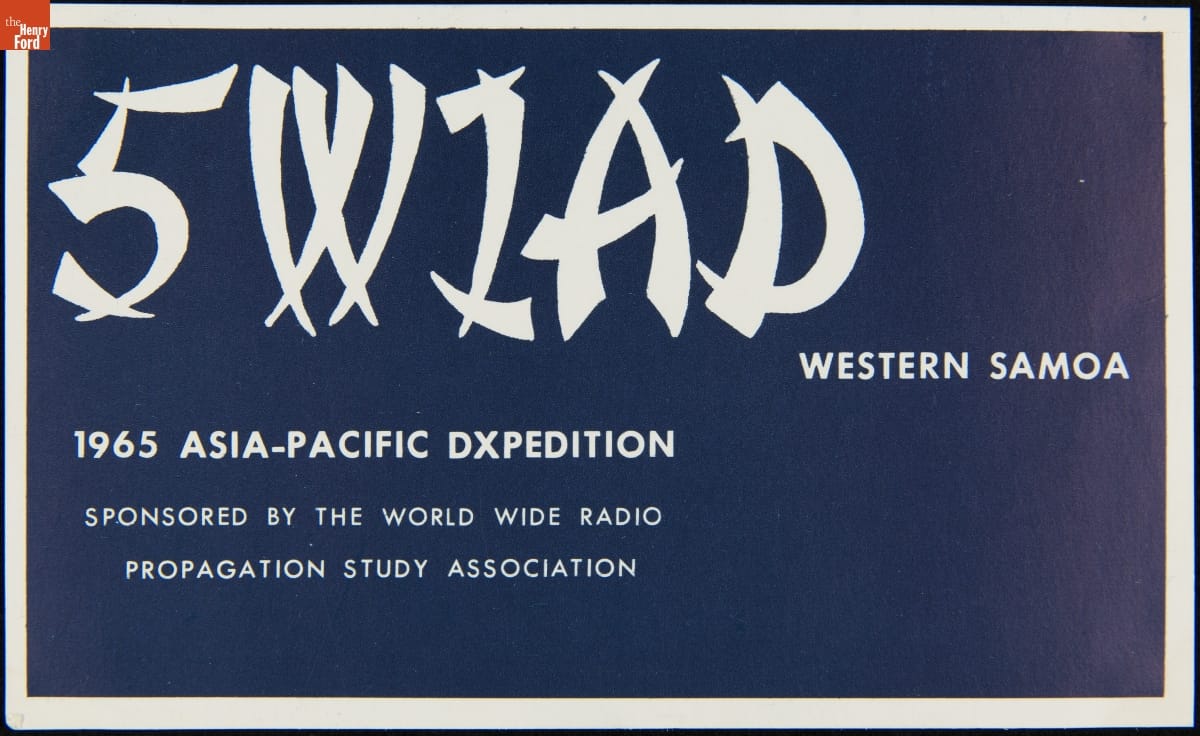
- QSL Card from the 1965 Asia-Pacific Dxpedition in Western Samoa using Call Sign 5W1AD to W6DQZ (Hamid Durmisevich, Los Angeles, California), August 3, 1965 - It was customary for ham radio operators (hams) to exchange these "QSL cards" with one another through the mail after their first conversation. Long-time hams amassed collections of thousands of cards, some from far-flung places. There is a story embedded in each example: the ham's call sign dominates the design, with additional details about location, reception reports, and weather conditions.
- August 03, 1965
- Collections - Artifact
QSL Card from the 1965 Asia-Pacific Dxpedition in Western Samoa using Call Sign 5W1AD to W6DQZ (Hamid Durmisevich, Los Angeles, California), August 3, 1965
It was customary for ham radio operators (hams) to exchange these "QSL cards" with one another through the mail after their first conversation. Long-time hams amassed collections of thousands of cards, some from far-flung places. There is a story embedded in each example: the ham's call sign dominates the design, with additional details about location, reception reports, and weather conditions.
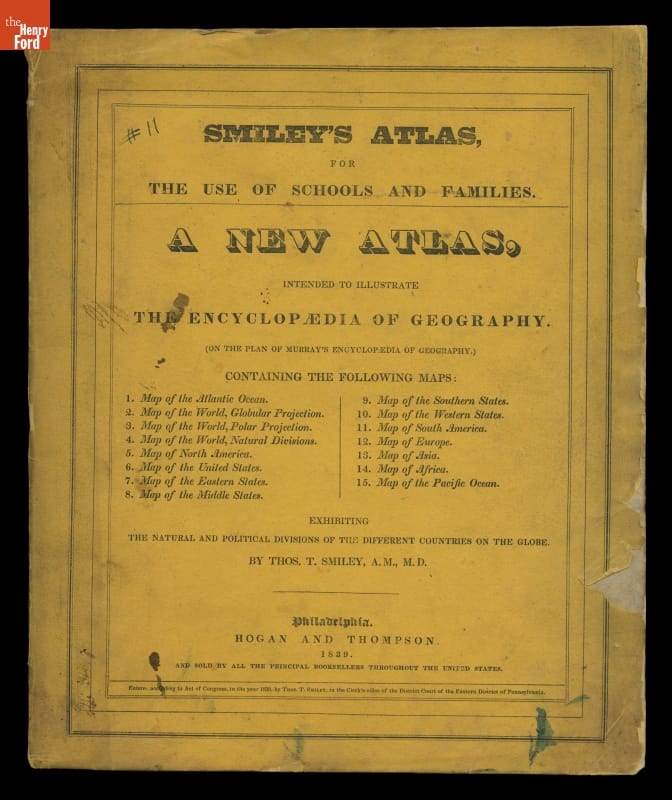
- Book, "Smiley's Atlas for The Use of Schools and Families," 1839 - This world atlas with lovely color maps would have been found in fortunate American homes and schools. The atlas reflects modern knowledge of natural geography in most ways, but not all (the shape of Michigan, for instance). The names, borders and even existence of countries have changed since 1839. Most maps include illustrations the mapmaker likely saw as symbolizing that land.
- 1839
- Collections - Artifact
Book, "Smiley's Atlas for The Use of Schools and Families," 1839
This world atlas with lovely color maps would have been found in fortunate American homes and schools. The atlas reflects modern knowledge of natural geography in most ways, but not all (the shape of Michigan, for instance). The names, borders and even existence of countries have changed since 1839. Most maps include illustrations the mapmaker likely saw as symbolizing that land.
- Studio Glass Expert on Display: Paul Stankard - Paul Stankard is one of the founders of the Studio Glass movement of the 1960s and 1970s, and you can see examples of his work in Henry Ford Museum's newest exhibit, the Davidson-Gerson Modern Glass Gallery.

- October 21, 2016
- Collections - article
Studio Glass Expert on Display: Paul Stankard
Paul Stankard is one of the founders of the Studio Glass movement of the 1960s and 1970s, and you can see examples of his work in Henry Ford Museum's newest exhibit, the Davidson-Gerson Modern Glass Gallery.
- Glass Gallery x2 - Learn how The Henry Ford envisioned creating an all-new gallery to exhibit some of our 10,000 glass artifacts, and how this vision intersected with that of collectors Bruce and Ann Bachmann.

- February 15, 2017
- Collections - article
Glass Gallery x2
Learn how The Henry Ford envisioned creating an all-new gallery to exhibit some of our 10,000 glass artifacts, and how this vision intersected with that of collectors Bruce and Ann Bachmann.