
Search
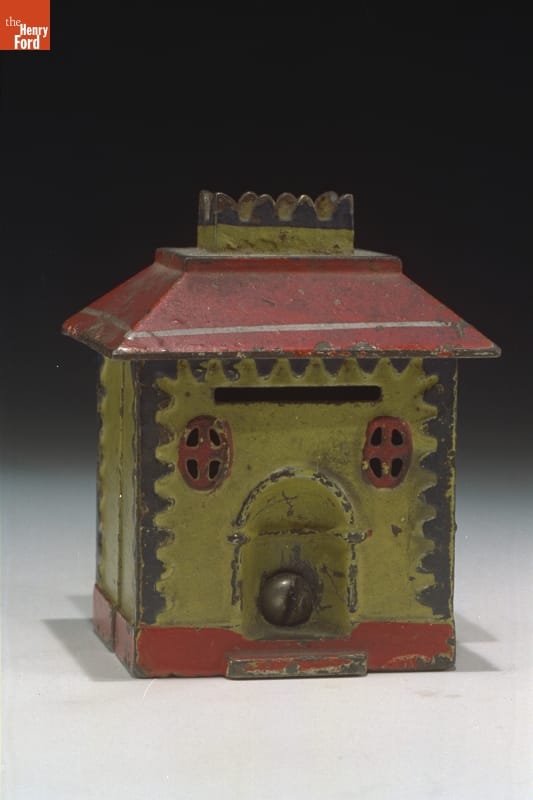
- Bank Building Bank, 1870-1930 - In the late-19th and early-20th centuries, several manufacturers marketed cast-iron toy banks to parents as a way to encourage thrift in children. Some banks used mechanical actions to deposit a coin, while others, like this one, just had a slot where the coin was dropped. These simple banks came in a variety of shapes that delighted children of all ages.
- 1870-1930
- Collections - Artifact
Bank Building Bank, 1870-1930
In the late-19th and early-20th centuries, several manufacturers marketed cast-iron toy banks to parents as a way to encourage thrift in children. Some banks used mechanical actions to deposit a coin, while others, like this one, just had a slot where the coin was dropped. These simple banks came in a variety of shapes that delighted children of all ages.
- Bank -
- Collections - Artifact
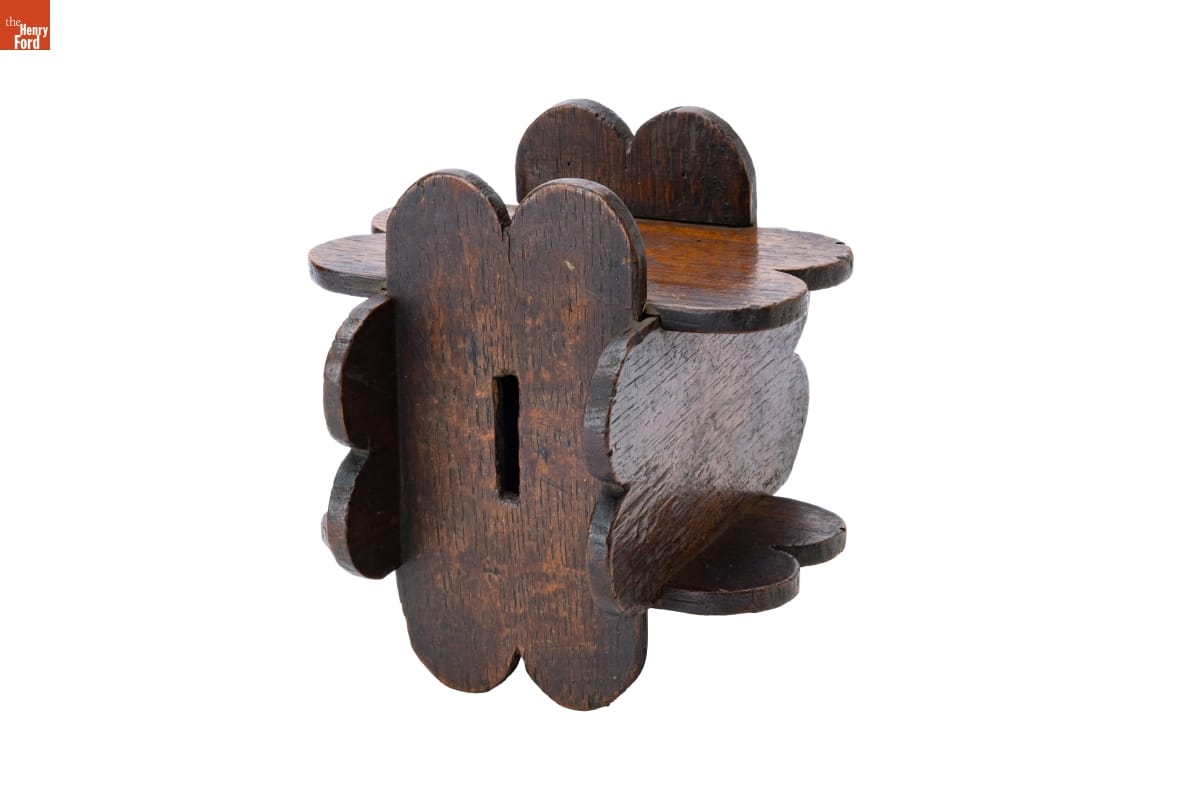
Bank
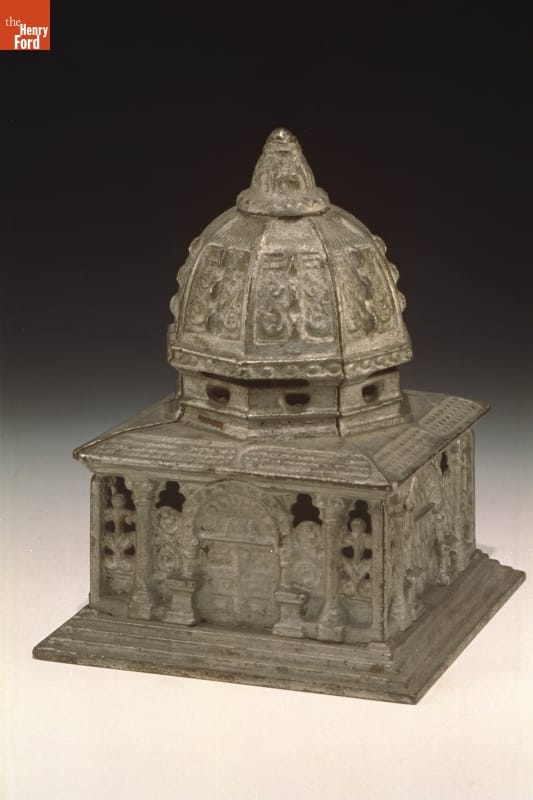
- "Columbia Bank" Building Bank, 1895-1912 - In the late-19th and early-20th centuries, several manufacturers marketed cast-iron toy banks to parents as a way to encourage thrift in children. Some banks used mechanical actions to deposit a coin, while others, like this one, just had a slot where the coin was dropped. These simple banks came in a variety of shapes that delighted children of all ages.
- 1895-1912
- Collections - Artifact
"Columbia Bank" Building Bank, 1895-1912
In the late-19th and early-20th centuries, several manufacturers marketed cast-iron toy banks to parents as a way to encourage thrift in children. Some banks used mechanical actions to deposit a coin, while others, like this one, just had a slot where the coin was dropped. These simple banks came in a variety of shapes that delighted children of all ages.
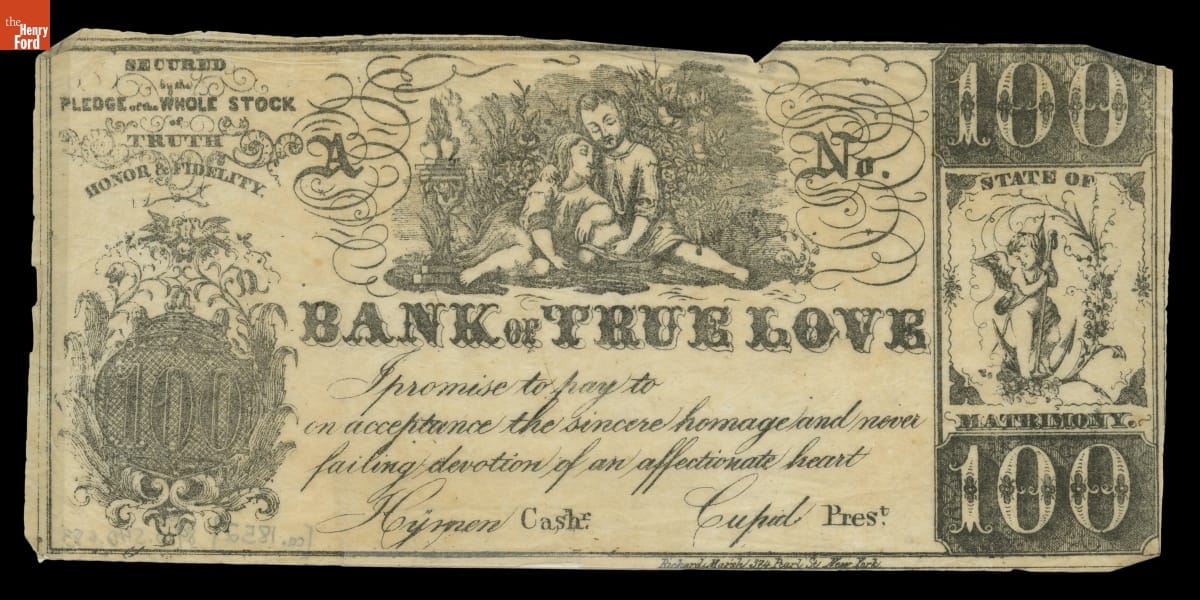
- Valentine, "Bank of True Love," circa 1852 - The custom of sending messages of affection on February 14 dates back to Roman times, when mid-February was a time to meet and court prospective mates. The earliest American valentines were labors of love, handmade by the sender. The spread of commercially produced valentines in the second half of the nineteenth century made sending and receiving Valentine's Day cards a more lighthearted activity.
- circa 1852
- Collections - Artifact
Valentine, "Bank of True Love," circa 1852
The custom of sending messages of affection on February 14 dates back to Roman times, when mid-February was a time to meet and court prospective mates. The earliest American valentines were labors of love, handmade by the sender. The spread of commercially produced valentines in the second half of the nineteenth century made sending and receiving Valentine's Day cards a more lighthearted activity.
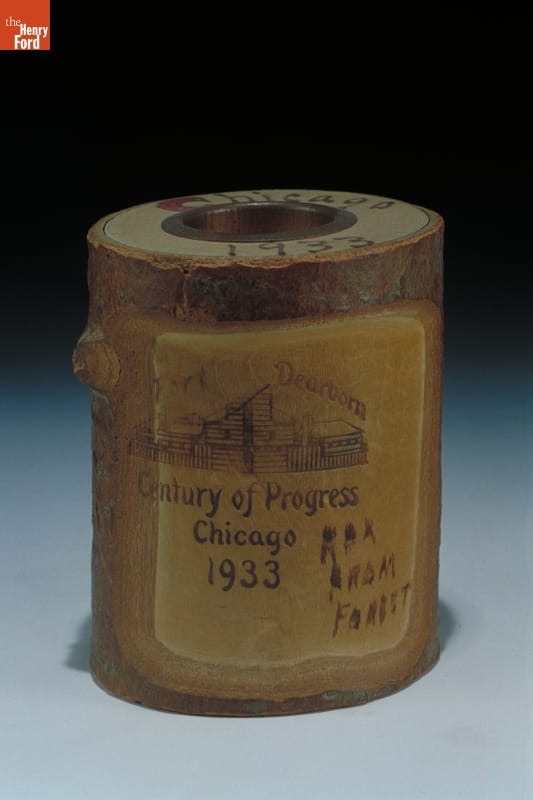
- Century of Progress Souvenir Bank, 1933 - Chicago's 1933-34 Century of Progress Exposition used the theme of progress to buoy national optimism during the darkest years of the Great Depression. Many fairgoers returned home with mementos, such as this bank depicting the exposition's replica of historic Fort Dearborn.
- 1933
- Collections - Artifact
Century of Progress Souvenir Bank, 1933
Chicago's 1933-34 Century of Progress Exposition used the theme of progress to buoy national optimism during the darkest years of the Great Depression. Many fairgoers returned home with mementos, such as this bank depicting the exposition's replica of historic Fort Dearborn.
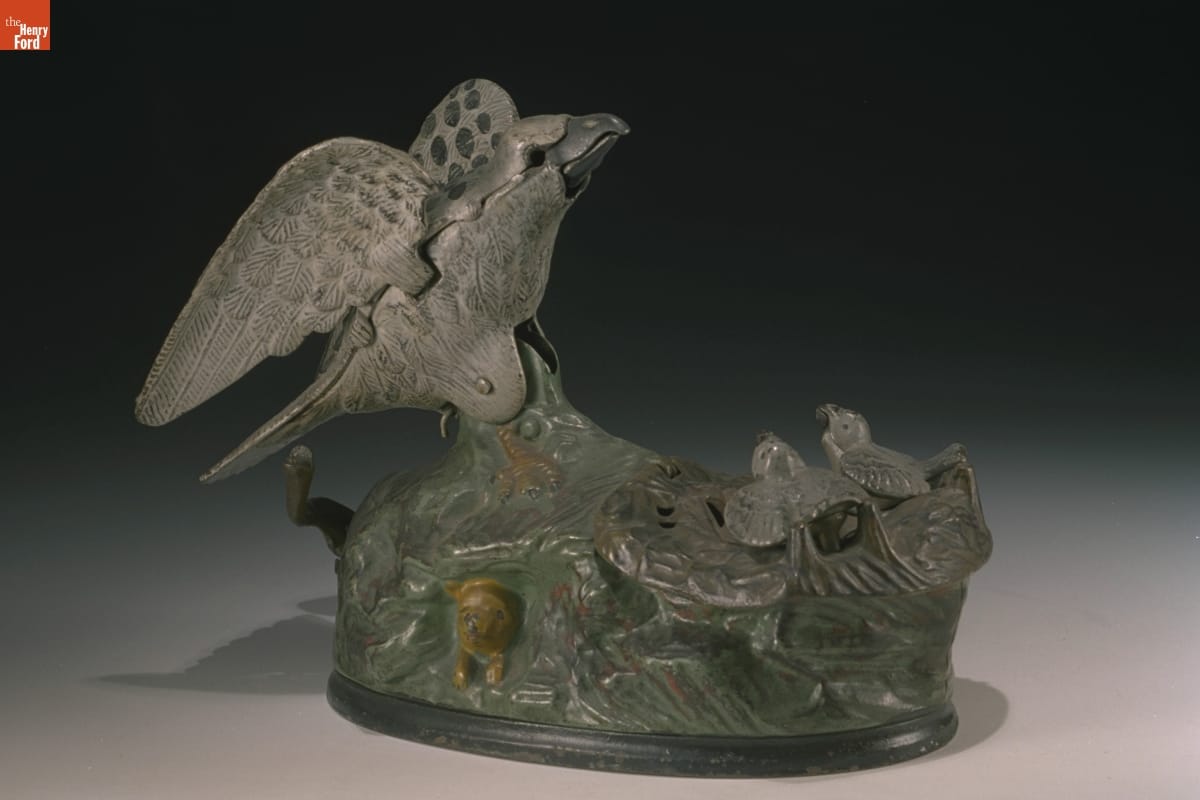
- "Eagle Bank" Mechanical Bank, 1883-1910 - Saving money can be fun. Beginning in the late 1800s, families could purchase banks that used ingenious mechanisms to deposit money. This mechanical bank has an eagle that looks as if it is feeding its young. Place a coin in the eagle's mouth and depress the lever; the eagle will lurch forward and deposit the coin.
- 1883-1910
- Collections - Artifact
"Eagle Bank" Mechanical Bank, 1883-1910
Saving money can be fun. Beginning in the late 1800s, families could purchase banks that used ingenious mechanisms to deposit money. This mechanical bank has an eagle that looks as if it is feeding its young. Place a coin in the eagle's mouth and depress the lever; the eagle will lurch forward and deposit the coin.
- Celebrate Black History: Empowering Financial Strength with Bank of America - This month we are honored to share our Celebrate Black History Leadership Spotlight Series, presented by Ford Motor Company Fund. Throughout February you’ll hear from social innovators as they share their experiences and insights on empowerment as we reflect on the past and collaborate to build a better future for the next generation. Join us every Monday at 11 am as we Celebrate Black History. Today, our series features Mydashia Hough, Manager of Diversity, Equity, and Inclusion at The Henry Ford, and Deola Animashaun, Consumer Community Banking Executive at Bank of America<a tabindex="0" href="https://www.youtube.com/@BankofAmerica" target="" force-new-state="true" data-sf-ec-immutable=""></a>.

- February 14, 2022
- Collections - Video
Celebrate Black History: Empowering Financial Strength with Bank of America
This month we are honored to share our Celebrate Black History Leadership Spotlight Series, presented by Ford Motor Company Fund. Throughout February you’ll hear from social innovators as they share their experiences and insights on empowerment as we reflect on the past and collaborate to build a better future for the next generation. Join us every Monday at 11 am as we Celebrate Black History. Today, our series features Mydashia Hough, Manager of Diversity, Equity, and Inclusion at The Henry Ford, and Deola Animashaun, Consumer Community Banking Executive at Bank of America.
- Lobby, National Bank of Commerce, Detroit, Michigan -
- Collections - Artifact
Lobby, National Bank of Commerce, Detroit, Michigan
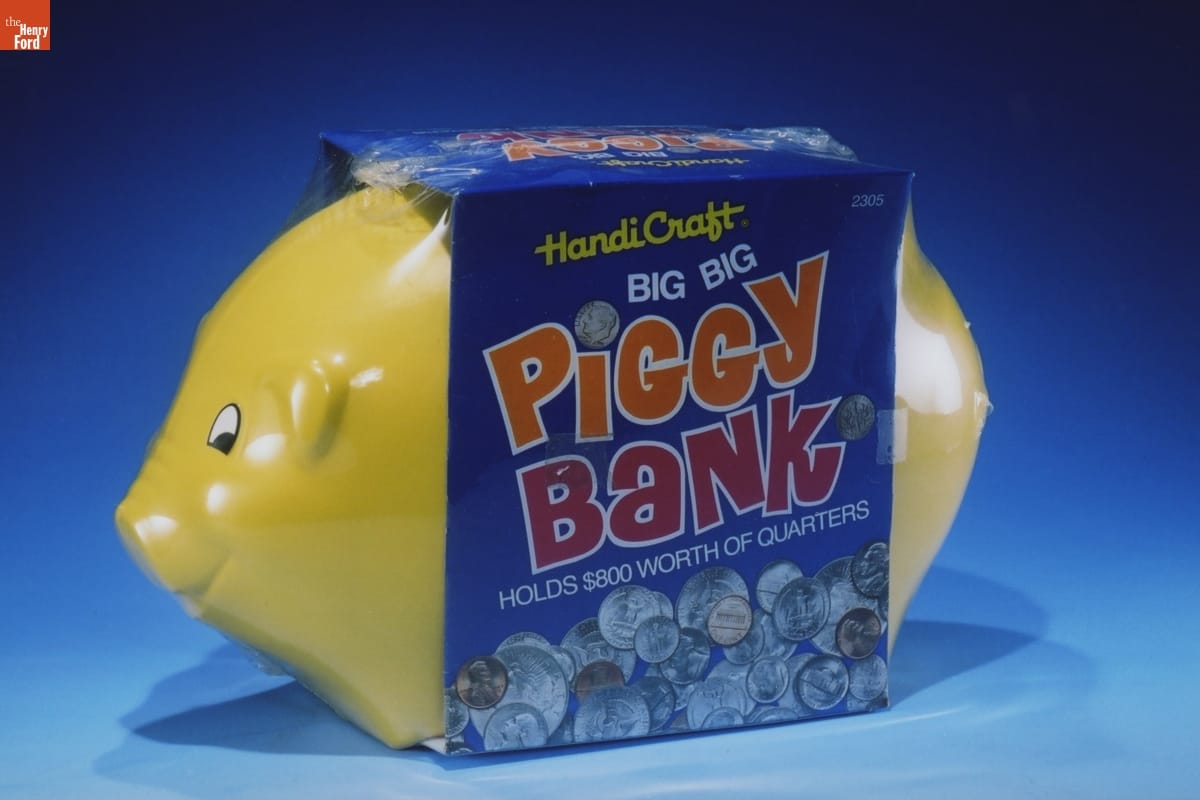
- Piggy Bank, 1991 - Still banks provide a simple way to save money. You place your coin in the slot then let it drop -- there are no mechanical devices. Still banks come in a variety of interesting and decorative shapes, including buildings, people, and animals. This yellow plastic "piggy" bank -- a popular form used for saving money -- was made in 1991.
- 1991
- Collections - Artifact
Piggy Bank, 1991
Still banks provide a simple way to save money. You place your coin in the slot then let it drop -- there are no mechanical devices. Still banks come in a variety of interesting and decorative shapes, including buildings, people, and animals. This yellow plastic "piggy" bank -- a popular form used for saving money -- was made in 1991.
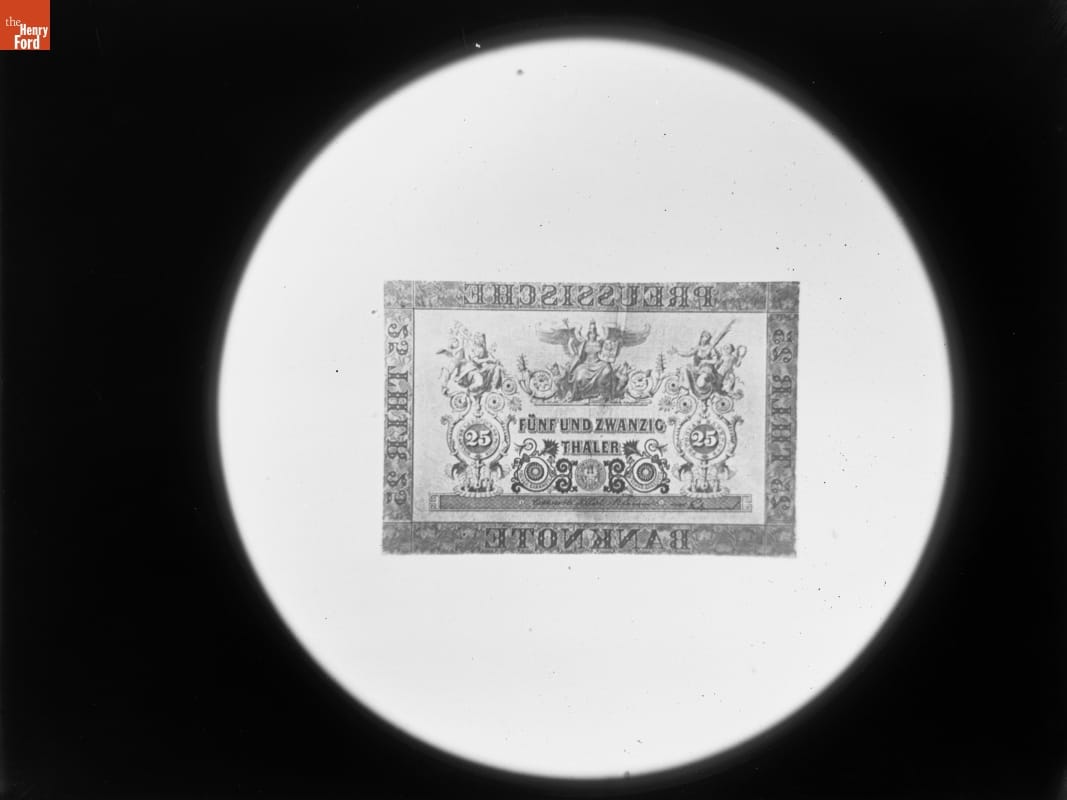
- Photomicrograph of Prussian Bank Note, 1890-1915 - In 1890, Jenny Young Chandler, 25 years old and recently widowed, began working for the <EM>New York Herald</EM>. As a photojournalist and feature writer, Chandler captured life in Brooklyn, New York, and vicinity. She also documented collections of private individuals and museums -- some of which were featured in magazine articles for collectors. By 1922, the time of her death, she had produced over 800 glass plate negatives.
- 1890-1915
- Collections - Artifact
Photomicrograph of Prussian Bank Note, 1890-1915
In 1890, Jenny Young Chandler, 25 years old and recently widowed, began working for the New York Herald. As a photojournalist and feature writer, Chandler captured life in Brooklyn, New York, and vicinity. She also documented collections of private individuals and museums -- some of which were featured in magazine articles for collectors. By 1922, the time of her death, she had produced over 800 glass plate negatives.