
Search
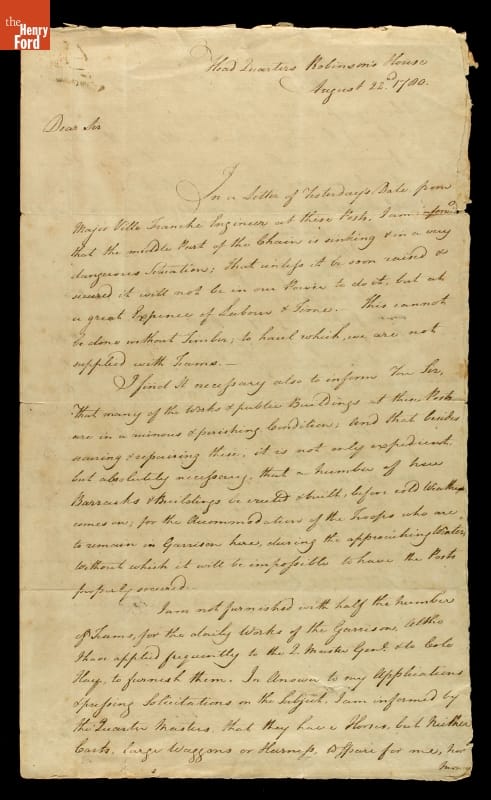
- Letter from Benedict Arnold to George Clinton, Governor of New York, August 22, 1780 - This is the letter that made "Benedict Arnold" synonymous with "traitor." Arnold, a talented Continental Army general, had grown leery of the Continental Congress. He wrote for permission to make repairs at West Point, but really intended to weaken the fort and surrender it to the British. Arnold's plot was ultimately foiled, but his attempted treason shocked the nation.
- August 22, 1780
- Collections - Artifact
Letter from Benedict Arnold to George Clinton, Governor of New York, August 22, 1780
This is the letter that made "Benedict Arnold" synonymous with "traitor." Arnold, a talented Continental Army general, had grown leery of the Continental Congress. He wrote for permission to make repairs at West Point, but really intended to weaken the fort and surrender it to the British. Arnold's plot was ultimately foiled, but his attempted treason shocked the nation.
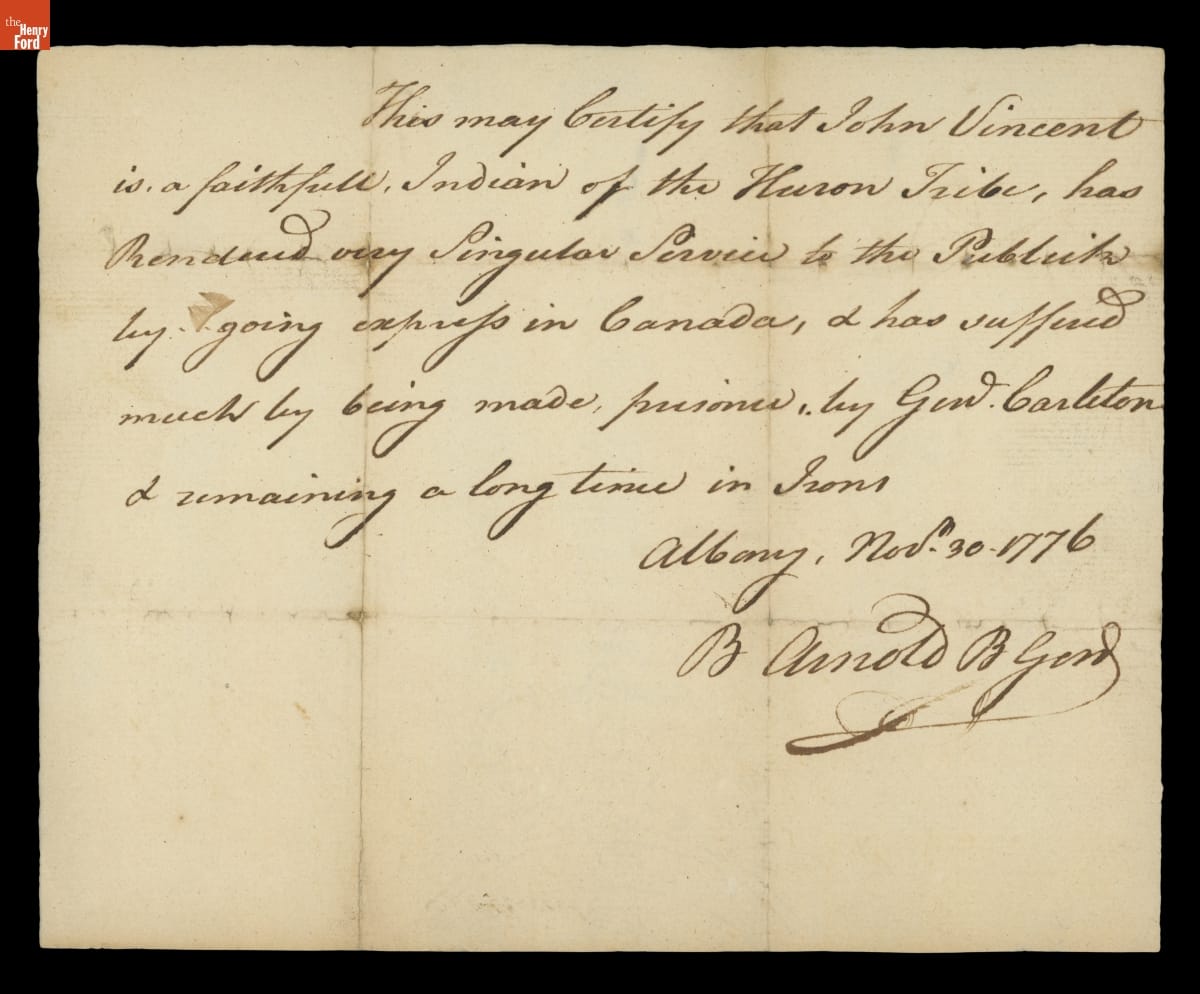
- Letter from Benedict Arnold Regarding John Vincent, an Indigenous Friend to the American Military, November 30, 1776 -
- November 30, 1776
- Collections - Artifact
Letter from Benedict Arnold Regarding John Vincent, an Indigenous Friend to the American Military, November 30, 1776
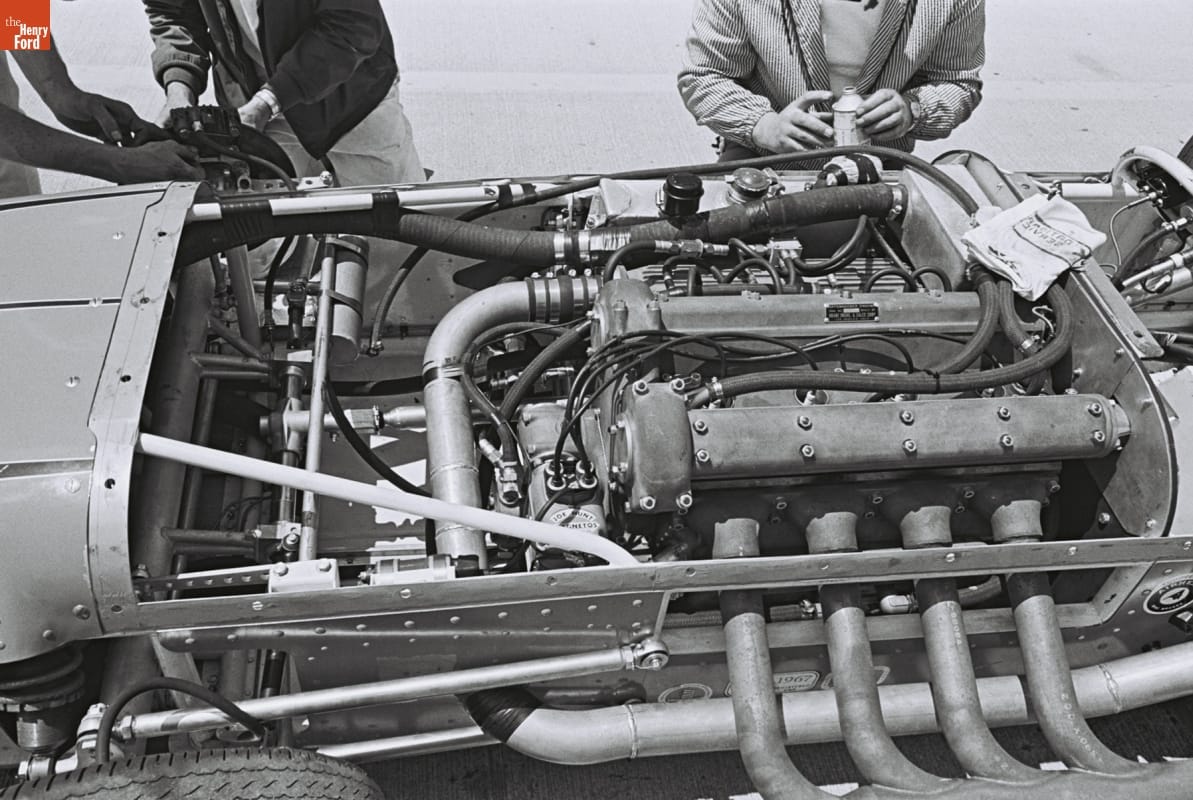
- 1967 Indianapolis 500 -- Item 1741 - Dave Friedman captured and preserved auto racing history through his photography. His work -- and his collection of works by other photographers -- documents key races, cars, and drivers. This shot shows events surrounding the 1967 Indianapolis 500. Parnelli Jones dominated with the turbine-powered #40 car, but a bearing failed him with four laps to go. A.J. Foyt won with the #14 Coyote-Ford.
- May 01, 1967
- Collections - Artifact
1967 Indianapolis 500 -- Item 1741
Dave Friedman captured and preserved auto racing history through his photography. His work -- and his collection of works by other photographers -- documents key races, cars, and drivers. This shot shows events surrounding the 1967 Indianapolis 500. Parnelli Jones dominated with the turbine-powered #40 car, but a bearing failed him with four laps to go. A.J. Foyt won with the #14 Coyote-Ford.
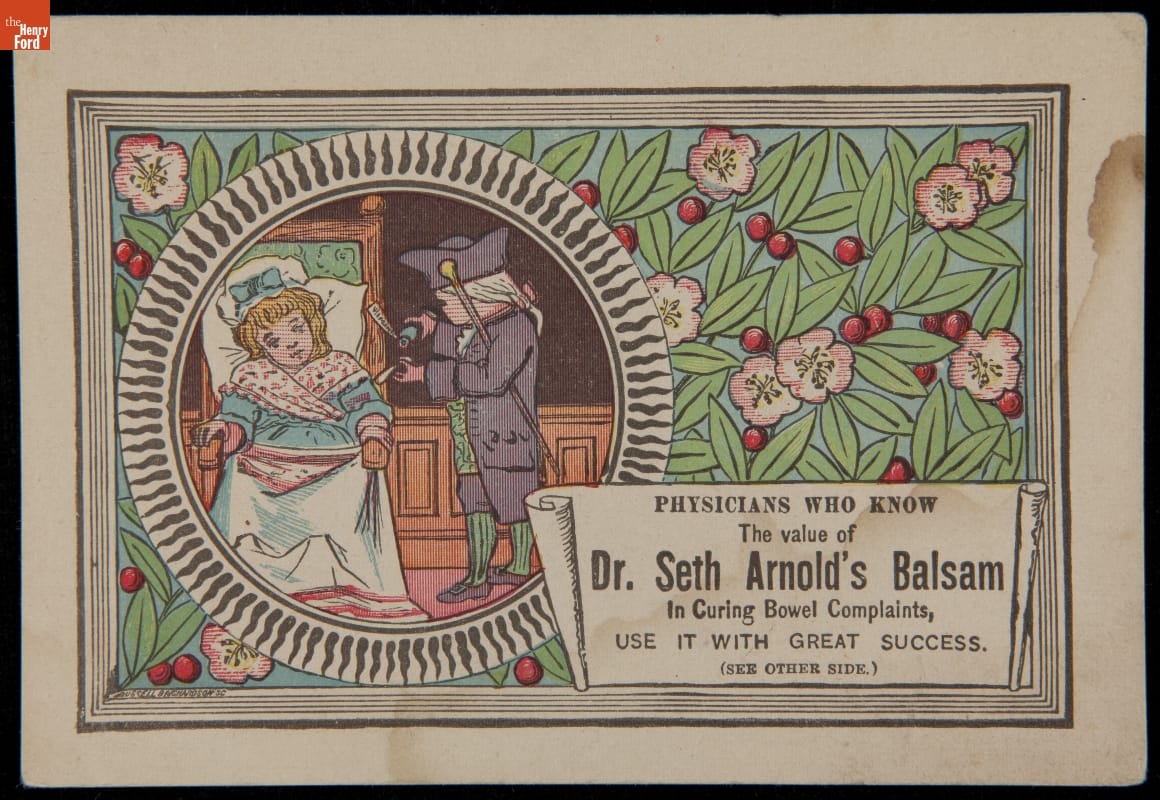
- Trade Card for Dr. Seth Arnold's Balsam, circa 1882 - In the last third of the nineteenth century, an unprecedented variety of consumer goods and services flooded the American market. Advertisers, armed with new methods of color printing, bombarded potential customers with trade cards. Americans enjoyed and often saved the vibrant little advertisements found in product packages or distributed by local merchants. Many survive as historical records of commercialism in the United States.
- circa 1882
- Collections - Artifact
Trade Card for Dr. Seth Arnold's Balsam, circa 1882
In the last third of the nineteenth century, an unprecedented variety of consumer goods and services flooded the American market. Advertisers, armed with new methods of color printing, bombarded potential customers with trade cards. Americans enjoyed and often saved the vibrant little advertisements found in product packages or distributed by local merchants. Many survive as historical records of commercialism in the United States.
- Pennant, "Lake Okoboji, Arnold's Park, Iowa," 1940-1965 - Tourists purchase simple, inexpensive souvenirs as proof of their travels. These mementos transport vacationers back to the places they visited and the things they did. In the mid-20th century, felt pennants were trendy. This pennant depicts the variety of the activities vacationers may have engaged in during their stay at Lake Okoboji in northern Iowa.
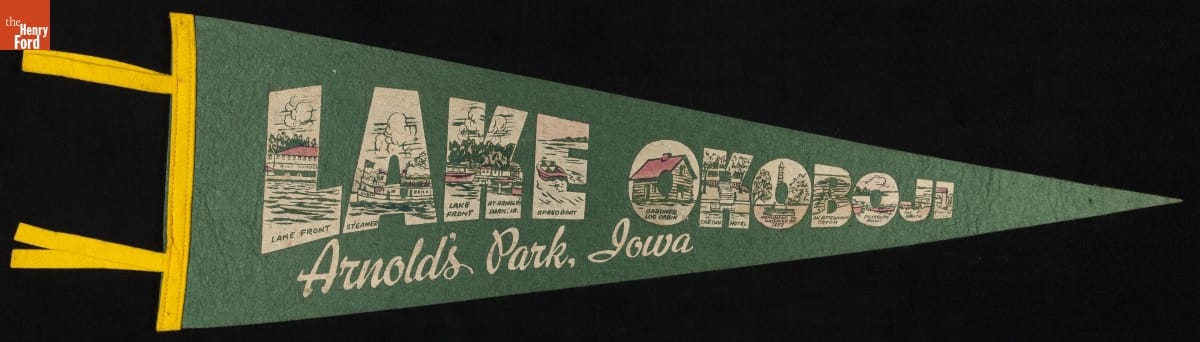
- 1940-1965
- Collections - Artifact
Pennant, "Lake Okoboji, Arnold's Park, Iowa," 1940-1965
Tourists purchase simple, inexpensive souvenirs as proof of their travels. These mementos transport vacationers back to the places they visited and the things they did. In the mid-20th century, felt pennants were trendy. This pennant depicts the variety of the activities vacationers may have engaged in during their stay at Lake Okoboji in northern Iowa.
- 1967 Indianapolis 500 -- Item 1801 - Dave Friedman captured and preserved auto racing history through his photography. His work -- and his collection of works by other photographers -- documents key races, cars, and drivers. This shot shows events surrounding the 1967 Indianapolis 500. Parnelli Jones dominated with the turbine-powered #40 car, but a bearing failed him with four laps to go. A.J. Foyt won with the #14 Coyote-Ford.
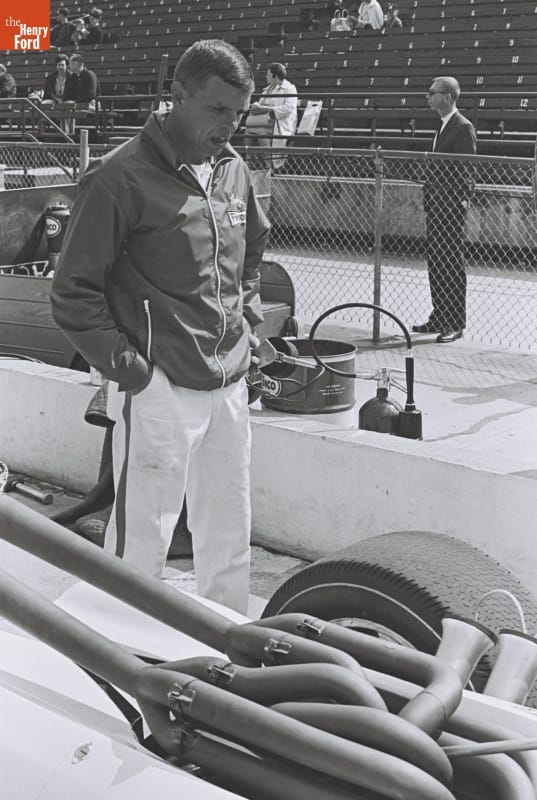
- May 01, 1967
- Collections - Artifact
1967 Indianapolis 500 -- Item 1801
Dave Friedman captured and preserved auto racing history through his photography. His work -- and his collection of works by other photographers -- documents key races, cars, and drivers. This shot shows events surrounding the 1967 Indianapolis 500. Parnelli Jones dominated with the turbine-powered #40 car, but a bearing failed him with four laps to go. A.J. Foyt won with the #14 Coyote-Ford.
- Balance Sheet for the Account of R. J. Arnold's Heirs, 1880 -
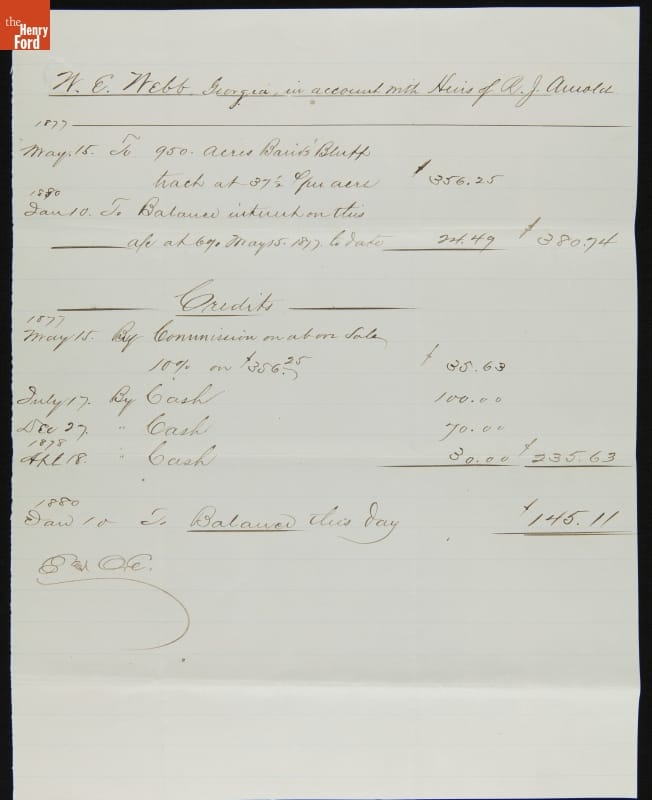
- 1877-1880
- Collections - Artifact
Balance Sheet for the Account of R. J. Arnold's Heirs, 1880
- Trade Card for Dr. Seth Arnold's Cough Killer, 1880-1890 - In the last third of the nineteenth century, an unprecedented variety of consumer goods and services flooded the American market. Advertisers, armed with new methods of color printing, bombarded potential customers with trade cards. Americans enjoyed and often saved the vibrant little advertisements found in product packages or distributed by local merchants. Many survive as historical records of commercialism in the United States.
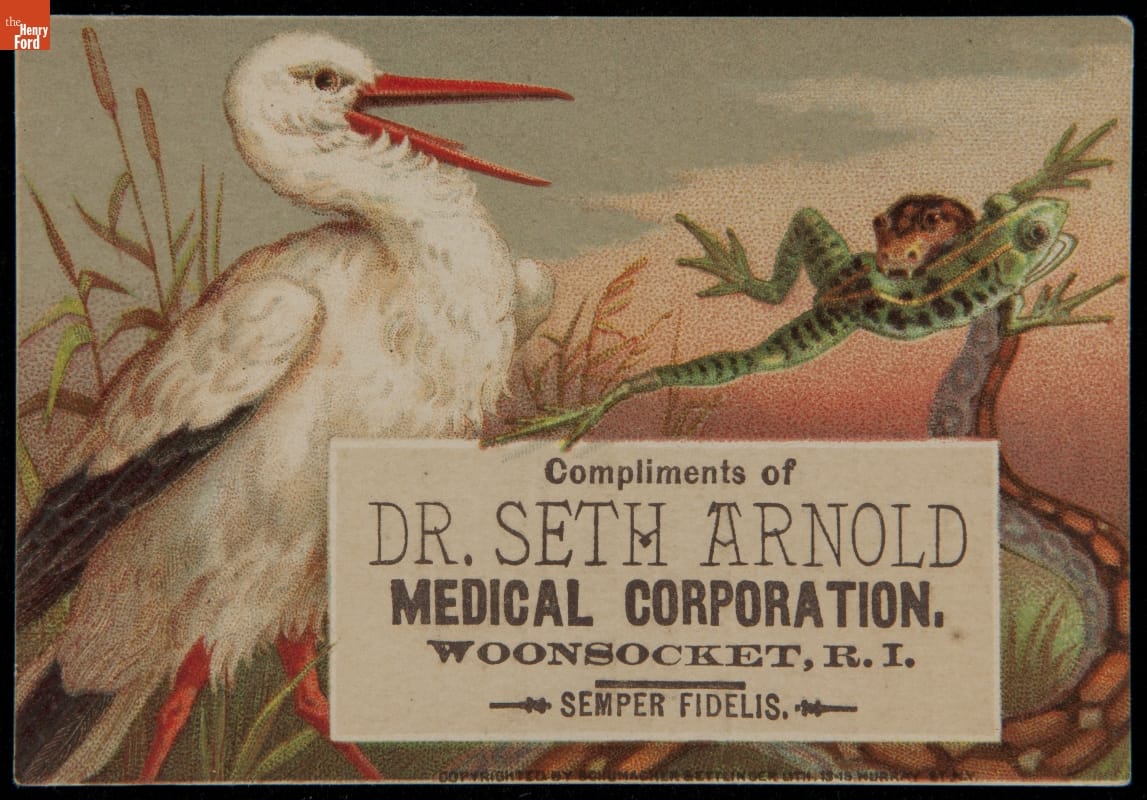
- 1880-1890
- Collections - Artifact
Trade Card for Dr. Seth Arnold's Cough Killer, 1880-1890
In the last third of the nineteenth century, an unprecedented variety of consumer goods and services flooded the American market. Advertisers, armed with new methods of color printing, bombarded potential customers with trade cards. Americans enjoyed and often saved the vibrant little advertisements found in product packages or distributed by local merchants. Many survive as historical records of commercialism in the United States.
- Conflicting Connections: Native Nations and the Revolution - Two sides fought the Revolutionary War — the Patriots and the British. One was angry about not being represented in Parliament. The other became intent on keeping the colonies under British rule. Both demanded control of North American land. But another group is often left out of the historical conversation — the Indigenous nations who had called this land home for millennia. Seeking to protect their lands, Indigenous nations fought on either side.

- October 02, 2026
- Collections - Set
Conflicting Connections: Native Nations and the Revolution
Two sides fought the Revolutionary War — the Patriots and the British. One was angry about not being represented in Parliament. The other became intent on keeping the colonies under British rule. Both demanded control of North American land. But another group is often left out of the historical conversation — the Indigenous nations who had called this land home for millennia. Seeking to protect their lands, Indigenous nations fought on either side.
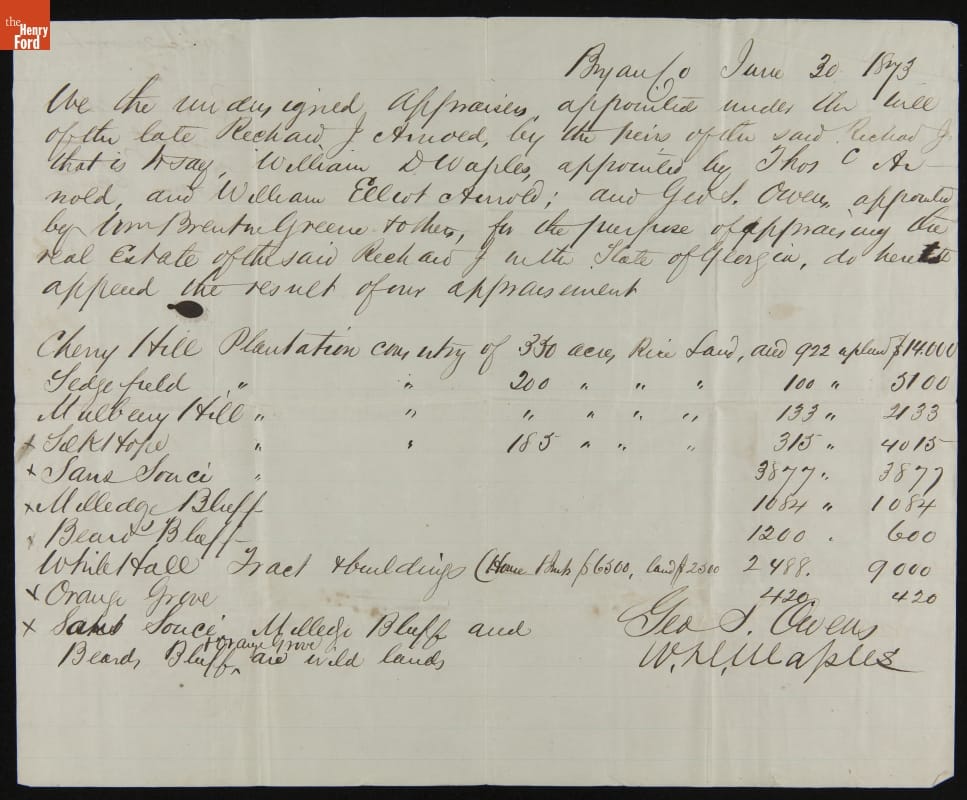
- Appraisal of R. J. Arnold's Bryan County, Georgia Properties, June 30, 1873 -
- June 30, 1873
- Collections - Artifact
Appraisal of R. J. Arnold's Bryan County, Georgia Properties, June 30, 1873