
Search
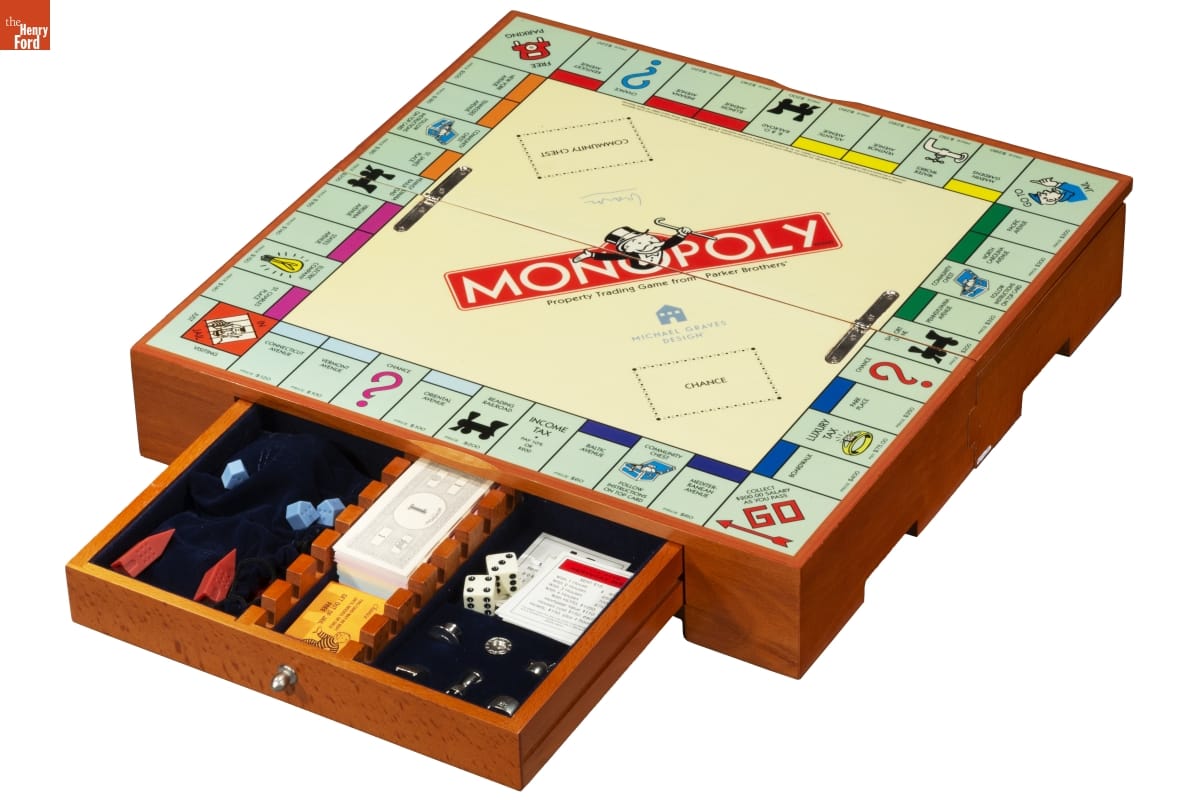
- Monopoly Board Game, 2002 - Starting in the early 1980s--and already established as an internationally recognized architect--Michael Graves began to pursue a parallel career as a product designer. Over the following three and a half decades he and his collaborators designed everything from humble household goods to limited edition luxury items for clients as diverse as Steuben, Alessi, Target, J. C. Penney, and Disney.
- 2002
- Collections - Artifact
Monopoly Board Game, 2002
Starting in the early 1980s--and already established as an internationally recognized architect--Michael Graves began to pursue a parallel career as a product designer. Over the following three and a half decades he and his collaborators designed everything from humble household goods to limited edition luxury items for clients as diverse as Steuben, Alessi, Target, J. C. Penney, and Disney.
- Tycoon Board Game, 1981 -
- 1981
- Collections - Artifact
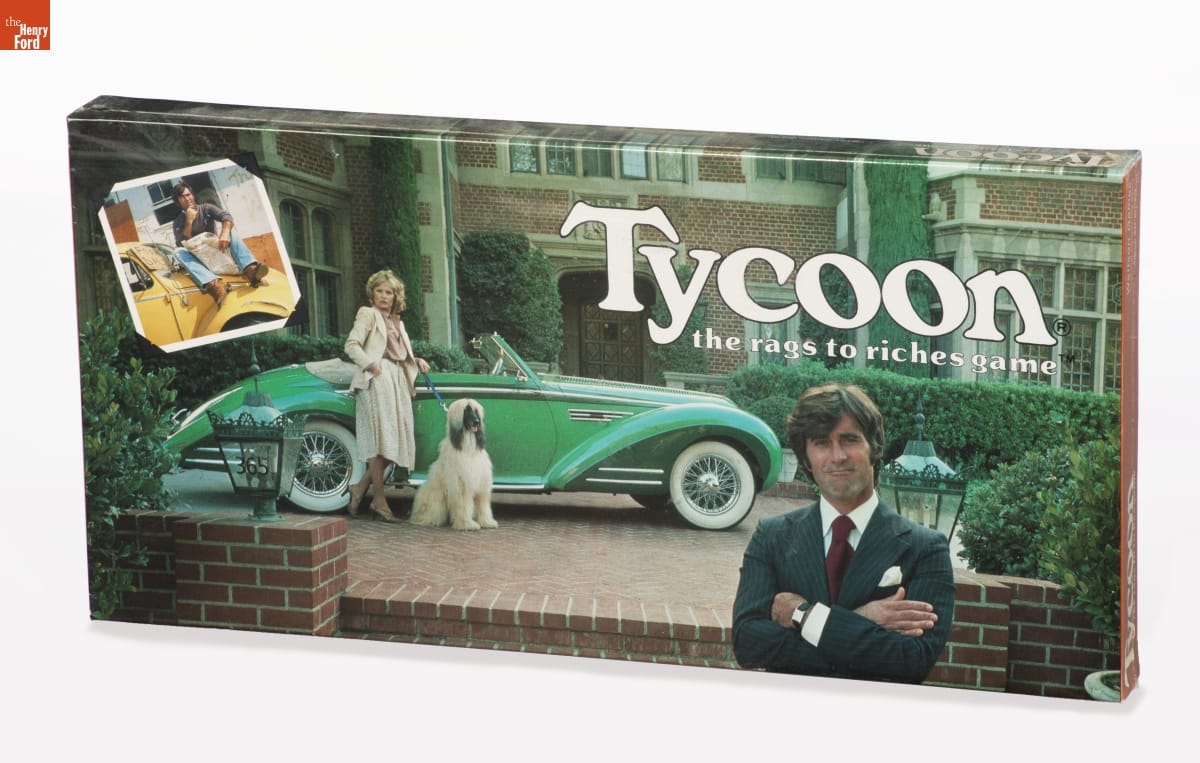
Tycoon Board Game, 1981
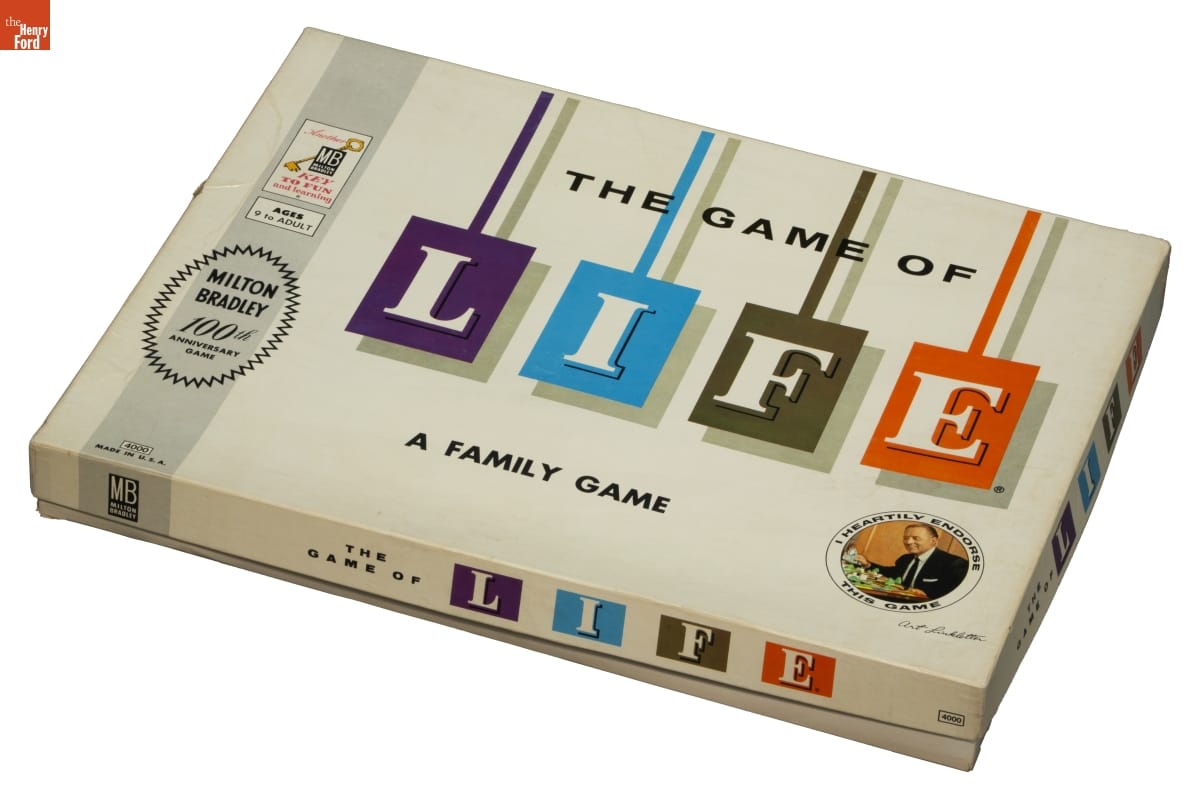
- The Game of Life Board Game, circa 1960 - The Game of Life was introduced in 1960 to celebrate the Milton Bradley Company's 100th anniversary. It included new features for board games: a three-dimensional board and integral plastic spinner. Throughout the game, players "experienced" major life events -- like getting a new job or starting a family -- as they competed to earn the most assets.
- circa 1961
- Collections - Artifact
The Game of Life Board Game, circa 1960
The Game of Life was introduced in 1960 to celebrate the Milton Bradley Company's 100th anniversary. It included new features for board games: a three-dimensional board and integral plastic spinner. Throughout the game, players "experienced" major life events -- like getting a new job or starting a family -- as they competed to earn the most assets.
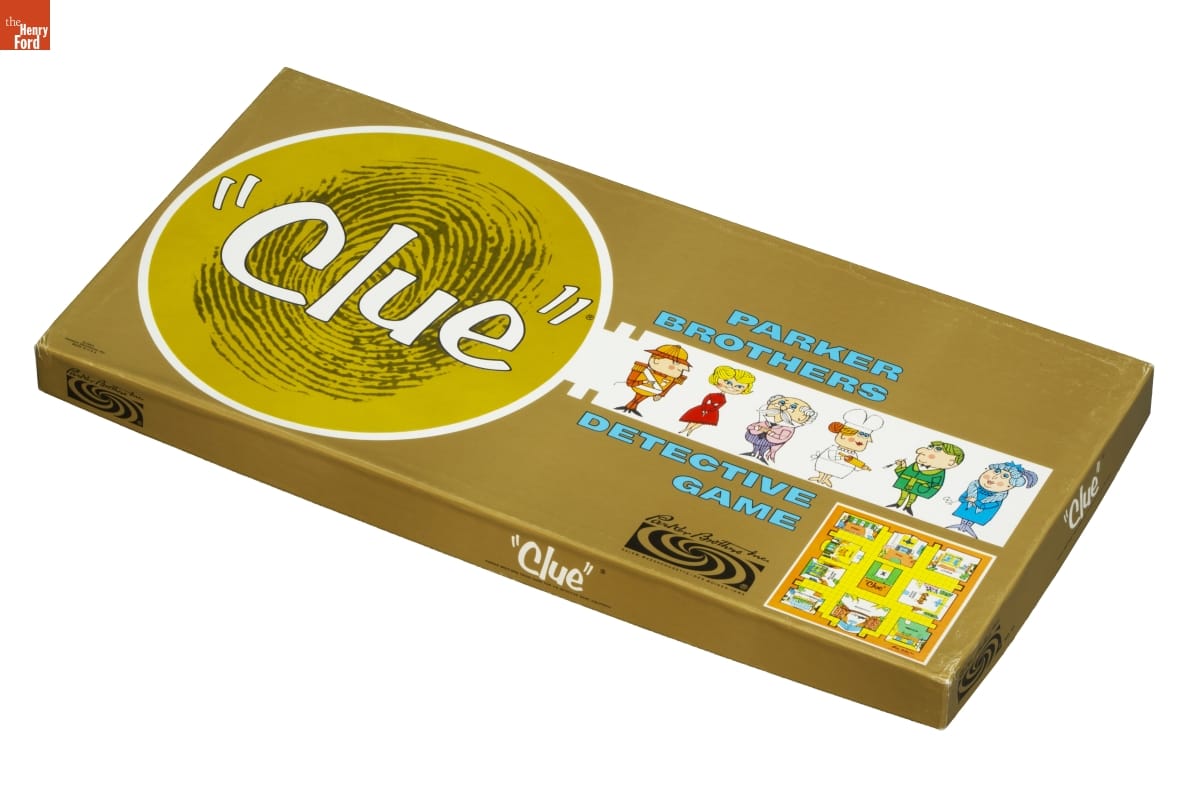
- Clue Board Game, circa 1963 - In the game of Clue, players move around a mansion as they work to solve a murder mystery. The winner eliminates incorrect possibilities to identify the murder weapon, location, and perpetrator. Parker Brothers first published the American version of Clue, which was created in England, in 1949. A classic "whodunit" board game, Clue requires deductive reasoning skills and a bit of luck.
- 1963
- Collections - Artifact
Clue Board Game, circa 1963
In the game of Clue, players move around a mansion as they work to solve a murder mystery. The winner eliminates incorrect possibilities to identify the murder weapon, location, and perpetrator. Parker Brothers first published the American version of Clue, which was created in England, in 1949. A classic "whodunit" board game, Clue requires deductive reasoning skills and a bit of luck.
- "Park and Shop" Board Game, 1960 - The striking cover on this game shows a typical suburban shopping center of the era, complete with large parking lot. The game contains a game board, 12 markers (6 cars and 6 people), toy money, cards, and dice. The original price, from Gilbert's Hobby Shop, was $2.98.

- 1960
- Collections - Artifact
"Park and Shop" Board Game, 1960
The striking cover on this game shows a typical suburban shopping center of the era, complete with large parking lot. The game contains a game board, 12 markers (6 cars and 6 people), toy money, cards, and dice. The original price, from Gilbert's Hobby Shop, was $2.98.
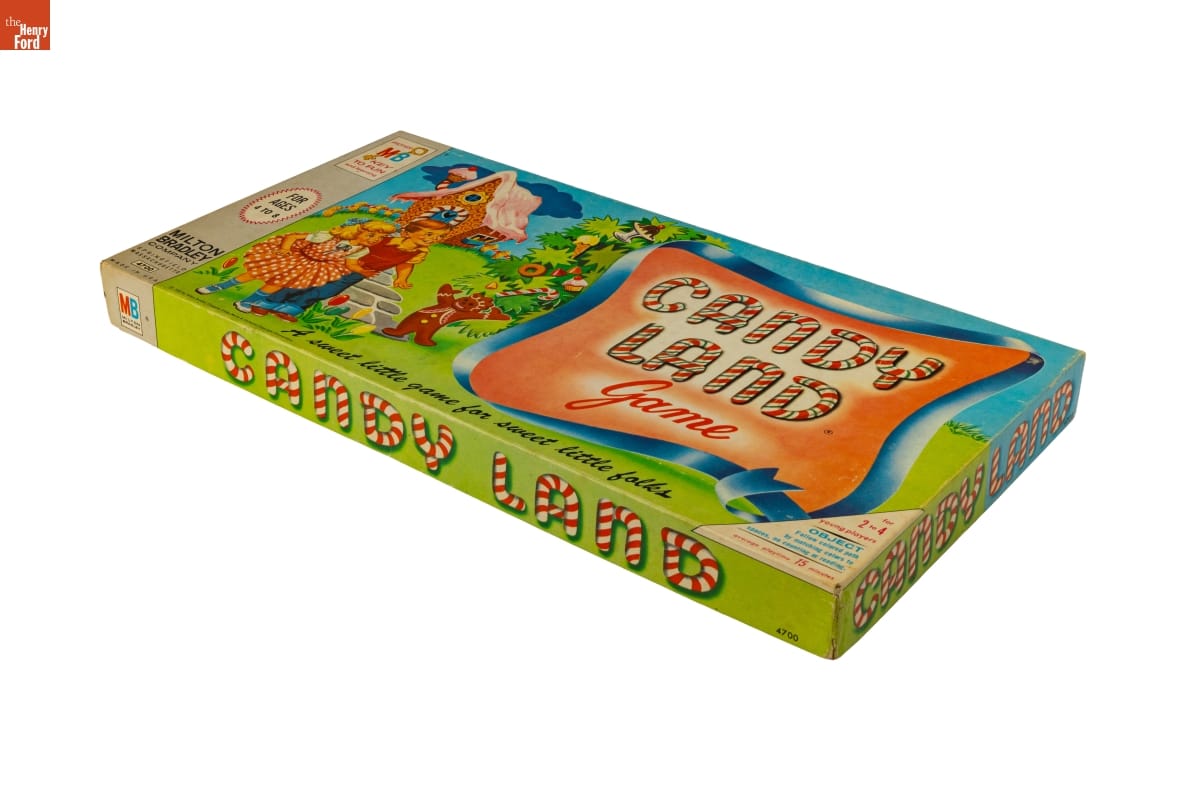
- Candy Land Board Game, circa 1962 - Eleanor Abbott, a schoolteacher recuperating from polio in a San Diego hospital, wanted to entertain children confined to the polio ward. In 1948, she developed Candy Land -- a colorful game that even kids too young to read or count could play. Milton Bradley published Candy Land in 1949, and it became one of the best-selling and most beloved board games of all time.
- circa 1962
- Collections - Artifact
Candy Land Board Game, circa 1962
Eleanor Abbott, a schoolteacher recuperating from polio in a San Diego hospital, wanted to entertain children confined to the polio ward. In 1948, she developed Candy Land -- a colorful game that even kids too young to read or count could play. Milton Bradley published Candy Land in 1949, and it became one of the best-selling and most beloved board games of all time.
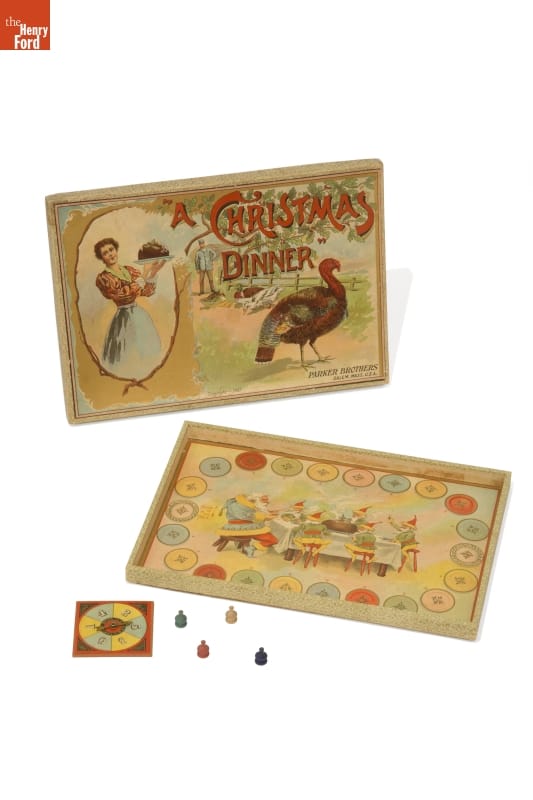
- "A Christmas Dinner" Board Game, 1897 - By the late 19th century, traces of the modern, secular celebration of Christmas had crystallized. Among these customs was preparing a special holiday dinner. Parker Brothers capitalized on this popular tradition, creating the game <em>A Christmas Dinner</em> in 1897. In the game, players spin a spinner and then move their counters around the board, hoping to land back on their original plate.
- 1897
- Collections - Artifact
"A Christmas Dinner" Board Game, 1897
By the late 19th century, traces of the modern, secular celebration of Christmas had crystallized. Among these customs was preparing a special holiday dinner. Parker Brothers capitalized on this popular tradition, creating the game A Christmas Dinner in 1897. In the game, players spin a spinner and then move their counters around the board, hoping to land back on their original plate.
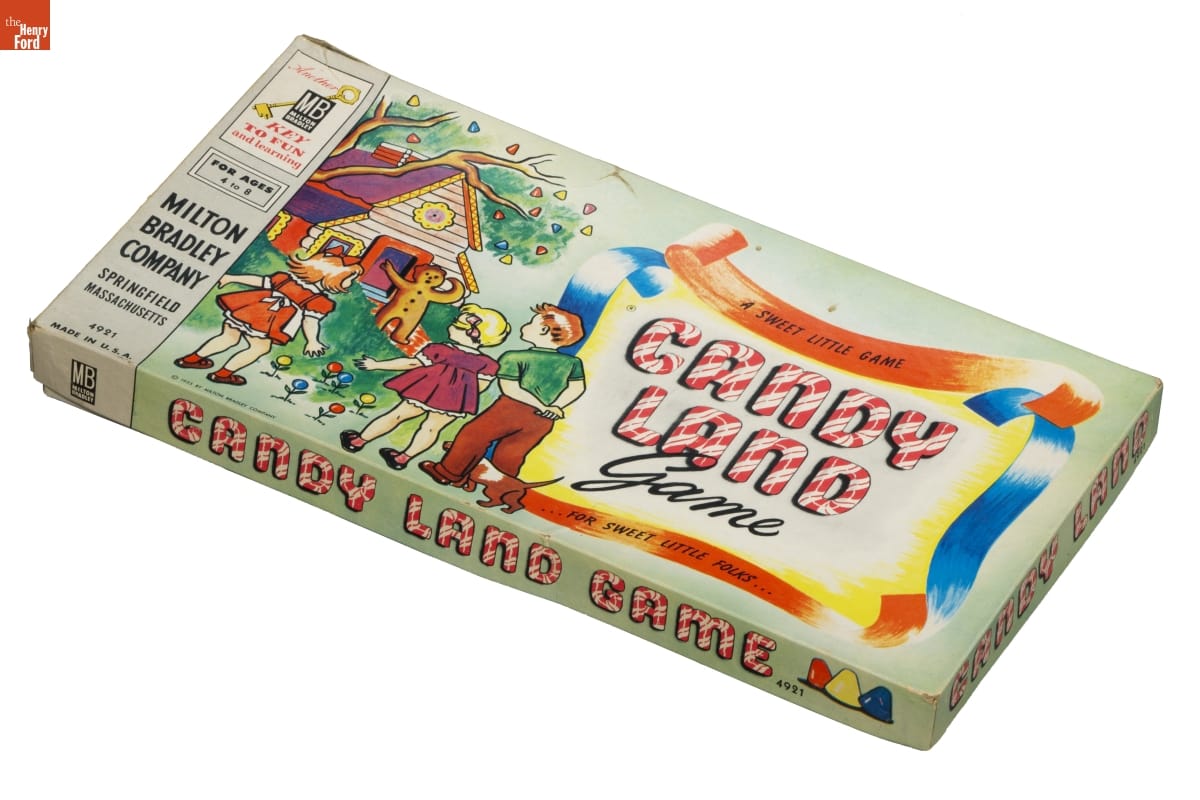
- Candy Land Board Game, circa 1955 - Eleanor Abbott, a schoolteacher recuperating from polio in a San Diego hospital, wanted to entertain children confined to the polio ward. In 1948, she developed Candy Land -- a colorful game that even kids too young to read or count could play. Milton Bradley published Candy Land in 1949, and it became one of the best-selling and most beloved board games of all time.
- 1955
- Collections - Artifact
Candy Land Board Game, circa 1955
Eleanor Abbott, a schoolteacher recuperating from polio in a San Diego hospital, wanted to entertain children confined to the polio ward. In 1948, she developed Candy Land -- a colorful game that even kids too young to read or count could play. Milton Bradley published Candy Land in 1949, and it became one of the best-selling and most beloved board games of all time.
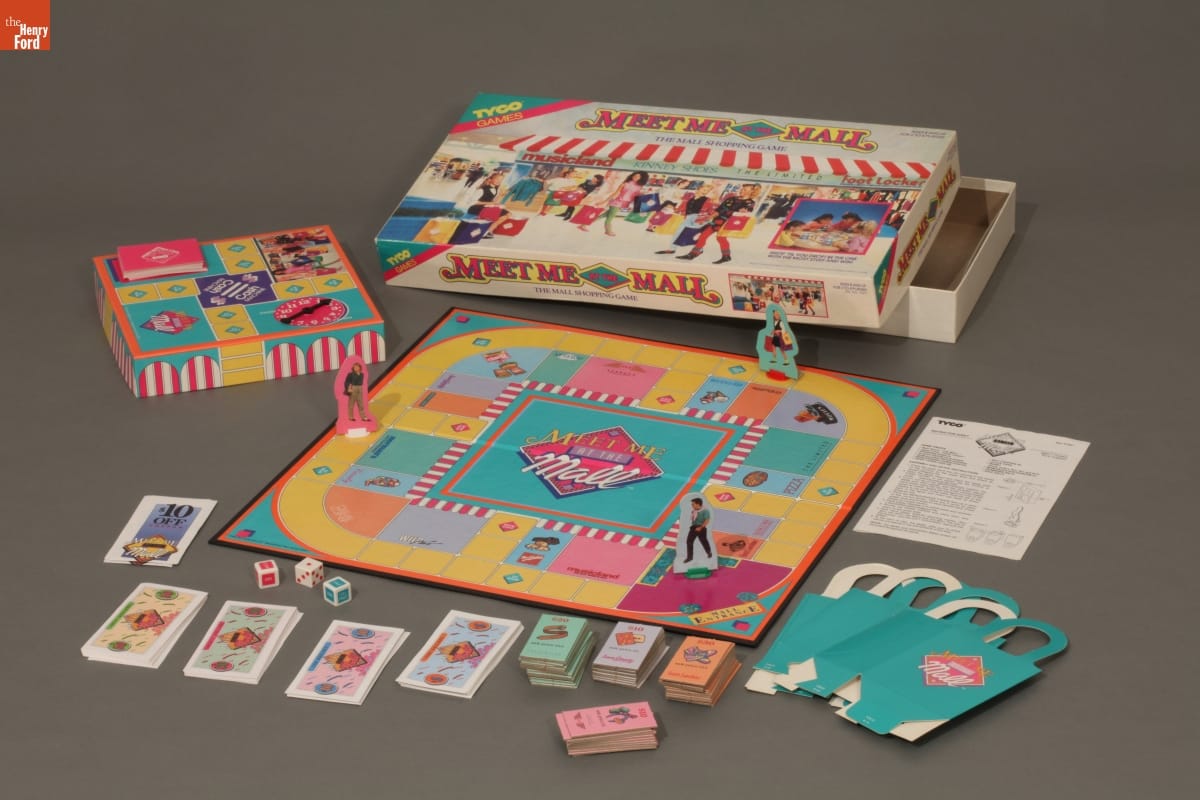
- Meet Me at the Mall Board Game, 1990 - By 1990, "power shopping" at the mall had become a major form of entertainment for many Americans. This game invited preteen girls to shop till they dropped. The player who bought the most stuff won; any cash left at game's end didn't count. Lucky players got more money by landing at the cash machine the same time as the mom or dad game pieces.
- 1990
- Collections - Artifact
Meet Me at the Mall Board Game, 1990
By 1990, "power shopping" at the mall had become a major form of entertainment for many Americans. This game invited preteen girls to shop till they dropped. The player who bought the most stuff won; any cash left at game's end didn't count. Lucky players got more money by landing at the cash machine the same time as the mom or dad game pieces.
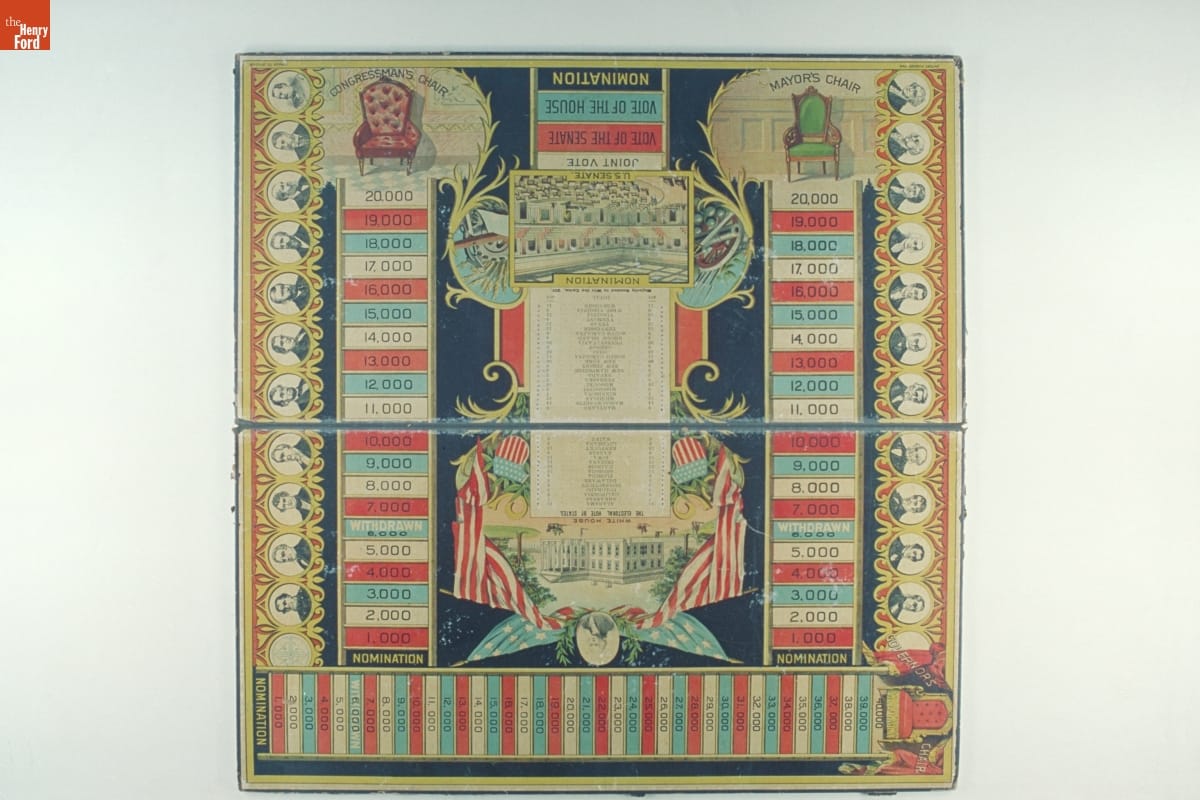
- The Game of Politics: Race for the Presidency Board Game, 1887-1890 - Two teams race for the presidency in this late-1880s board game published by the W. S. Reed Toy Company. The would-be politicians must first get elected to various offices before running for president. Vote cards help teams capture the nomination and later a state's electoral vote. The team receiving the majority of the Electoral College votes (just like today's elections) wins!
- 1887-1890
- Collections - Artifact
The Game of Politics: Race for the Presidency Board Game, 1887-1890
Two teams race for the presidency in this late-1880s board game published by the W. S. Reed Toy Company. The would-be politicians must first get elected to various offices before running for president. Vote cards help teams capture the nomination and later a state's electoral vote. The team receiving the majority of the Electoral College votes (just like today's elections) wins!