
Search
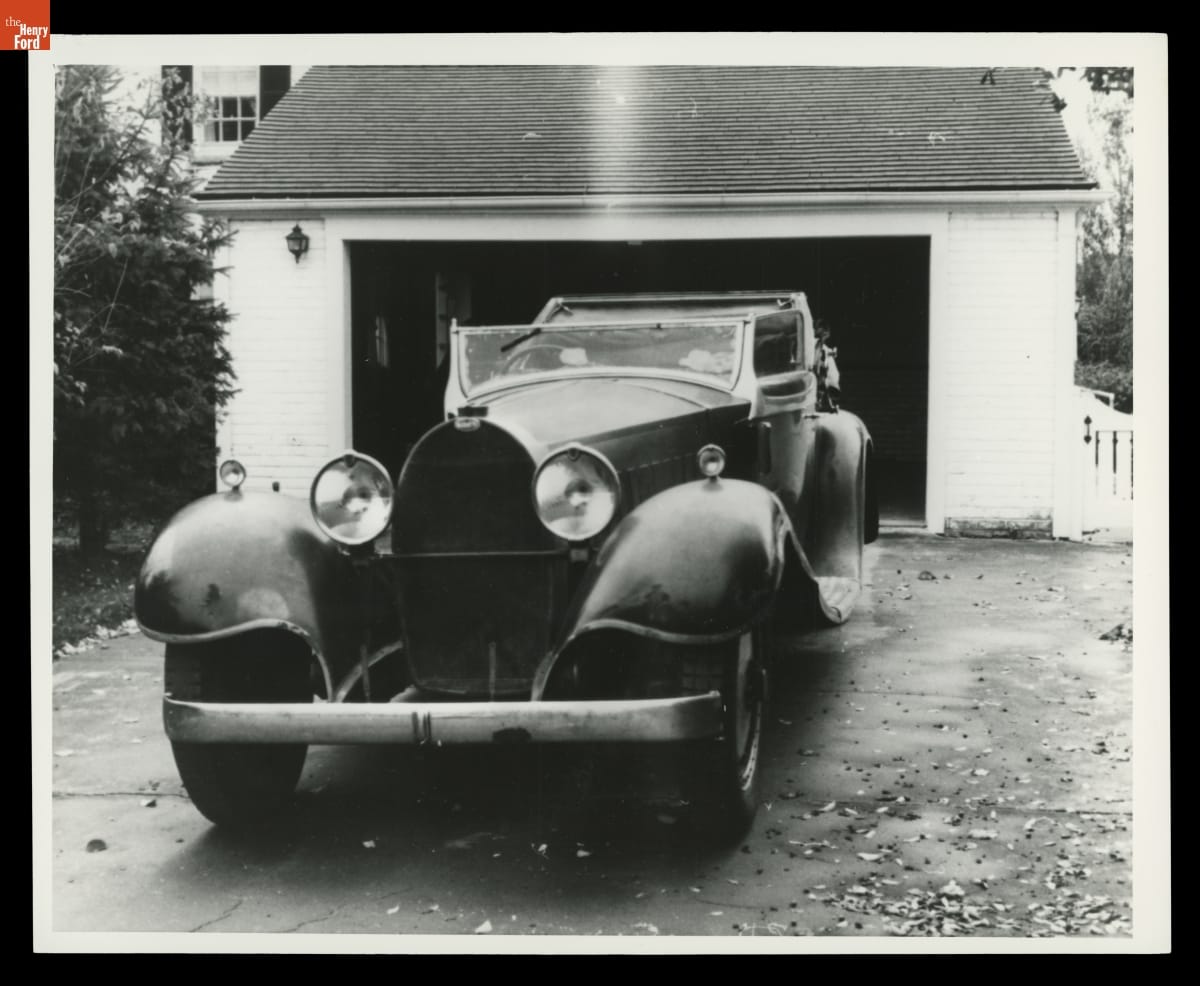
- 1931 Bugatti Royale, 1943-1945 - In 1943, Charles Chayne acquired the 1931 Bugatti Royale from a New York-area salvage yard, where it had been taken after winter ice cracked the engine block. Chayne, chief engineer at Buick, repaired the engine and modified the car to his own specifications. He and his wife Esther donated the Royale to The Henry Ford in 1958.
- 1943-1945
- Collections - Artifact
1931 Bugatti Royale, 1943-1945
In 1943, Charles Chayne acquired the 1931 Bugatti Royale from a New York-area salvage yard, where it had been taken after winter ice cracked the engine block. Chayne, chief engineer at Buick, repaired the engine and modified the car to his own specifications. He and his wife Esther donated the Royale to The Henry Ford in 1958.
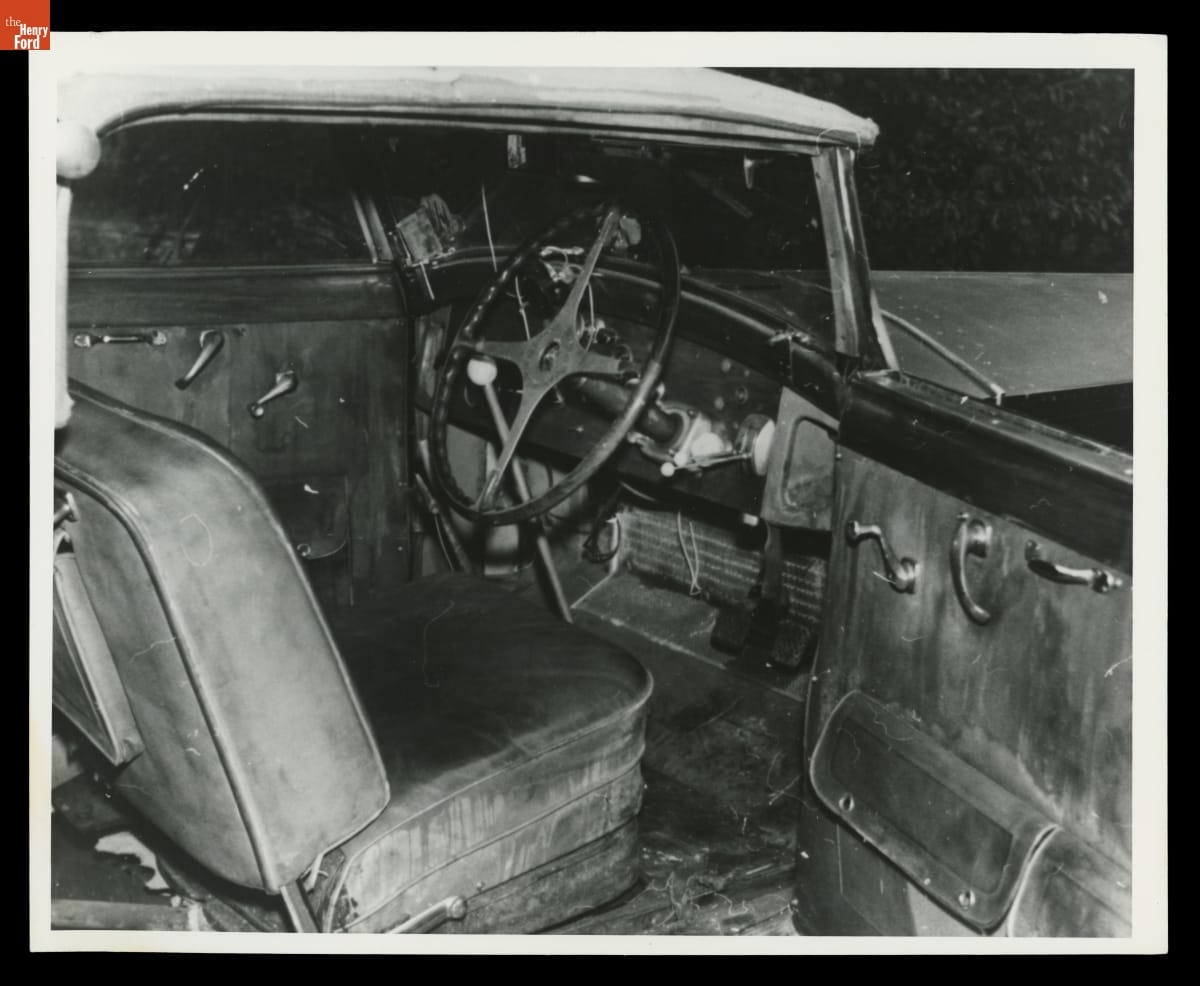
- 1931 Bugatti Royale, 1943-1945 - In 1943, Charles Chayne acquired the 1931 Bugatti Royale from a New York-area salvage yard, where it had been taken after winter ice cracked the engine block. Chayne, chief engineer at Buick, repaired the engine and modified the car to his own specifications. He and his wife Esther donated the Royale to The Henry Ford in 1958.
- 1943-1945
- Collections - Artifact
1931 Bugatti Royale, 1943-1945
In 1943, Charles Chayne acquired the 1931 Bugatti Royale from a New York-area salvage yard, where it had been taken after winter ice cracked the engine block. Chayne, chief engineer at Buick, repaired the engine and modified the car to his own specifications. He and his wife Esther donated the Royale to The Henry Ford in 1958.
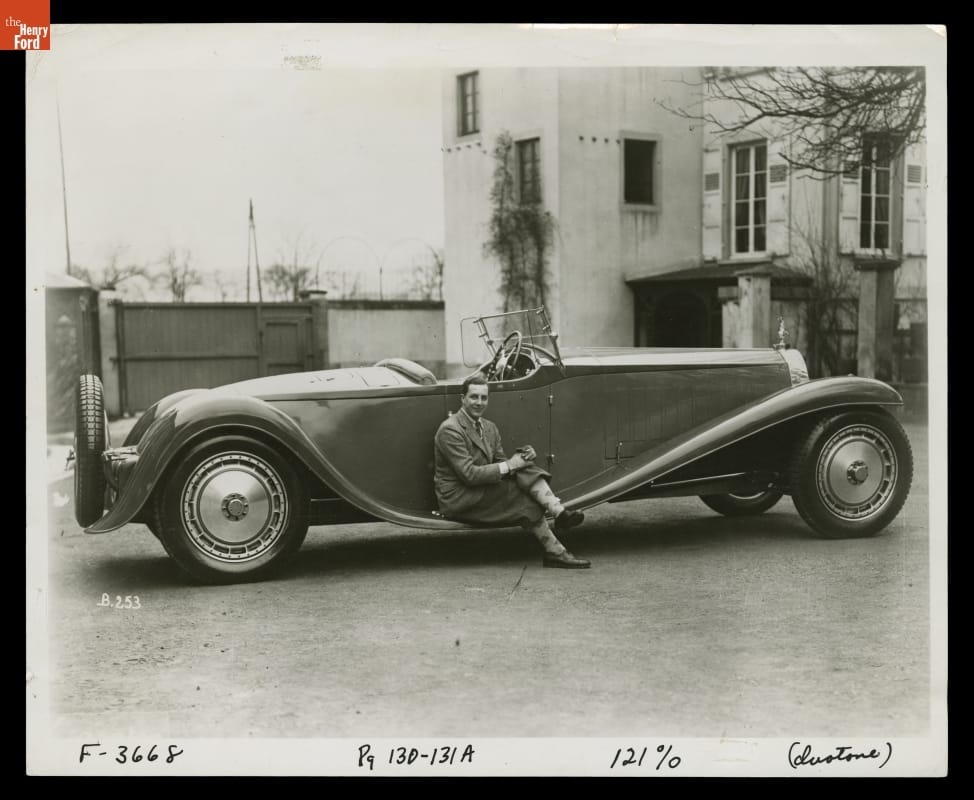
- Jean Bugatti and his Bugatti Royale Roadster, 1930-1939 - Jean Bugatti, son of automaker Ettore Bugatti, posed for this photo with a Bugatti Type 41 Royale he designed for French clothing manufacturer Armand Esders. The car originally featured an open body with sweeping fenders and no headlights. Later, a subsequent owner rebodied the roadster as a partially closed coupe de ville.
- 1930-1939
- Collections - Artifact
Jean Bugatti and his Bugatti Royale Roadster, 1930-1939
Jean Bugatti, son of automaker Ettore Bugatti, posed for this photo with a Bugatti Type 41 Royale he designed for French clothing manufacturer Armand Esders. The car originally featured an open body with sweeping fenders and no headlights. Later, a subsequent owner rebodied the roadster as a partially closed coupe de ville.
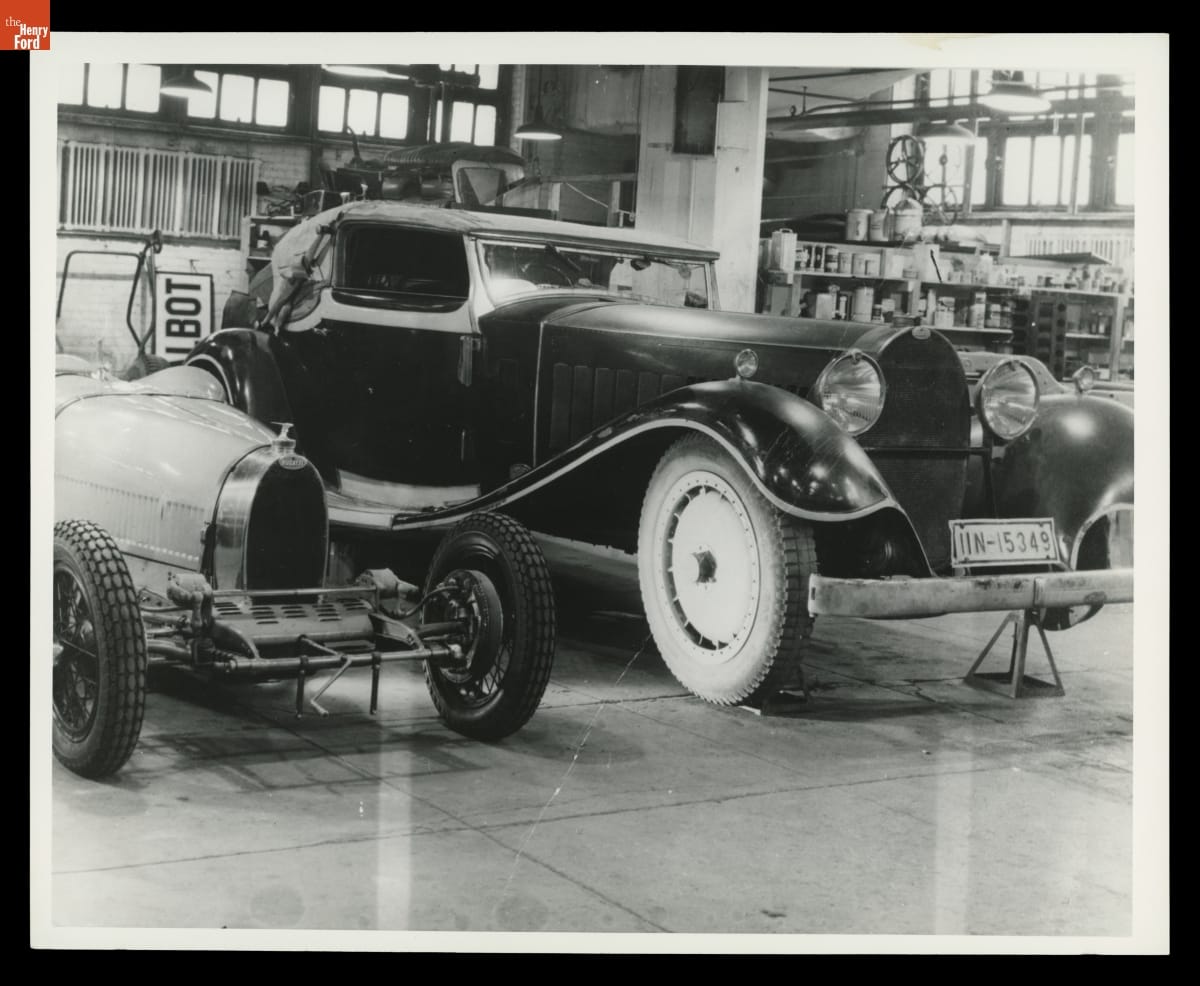
- 1931 Bugatti Royale, circa 1943 - In 1943, Charles Chayne acquired the 1931 Bugatti Royale from a New York-area salvage yard, where it had been taken after winter ice cracked the engine block. Chayne, chief engineer at Buick, repaired the engine and modified the car to his own specifications. He and his wife Esther donated the Royale to The Henry Ford in 1958.
- circa 1943
- Collections - Artifact
1931 Bugatti Royale, circa 1943
In 1943, Charles Chayne acquired the 1931 Bugatti Royale from a New York-area salvage yard, where it had been taken after winter ice cracked the engine block. Chayne, chief engineer at Buick, repaired the engine and modified the car to his own specifications. He and his wife Esther donated the Royale to The Henry Ford in 1958.
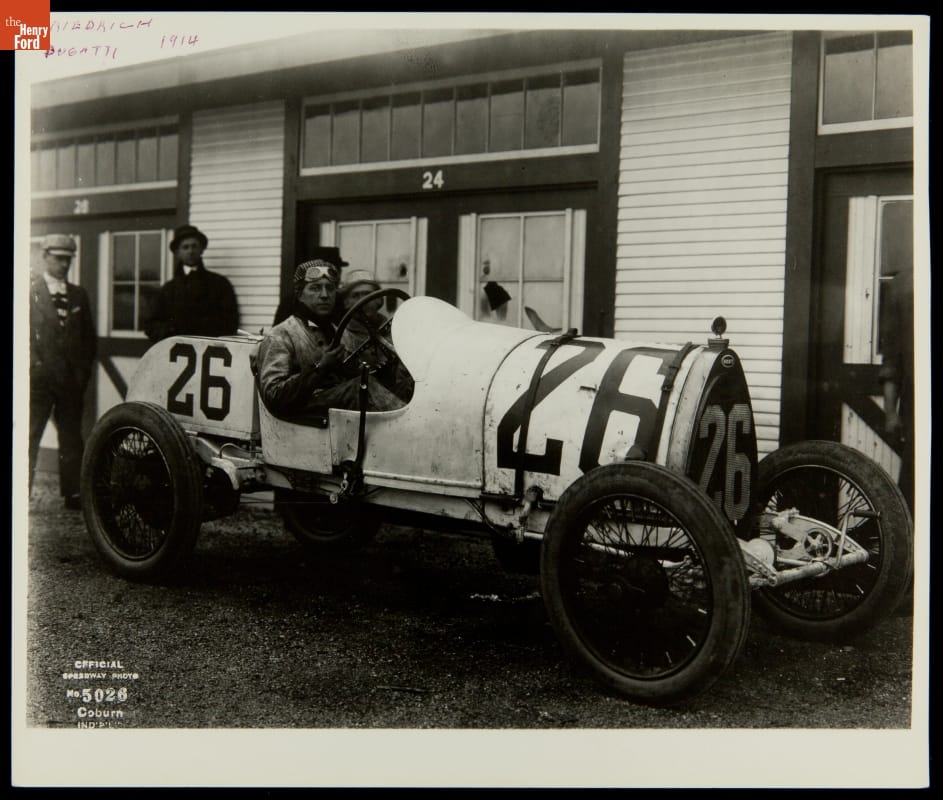
- Ernst Friedrich, #26 Bugatti, Indianapolis Speedway, 1914 - Bugatti automobiles were popular in motor racing in the early decades of the 20th century. French racing driver Ernst Friedrich is pictured here in a Bugatti car at the Indianapolis Motor Speedway in 1914.
- 1914
- Collections - Artifact
Ernst Friedrich, #26 Bugatti, Indianapolis Speedway, 1914
Bugatti automobiles were popular in motor racing in the early decades of the 20th century. French racing driver Ernst Friedrich is pictured here in a Bugatti car at the Indianapolis Motor Speedway in 1914.
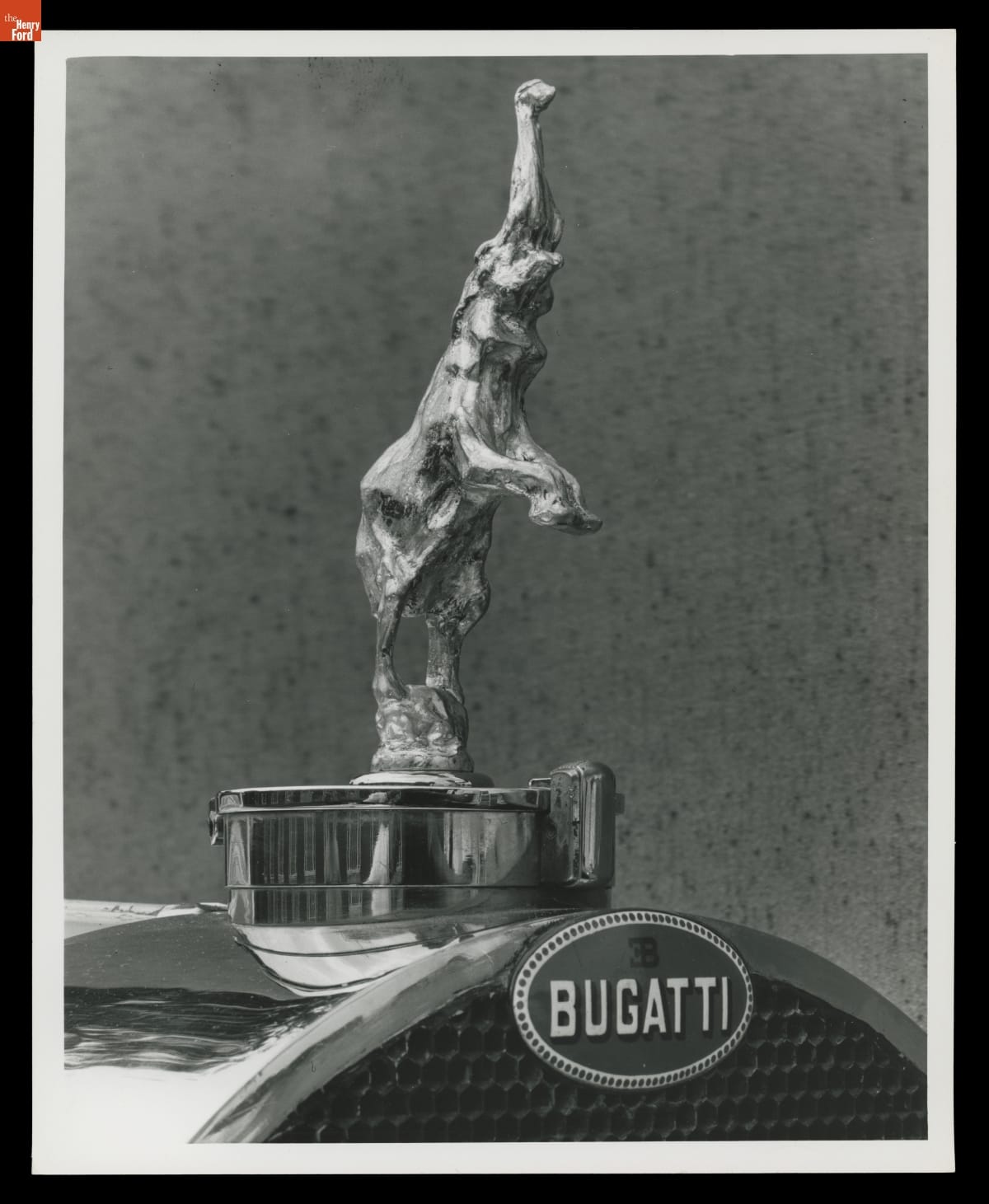
- 1931 Bugatti Royale Elephant Radiator Ornament, 1968 - The Bugatti Royale's radiator is capped with a dancing elephant -- a suitably sized animal mascot for a car of such grand proportions. The ornament was cast from a work by sculptor Rembrandt Bugatti, younger brother of Royale builder Ettore Bugatti. Rembrandt Bugatti died in 1916 and the Royale's mascot was a tribute to his memory.
- 1968
- Collections - Artifact
1931 Bugatti Royale Elephant Radiator Ornament, 1968
The Bugatti Royale's radiator is capped with a dancing elephant -- a suitably sized animal mascot for a car of such grand proportions. The ornament was cast from a work by sculptor Rembrandt Bugatti, younger brother of Royale builder Ettore Bugatti. Rembrandt Bugatti died in 1916 and the Royale's mascot was a tribute to his memory.
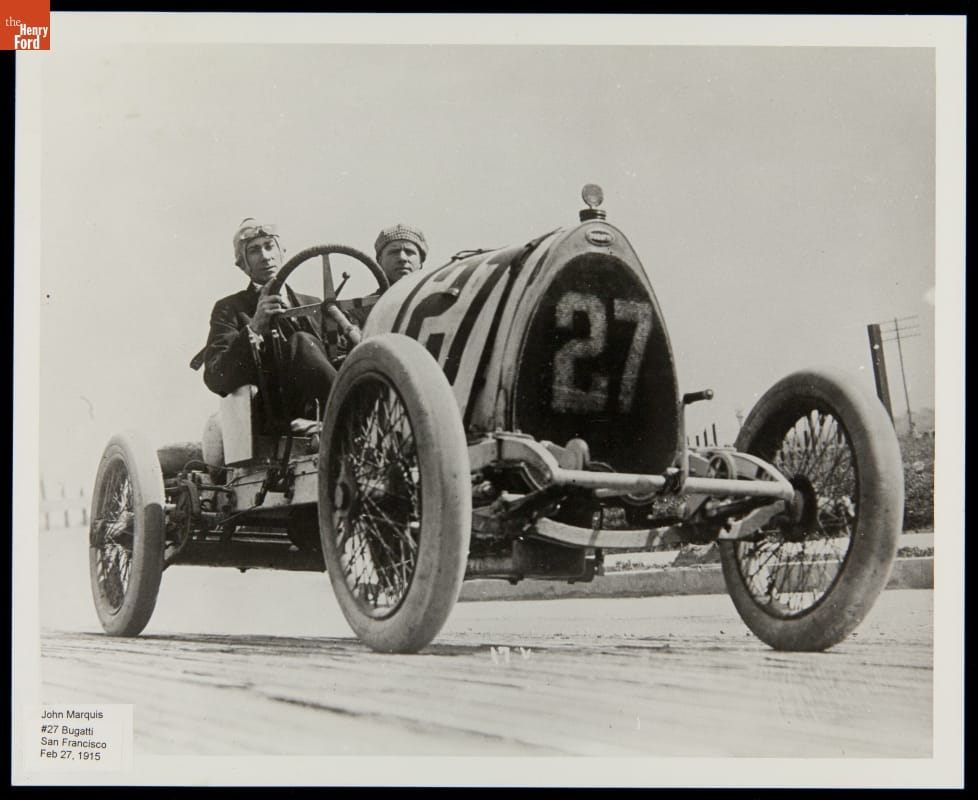
- John Marquis, #27 Bugatti, San Francisco, California, 1915 - Bugatti automobiles were popular in motor racing in the early decades of the 20th century. American driver John Marquis competed in a Bugatti at the 1915 Vanderbilt Cup race in San Francisco. Marquis's car broke a spring after 16 laps. He finished the race in 26th place.
- 1915
- Collections - Artifact
John Marquis, #27 Bugatti, San Francisco, California, 1915
Bugatti automobiles were popular in motor racing in the early decades of the 20th century. American driver John Marquis competed in a Bugatti at the 1915 Vanderbilt Cup race in San Francisco. Marquis's car broke a spring after 16 laps. He finished the race in 26th place.
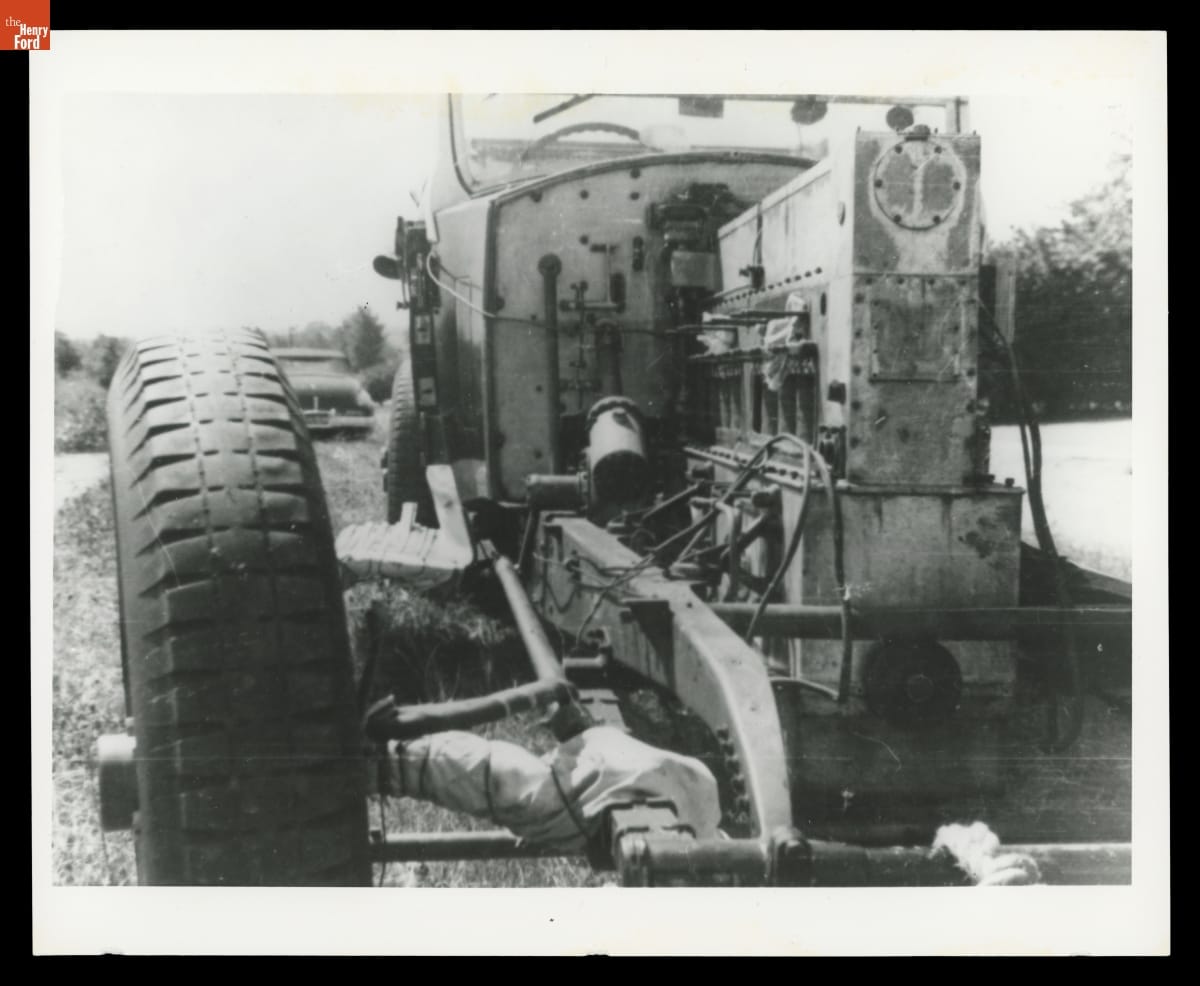
- 1931 Bugatti Royale, 1943-1945 - In 1943, Charles Chayne acquired the 1931 Bugatti Royale from a New York-area salvage yard, where it had been taken after winter ice cracked the engine block. Chayne, chief engineer at Buick, repaired the engine and modified the car to his own specifications. He and his wife Esther donated the Royale to The Henry Ford in 1958.
- 1943-1945
- Collections - Artifact
1931 Bugatti Royale, 1943-1945
In 1943, Charles Chayne acquired the 1931 Bugatti Royale from a New York-area salvage yard, where it had been taken after winter ice cracked the engine block. Chayne, chief engineer at Buick, repaired the engine and modified the car to his own specifications. He and his wife Esther donated the Royale to The Henry Ford in 1958.
- 1931 Bugatti Royale outside Henry Ford Museum, 1968 - The Henry Ford acquired its 1931 Bugatti Royale in 1958. The French-built luxury car remains one of the most popular vehicles in the museum's collection. This photo shows the Bugatti's elegant instrument panel. Donors Charles and Esther Chayne redid the car's interior to suit their tastes, including replacing the original wood steering wheel with the green Tenite model seen here.
- 1968
- Collections - Artifact
1931 Bugatti Royale outside Henry Ford Museum, 1968
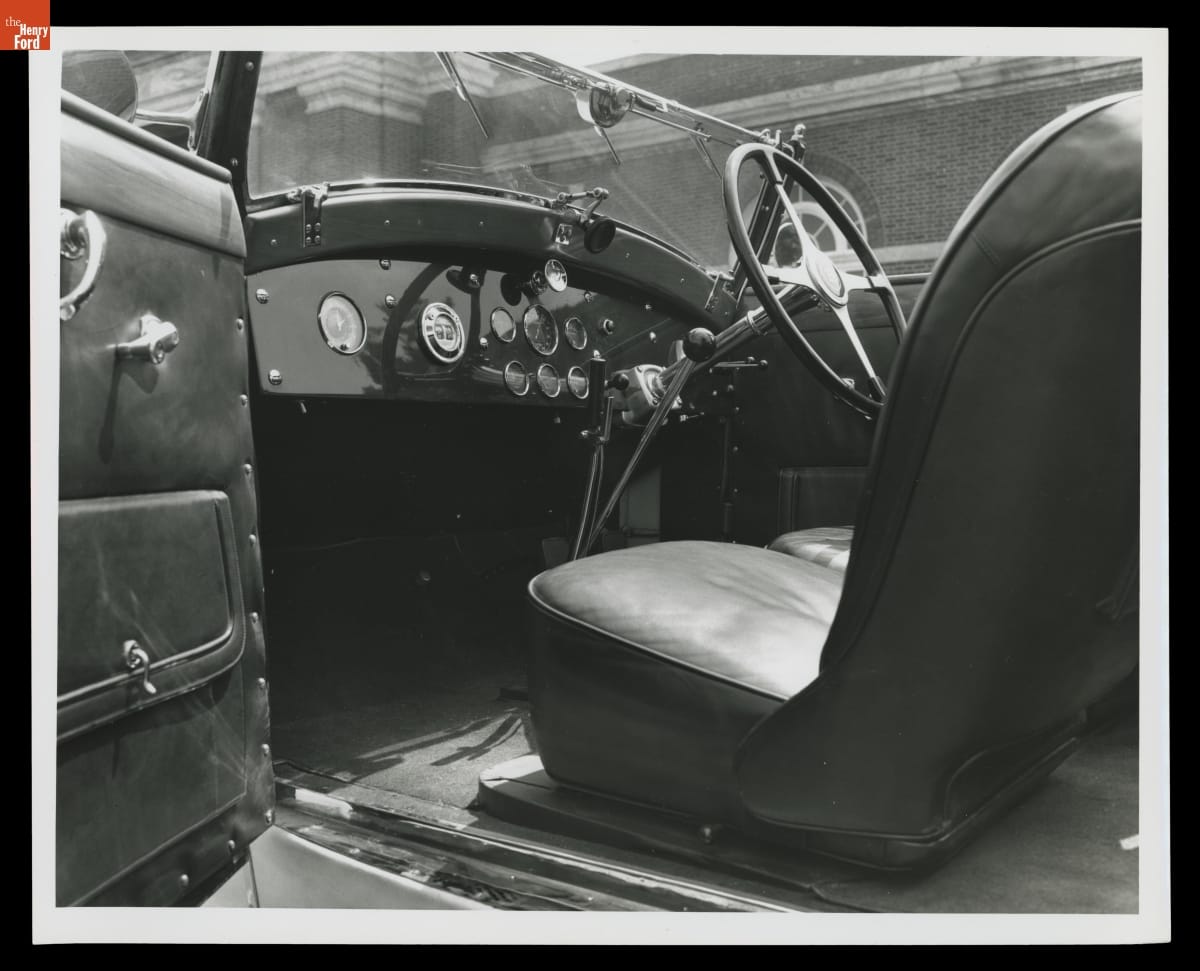
The Henry Ford acquired its 1931 Bugatti Royale in 1958. The French-built luxury car remains one of the most popular vehicles in the museum's collection. This photo shows the Bugatti's elegant instrument panel. Donors Charles and Esther Chayne redid the car's interior to suit their tastes, including replacing the original wood steering wheel with the green Tenite model seen here.
- 1931 Bugatti Royale outside Henry Ford Museum, 1968 - The Henry Ford acquired its 1931 Bugatti Royale in 1958. The French-built luxury car remains one of the most popular vehicles in the museum's collection. This photo shows the Bugatti's elegant instrument panel. Donors Charles and Esther Chayne redid the car's interior to suit their tastes, including replacing the original wood steering wheel with the green Tenite model seen here.
- 1968
- Collections - Artifact
1931 Bugatti Royale outside Henry Ford Museum, 1968
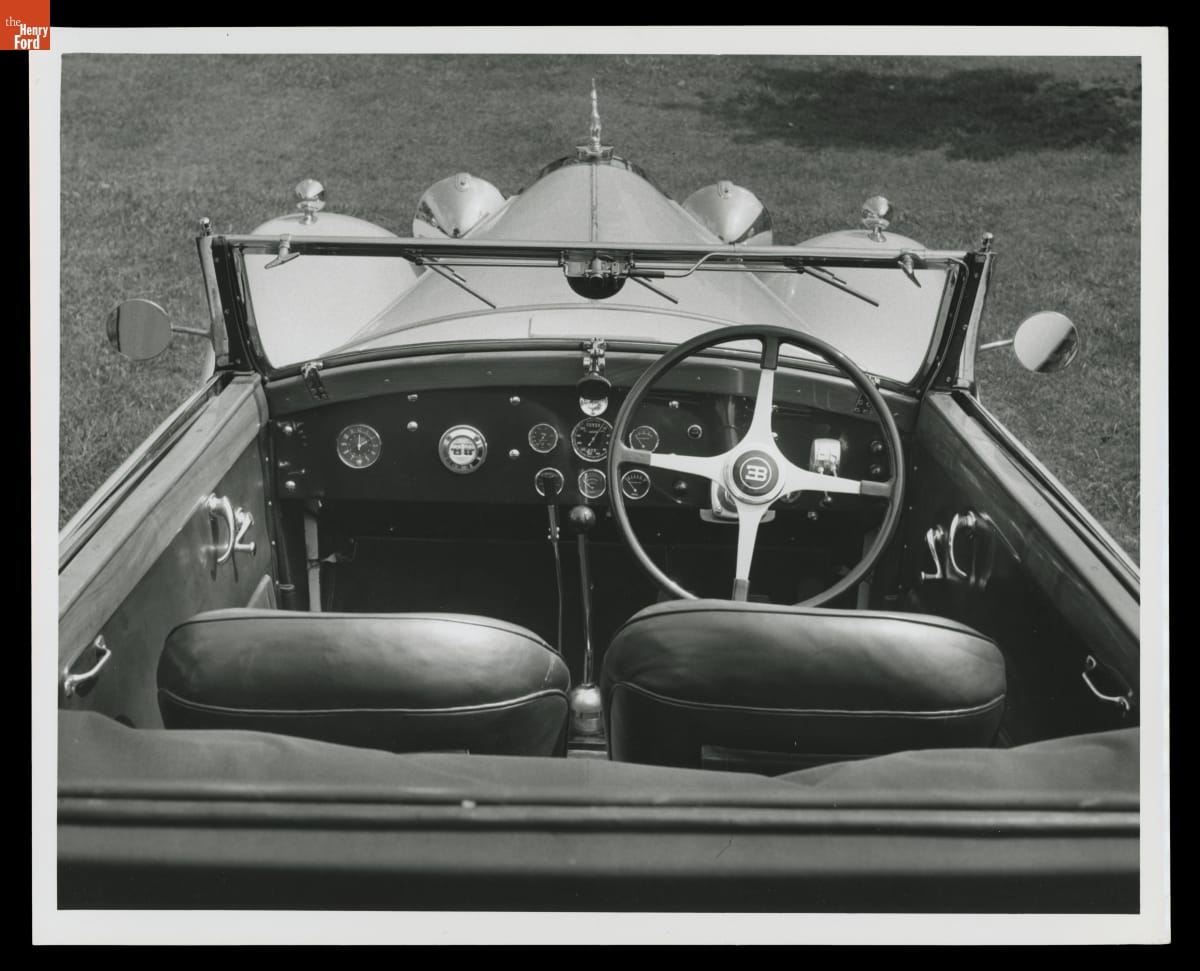
The Henry Ford acquired its 1931 Bugatti Royale in 1958. The French-built luxury car remains one of the most popular vehicles in the museum's collection. This photo shows the Bugatti's elegant instrument panel. Donors Charles and Esther Chayne redid the car's interior to suit their tastes, including replacing the original wood steering wheel with the green Tenite model seen here.