
Search
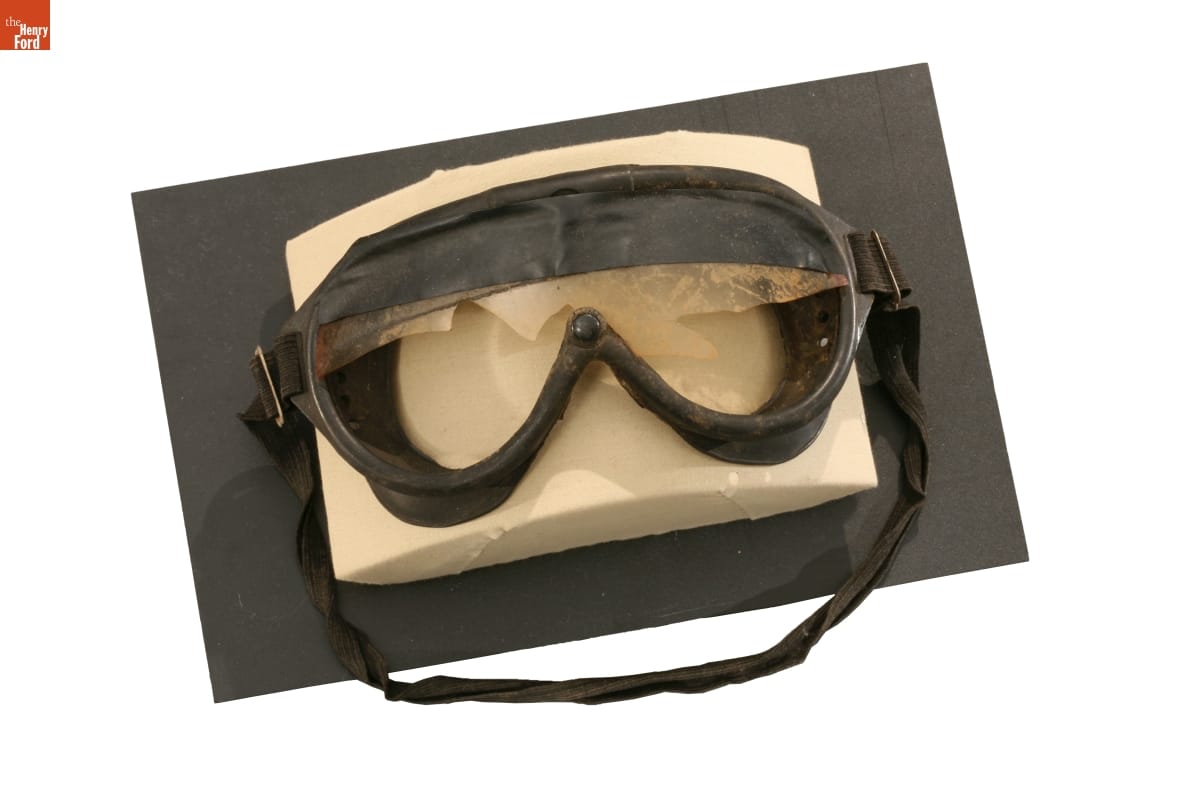
- Racing Goggles Worn by Stirling Moss during His Career-Ending Crash, 1962 - Sir Stirling Moss ranked as one of Great Britain's finest racing drivers, having earned 212 wins in 529 starts. He finished in the top three in Formula One standings each year from 1955 to 1961. Moss retired from competitive driving after surviving an accident at Goodwood in 1962. He later served as a color commentator for televised Formula One and NASCAR races.
- April 23, 1962
- Collections - Artifact
Racing Goggles Worn by Stirling Moss during His Career-Ending Crash, 1962
Sir Stirling Moss ranked as one of Great Britain's finest racing drivers, having earned 212 wins in 529 starts. He finished in the top three in Formula One standings each year from 1955 to 1961. Moss retired from competitive driving after surviving an accident at Goodwood in 1962. He later served as a color commentator for televised Formula One and NASCAR races.
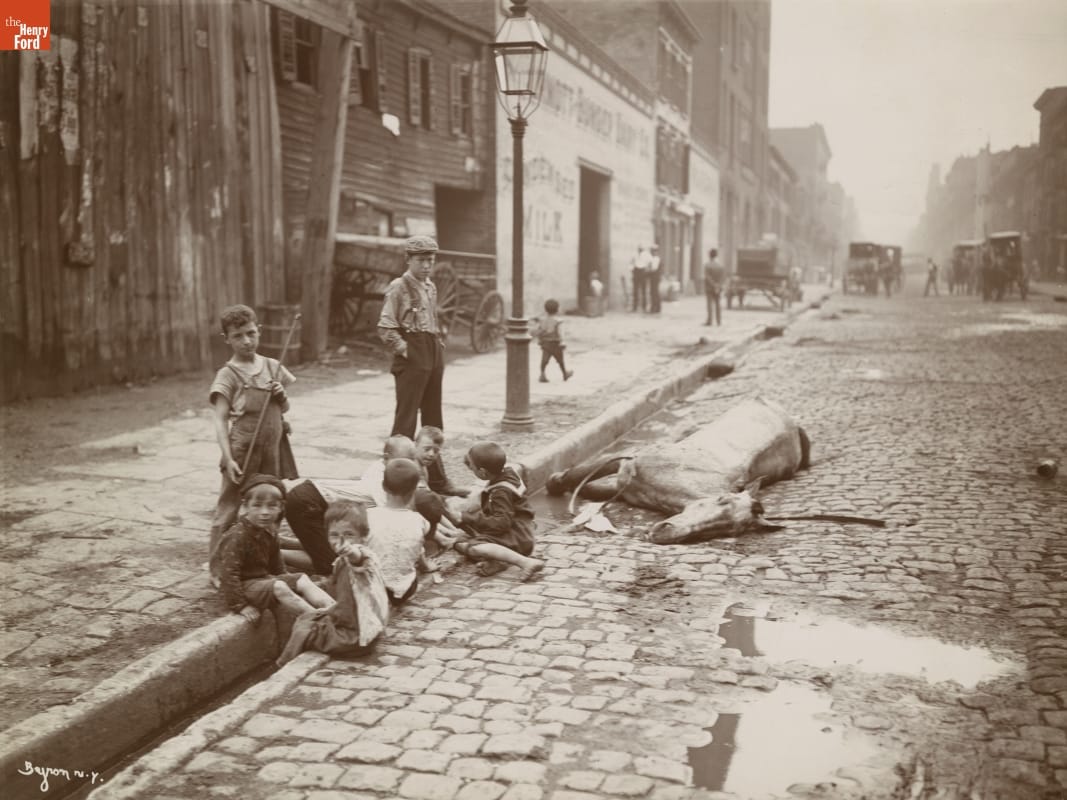
- "The Close of a Career in New York," 1900-1906 - Horse power created its own kind of pollution. Manure -- and dead horses, like this one in New York City -- were not uncommon on urban streets.
- 1900-1906
- Collections - Artifact
"The Close of a Career in New York," 1900-1906
Horse power created its own kind of pollution. Manure -- and dead horses, like this one in New York City -- were not uncommon on urban streets.
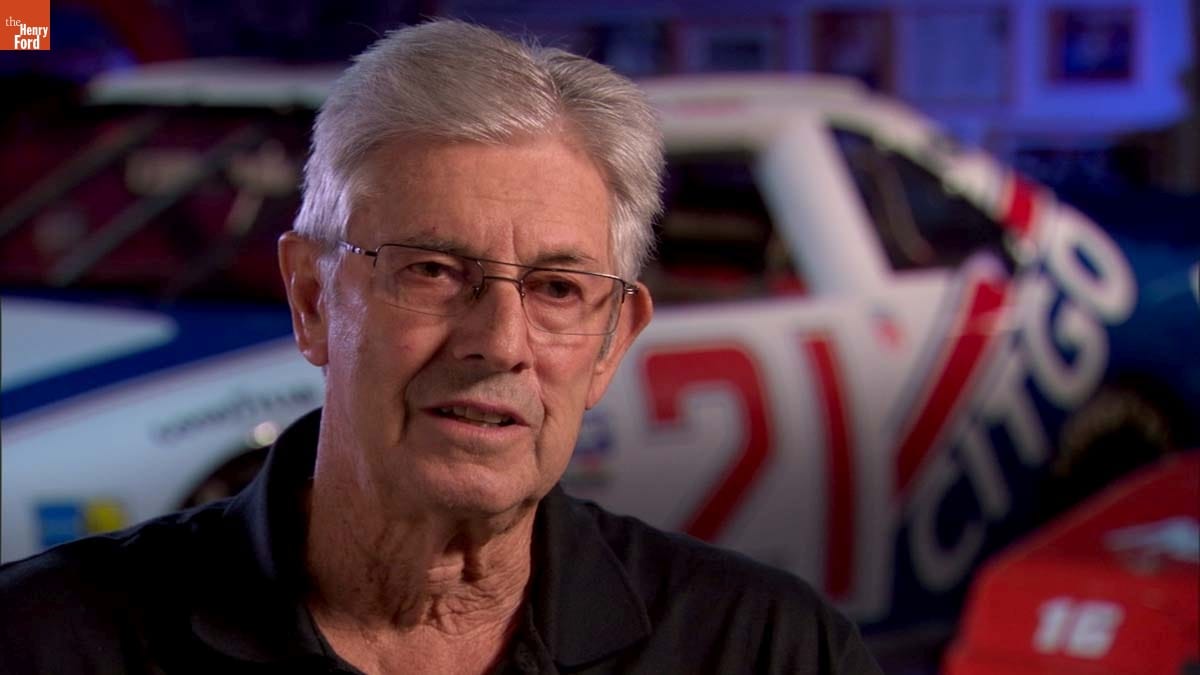
- "Career Highlights," Clip from Interview with Leonard Wood, October 24, 2010 - Wood Brothers Racing is the oldest active team in NASCAR. While other early teams treated pit stops like leisurely breaks for the driver, the Woods serviced their cars in a fast, choreographed procedure that helped win races and soon became standard. The Henry Ford interviewed members of the Wood family in 2010 at the team's museum in Stuart, Virginia.
- October 24, 2010
- Collections - Artifact
"Career Highlights," Clip from Interview with Leonard Wood, October 24, 2010
Wood Brothers Racing is the oldest active team in NASCAR. While other early teams treated pit stops like leisurely breaks for the driver, the Woods serviced their cars in a fast, choreographed procedure that helped win races and soon became standard. The Henry Ford interviewed members of the Wood family in 2010 at the team's museum in Stuart, Virginia.
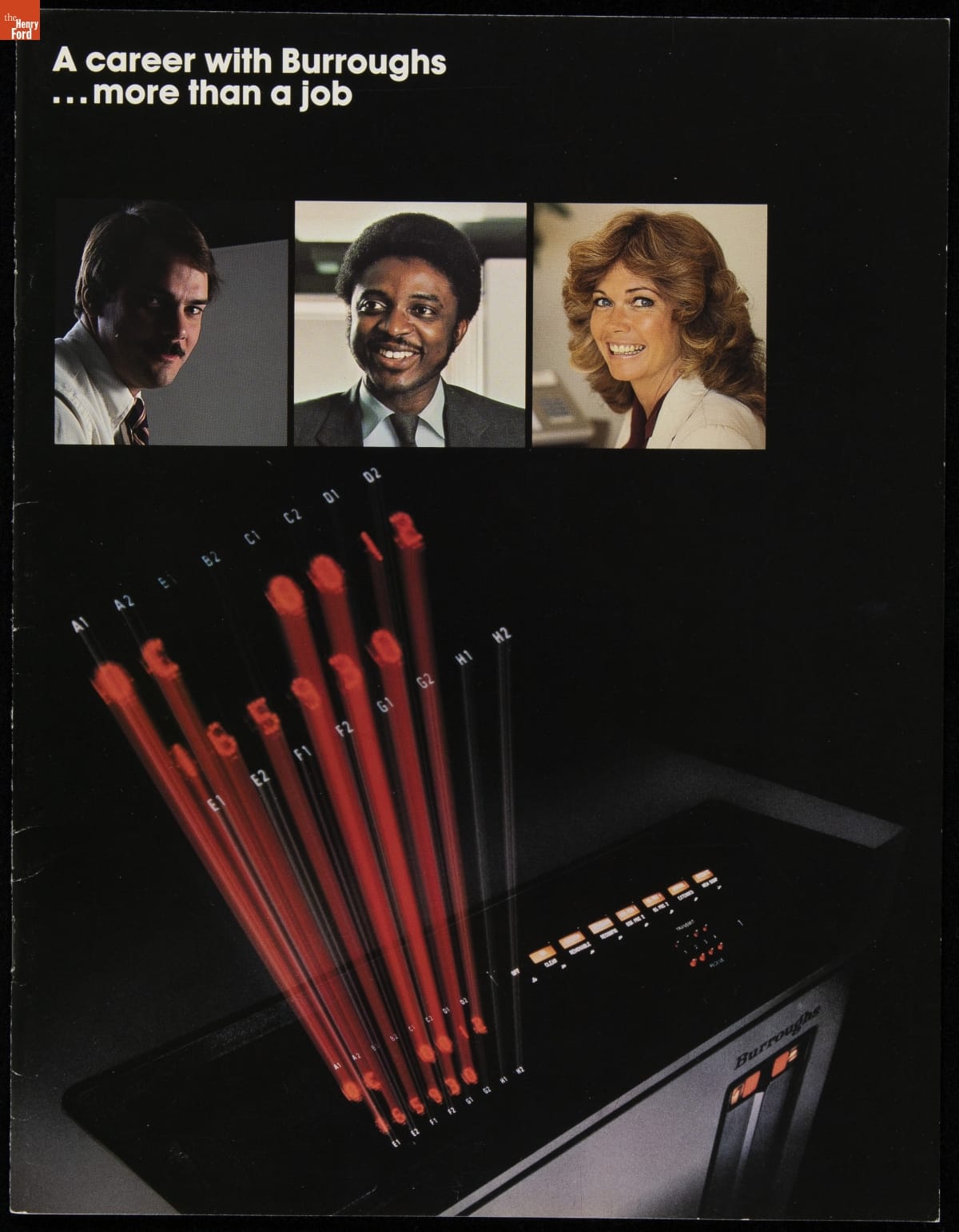
- Publication, "A Career with Burroughs … More Than a Job," circa 1979 - William Seward Burroughs and three other co-founders established the American Arithmometer Company in 1886 to produce simple addition and subtraction machines. Over the years, the company--later known as the Burroughs Corporation--innovated and expanded. Mergers with companies such as Moon-Hopkins and Sperry in the 20th century helped Burroughs become a leader in the calculating--and later computing--industry.
- circa 1979
- Collections - Artifact
Publication, "A Career with Burroughs … More Than a Job," circa 1979
William Seward Burroughs and three other co-founders established the American Arithmometer Company in 1886 to produce simple addition and subtraction machines. Over the years, the company--later known as the Burroughs Corporation--innovated and expanded. Mergers with companies such as Moon-Hopkins and Sperry in the 20th century helped Burroughs become a leader in the calculating--and later computing--industry.
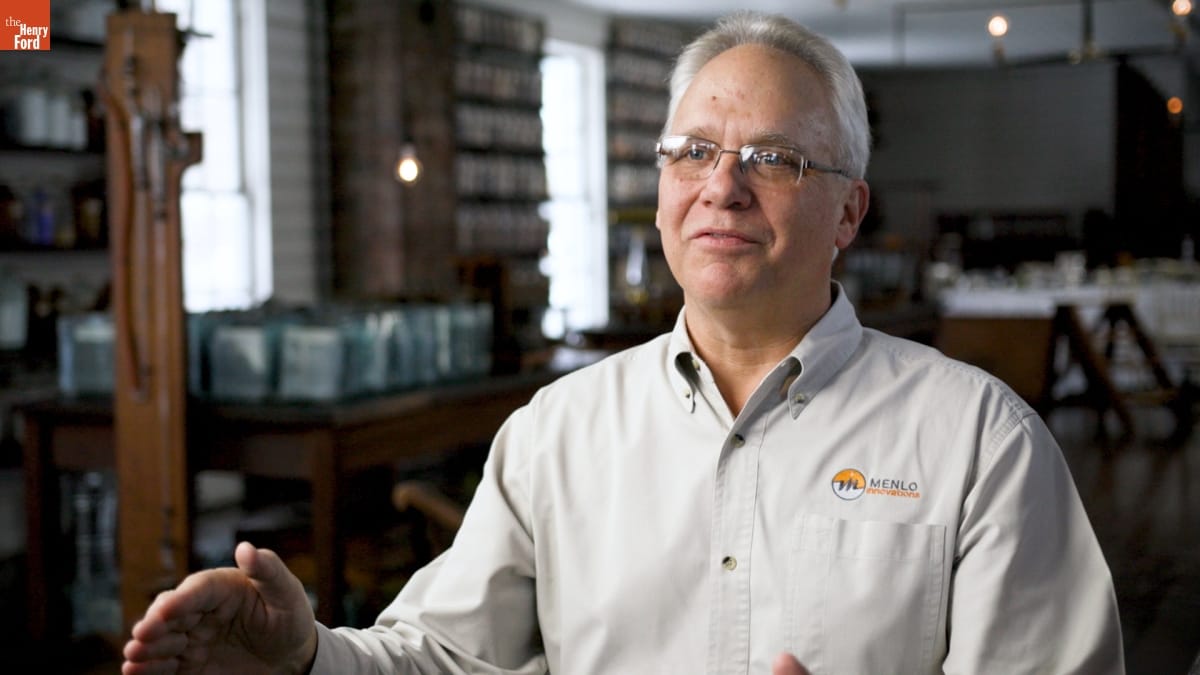
- "High School & First Career" Clip from Interview with Richard Sheridan, November 13, 2019 - Richard Sheridan, CEO and co-founder of Menlo Innovations, was the Fall 2019 Entrepreneur-in-Residence at The Henry Ford, funded by the William Davidson Foundation Initiative for Entrepreneurship. During his interview, Sheridan describes how his career experiences influenced the founding of his software company, where he embraces a unique approach to the office environment, emphasizing teamwork and encouraging joy in the workplace.
- November 13, 2019
- Collections - Artifact
"High School & First Career" Clip from Interview with Richard Sheridan, November 13, 2019
Richard Sheridan, CEO and co-founder of Menlo Innovations, was the Fall 2019 Entrepreneur-in-Residence at The Henry Ford, funded by the William Davidson Foundation Initiative for Entrepreneurship. During his interview, Sheridan describes how his career experiences influenced the founding of his software company, where he embraces a unique approach to the office environment, emphasizing teamwork and encouraging joy in the workplace.
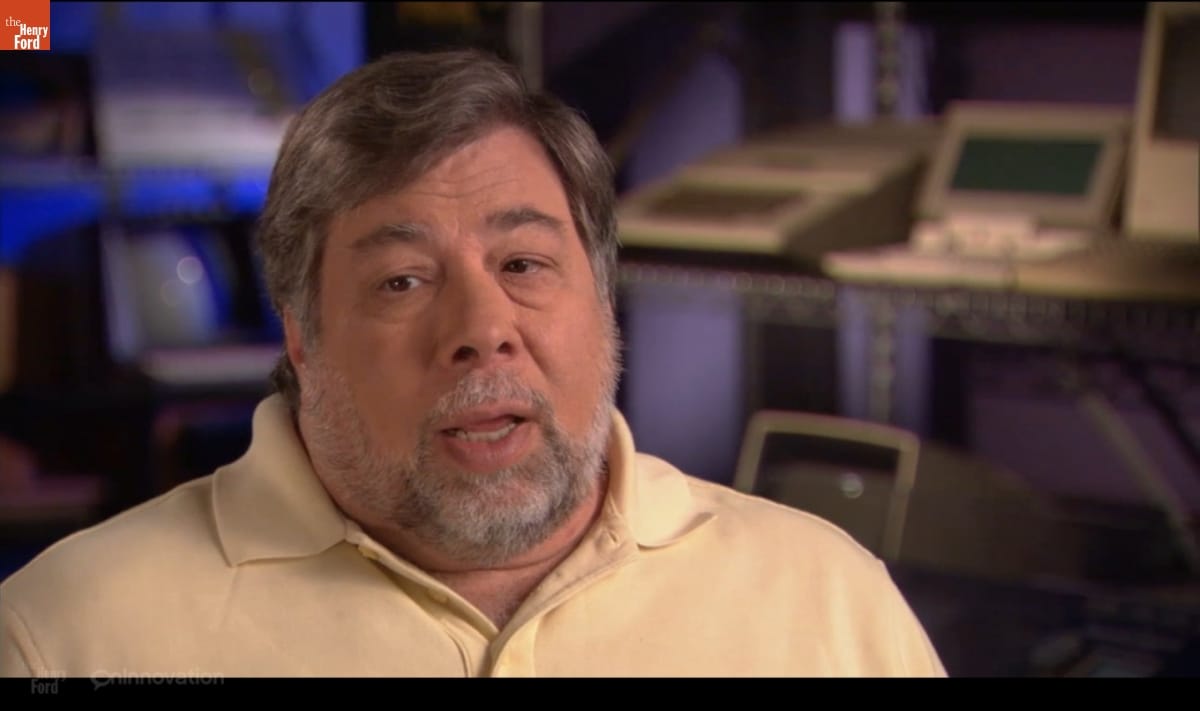
- "What Was Your Career Path?" Clip from Interview with Steve Wozniak, August 18, 2008 - American computer engineer Stephen Wozniak co-founded Apple Computer (now Apple Inc.) with Steve Jobs in 1976. Wozniak's inventions and machines--he created the Apple 1 and Apple II computers--contributed greatly to the personal computer revolution of the 1970s and 80s. In 2008, staff from The Henry Ford interviewed Wozniak at the Computer History Museum in California as part of the Collecting Innovation Today Oral History Project.
- August 18, 2008
- Collections - Artifact
"What Was Your Career Path?" Clip from Interview with Steve Wozniak, August 18, 2008
American computer engineer Stephen Wozniak co-founded Apple Computer (now Apple Inc.) with Steve Jobs in 1976. Wozniak's inventions and machines--he created the Apple 1 and Apple II computers--contributed greatly to the personal computer revolution of the 1970s and 80s. In 2008, staff from The Henry Ford interviewed Wozniak at the Computer History Museum in California as part of the Collecting Innovation Today Oral History Project.
- Burroughs Publication, "Printed Circuit Facility," Carlsbad, California, 1964 - William Seward Burroughs and three other co-founders established the American Arithmometer Company in 1886 to produce simple addition and subtraction machines. Over the years, the company--later known as the Burroughs Corporation--innovated and expanded. Mergers with companies such as Moon-Hopkins and Sperry in the 20th century helped Burroughs become a leader in the calculating--and later computing--industry.
- 1964
- Collections - Artifact
Burroughs Publication, "Printed Circuit Facility," Carlsbad, California, 1964
William Seward Burroughs and three other co-founders established the American Arithmometer Company in 1886 to produce simple addition and subtraction machines. Over the years, the company--later known as the Burroughs Corporation--innovated and expanded. Mergers with companies such as Moon-Hopkins and Sperry in the 20th century helped Burroughs become a leader in the calculating--and later computing--industry.
- Education and Careers of the Jackson Home - The residents of the Jackson home exemplify the transformative power of education. More than a path to professional success and stability, education was a commitment to teaching, mentoring, and inspiring others. Through their training and expertise, Dr. Sullivan and Richie Jean Jackson served their community by providing essential dental care and nurturing future generations.

- July 14, 2026
- Collections - Set
Education and Careers of the Jackson Home
The residents of the Jackson home exemplify the transformative power of education. More than a path to professional success and stability, education was a commitment to teaching, mentoring, and inspiring others. Through their training and expertise, Dr. Sullivan and Richie Jean Jackson served their community by providing essential dental care and nurturing future generations.
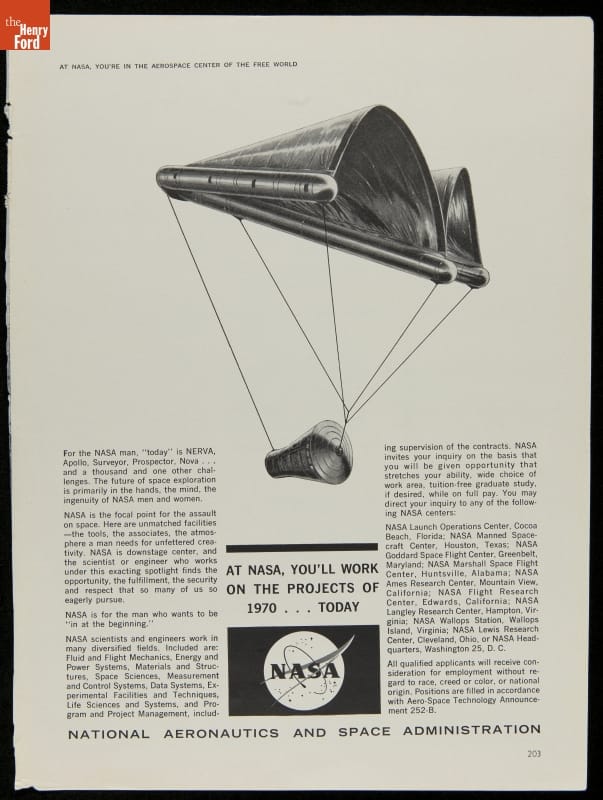
- Recruiting Advertisement for NASA, "You'll Work on the Projects of 1970, Today," June 1962 - President John F. Kennedy's vision to explore the "new frontier" of space ignited the public's imagination. It was also an overt Cold War strategy against the Soviet Union which launched the first man in space April 12, 1961. NASA published this ad series in 1962 to convince aerospace engineers and scientists to join them for the U.S. effort to conquer space.
- June 01, 1962
- Collections - Artifact
Recruiting Advertisement for NASA, "You'll Work on the Projects of 1970, Today," June 1962
President John F. Kennedy's vision to explore the "new frontier" of space ignited the public's imagination. It was also an overt Cold War strategy against the Soviet Union which launched the first man in space April 12, 1961. NASA published this ad series in 1962 to convince aerospace engineers and scientists to join them for the U.S. effort to conquer space.
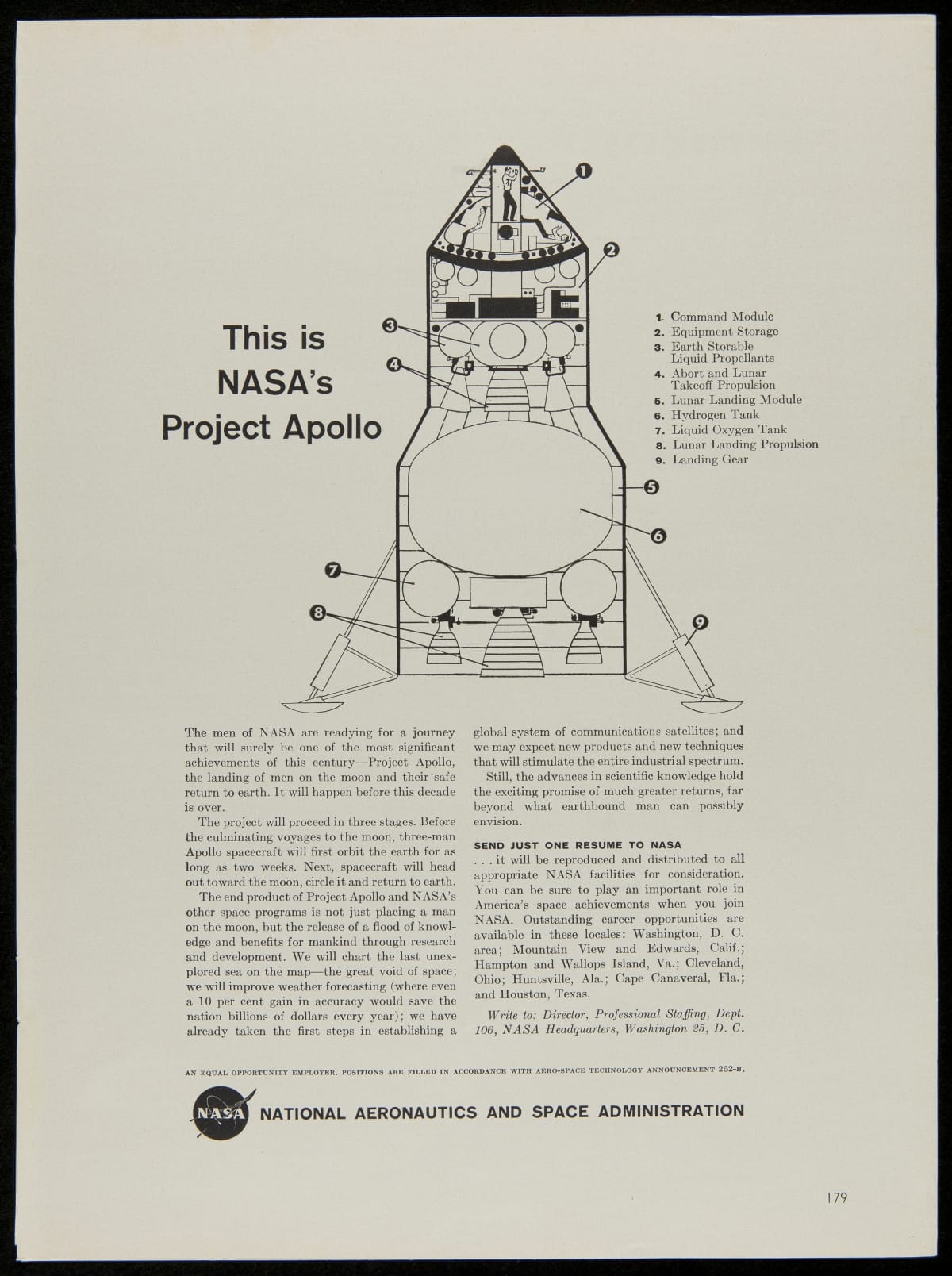
- Recruiting Advertisement for NASA, "This is NASA's Project Apollo," May 1962 - President John F. Kennedy's vision to explore the "new frontier" of space ignited the public's imagination. It was also an overt Cold War strategy against the Soviet Union which launched the first man in space April 12, 1961. NASA published this ad series in 1962 to convince aerospace engineers and scientists to join them for the U.S. effort to conquer space.
- May 01, 1962
- Collections - Artifact
Recruiting Advertisement for NASA, "This is NASA's Project Apollo," May 1962
President John F. Kennedy's vision to explore the "new frontier" of space ignited the public's imagination. It was also an overt Cold War strategy against the Soviet Union which launched the first man in space April 12, 1961. NASA published this ad series in 1962 to convince aerospace engineers and scientists to join them for the U.S. effort to conquer space.