
Search
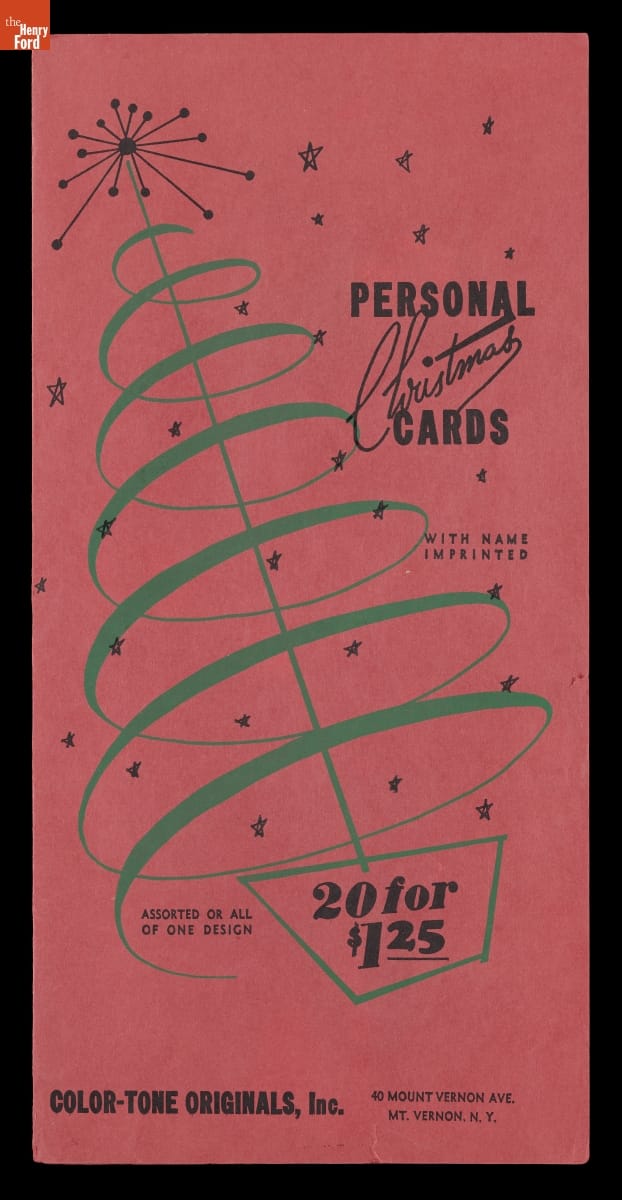
- "Personal Christmas Cards with Name Imprinted," 1960-1965 -
- 1960-1965
- Collections - Artifact
"Personal Christmas Cards with Name Imprinted," 1960-1965
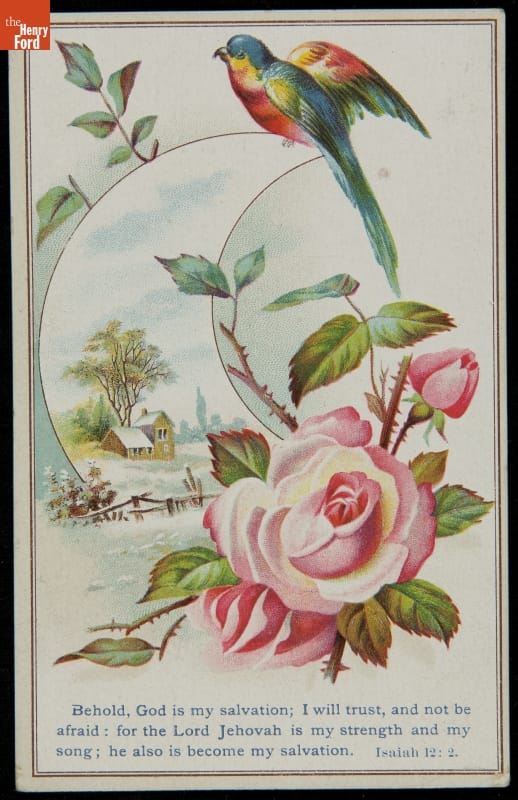
- Trade Card for G.P. Brown & Co., Plain School Cards and Christmas Cards, 1873-1893 - In the last third of the nineteenth century, an unprecedented variety of consumer goods and services flooded the American market. Advertisers, armed with new methods of color printing, bombarded potential customers with trade cards. Americans enjoyed and often saved the vibrant little advertisements found in product packages or distributed by local merchants. Many survive as historical records of commercialism in the United States.
- 1873-1893
- Collections - Artifact
Trade Card for G.P. Brown & Co., Plain School Cards and Christmas Cards, 1873-1893
In the last third of the nineteenth century, an unprecedented variety of consumer goods and services flooded the American market. Advertisers, armed with new methods of color printing, bombarded potential customers with trade cards. Americans enjoyed and often saved the vibrant little advertisements found in product packages or distributed by local merchants. Many survive as historical records of commercialism in the United States.
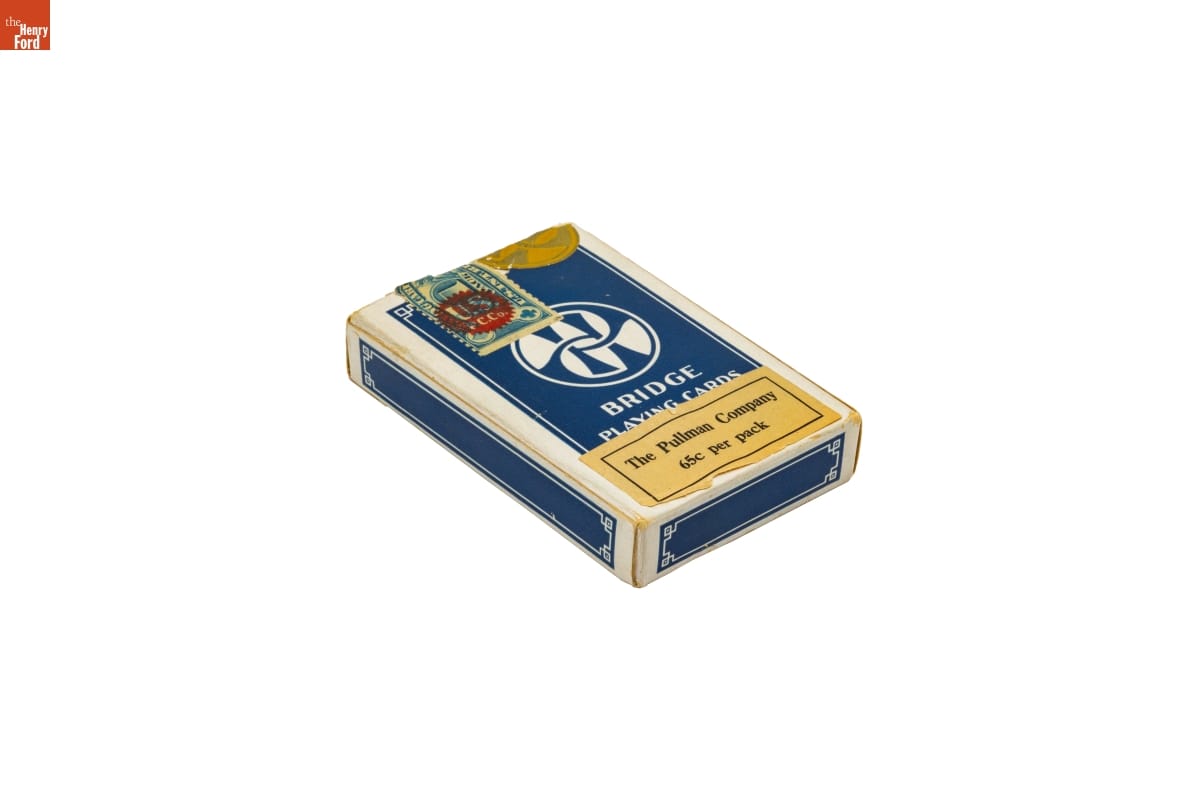
- Pullman Company Playing Cards - From its founding in 1867 until its demise a century later, the Pullman Company's name was synonymous with first-class travel on American railroads. Pullman not only built sleeping cars, it also operated them under contract with host railroads to ensure quality service. But Pullman's well-heeled passengers were the first to embrace air travel once it became a viable alternative.
- Collections - Artifact
Pullman Company Playing Cards
From its founding in 1867 until its demise a century later, the Pullman Company's name was synonymous with first-class travel on American railroads. Pullman not only built sleeping cars, it also operated them under contract with host railroads to ensure quality service. But Pullman's well-heeled passengers were the first to embrace air travel once it became a viable alternative.
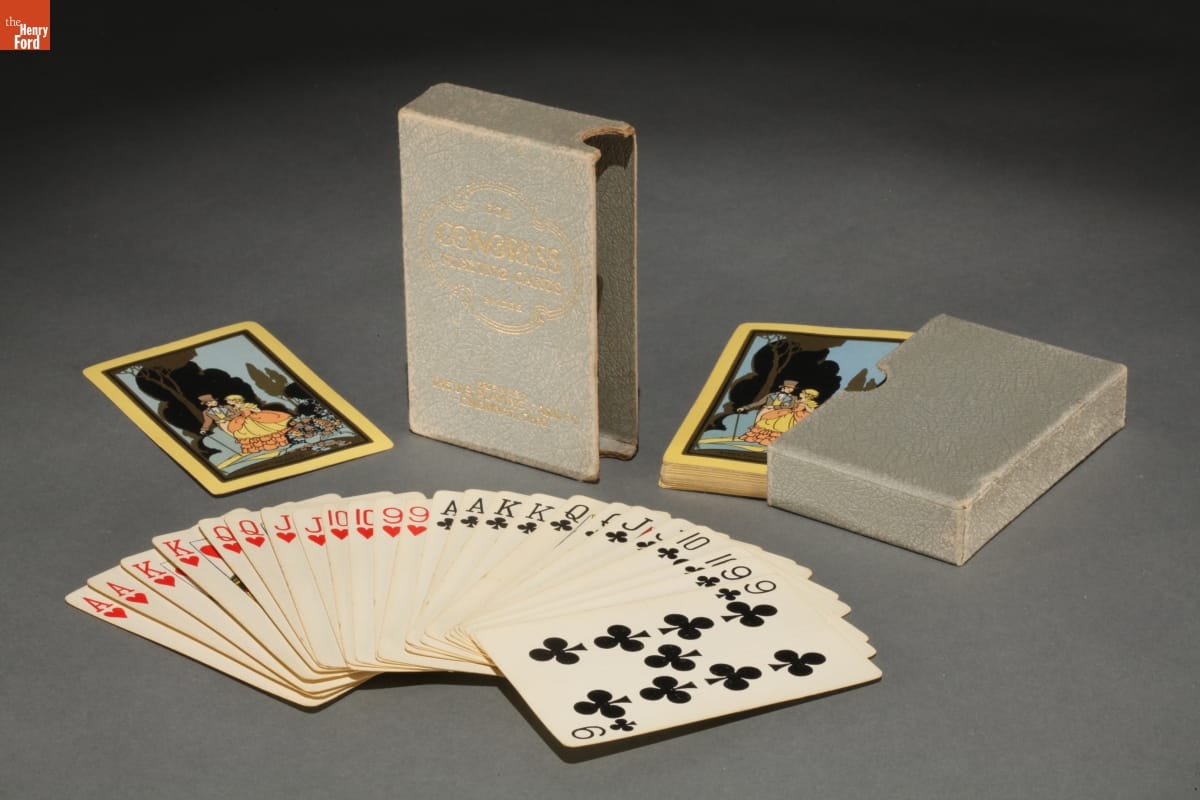
- Congress "Sweethearts" Playing Cards, 1928 - The U.S. Playing Card Company produced a number of decorative decks of cards for playing pinochle or other card games in the 1920s and 30s. Card parties provided a social outlet for many in the middle-class.
- 1928
- Collections - Artifact
Congress "Sweethearts" Playing Cards, 1928
The U.S. Playing Card Company produced a number of decorative decks of cards for playing pinochle or other card games in the 1920s and 30s. Card parties provided a social outlet for many in the middle-class.
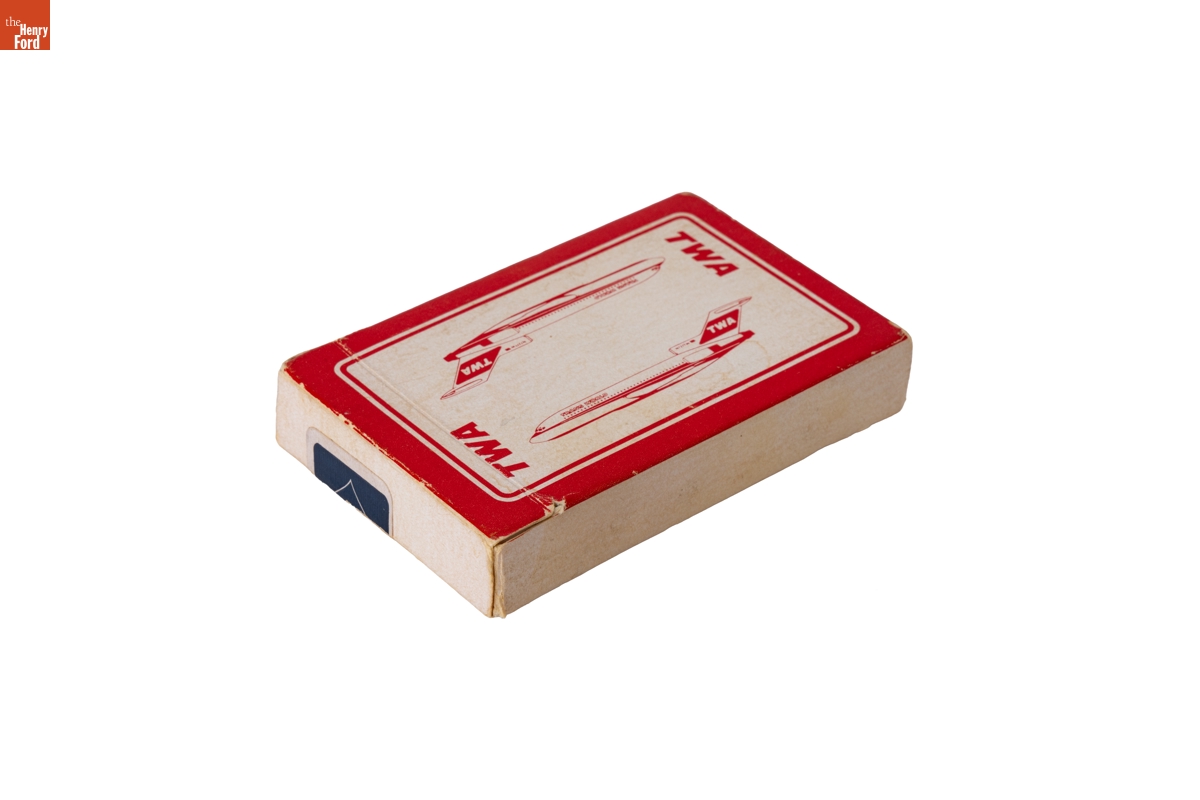
- TWA Playing Cards, 1975-1979 - Diane Beers joined TWA as a flight attendant in 1965 but left to marry Richard Hill a year later -- a time when many airlines employed only single women in that job. Beers Hill continued her interest in the airline industry and assembled an impressive collection of promotional items, models, toiletries, and advertisements from various air carriers.
- 1975-1979
- Collections - Artifact
TWA Playing Cards, 1975-1979
Diane Beers joined TWA as a flight attendant in 1965 but left to marry Richard Hill a year later -- a time when many airlines employed only single women in that job. Beers Hill continued her interest in the airline industry and assembled an impressive collection of promotional items, models, toiletries, and advertisements from various air carriers.
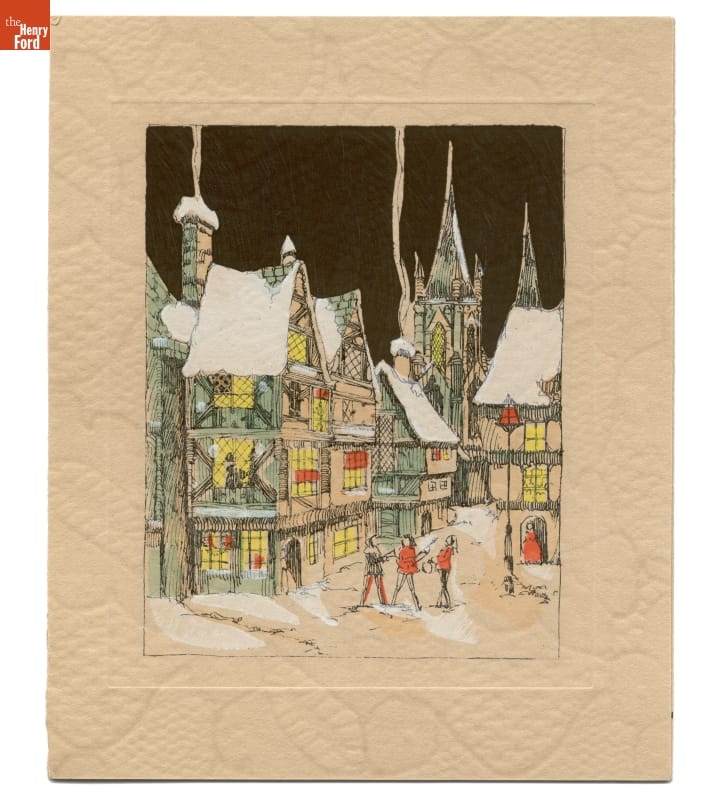
- Christmas Card, 1930 - Mailing colorful, commercially designed greeting cards had become an American tradition by the 1920s and 1930s. During the holidays, friends and neighbors commonly exchanged cards wishing one another a Merry Christmas or Happy New Year. Publishers sometimes decorated these cards with nostalgic images of traditional seasonal visitors, such as pipers or carolers.
- 1930
- Collections - Artifact
Christmas Card, 1930
Mailing colorful, commercially designed greeting cards had become an American tradition by the 1920s and 1930s. During the holidays, friends and neighbors commonly exchanged cards wishing one another a Merry Christmas or Happy New Year. Publishers sometimes decorated these cards with nostalgic images of traditional seasonal visitors, such as pipers or carolers.
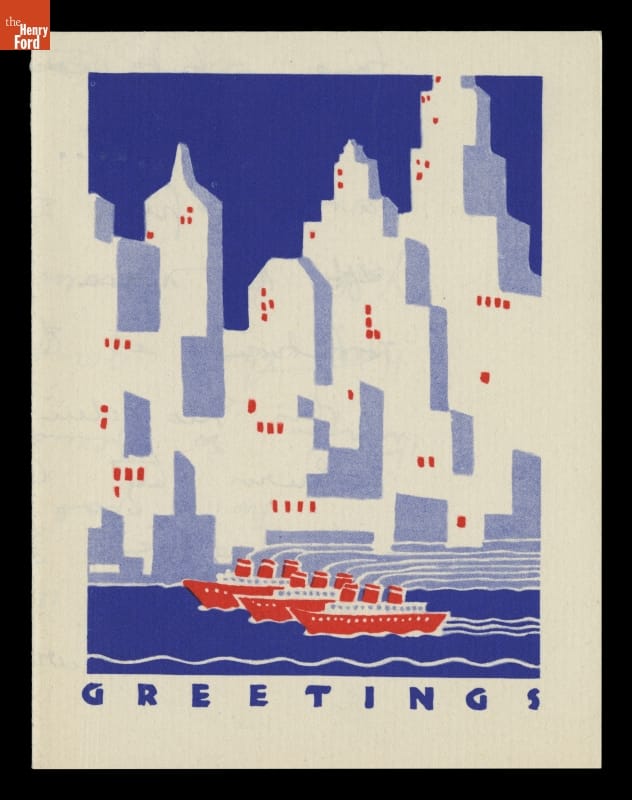
- Christmas Card, 1934 -
- 1934
- Collections - Artifact
Christmas Card, 1934
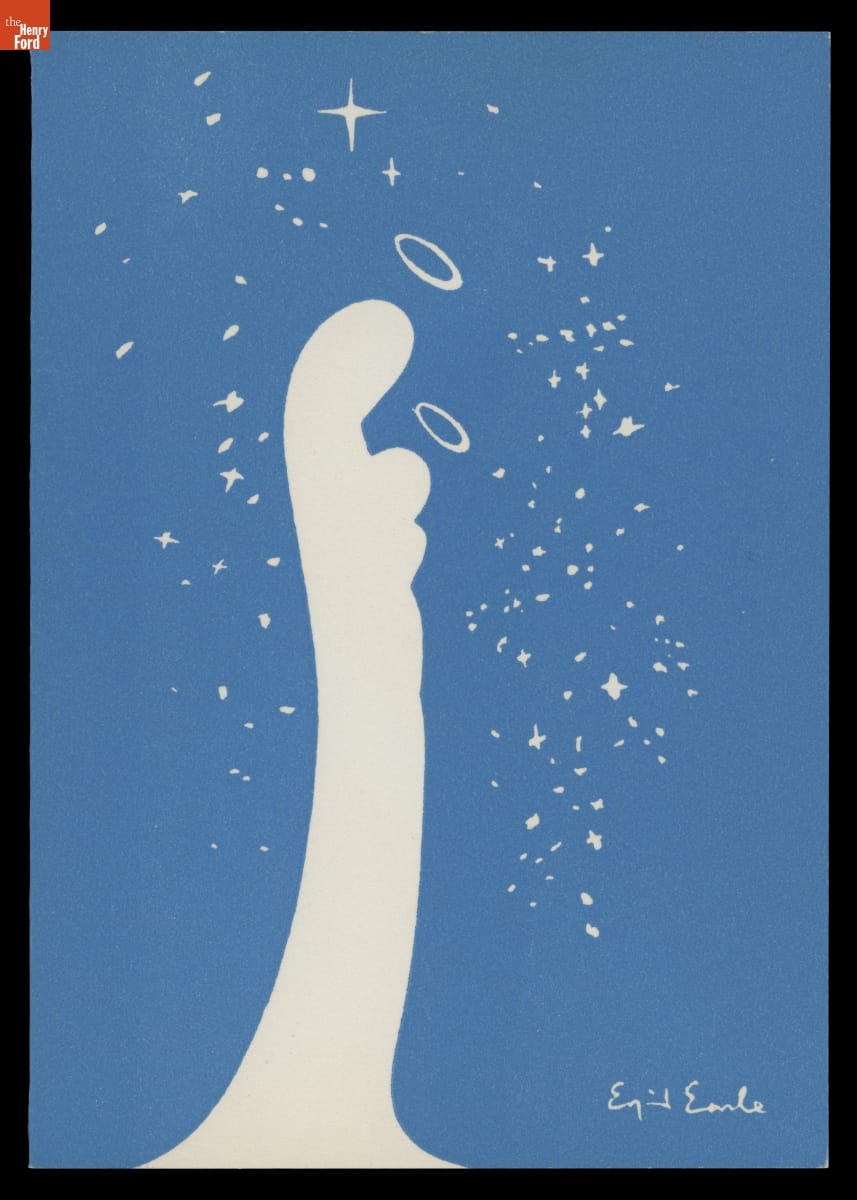
- Christmas Card, 1943 - The artist Eyvind Earle (1916-2000) is best known for his work on the 1959 Walt Disney Studios animated film <em>Sleeping Beauty</em>, but he also designed Christmas cards. Earle began producing cards in his early twenties, selling them through his own company. Later, Earle joined the American Artists Group and continued designing Christmas cards. He would produce more than 800 designs throughout his career.
- 1943
- Collections - Artifact
Christmas Card, 1943
The artist Eyvind Earle (1916-2000) is best known for his work on the 1959 Walt Disney Studios animated film Sleeping Beauty, but he also designed Christmas cards. Earle began producing cards in his early twenties, selling them through his own company. Later, Earle joined the American Artists Group and continued designing Christmas cards. He would produce more than 800 designs throughout his career.
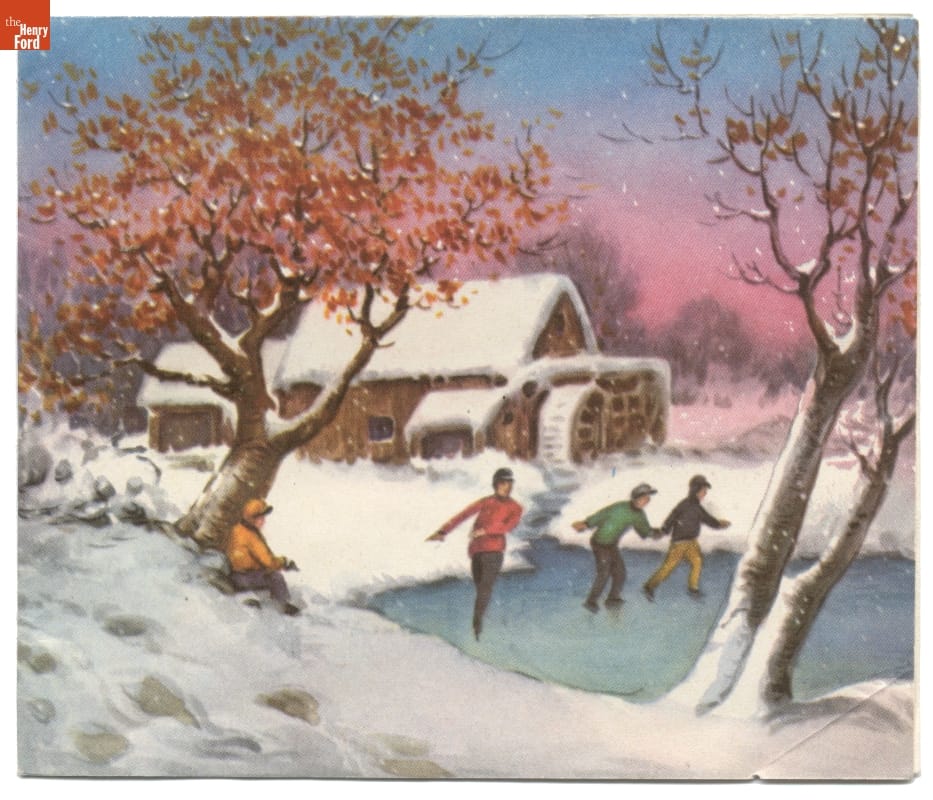
- Christmas Card, 1955 - Mailing colorful, commercially designed greeting cards was a 20th-century American tradition. During the holidays, friends and neighbors commonly exchanged cards wishing one another a Merry Christmas or Happy New Year. Publishers often employed decorative imagery, such as a homey winter scene, to evoke warm seasonal memories.
- 1955
- Collections - Artifact
Christmas Card, 1955
Mailing colorful, commercially designed greeting cards was a 20th-century American tradition. During the holidays, friends and neighbors commonly exchanged cards wishing one another a Merry Christmas or Happy New Year. Publishers often employed decorative imagery, such as a homey winter scene, to evoke warm seasonal memories.
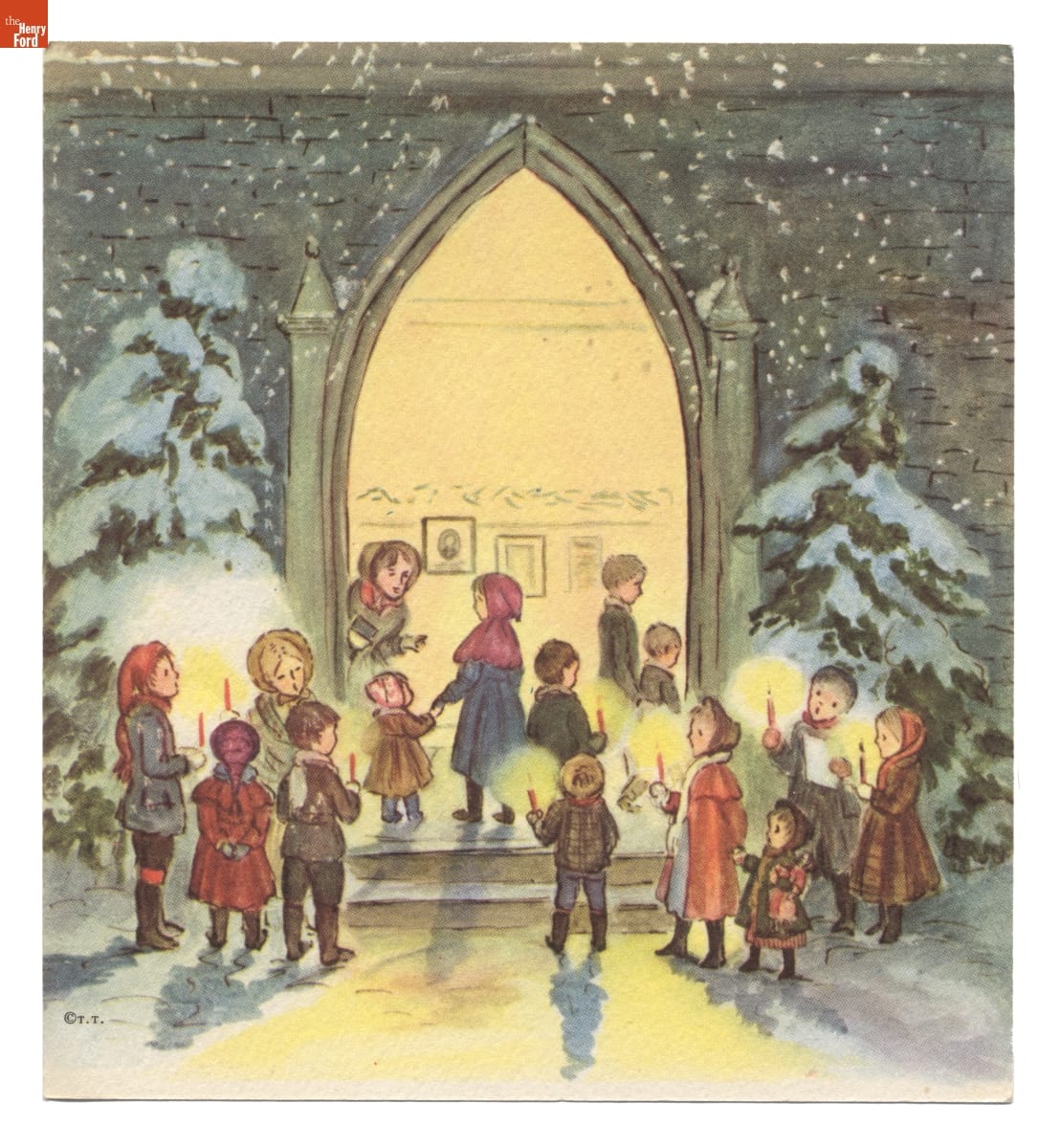
- Christmas Card, 1951 - In addition to illustrating nearly 100 children's books, renowned American artist Tasha Tudor (1915-2008) created thousands of drawings for the Irene Dash Greeting Card Company Incorporated. Featuring traditional 19th-century scenes crafted in soft colors, her holiday greeting cards evoke warm seasonal sentiments. This postwar Christmas card typifies Tudor's detailed, enchanting, and popular illustrations.
- 1951
- Collections - Artifact
Christmas Card, 1951
In addition to illustrating nearly 100 children's books, renowned American artist Tasha Tudor (1915-2008) created thousands of drawings for the Irene Dash Greeting Card Company Incorporated. Featuring traditional 19th-century scenes crafted in soft colors, her holiday greeting cards evoke warm seasonal sentiments. This postwar Christmas card typifies Tudor's detailed, enchanting, and popular illustrations.