
Search
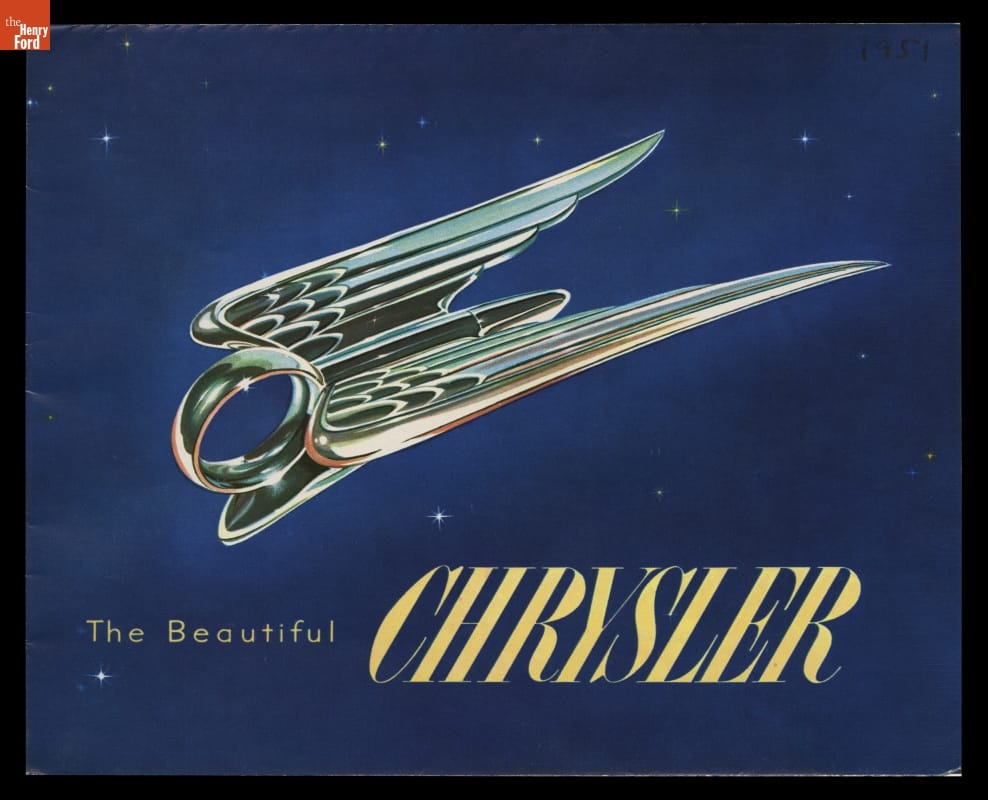
- 1951 Chrysler Sales Brochure, "The Beautiful Chrysler" - The big news from Chrysler for 1951 was the introduction of its new "FirePower" hemispherical combustion chamber V-8 engine. The dome-shaped cylinder heads allowed for more complete, efficient combustion. When Chrysler introduced its next generation of the design for 1964, it dropped the FirePower name in favor of "Hemi." Hemi engines became a Chrysler trademark.
- December 01, 1950
- Collections - Artifact
1951 Chrysler Sales Brochure, "The Beautiful Chrysler"
The big news from Chrysler for 1951 was the introduction of its new "FirePower" hemispherical combustion chamber V-8 engine. The dome-shaped cylinder heads allowed for more complete, efficient combustion. When Chrysler introduced its next generation of the design for 1964, it dropped the FirePower name in favor of "Hemi." Hemi engines became a Chrysler trademark.
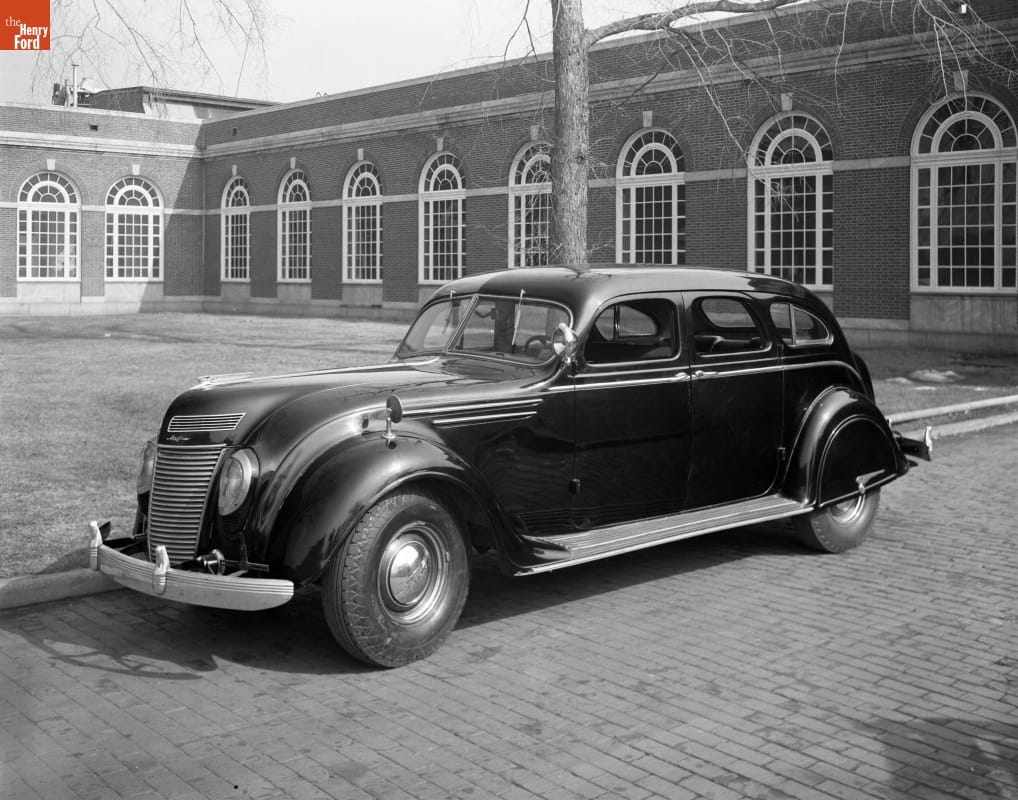
- 1937 Chrysler Airflow Sedan - Chrysler took a bold step in automotive styling when it introduced the streamlined Airflow for 1934. Designed with the aid of a wind tunnel, the aerodynamic car was years ahead of its time. But Chrysler paid a price for its vision. The complex body caused manufacturing problems, and customers balked at the unconventional appearance. Chrysler canceled the Airflow after 1937.
- 1937
- Collections - Artifact
1937 Chrysler Airflow Sedan
Chrysler took a bold step in automotive styling when it introduced the streamlined Airflow for 1934. Designed with the aid of a wind tunnel, the aerodynamic car was years ahead of its time. But Chrysler paid a price for its vision. The complex body caused manufacturing problems, and customers balked at the unconventional appearance. Chrysler canceled the Airflow after 1937.
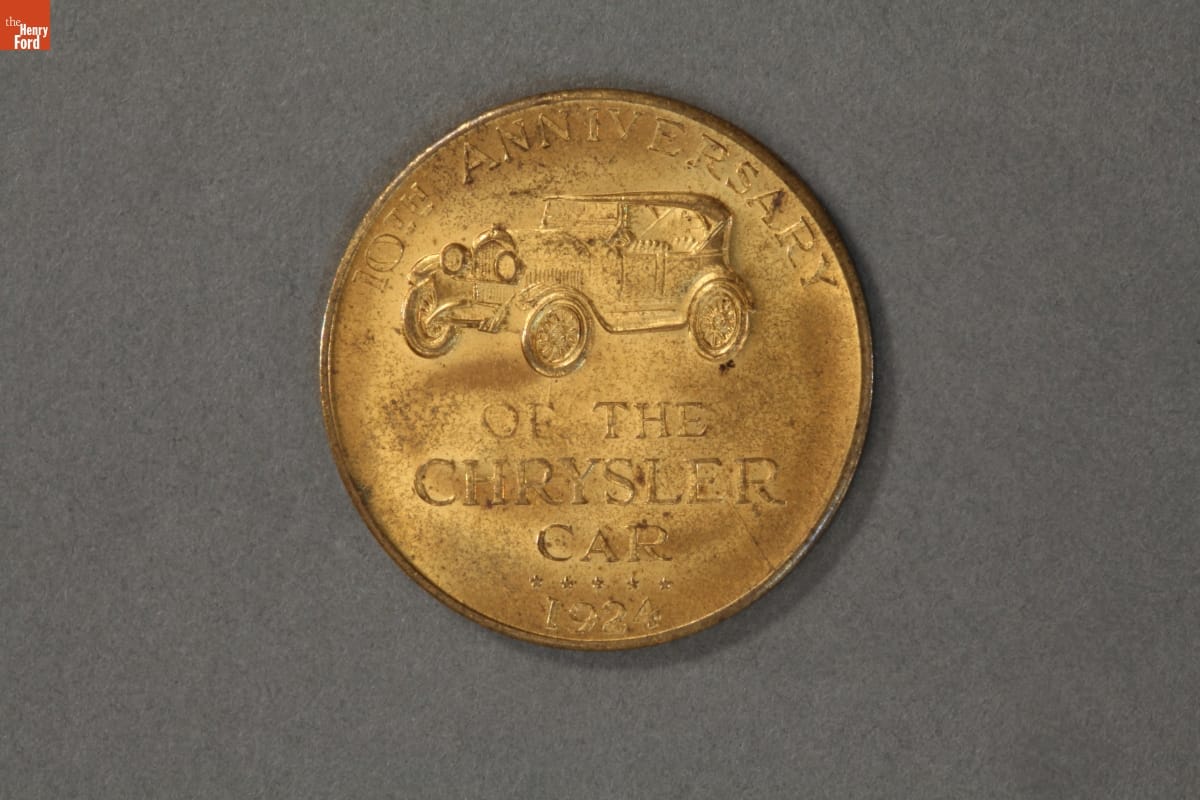
- Chrysler Commemorative Medal, 1934 - Chicago's 1933-34 Century of Progress Exposition used the theme of progress to buoy national optimism during the Depression's darkest years. Chrysler Motors, one of many manufacturers with a major presence at the fair, constructed a large pavilion and distributed souvenirs to fairgoers. This brass medallion commemorated Chrysler's first ten years -- a "Century of Progress in a Decade."
- 1934
- Collections - Artifact
Chrysler Commemorative Medal, 1934
Chicago's 1933-34 Century of Progress Exposition used the theme of progress to buoy national optimism during the Depression's darkest years. Chrysler Motors, one of many manufacturers with a major presence at the fair, constructed a large pavilion and distributed souvenirs to fairgoers. This brass medallion commemorated Chrysler's first ten years -- a "Century of Progress in a Decade."
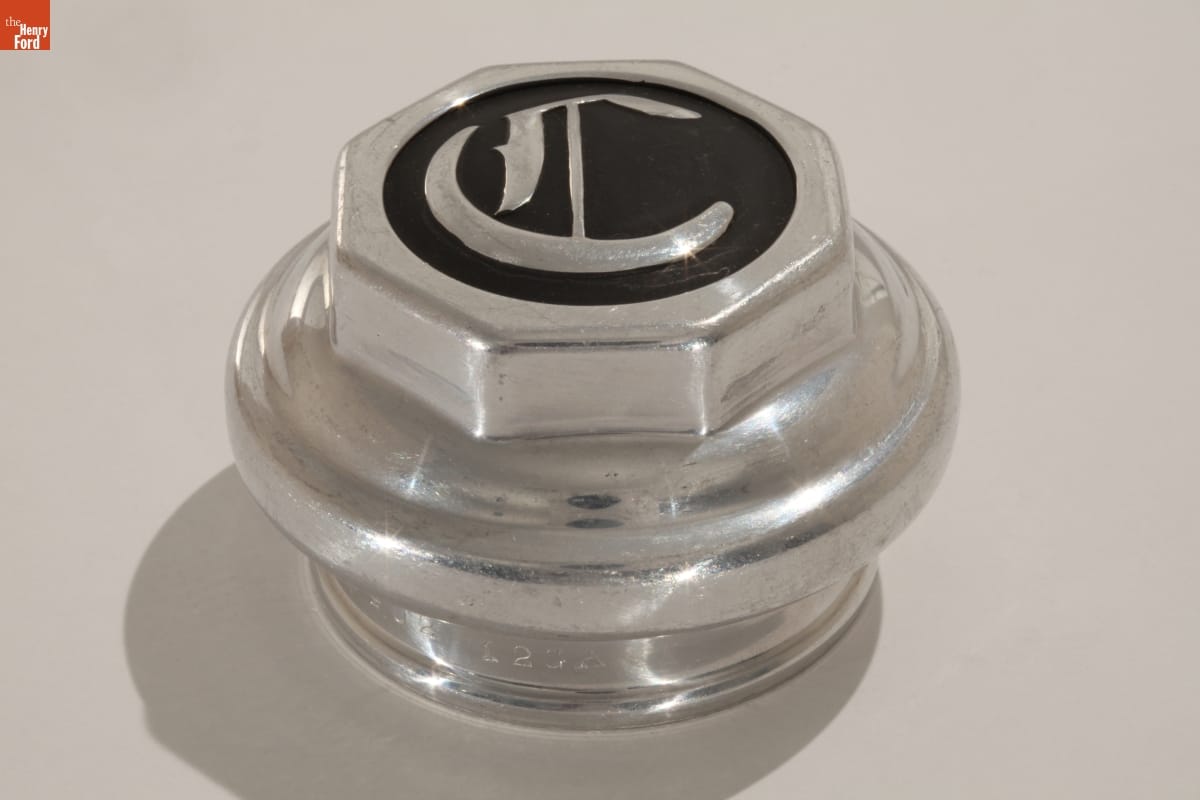
- Chrysler Hubcap, 1920-1929 - Early automobile wheels had a central hub with a greased wheel bearing. Hub caps kept grease in and dust out. As wheels evolved and hubcaps became functionally unnecessary, they remained important to both manufacturers -- who branded wheel covers with maker names or logos -- and consumers -- who identified with hubcaps as statements about their cars and themselves.
- 1920-1929
- Collections - Artifact
Chrysler Hubcap, 1920-1929
Early automobile wheels had a central hub with a greased wheel bearing. Hub caps kept grease in and dust out. As wheels evolved and hubcaps became functionally unnecessary, they remained important to both manufacturers -- who branded wheel covers with maker names or logos -- and consumers -- who identified with hubcaps as statements about their cars and themselves.
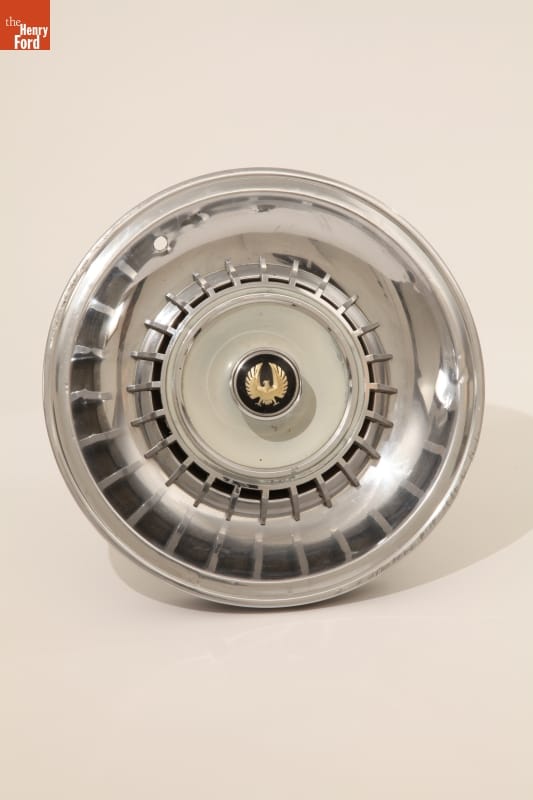
- Chrysler Imperial Hubcap, 1964 - Chrysler introduced Imperial as a model in 1926. From 1955 through 1975, it was a separate make. Imperial represented the very best of Chrysler Corporation's vehicles. Premium features like power brakes, power steering and power windows were standard equipment. Still, Imperial never quite managed to develop a distinct identity, in part because it never had a separate dealer network.
- 1964
- Collections - Artifact
Chrysler Imperial Hubcap, 1964
Chrysler introduced Imperial as a model in 1926. From 1955 through 1975, it was a separate make. Imperial represented the very best of Chrysler Corporation's vehicles. Premium features like power brakes, power steering and power windows were standard equipment. Still, Imperial never quite managed to develop a distinct identity, in part because it never had a separate dealer network.
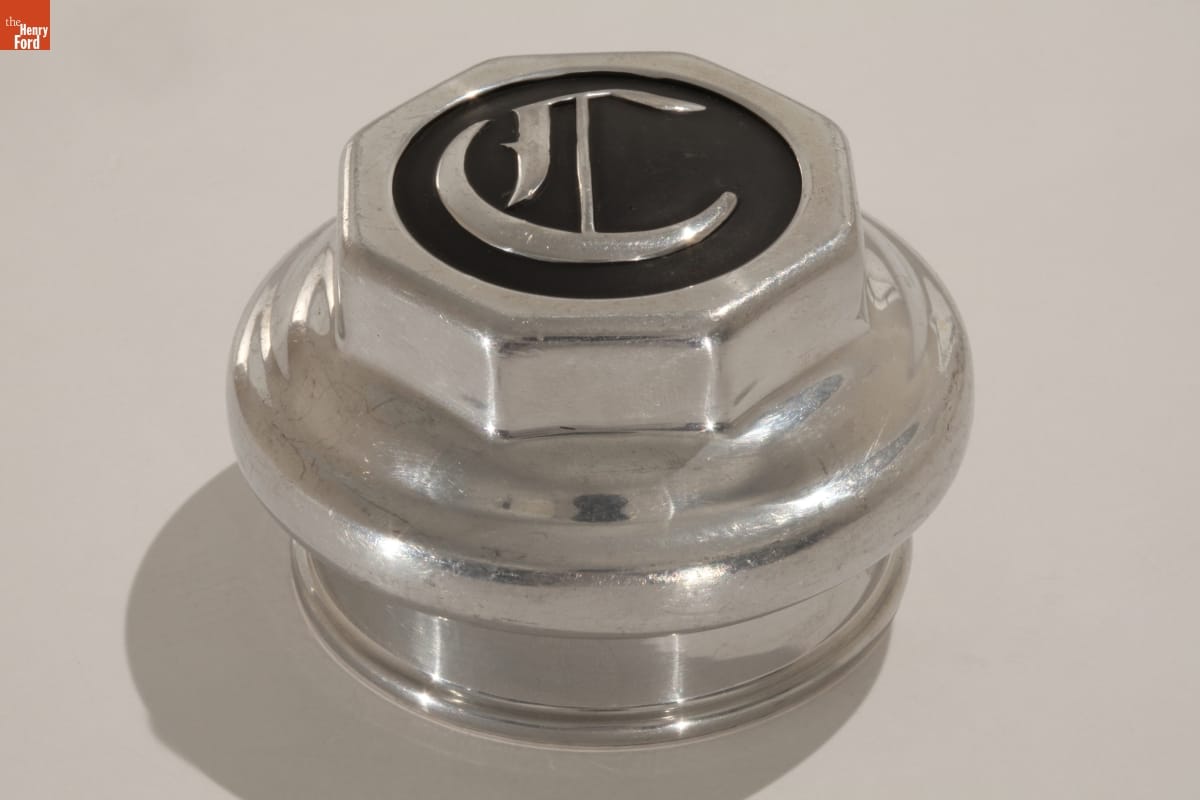
- Chrysler Hubcap, 1920-1929 - Early automobile wheels had a central hub with a greased wheel bearing. Hub caps kept grease in and dust out. As wheels evolved and hubcaps became functionally unnecessary, they remained important to both manufacturers -- who branded wheel covers with maker names or logos -- and consumers -- who identified with hubcaps as statements about their cars and themselves.
- 1920-1929
- Collections - Artifact
Chrysler Hubcap, 1920-1929
Early automobile wheels had a central hub with a greased wheel bearing. Hub caps kept grease in and dust out. As wheels evolved and hubcaps became functionally unnecessary, they remained important to both manufacturers -- who branded wheel covers with maker names or logos -- and consumers -- who identified with hubcaps as statements about their cars and themselves.
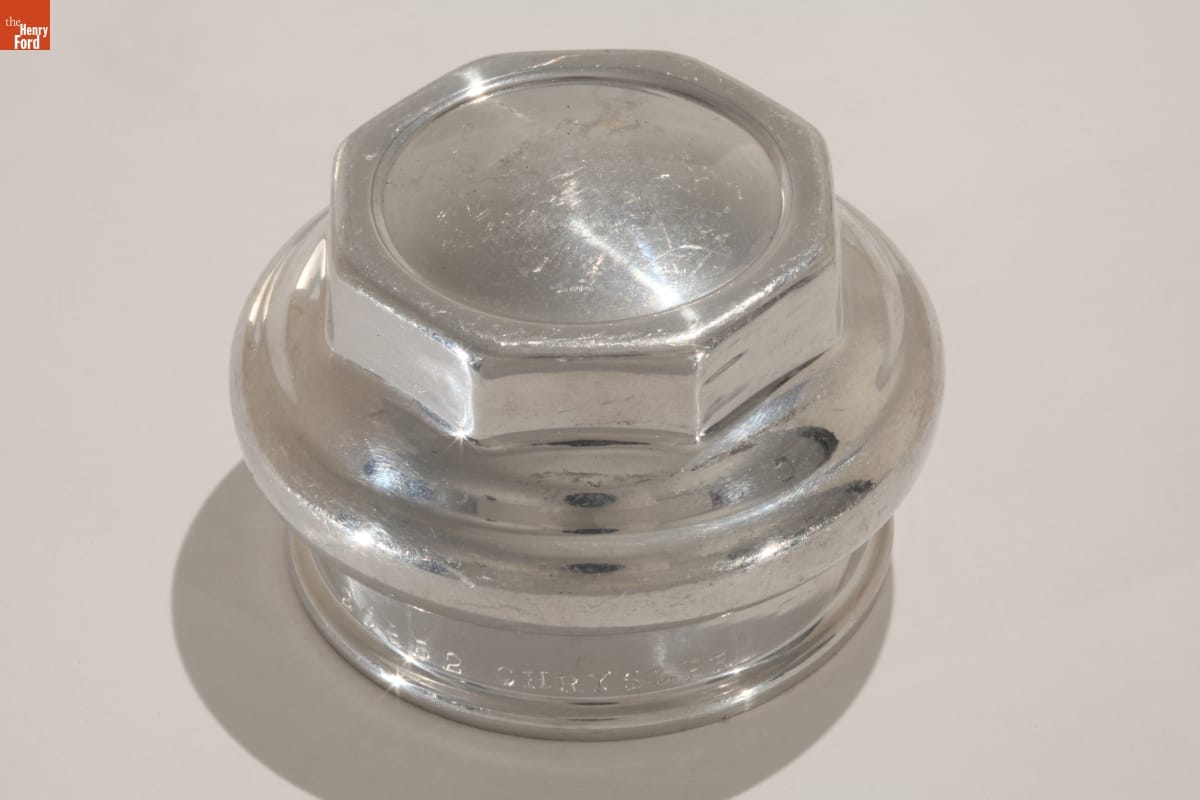
- Chrysler Hubcap, 1920-1929 - Early automobile wheels had a central hub with a greased wheel bearing. Hub caps kept grease in and dust out. Beginning in 1915, the Aluminum Goods Manufacturing Company of Manitowoc, Wisconsin, supplied hubcaps -- including this one -- to many automotive manufacturers. Hubcaps became functionally unnecessary as wheels evolved, but they remained important components of style and marketing.
- 1920-1929
- Collections - Artifact
Chrysler Hubcap, 1920-1929
Early automobile wheels had a central hub with a greased wheel bearing. Hub caps kept grease in and dust out. Beginning in 1915, the Aluminum Goods Manufacturing Company of Manitowoc, Wisconsin, supplied hubcaps -- including this one -- to many automotive manufacturers. Hubcaps became functionally unnecessary as wheels evolved, but they remained important components of style and marketing.
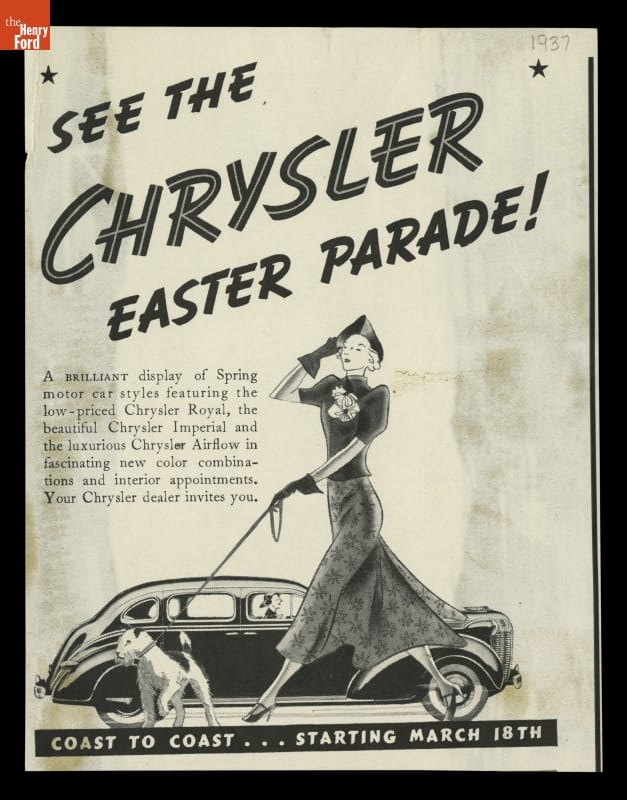
- Advertisement for Chrysler Automobiles, March 1937, "See the Chrysler Easter Parade!" - For automobile manufacturers and dealers, springtime marked the midpoint of the sales year. The current model year cars, introduced the previous fall, began to grow stale as customers anticipated new models roughly six months away. Some automakers tried to stimulate sales -- especially in the difficult Depression years -- with special spring colors.
- March 01, 1937
- Collections - Artifact
Advertisement for Chrysler Automobiles, March 1937, "See the Chrysler Easter Parade!"
For automobile manufacturers and dealers, springtime marked the midpoint of the sales year. The current model year cars, introduced the previous fall, began to grow stale as customers anticipated new models roughly six months away. Some automakers tried to stimulate sales -- especially in the difficult Depression years -- with special spring colors.
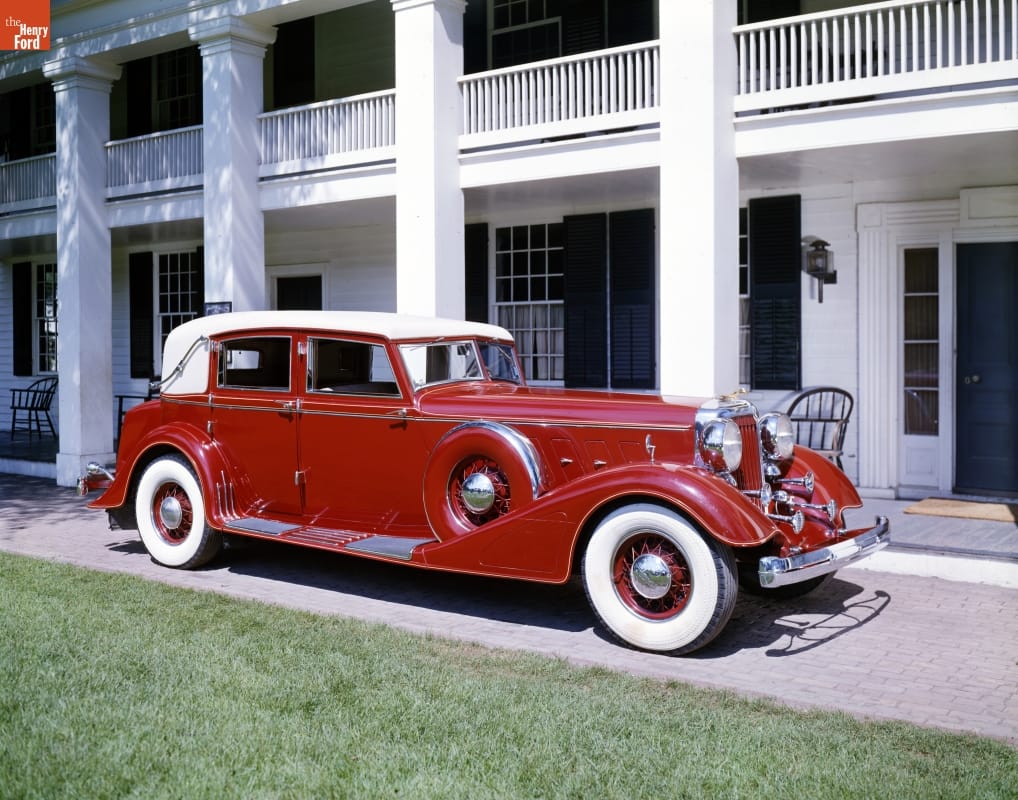
- 1932 Chrysler Imperial Landau Sedan, Personal Car of Walter P. Chrysler - This Chrysler Imperial Landau was custom built for an especially prominent customer: company founder and president Walter P. Chrysler. The car features an aluminum body and a high-compression, eight-cylinder engine. The interior is fitted with a writing desk, bar, vanity case, and second speedometer viewable from the rear seat. The red color matched an antique Chinese vase owned by Mr. Chrysler.
- 1932
- Collections - Artifact
1932 Chrysler Imperial Landau Sedan, Personal Car of Walter P. Chrysler
This Chrysler Imperial Landau was custom built for an especially prominent customer: company founder and president Walter P. Chrysler. The car features an aluminum body and a high-compression, eight-cylinder engine. The interior is fitted with a writing desk, bar, vanity case, and second speedometer viewable from the rear seat. The red color matched an antique Chinese vase owned by Mr. Chrysler.
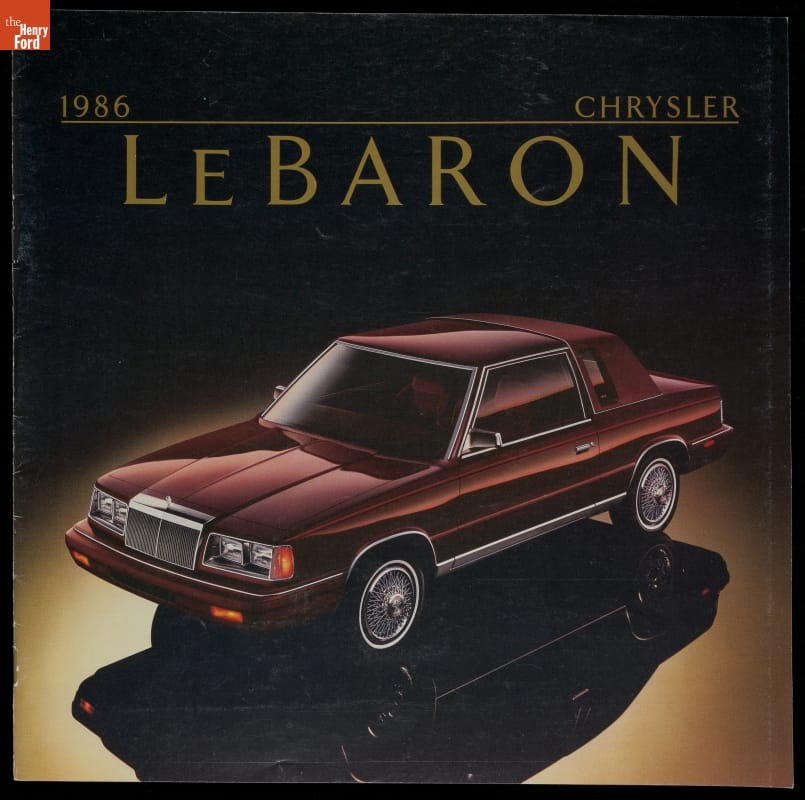
- 1986 Chrysler LeBaron Sales Brochure - Good branding is an important asset, and automakers often reuse established names. Chrysler first used "LeBaron" in the 1930s for its top-of-the-line luxury model. The name reappeared on a mid-size model in the 1970s. By 1986, "LeBaron" designated the premium version of Chrysler's front-wheel-drive K-car.
- 1986
- Collections - Artifact
1986 Chrysler LeBaron Sales Brochure
Good branding is an important asset, and automakers often reuse established names. Chrysler first used "LeBaron" in the 1930s for its top-of-the-line luxury model. The name reappeared on a mid-size model in the 1970s. By 1986, "LeBaron" designated the premium version of Chrysler's front-wheel-drive K-car.