
Search
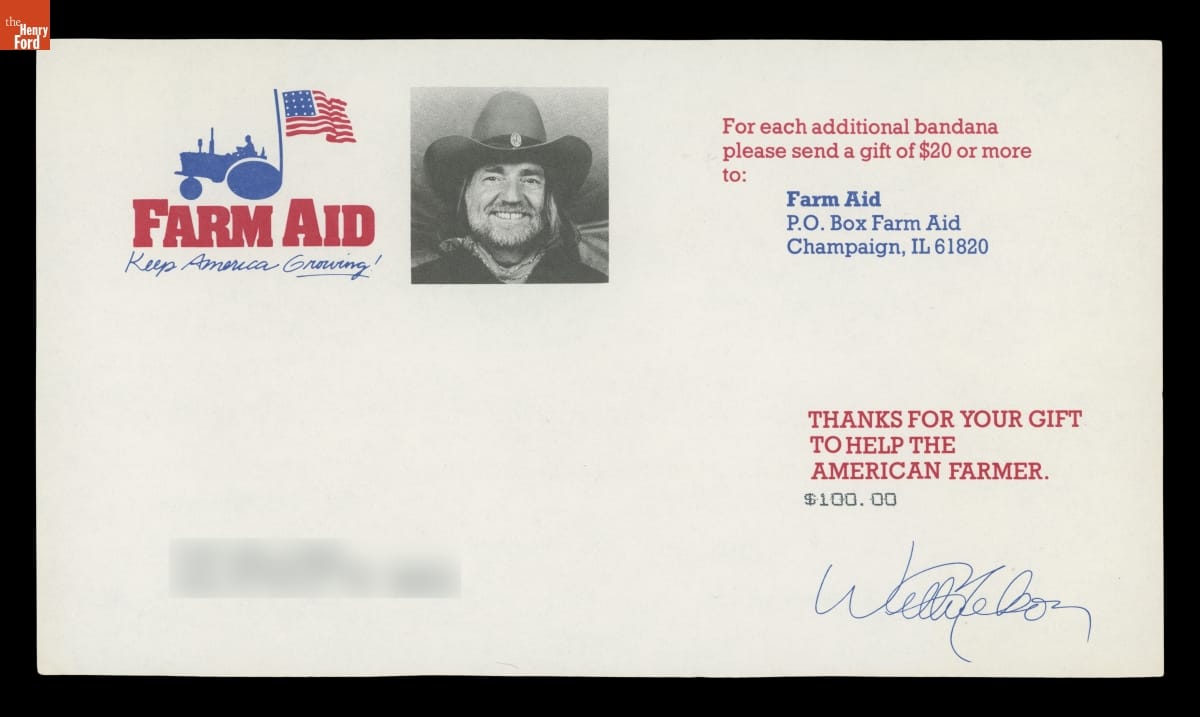
- Farm Aid Documentation of $100 Donation, 1985 - High interest rates on loans and declining farm income destabilized the farm economy during the 1980s. Heavily mortgaged farmers lost everything, and suicide rates escalated. Recording artists Willie Nelson, John Cougar Mellencamp and Neil Young joined with other singers to stage the first Farm Aid concert at the University of Illinois on 22 September 1985.
- 1985
- Collections - Artifact
Farm Aid Documentation of $100 Donation, 1985
High interest rates on loans and declining farm income destabilized the farm economy during the 1980s. Heavily mortgaged farmers lost everything, and suicide rates escalated. Recording artists Willie Nelson, John Cougar Mellencamp and Neil Young joined with other singers to stage the first Farm Aid concert at the University of Illinois on 22 September 1985.
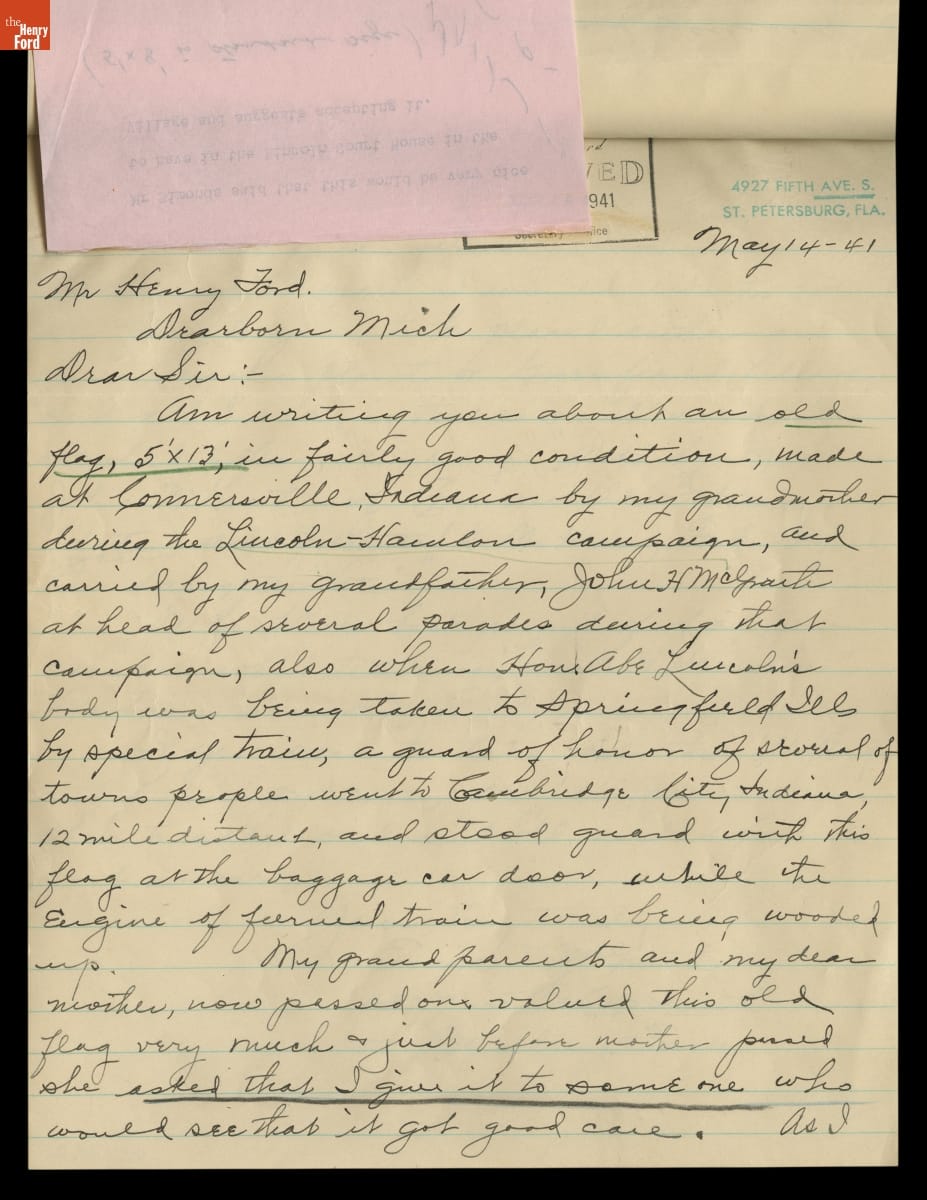
- Letter regarding Lincoln Campaign Flag Donation, 1941 - In 1941, Earnest McGrath wrote to Henry Ford about donating a flag made by his grandmother, Lucinda McGrath of Connersville, Indiana. Earnest's grandfather John had carried the flag in local 1860 presidential campaign parades supporting Abraham Lincoln. Later, after Lincoln's assassination in 1865, the flag was used as part of an honor guard when Lincoln's body traveled through Indiana. Ford accepted the donation.
- May 14, 1941
- Collections - Artifact
Letter regarding Lincoln Campaign Flag Donation, 1941
In 1941, Earnest McGrath wrote to Henry Ford about donating a flag made by his grandmother, Lucinda McGrath of Connersville, Indiana. Earnest's grandfather John had carried the flag in local 1860 presidential campaign parades supporting Abraham Lincoln. Later, after Lincoln's assassination in 1865, the flag was used as part of an honor guard when Lincoln's body traveled through Indiana. Ford accepted the donation.
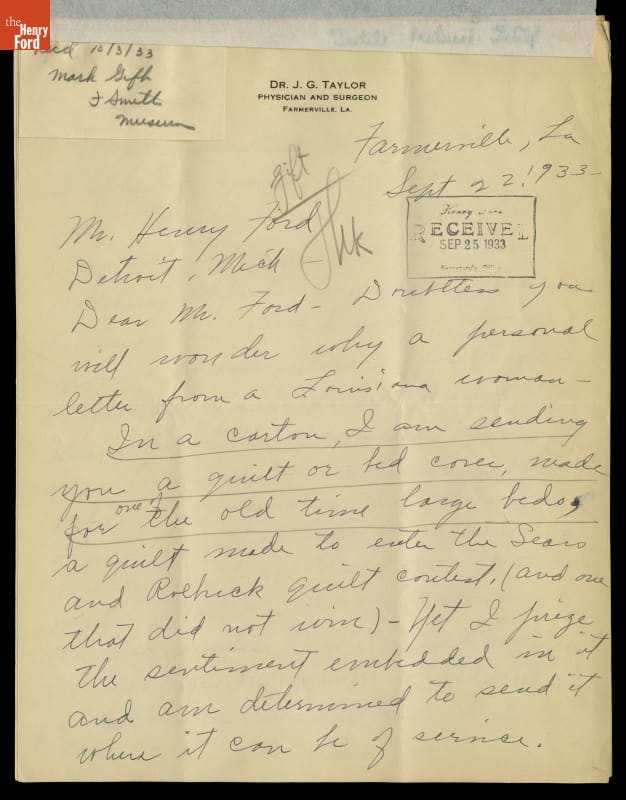
- Correspondence Regarding Zemma Taylor's "American Pride" Quilt Donation, 1933 -
- September 22, 1933
- Collections - Artifact
Correspondence Regarding Zemma Taylor's "American Pride" Quilt Donation, 1933
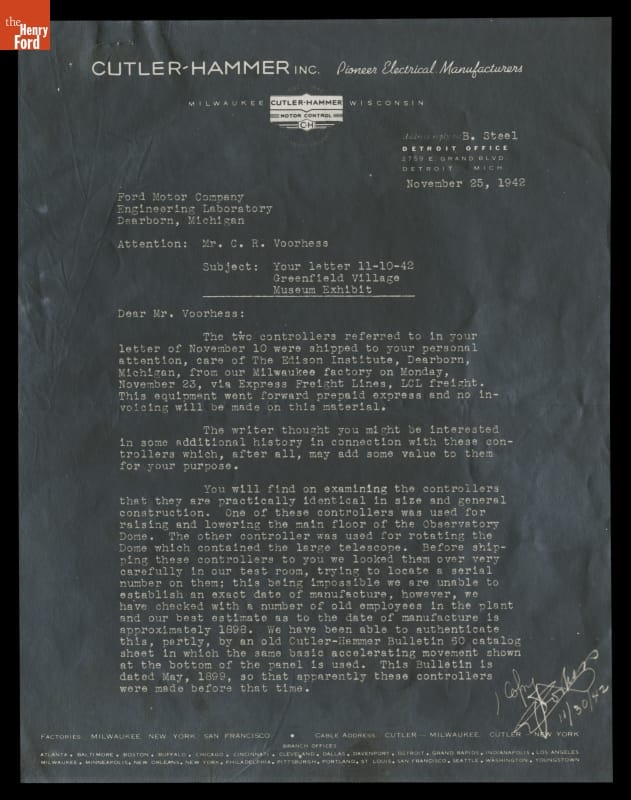
- Correspondence Regarding Donation of Yerkes Observatory Motor Controllers, 1942 - Yerkes Observatory in Williams Bay, Wisconsin is known as the birthplace of modern physics for the volume and importance of research conducted there. It is also home to the world's largest refracting telescope. When it opened in 1897, the observatory included an adjustable floor and rotating dome, governed by motor controllers made by Chicago-based Cutler-Hammer. The Henry Ford acquired the controllers from Cutler-Hammer in 1942.
- November 25, 1942
- Collections - Artifact
Correspondence Regarding Donation of Yerkes Observatory Motor Controllers, 1942
Yerkes Observatory in Williams Bay, Wisconsin is known as the birthplace of modern physics for the volume and importance of research conducted there. It is also home to the world's largest refracting telescope. When it opened in 1897, the observatory included an adjustable floor and rotating dome, governed by motor controllers made by Chicago-based Cutler-Hammer. The Henry Ford acquired the controllers from Cutler-Hammer in 1942.
- Correspondence regarding Donation of Sholes & Glidden Typewriter Patent Model, 1929 -
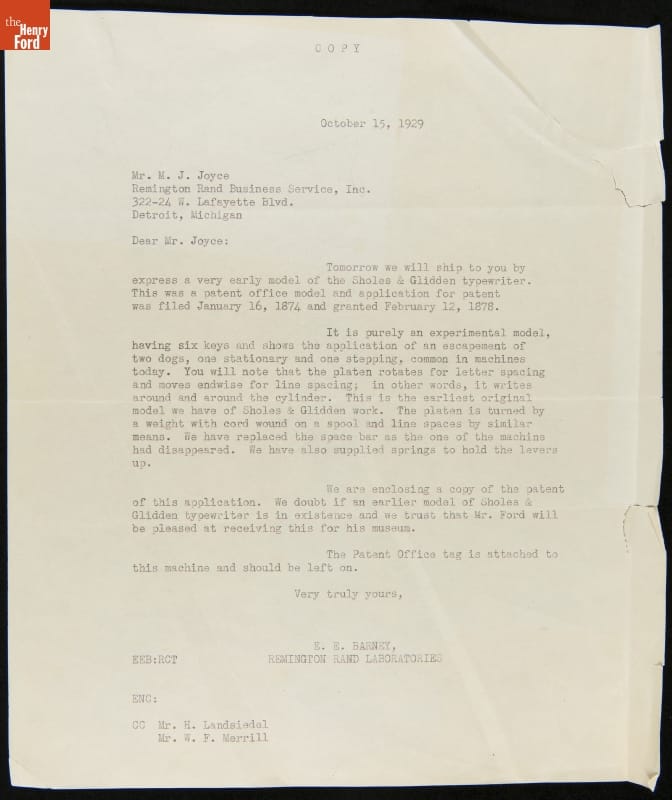
- October 15, 1929
- Collections - Artifact
Correspondence regarding Donation of Sholes & Glidden Typewriter Patent Model, 1929
- Letter to Hedwig Einert regarding a Donation, December 4, 1934 -
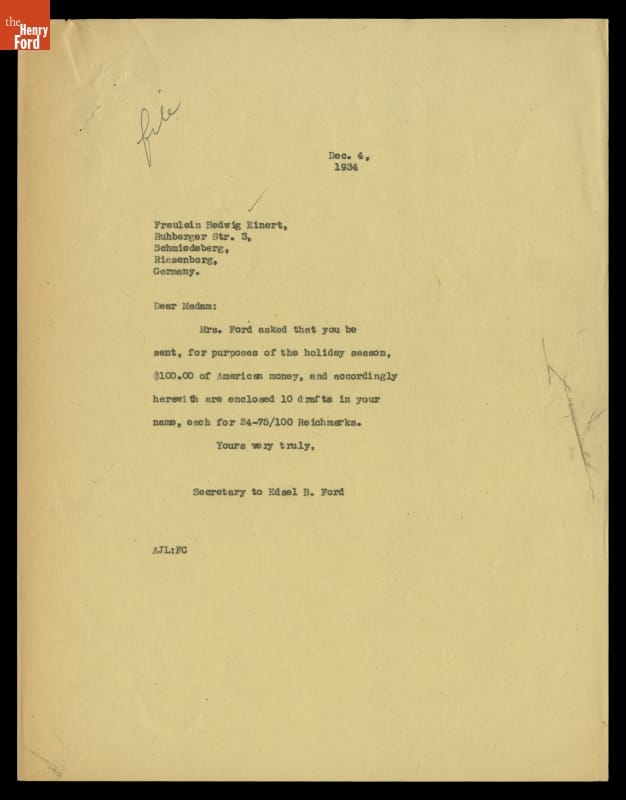
- December 04, 1934
- Collections - Artifact
Letter to Hedwig Einert regarding a Donation, December 4, 1934
- Donating Blood at Ford Motor Company Willow Run Bomber Plant, November 1944 -

- November 27, 1944
- Collections - Artifact
Donating Blood at Ford Motor Company Willow Run Bomber Plant, November 1944
- Donation of the Millionth Bendix Washing Machine Manufactured to Henry Ford Museum, October 1947 -
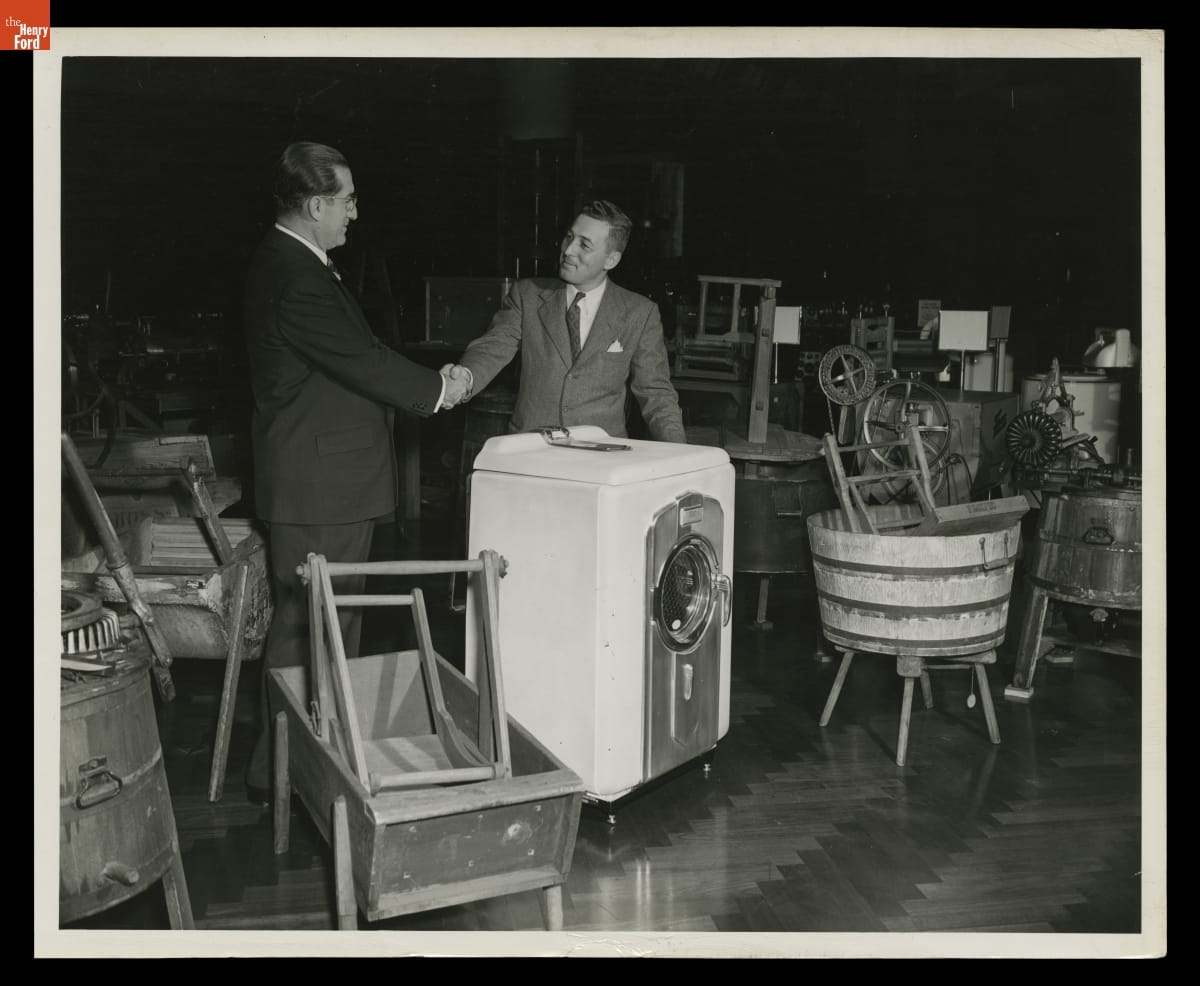
- October 01, 1947
- Collections - Artifact
Donation of the Millionth Bendix Washing Machine Manufactured to Henry Ford Museum, October 1947
- Ford Tractor Donation to the Southern Illinois 4H Club Camp, 1960 -
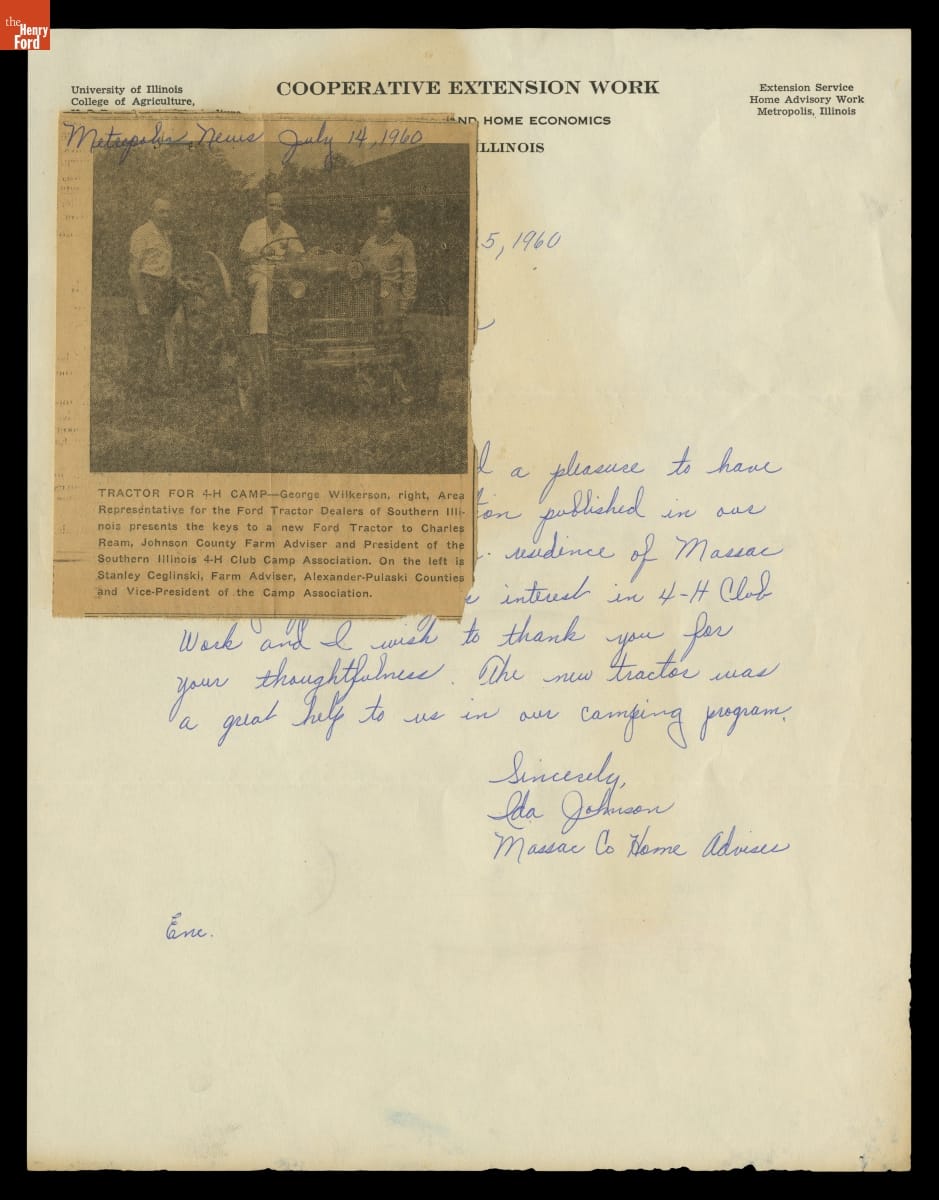
- July 01, 1960
- Collections - Artifact
Ford Tractor Donation to the Southern Illinois 4H Club Camp, 1960
- Letter to Edsel Ford regarding Donation to the National Recreation Association, September 18, 1933 - Early 20th-century reformers created the National Recreation Association (originally the Playground Association of America) to establish clean, safe, supervised play spaces for children living in crowded cities. Reformers hoped these playgrounds would promote a sense of physical, social, and moral well-being among America's children and youth. Annual pleas urged local business leaders to support this worthwhile cause.
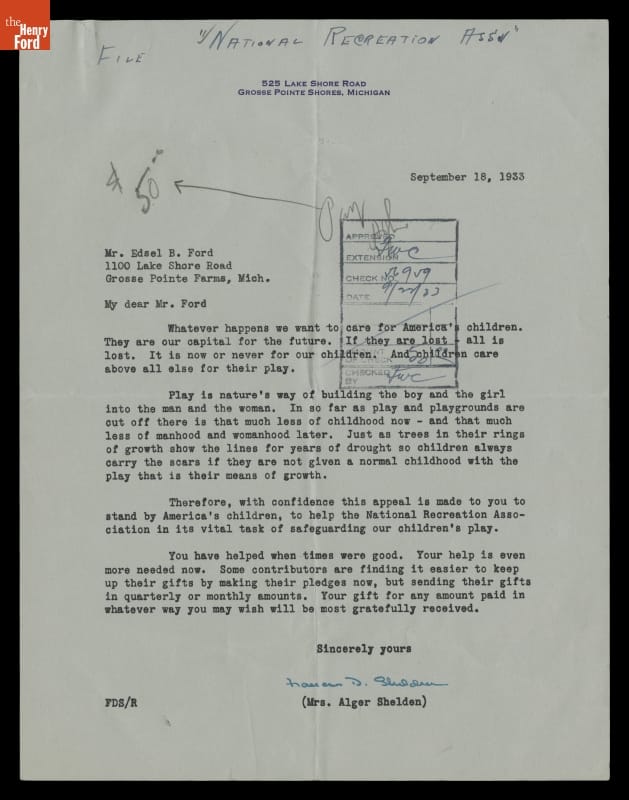
- September 18, 1933
- Collections - Artifact
Letter to Edsel Ford regarding Donation to the National Recreation Association, September 18, 1933
Early 20th-century reformers created the National Recreation Association (originally the Playground Association of America) to establish clean, safe, supervised play spaces for children living in crowded cities. Reformers hoped these playgrounds would promote a sense of physical, social, and moral well-being among America's children and youth. Annual pleas urged local business leaders to support this worthwhile cause.