
Search
- J.F. Harcourt Company Grain Drill, circa 1880 -
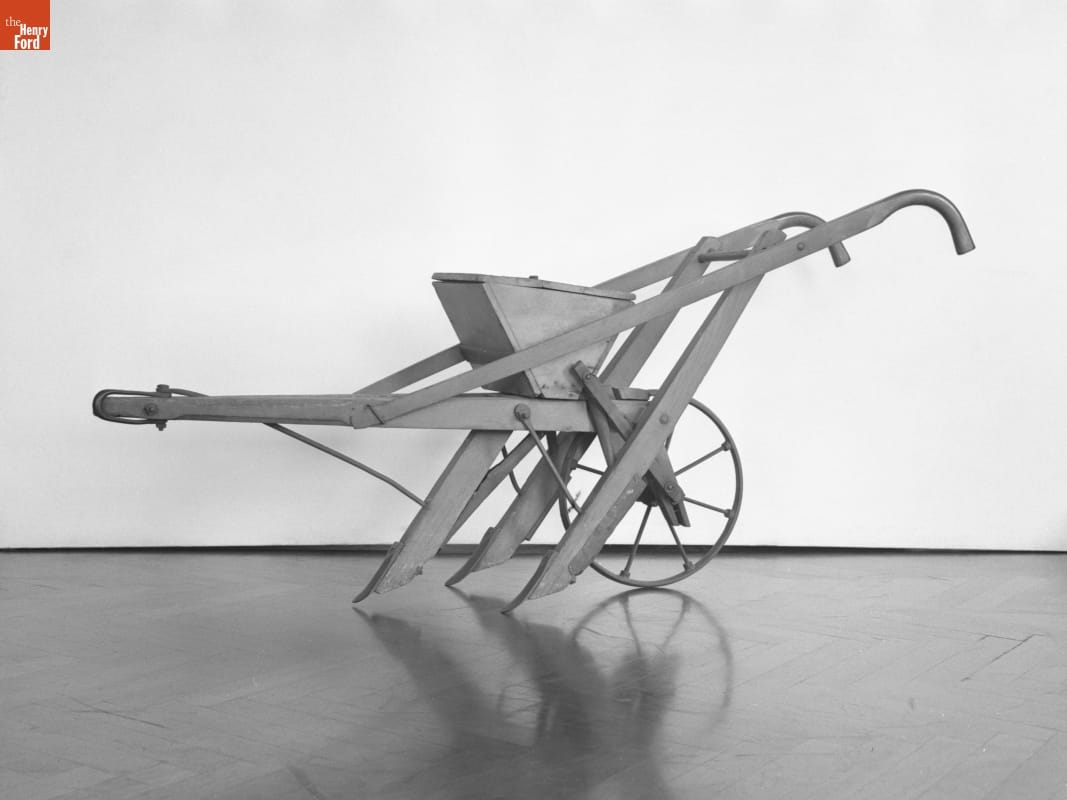
- circa 1880
- Collections - Artifact
J.F. Harcourt Company Grain Drill, circa 1880
- Grain Drill, circa 1890 - The grain drill was superior to hand sowing because it distributed seed uniformly at a controlled depth and covered it properly. Less seed per acre was used, but higher yields resulted. Early drills required an even seedbed to be effective. This improved drill, patented 1863 by P.D. Beckwith, used heavy cast iron wheels to both smooth and plant the seedbed.
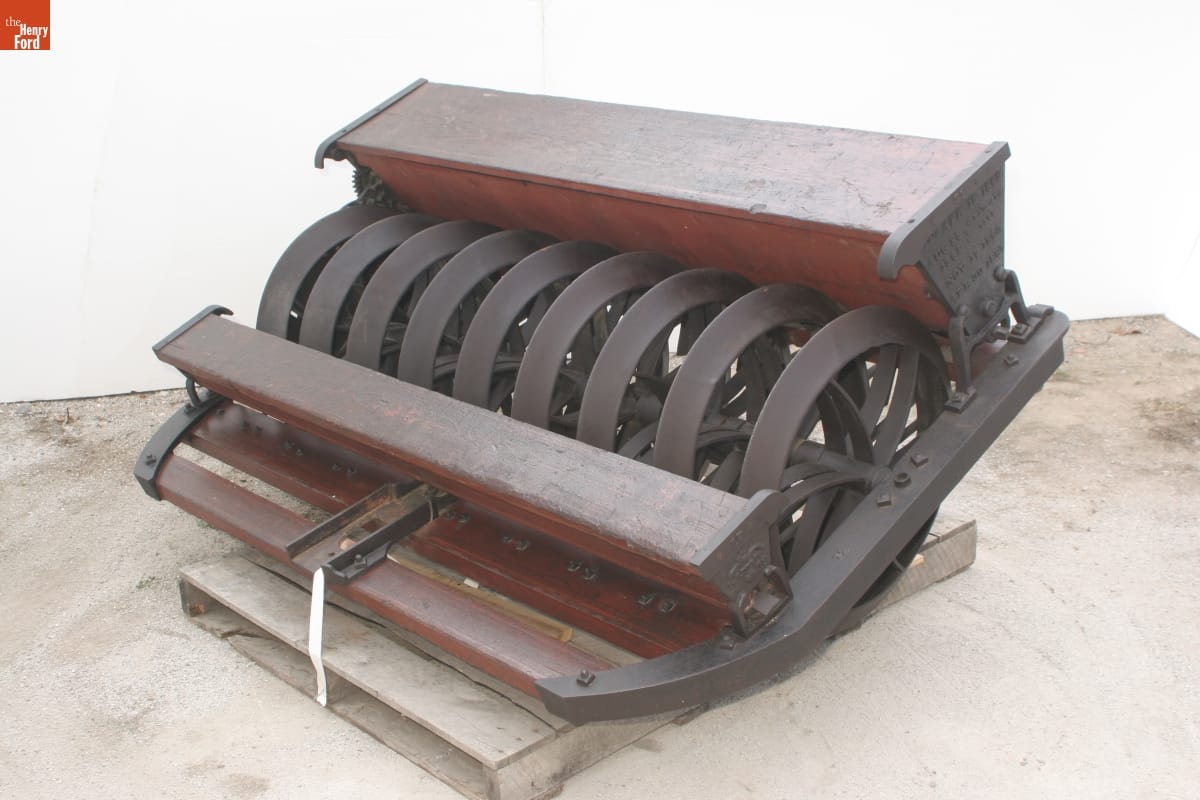
- circa 1890
- Collections - Artifact
Grain Drill, circa 1890
The grain drill was superior to hand sowing because it distributed seed uniformly at a controlled depth and covered it properly. Less seed per acre was used, but higher yields resulted. Early drills required an even seedbed to be effective. This improved drill, patented 1863 by P.D. Beckwith, used heavy cast iron wheels to both smooth and plant the seedbed.
- One-Horse Grain Drill, circa 1870 -
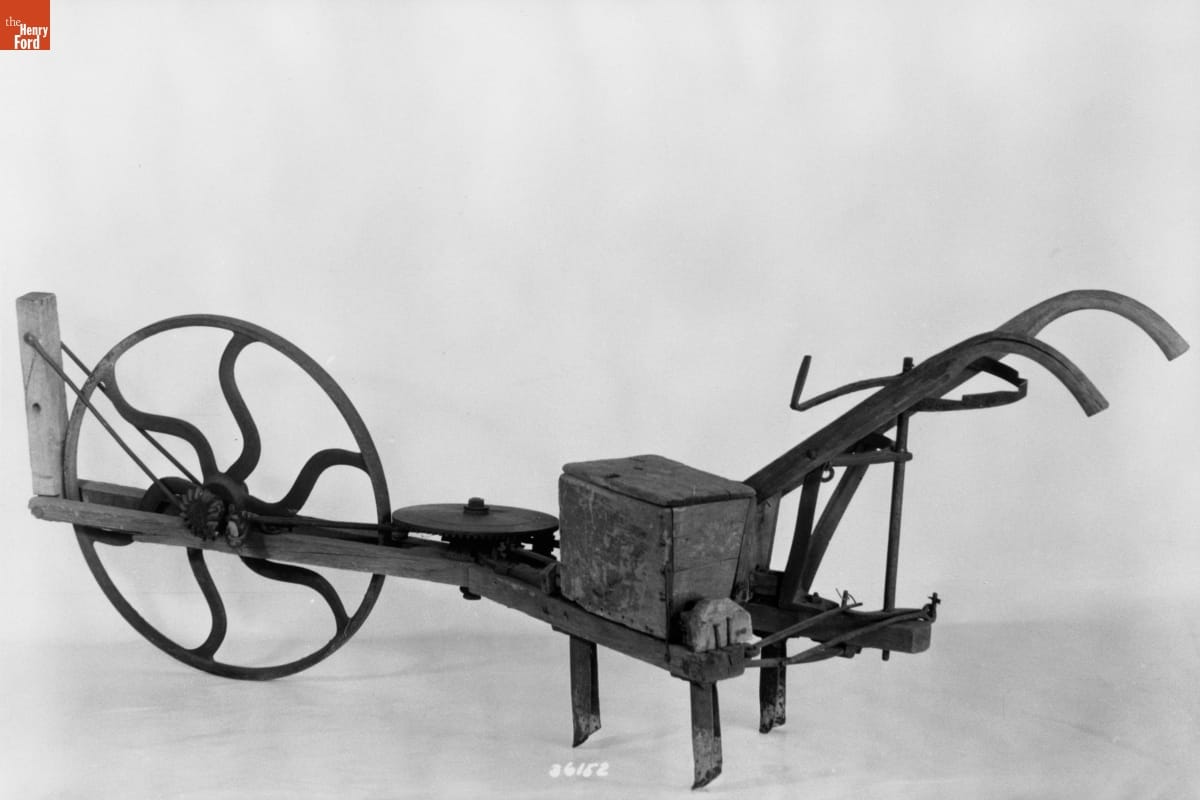
- circa 1870
- Collections - Artifact
One-Horse Grain Drill, circa 1870
- Superior Grain Drill, circa 1900 - Drilling grain was superior to hand sowing because it distributed seed uniformly at a controlled depth and covered it properly. Less seed per acre was used, but higher yields resulted. Early grain drills opened the seedbed with hoes, but they tended to clog with field debris. The disk-type opener easily cut through the debris, allowing for larger, more effective drills.
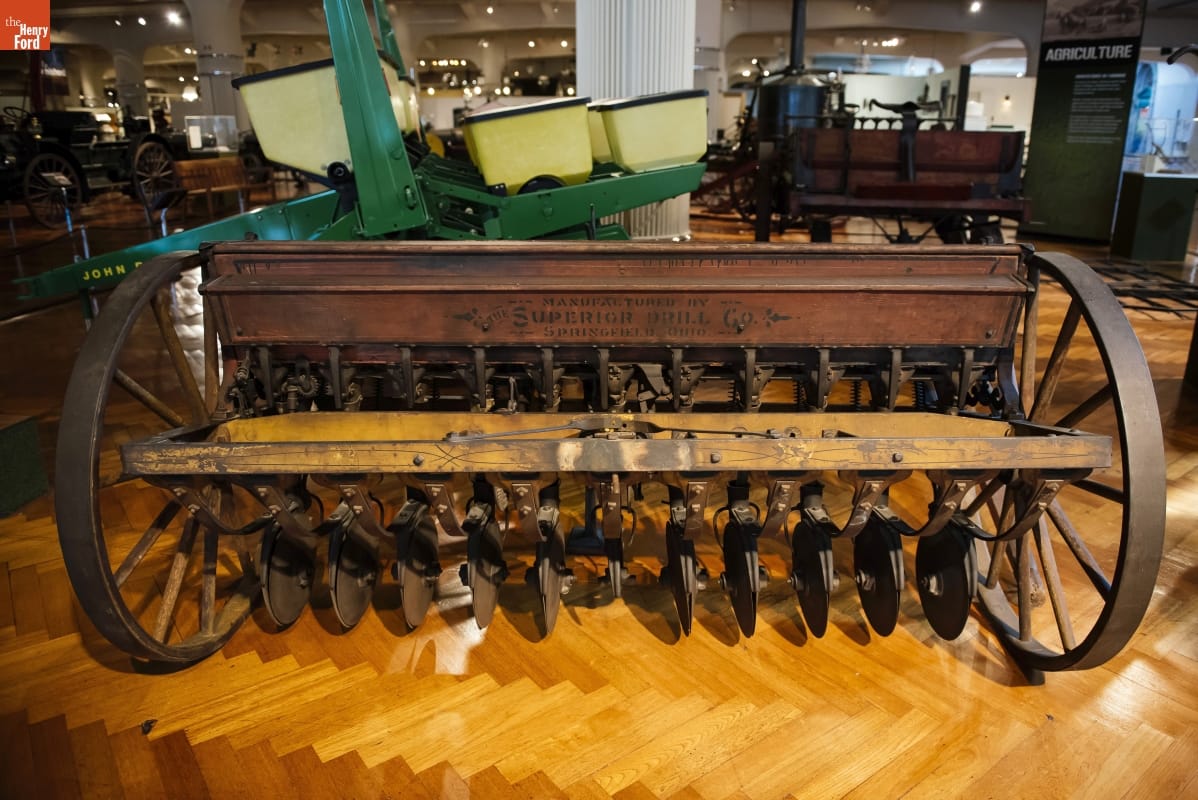
- circa 1900
- Collections - Artifact
Superior Grain Drill, circa 1900
Drilling grain was superior to hand sowing because it distributed seed uniformly at a controlled depth and covered it properly. Less seed per acre was used, but higher yields resulted. Early grain drills opened the seedbed with hoes, but they tended to clog with field debris. The disk-type opener easily cut through the debris, allowing for larger, more effective drills.
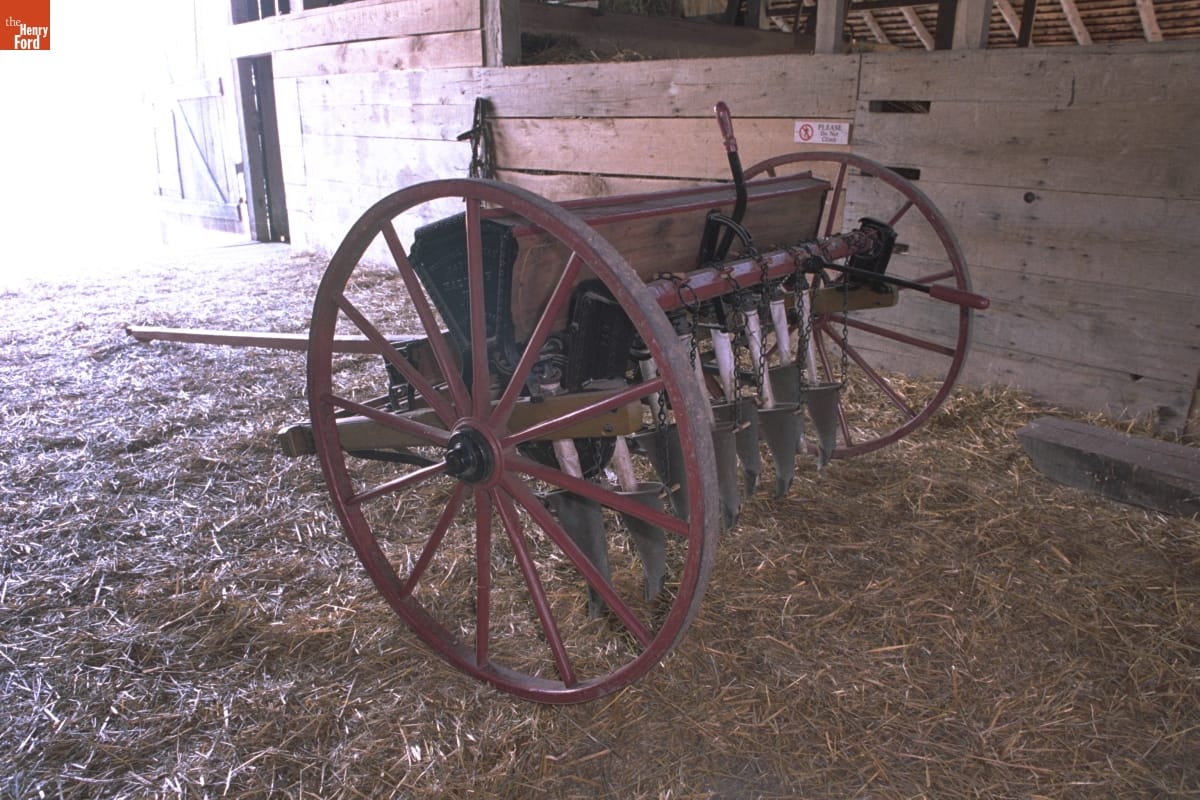
- Bickford & Huffman Grain Drill, circa 1890 - Lyman Bickford and Henry Huffman began making agricultural machinery in 1842. They manufactured a grain drill in 1849 that became the "Farmers' Favorite." Dependable and affordable, this drill set a standard for the industry. Patents for "double force" seed distribution and changeable speed gearing increased the drill's utility. Farmers could use it to plant seeds and spread fertilizer at the same time.
- circa 1890
- Collections - Artifact
Bickford & Huffman Grain Drill, circa 1890
Lyman Bickford and Henry Huffman began making agricultural machinery in 1842. They manufactured a grain drill in 1849 that became the "Farmers' Favorite." Dependable and affordable, this drill set a standard for the industry. Patents for "double force" seed distribution and changeable speed gearing increased the drill's utility. Farmers could use it to plant seeds and spread fertilizer at the same time.
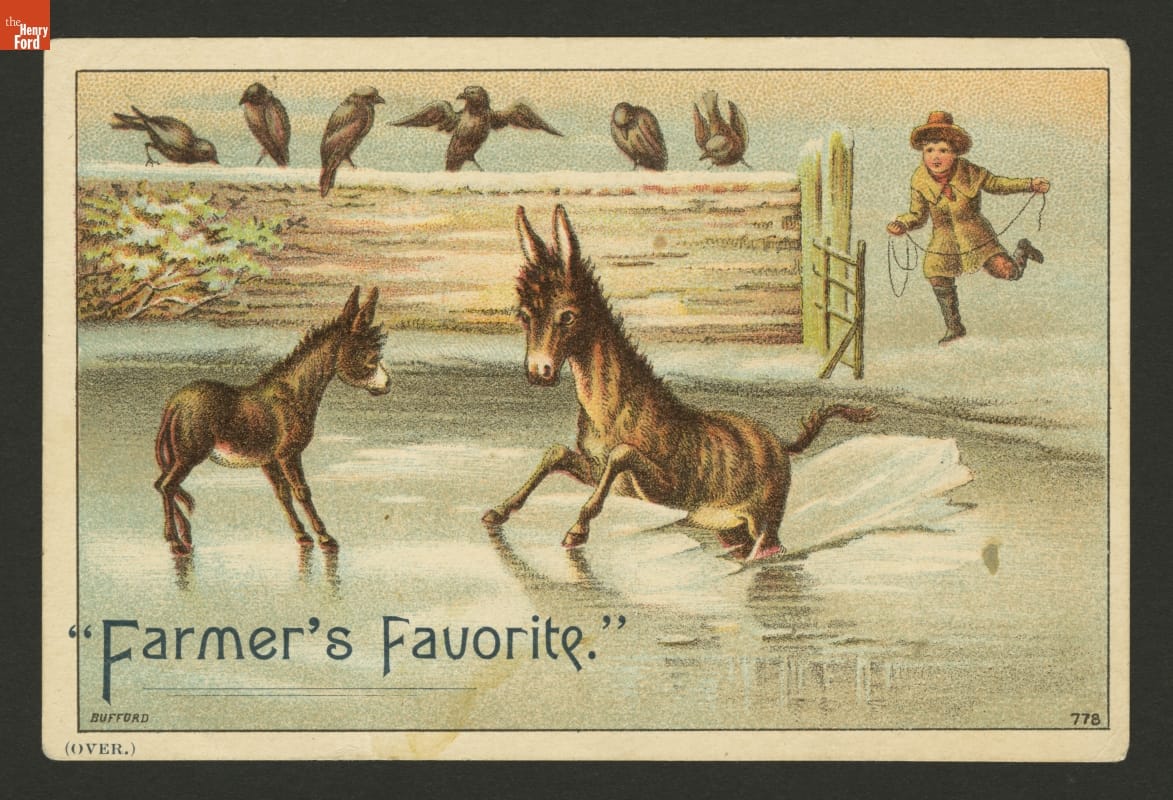
- Trade Card for Bickford & Huffman's Diamond Fertilizer Grain Drill, 1870-1900 - In the last third of the nineteenth century, an unprecedented variety of consumer goods and services flooded the American market. Advertisers, armed with new methods of color printing, bombarded potential customers with trade cards. Americans enjoyed and often saved the vibrant little advertisements found in product packages or distributed by local merchants. Many survive as historical records of commercialism in the United States.
- 1870-1900
- Collections - Artifact
Trade Card for Bickford & Huffman's Diamond Fertilizer Grain Drill, 1870-1900
In the last third of the nineteenth century, an unprecedented variety of consumer goods and services flooded the American market. Advertisers, armed with new methods of color printing, bombarded potential customers with trade cards. Americans enjoyed and often saved the vibrant little advertisements found in product packages or distributed by local merchants. Many survive as historical records of commercialism in the United States.
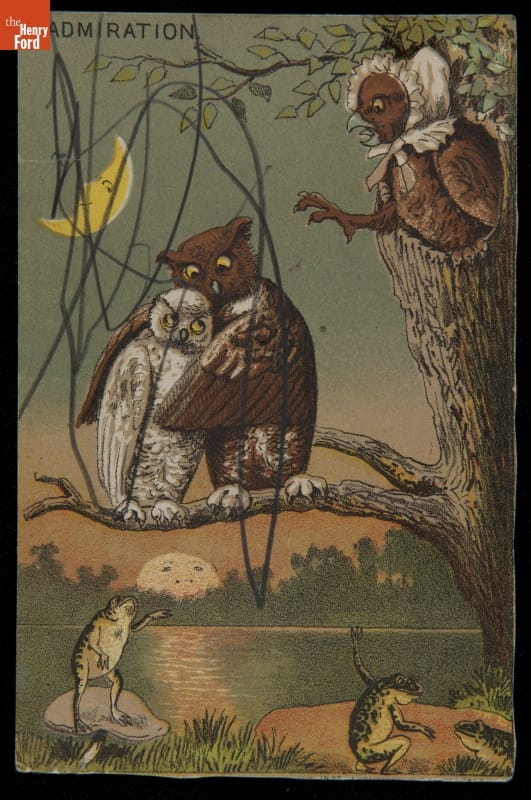
- Trade Card for the "Farmer's Favorite" Grain Seed Drill, Bickford & Huffman, 1886 - In the last third of the nineteenth century, an unprecedented variety of consumer goods and services flooded the American market. Advertisers, armed with new methods of color printing, bombarded potential customers with trade cards. Americans enjoyed and often saved the vibrant little advertisements found in product packages or distributed by local merchants. Many survive as historical records of commercialism in the United States.
- 1886
- Collections - Artifact
Trade Card for the "Farmer's Favorite" Grain Seed Drill, Bickford & Huffman, 1886
In the last third of the nineteenth century, an unprecedented variety of consumer goods and services flooded the American market. Advertisers, armed with new methods of color printing, bombarded potential customers with trade cards. Americans enjoyed and often saved the vibrant little advertisements found in product packages or distributed by local merchants. Many survive as historical records of commercialism in the United States.
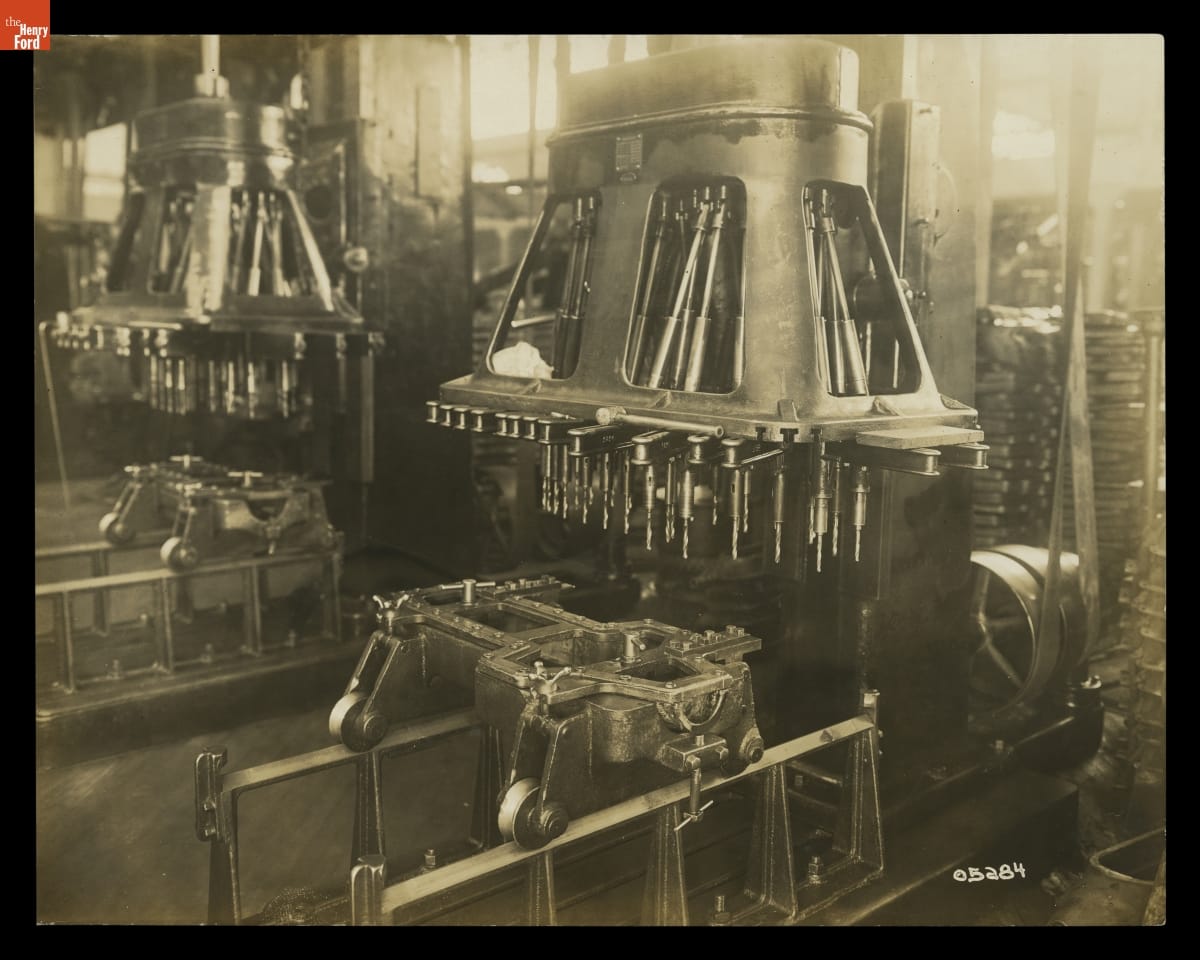
- Multiple Spindle Drill for Crankcase Drilling at Ford Motor Company Highland Park Plant, circa 1910 -
- circa 1910
- Collections - Artifact
Multiple Spindle Drill for Crankcase Drilling at Ford Motor Company Highland Park Plant, circa 1910
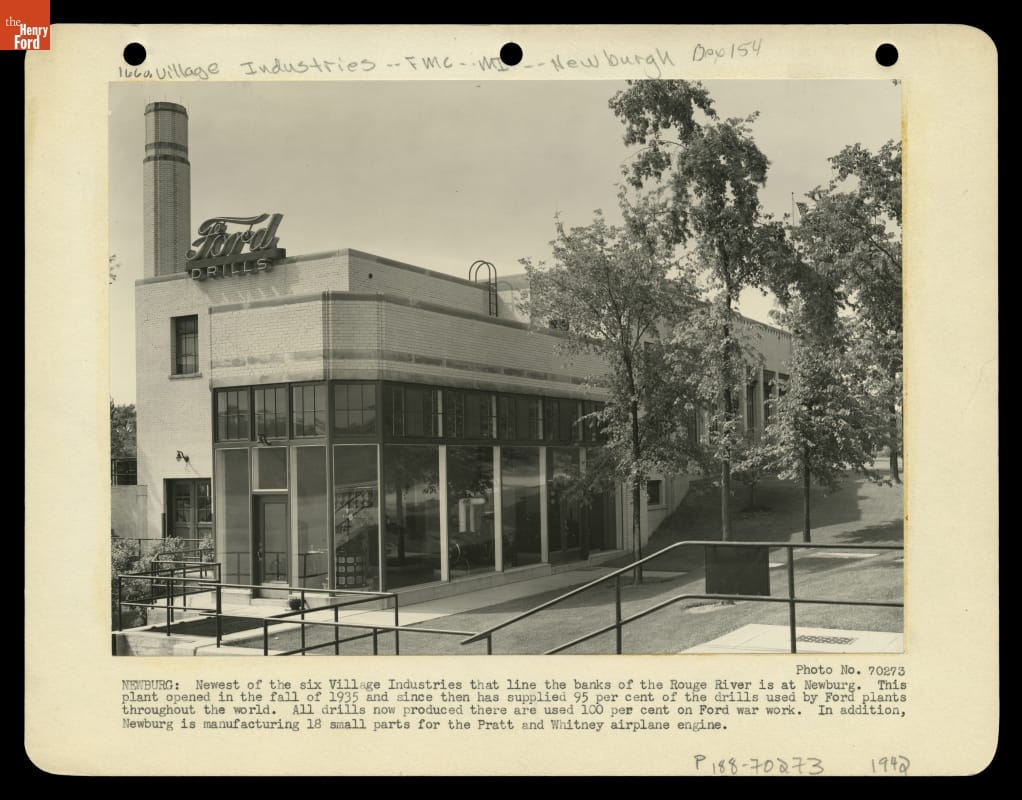
- Ford Village Industries Newburgh Drill Plant, Livonia, Michigan, 1942 - Henry Ford began setting up small-scale factories in towns throughout southeast Michigan in the 1920s. These "Village Industries" -- usually located at the site of an old mill -- employed local residents and supplied Ford with parts, tools and equipment. Newburgh Mill -- situated along the Middle Rouge River -- opened in 1935 and made most of the twist drills used in Ford's operations.
- 1942
- Collections - Artifact
Ford Village Industries Newburgh Drill Plant, Livonia, Michigan, 1942
Henry Ford began setting up small-scale factories in towns throughout southeast Michigan in the 1920s. These "Village Industries" -- usually located at the site of an old mill -- employed local residents and supplied Ford with parts, tools and equipment. Newburgh Mill -- situated along the Middle Rouge River -- opened in 1935 and made most of the twist drills used in Ford's operations.
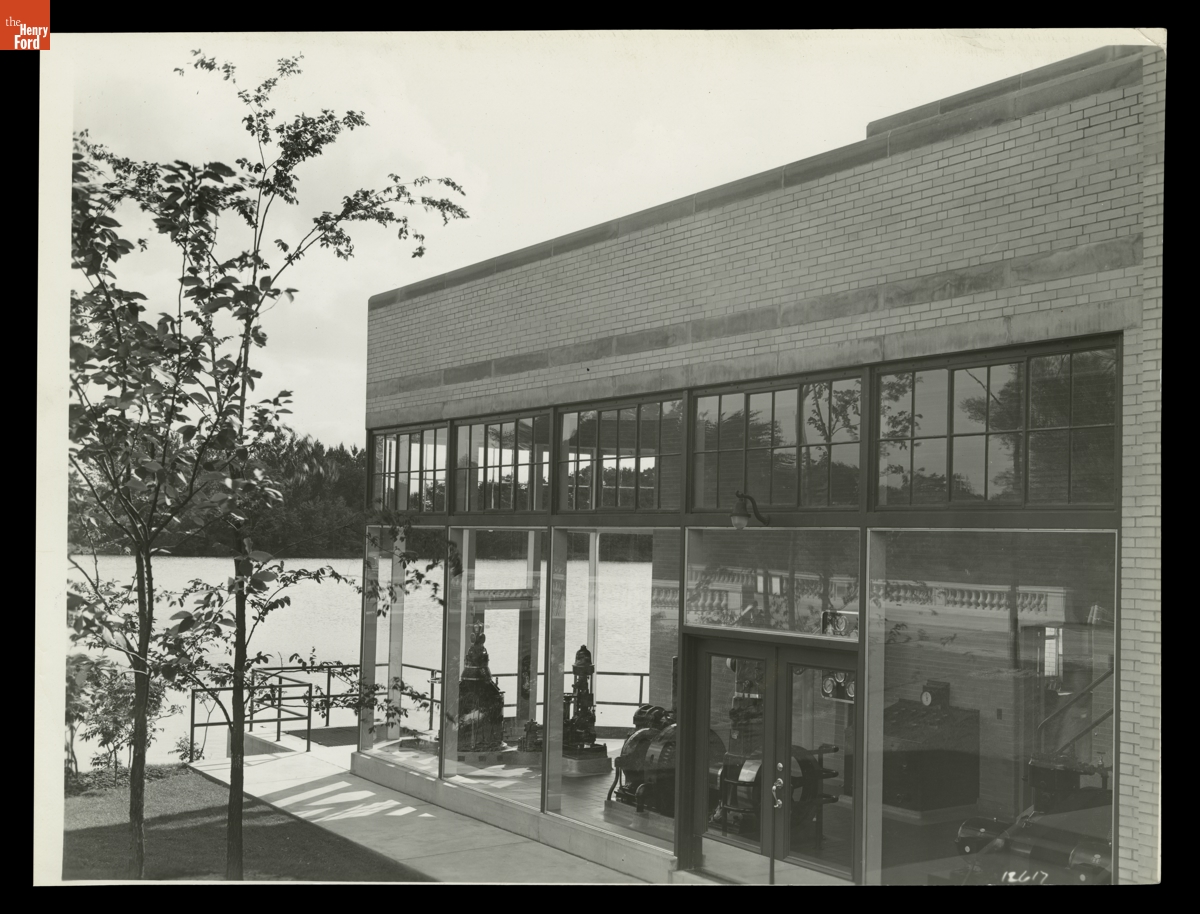
- Ford Village Industries, Newburgh Drill Plant, Livonia, Michigan, 1937 - Henry Ford began setting up small-scale factories in towns throughout southeast Michigan in the 1920s. These "Village Industries" -- usually located at the site of an old mill -- employed local residents and supplied Ford with parts, tools and equipment. Newburgh Mill -- situated along the Middle Rouge River -- opened in 1935 and made most of the twist drills used in Ford's operations.
- September 14, 1937
- Collections - Artifact
Ford Village Industries, Newburgh Drill Plant, Livonia, Michigan, 1937
Henry Ford began setting up small-scale factories in towns throughout southeast Michigan in the 1920s. These "Village Industries" -- usually located at the site of an old mill -- employed local residents and supplied Ford with parts, tools and equipment. Newburgh Mill -- situated along the Middle Rouge River -- opened in 1935 and made most of the twist drills used in Ford's operations.