
Search
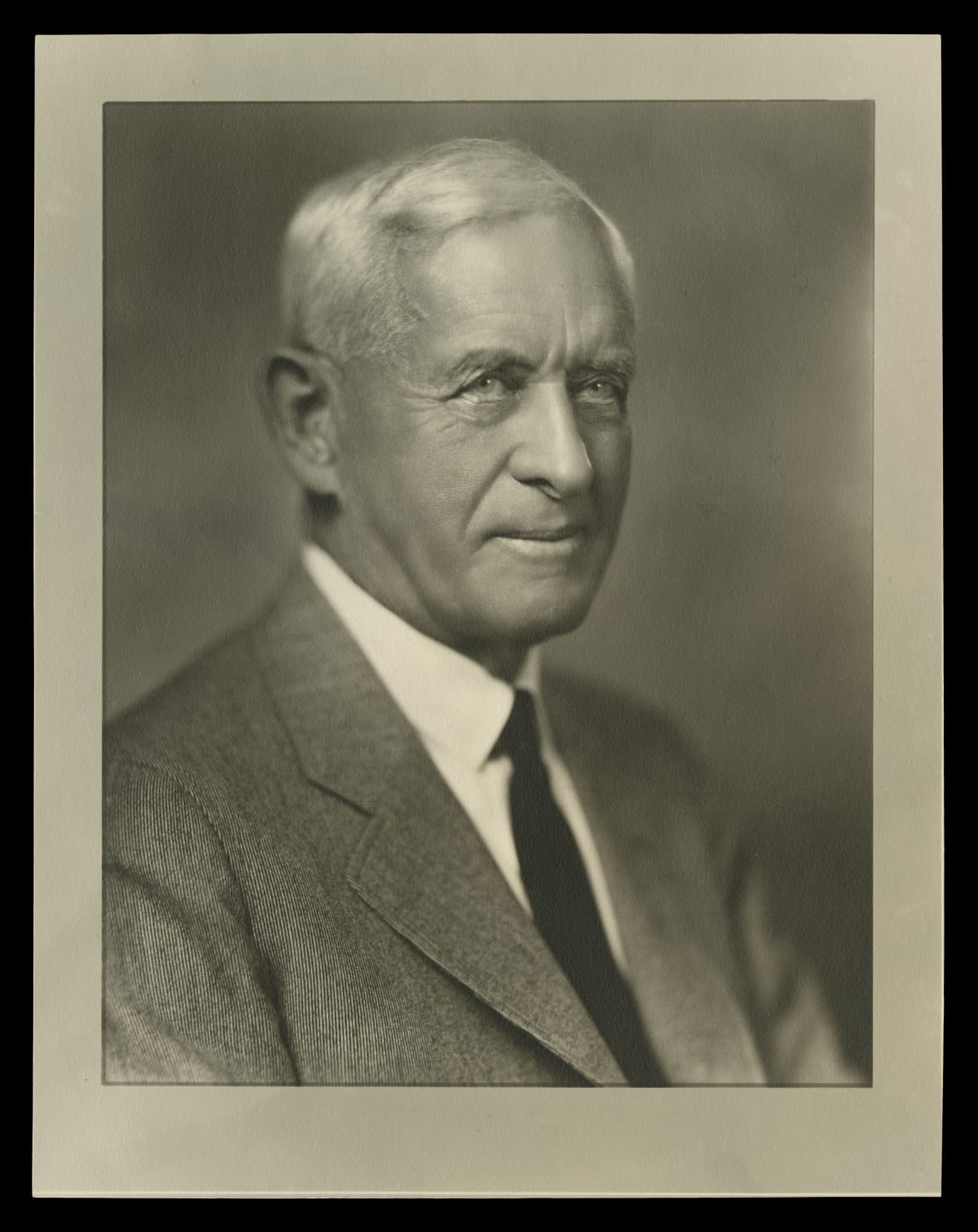
- Portrait of Edward G. Kingsford, circa 1920 - E.G. Kingsford, a cousin-in-law to Henry Ford, located and purchased some 313,000 acres of forest in Michigan's Upper Peninsula for Ford Motor Company. Ford built a sawmill on site and the finished lumber went to Detroit for use in Model Ts. Ford produced charcoal from the sawmill's waste. Kingsford, Michigan, and the Kingsford charcoal brand were named in Kingsford's honor.
- circa 1920
- Collections - Artifact
Portrait of Edward G. Kingsford, circa 1920
E.G. Kingsford, a cousin-in-law to Henry Ford, located and purchased some 313,000 acres of forest in Michigan's Upper Peninsula for Ford Motor Company. Ford built a sawmill on site and the finished lumber went to Detroit for use in Model Ts. Ford produced charcoal from the sawmill's waste. Kingsford, Michigan, and the Kingsford charcoal brand were named in Kingsford's honor.
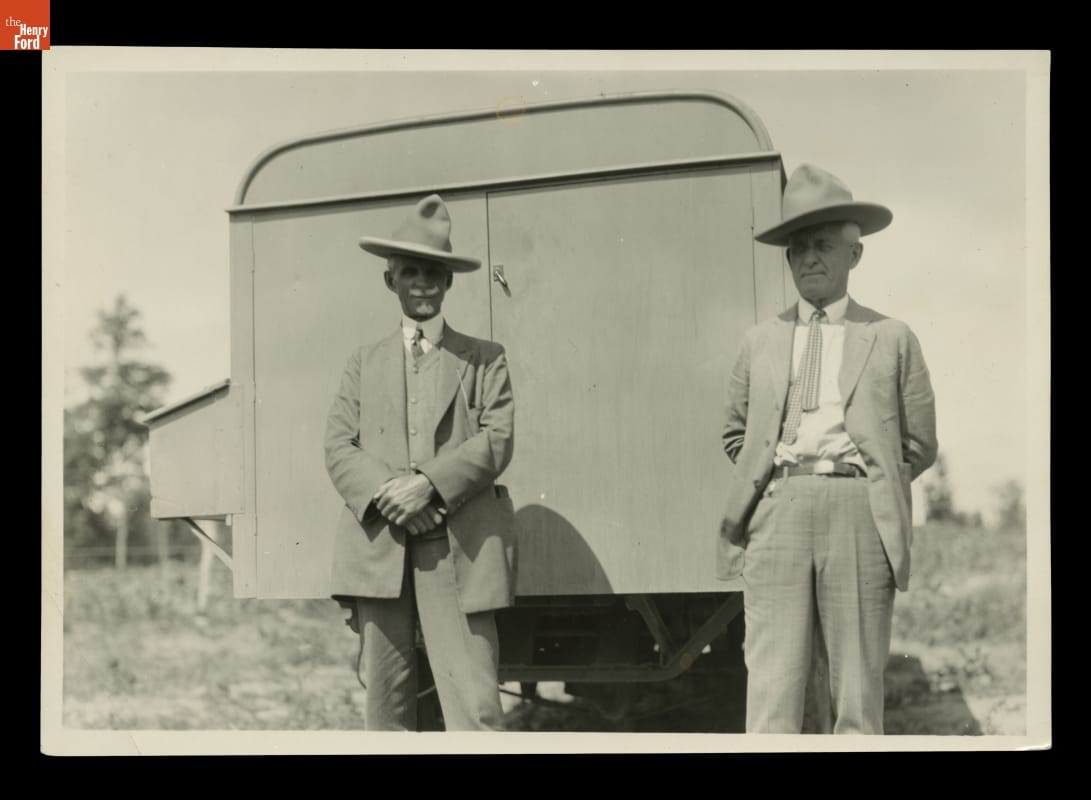
- Henry Ford and Edward Kingsford in Western Wear on a "Vagabonds" Camping Trip, 1923 - In 1923, Henry Ford, Thomas Edison and Harvey Firestone embarked on one of their famous camping trips, this time exploring the Upper Peninsula of Michigan. Henry Ford and E.G. Kingsford -- manager of Ford's extensive northern Michigan lumbering operations and namesake of the Kingsford Charcoal company -- joined in on the jovial atmosphere of camp, donning western attire.
- 1923
- Collections - Artifact
Henry Ford and Edward Kingsford in Western Wear on a "Vagabonds" Camping Trip, 1923
In 1923, Henry Ford, Thomas Edison and Harvey Firestone embarked on one of their famous camping trips, this time exploring the Upper Peninsula of Michigan. Henry Ford and E.G. Kingsford -- manager of Ford's extensive northern Michigan lumbering operations and namesake of the Kingsford Charcoal company -- joined in on the jovial atmosphere of camp, donning western attire.
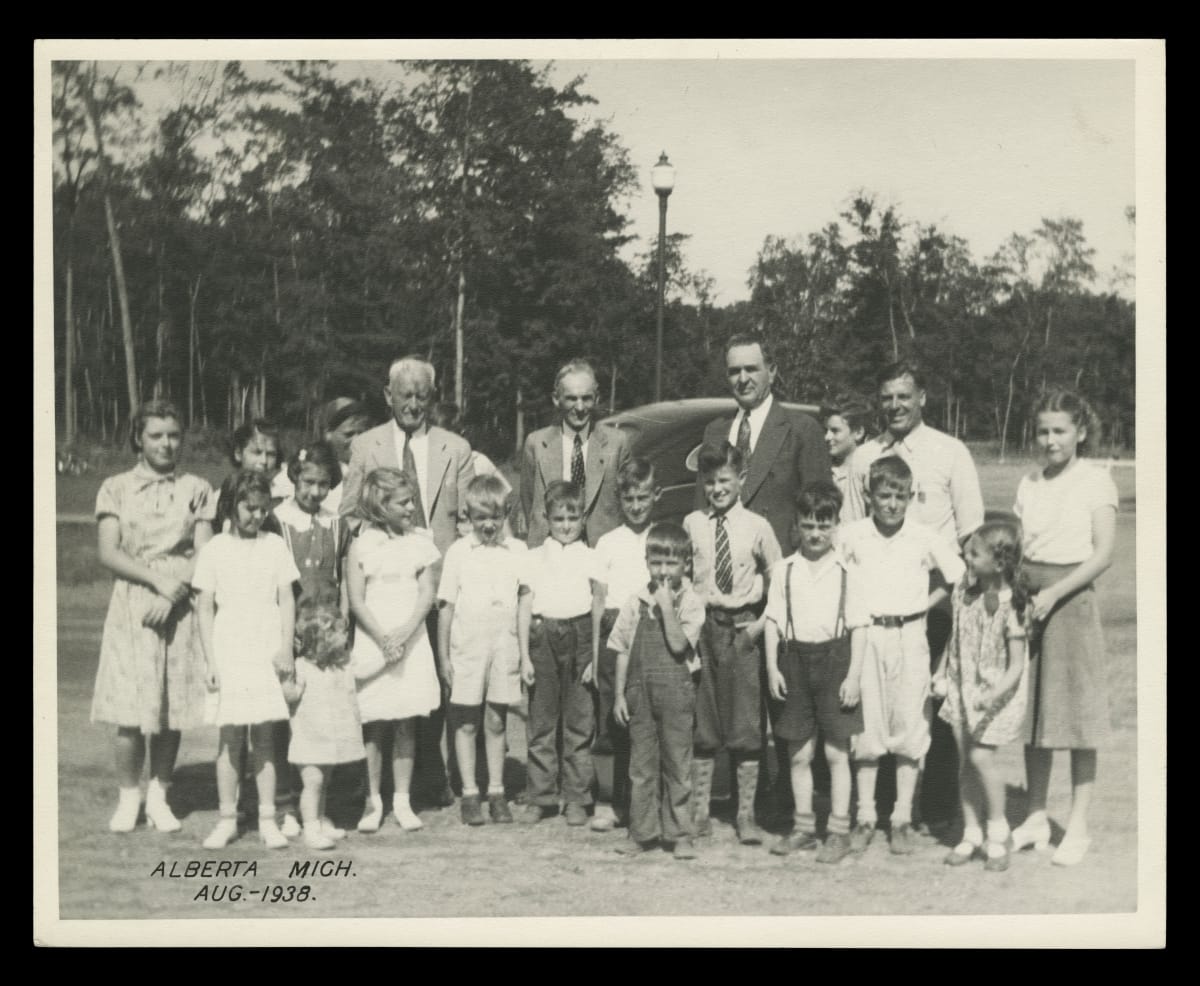
- Edward Kingsford, Henry Ford, Fred Johnson and Alex Boivin with Group of Children in Alberta, Michigan, 1938 - Henry Ford (center), Edward Kingsford (left), and Fred Johnson (right) posed with children in the Ford company town of Alberta, Michigan, in 1938. Kingsford and Johnson helped manage Ford's vast forest lands in Michigan's Upper Peninsula, and Alberta was home to a sawmill that produced lumber for Ford's automobiles. In 1954, Ford Motor Company donated the sawmill and community buildings to Michigan Technological University.
- August 01, 1938
- Collections - Artifact
Edward Kingsford, Henry Ford, Fred Johnson and Alex Boivin with Group of Children in Alberta, Michigan, 1938
Henry Ford (center), Edward Kingsford (left), and Fred Johnson (right) posed with children in the Ford company town of Alberta, Michigan, in 1938. Kingsford and Johnson helped manage Ford's vast forest lands in Michigan's Upper Peninsula, and Alberta was home to a sawmill that produced lumber for Ford's automobiles. In 1954, Ford Motor Company donated the sawmill and community buildings to Michigan Technological University.
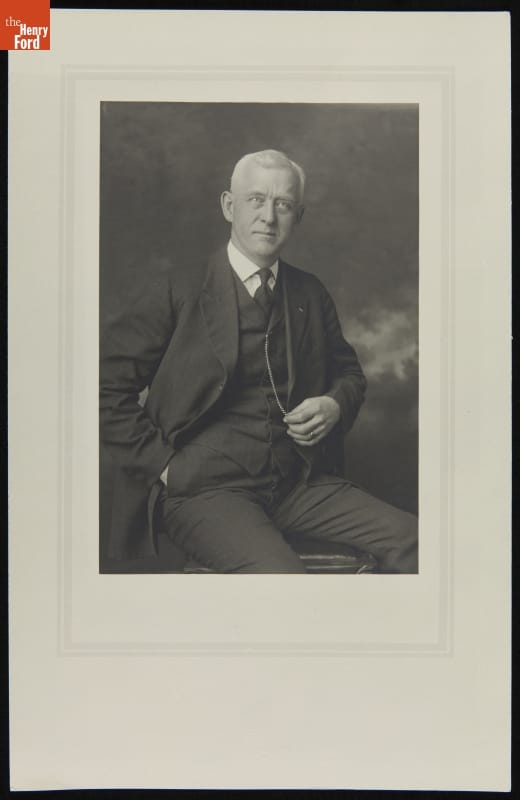
- E. G. Kingsford, Ford Dealer, Iron Mountain, Michigan, circa 1918 - Edward G. Kingsford was operating a Ford dealership in Iron Mountain, Michigan, when his cousin-in-law, Henry Ford, contacted him about acquiring timberland in Michigan's Upper Peninsula. Kingsford arranged the purchase of some 313,000 acres on behalf of Ford Motor Company. He then became vice president of Ford's Upper Peninsula operations, which included sawmills, factories, and a wood chemical plant.
- circa 1918
- Collections - Artifact
E. G. Kingsford, Ford Dealer, Iron Mountain, Michigan, circa 1918
Edward G. Kingsford was operating a Ford dealership in Iron Mountain, Michigan, when his cousin-in-law, Henry Ford, contacted him about acquiring timberland in Michigan's Upper Peninsula. Kingsford arranged the purchase of some 313,000 acres on behalf of Ford Motor Company. He then became vice president of Ford's Upper Peninsula operations, which included sawmills, factories, and a wood chemical plant.
- E. G. Kingsford Ford Dealership, Iron Mountain, Michigan, circa 1927 - Early automobile bodies were made of wood. Henry Ford wanted to secure a timber supply in the hardwood forests of Michigan's Upper Peninsula. He contracted E. G. Kingsford, the authorized Ford dealer in Iron Mountain (and his cousin-in-law), to purchase land for company use. Iron Mountain quickly became the center of Ford's logging and manufacturing operations in northern Michigan.
- circa 1927
- Collections - Artifact
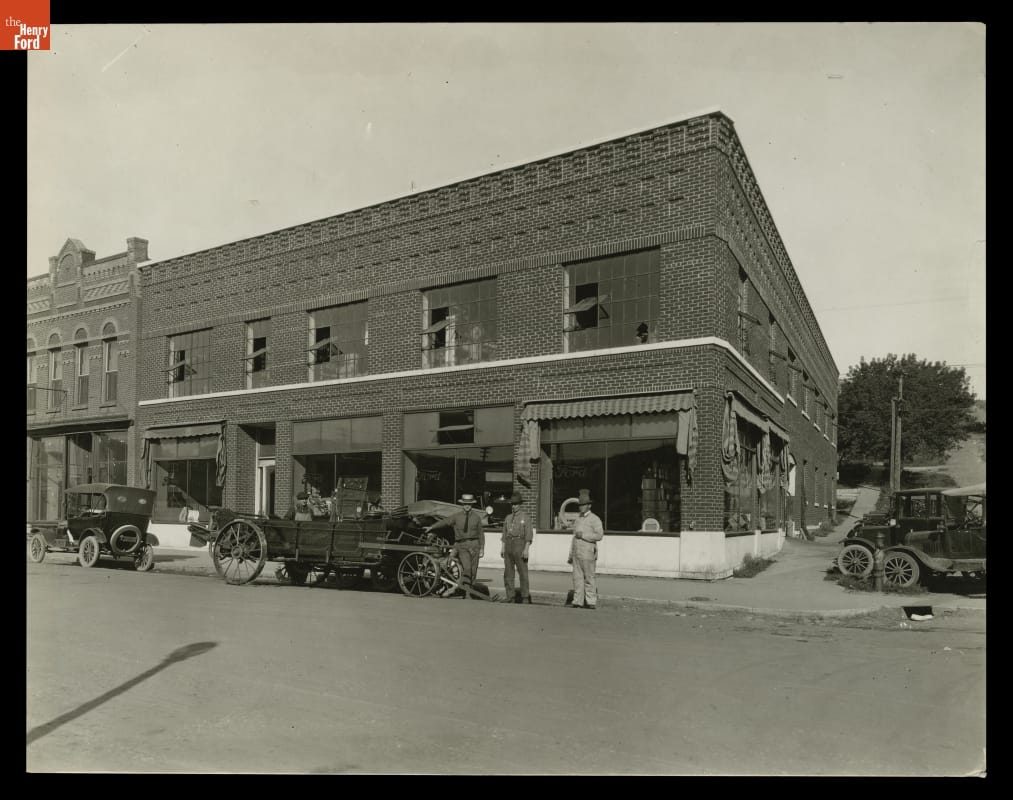
E. G. Kingsford Ford Dealership, Iron Mountain, Michigan, circa 1927
Early automobile bodies were made of wood. Henry Ford wanted to secure a timber supply in the hardwood forests of Michigan's Upper Peninsula. He contracted E. G. Kingsford, the authorized Ford dealer in Iron Mountain (and his cousin-in-law), to purchase land for company use. Iron Mountain quickly became the center of Ford's logging and manufacturing operations in northern Michigan.
- Ford in Michigan’s Upper Peninsula - In 1919, Henry Ford began buying vast amounts of forestland in Michigan's Upper Peninsula. These prime hardwood forests supplied the lumber used to create vehicle bodies and parts. Other products such as railroad ties, shipping containers and chemical byproducts were also made -- all to support Ford's automobile operations and his goal of manufacturing self-sufficiency.
- May 04, 2017
- Collections - Set
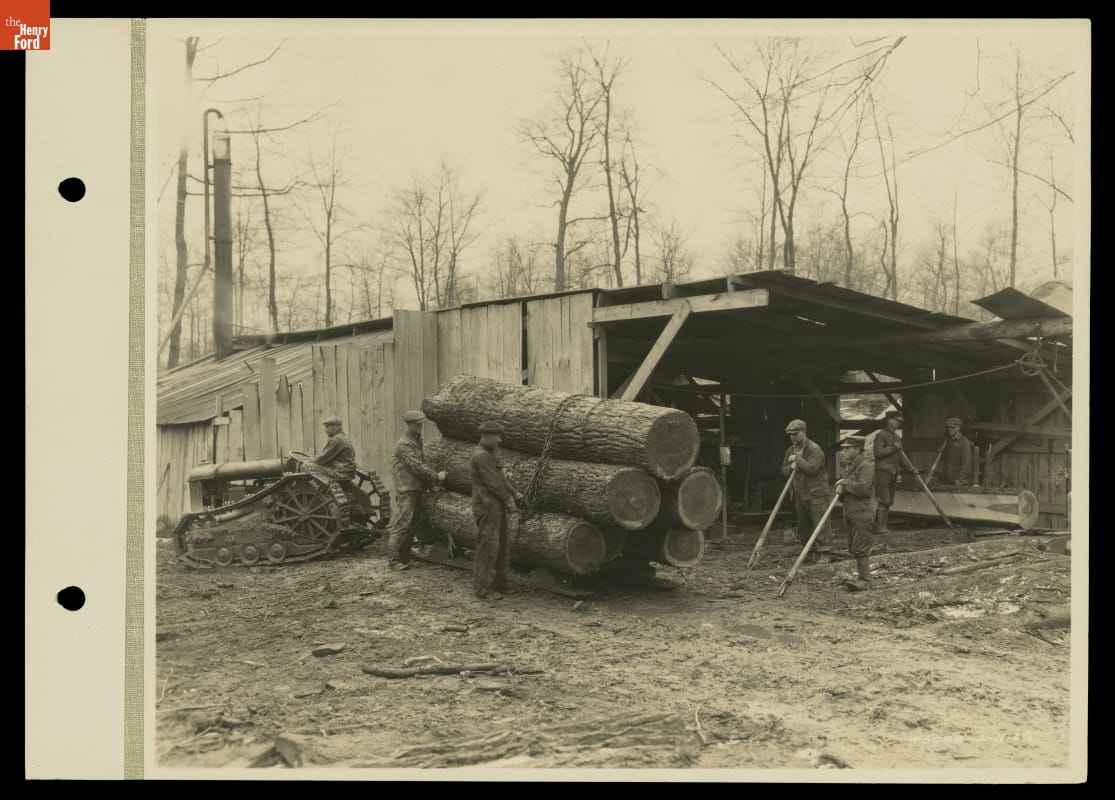
Ford in Michigan’s Upper Peninsula
In 1919, Henry Ford began buying vast amounts of forestland in Michigan's Upper Peninsula. These prime hardwood forests supplied the lumber used to create vehicle bodies and parts. Other products such as railroad ties, shipping containers and chemical byproducts were also made -- all to support Ford's automobile operations and his goal of manufacturing self-sufficiency.
- Ford Charcoal Briquets - Ford Motor Company sawmills created heaps of wood wastes. Some was used to produce steam for factory operations. The rest was carbonized and compressed into charcoal. Workers mixed charred hardwood chips with starch, forming nearly 100 tons of charcoal briquettes each day. Dealers sold branded barbecue accessories and packages of the popular briquettes in Ford dealerships across the country.
- May 04, 2017
- Collections - Set
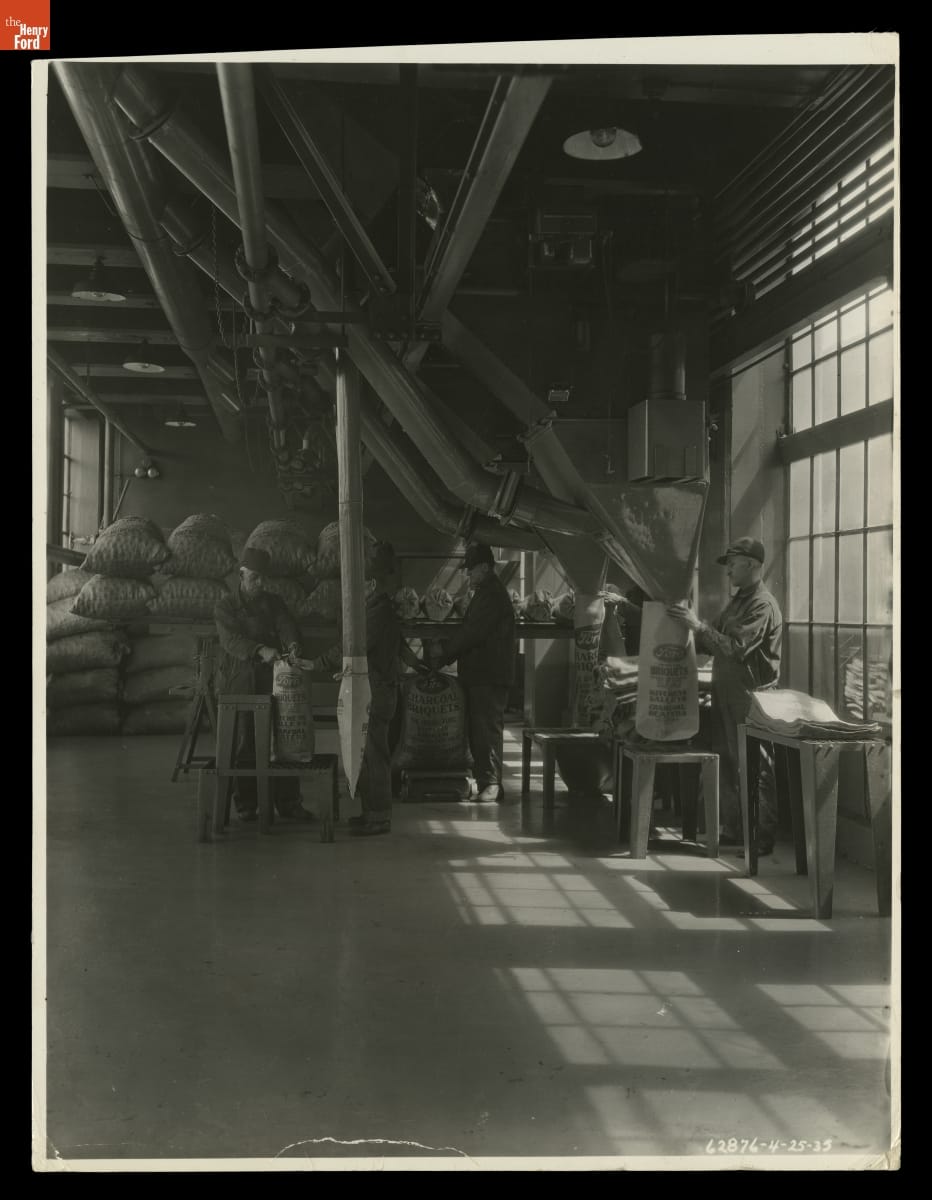
Ford Charcoal Briquets
Ford Motor Company sawmills created heaps of wood wastes. Some was used to produce steam for factory operations. The rest was carbonized and compressed into charcoal. Workers mixed charred hardwood chips with starch, forming nearly 100 tons of charcoal briquettes each day. Dealers sold branded barbecue accessories and packages of the popular briquettes in Ford dealerships across the country.
- Kerry-Edwards Campaign Button, 2004 - In 2000, the Democratic presidential candidate had won the popular vote, but narrowly lost the Electoral College vote. Democrats hoped Massachusetts Senator John Kerry could retake the White House in 2004. Kerry battled incumbent George W. Bush who touted his leadership after the September 11, 2001 attacks. Bush won again, but this time also winning the popular vote by a small majority.
- 2004
- Collections - Artifact
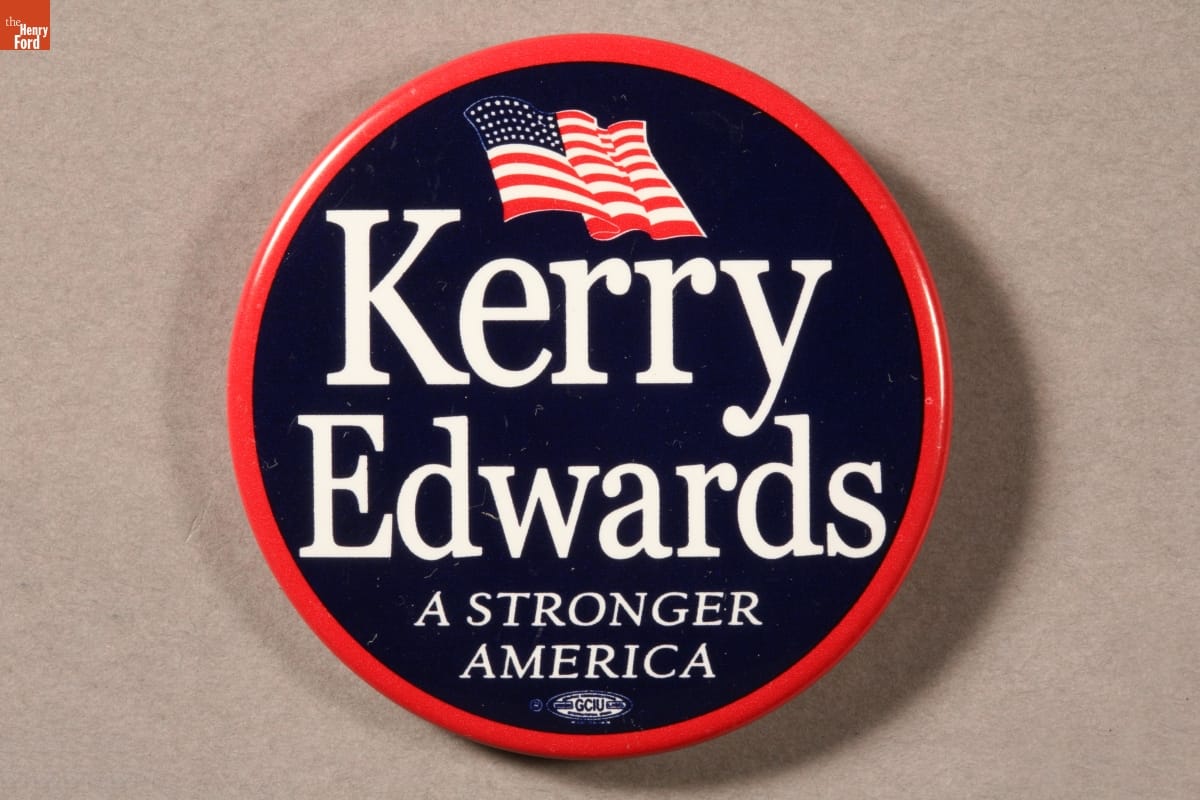
Kerry-Edwards Campaign Button, 2004
In 2000, the Democratic presidential candidate had won the popular vote, but narrowly lost the Electoral College vote. Democrats hoped Massachusetts Senator John Kerry could retake the White House in 2004. Kerry battled incumbent George W. Bush who touted his leadership after the September 11, 2001 attacks. Bush won again, but this time also winning the popular vote by a small majority.
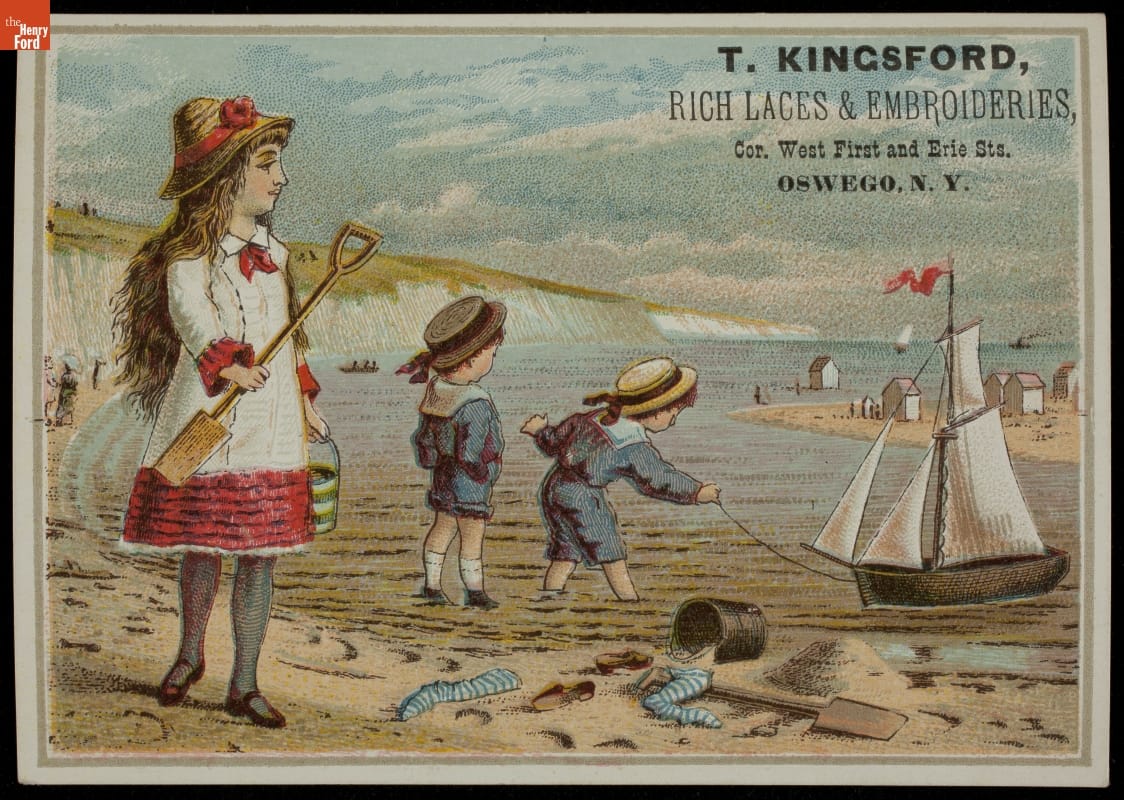
- Trade Card for Lace & Embroidery, T. Kingsford & Son, 1870-1900 - In the last third of the nineteenth century, an unprecedented variety of consumer goods and services flooded the American market. Advertisers, armed with new methods of color printing, bombarded potential customers with trade cards. Americans enjoyed and often saved the vibrant little advertisements found in product packages or distributed by local merchants. Many survive as historical records of commercialism in the United States.
- 1870-1900
- Collections - Artifact
Trade Card for Lace & Embroidery, T. Kingsford & Son, 1870-1900
In the last third of the nineteenth century, an unprecedented variety of consumer goods and services flooded the American market. Advertisers, armed with new methods of color printing, bombarded potential customers with trade cards. Americans enjoyed and often saved the vibrant little advertisements found in product packages or distributed by local merchants. Many survive as historical records of commercialism in the United States.
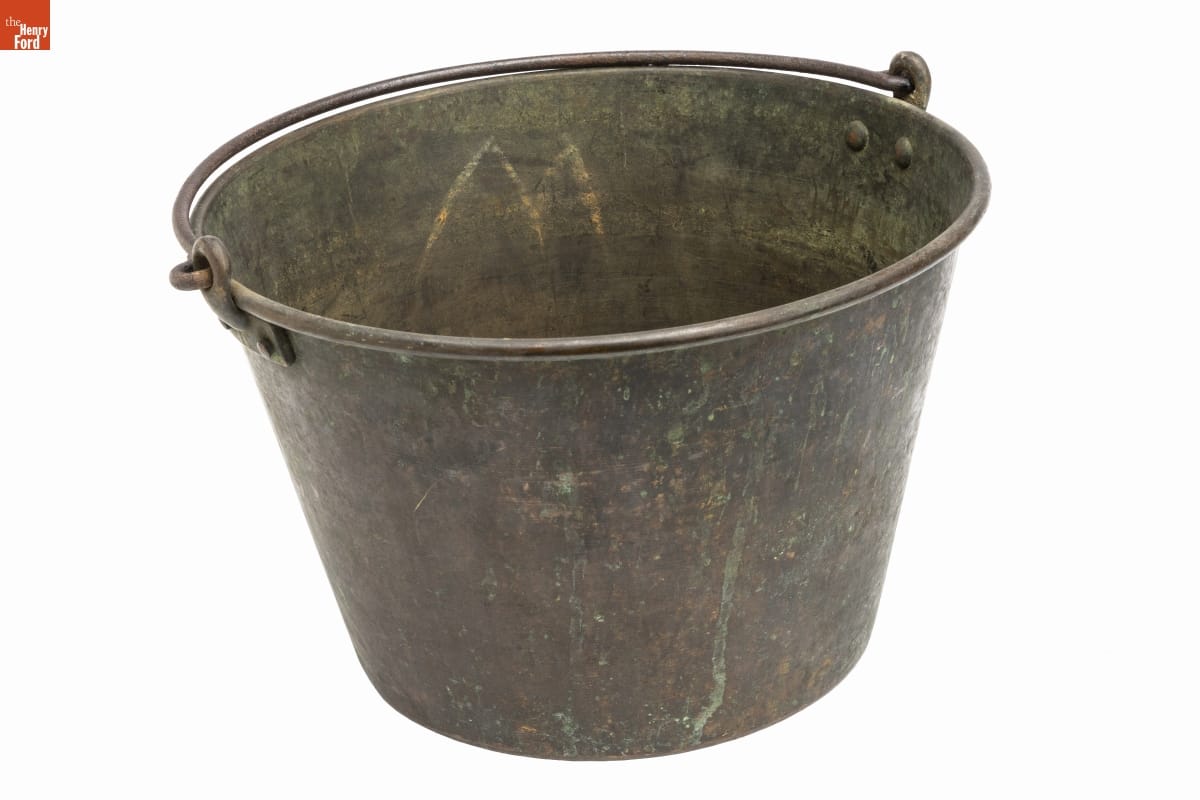
- Edward Miller & Co. Kettle, 1870-1900 -
- 1870-1900
- Collections - Artifact
Edward Miller & Co. Kettle, 1870-1900