
Search
- The Right Mentality - Emanuele Pirro drives innovation — literally. The Formula One driver describes the famous Edison2 ultra-efficient car and discusses the risks and technical challenges that come with building a groundbreaking new vehicle.

- January 01, 2013
- Collections - article
The Right Mentality
Emanuele Pirro drives innovation — literally. The Formula One driver describes the famous Edison2 ultra-efficient car and discusses the risks and technical challenges that come with building a groundbreaking new vehicle.
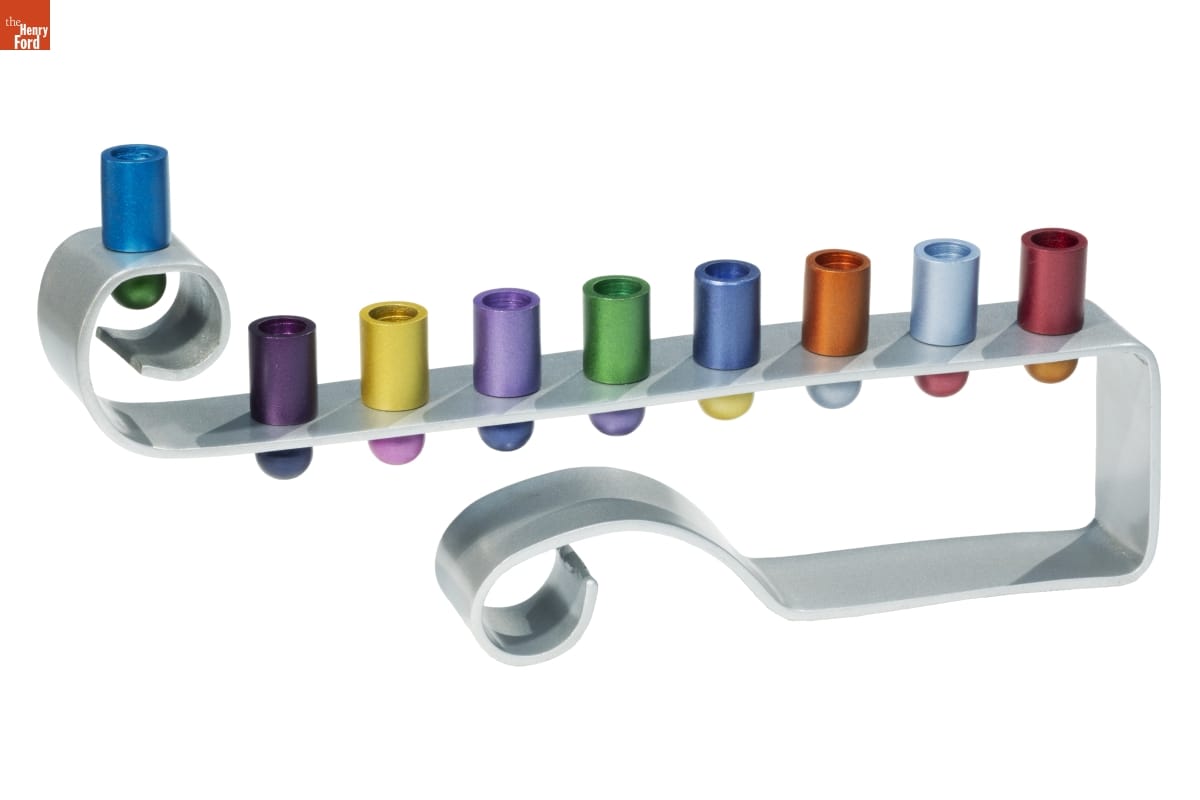
- "Emanual Menorah" Hanukkah Lamp, circa 2020 - Each night of Hanukkah, many Jewish families light a symbolic candelabrum called a menorah. This deep-rooted custom commemorates a miracle that followed a military victory in the year 165 B.C.E. Menorahs often incorporate traditional motifs, but more modern ones may also depict contemporary subjects, symbols, or designs.
- circa 2020
- Collections - Artifact
"Emanual Menorah" Hanukkah Lamp, circa 2020
Each night of Hanukkah, many Jewish families light a symbolic candelabrum called a menorah. This deep-rooted custom commemorates a miracle that followed a military victory in the year 165 B.C.E. Menorahs often incorporate traditional motifs, but more modern ones may also depict contemporary subjects, symbols, or designs.
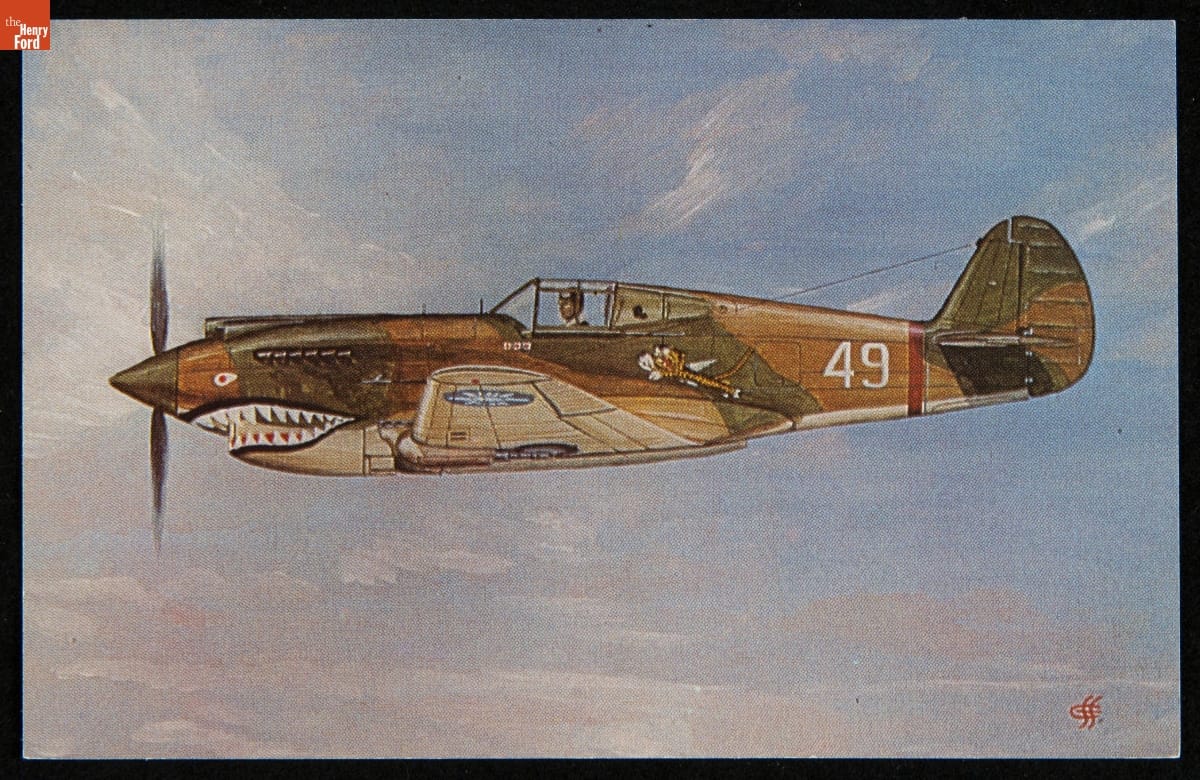
- 1941 Curtiss P-40C "Tomahawk" - Introduced in 1938, the Curtiss P-40 saw widespread use by Allied forces in World War II. The single-seat, single-engine fighter performed best at lower altitudes, and it was well suited to attacks on ground targets. Americans called it the Warhawk, while British and Soviet forces designated it Tomahawk. Curtiss-Wright produced more than 13,700 units at its Buffalo, New York, factory through 1944.
- 1982
- Collections - Artifact
1941 Curtiss P-40C "Tomahawk"
Introduced in 1938, the Curtiss P-40 saw widespread use by Allied forces in World War II. The single-seat, single-engine fighter performed best at lower altitudes, and it was well suited to attacks on ground targets. Americans called it the Warhawk, while British and Soviet forces designated it Tomahawk. Curtiss-Wright produced more than 13,700 units at its Buffalo, New York, factory through 1944.
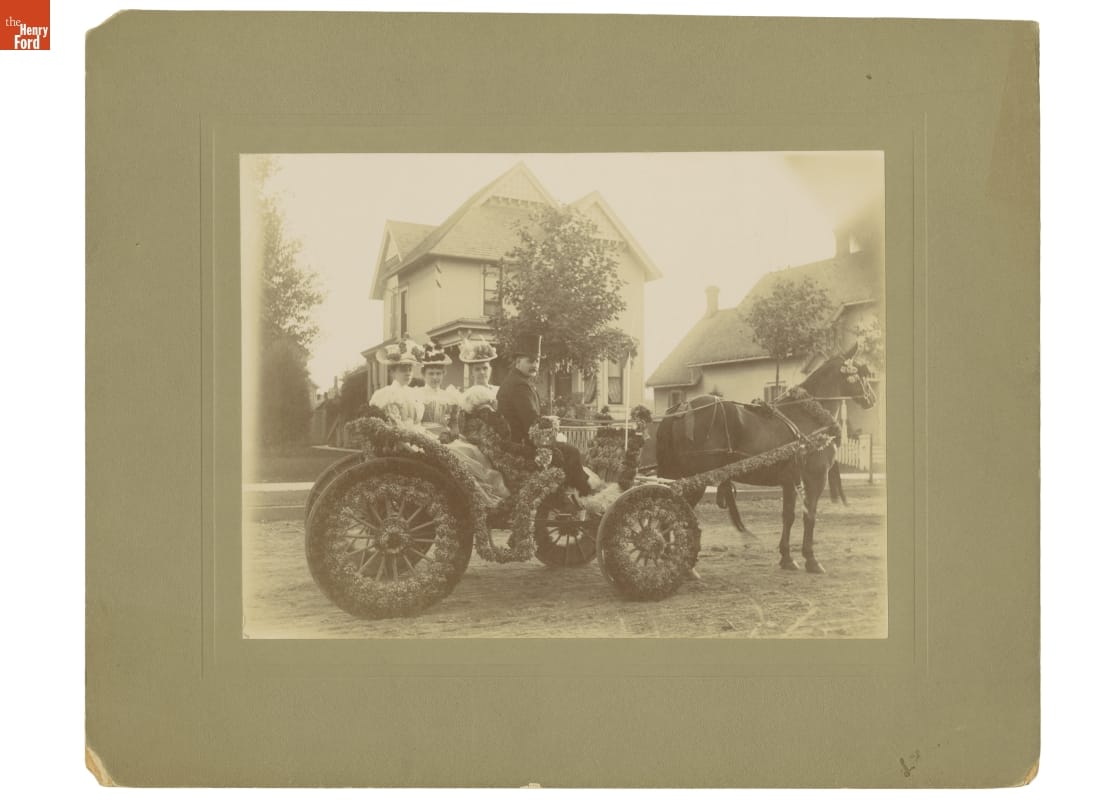
- Passengers in a Horse-Drawn Carriage Decorated for a Parade in Jackson, Michigan, circa 1895 - Community-sponsored celebrations provide entertainment for area residents. Around the turn of the 20th century, these celebrations sometimes included floral parades. Civic leaders would festoon buggies, coaches, carriages and even horses with flowers and ribbons. This photograph shows local store owner, E. G. Cook, and passengers in a decorated carriage ready to parade down the streets of Jackson, Michigan.
- circa 1895
- Collections - Artifact
Passengers in a Horse-Drawn Carriage Decorated for a Parade in Jackson, Michigan, circa 1895
Community-sponsored celebrations provide entertainment for area residents. Around the turn of the 20th century, these celebrations sometimes included floral parades. Civic leaders would festoon buggies, coaches, carriages and even horses with flowers and ribbons. This photograph shows local store owner, E. G. Cook, and passengers in a decorated carriage ready to parade down the streets of Jackson, Michigan.
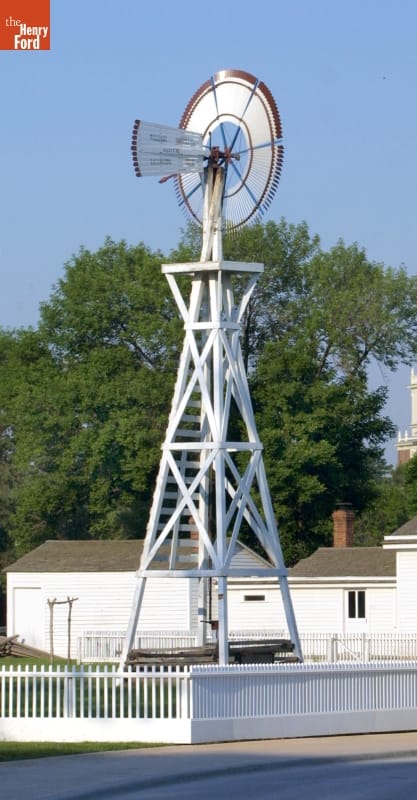
- Stover Windmill, circa 1883 - This windmill is similar to one purchased by William Ford, Henry Ford's father, and used on his Dearborn, Michigan, farm. Farmers throughout the United States in the late 1800s could purchase American prairie-style windmills like this one from scores of manufacturers. These labor-saving devices provided power for farm machinery and pumped well water used by the farmer's family and livestock.
- circa 1883
- Collections - Artifact
Stover Windmill, circa 1883
This windmill is similar to one purchased by William Ford, Henry Ford's father, and used on his Dearborn, Michigan, farm. Farmers throughout the United States in the late 1800s could purchase American prairie-style windmills like this one from scores of manufacturers. These labor-saving devices provided power for farm machinery and pumped well water used by the farmer's family and livestock.
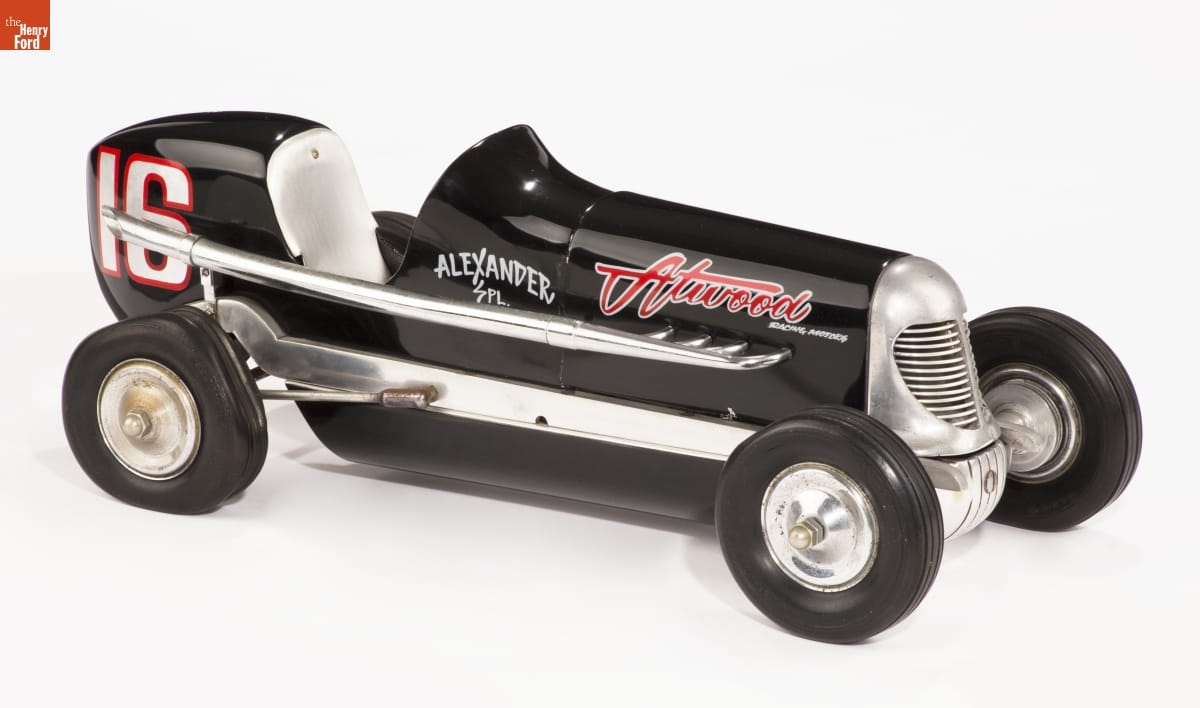
- Alexander Gas-Powered Racing Tether Car, 1938-1940 - Tether cars, gas-powered model race cars, were popular in the 1930s and 1940s. They were raced individually while tethered to a central pivot, or against each other on a scaled-down board track. Alexander Automotive Engineering Company produced this front-wheel-drive model with a cast aluminum body and a sheet metal hood.
- 1938-1940
- Collections - Artifact
Alexander Gas-Powered Racing Tether Car, 1938-1940
Tether cars, gas-powered model race cars, were popular in the 1930s and 1940s. They were raced individually while tethered to a central pivot, or against each other on a scaled-down board track. Alexander Automotive Engineering Company produced this front-wheel-drive model with a cast aluminum body and a sheet metal hood.
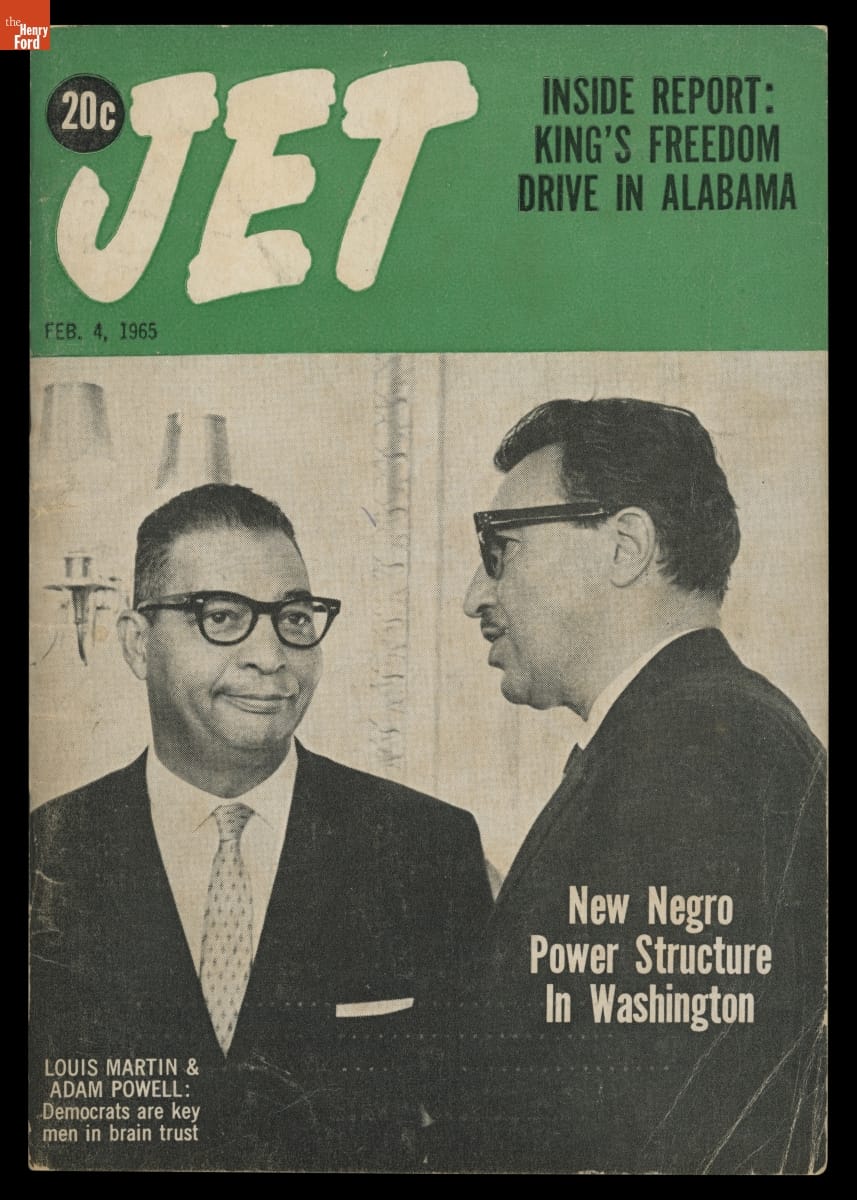
- "Jet" Magazine, February 4, 1965 - John H. Johnson, head of the Chicago-based Johnson Publishing Company, founded Jet magazine in November 1951. Originally billed as "The Weekly Negro News Magazine," the publication printed news, culture, and entertainment articles related to the African American community. Jet also chronicled the civil rights movement from its earliest years, addressing racial violence and inequality in American society.
- February 04, 1965
- Collections - Artifact
"Jet" Magazine, February 4, 1965
John H. Johnson, head of the Chicago-based Johnson Publishing Company, founded Jet magazine in November 1951. Originally billed as "The Weekly Negro News Magazine," the publication printed news, culture, and entertainment articles related to the African American community. Jet also chronicled the civil rights movement from its earliest years, addressing racial violence and inequality in American society.
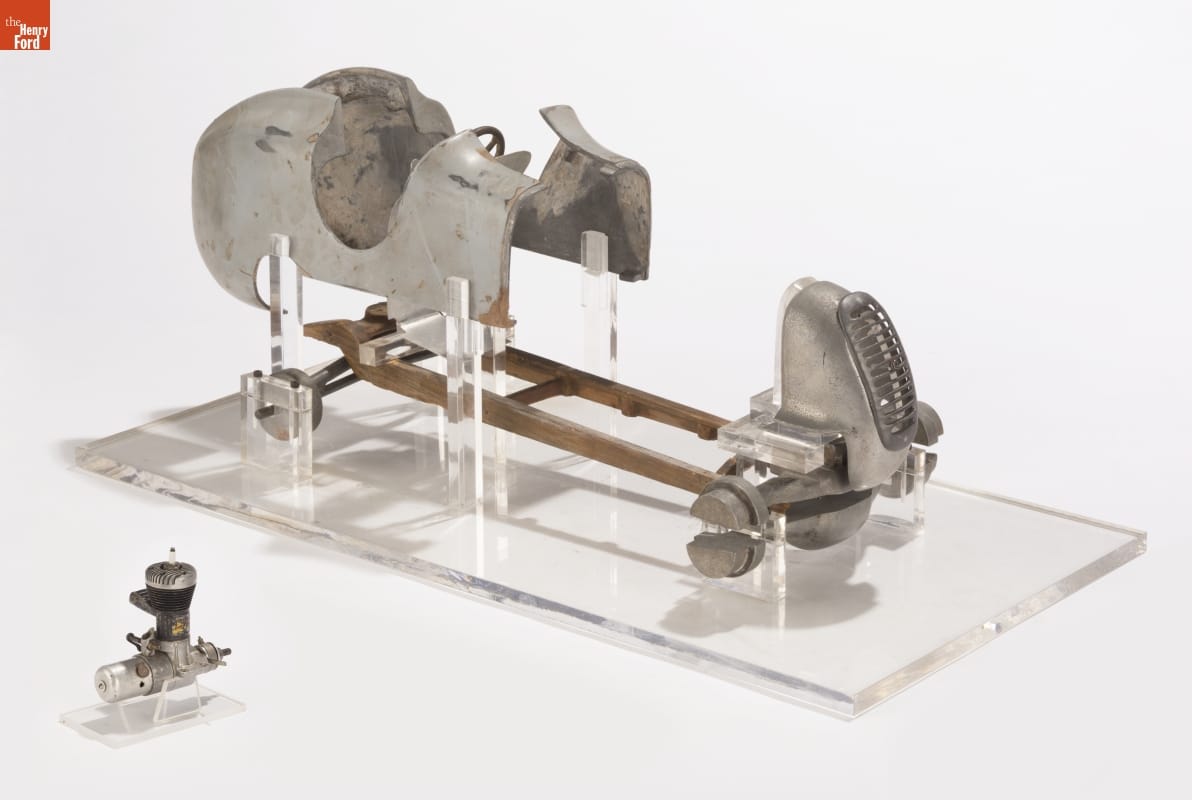
- Castings for the Alexander Super-Deluxe Gas-Powered Racing Tether Car, circa 1940 - Tether cars, gas-powered model race cars, peaked in popularity during the years surrounding World War II. They were raced individually while tethered to a central pivot, or against each other on a scaled-down board track. While some cars were hand-built, many more were mass-produced. These castings were used to manufacture Alexander tether cars.
- circa 1940
- Collections - Artifact
Castings for the Alexander Super-Deluxe Gas-Powered Racing Tether Car, circa 1940
Tether cars, gas-powered model race cars, peaked in popularity during the years surrounding World War II. They were raced individually while tethered to a central pivot, or against each other on a scaled-down board track. While some cars were hand-built, many more were mass-produced. These castings were used to manufacture Alexander tether cars.
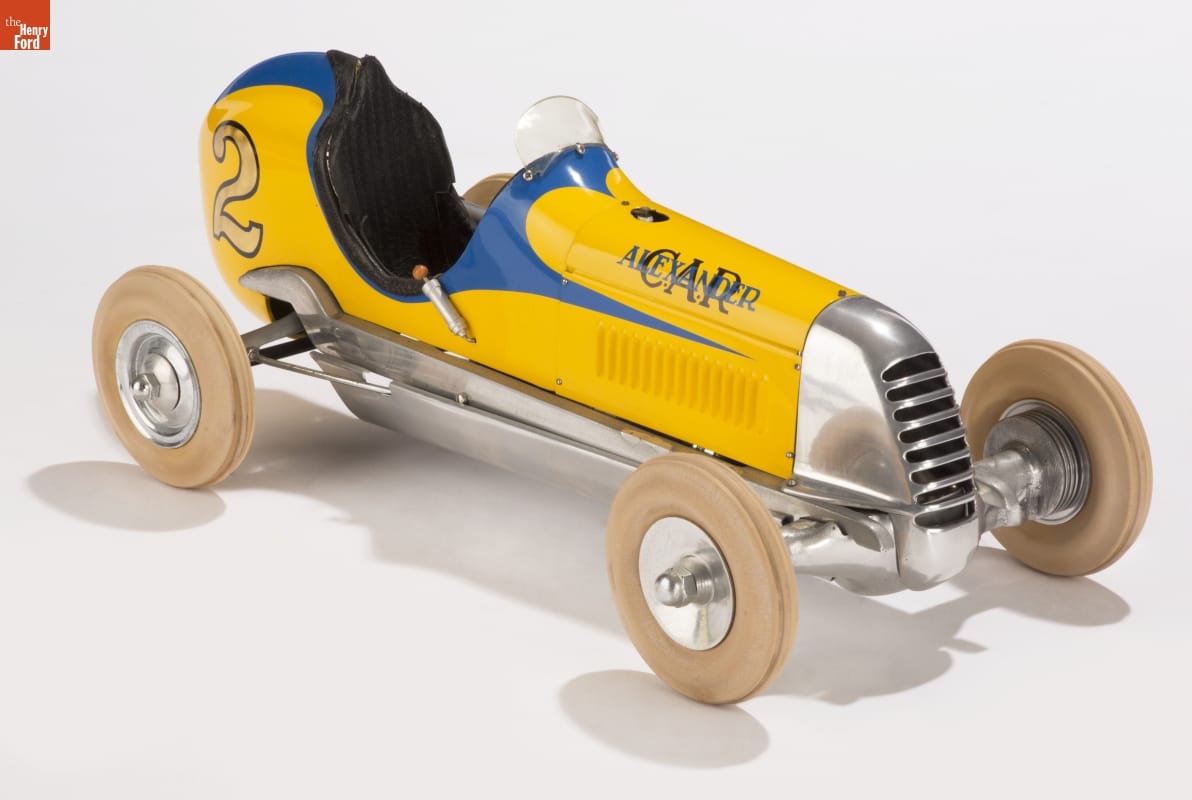
- Baby Alexander Gas-Powered Racing Tether Car, 1941 - Tether cars, gas-powered model race cars, were popular in the 1930s and 1940s. They were raced individually while tethered to a central pivot, or against each other on a scaled-down board track. Alexander Automotive Engineering Company of Inglewood, California, produced this "Baby Alexander" model in 1941. "Baby" refers to the car's wheelbase, which is one inch shorter than on standard models.
- 1941
- Collections - Artifact
Baby Alexander Gas-Powered Racing Tether Car, 1941
Tether cars, gas-powered model race cars, were popular in the 1930s and 1940s. They were raced individually while tethered to a central pivot, or against each other on a scaled-down board track. Alexander Automotive Engineering Company of Inglewood, California, produced this "Baby Alexander" model in 1941. "Baby" refers to the car's wheelbase, which is one inch shorter than on standard models.
- Al Smith, Henry Ford, Fiorello La Guardia, Grover Whalen and Edsel Ford at "Road of Tomorrow" Dedication, New York World's Fair, 1939 - Ford Motor Company was a major participant in the 1939-40 New York World's Fair. Visitors to the Ford building could ride in brand-new Ford automobiles along the Road of Tomorrow. This conceptual highway ride suggested modern techniques for safer, quieter, and more efficient roadways. In April 1939, Henry Ford, Edsel Ford and other dignitaries dedicated the half-mile-long experience.
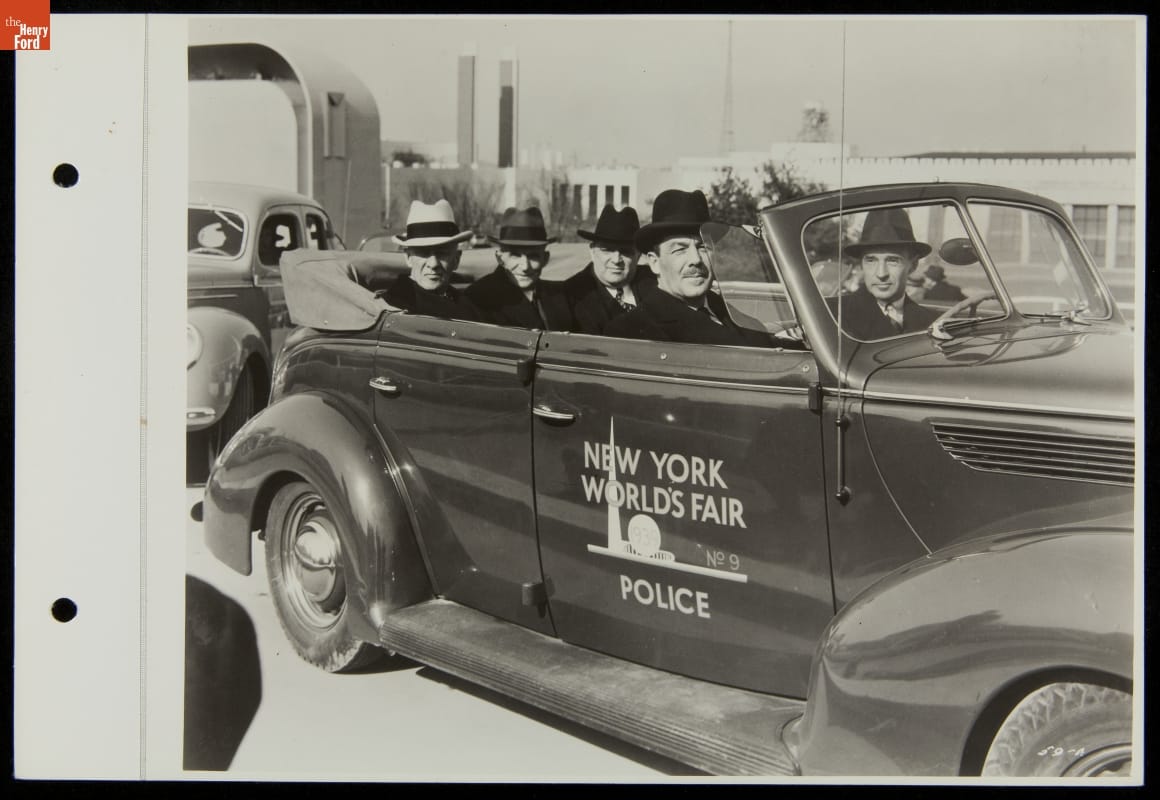
- April 05, 1939
- Collections - Artifact
Al Smith, Henry Ford, Fiorello La Guardia, Grover Whalen and Edsel Ford at "Road of Tomorrow" Dedication, New York World's Fair, 1939
Ford Motor Company was a major participant in the 1939-40 New York World's Fair. Visitors to the Ford building could ride in brand-new Ford automobiles along the Road of Tomorrow. This conceptual highway ride suggested modern techniques for safer, quieter, and more efficient roadways. In April 1939, Henry Ford, Edsel Ford and other dignitaries dedicated the half-mile-long experience.