
Search
- Assembly Line Workers, Ford Rouge Plant, 1932 - Ford Motor Company's system of mass production depended on the smooth flow of parts and materials to workers. Ford engineers designed the buildings and facilities at the company's massive Rouge plant with this in mind. The "B" Building, where vehicle assembly took place, included extensive conveyer systems to accommodate the continuous movement of parts and processes.
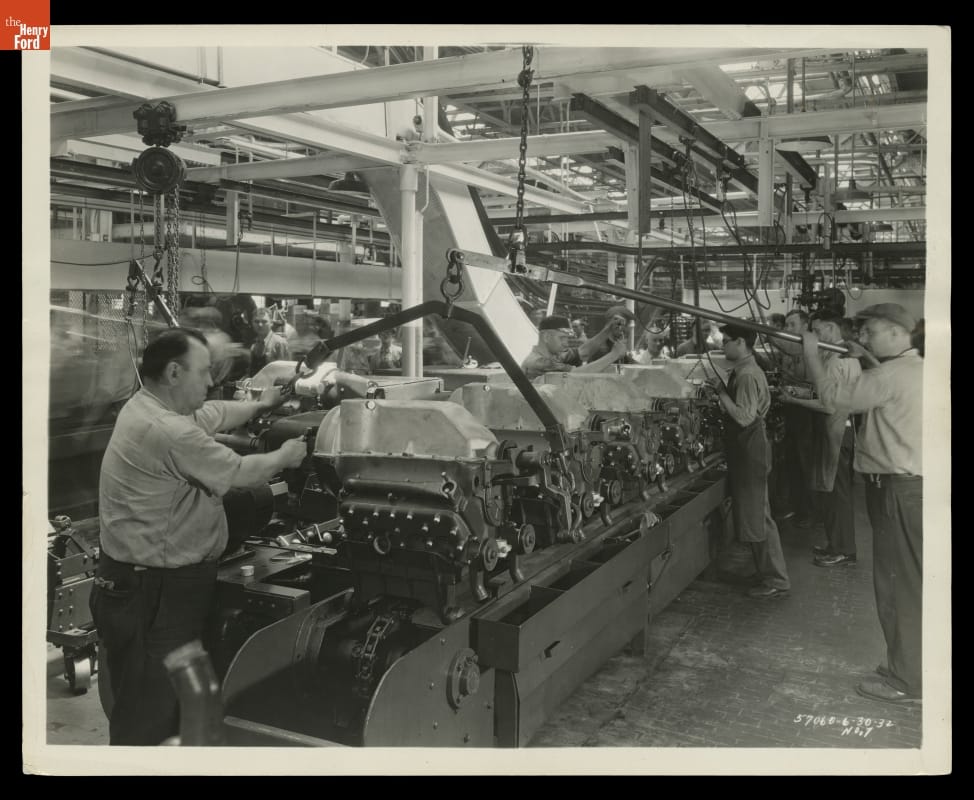
- June 30, 1932
- Collections - Artifact
Assembly Line Workers, Ford Rouge Plant, 1932
Ford Motor Company's system of mass production depended on the smooth flow of parts and materials to workers. Ford engineers designed the buildings and facilities at the company's massive Rouge plant with this in mind. The "B" Building, where vehicle assembly took place, included extensive conveyer systems to accommodate the continuous movement of parts and processes.
- Assembly Line Workers, Ford Rouge Plant, 1932 - Ford Motor Company's system of mass production depended on the smooth flow of parts and materials to workers. Ford engineers designed the buildings and facilities at the company's massive Rouge plant with this in mind. The "B" Building, where vehicle assembly took place, included extensive conveyer systems to accommodate the continuous movement of parts and processes.
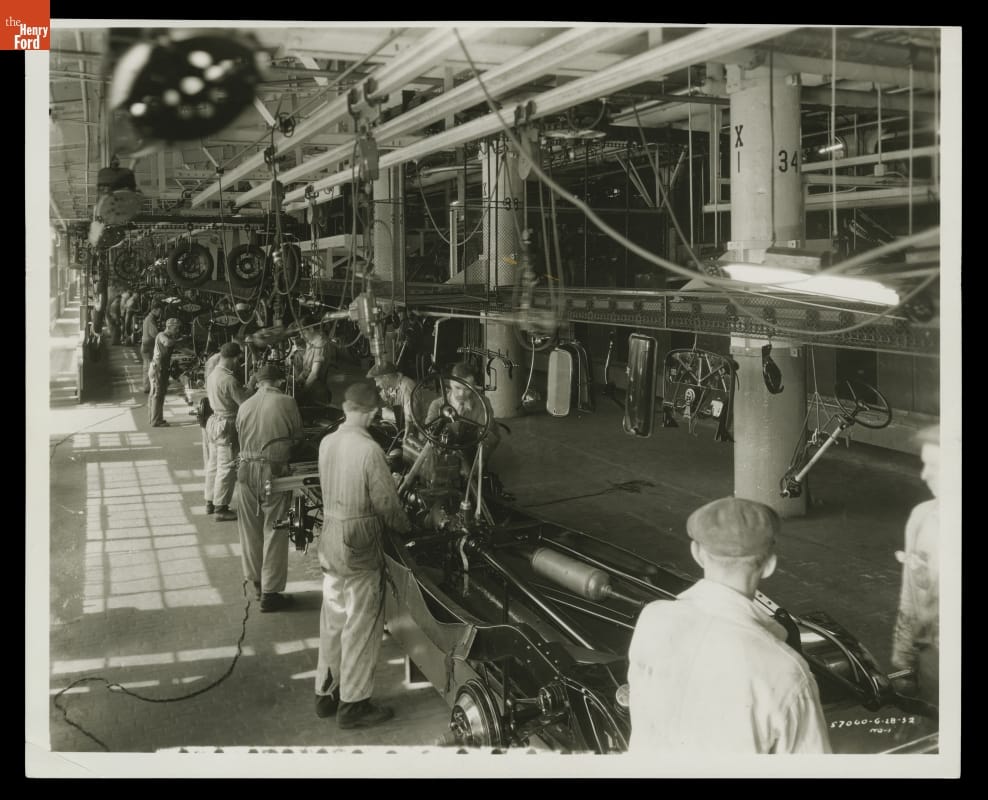
- June 28, 1932
- Collections - Artifact
Assembly Line Workers, Ford Rouge Plant, 1932
Ford Motor Company's system of mass production depended on the smooth flow of parts and materials to workers. Ford engineers designed the buildings and facilities at the company's massive Rouge plant with this in mind. The "B" Building, where vehicle assembly took place, included extensive conveyer systems to accommodate the continuous movement of parts and processes.
- Foundry Workers at Ford Rouge Plant, 1936 - Workers at the Ford Rouge plant's foundry poured a molten mixture of metal, coke, and limestone into molds to create cast-metal engine blocks and parts. Once "shaken out" of their molds, castings were roughly machined before heading elsewhere for finishing and assembly. The Rouge foundry set an industry benchmark in 1932 by successfully casting Ford's intricate, single-piece V-8 engine block.
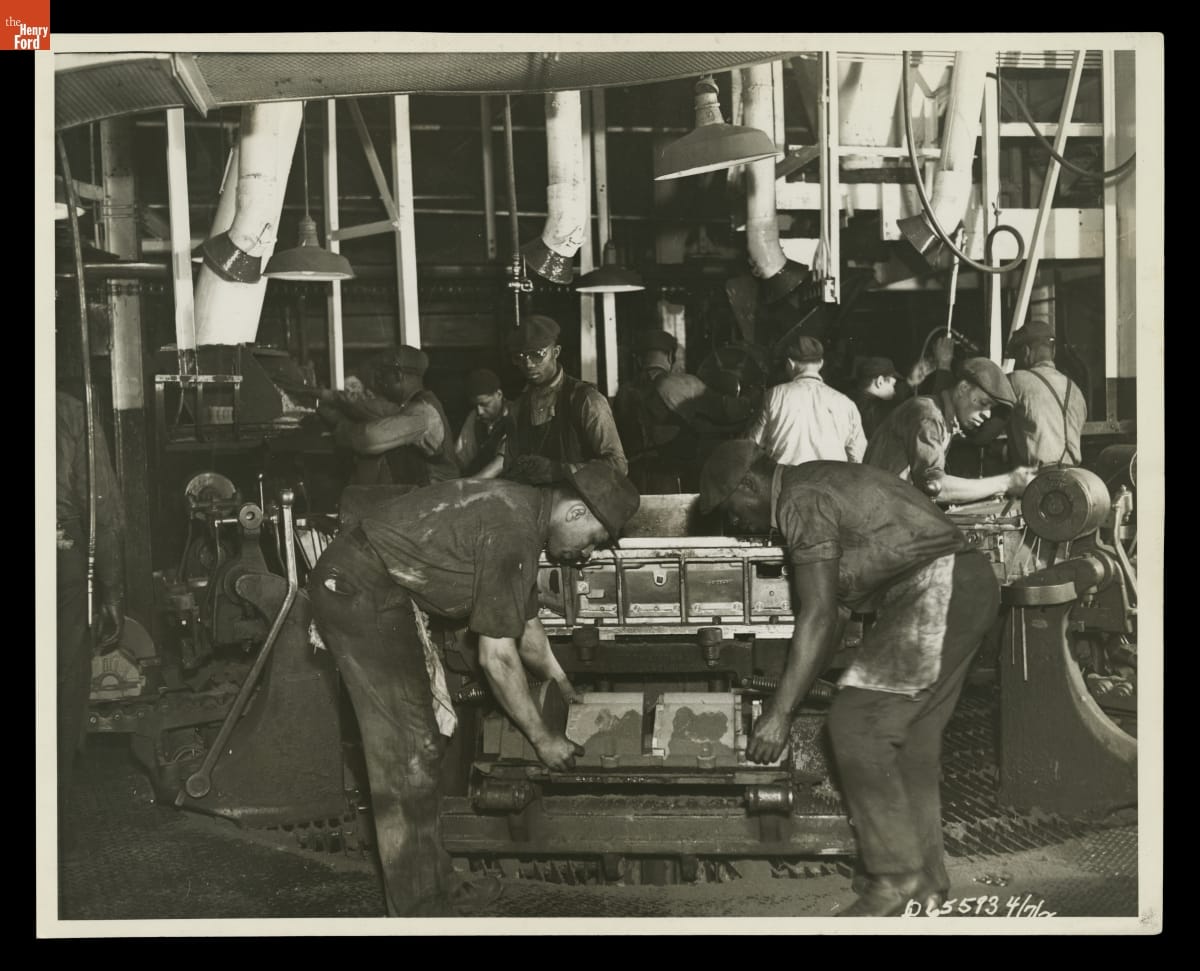
- 1936
- Collections - Artifact
Foundry Workers at Ford Rouge Plant, 1936
Workers at the Ford Rouge plant's foundry poured a molten mixture of metal, coke, and limestone into molds to create cast-metal engine blocks and parts. Once "shaken out" of their molds, castings were roughly machined before heading elsewhere for finishing and assembly. The Rouge foundry set an industry benchmark in 1932 by successfully casting Ford's intricate, single-piece V-8 engine block.
- Foundry Workers at Ford Rouge Plant, 1933 - Workers at the Ford Rouge Plant foundry poured a molten mixture of metal, coke, and limestone into molds to create engine blocks. Once "shaken out" of their molds, castings were roughly machined before heading elsewhere for finishing and assembly. The Rouge foundry set an industry benchmark in 1932 with the successful casting of Ford's intricate, single-piece V-8 engine block.
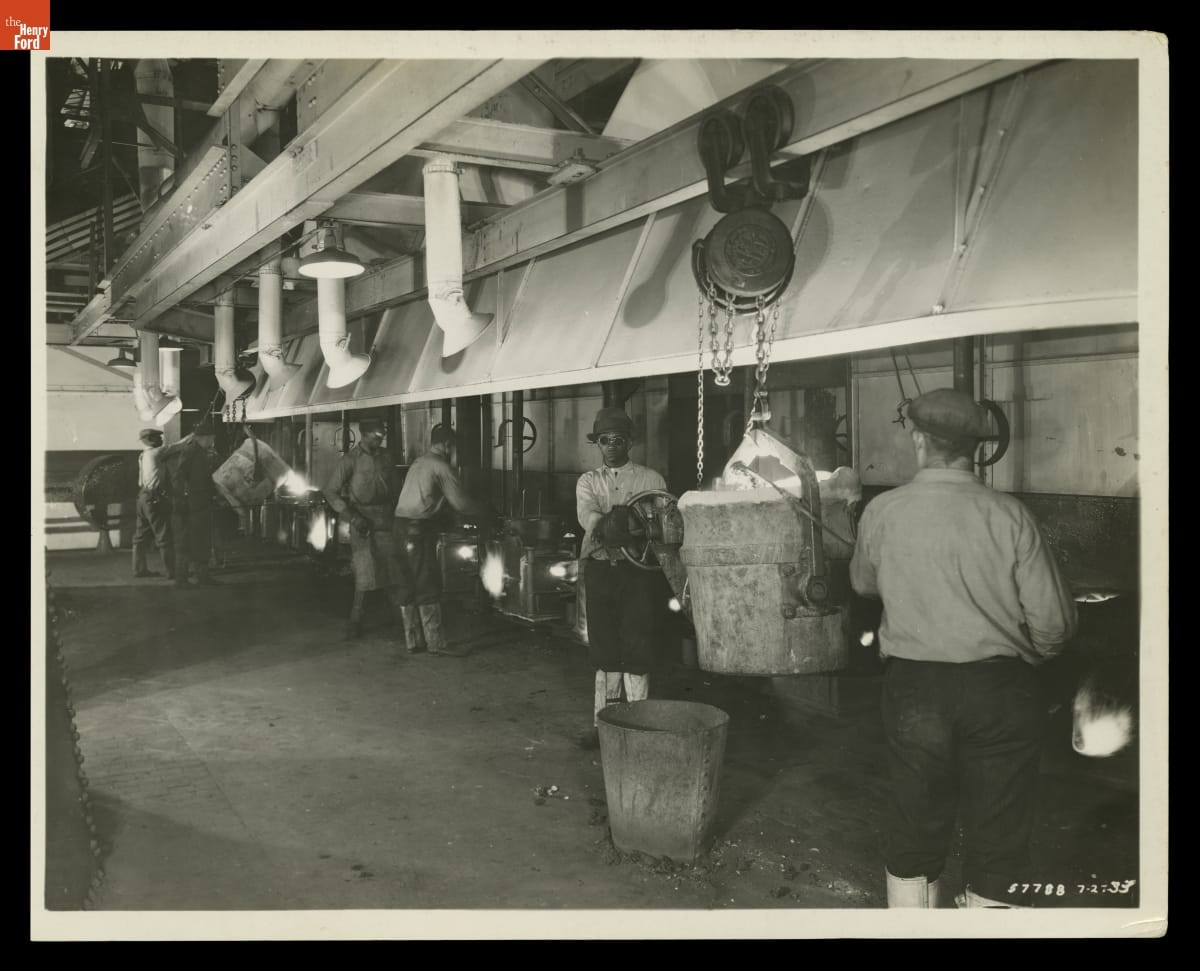
- July 22, 1933
- Collections - Artifact
Foundry Workers at Ford Rouge Plant, 1933
Workers at the Ford Rouge Plant foundry poured a molten mixture of metal, coke, and limestone into molds to create engine blocks. Once "shaken out" of their molds, castings were roughly machined before heading elsewhere for finishing and assembly. The Rouge foundry set an industry benchmark in 1932 with the successful casting of Ford's intricate, single-piece V-8 engine block.
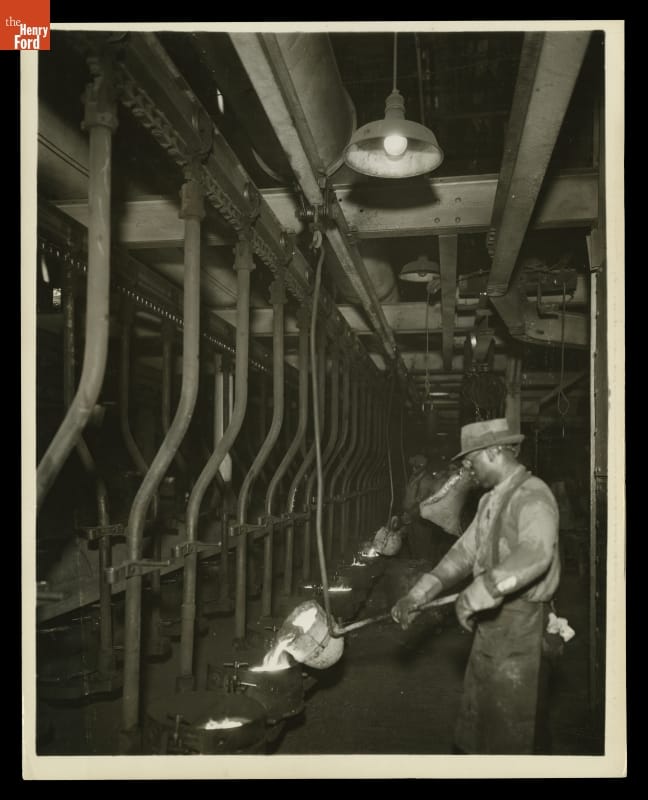
- Foundry Workers at the Ford Rouge Plant, 1934 - Workers at the Ford Rouge plant's foundry poured a molten mixture of metal, coke, and limestone into molds to create cast-metal engine blocks and parts. Once "shaken out" of their molds, castings were roughly machined before heading elsewhere for finishing and assembly. The Rouge foundry set an industry benchmark in 1932 by successfully casting Ford's intricate, single-piece V-8 engine block.
- 1934
- Collections - Artifact
Foundry Workers at the Ford Rouge Plant, 1934
Workers at the Ford Rouge plant's foundry poured a molten mixture of metal, coke, and limestone into molds to create cast-metal engine blocks and parts. Once "shaken out" of their molds, castings were roughly machined before heading elsewhere for finishing and assembly. The Rouge foundry set an industry benchmark in 1932 by successfully casting Ford's intricate, single-piece V-8 engine block.
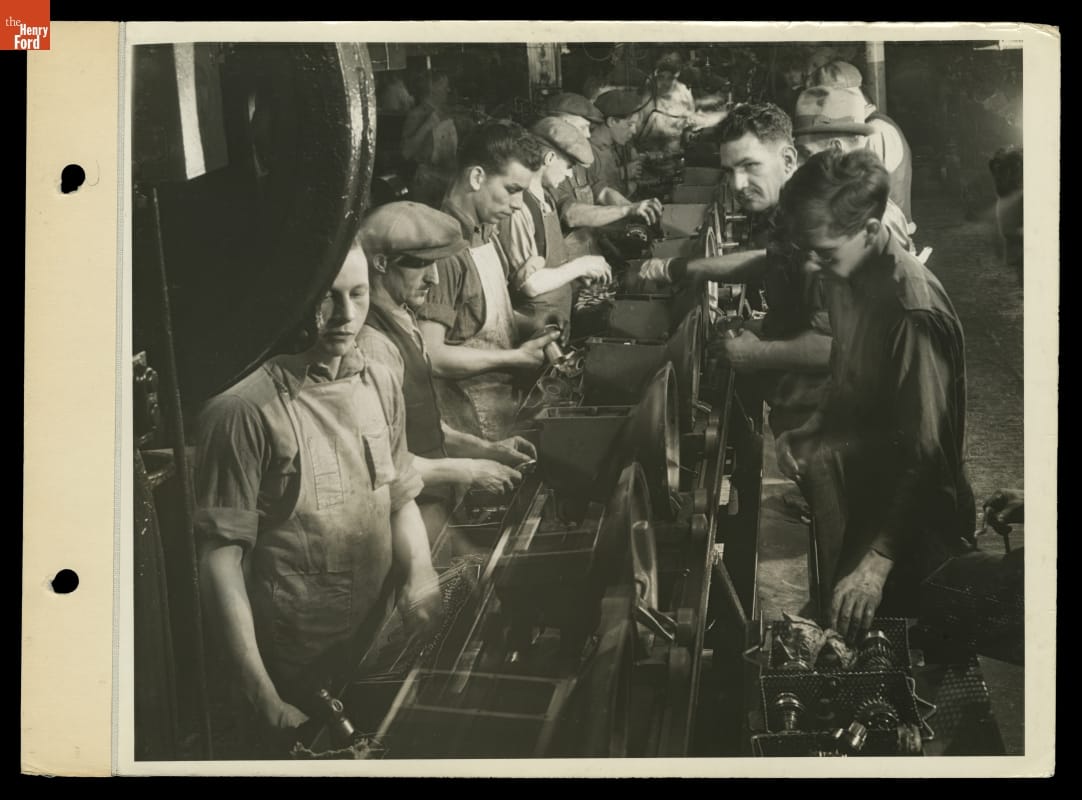
- Workers Assembling Automobile Transmissions, Ford Rouge Plant, 1936 - At its peak in the 1930s, Ford Motor Company's massive Rouge factory employed more than 100,000 workers. The complex included more than 15 million square feet of floor space and 120 miles of conveyors that turned out a new car every 49 seconds. In 1936, when this photo was taken, the people of Ford built more than 790,000 automobiles.
- December 16, 1936
- Collections - Artifact
Workers Assembling Automobile Transmissions, Ford Rouge Plant, 1936
At its peak in the 1930s, Ford Motor Company's massive Rouge factory employed more than 100,000 workers. The complex included more than 15 million square feet of floor space and 120 miles of conveyors that turned out a new car every 49 seconds. In 1936, when this photo was taken, the people of Ford built more than 790,000 automobiles.
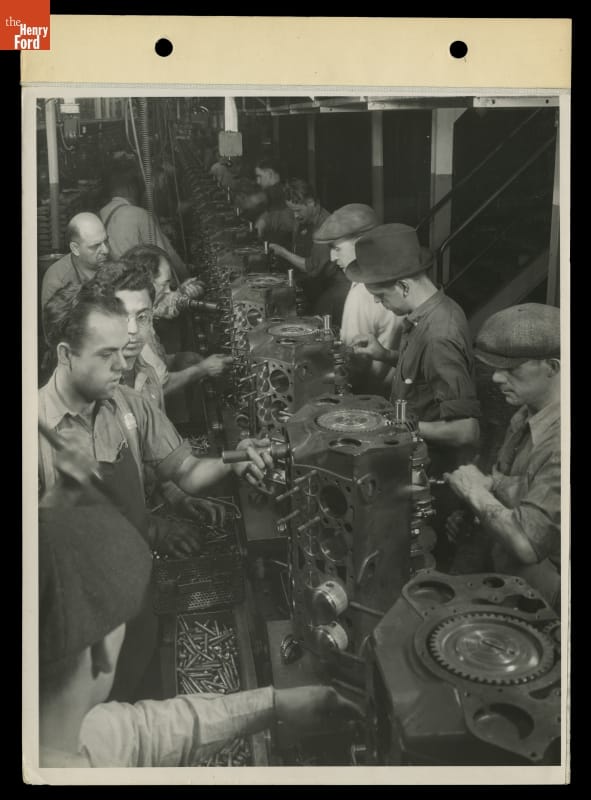
- Workers Assembling Engine Blocks, Ford Rouge Plant, 1936 - Engineers at Ford's Highland Park plant had fine-tuned the moving assembly line. With this experience in hand, Ford created the "B" Building at its new River Rouge complex with extensive conveyer systems to accommodate the flow of parts and assembly processes. These line workers assemble Ford's radical V-8 engines, the first 8-cylinder engines available for inexpensive cars.
- December 18, 1936
- Collections - Artifact
Workers Assembling Engine Blocks, Ford Rouge Plant, 1936
Engineers at Ford's Highland Park plant had fine-tuned the moving assembly line. With this experience in hand, Ford created the "B" Building at its new River Rouge complex with extensive conveyer systems to accommodate the flow of parts and assembly processes. These line workers assemble Ford's radical V-8 engines, the first 8-cylinder engines available for inexpensive cars.
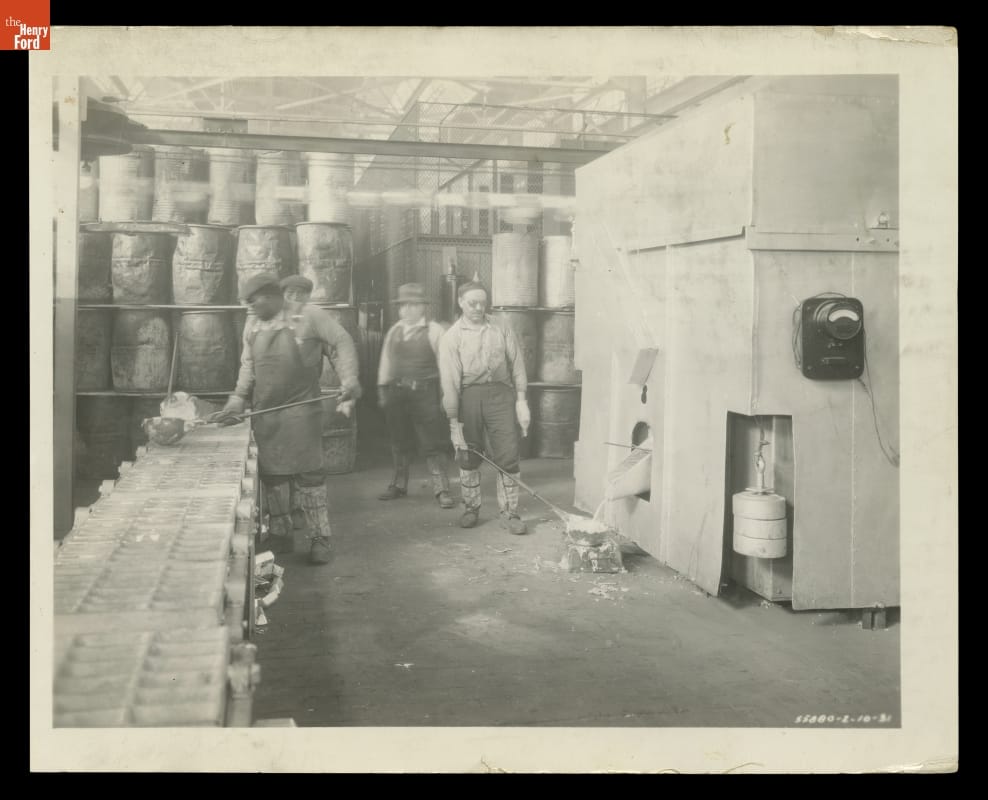
- Workers in Ford Rouge Plant Cyanide Foundry, 1931 - By 1931, Ford Motor Company was the largest employer of African-American workers in the country. Henry Ford was closely tied to leaders in Detroit's African-American community, especially with the pastors of two of the city's largest churches, Rev. Robert Bradby of 2nd Baptist and Rev. Everard Daniel of St. Matthew's Episcopal Church. Through these men, many recent arrivals were directed to the Ford Employment Office. Although Ford employed large numbers of African Americans, there were limits to how far most could advance. Many African-American workers spent their time in lower paying, dirty, dangerous, and unhealthy jobs in places like this Cyanide Foundry that used potassium cyanide, a key material in hardening steel.
- February 10, 1931
- Collections - Artifact
Workers in Ford Rouge Plant Cyanide Foundry, 1931
By 1931, Ford Motor Company was the largest employer of African-American workers in the country. Henry Ford was closely tied to leaders in Detroit's African-American community, especially with the pastors of two of the city's largest churches, Rev. Robert Bradby of 2nd Baptist and Rev. Everard Daniel of St. Matthew's Episcopal Church. Through these men, many recent arrivals were directed to the Ford Employment Office. Although Ford employed large numbers of African Americans, there were limits to how far most could advance. Many African-American workers spent their time in lower paying, dirty, dangerous, and unhealthy jobs in places like this Cyanide Foundry that used potassium cyanide, a key material in hardening steel.
- Blind Worker at the Ford Rouge Plant, 1934 - Henry Ford believed in providing employment opportunities to individuals with disabilities. Workers who were blind or visually impaired could sort ammeter gauges or assemble valve bushings by feel, for example, while workers with amputations could operate push-button machines with no difficulty. It was estimated that Ford Motor Company employed as many as 13,000 people with disabilities in 1927.
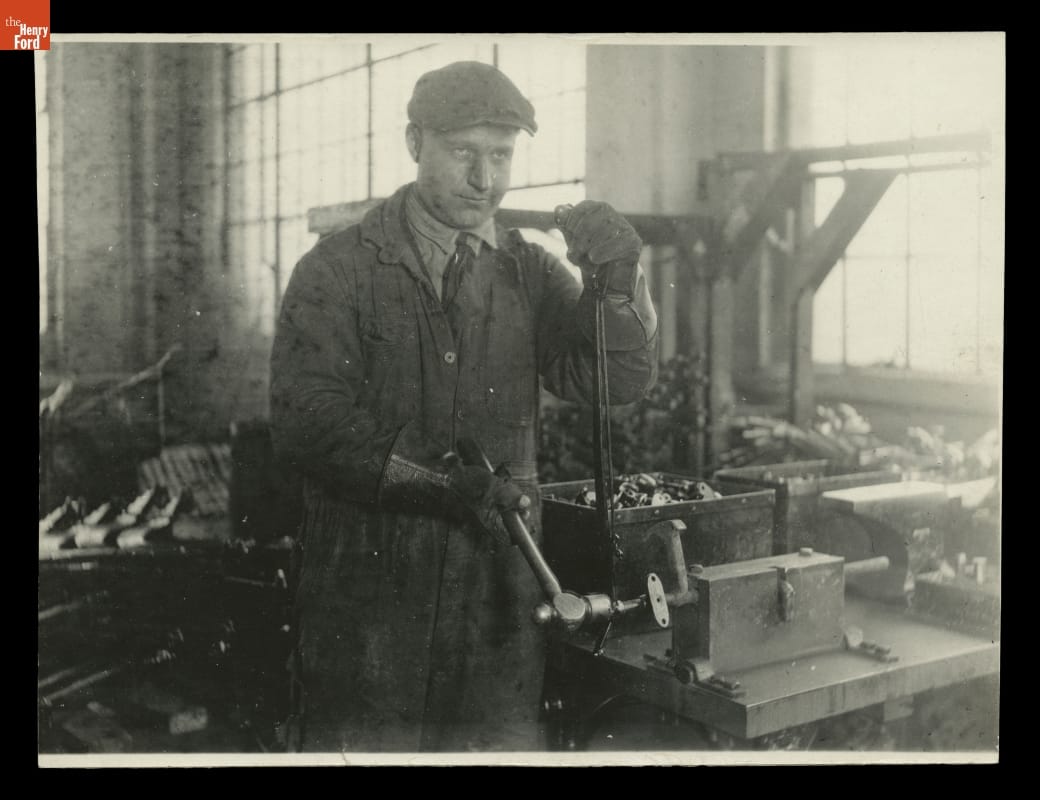
- 1934
- Collections - Artifact
Blind Worker at the Ford Rouge Plant, 1934
Henry Ford believed in providing employment opportunities to individuals with disabilities. Workers who were blind or visually impaired could sort ammeter gauges or assemble valve bushings by feel, for example, while workers with amputations could operate push-button machines with no difficulty. It was estimated that Ford Motor Company employed as many as 13,000 people with disabilities in 1927.
- Butter Worker, 1859 -
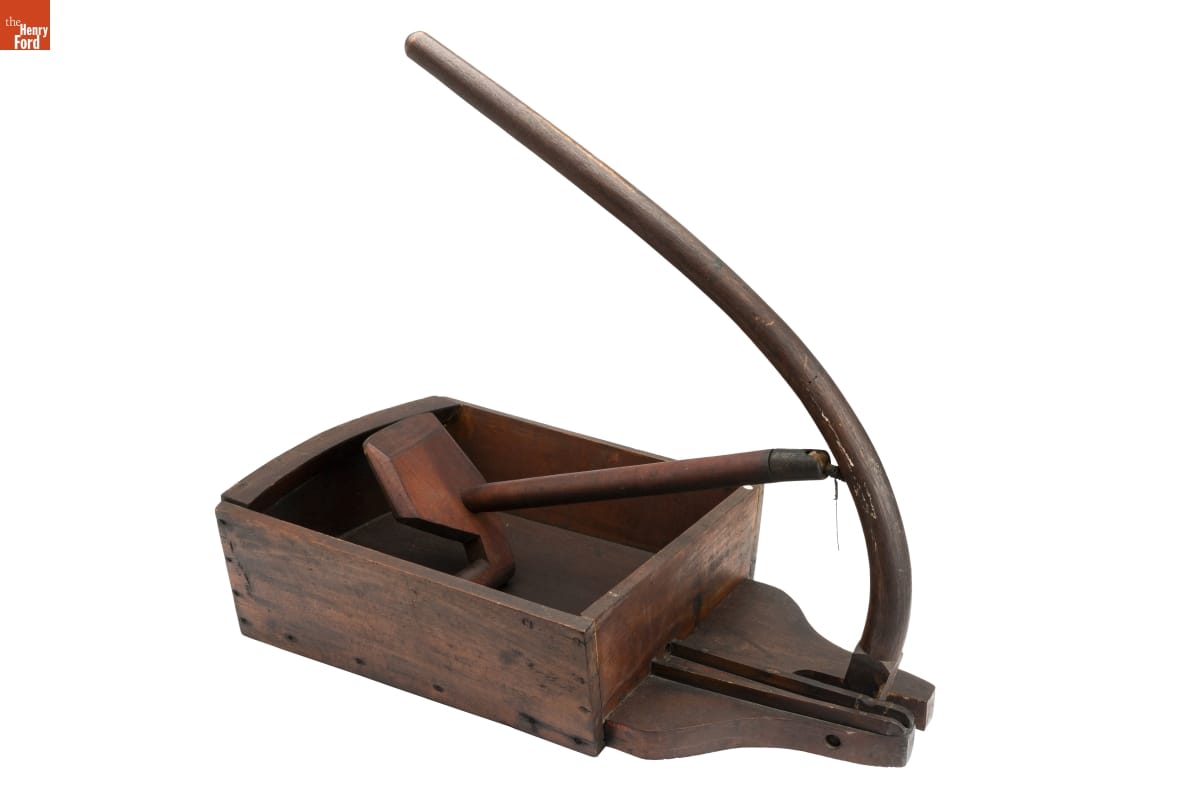
- circa 1859
- Collections - Artifact
Butter Worker, 1859