
Search
- Belterra: A Midwest Suburban School System in the Amazon Jungle - Education played an integral role in ensuring economic and social success during the short-lived existence of Belterra, one of Henry Ford's Brazilian plantations designed to mass produce rubber for Ford Motor Company cars.

- September 04, 2015
- Collections - article
Belterra: A Midwest Suburban School System in the Amazon Jungle
Education played an integral role in ensuring economic and social success during the short-lived existence of Belterra, one of Henry Ford's Brazilian plantations designed to mass produce rubber for Ford Motor Company cars.
- Ford Rubber Plantations in Brazil - Ford Motor Company’s efforts to secure a regular source of rubber resulted in the establishment of plantations in Brazil.

- January 01, 2016
- Collections - popular research topic
Ford Rubber Plantations in Brazil
Ford Motor Company’s efforts to secure a regular source of rubber resulted in the establishment of plantations in Brazil.
- Just Added to Our Digital Collections: Plant Samples - We've just digitized plant samples from Henry Ford's rubber plantations in Brazil.

- August 19, 2015
- Collections - article
Just Added to Our Digital Collections: Plant Samples
We've just digitized plant samples from Henry Ford's rubber plantations in Brazil.
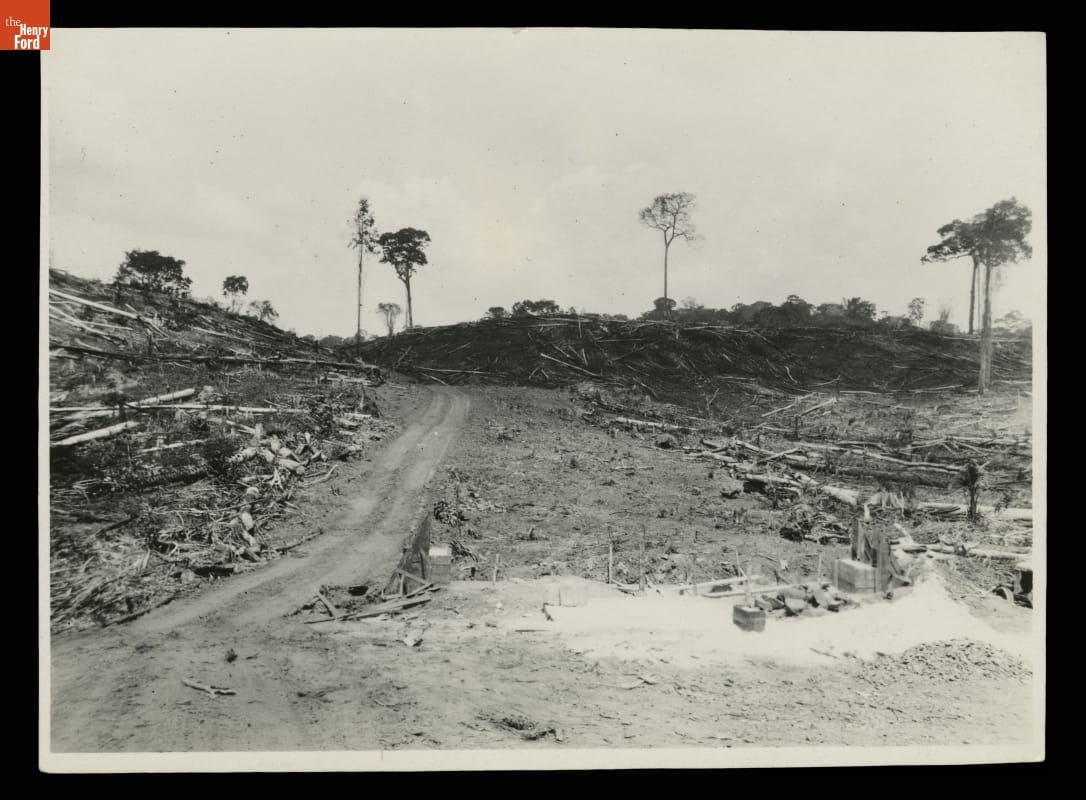
- New Road Construction at Fordlandia, Brazil, 1929 - Henry Ford established Fordlandia and Belterra in the Brazilian rainforest to supply rubber for automobile production. He began shipping machinery and supplies to the Amazon in 1928. Ford paid the indigenous workers good wages and supplied various amenities -- he also imposed foreign work traditions and behavioral restrictions which the workers resented. The plantations failed and Ford Motor Company disposed of the project in 1945.
- August 31, 1929
- Collections - Artifact
New Road Construction at Fordlandia, Brazil, 1929
Henry Ford established Fordlandia and Belterra in the Brazilian rainforest to supply rubber for automobile production. He began shipping machinery and supplies to the Amazon in 1928. Ford paid the indigenous workers good wages and supplied various amenities -- he also imposed foreign work traditions and behavioral restrictions which the workers resented. The plantations failed and Ford Motor Company disposed of the project in 1945.
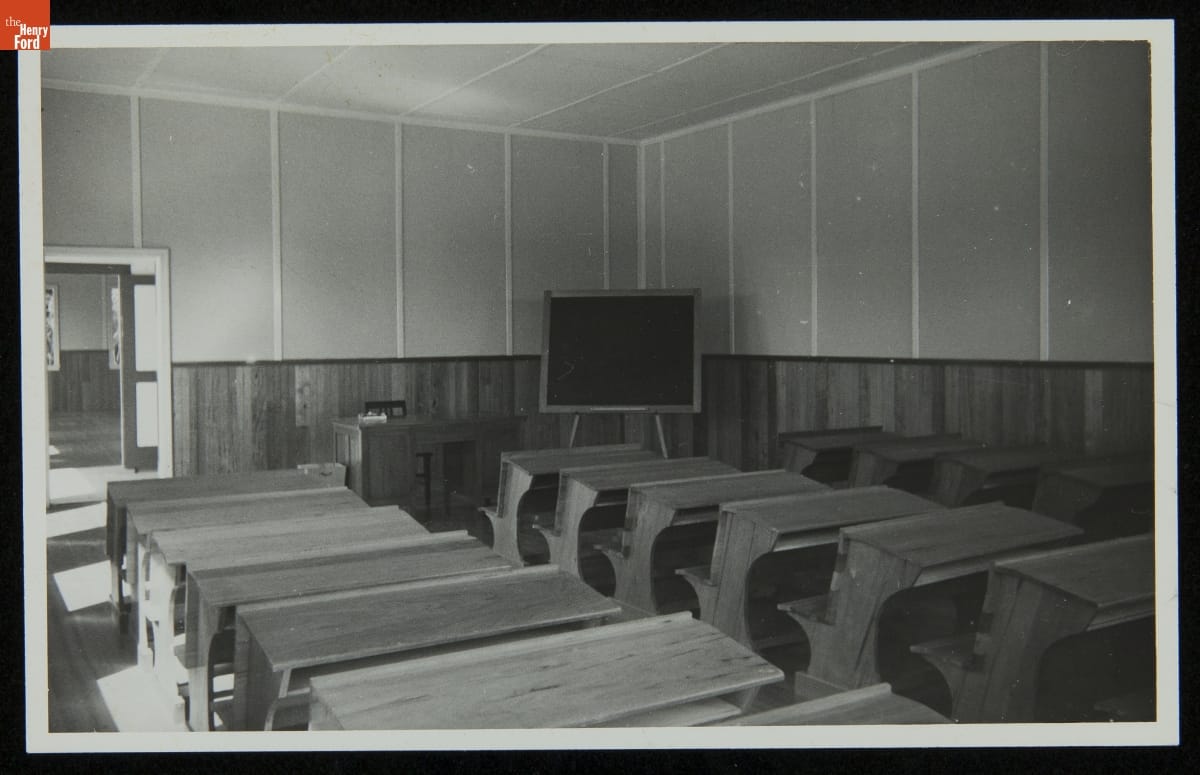
- Classroom in Belterra School, Belterra, Brazil, circa 1942 - Along with Fordlandia, Belterra was established by Henry Ford in the Brazilian rainforest to supply rubber for automobile production. Modeled after small-town America, Belterra had a grid-like street system lined with American-style homes. The city was also equipped with recreational facilities, a hospital, a dentist's office, and a school that provided its students with pencils, books and uniforms.
- circa 1942
- Collections - Artifact
Classroom in Belterra School, Belterra, Brazil, circa 1942
Along with Fordlandia, Belterra was established by Henry Ford in the Brazilian rainforest to supply rubber for automobile production. Modeled after small-town America, Belterra had a grid-like street system lined with American-style homes. The city was also equipped with recreational facilities, a hospital, a dentist's office, and a school that provided its students with pencils, books and uniforms.
- Ford Radio and Fordlandia - Learn the various ways Henry Ford used radio technology in the early years of Ford Motor Company--including as a way to communicate with Fordlandia, Ford's rubber plantation in Brazil.

- September 13, 2017
- Collections - article
Ford Radio and Fordlandia
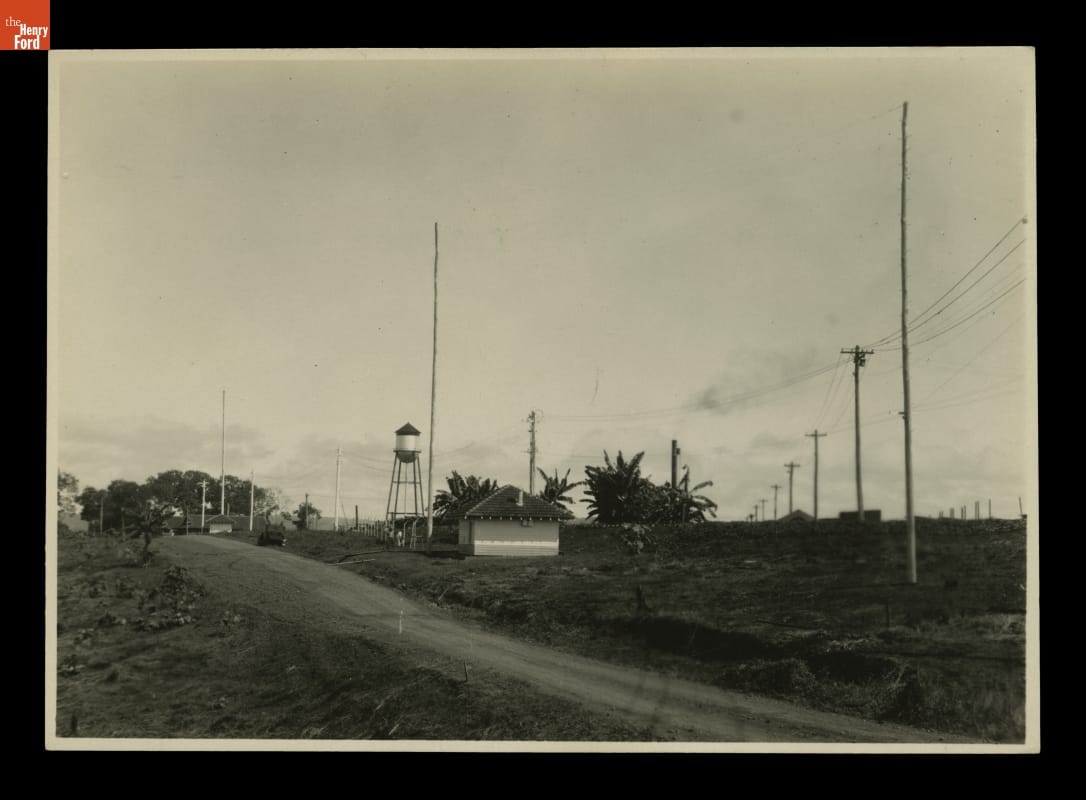
Learn the various ways Henry Ford used radio technology in the early years of Ford Motor Company--including as a way to communicate with Fordlandia, Ford's rubber plantation in Brazil.
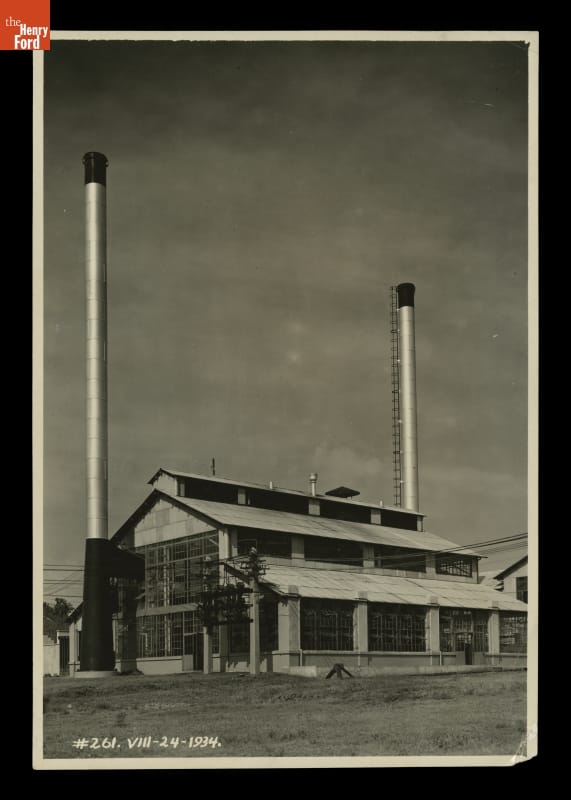
- Power House at Fordlandia, Brazil, 1934 - Henry Ford established Fordlandia and Belterra in the Brazilian rainforest to supply rubber for automobile production. He began shipping machinery and supplies to the Amazon in 1928. Ford paid the indigenous workers good wages and supplied various amenities -- he also imposed foreign work traditions and behavioral restrictions which the workers resented. The plantations failed and Ford Motor Company disposed of the project in 1945.
- 1934
- Collections - Artifact
Power House at Fordlandia, Brazil, 1934
Henry Ford established Fordlandia and Belterra in the Brazilian rainforest to supply rubber for automobile production. He began shipping machinery and supplies to the Amazon in 1928. Ford paid the indigenous workers good wages and supplied various amenities -- he also imposed foreign work traditions and behavioral restrictions which the workers resented. The plantations failed and Ford Motor Company disposed of the project in 1945.
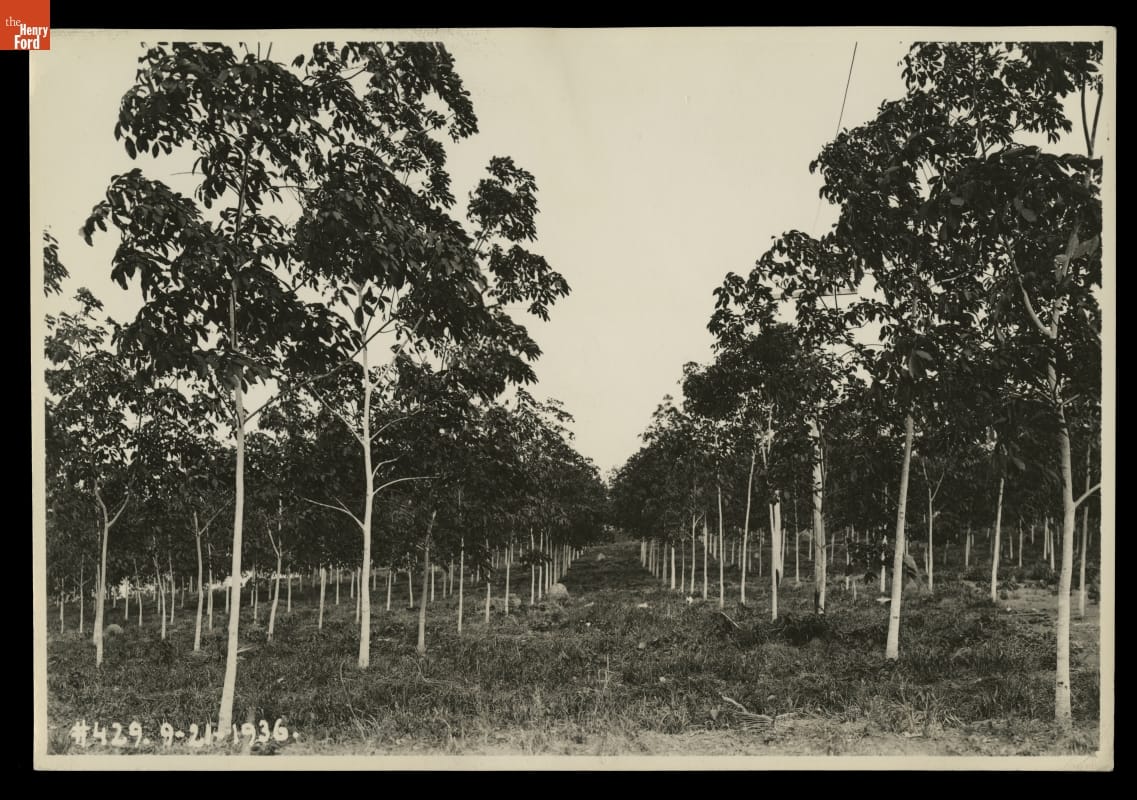
- Young Rubber Trees, Fordlandia, Brazil, 1936 - Henry Ford established Fordlandia and Belterra in the Brazilian rainforest to supply rubber for automobile production. He began shipping machinery and supplies to the Amazon in 1928. Ford paid the indigenous workers good wages and supplied various amenities -- he also imposed foreign work traditions and behavioral restrictions which the workers resented. The plantations failed and Ford Motor Company disposed of the project in 1945.
- September 21, 1936
- Collections - Artifact
Young Rubber Trees, Fordlandia, Brazil, 1936
Henry Ford established Fordlandia and Belterra in the Brazilian rainforest to supply rubber for automobile production. He began shipping machinery and supplies to the Amazon in 1928. Ford paid the indigenous workers good wages and supplied various amenities -- he also imposed foreign work traditions and behavioral restrictions which the workers resented. The plantations failed and Ford Motor Company disposed of the project in 1945.
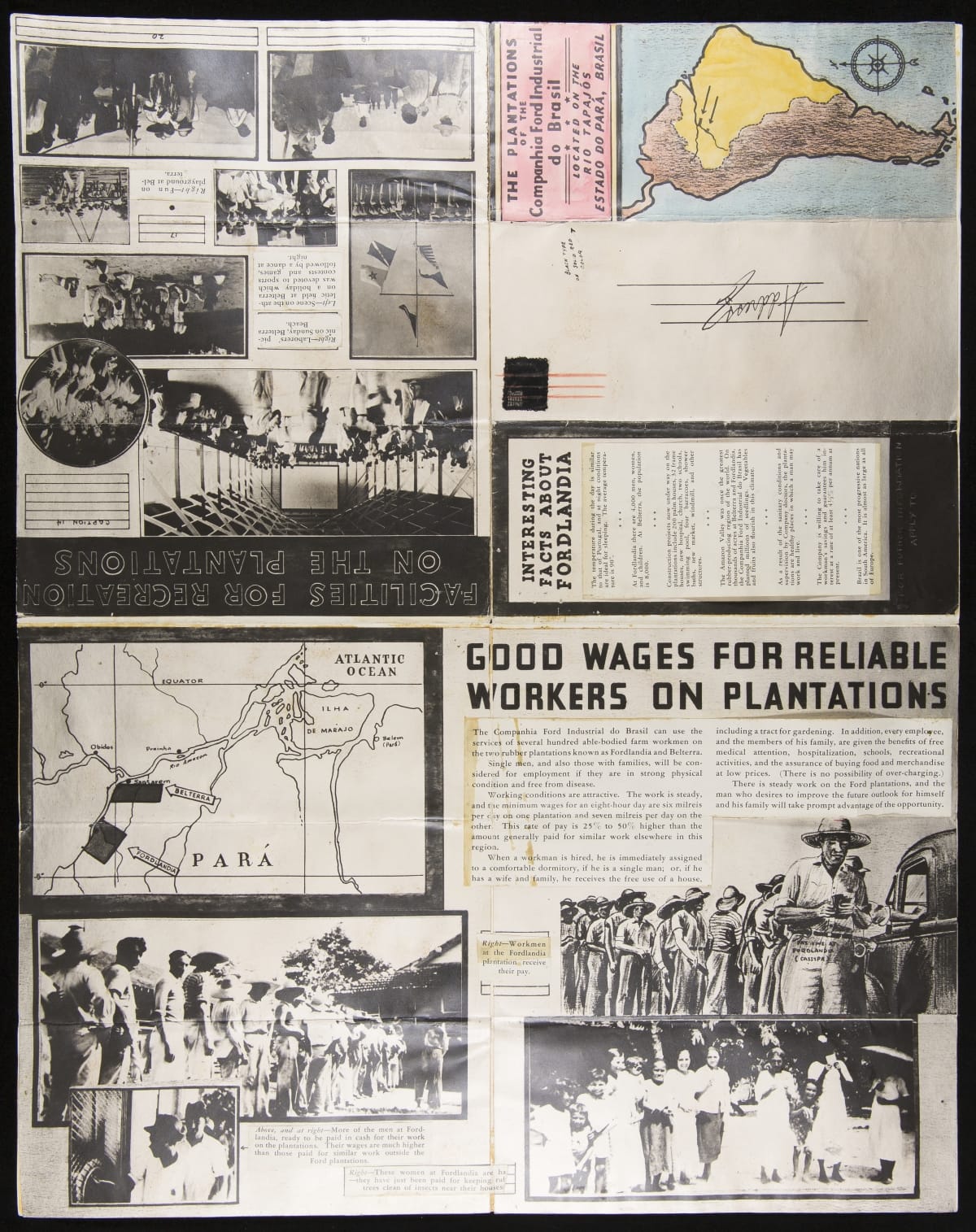
- Proof for Brochure, "The Plantations of the Companhia Ford Industrial do Brasil," circa 1937 - Henry Ford established Fordlandia and Belterra in the Brazilian rainforest to supply rubber for automobile production. He began shipping machinery and supplies to the Amazon in 1928. Ford paid the indigenous workers good wages and supplied various amenities -- he also imposed foreign work traditions and behavioral restrictions which the workers resented. The plantations failed and Ford Motor Company disposed of the project in 1945.
- circa 1937
- Collections - Artifact
Proof for Brochure, "The Plantations of the Companhia Ford Industrial do Brasil," circa 1937
Henry Ford established Fordlandia and Belterra in the Brazilian rainforest to supply rubber for automobile production. He began shipping machinery and supplies to the Amazon in 1928. Ford paid the indigenous workers good wages and supplied various amenities -- he also imposed foreign work traditions and behavioral restrictions which the workers resented. The plantations failed and Ford Motor Company disposed of the project in 1945.
- Radio Power House and Receiving Antenna, Fordlandia, Brazil -
- 1926 - 1946
- Collections - Artifact
Radio Power House and Receiving Antenna, Fordlandia, Brazil