
Search
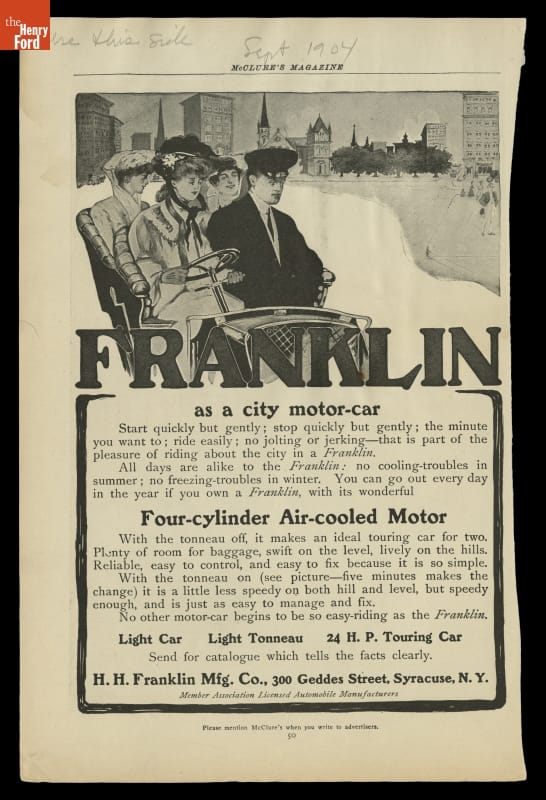
- Franklin Automobile Advertisement, "September 1904, Franklin as a City Motor-Car" - Franklin heralded the versatility of its automobiles in this 1904 advertisement. The tonneau -- a detachable rear seat -- doubled the car's seating in five minutes. The air-cooled motor eliminated the danger of the cooling system boiling over in summer or freezing in winter. According to Franklin, its vehicle was a perfect "city motor-car."
- September 01, 1904
- Collections - Artifact
Franklin Automobile Advertisement, "September 1904, Franklin as a City Motor-Car"
Franklin heralded the versatility of its automobiles in this 1904 advertisement. The tonneau -- a detachable rear seat -- doubled the car's seating in five minutes. The air-cooled motor eliminated the danger of the cooling system boiling over in summer or freezing in winter. According to Franklin, its vehicle was a perfect "city motor-car."
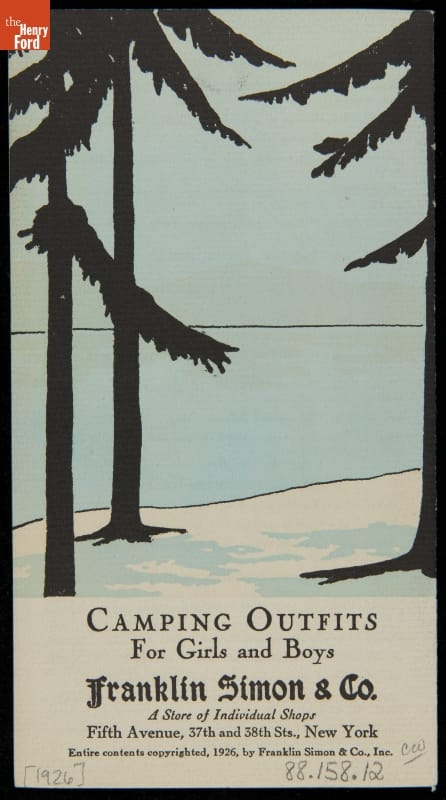
- Catalog, "Camping Outfits for Girls and Boys," Franklin Simon & Company, 1926 - In the 1920s, many American children attended summer camps or participated in youth organizations that emphasized outdoor activities. To meet their needs, Franklin Simon & Company distributed this 1926 catalog featuring specialty "camping outfits for boys and girls." The New York City-based department store offered a variety of outdoor clothing and accessories, including hosiery, footwear, neckerchiefs, and pajamas.
- 1926
- Collections - Artifact
Catalog, "Camping Outfits for Girls and Boys," Franklin Simon & Company, 1926
In the 1920s, many American children attended summer camps or participated in youth organizations that emphasized outdoor activities. To meet their needs, Franklin Simon & Company distributed this 1926 catalog featuring specialty "camping outfits for boys and girls." The New York City-based department store offered a variety of outdoor clothing and accessories, including hosiery, footwear, neckerchiefs, and pajamas.
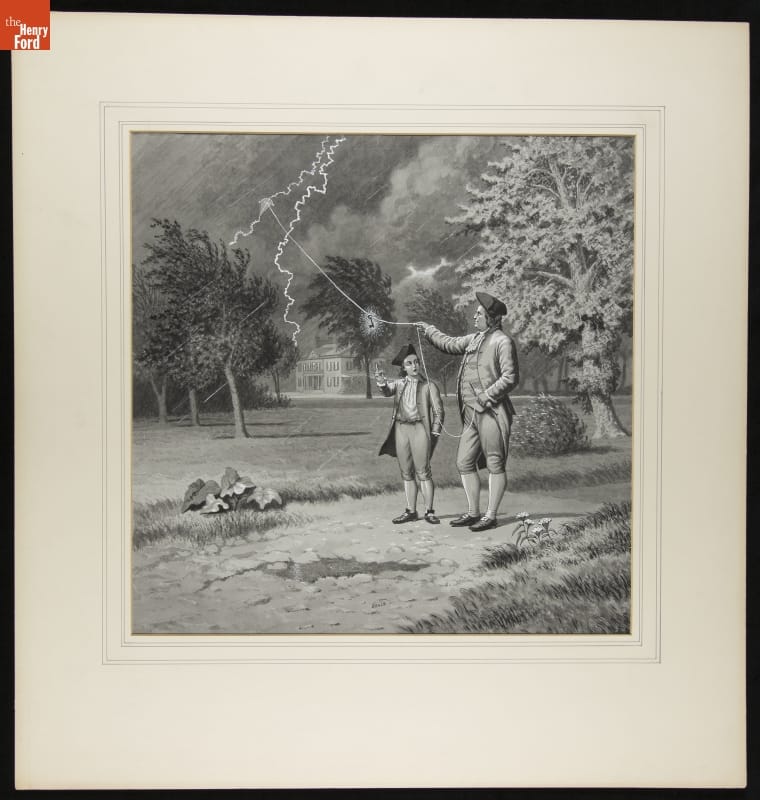
- "Franklin's Kite Experiment," Drawing for Magic Lantern Slide, 1902-1903 - Joseph Boggs Beale created artwork that was reproduced to make magic lantern slides. His works include some of the most artistic slide illustrations made in the late-19th and early-20th centuries. Beale was also prolific, producing more than 2000 images used in over 250 different lantern slide sets. This drawing, part of Beale's "Life of Benjamin Franklin" set, depicts Franklin conducting his famous experiment with electricity.
- 1752
- Collections - Artifact
"Franklin's Kite Experiment," Drawing for Magic Lantern Slide, 1902-1903
Joseph Boggs Beale created artwork that was reproduced to make magic lantern slides. His works include some of the most artistic slide illustrations made in the late-19th and early-20th centuries. Beale was also prolific, producing more than 2000 images used in over 250 different lantern slide sets. This drawing, part of Beale's "Life of Benjamin Franklin" set, depicts Franklin conducting his famous experiment with electricity.
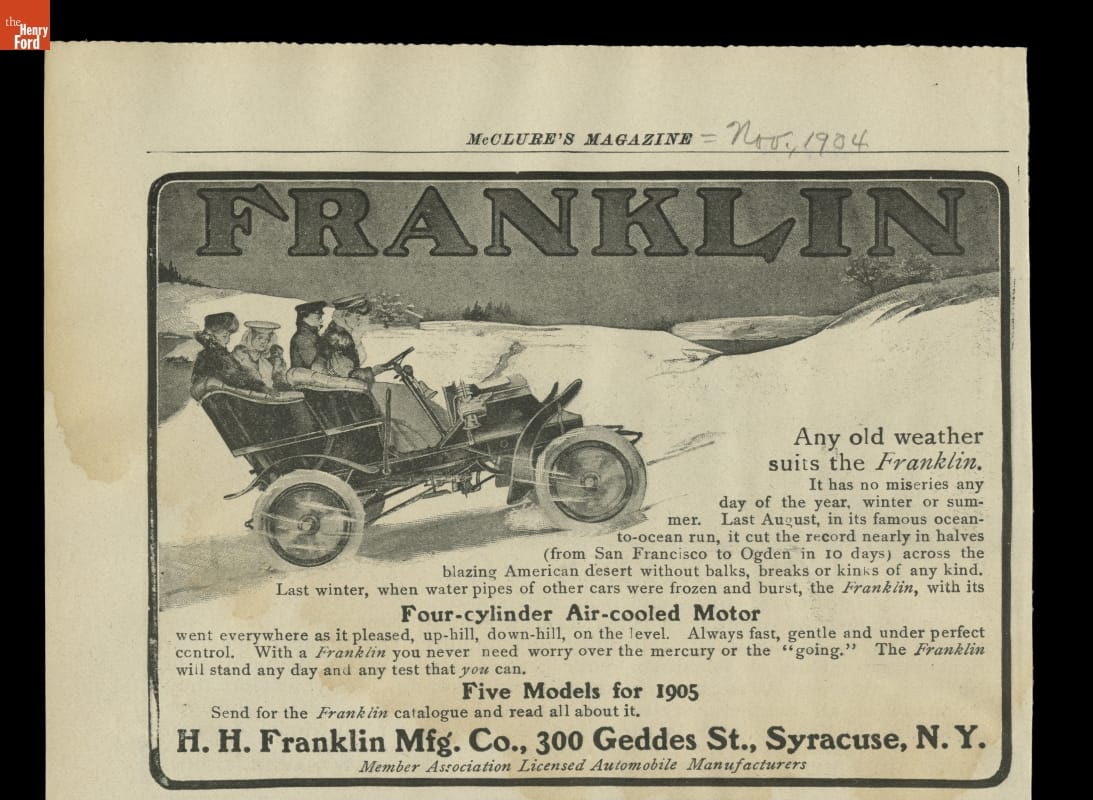
- Franklin Automobile Advertisement, November 1904, "Any Old Weather Suits the Franklin" - Throughout the company's existence from 1902 to 1934, Franklin automobiles were distinguished by air-cooled engines. Buyers more familiar with conventional water-cooled motors were suspicious, so Franklin went to great lengths to prove and promote air cooling's effectiveness. The cold weather depicted in this ad wouldn't have troubled a Franklin -- it had no water to freeze.
- November 01, 1904
- Collections - Artifact
Franklin Automobile Advertisement, November 1904, "Any Old Weather Suits the Franklin"
Throughout the company's existence from 1902 to 1934, Franklin automobiles were distinguished by air-cooled engines. Buyers more familiar with conventional water-cooled motors were suspicious, so Franklin went to great lengths to prove and promote air cooling's effectiveness. The cold weather depicted in this ad wouldn't have troubled a Franklin -- it had no water to freeze.
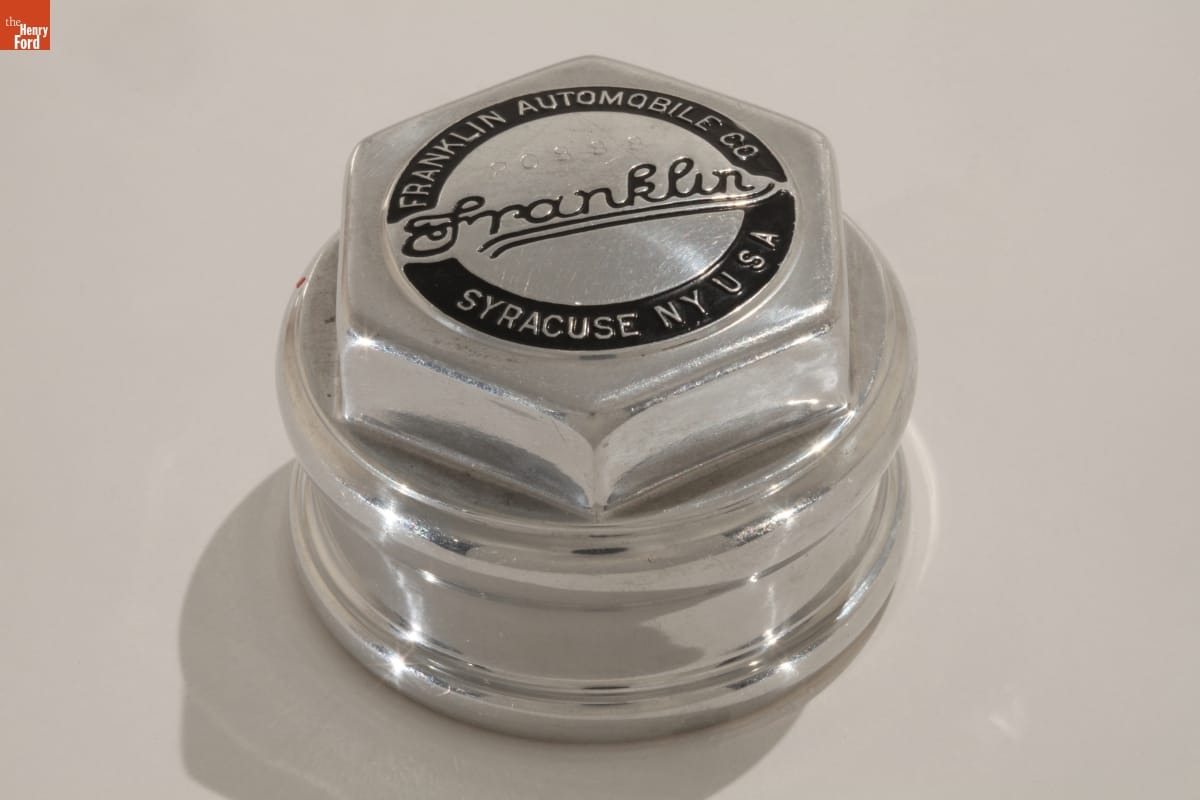
- Franklin Hubcap, 1920-1930 - Early automobile wheels had a central hub with a greased wheel bearing. Hub caps kept grease in and dust out. As wheels evolved and hubcaps became functionally unnecessary, they remained important to both manufacturers -- who branded wheel covers with maker names or logos -- and consumers -- who identified with hubcaps as statements about their cars and themselves.
- 1920-1930
- Collections - Artifact
Franklin Hubcap, 1920-1930
Early automobile wheels had a central hub with a greased wheel bearing. Hub caps kept grease in and dust out. As wheels evolved and hubcaps became functionally unnecessary, they remained important to both manufacturers -- who branded wheel covers with maker names or logos -- and consumers -- who identified with hubcaps as statements about their cars and themselves.
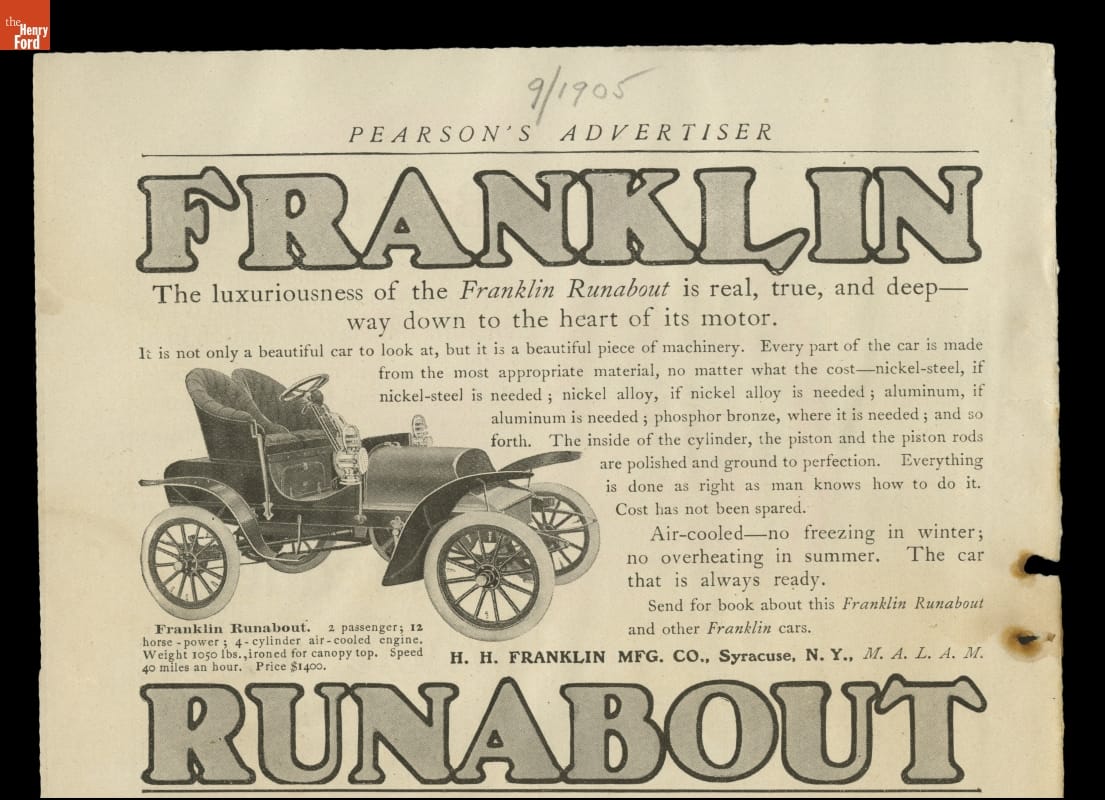
- Franklin Automobile Advertisement, September 1905, "The Luxuriousness of the Franklin" - Upscale Franklin automobiles, built from 1902 to 1934 in Syracuse, New York, were distinguished by their air-cooled engines. No radiator or water meant less weight, and no danger of the cooling system boiling over in summer or freezing in winter. Some 150,000 Franklins were built over the company's 32 years, making it the most successful American air-cooled car.
- September 01, 1905
- Collections - Artifact
Franklin Automobile Advertisement, September 1905, "The Luxuriousness of the Franklin"
Upscale Franklin automobiles, built from 1902 to 1934 in Syracuse, New York, were distinguished by their air-cooled engines. No radiator or water meant less weight, and no danger of the cooling system boiling over in summer or freezing in winter. Some 150,000 Franklins were built over the company's 32 years, making it the most successful American air-cooled car.
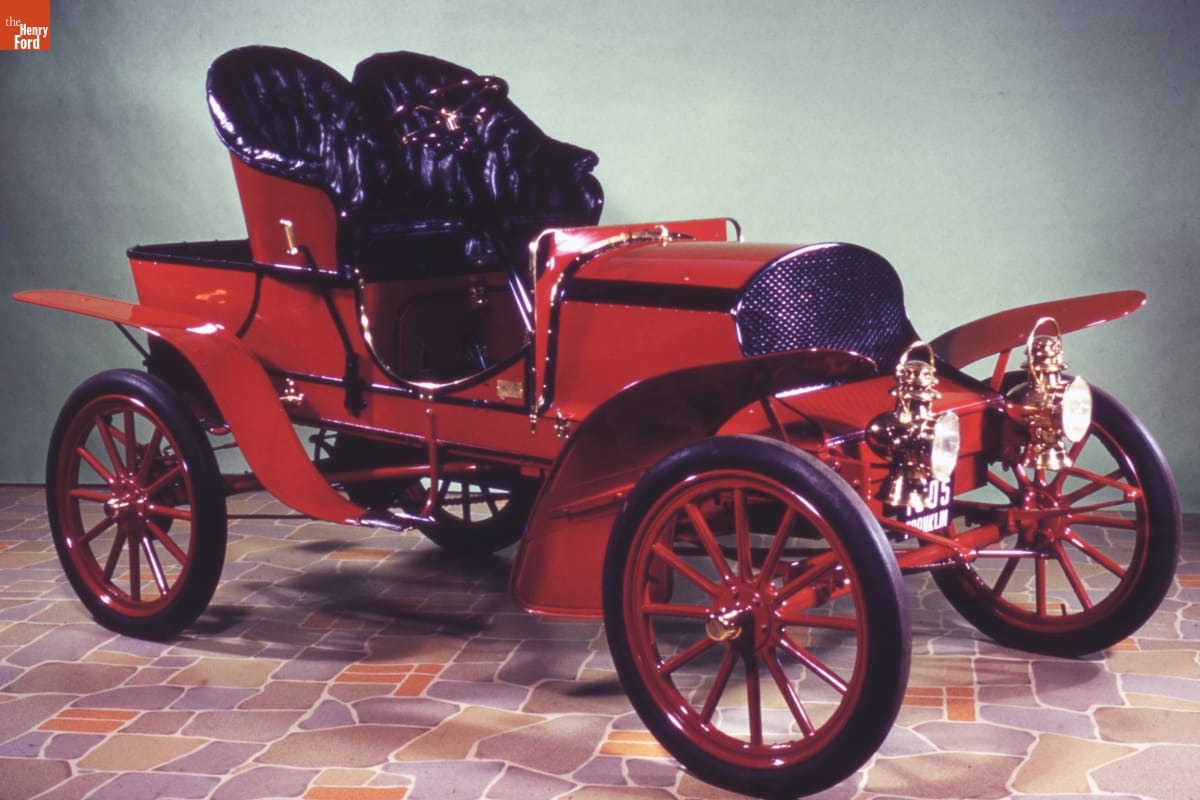
- 1905 Franklin Runabout - The Franklin Automobile Company of Syracuse, New York, manufactured luxury cars from 1902 until 1934. Franklins were inventive machines. This 1905 runabout is distinguished by its air-cooled engine, which eliminated the need for a radiator. The engine is mounted transversely under the hood so that each of the four cylinders is cooled equally as the car travels.
- 1905
- Collections - Artifact
1905 Franklin Runabout
The Franklin Automobile Company of Syracuse, New York, manufactured luxury cars from 1902 until 1934. Franklins were inventive machines. This 1905 runabout is distinguished by its air-cooled engine, which eliminated the need for a radiator. The engine is mounted transversely under the hood so that each of the four cylinders is cooled equally as the car travels.
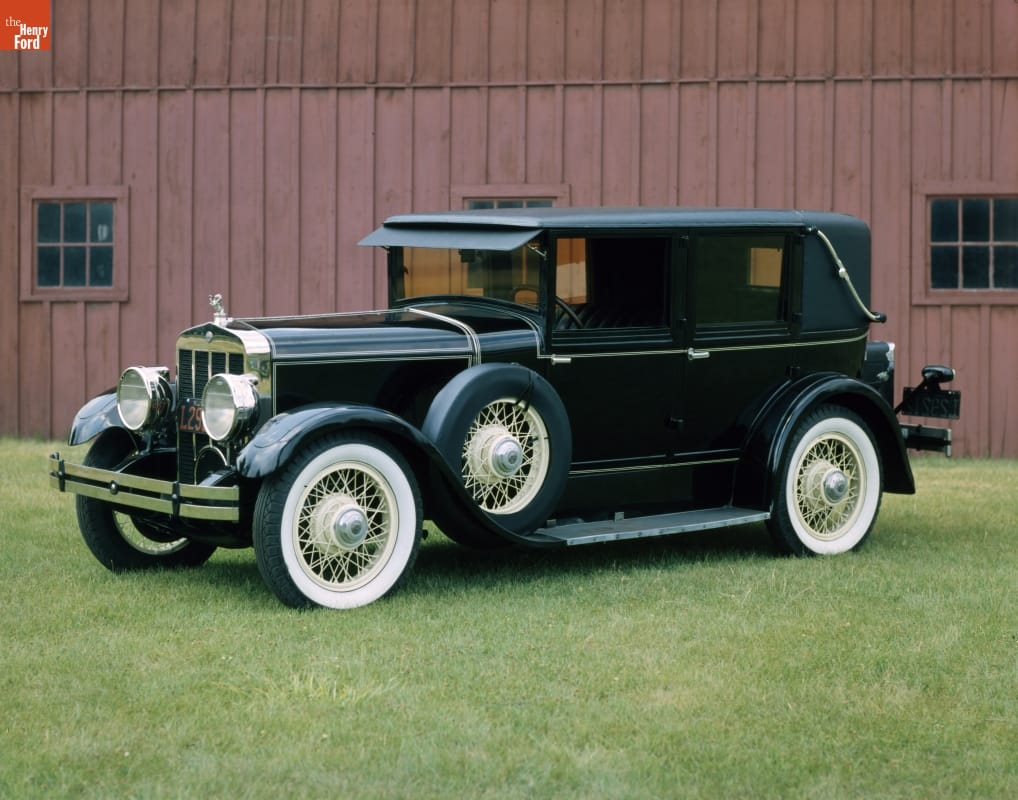
- 1928 Franklin Airman Sport Sedan, Personal Car of Charles A. Lindbergh - Franklin automobiles, built from 1902 until 1934, were distinguished by their air-cooled engines. When Charles Lindbergh flew across the Atlantic with an air-cooled motor in 1927, Franklin played up the connection by introducing an "Airman" sedan and giving this example to the aviator. In turn, Lindbergh gave the car to Henry Ford in 1940 for inclusion in Henry Ford Museum.
- 1928
- Collections - Artifact
1928 Franklin Airman Sport Sedan, Personal Car of Charles A. Lindbergh
Franklin automobiles, built from 1902 until 1934, were distinguished by their air-cooled engines. When Charles Lindbergh flew across the Atlantic with an air-cooled motor in 1927, Franklin played up the connection by introducing an "Airman" sedan and giving this example to the aviator. In turn, Lindbergh gave the car to Henry Ford in 1940 for inclusion in Henry Ford Museum.
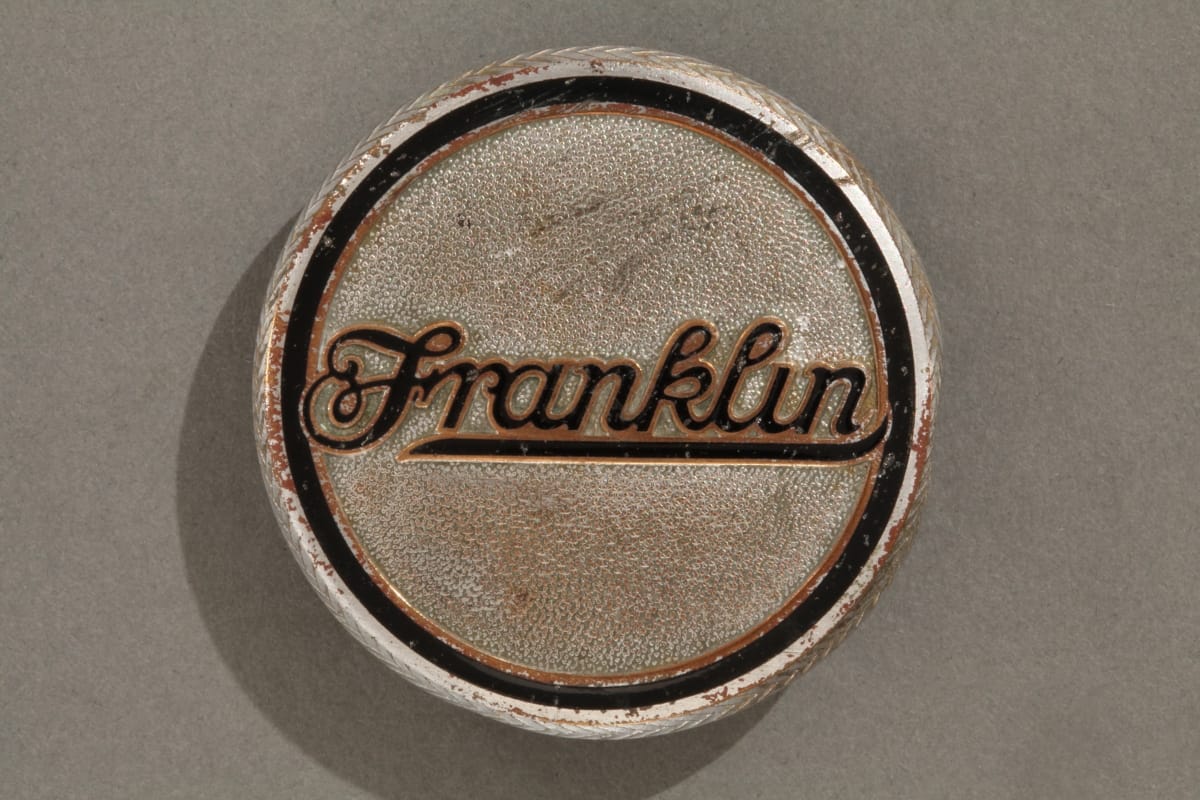
- Franklin Automobile Emblem, circa 1925 - Early automobile manufacturers took advantage of the prominent location of radiators and affixed branded emblems to them. As cars evolved and radiators were hidden within vehicle bodies, manufacturers retained this practice by branding hoods or grilles. Emblems remained important branding tools, but also became meaningful to consumers as statements about their cars and themselves.
- 1920-1930
- Collections - Artifact
Franklin Automobile Emblem, circa 1925
Early automobile manufacturers took advantage of the prominent location of radiators and affixed branded emblems to them. As cars evolved and radiators were hidden within vehicle bodies, manufacturers retained this practice by branding hoods or grilles. Emblems remained important branding tools, but also became meaningful to consumers as statements about their cars and themselves.
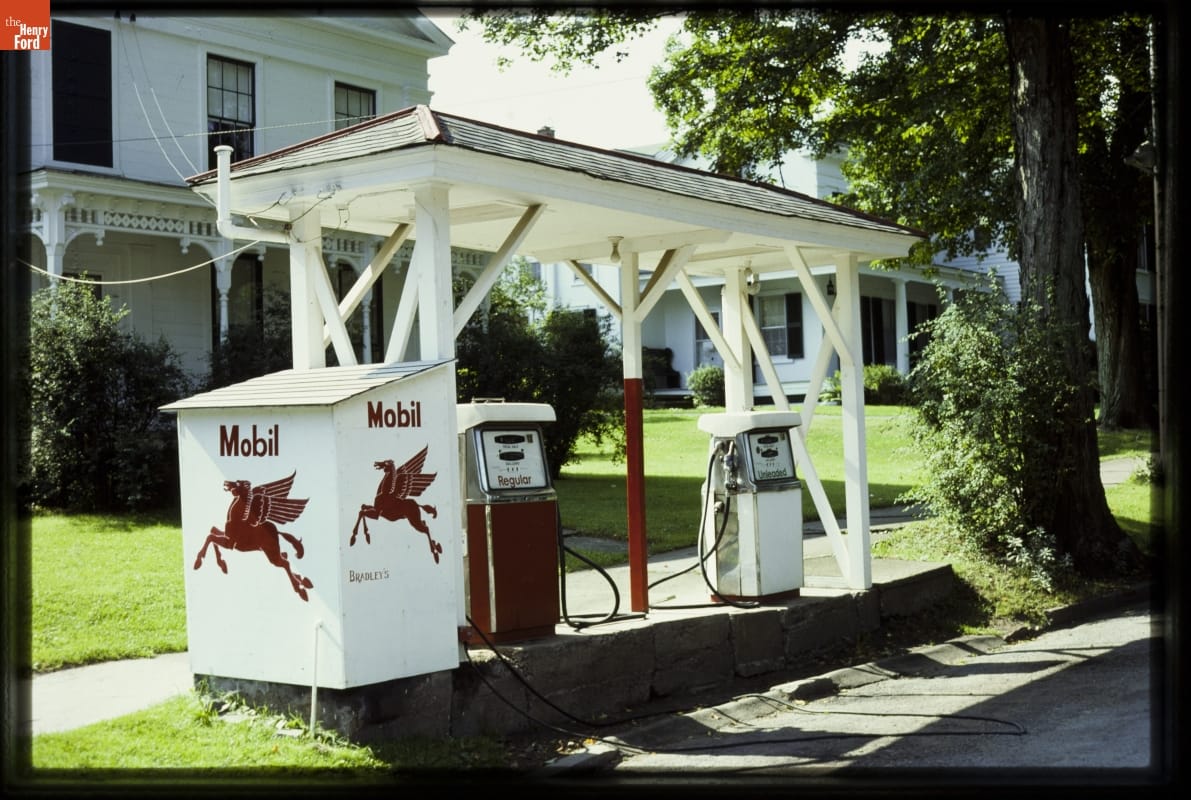
- Bradley's Mobil, Franklin, New York, 1976 - In the mid-1970s, John Margolies began to assemble a visual record of America's built roadside landscape. Over the following three decades, he traveled thousands of miles to photograph the overlooked and often quickly vanishing structures that had grown out of American automobile culture and main street commerce. His photographs of hotels, motels, diners, service stations, drive-ins and attractions celebrate and capture a unique chapter of American history.
- 1976
- Collections - Artifact
Bradley's Mobil, Franklin, New York, 1976
In the mid-1970s, John Margolies began to assemble a visual record of America's built roadside landscape. Over the following three decades, he traveled thousands of miles to photograph the overlooked and often quickly vanishing structures that had grown out of American automobile culture and main street commerce. His photographs of hotels, motels, diners, service stations, drive-ins and attractions celebrate and capture a unique chapter of American history.