
Search
- J.R. Jones General Store - James R. Jones was one of nine different proprietors who operated a general merchandise store in this building between 1857 and 1927. From 1882 to 1888, Jones sold products like coffee, sugar, fabric, and shoes. He also boasted the first telephone in town. General stores were organized shopping spaces. Long shelves with groupings of similar products lined each side.
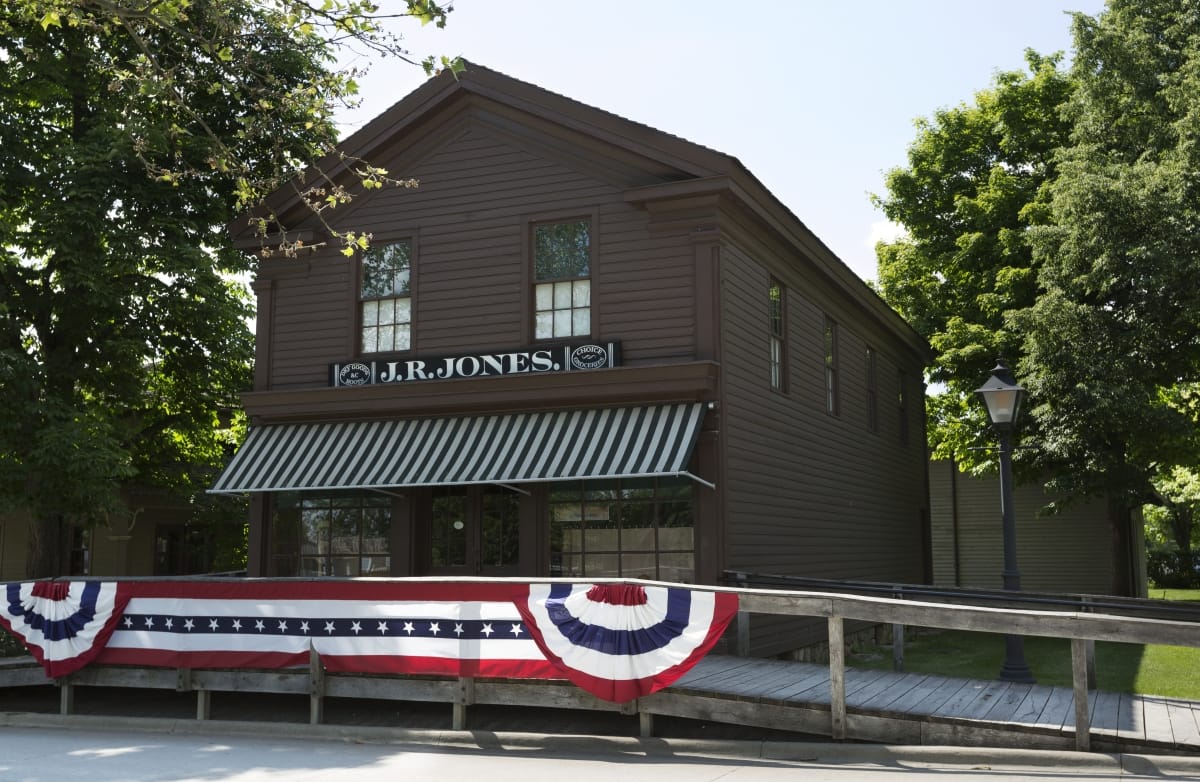
- 1882-1888
- Collections - Artifact
J.R. Jones General Store
James R. Jones was one of nine different proprietors who operated a general merchandise store in this building between 1857 and 1927. From 1882 to 1888, Jones sold products like coffee, sugar, fabric, and shoes. He also boasted the first telephone in town. General stores were organized shopping spaces. Long shelves with groupings of similar products lined each side.
- Hallmark "General Store" Christmas Ornament, 1986 - Already known for greeting cards, Hallmark introduced a line of Christmas ornaments in 1973. The company's annual release of an increasing array of ornaments revolutionized Christmas decorating, appealing to customers' interest in marking memories and milestones as well as expressing one's personality and unique tastes.
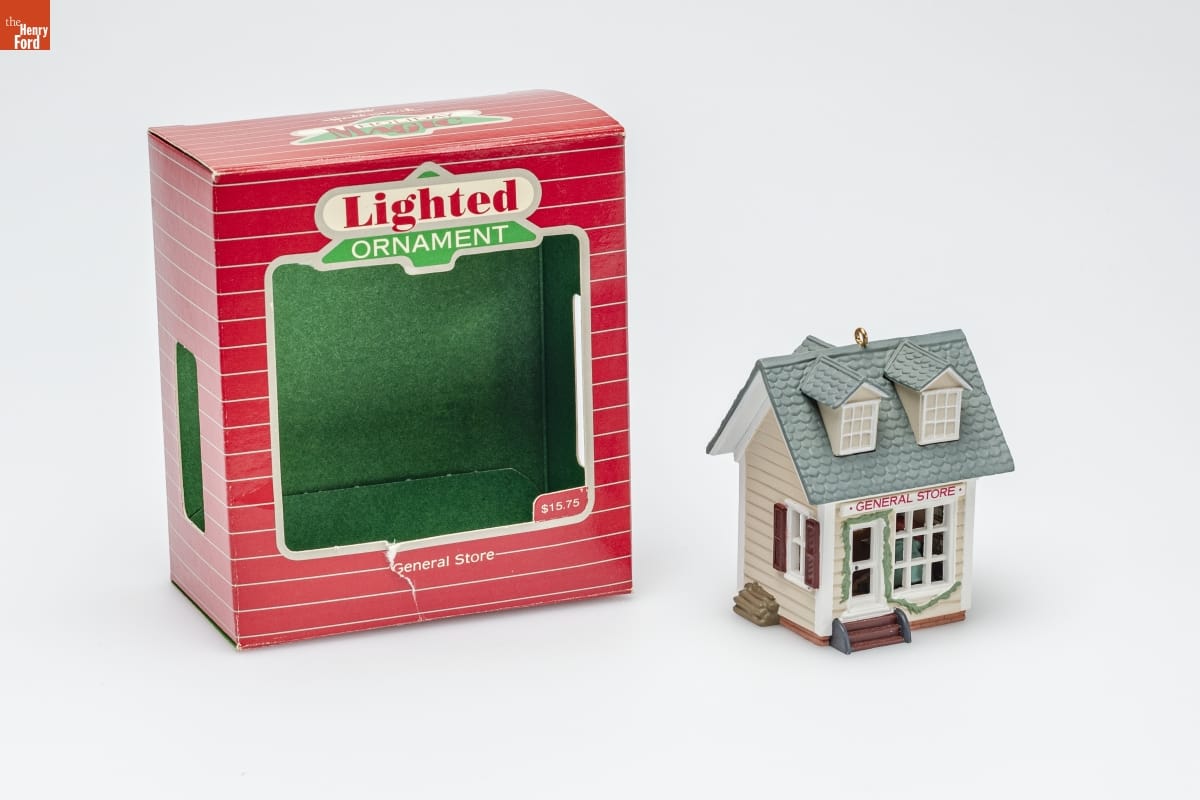
- 1986
- Collections - Artifact
Hallmark "General Store" Christmas Ornament, 1986
Already known for greeting cards, Hallmark introduced a line of Christmas ornaments in 1973. The company's annual release of an increasing array of ornaments revolutionized Christmas decorating, appealing to customers' interest in marking memories and milestones as well as expressing one's personality and unique tastes.
- General Store in Pequaming, Michigan, 1924 - Ford Motor Company opened its first employee commissary in 1919. By purchasing groceries, dry goods and over-the-counter medicines in bulk, Ford obtained better prices -- savings which it then passed on to employees through its company stores. The lumbering village of Pequaming, essentially a Ford company town, was especially dependent on its commissary; it was the only store in the area.
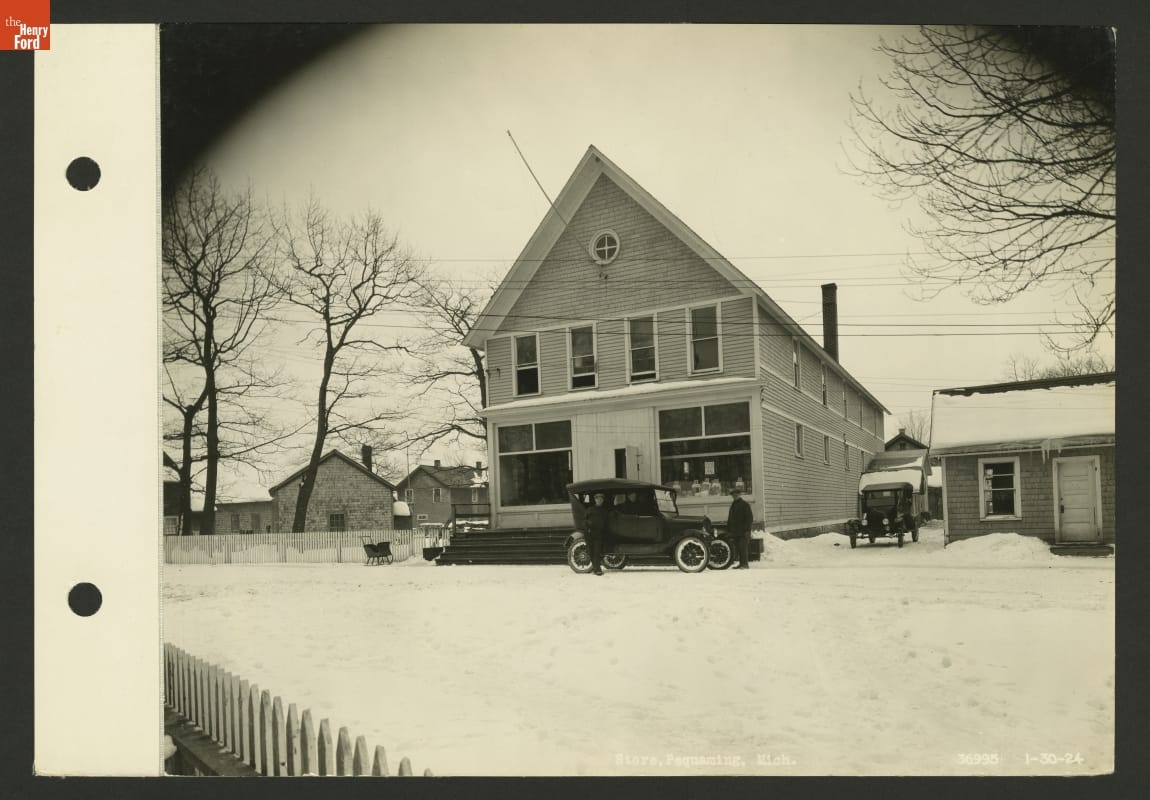
- January 30, 1924
- Collections - Artifact
General Store in Pequaming, Michigan, 1924
Ford Motor Company opened its first employee commissary in 1919. By purchasing groceries, dry goods and over-the-counter medicines in bulk, Ford obtained better prices -- savings which it then passed on to employees through its company stores. The lumbering village of Pequaming, essentially a Ford company town, was especially dependent on its commissary; it was the only store in the area.
- General Store in Greenfield Village, circa 1934 - Irving Bacon, a Ford Motor Company employee and Henry Ford's personal artist, created pen-and-ink drawings to illustrate guidebooks for the Edison Institute Museum and Greenfield Village (now The Henry Ford) when they officially opened to the public in 1933. An illustrated souvenir guidebook helped visitors navigate the exhibits and grounds. Ford also used these drawings in other company publications.
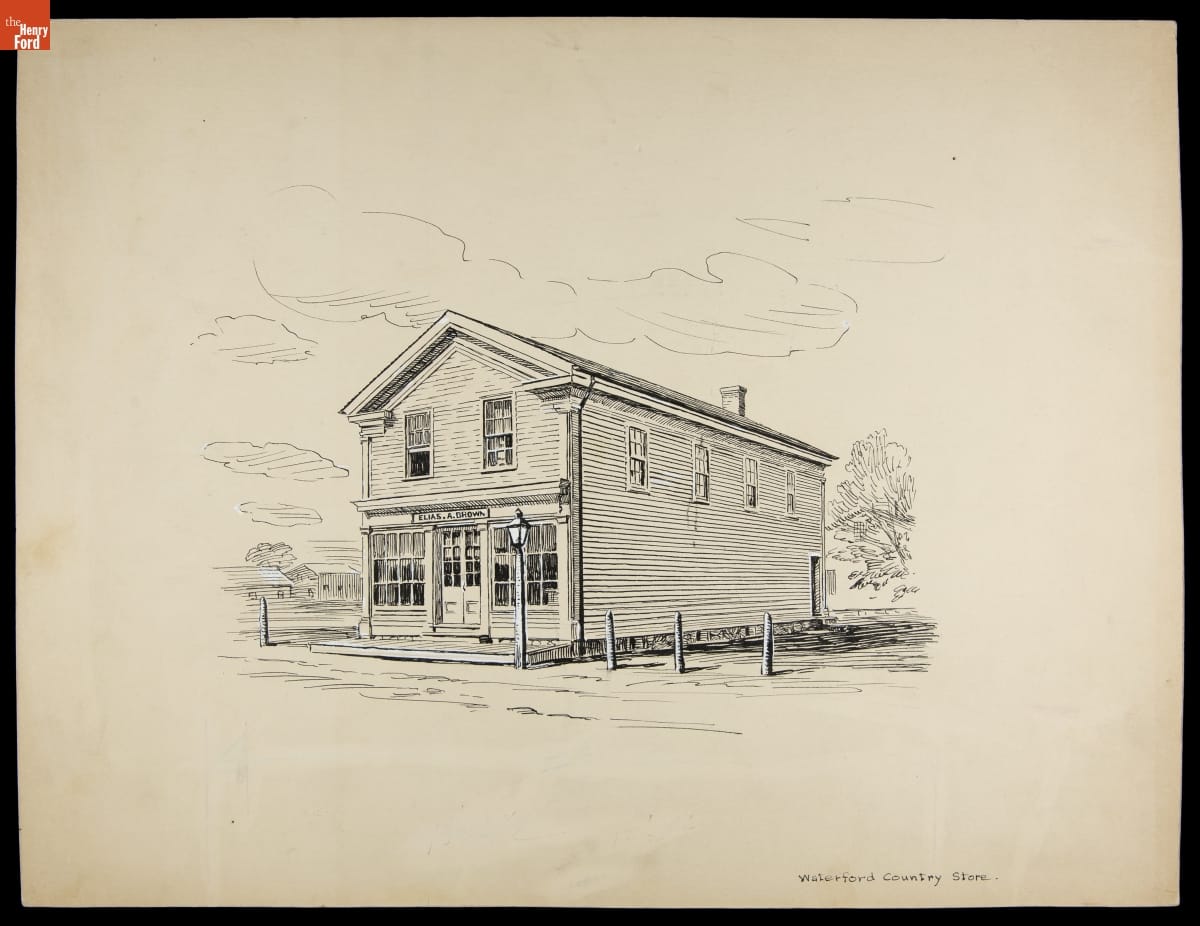
- circa 1934
- Collections - Artifact
General Store in Greenfield Village, circa 1934
Irving Bacon, a Ford Motor Company employee and Henry Ford's personal artist, created pen-and-ink drawings to illustrate guidebooks for the Edison Institute Museum and Greenfield Village (now The Henry Ford) when they officially opened to the public in 1933. An illustrated souvenir guidebook helped visitors navigate the exhibits and grounds. Ford also used these drawings in other company publications.
- Interior of a General Store, circa 1885 -
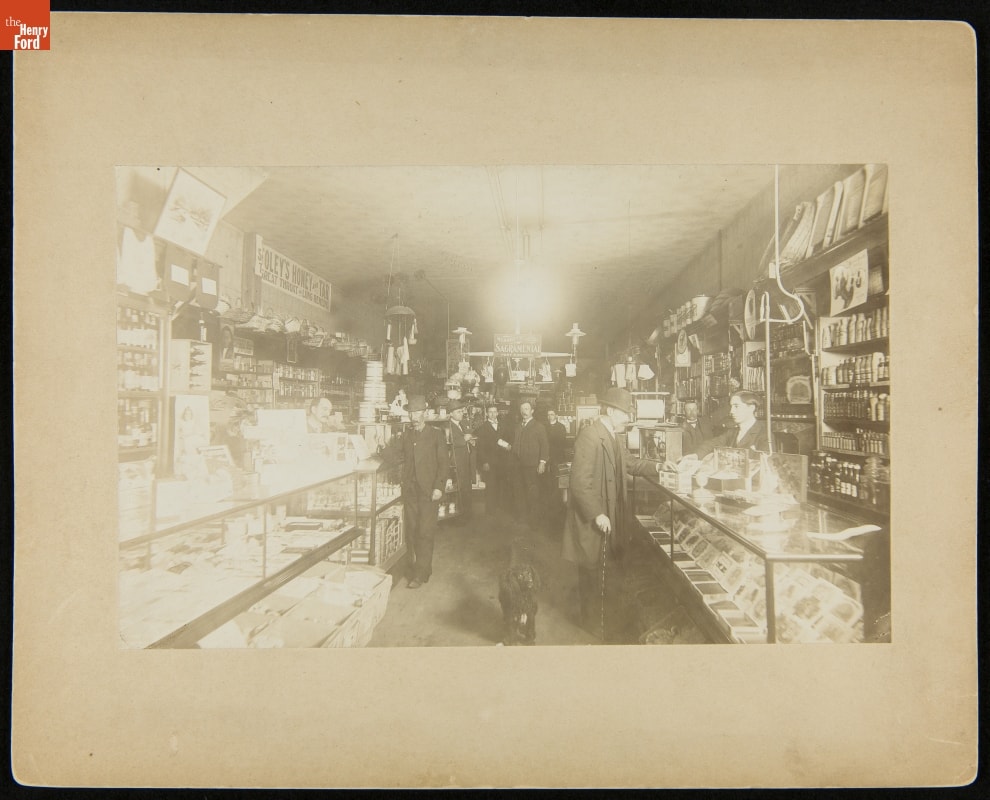
- circa 1885
- Collections - Artifact
Interior of a General Store, circa 1885
- Interior of a General Store, circa 1900 -
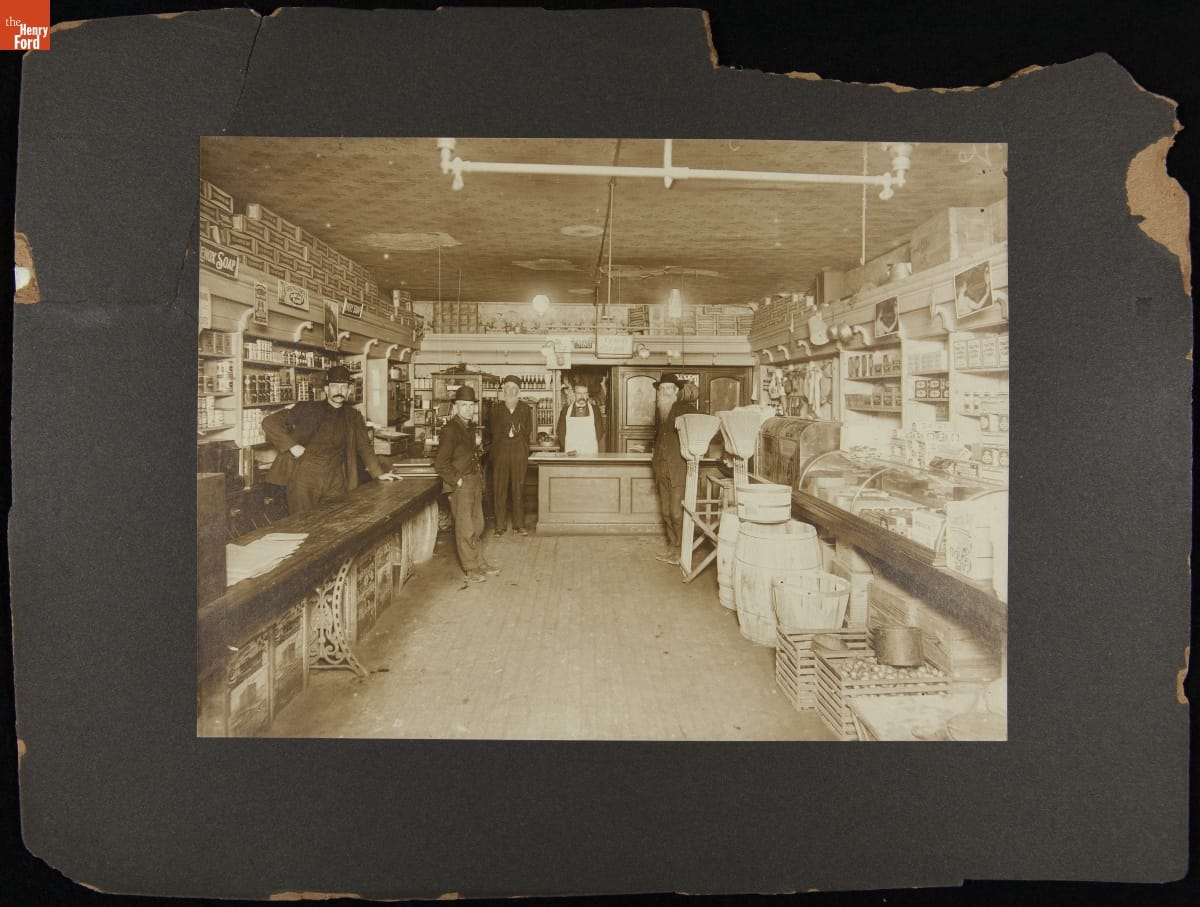
- circa 1900
- Collections - Artifact
Interior of a General Store, circa 1900
- Customer Standing inside a General Store, 1930 -
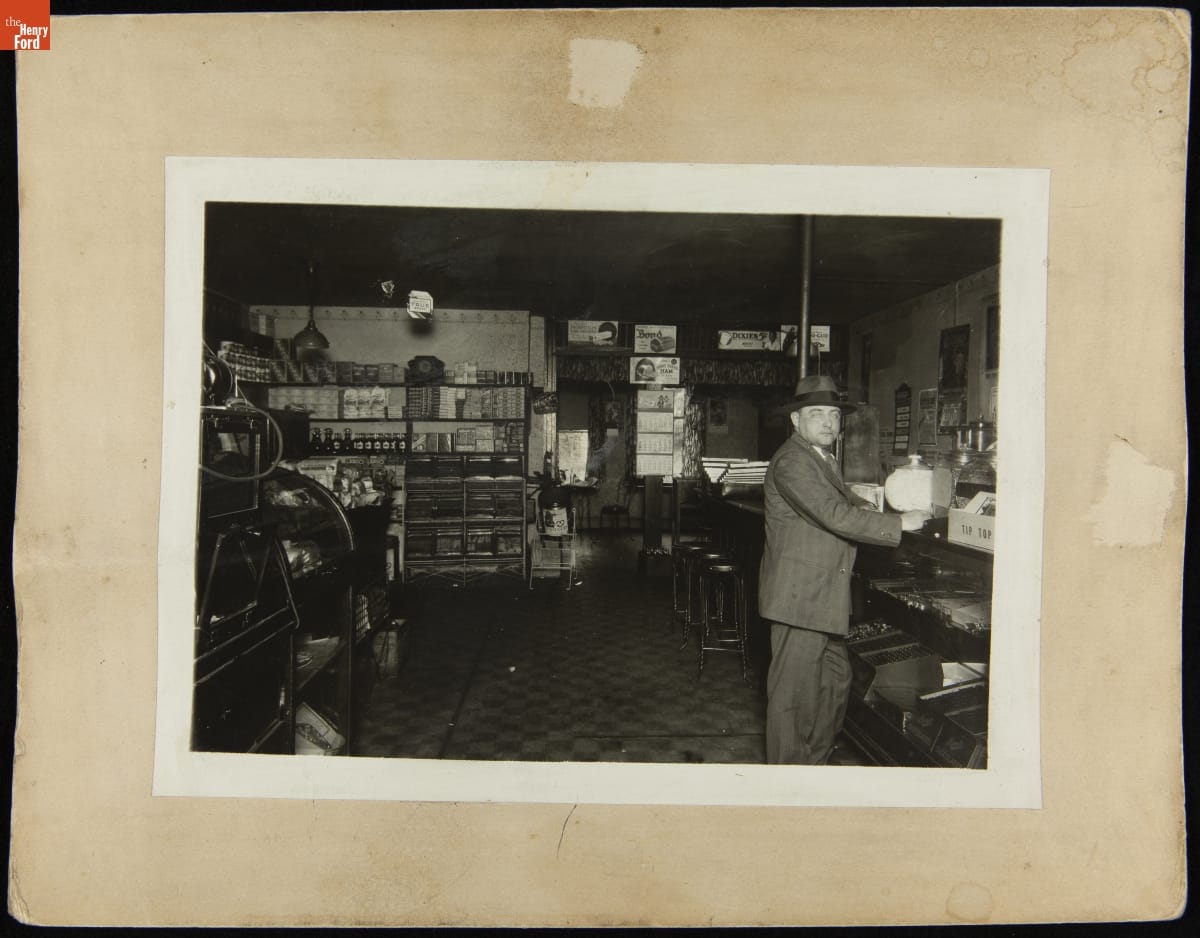
- 1930
- Collections - Artifact
Customer Standing inside a General Store, 1930
- Interior of a General Store, circa 1895 -
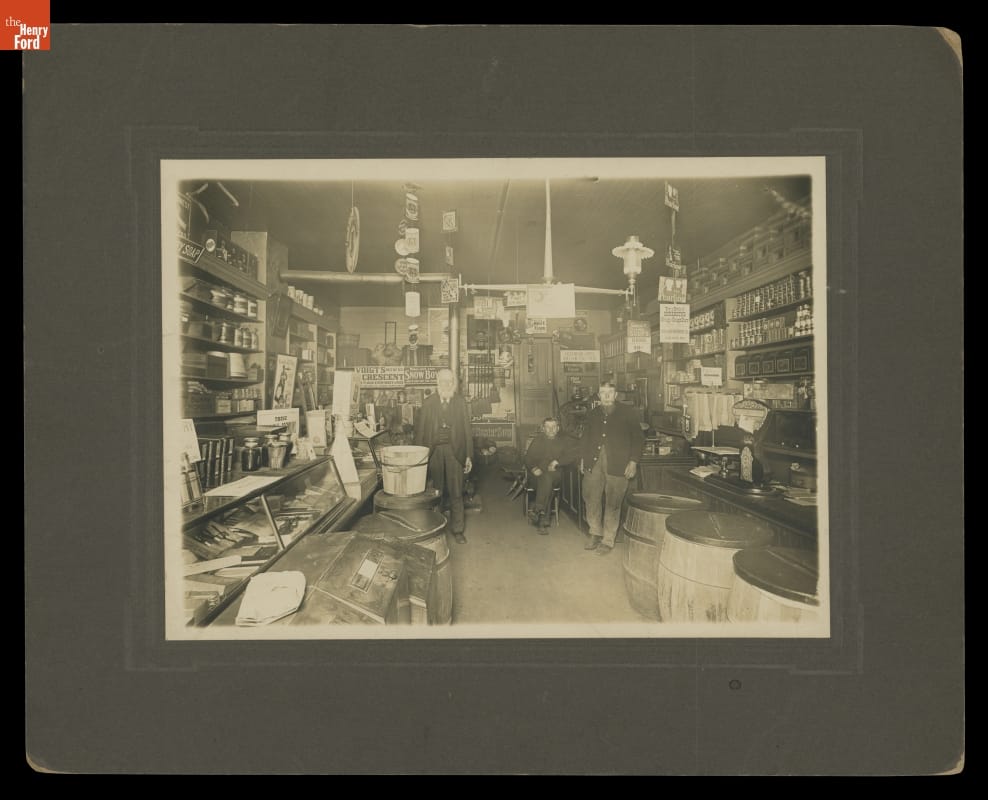
- circa 1895
- Collections - Artifact
Interior of a General Store, circa 1895
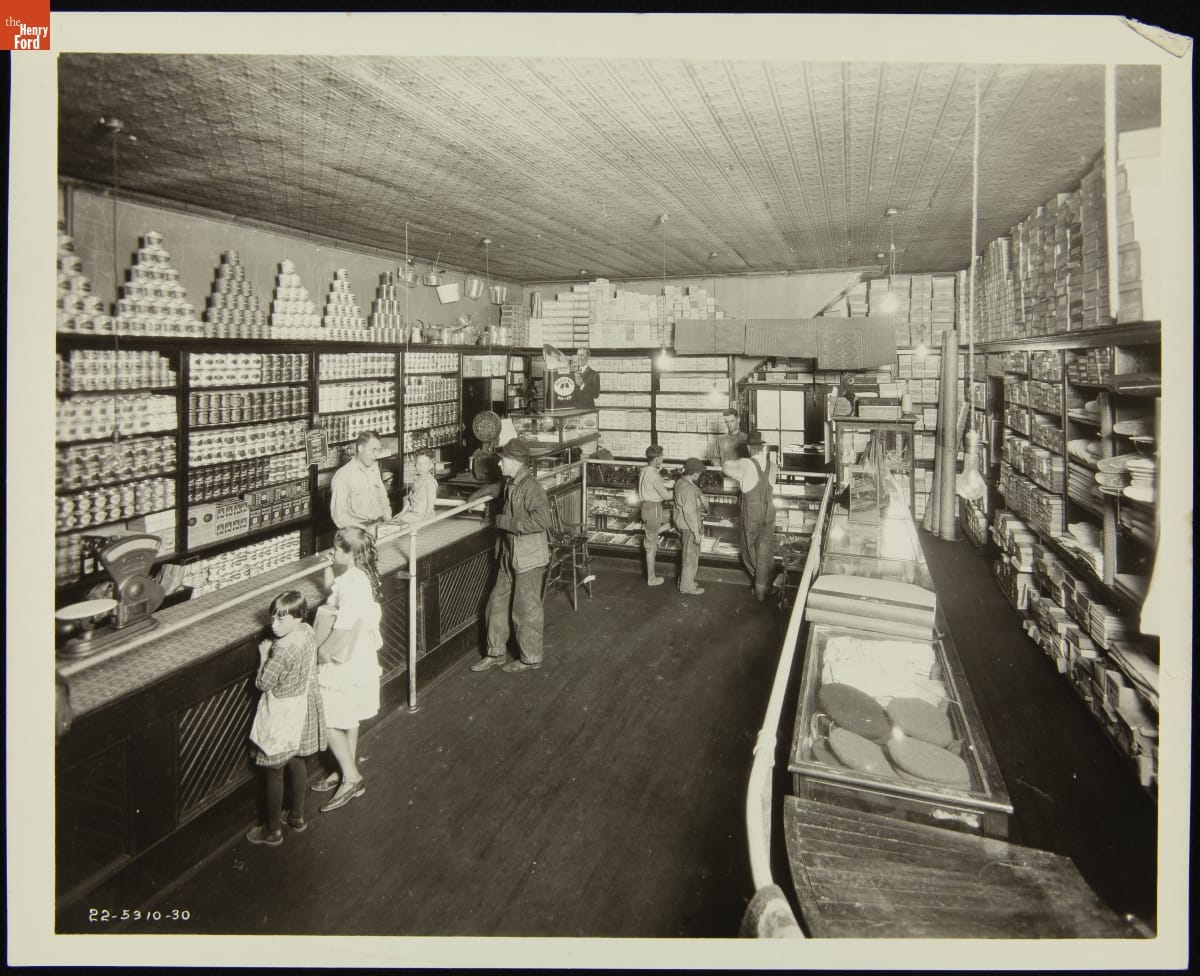
- General Store at the Fordson Coal Mine, Kentucky, 1922 - Beginning in 1920, Henry Ford purchased several coal mines in Kentucky and West Virginia. Two years later, he formed Fordson Coal Company to manage the mines. Ford-owned mines protected Ford Motor Company's coal supply in the event of labor unrest or government interference. Fordson sold its coal mining operations in the mid-1930s.
- 1922
- Collections - Artifact
General Store at the Fordson Coal Mine, Kentucky, 1922
Beginning in 1920, Henry Ford purchased several coal mines in Kentucky and West Virginia. Two years later, he formed Fordson Coal Company to manage the mines. Ford-owned mines protected Ford Motor Company's coal supply in the event of labor unrest or government interference. Fordson sold its coal mining operations in the mid-1930s.
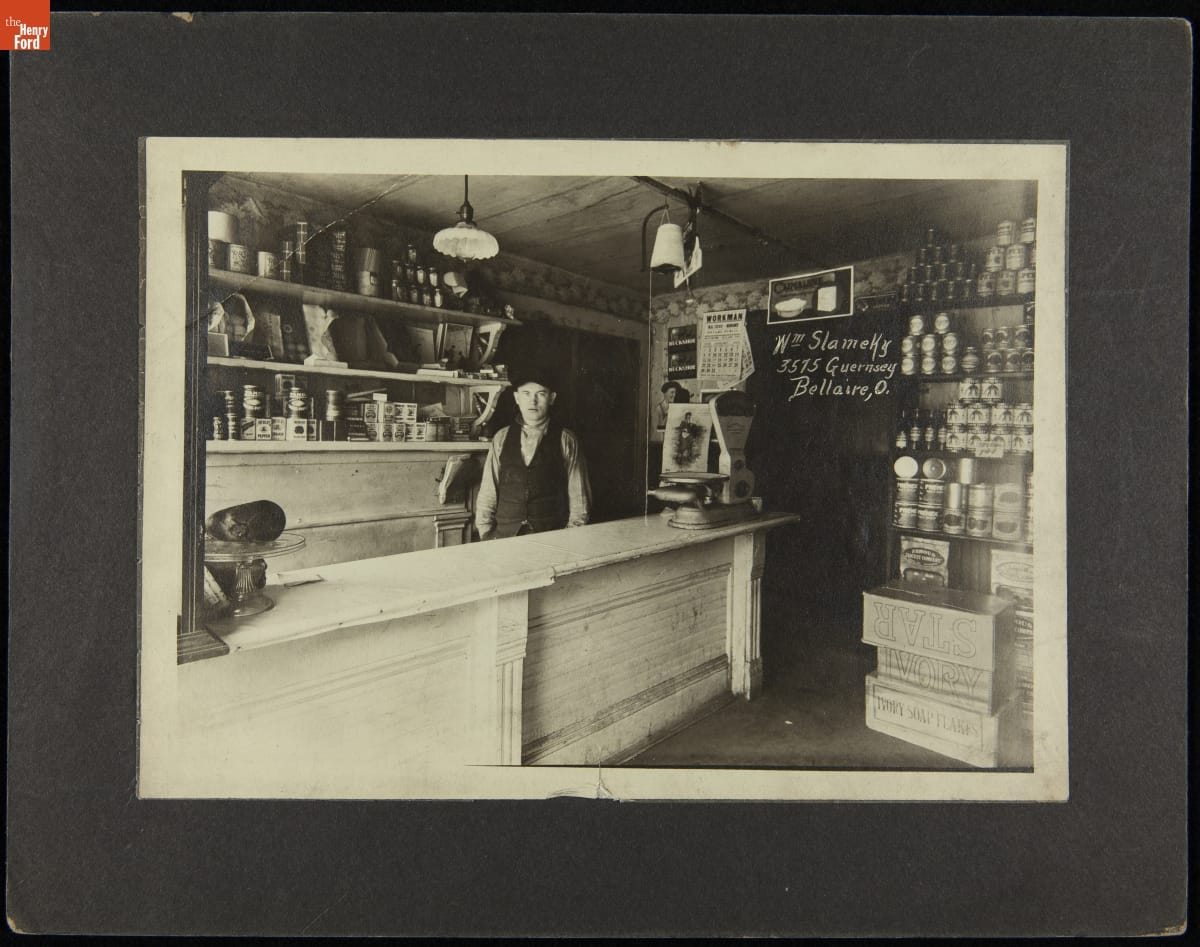
- Interior of a General Store in Bellaire, Ohio, 1923 -
- January 01, 1923
- Collections - Artifact
Interior of a General Store in Bellaire, Ohio, 1923