
Search
- Halloween Postcard, "Merry Halloween," 1909 - A jack-o-lantern is a traditional symbol of Halloween. The tradition began in the Celtic regions of Europe, specifically Ireland, where people hollowed out root vegetables, such as turnips, and lit them with candles or burning coal or embers. As immigrants flooded into the United States in the 1800s they used the pumpkin -- native to America -- as a natural substitute.

- circa 1909
- Collections - Artifact
Halloween Postcard, "Merry Halloween," 1909
A jack-o-lantern is a traditional symbol of Halloween. The tradition began in the Celtic regions of Europe, specifically Ireland, where people hollowed out root vegetables, such as turnips, and lit them with candles or burning coal or embers. As immigrants flooded into the United States in the 1800s they used the pumpkin -- native to America -- as a natural substitute.
- Halloween Postcard, "The Halloween Lantern," 1914 - Halloween's superstitious origins gave way to a national celebration of mystery and innocent fun in 20th-century America. Seasonal greeting postcards commonly exchanged by friends and neighbors during Halloween reflected a distinctly American blend of olden customs and modern life. This colorful example from 1914 combines traditional superstitious symbols with a contemporary automobile.

- 1914
- Collections - Artifact
Halloween Postcard, "The Halloween Lantern," 1914
Halloween's superstitious origins gave way to a national celebration of mystery and innocent fun in 20th-century America. Seasonal greeting postcards commonly exchanged by friends and neighbors during Halloween reflected a distinctly American blend of olden customs and modern life. This colorful example from 1914 combines traditional superstitious symbols with a contemporary automobile.
- "Hallowe'en," 1908 - A distinctly American blend of Halloween traditions emerged by the late 1800s. Into the 20th century, the holiday was mostly an innocent celebration of mystery and fun, but friends and neighbors often exchanged seasonal greeting cards that evoked Halloween's superstitious origins. This colorful example alludes to olden customs and beliefs involving witchcraft, owls, and black cats.

- 1908
- Collections - Artifact
"Hallowe'en," 1908
A distinctly American blend of Halloween traditions emerged by the late 1800s. Into the 20th century, the holiday was mostly an innocent celebration of mystery and fun, but friends and neighbors often exchanged seasonal greeting cards that evoked Halloween's superstitious origins. This colorful example alludes to olden customs and beliefs involving witchcraft, owls, and black cats.
- Halloween Postcard, "A Starry Hallowe'en," circa 1915 - Halloween's superstitious origins gave way to a national celebration of mystery and innocent fun in 20th-century America. Seasonal greeting postcards commonly exchanged by friends and neighbors during Halloween reflected a distinctly American blend of olden customs and modern life. This colorful example from about 1915 features traditional superstitious symbols and a whimsical "airplane."

- circa 1915
- Collections - Artifact
Halloween Postcard, "A Starry Hallowe'en," circa 1915
Halloween's superstitious origins gave way to a national celebration of mystery and innocent fun in 20th-century America. Seasonal greeting postcards commonly exchanged by friends and neighbors during Halloween reflected a distinctly American blend of olden customs and modern life. This colorful example from about 1915 features traditional superstitious symbols and a whimsical "airplane."
- Waste Management Ride-Along Halloween Costume, Worn by Simon Morland in 2022 -

- 2022
- Collections - Artifact
Waste Management Ride-Along Halloween Costume, Worn by Simon Morland in 2022
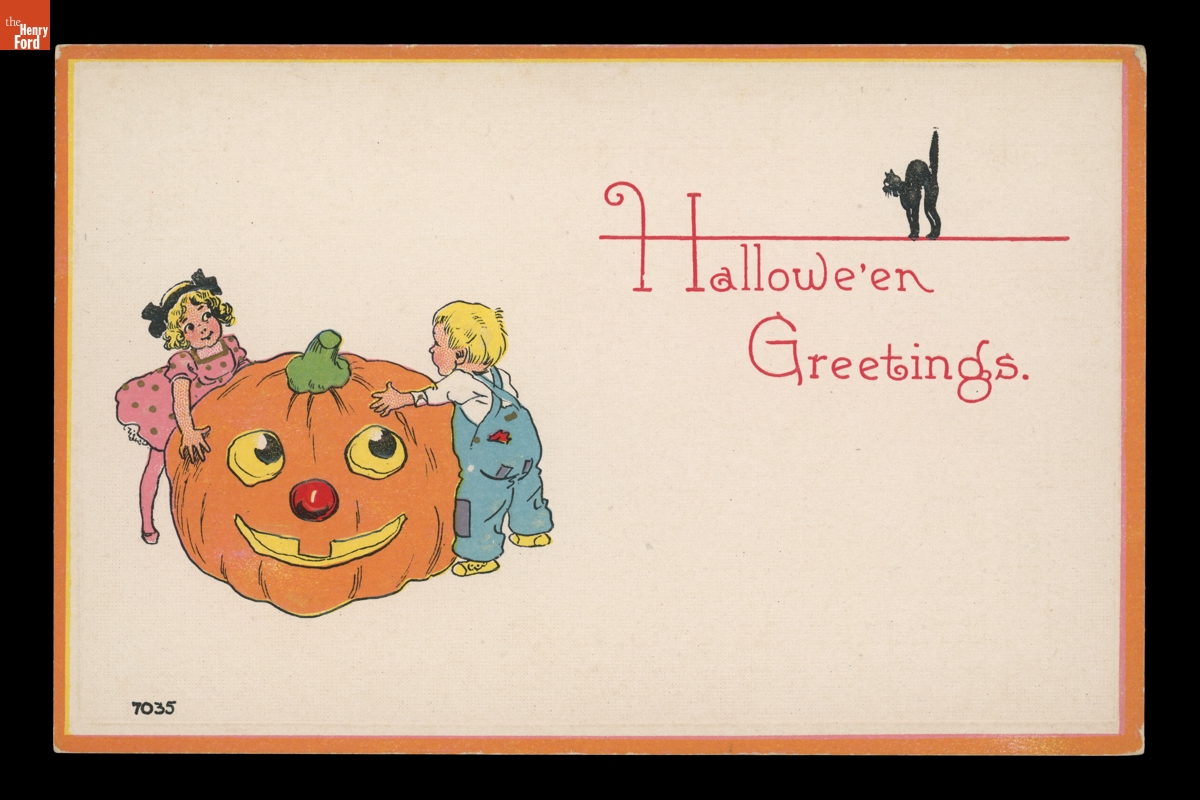
- "Hallowe'en Greetings," 1912 - A distinctly American blend of Halloween traditions emerged by the late 1800s. Into the 20th century, the holiday became a national celebration of mystery and fun. Often, friends and neighbors exchanged seasonal greeting cards. This colorful example features a jack-o-lantern and black cat -- two symbols of Halloween's superstitious origins.
- 1912
- Collections - Artifact
"Hallowe'en Greetings," 1912
A distinctly American blend of Halloween traditions emerged by the late 1800s. Into the 20th century, the holiday became a national celebration of mystery and fun. Often, friends and neighbors exchanged seasonal greeting cards. This colorful example features a jack-o-lantern and black cat -- two symbols of Halloween's superstitious origins.
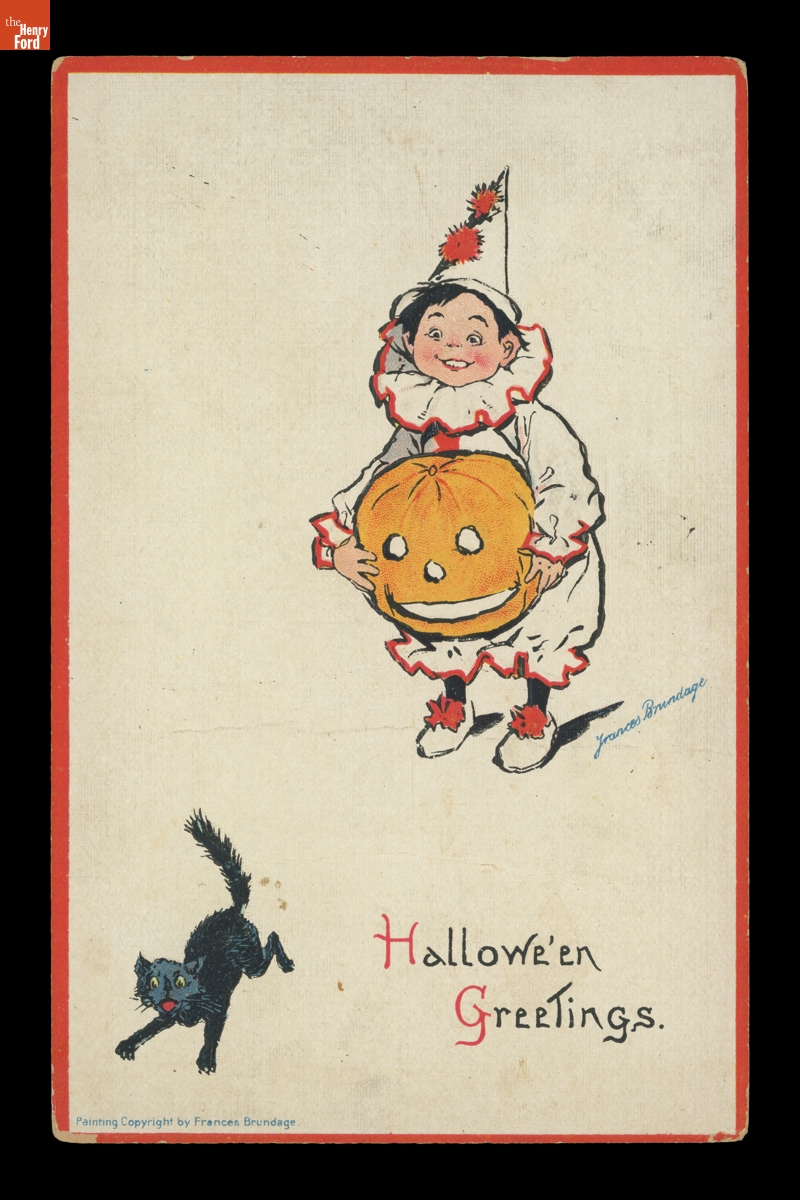
- "Hallowe'en Greetings," 1915 - Halloween's superstitious origins gave way to a national celebration of mystery and innocent fun in 20th-century America. Seasonal greeting cards commonly exchanged by friends and neighbors during Halloween reflected a distinctly American blend of olden customs and modern life. Traditional symbols - a jack-o-lantern and black cat - join a child in contemporary costume on this card from 1915.
- 1915
- Collections - Artifact
"Hallowe'en Greetings," 1915
Halloween's superstitious origins gave way to a national celebration of mystery and innocent fun in 20th-century America. Seasonal greeting cards commonly exchanged by friends and neighbors during Halloween reflected a distinctly American blend of olden customs and modern life. Traditional symbols - a jack-o-lantern and black cat - join a child in contemporary costume on this card from 1915.
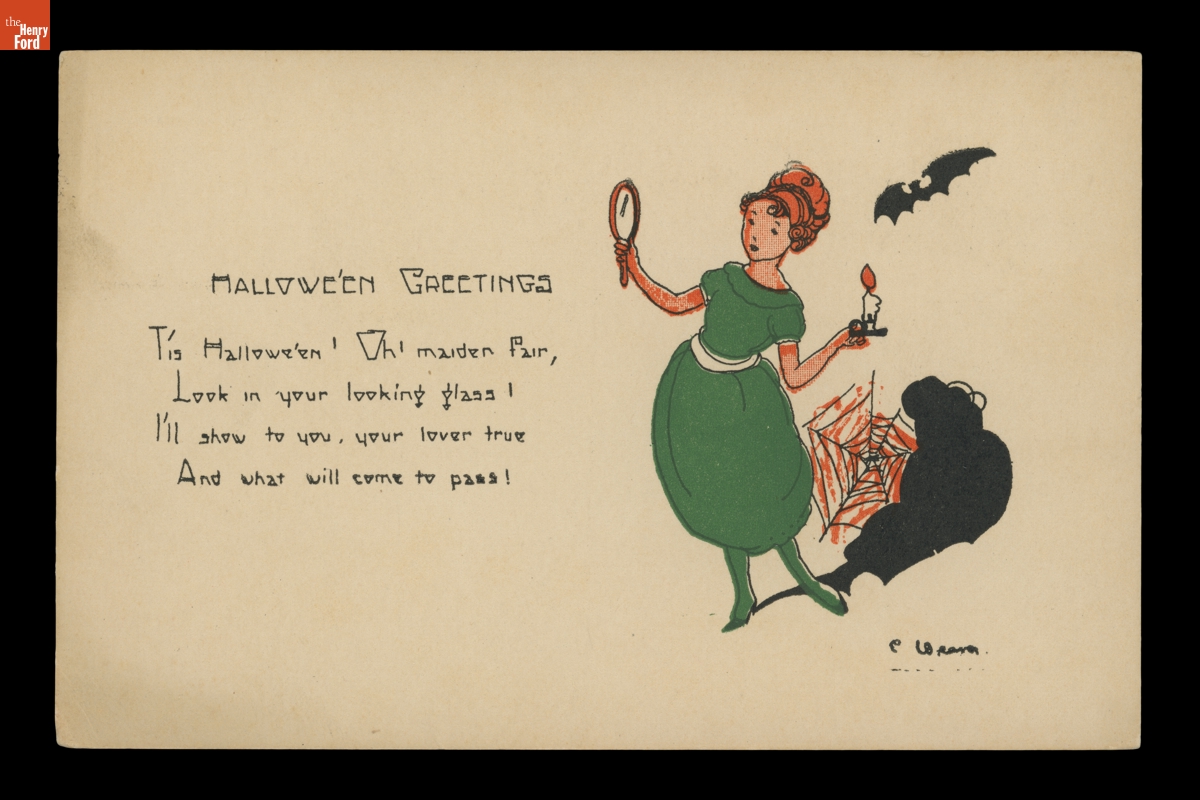
- "Hallowe'en Greetings 'Tis Hallowe'en Oh maiden fair... ," circa 1930 - By the late 1800s, a distinct blend of Halloween customs had emerged in the United States. The holiday was mostly an innocent celebration of mystery and fun into the 20th century, though traditions often reflected Halloween's supernatural origins. This greeting card depicts one popular superstition that a looking glass could reveal a young lady's romantic future during Halloween.
- circa 1930
- Collections - Artifact
"Hallowe'en Greetings 'Tis Hallowe'en Oh maiden fair... ," circa 1930
By the late 1800s, a distinct blend of Halloween customs had emerged in the United States. The holiday was mostly an innocent celebration of mystery and fun into the 20th century, though traditions often reflected Halloween's supernatural origins. This greeting card depicts one popular superstition that a looking glass could reveal a young lady's romantic future during Halloween.
- Halloween Treat Bags, 1995 - As Trick-or-Treating for children became increasingly popular during the 20th century, manufacturers developed related products like treat bags and small-sized versions of popular candy to facilitate the giving of Halloween treats. These treat bags date from the 1990s, a period of time when Halloween was being celebrated in increasingly elaborate ways, making it America's second largest holiday.

- 1995
- Collections - Artifact
Halloween Treat Bags, 1995
As Trick-or-Treating for children became increasingly popular during the 20th century, manufacturers developed related products like treat bags and small-sized versions of popular candy to facilitate the giving of Halloween treats. These treat bags date from the 1990s, a period of time when Halloween was being celebrated in increasingly elaborate ways, making it America's second largest holiday.
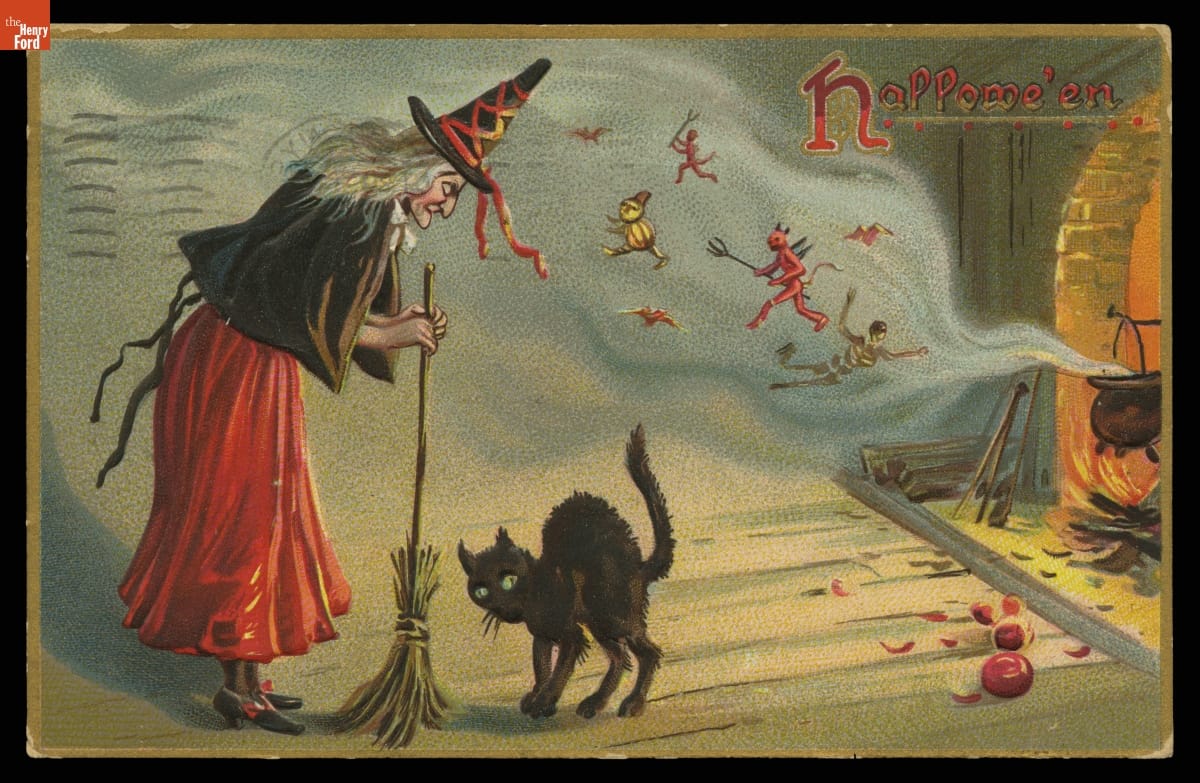
- "Hallowe'en," circa 1910 - A distinctly American blend of Halloween traditions emerged by the late 1800s. Into the 20th century, the holiday was mostly an innocent celebration of mystery and fun, but friends and neighbors often exchanged seasonal greeting cards that evoked Halloween's superstitious origins. This colorful example alludes to olden customs and beliefs involving witchcraft and black cats.
- circa 1910
- Collections - Artifact
"Hallowe'en," circa 1910
A distinctly American blend of Halloween traditions emerged by the late 1800s. Into the 20th century, the holiday was mostly an innocent celebration of mystery and fun, but friends and neighbors often exchanged seasonal greeting cards that evoked Halloween's superstitious origins. This colorful example alludes to olden customs and beliefs involving witchcraft and black cats.