
Search
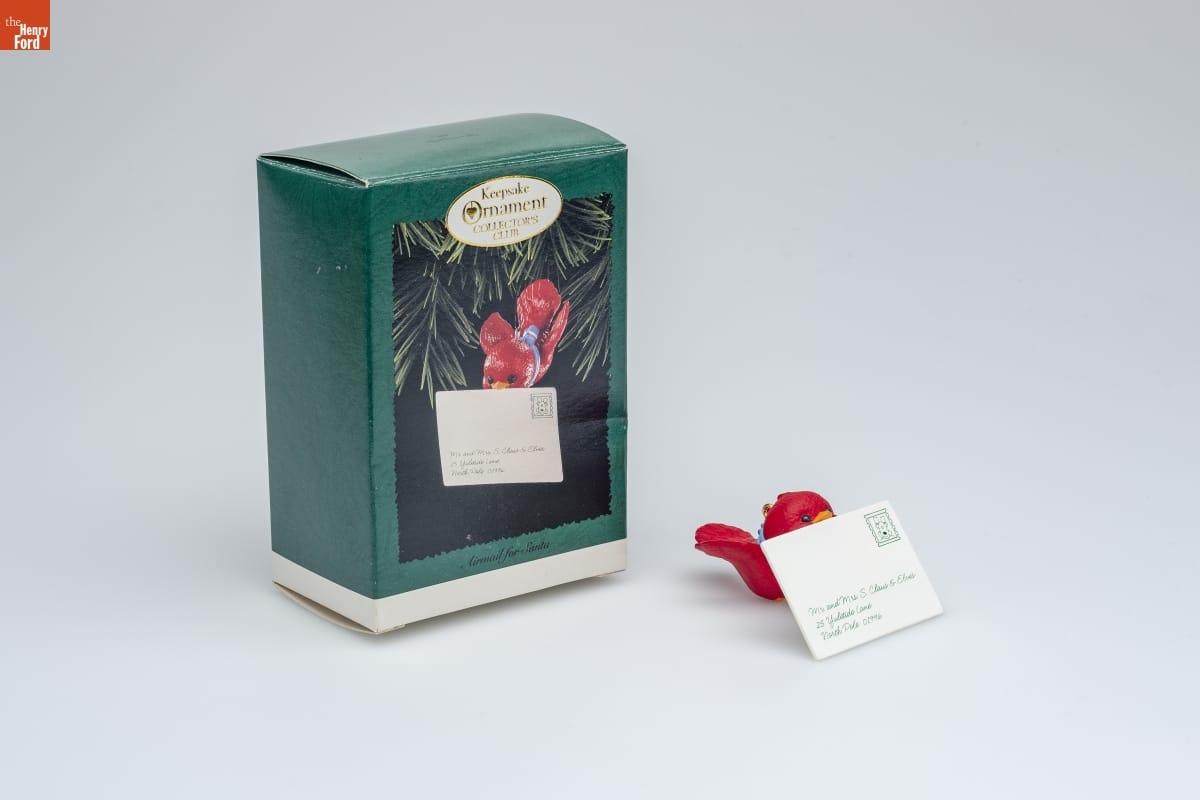
- Hallmark "Airmail for Santa" Collector's Club Christmas Ornament, 1996 - Already known for greeting cards, Hallmark introduced a line of Christmas ornaments in 1973. The company's annual release of an increasing array of ornaments revolutionized Christmas decorating, appealing to customers' interest in marking memories and milestones as well as expressing one's personality and unique tastes.
- 1996
- Collections - Artifact
Hallmark "Airmail for Santa" Collector's Club Christmas Ornament, 1996
Already known for greeting cards, Hallmark introduced a line of Christmas ornaments in 1973. The company's annual release of an increasing array of ornaments revolutionized Christmas decorating, appealing to customers' interest in marking memories and milestones as well as expressing one's personality and unique tastes.
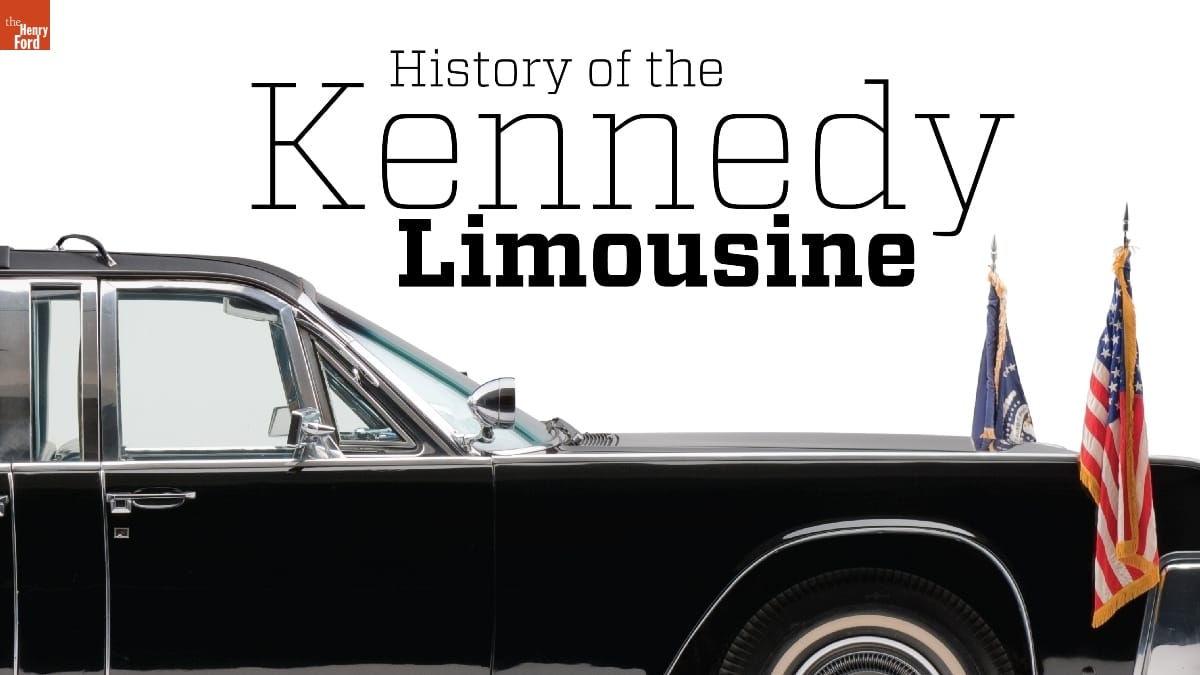
- History of the Kennedy Limousine - Arguably, no presidential limousine is as widely recognized as the 1961 Lincoln Continental in which John F. Kennedy was assassinated on November 22, 1963. When originally constructed, the car had no armor. After the tragedy, it was thoroughly rebuilt with titanium plating, bullet-resistant glass, and a more powerful engine to handle the added weight. This film tells the limo's remarkable story.
- 2013
- Collections - Artifact
History of the Kennedy Limousine
Arguably, no presidential limousine is as widely recognized as the 1961 Lincoln Continental in which John F. Kennedy was assassinated on November 22, 1963. When originally constructed, the car had no armor. After the tragedy, it was thoroughly rebuilt with titanium plating, bullet-resistant glass, and a more powerful engine to handle the added weight. This film tells the limo's remarkable story.
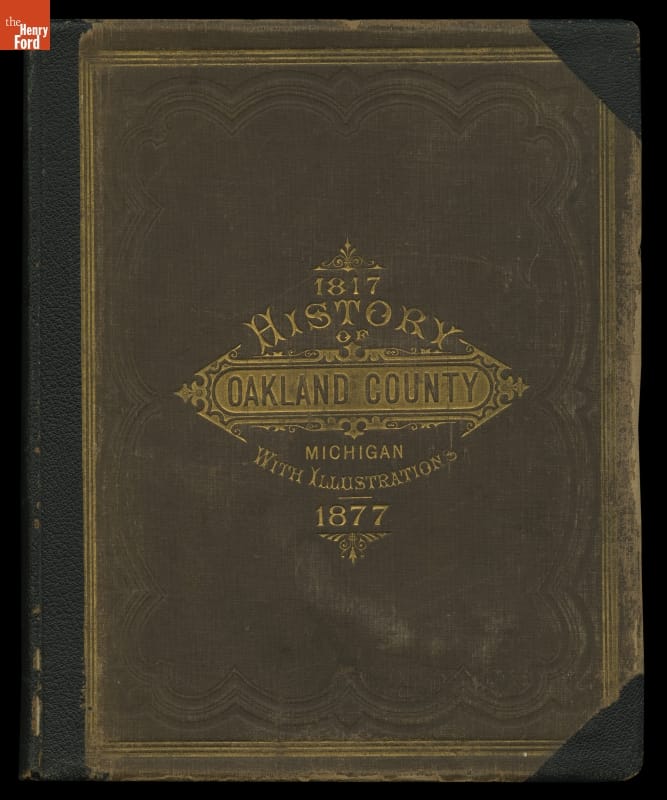
- "History of Oakland County, Michigan," 1877 -
- 1877
- Collections - Artifact
"History of Oakland County, Michigan," 1877
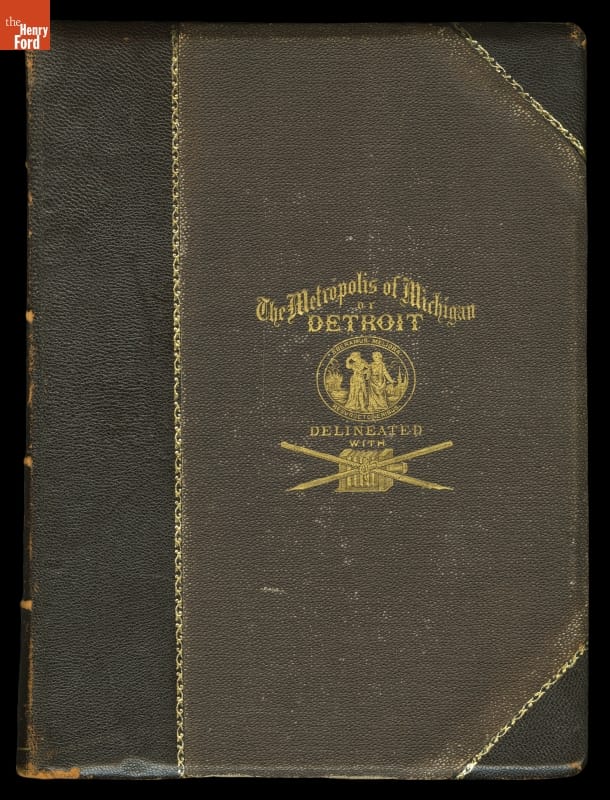
- "History of Detroit and Michigan," 1884 - The author of this book, Silas Farmer, was the son of John Farmer, Detroit's earliest map publisher. Silas began his career working on maps but turned his efforts to writing and compiling a complete history of Detroit, Michigan. A great reference to what life was like in Detroit before the 1900s, historians continue to study this work today.
- 1884
- Collections - Artifact
"History of Detroit and Michigan," 1884
The author of this book, Silas Farmer, was the son of John Farmer, Detroit's earliest map publisher. Silas began his career working on maps but turned his efforts to writing and compiling a complete history of Detroit, Michigan. A great reference to what life was like in Detroit before the 1900s, historians continue to study this work today.
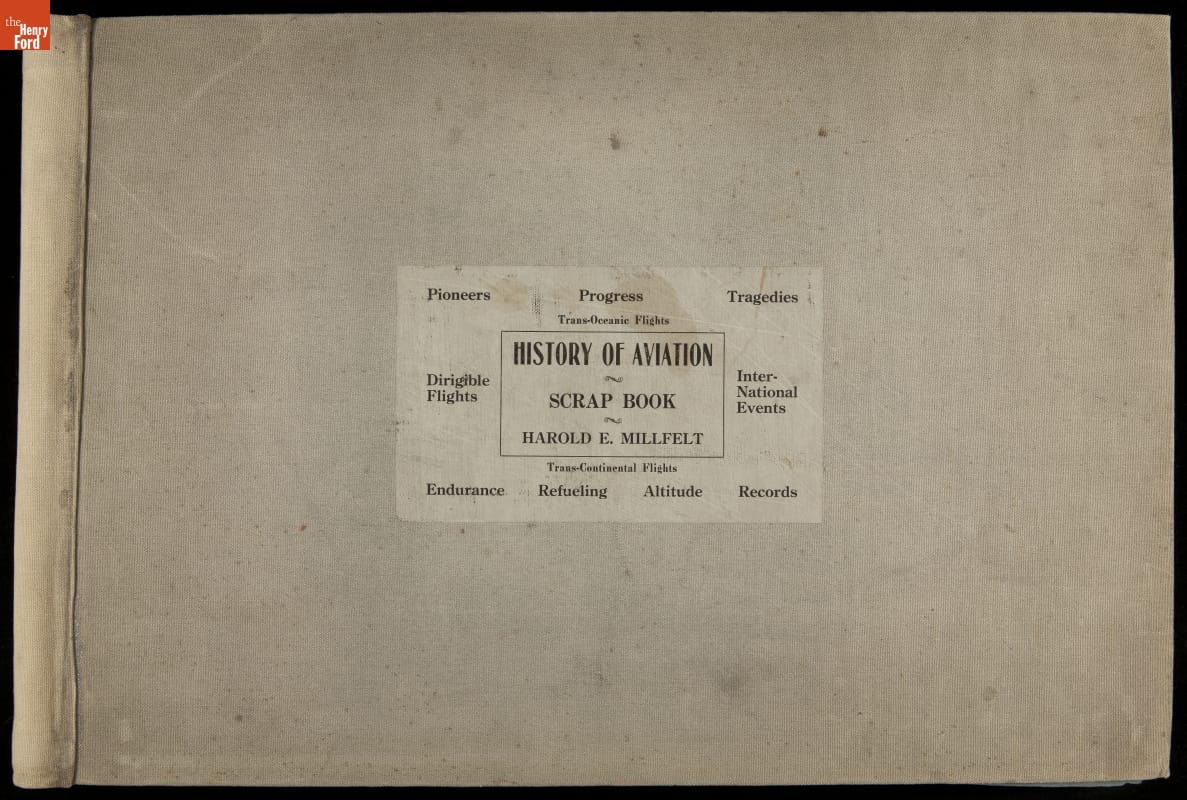
- History of Aviation Scrapbook, 1908-1929 - Harold E. Millfelt, a night clerk at a hotel in Zanesville, Ohio, assembled scrapbooks to pass the time during his long overnight shifts. This one documents the history of aviation, from the Wright brothers' demonstration flights in 1908 through Charles Lindbergh's solo transatlantic flight in 1927. Most of the scrapbook's content relates to Lindbergh and his flight.
- 1908-1929
- Collections - Artifact
History of Aviation Scrapbook, 1908-1929
Harold E. Millfelt, a night clerk at a hotel in Zanesville, Ohio, assembled scrapbooks to pass the time during his long overnight shifts. This one documents the history of aviation, from the Wright brothers' demonstration flights in 1908 through Charles Lindbergh's solo transatlantic flight in 1927. Most of the scrapbook's content relates to Lindbergh and his flight.
- Brochure, "History of the Measurement of Length," circa 1960 -
- circa 1960
- Collections - Artifact
Brochure, "History of the Measurement of Length," circa 1960
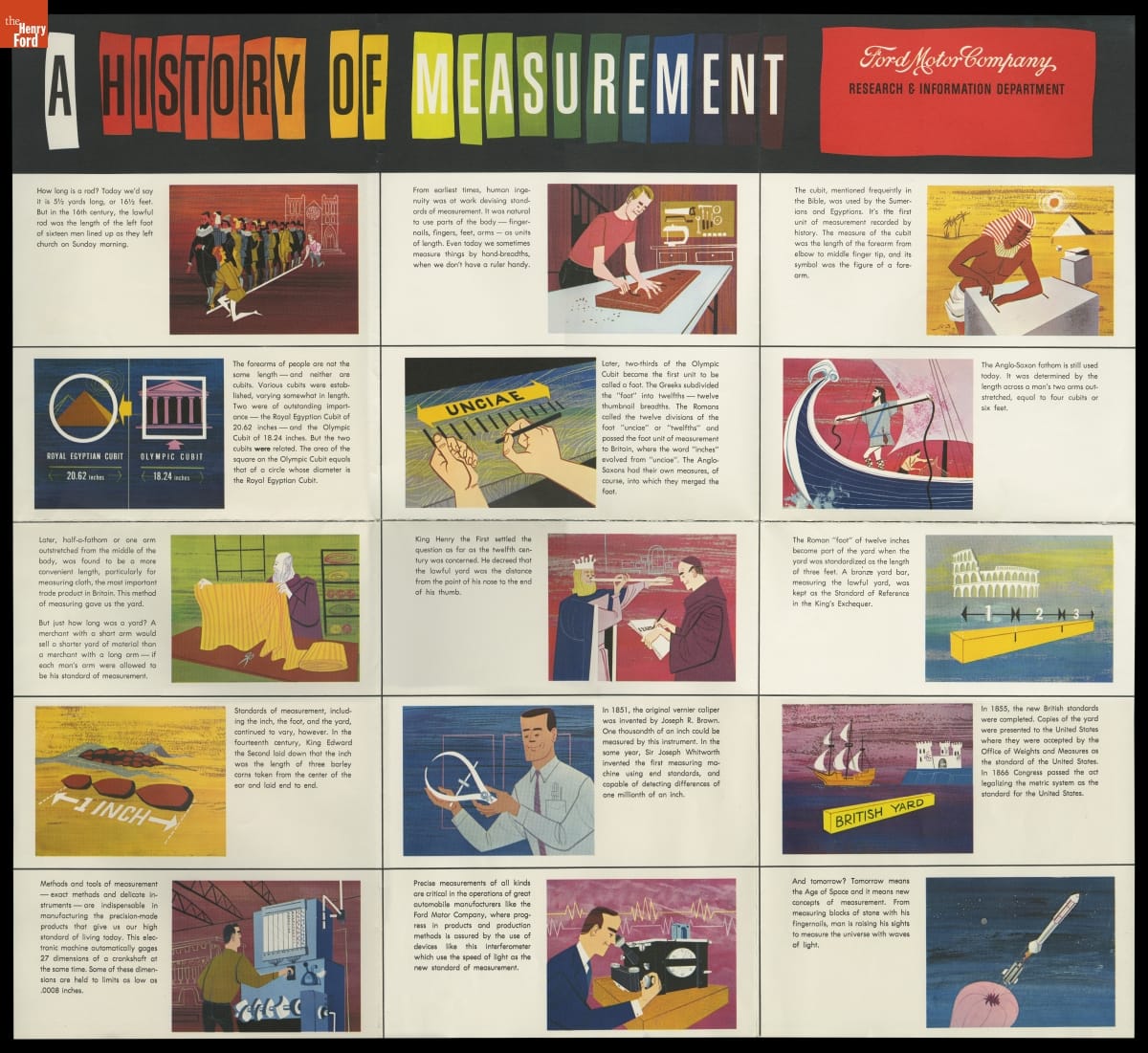
- Poster, "A History of Measurement," circa 1960 - Around 1960, Ford Motor Company's Research and Information Department produced a set of educational posters presenting "a short history of how our system of linear measurement and measurement of length came into being." Concise captions accompanying dynamic, simple illustrations revealed the origins of many standards of measurement and explained their critical role in science and industry.
- circa 1960
- Collections - Artifact
Poster, "A History of Measurement," circa 1960
Around 1960, Ford Motor Company's Research and Information Department produced a set of educational posters presenting "a short history of how our system of linear measurement and measurement of length came into being." Concise captions accompanying dynamic, simple illustrations revealed the origins of many standards of measurement and explained their critical role in science and industry.
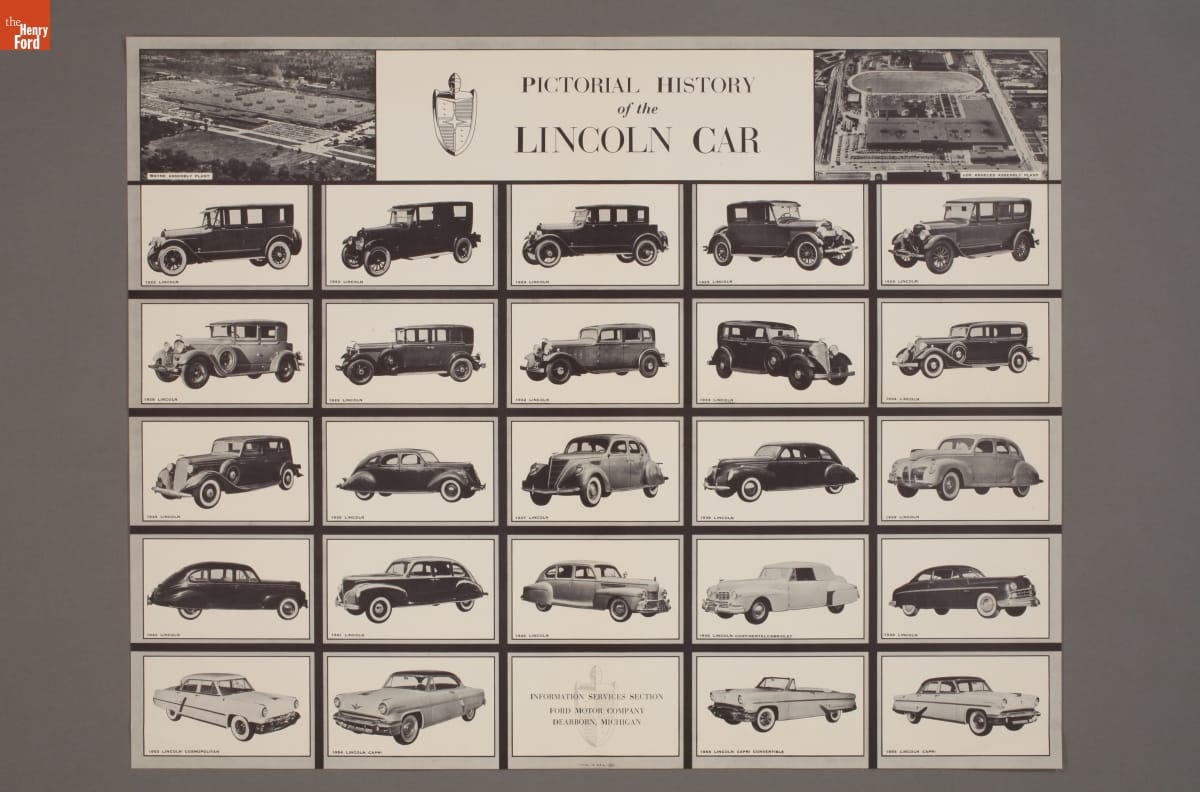
- "Pictorial History of the Lincoln Car," 1955 - Thirty-three years of Lincoln styling are represented in this poster, from the company's early designs under Henry Leland and Wilfred Leland, to the marque's renaissance under Edsel Ford, to its refreshed post-World War II models. Many changes are shown, but none is quite so dramatic as that between the staid Model K of 1935 and the streamlined Zephyr of 1936.
- 1922-1955
- Collections - Artifact
"Pictorial History of the Lincoln Car," 1955
Thirty-three years of Lincoln styling are represented in this poster, from the company's early designs under Henry Leland and Wilfred Leland, to the marque's renaissance under Edsel Ford, to its refreshed post-World War II models. Many changes are shown, but none is quite so dramatic as that between the staid Model K of 1935 and the streamlined Zephyr of 1936.
- "Pictorial History of the Ford Car," 1955 - This poster, produced by the Ford Motor Company Information Services Section, shows images of Ford cars from the 1896 Quadricycle to the 1955 Ford Thunderbird. It also has images of the Bagley Avenue Workshop, where Henry Ford built the Quadricycle, and an aerial view of the Rouge Plant, where the Thunderbird was produced.
- 1896-1955
- Collections - Artifact
"Pictorial History of the Ford Car," 1955
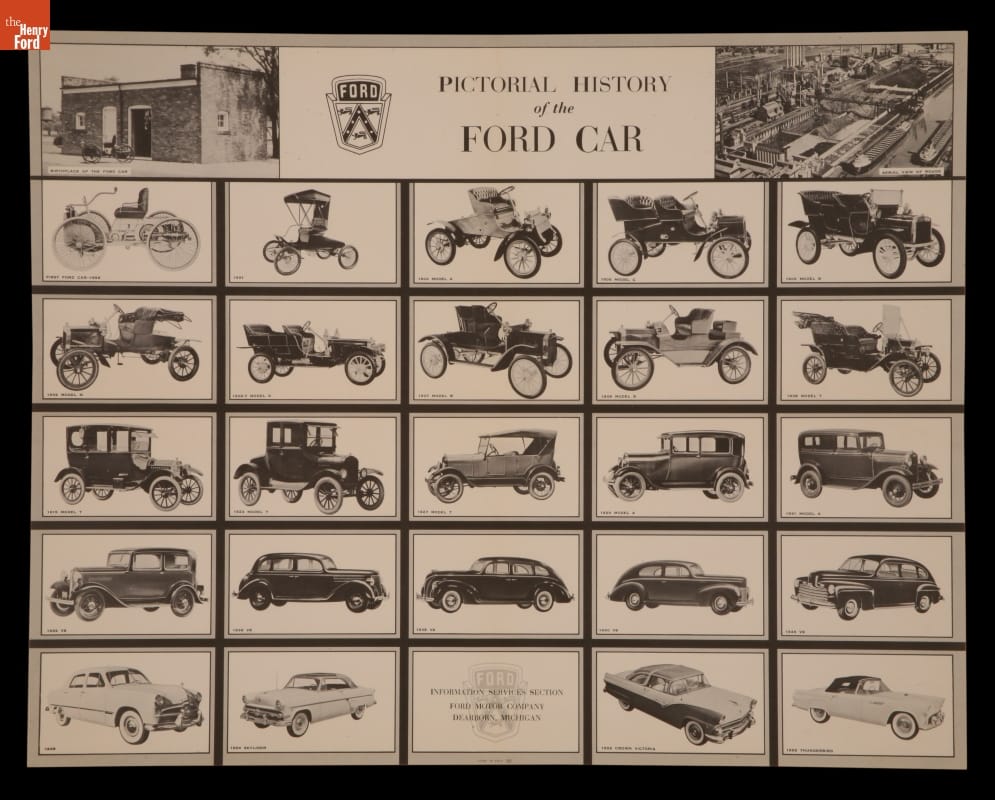
This poster, produced by the Ford Motor Company Information Services Section, shows images of Ford cars from the 1896 Quadricycle to the 1955 Ford Thunderbird. It also has images of the Bagley Avenue Workshop, where Henry Ford built the Quadricycle, and an aerial view of the Rouge Plant, where the Thunderbird was produced.
- "Pictorial History of the Mercury Car," 1955 - Ford Motor Company launched Mercury with the 1939 model year. The mid-priced brand fit neatly between the economical Ford and the upmarket Lincoln, allowing Ford Motor to follow General Motors' successful "car for every purse" strategy. As this poster shows, Mercury essentially was a dressed-up Ford in its first years but came into its own after World War II.
- 1939-1955
- Collections - Artifact
"Pictorial History of the Mercury Car," 1955
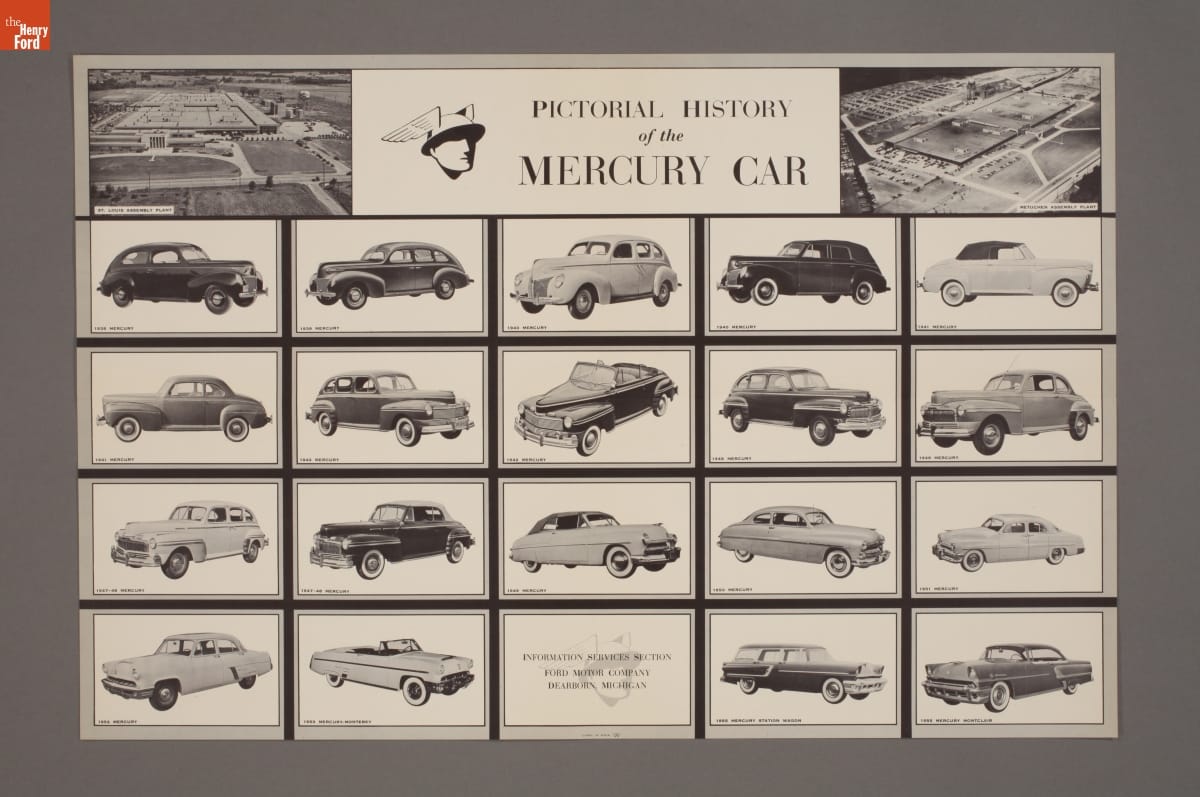
Ford Motor Company launched Mercury with the 1939 model year. The mid-priced brand fit neatly between the economical Ford and the upmarket Lincoln, allowing Ford Motor to follow General Motors' successful "car for every purse" strategy. As this poster shows, Mercury essentially was a dressed-up Ford in its first years but came into its own after World War II.