
Search
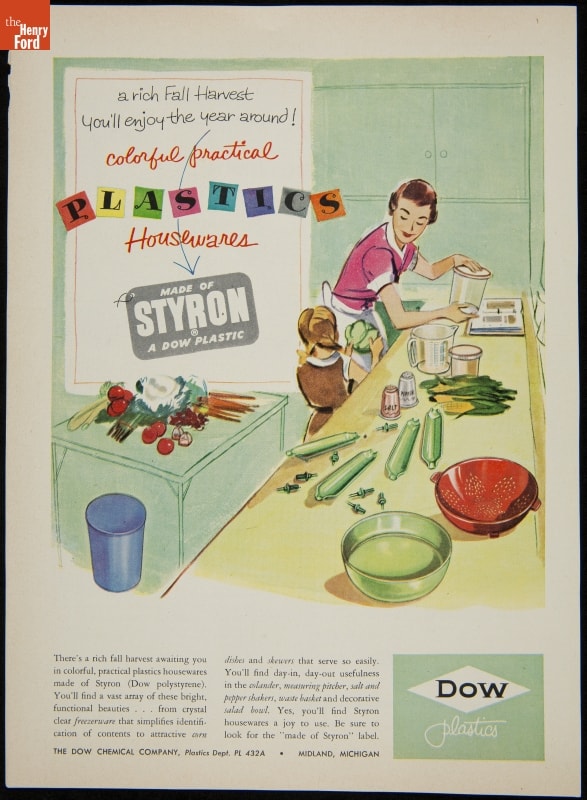
- "Plastic Housewares Made of Styron, a Dow Plastic," circa 1952 -
- circa 1952
- Collections - Artifact
"Plastic Housewares Made of Styron, a Dow Plastic," circa 1952
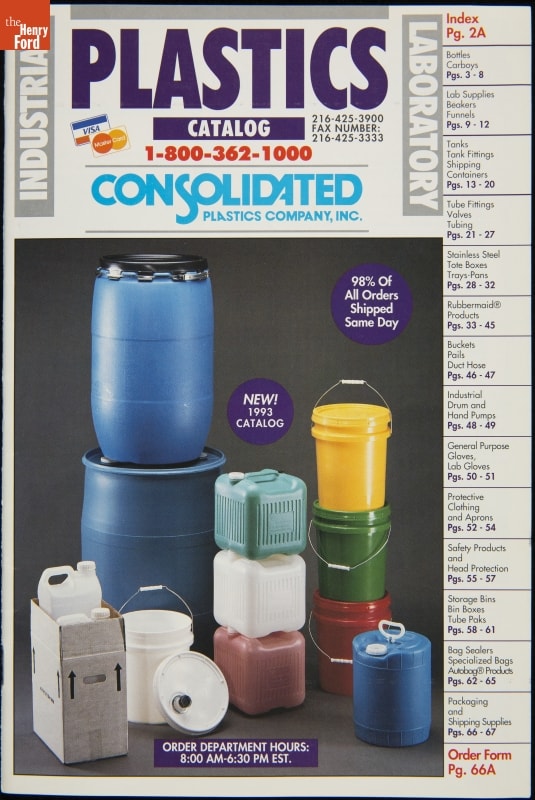
- Consolidated Plastics Company Catalog, "Industrial and Laboratory Plastics," 1993 -
- 1993
- Collections - Artifact
Consolidated Plastics Company Catalog, "Industrial and Laboratory Plastics," 1993
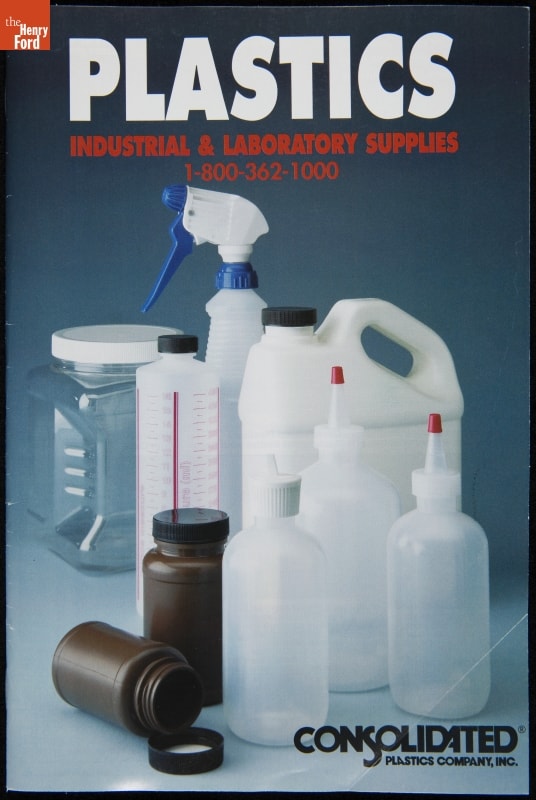
- Consolidated Plastics Company Catalog, "Plastics, Industrial and Laboratory Supplies," 2006 -
- 2006
- Collections - Artifact
Consolidated Plastics Company Catalog, "Plastics, Industrial and Laboratory Supplies," 2006
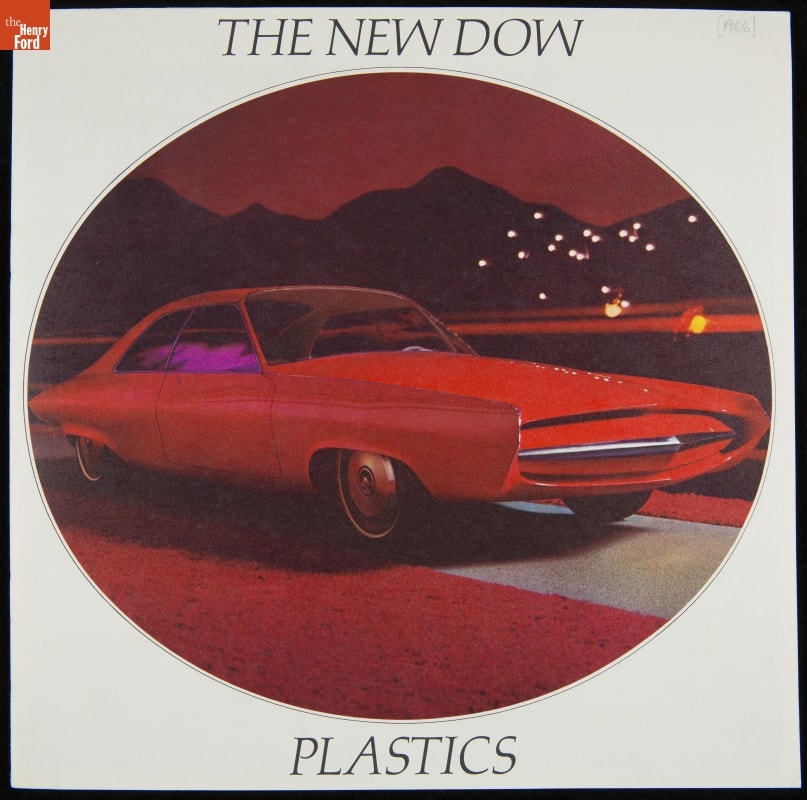
- The New Dow Plastics, 1966 -
- 1966
- Collections - Artifact
The New Dow Plastics, 1966
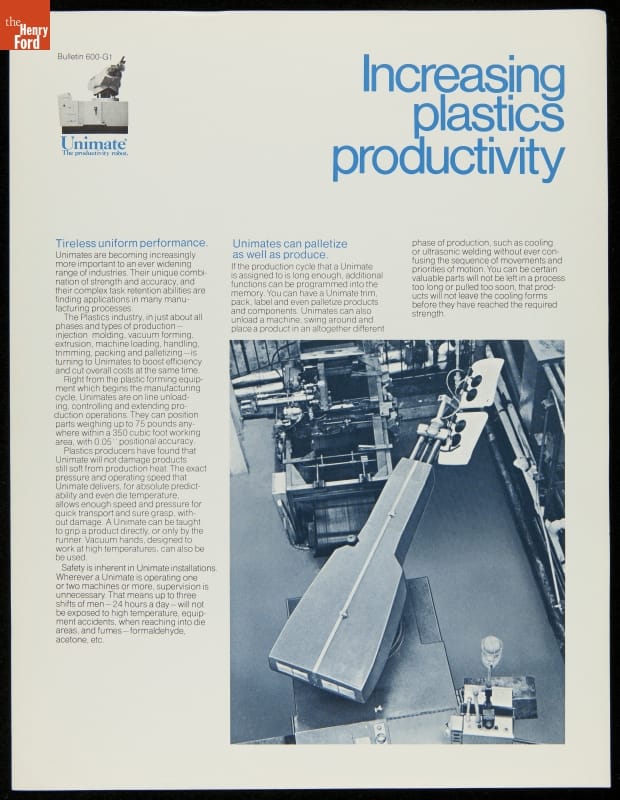
- Increasing Plastics Productivity, Unimation Inc., 1971 - George Devol revolutionized manufacturing with his invention of the Unimate -- the world's first industrial robot. These rugged programmable units were designed to perform repetitive, arduous and hazardous tasks. The first Unimate was installed in a General Motors plant in 1961. This brochure, part of a larger archival collection documenting Devol's work, illustrates the functions and uses of his innovative idea.
- 1971
- Collections - Artifact
Increasing Plastics Productivity, Unimation Inc., 1971
George Devol revolutionized manufacturing with his invention of the Unimate -- the world's first industrial robot. These rugged programmable units were designed to perform repetitive, arduous and hazardous tasks. The first Unimate was installed in a General Motors plant in 1961. This brochure, part of a larger archival collection documenting Devol's work, illustrates the functions and uses of his innovative idea.
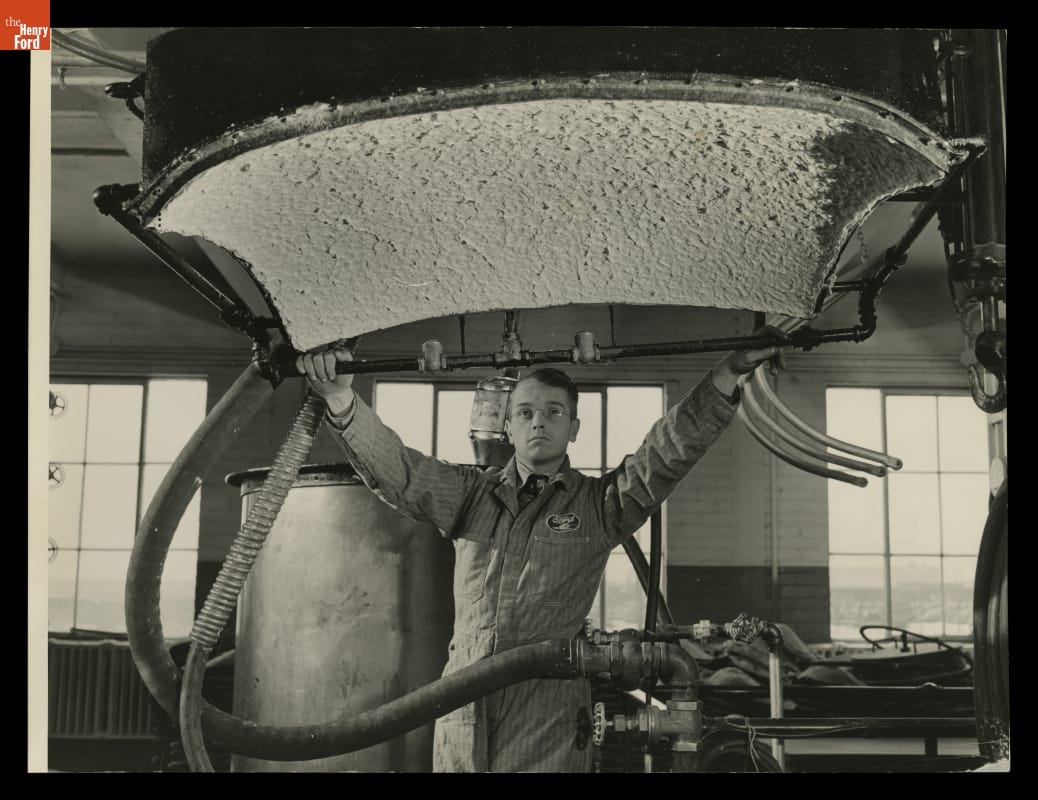
- Soybean Plastic Car Research, 1940 - In the 1930s, chemists doing research at Ford's Greenfield Village laboratory discovered that soy-based plastics could be molded into thick, hard sheets. The scientists created prototypes of automobile body parts, like trunk lids. Soon, they envisioned a car with a complete soy-plastic body. Henry Ford unveiled this experimental vehicle in 1941. The "Soybean Car" was abandoned with the U.S. entry into World War II.
- November 29, 1940
- Collections - Artifact
Soybean Plastic Car Research, 1940
In the 1930s, chemists doing research at Ford's Greenfield Village laboratory discovered that soy-based plastics could be molded into thick, hard sheets. The scientists created prototypes of automobile body parts, like trunk lids. Soon, they envisioned a car with a complete soy-plastic body. Henry Ford unveiled this experimental vehicle in 1941. The "Soybean Car" was abandoned with the U.S. entry into World War II.
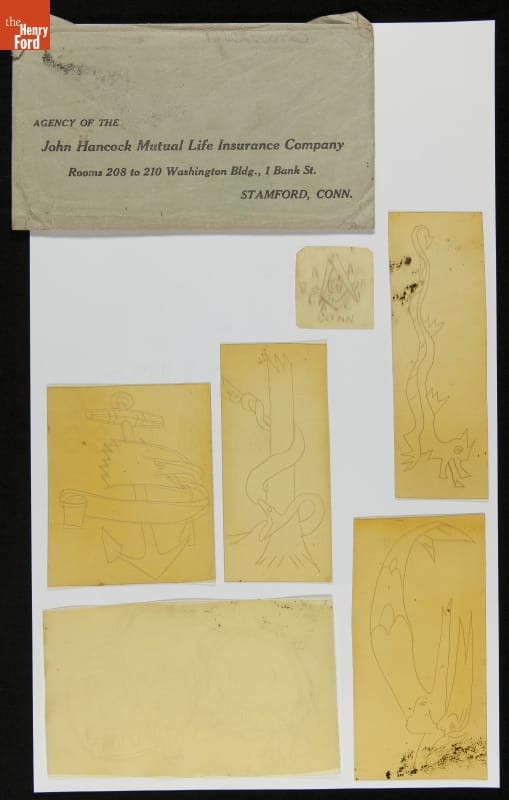
- Plastic Tattoo Stencils, 1900-1950 - Tattoo stencils range in material from disposable paper to plastic. Designs were drawn on transfer paper or scratched into plastic with a needle. With plastic stencils, powdered charcoal was rubbed into the lines; Vaseline was applied to the skin. When the stencil was pressed against the skin, the charcoal transferred as an outline. Stencils allowed tattooists to circulate and exchange ideas.
- 1900-1950
- Collections - Artifact
Plastic Tattoo Stencils, 1900-1950
Tattoo stencils range in material from disposable paper to plastic. Designs were drawn on transfer paper or scratched into plastic with a needle. With plastic stencils, powdered charcoal was rubbed into the lines; Vaseline was applied to the skin. When the stencil was pressed against the skin, the charcoal transferred as an outline. Stencils allowed tattooists to circulate and exchange ideas.
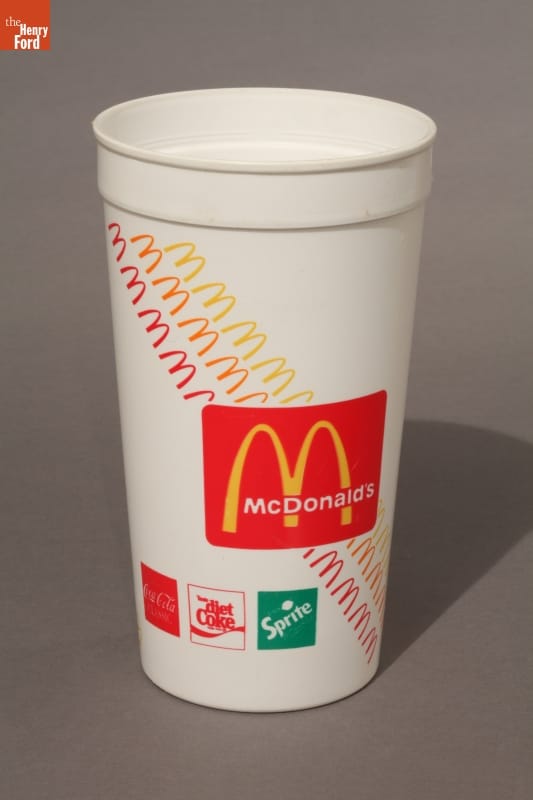
- McDonald's Plastic Drinking Cup, 1986 - In 1948, the McDonald brothers transformed their Southern California drive-in into the fast food concept that we know today. The "M" logo on this plastic beverage cup, inspired by the famous golden arches of the restaurant, became McDonald's standard logo by the 1960s. Today this logo is recognized throughout the world.
- 1986-1988
- Collections - Artifact
McDonald's Plastic Drinking Cup, 1986
In 1948, the McDonald brothers transformed their Southern California drive-in into the fast food concept that we know today. The "M" logo on this plastic beverage cup, inspired by the famous golden arches of the restaurant, became McDonald's standard logo by the 1960s. Today this logo is recognized throughout the world.
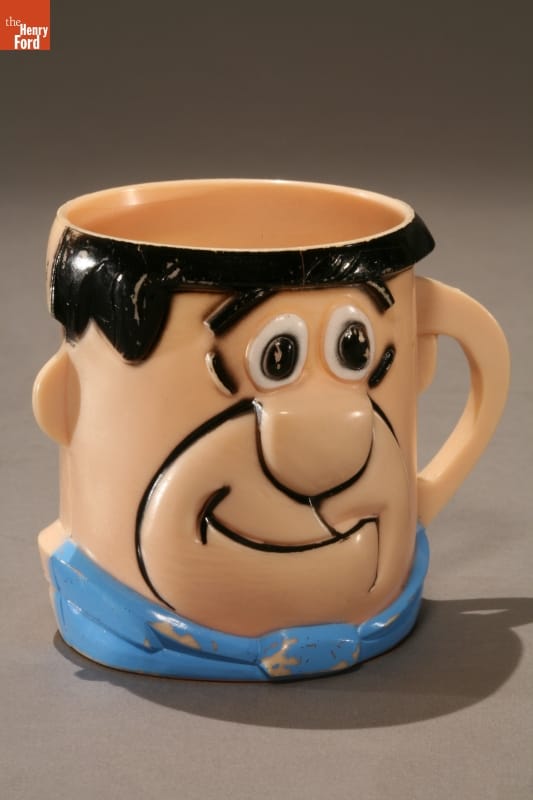
- Fred Flintstone Plastic Character Mug, 1968 - This mug depicts Fred Flintstone, the main character of the animated television sitcom, "The Flintstones," which aired on prime time from 1960 to 1966. A parody of modern suburban life, this show offered a family-friendly version of Jackie Gleason's gritty "Honeymooners" TV series that aired from 1955 to 1956.
- 1968
- Collections - Artifact
Fred Flintstone Plastic Character Mug, 1968
This mug depicts Fred Flintstone, the main character of the animated television sitcom, "The Flintstones," which aired on prime time from 1960 to 1966. A parody of modern suburban life, this show offered a family-friendly version of Jackie Gleason's gritty "Honeymooners" TV series that aired from 1955 to 1956.
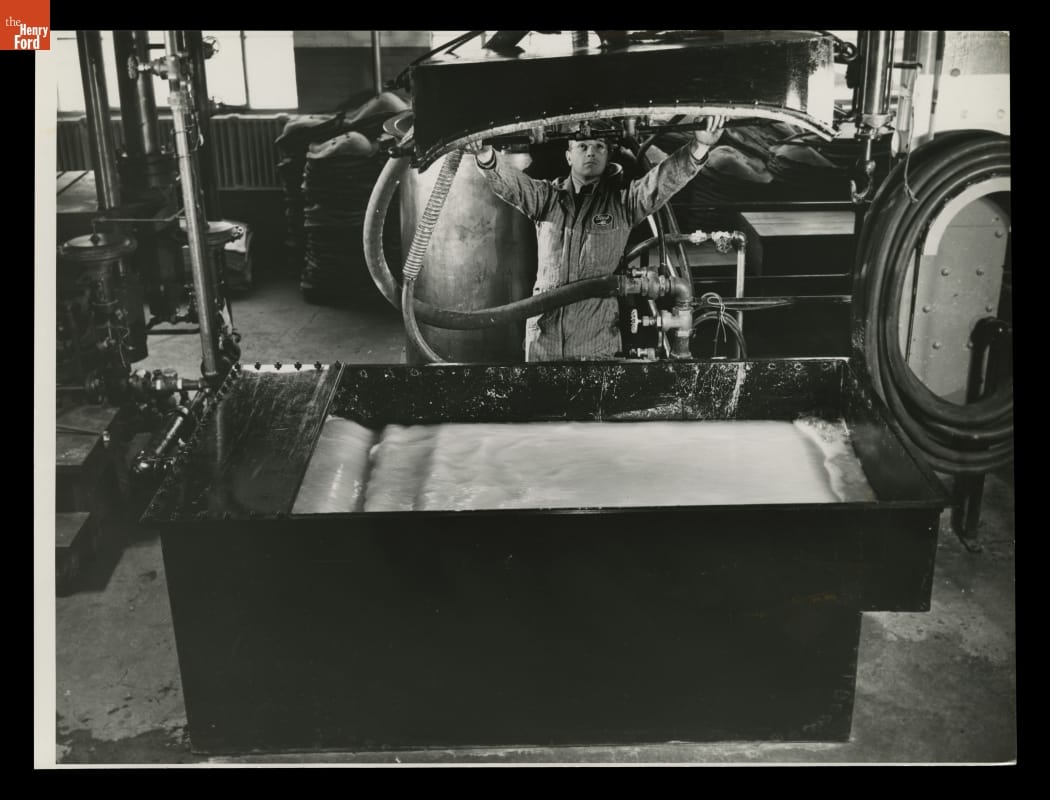
- Soybean Plastic Car Research, 1940 - In the 1930s, chemists doing research at Ford's Greenfield Village laboratory discovered that soy-based plastics could be molded into thick, hard sheets. The scientists created prototypes of automobile body parts, like trunk lids. Soon, they envisioned a car with a complete soy-plastic body. Henry Ford unveiled this experimental vehicle in 1941. The "Soybean Car" was abandoned with the U.S. entry into World War II.
- November 29, 1940
- Collections - Artifact
Soybean Plastic Car Research, 1940
In the 1930s, chemists doing research at Ford's Greenfield Village laboratory discovered that soy-based plastics could be molded into thick, hard sheets. The scientists created prototypes of automobile body parts, like trunk lids. Soon, they envisioned a car with a complete soy-plastic body. Henry Ford unveiled this experimental vehicle in 1941. The "Soybean Car" was abandoned with the U.S. entry into World War II.