
Search
- Pressed Glass Dish,1825-1835 - Mechanically pressed glass was an innovation in glass history, making decorative, "patterned" glass available to a broad audience. One of the earliest types of pressed glass, dating to the 1830s is known as "Lacy Glass". Complex stippled patterns were developed to help hide technical defects caused by early presses, when the glass gather was cut off and dropped into a mold.
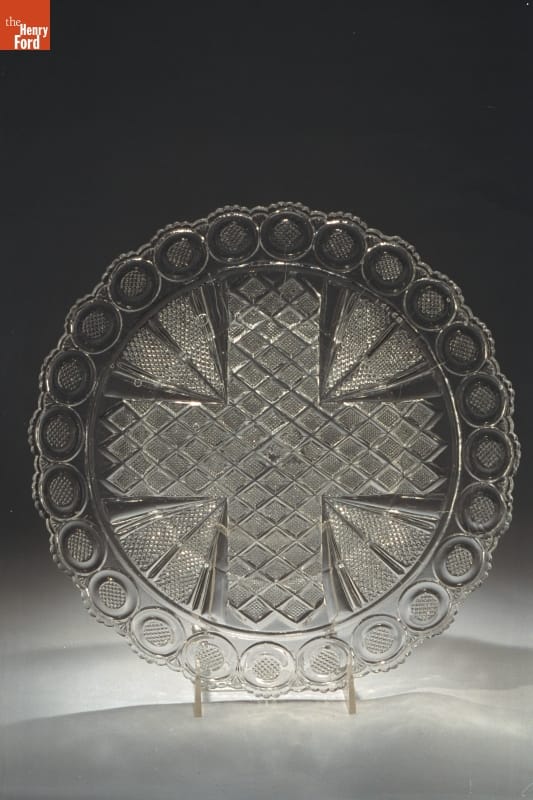
- 1825-1835
- Collections - Artifact
Pressed Glass Dish,1825-1835
Mechanically pressed glass was an innovation in glass history, making decorative, "patterned" glass available to a broad audience. One of the earliest types of pressed glass, dating to the 1830s is known as "Lacy Glass". Complex stippled patterns were developed to help hide technical defects caused by early presses, when the glass gather was cut off and dropped into a mold.
- Pressed Glass - Mechanically pressed glass was an innovation in glass history, making decorative, "patterned" glass available to a broad audience. One of the earliest types of pressed glass, dating to the 1830s is known as "Lacy Glass". Complex stippled patterns were developed to help hide technical defects caused by early presses, when the glass gather was cut off and dropped into a mold.
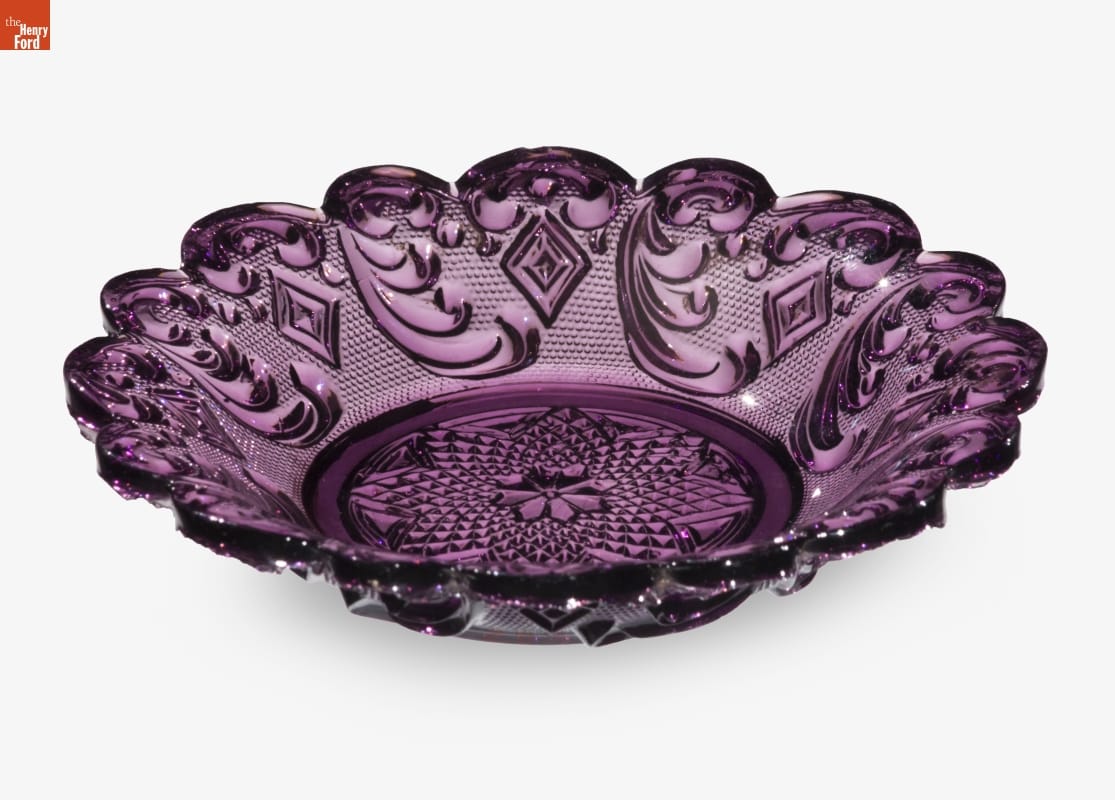
- July 26, 2017
- Collections - Set
Pressed Glass
Mechanically pressed glass was an innovation in glass history, making decorative, "patterned" glass available to a broad audience. One of the earliest types of pressed glass, dating to the 1830s is known as "Lacy Glass". Complex stippled patterns were developed to help hide technical defects caused by early presses, when the glass gather was cut off and dropped into a mold.
- Pressed Glass Mold for a Dish, 1850-1910 -
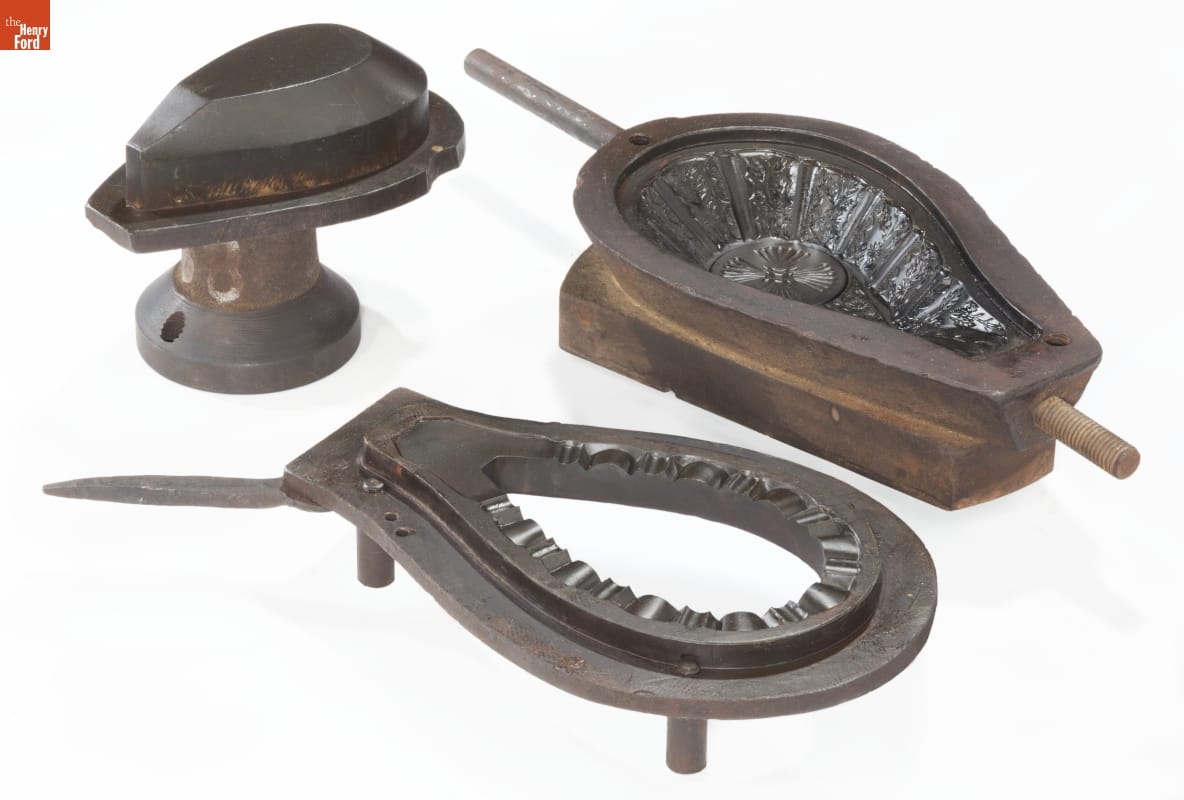
- 1850-1910
- Collections - Artifact
Pressed Glass Mold for a Dish, 1850-1910
- Glass Press, Used by Cambridge Glass Works, circa 1920 -
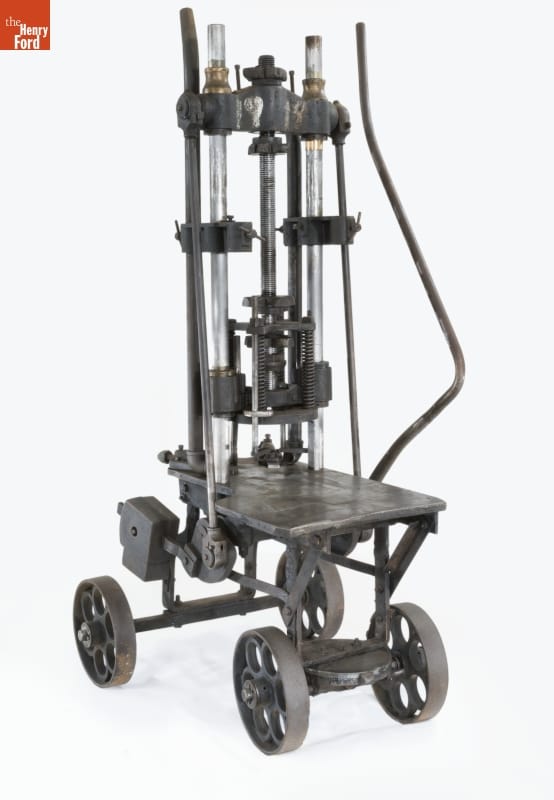
- circa 1920
- Collections - Artifact
Glass Press, Used by Cambridge Glass Works, circa 1920
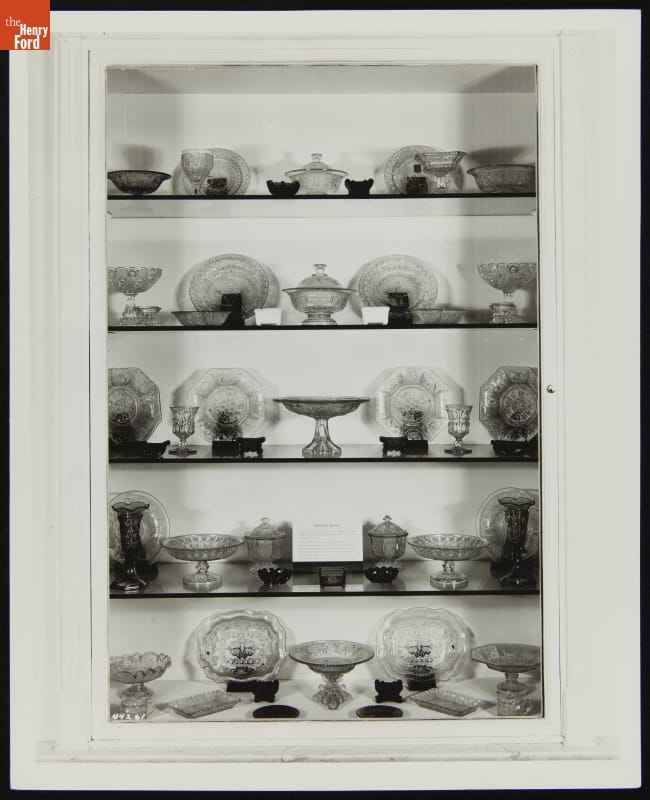
- Pressed Glass on Display in Henry Ford Museum Promenade, March 1939 - This photograph documents the Museum's glass display on March 15, 1939. The collection was arranged in recessed cases lining the Promenade, the long marble corridor at the front of the Museum. Curators limited the display to examples representing Early American blown and pressed glass as well as English and Irish glass, then thought the most important for study and exhibit.
- March 15, 1939
- Collections - Artifact
Pressed Glass on Display in Henry Ford Museum Promenade, March 1939
This photograph documents the Museum's glass display on March 15, 1939. The collection was arranged in recessed cases lining the Promenade, the long marble corridor at the front of the Museum. Curators limited the display to examples representing Early American blown and pressed glass as well as English and Irish glass, then thought the most important for study and exhibit.
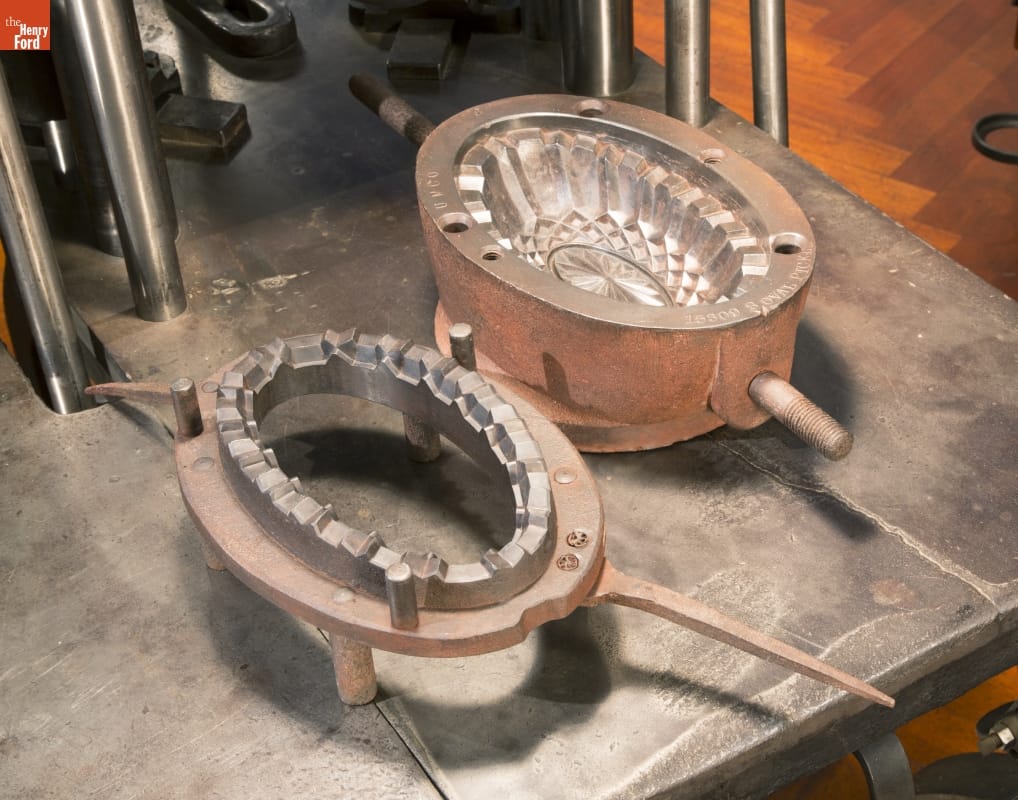
- Pressed Glass Mold for an Oval Pickle Dish, 1850-1910 -
- 1850-1910
- Collections - Artifact
Pressed Glass Mold for an Oval Pickle Dish, 1850-1910
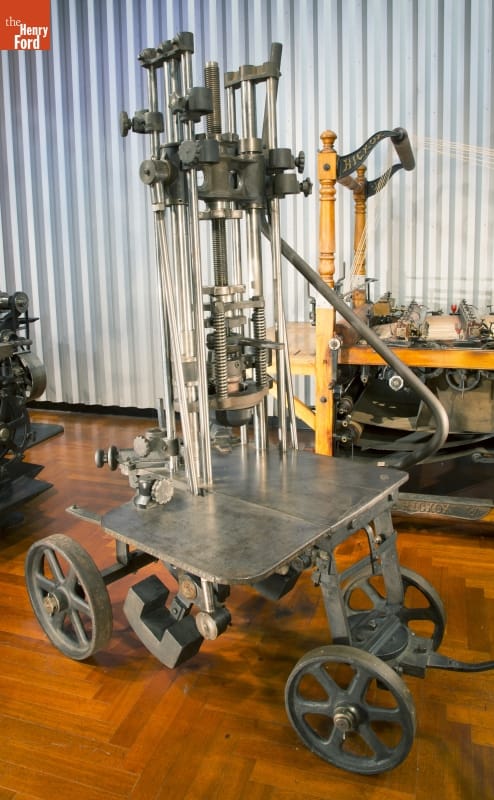
- Side Lever Glass Press, Used by Fostoria Glass Company, 1890-1920 - As early as the 1820s, American glass manufacturers mass-produced pressed glassware to meet the demands of a rapidly growing population. Using presses to shape molten glass in intricately engraved molds, workers could churn out highly decorative -- yet affordable -- pieces that looked like expensive cut or etched glass. By the late 19th century most Americans owned a set of pressed glass tableware.
- 1890-1920
- Collections - Artifact
Side Lever Glass Press, Used by Fostoria Glass Company, 1890-1920
As early as the 1820s, American glass manufacturers mass-produced pressed glassware to meet the demands of a rapidly growing population. Using presses to shape molten glass in intricately engraved molds, workers could churn out highly decorative -- yet affordable -- pieces that looked like expensive cut or etched glass. By the late 19th century most Americans owned a set of pressed glass tableware.
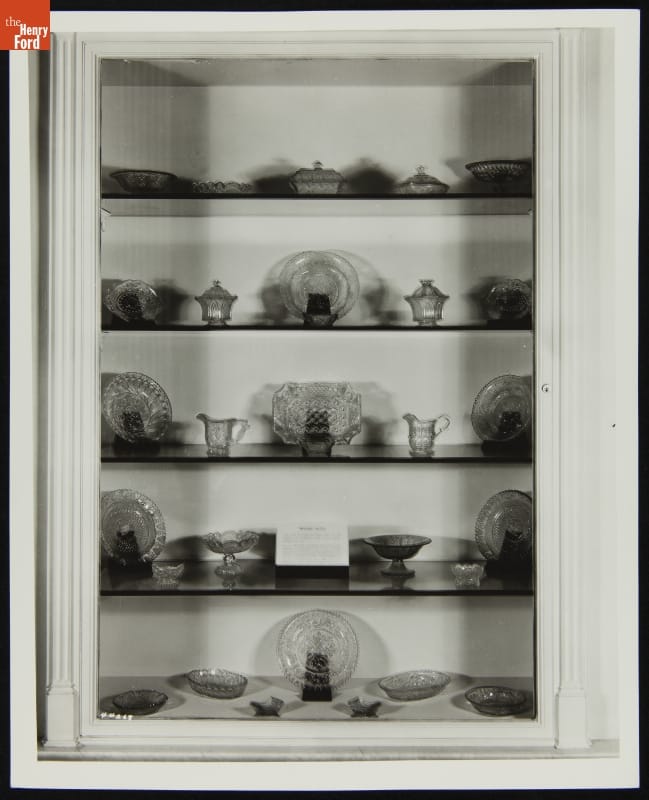
- Pressed Glass on Display in Henry Ford Museum Promenade, March 1939 - This photograph documents the Museum's glass display on March 15, 1939. The collection was arranged in recessed cases lining the Promenade, the long marble corridor at the front of the Museum. Curators limited the display to examples representing Early American blown and pressed glass as well as English and Irish glass, then thought the most important for study and exhibit.
- March 15, 1939
- Collections - Artifact
Pressed Glass on Display in Henry Ford Museum Promenade, March 1939
This photograph documents the Museum's glass display on March 15, 1939. The collection was arranged in recessed cases lining the Promenade, the long marble corridor at the front of the Museum. Curators limited the display to examples representing Early American blown and pressed glass as well as English and Irish glass, then thought the most important for study and exhibit.
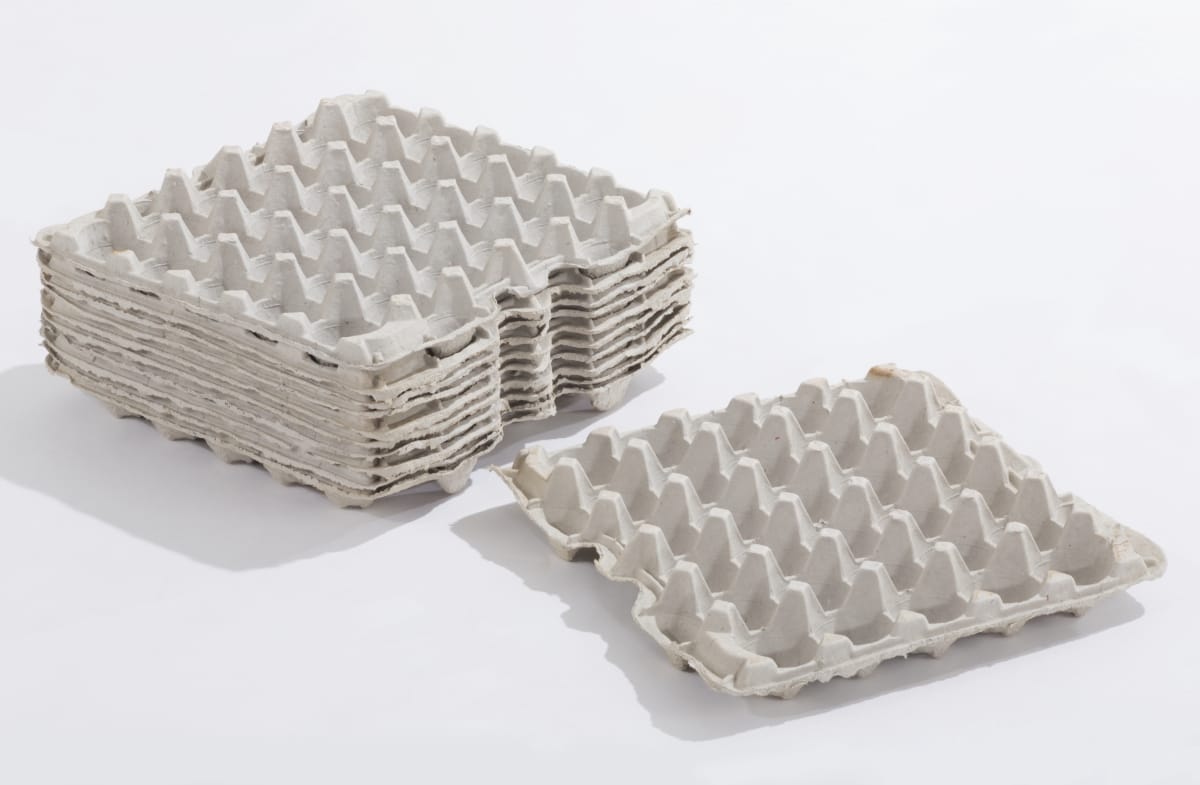
- Pressed Paper Egg Tray, 1930-2000 - Pressed paper egg trays provided padding between layers of eggs packed for transport from farms to urban markets. Each tray, or flat, held 30 eggs and fit easily within the standard wholesale package -- a wooden box (and later a wire cage). These packages held twelve flats -- a total of thirty dozen (360) eggs!
- 1930-2000
- Collections - Artifact
Pressed Paper Egg Tray, 1930-2000
Pressed paper egg trays provided padding between layers of eggs packed for transport from farms to urban markets. Each tray, or flat, held 30 eggs and fit easily within the standard wholesale package -- a wooden box (and later a wire cage). These packages held twelve flats -- a total of thirty dozen (360) eggs!
- Pressed Paper Egg Tray, 1930-2000 - Pressed paper egg trays provided padding between layers of eggs packed for transport from farms to urban markets. Each tray, or flat, held 30 eggs and fit easily within the standard wholesale package -- a wooden box (and later a wire cage). These packages held twelve flats -- a total of thirty dozen (360) eggs!
- 1930-2000
- Collections - Artifact
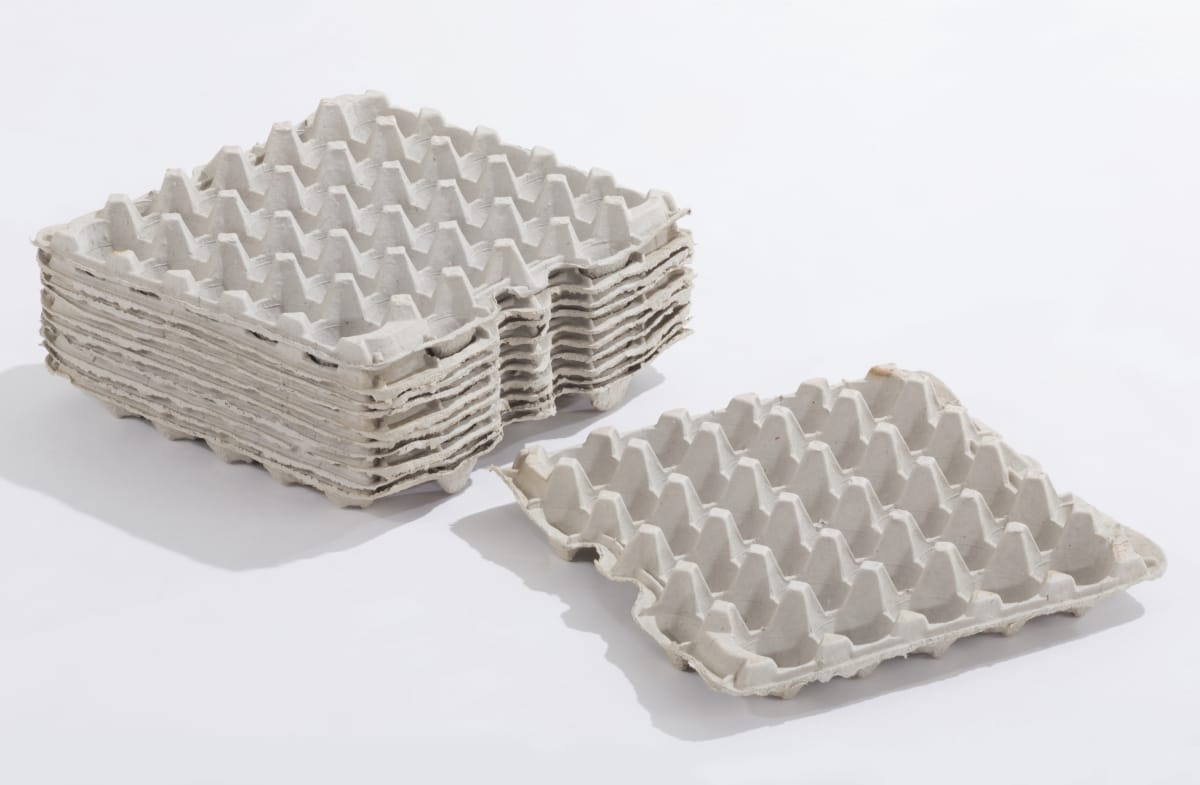
Pressed Paper Egg Tray, 1930-2000
Pressed paper egg trays provided padding between layers of eggs packed for transport from farms to urban markets. Each tray, or flat, held 30 eggs and fit easily within the standard wholesale package -- a wooden box (and later a wire cage). These packages held twelve flats -- a total of thirty dozen (360) eggs!