
Search
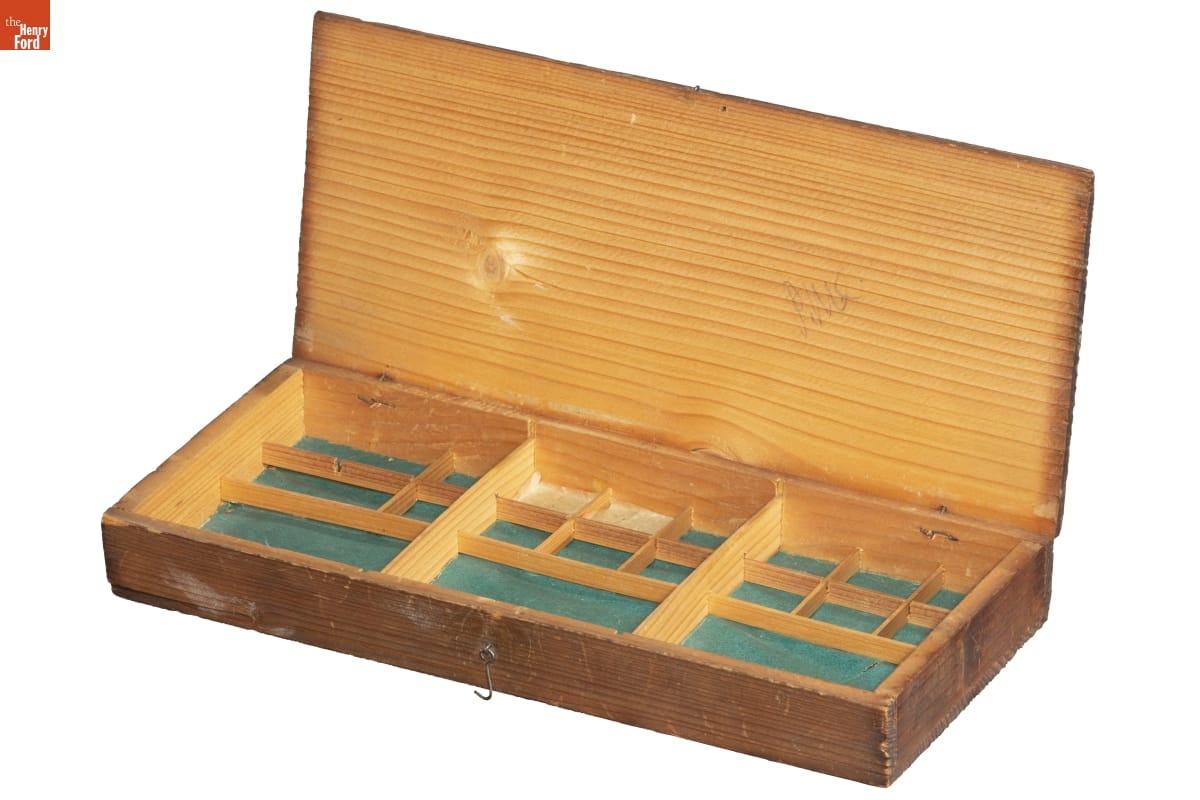
- Watchmaker's Box -
- Collections - Artifact
Watchmaker's Box
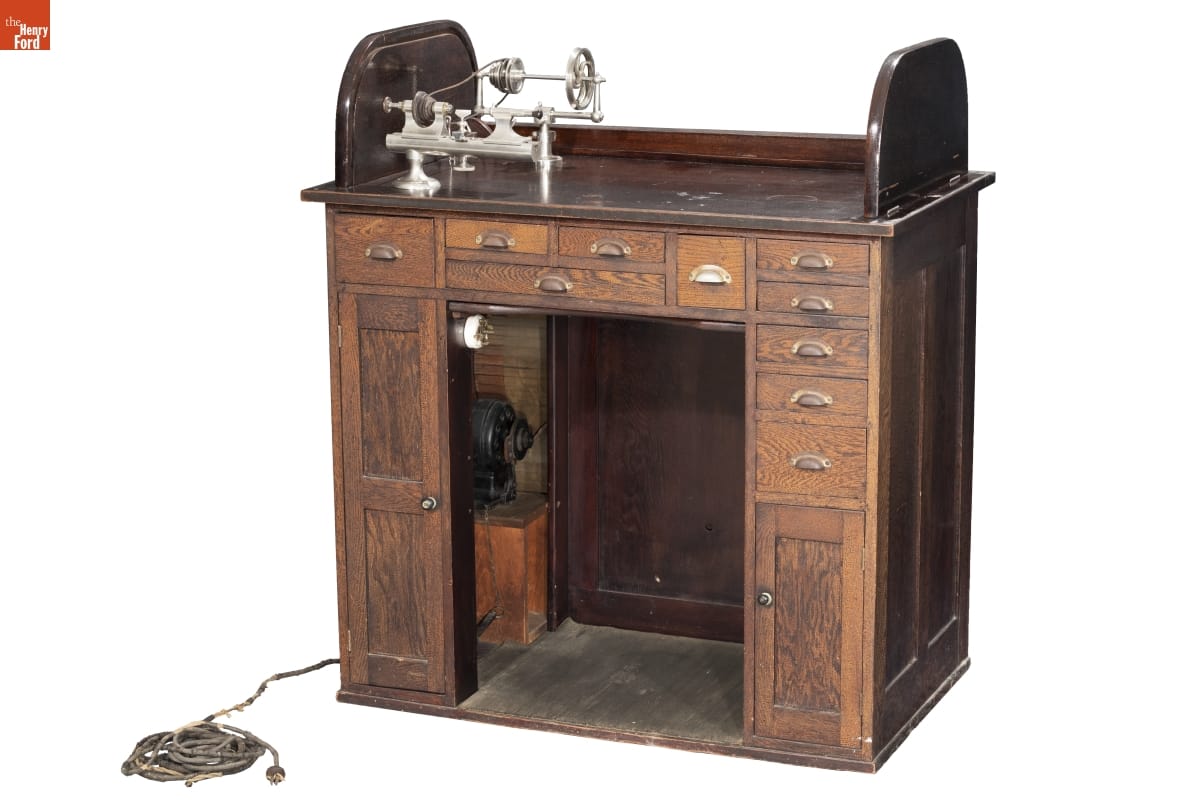
- Watchmaker's Bench, 1876-1917 -
- 1876-1917
- Collections - Artifact
Watchmaker's Bench, 1876-1917
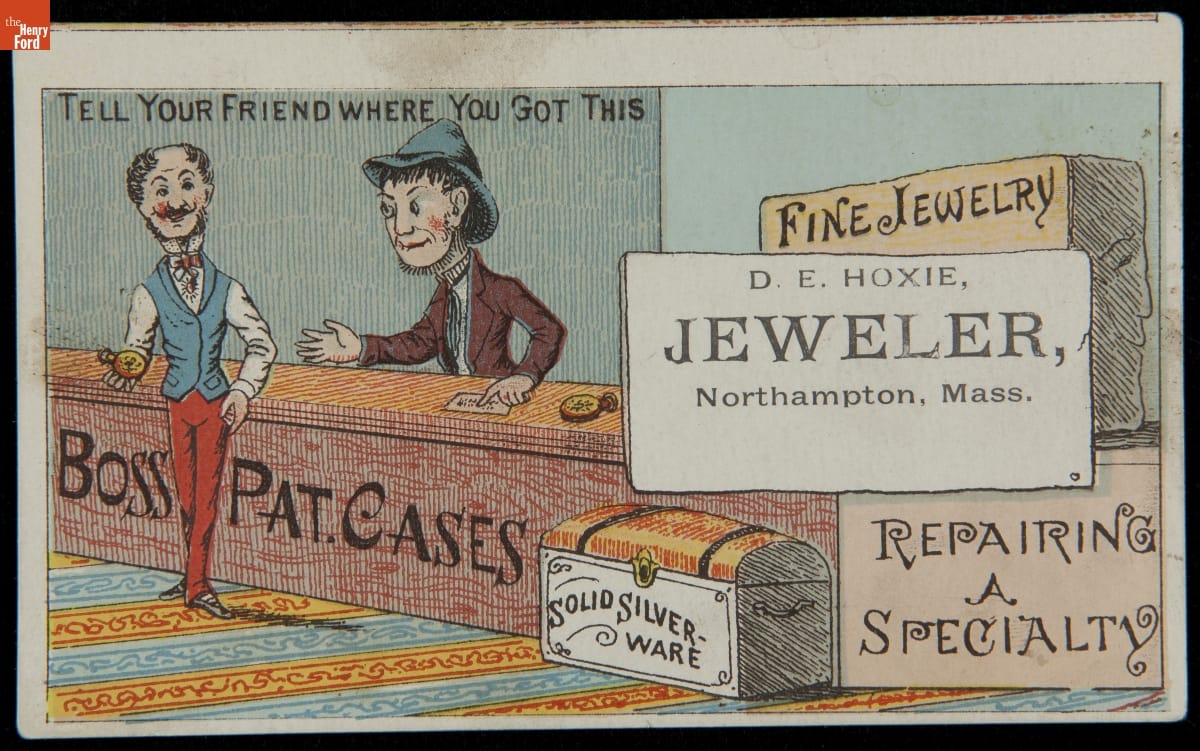
- Trade Card for D.E. Hoxie, Jeweler and Watchmaker, 1870-1900 - In the last third of the nineteenth century, an unprecedented variety of consumer goods and services flooded the American market. Advertisers, armed with new methods of color printing, bombarded potential customers with trade cards. Americans enjoyed and often saved the vibrant little advertisements found in product packages or distributed by local merchants. Many survive as historical records of commercialism in the United States.
- 1870-1900
- Collections - Artifact
Trade Card for D.E. Hoxie, Jeweler and Watchmaker, 1870-1900
In the last third of the nineteenth century, an unprecedented variety of consumer goods and services flooded the American market. Advertisers, armed with new methods of color printing, bombarded potential customers with trade cards. Americans enjoyed and often saved the vibrant little advertisements found in product packages or distributed by local merchants. Many survive as historical records of commercialism in the United States.
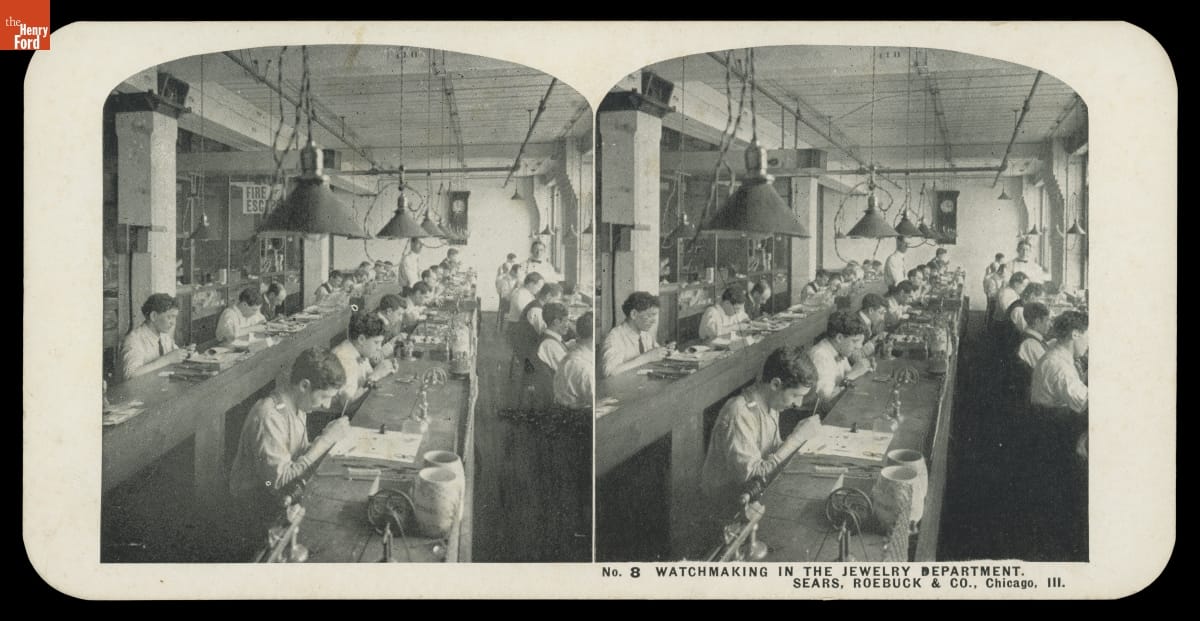
- "Watchmaking in the Jewelry Department. Sears, Roebuck & Co., Chicago, Ill.," 1906-1908 - Mail-order firm Sears, Roebuck, & Co. had become one of America's largest corporations by the early 1900s. Sears was particularly popular among rural Americans, as it offered better options, lower costs, and more efficient delivery methods than traditional general stores. This stereograph, one of a set of 50 sold through the Sears catalog beginning in 1908, offered a behind-the-scenes look at the company's operation.
- 1906-1908
- Collections - Artifact
"Watchmaking in the Jewelry Department. Sears, Roebuck & Co., Chicago, Ill.," 1906-1908
Mail-order firm Sears, Roebuck, & Co. had become one of America's largest corporations by the early 1900s. Sears was particularly popular among rural Americans, as it offered better options, lower costs, and more efficient delivery methods than traditional general stores. This stereograph, one of a set of 50 sold through the Sears catalog beginning in 1908, offered a behind-the-scenes look at the company's operation.
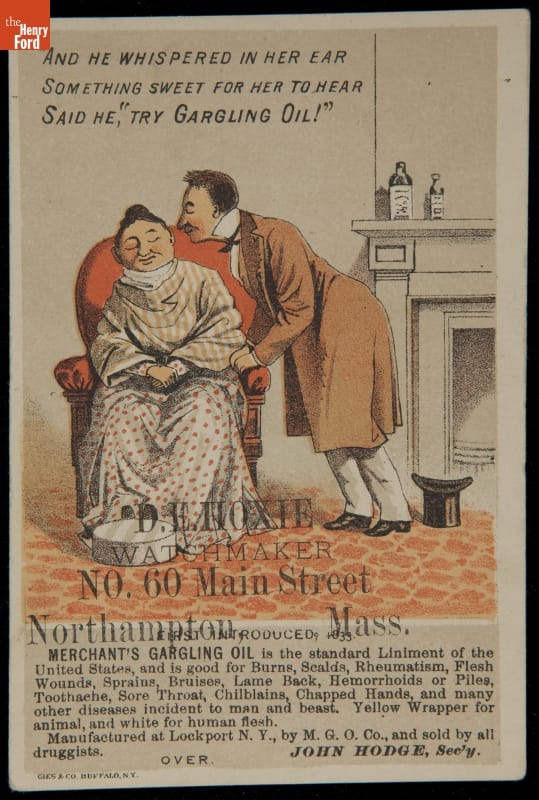
- Trade Card for Merchant's Gargling Oil and Watchmaker D.E. Hoxie, 1870-1900 - Dr. George Merchant founded the Merchant's Gargling Oil Company in 1833 in Lockport, New York. The company claimed the liniment (not really for "gargling") eased a variety of aches and pains common to "man and beast"--it bottled one version for humans and another for animals. In the late 1800s, the company used almanacs, songbooks, and trade cards to advertise its product.
- 1870-1900
- Collections - Artifact
Trade Card for Merchant's Gargling Oil and Watchmaker D.E. Hoxie, 1870-1900
Dr. George Merchant founded the Merchant's Gargling Oil Company in 1833 in Lockport, New York. The company claimed the liniment (not really for "gargling") eased a variety of aches and pains common to "man and beast"--it bottled one version for humans and another for animals. In the late 1800s, the company used almanacs, songbooks, and trade cards to advertise its product.
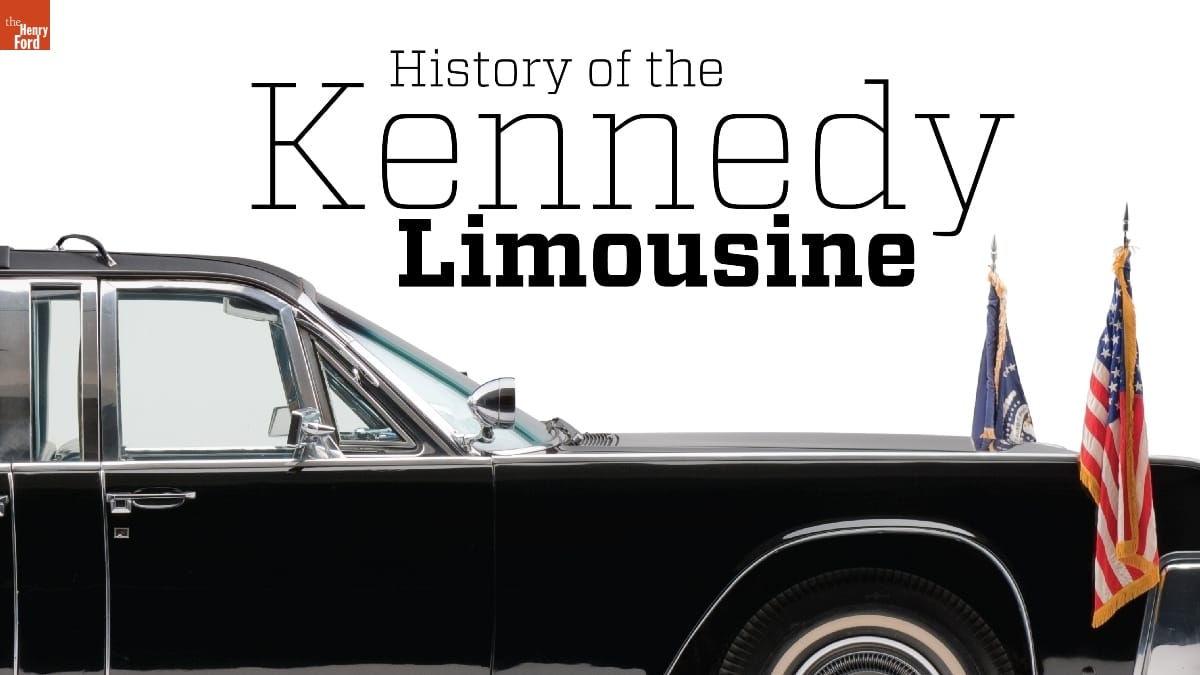
- History of the Kennedy Limousine - Arguably, no presidential limousine is as widely recognized as the 1961 Lincoln Continental in which John F. Kennedy was assassinated on November 22, 1963. When originally constructed, the car had no armor. After the tragedy, it was thoroughly rebuilt with titanium plating, bullet-resistant glass, and a more powerful engine to handle the added weight. This film tells the limo's remarkable story.
- 2013
- Collections - Artifact
History of the Kennedy Limousine
Arguably, no presidential limousine is as widely recognized as the 1961 Lincoln Continental in which John F. Kennedy was assassinated on November 22, 1963. When originally constructed, the car had no armor. After the tragedy, it was thoroughly rebuilt with titanium plating, bullet-resistant glass, and a more powerful engine to handle the added weight. This film tells the limo's remarkable story.
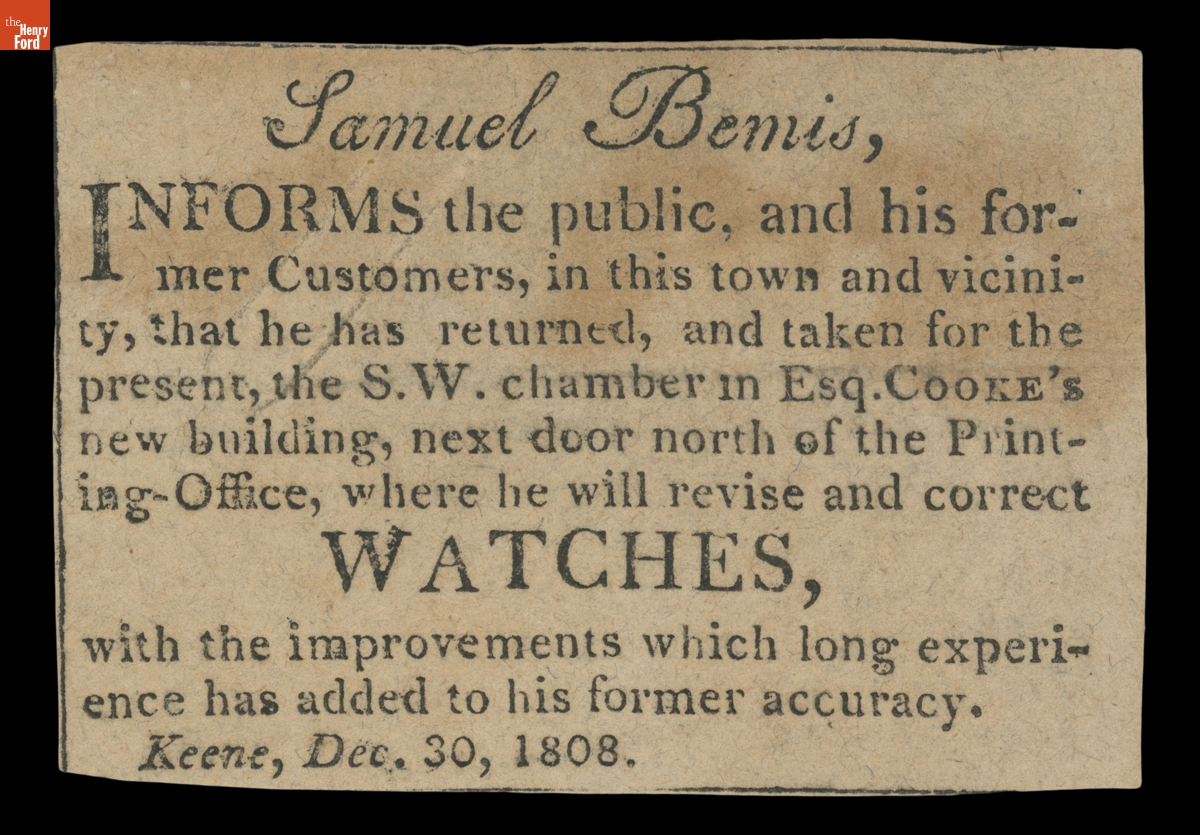
- Newspaper Advertisement, Samuel Bemis Offering His Service as Watchmaker in Keene, New Hampshire, December 1808 -
- December 30, 1808
- Collections - Artifact
Newspaper Advertisement, Samuel Bemis Offering His Service as Watchmaker in Keene, New Hampshire, December 1808
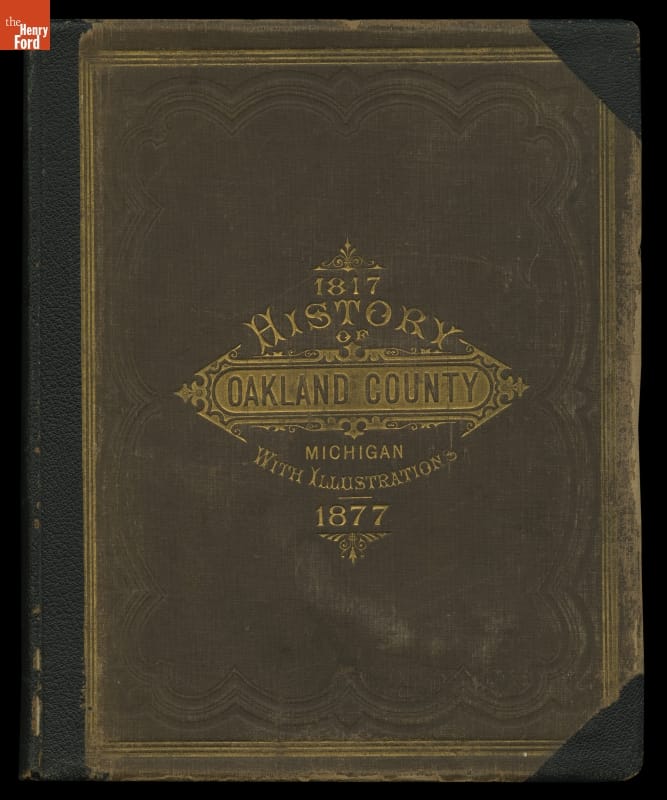
- "History of Oakland County, Michigan," 1877 -
- 1877
- Collections - Artifact
"History of Oakland County, Michigan," 1877
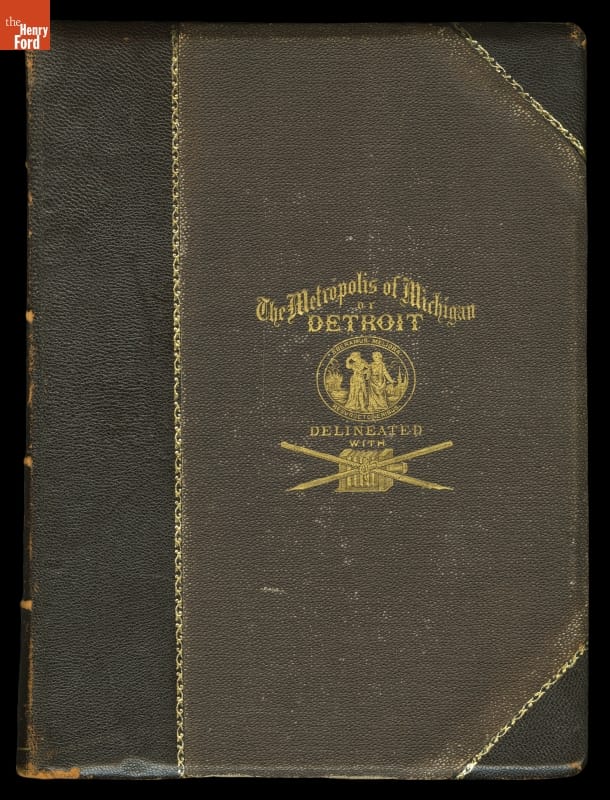
- "History of Detroit and Michigan," 1884 - The author of this book, Silas Farmer, was the son of John Farmer, Detroit's earliest map publisher. Silas began his career working on maps but turned his efforts to writing and compiling a complete history of Detroit, Michigan. A great reference to what life was like in Detroit before the 1900s, historians continue to study this work today.
- 1884
- Collections - Artifact
"History of Detroit and Michigan," 1884
The author of this book, Silas Farmer, was the son of John Farmer, Detroit's earliest map publisher. Silas began his career working on maps but turned his efforts to writing and compiling a complete history of Detroit, Michigan. A great reference to what life was like in Detroit before the 1900s, historians continue to study this work today.
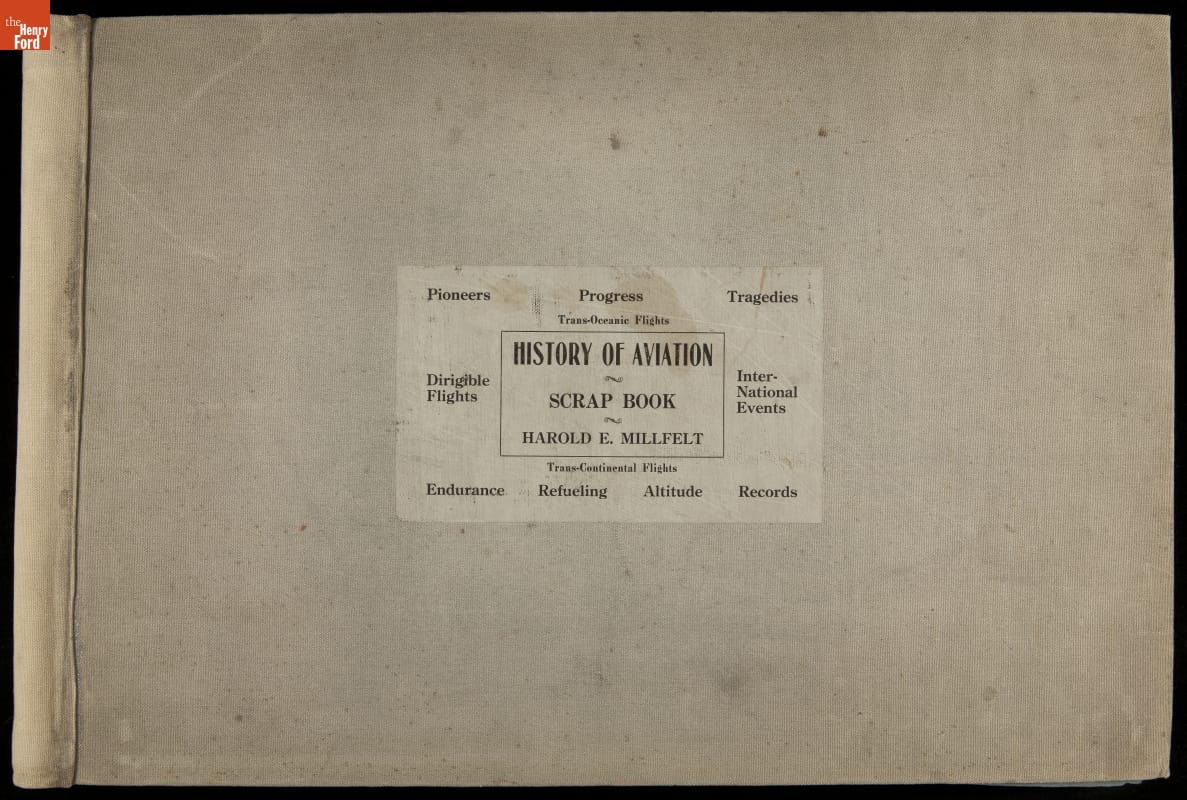
- History of Aviation Scrapbook, 1908-1929 - Harold E. Millfelt, a night clerk at a hotel in Zanesville, Ohio, assembled scrapbooks to pass the time during his long overnight shifts. This one documents the history of aviation, from the Wright brothers' demonstration flights in 1908 through Charles Lindbergh's solo transatlantic flight in 1927. Most of the scrapbook's content relates to Lindbergh and his flight.
- 1908-1929
- Collections - Artifact
History of Aviation Scrapbook, 1908-1929
Harold E. Millfelt, a night clerk at a hotel in Zanesville, Ohio, assembled scrapbooks to pass the time during his long overnight shifts. This one documents the history of aviation, from the Wright brothers' demonstration flights in 1908 through Charles Lindbergh's solo transatlantic flight in 1927. Most of the scrapbook's content relates to Lindbergh and his flight.