
Search
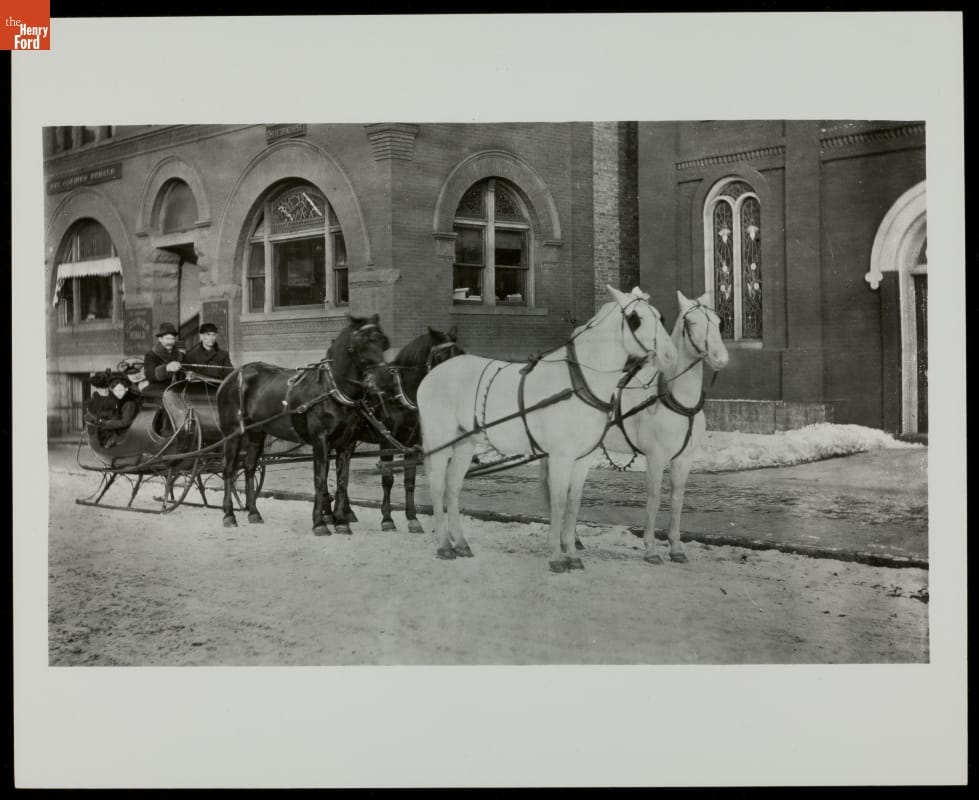
- Horses Hitched to Sleigh on City Street, circa 1900 - Dirt roads that could quickly become rutted and muddy were not ideal, but they were the only option for most Americans at the turn of the 20th century. If snow fell, however, poor road conditions were no match for a team of horses pulling a sleigh. These riders would glide easily over the ice and snow on their sleigh's smooth, narrow runners.
- circa 1900
- Collections - Artifact
Horses Hitched to Sleigh on City Street, circa 1900
Dirt roads that could quickly become rutted and muddy were not ideal, but they were the only option for most Americans at the turn of the 20th century. If snow fell, however, poor road conditions were no match for a team of horses pulling a sleigh. These riders would glide easily over the ice and snow on their sleigh's smooth, narrow runners.
- Copperplate Engraving, "New Machine to go Without Horses," circa 1800 -
- circa 1800
- Collections - Artifact
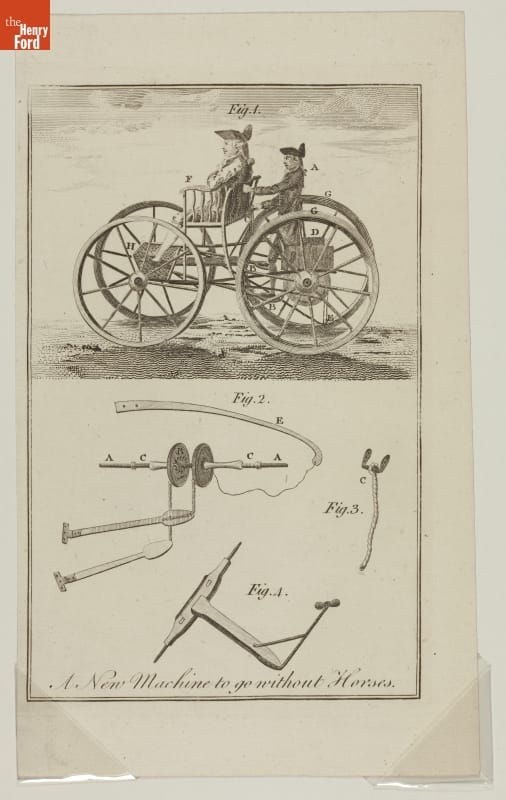
Copperplate Engraving, "New Machine to go Without Horses," circa 1800
- "Why Cars Are Better Than Horses" Clip from Interview with Bill Gates, 2009 - Obsessively dedicated to computing and software since his student days, Bill Gates became galvanized by the advent of an early personal computer, the Altair, which appeared in 1975. His passion for seeing what the computer could do was so great, in fact, that he took a leave of absence from Harvard and moved to Albuquerque, New Mexico, home of MITS, the Altair's parent company, to write code for it. Capitalizing on this initial success, Gates and his team went on to write the programs in BASIC for the IBM PC that proved instrumental in launching the personal computing revolution.
- 2009
- Collections - Artifact
"Why Cars Are Better Than Horses" Clip from Interview with Bill Gates, 2009
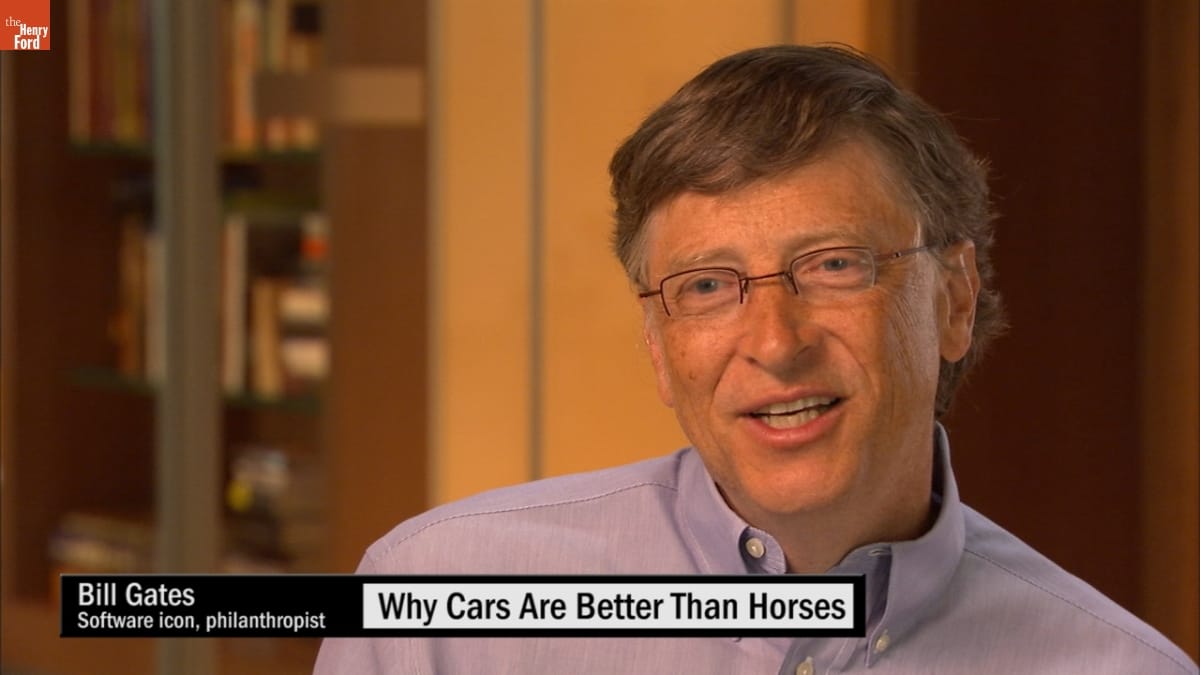
Obsessively dedicated to computing and software since his student days, Bill Gates became galvanized by the advent of an early personal computer, the Altair, which appeared in 1975. His passion for seeing what the computer could do was so great, in fact, that he took a leave of absence from Harvard and moved to Albuquerque, New Mexico, home of MITS, the Altair's parent company, to write code for it. Capitalizing on this initial success, Gates and his team went on to write the programs in BASIC for the IBM PC that proved instrumental in launching the personal computing revolution.
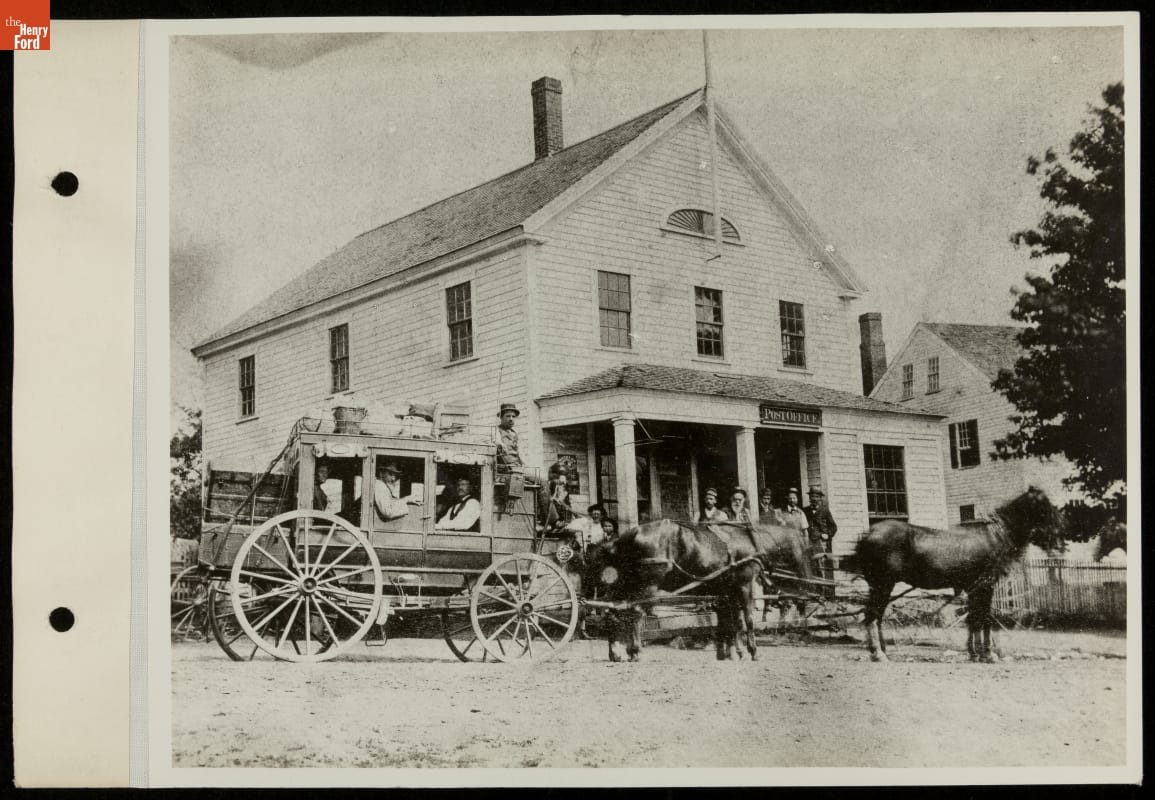
- Concord Coach Hitched to Four Horses in Front of Post Office, circa 1885 - This hack passenger wagon, with its smaller, square body and open sides, was a less expensive type of public coach. Used for short distance travel in rural areas, these vehicles carried passengers between towns and villages. Quite appropriately, this driver has posed his vehicle in front of a post office -- stage lines also transported the U.S. mail along their routes.
- circa 1885
- Collections - Artifact
Concord Coach Hitched to Four Horses in Front of Post Office, circa 1885
This hack passenger wagon, with its smaller, square body and open sides, was a less expensive type of public coach. Used for short distance travel in rural areas, these vehicles carried passengers between towns and villages. Quite appropriately, this driver has posed his vehicle in front of a post office -- stage lines also transported the U.S. mail along their routes.
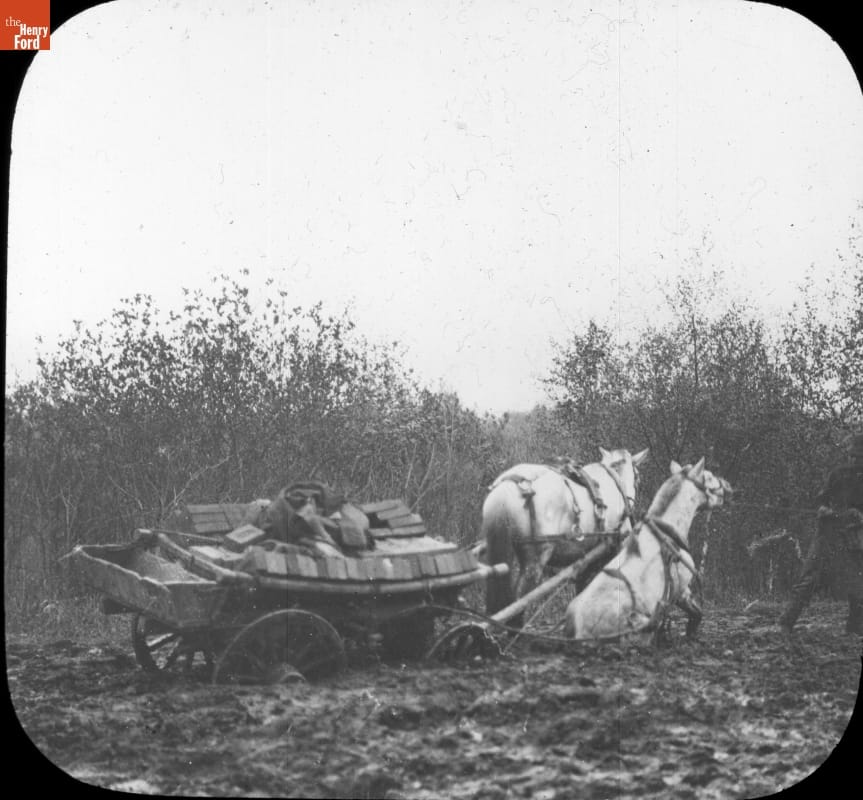
- Horses and Wagon Mired in Mud, Russia, New York to Paris Race, 1908 - The 1908 New York to Paris race was a 22,000-mile automobile endurance contest. Teams would have to drive their cars through cold, snow and rain and usually on poor roads. In May, the three remaining teams headed west from Vladivostok, Russia. Roads in Siberia were muddy and sometimes impassable. Getting stuck seemed to be a common occurrence.
- 1908
- Collections - Artifact
Horses and Wagon Mired in Mud, Russia, New York to Paris Race, 1908
The 1908 New York to Paris race was a 22,000-mile automobile endurance contest. Teams would have to drive their cars through cold, snow and rain and usually on poor roads. In May, the three remaining teams headed west from Vladivostok, Russia. Roads in Siberia were muddy and sometimes impassable. Getting stuck seemed to be a common occurrence.
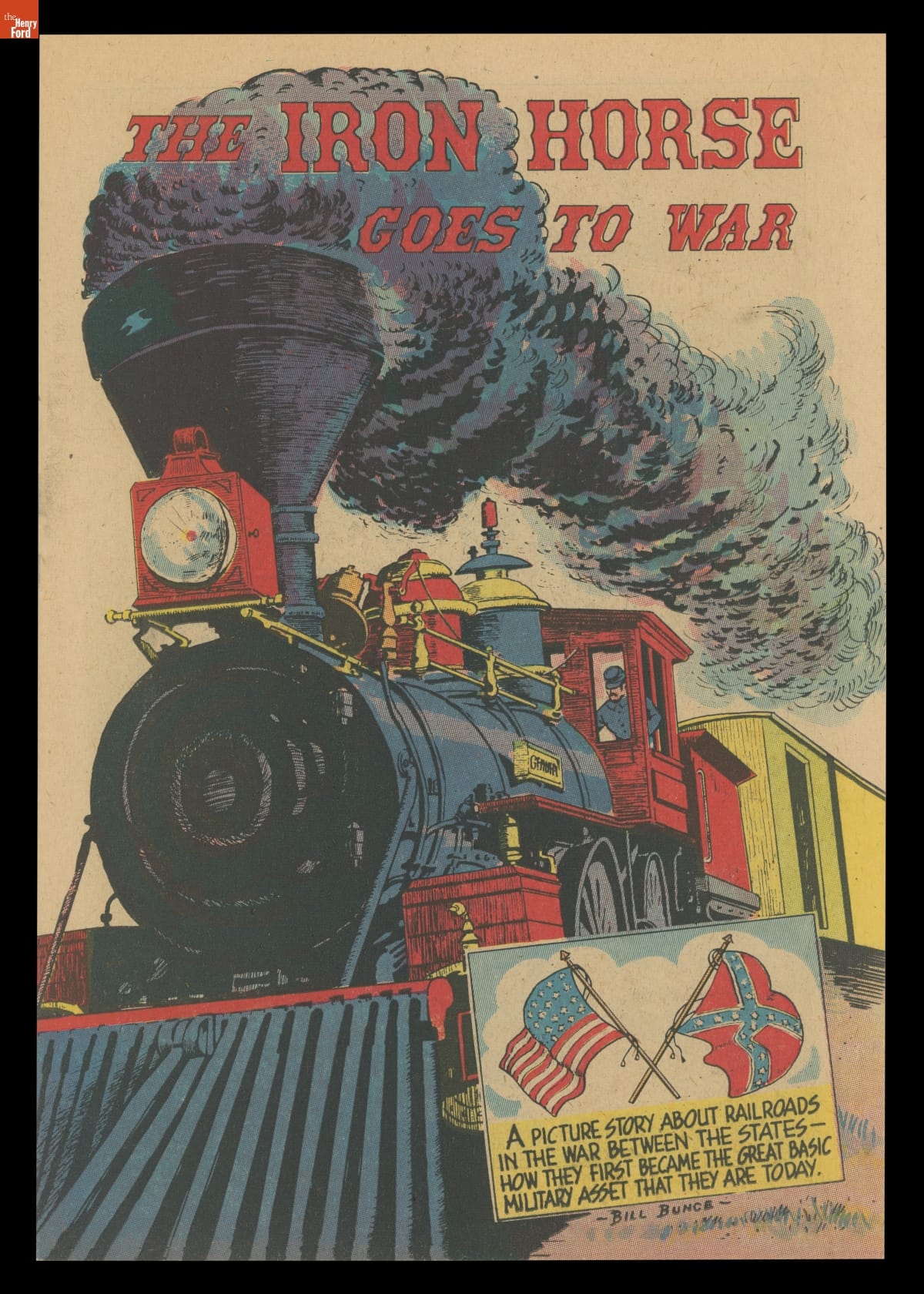
- "The Iron Horse Goes to War" Comic Book, circa 1960 - The Association of American Railroads published this comic book, <em>The Iron Horse Goes to War</em>, in 1960 on the eve of the centennial of the American Civil War. Railroads played a vital role in that conflict, fought from 1861-1865. Trains transported troops, weapons and supplies, and military forces attacked railroad tracks, structures and equipment.
- circa 1960
- Collections - Artifact
"The Iron Horse Goes to War" Comic Book, circa 1960
The Association of American Railroads published this comic book, The Iron Horse Goes to War, in 1960 on the eve of the centennial of the American Civil War. Railroads played a vital role in that conflict, fought from 1861-1865. Trains transported troops, weapons and supplies, and military forces attacked railroad tracks, structures and equipment.
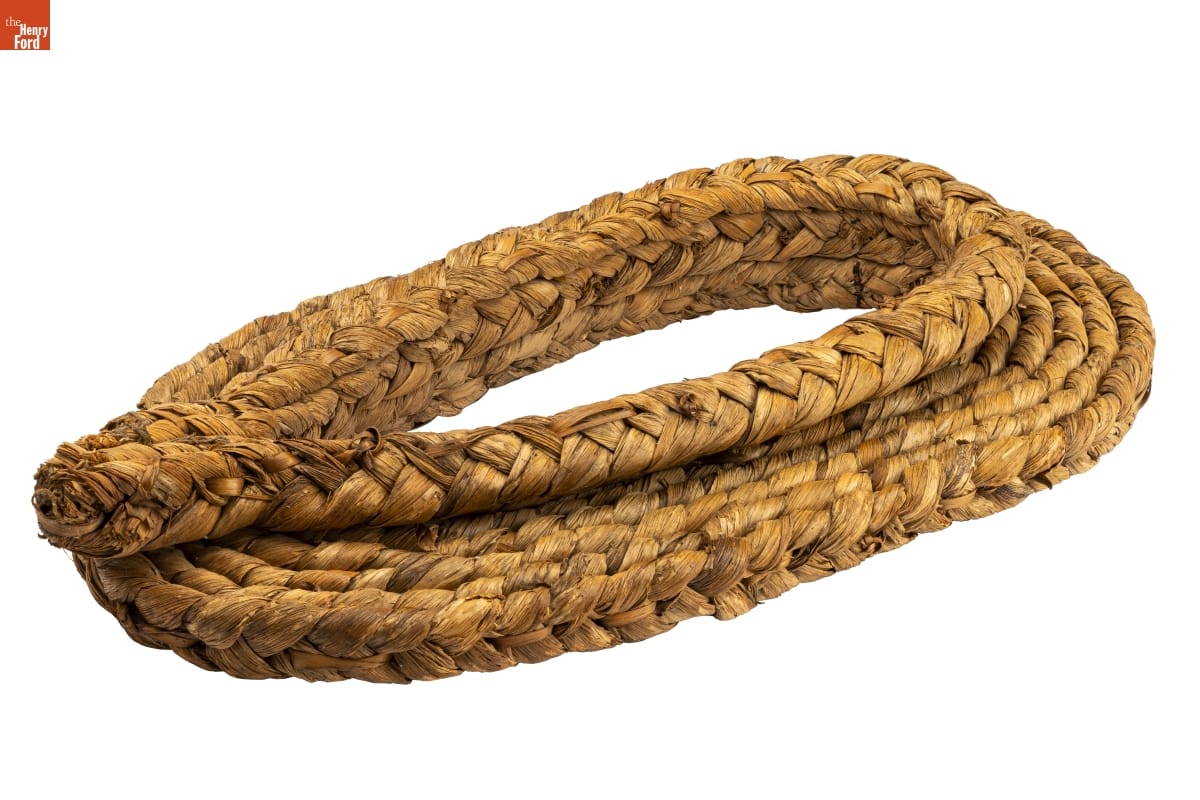
- Horse Collar - Fitted with a padded collar and other tack or harness equipment, a horse can move heavy loads or pull carriages, wagons, plows and other machinery. The collar distributes the weight around the horse's neck and shoulders, while avoiding pressure on the animal's windpipe. With this age-old invention, horses became and remain a valuable engine in non-motorized environments.
- Collections - Artifact
Horse Collar
Fitted with a padded collar and other tack or harness equipment, a horse can move heavy loads or pull carriages, wagons, plows and other machinery. The collar distributes the weight around the horse's neck and shoulders, while avoiding pressure on the animal's windpipe. With this age-old invention, horses became and remain a valuable engine in non-motorized environments.
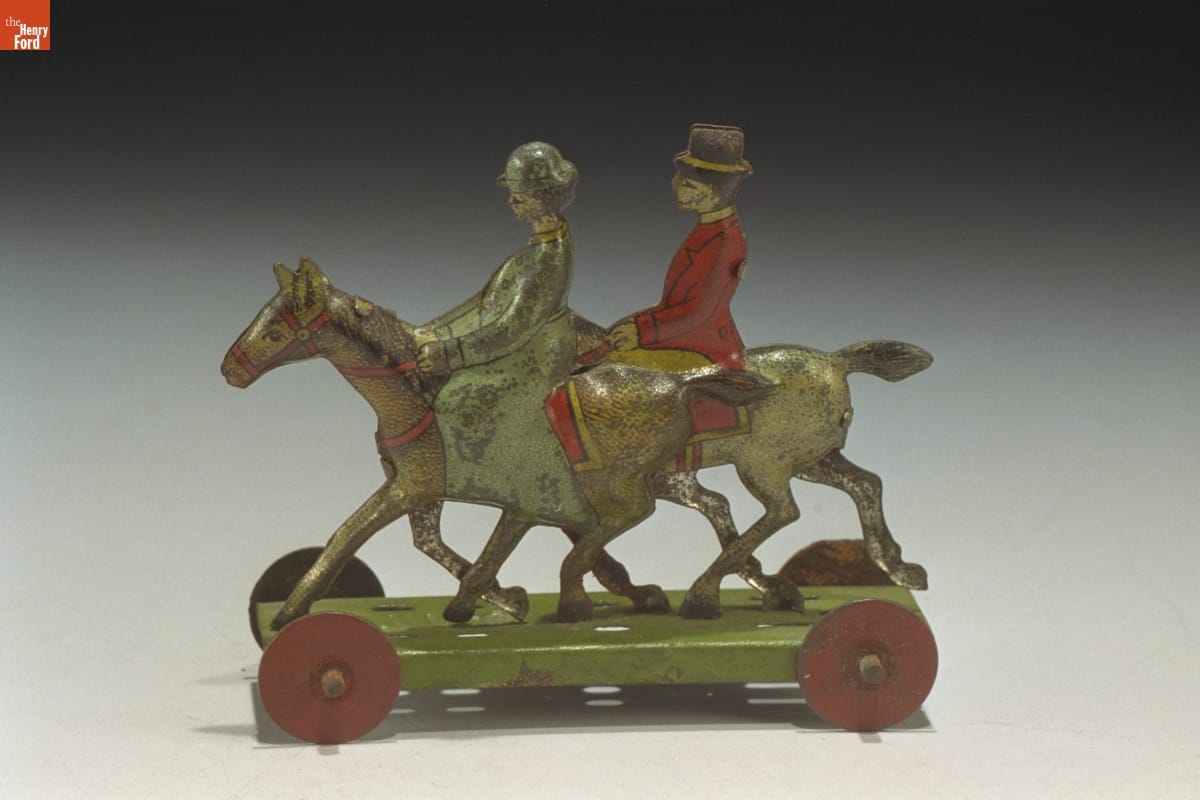
- Horses and Riders Penny Toy, circa 1890 - Toy companies began making small, inexpensive, yet colorful, tin toys in the late 19th century. Over the years, toymakers stamped tin into shapes of animals, trains, boats, soldiers and even this couple riding horses. Children could purchase these low-priced toys from shopkeepers or street vendors. These mass-produced toys -- though not meant to last -- provided fun for just a few pennies.
- circa 1890
- Collections - Artifact
Horses and Riders Penny Toy, circa 1890
Toy companies began making small, inexpensive, yet colorful, tin toys in the late 19th century. Over the years, toymakers stamped tin into shapes of animals, trains, boats, soldiers and even this couple riding horses. Children could purchase these low-priced toys from shopkeepers or street vendors. These mass-produced toys -- though not meant to last -- provided fun for just a few pennies.
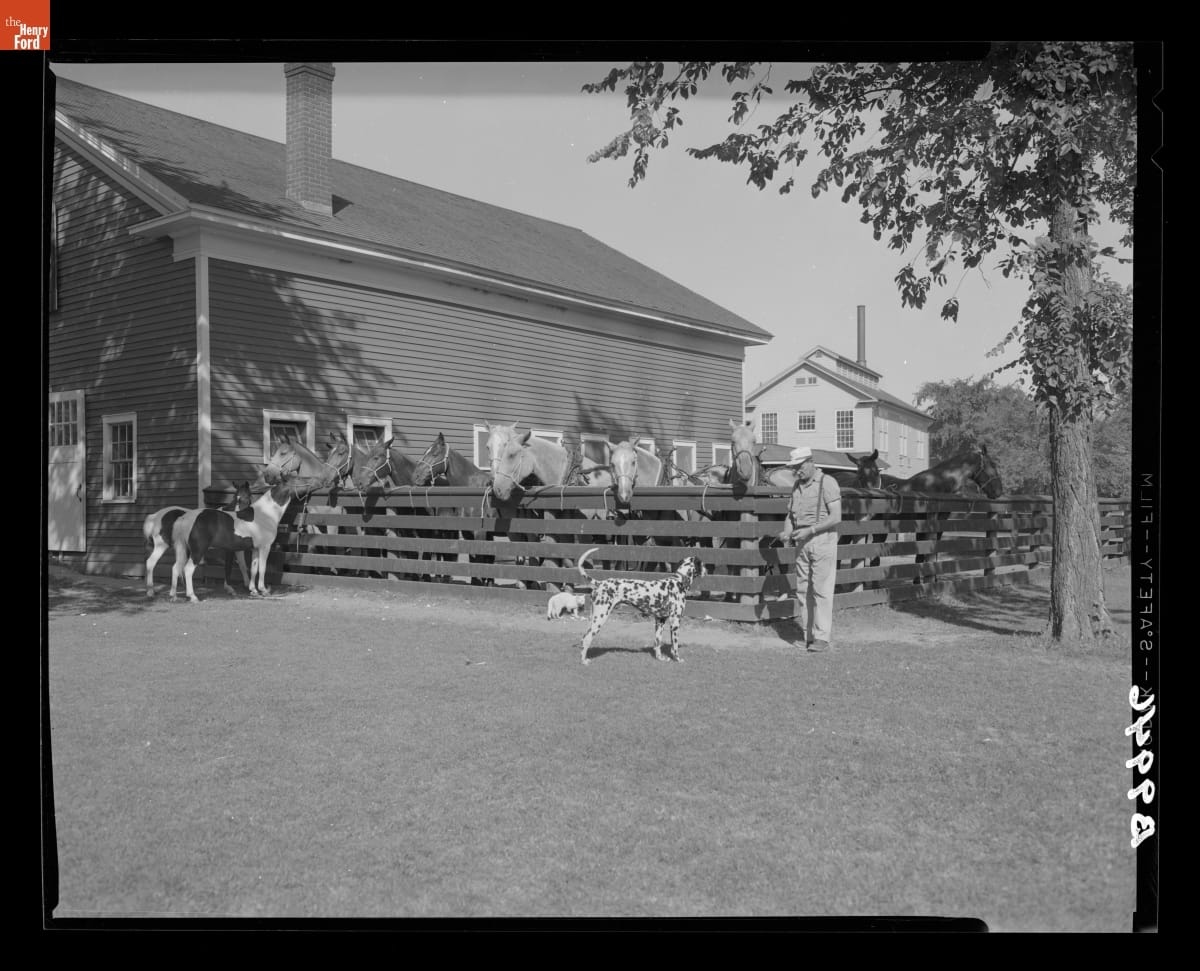
- Horses in Greenfield Village, June 28, 1955 -
- June 28, 1955
- Collections - Artifact
Horses in Greenfield Village, June 28, 1955
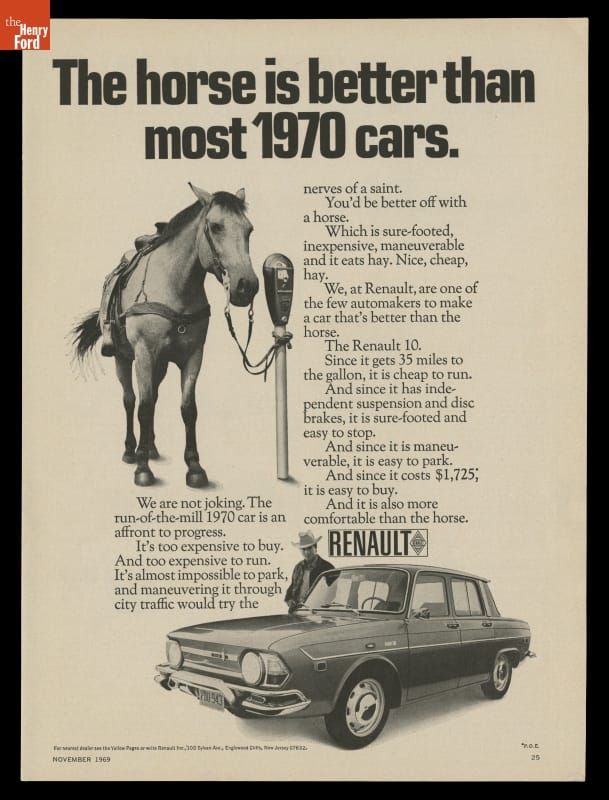
- 1969 Renault Advertisement, "The Horse is Better than Most 1970 Cars" - French automaker Renault was formed in 1899 by brothers Louis, Marcel, and Fernand Renault. The company built its early reputation in part through racing, and it expanded into commercial vehicles as well. Following World War II, Renault's compact Dauphine sold well in the United States. Renault increased its American footprint through a partnership with American Motors Corporation launched in 1979.
- 1969
- Collections - Artifact
1969 Renault Advertisement, "The Horse is Better than Most 1970 Cars"
French automaker Renault was formed in 1899 by brothers Louis, Marcel, and Fernand Renault. The company built its early reputation in part through racing, and it expanded into commercial vehicles as well. Following World War II, Renault's compact Dauphine sold well in the United States. Renault increased its American footprint through a partnership with American Motors Corporation launched in 1979.