
Search
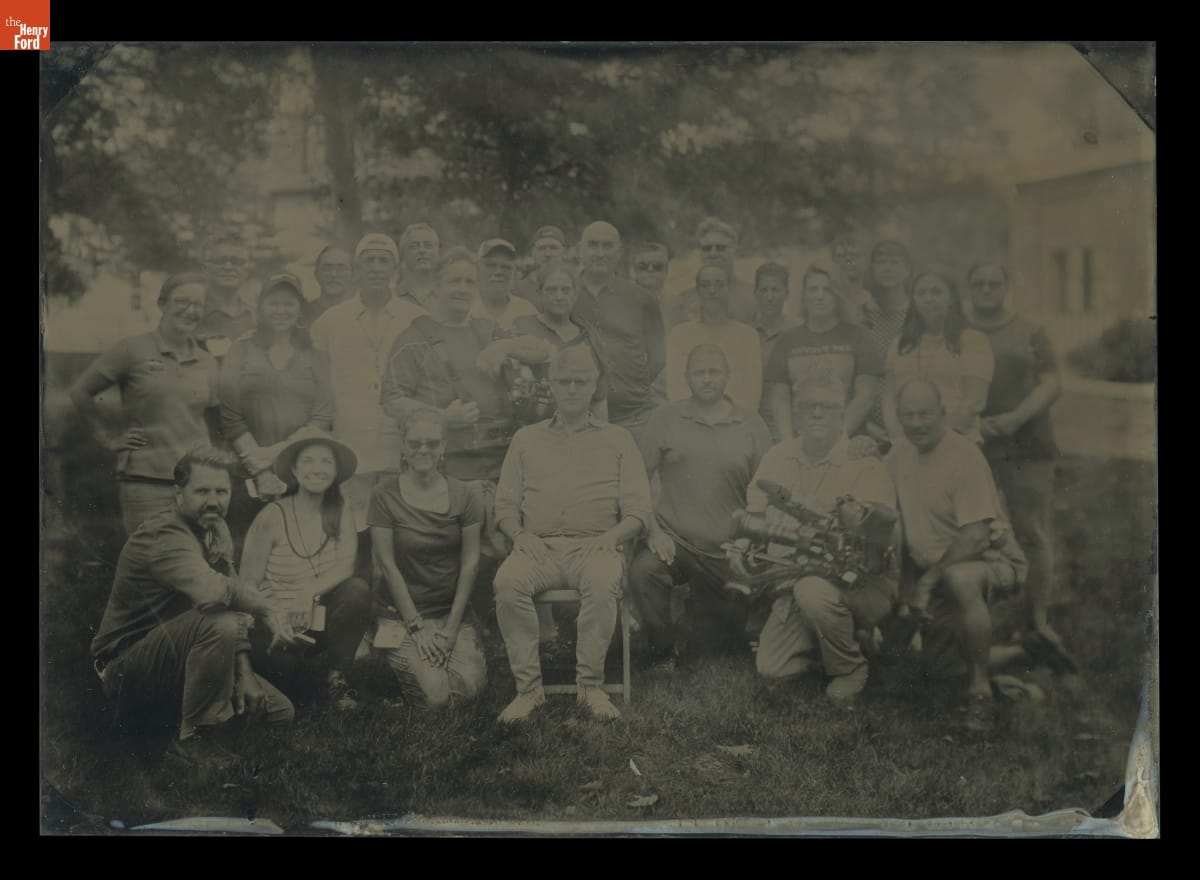
- Film Crew of The Henry Ford's Innovation Nation in Greenfield Village, September 2019 - In 2019, The Henry Ford's staff and production partners filmed a story about tintype photography for the weekly television show, <em>The Henry Ford's Innovation Nation</em>. A modern-day tintypist used traditional methods to create tintype photographs of the cast -- Mo Rocca, the show's host, and Jeanine Head Miller, curator of domestic life -- and film crew outside the Greenfield Village Tintype Studio.
- September 13, 2019
- Collections - Artifact
Film Crew of The Henry Ford's Innovation Nation in Greenfield Village, September 2019
In 2019, The Henry Ford's staff and production partners filmed a story about tintype photography for the weekly television show, The Henry Ford's Innovation Nation. A modern-day tintypist used traditional methods to create tintype photographs of the cast -- Mo Rocca, the show's host, and Jeanine Head Miller, curator of domestic life -- and film crew outside the Greenfield Village Tintype Studio.
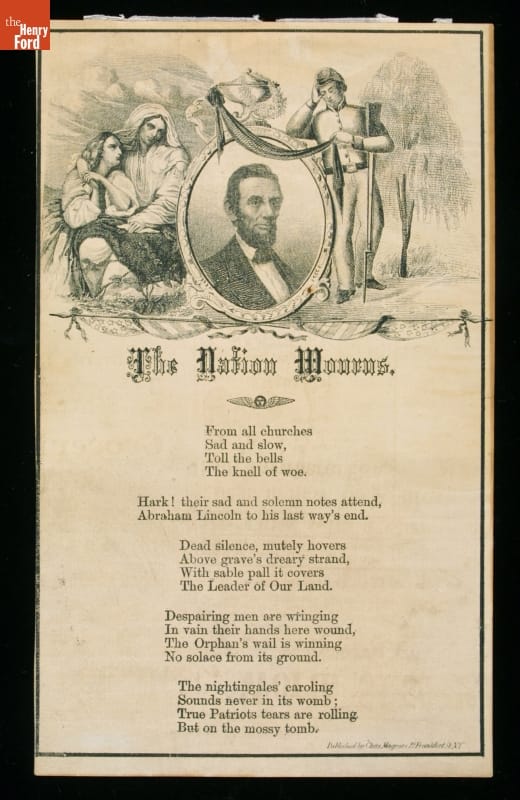
- "The Nation Mourns," 1865 - President Lincoln's assassination produced an outpouring of grief. His death linked him with the hundreds of thousands of Union soldiers that had sacrificed their lives during the Civil War. His life and the causes he embodied -- the Union and Emancipation -- touched admirers and detractors alike. This broadside pays tribute to Lincoln through images and a poem expressing the nation's mourning.
- 1865
- Collections - Artifact
"The Nation Mourns," 1865
President Lincoln's assassination produced an outpouring of grief. His death linked him with the hundreds of thousands of Union soldiers that had sacrificed their lives during the Civil War. His life and the causes he embodied -- the Union and Emancipation -- touched admirers and detractors alike. This broadside pays tribute to Lincoln through images and a poem expressing the nation's mourning.
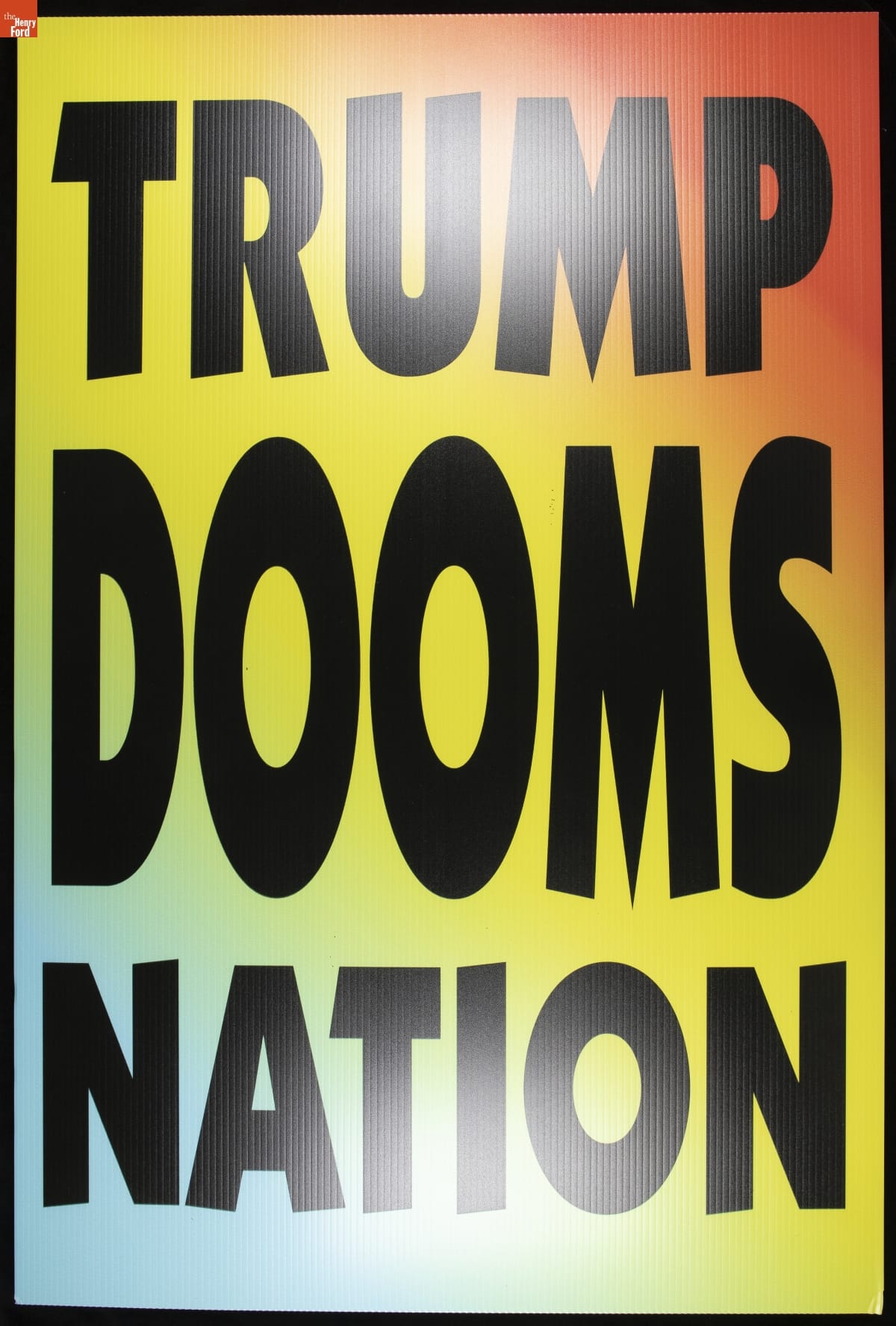
- "Trump Dooms Nation" Poster, 2017-2020 - Paul Chan blends art with political activism through multimedia work, performances, and sculpture. This protest sign is part of his "New Proverbs" series, whose aesthetics are inspired by the infamous Westboro Baptist Church posters. Chan's signs premiered at the Washington and NYC Women's Marches in 2017 and continued to be a presence at protests throughout the Trump presidency.
- 2017-2020
- Collections - Artifact
"Trump Dooms Nation" Poster, 2017-2020
Paul Chan blends art with political activism through multimedia work, performances, and sculpture. This protest sign is part of his "New Proverbs" series, whose aesthetics are inspired by the infamous Westboro Baptist Church posters. Chan's signs premiered at the Washington and NYC Women's Marches in 2017 and continued to be a presence at protests throughout the Trump presidency.
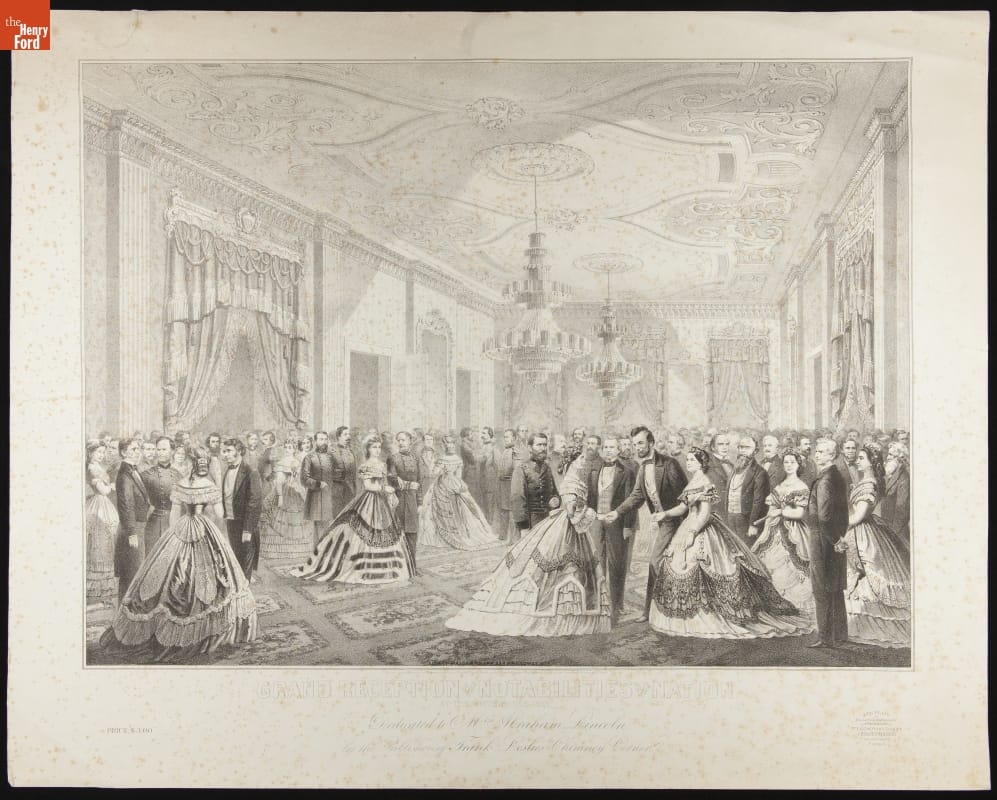
- Lithograph, "Grand Reception of the Notabilities of the Nation," 1865 - This reception was held in the East Room of the White House just after President Lincoln's second inauguration on March 4, 1865. The President and the first lady are prominently placed in the foreground receiving General and Mrs. Grant in a room filled with notable figures in the U. S. Government and Army. The scene is one of the last major public events before the President's Assassination on April 14, 1865.
- March 06, 1865
- Collections - Artifact
Lithograph, "Grand Reception of the Notabilities of the Nation," 1865
This reception was held in the East Room of the White House just after President Lincoln's second inauguration on March 4, 1865. The President and the first lady are prominently placed in the foreground receiving General and Mrs. Grant in a room filled with notable figures in the U. S. Government and Army. The scene is one of the last major public events before the President's Assassination on April 14, 1865.
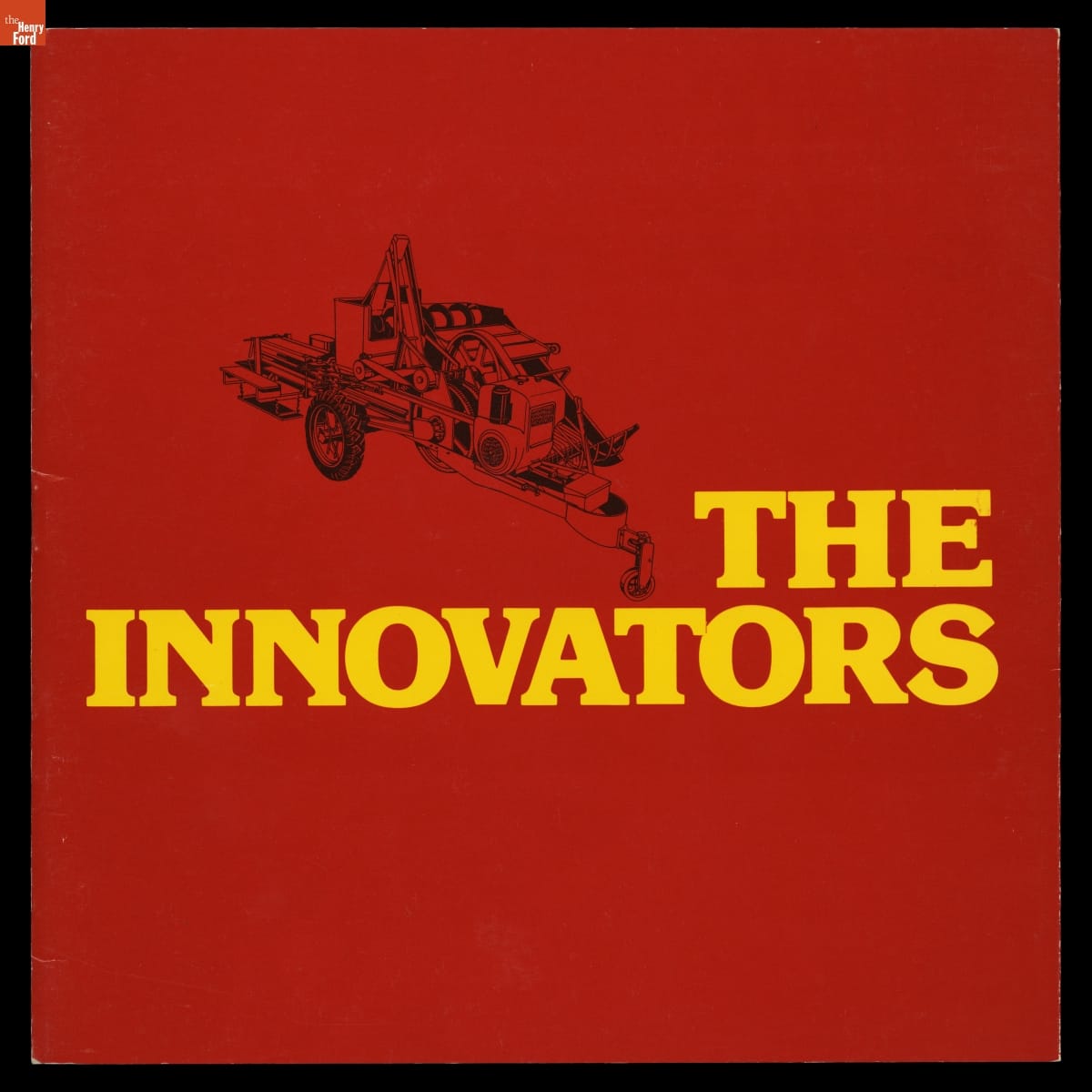
- Sperry-New Holland Catalog, "The Innovators," 1977 - For centuries, manufacturers have worked to perfect machinery that combines the three major steps of harvesting grain: reaping, or cutting the crop; threshing to loosen the grain from the chaff; and disposing of the straw while retaining the grain. Since self-propelled combines were introduced in the 1930s, competitors have produced ever-improving models. This catalog advertised a range of combines from Sperry Rand Corporation's New Holland Division.
- 1977
- Collections - Artifact
Sperry-New Holland Catalog, "The Innovators," 1977
For centuries, manufacturers have worked to perfect machinery that combines the three major steps of harvesting grain: reaping, or cutting the crop; threshing to loosen the grain from the chaff; and disposing of the straw while retaining the grain. Since self-propelled combines were introduced in the 1930s, competitors have produced ever-improving models. This catalog advertised a range of combines from Sperry Rand Corporation's New Holland Division.
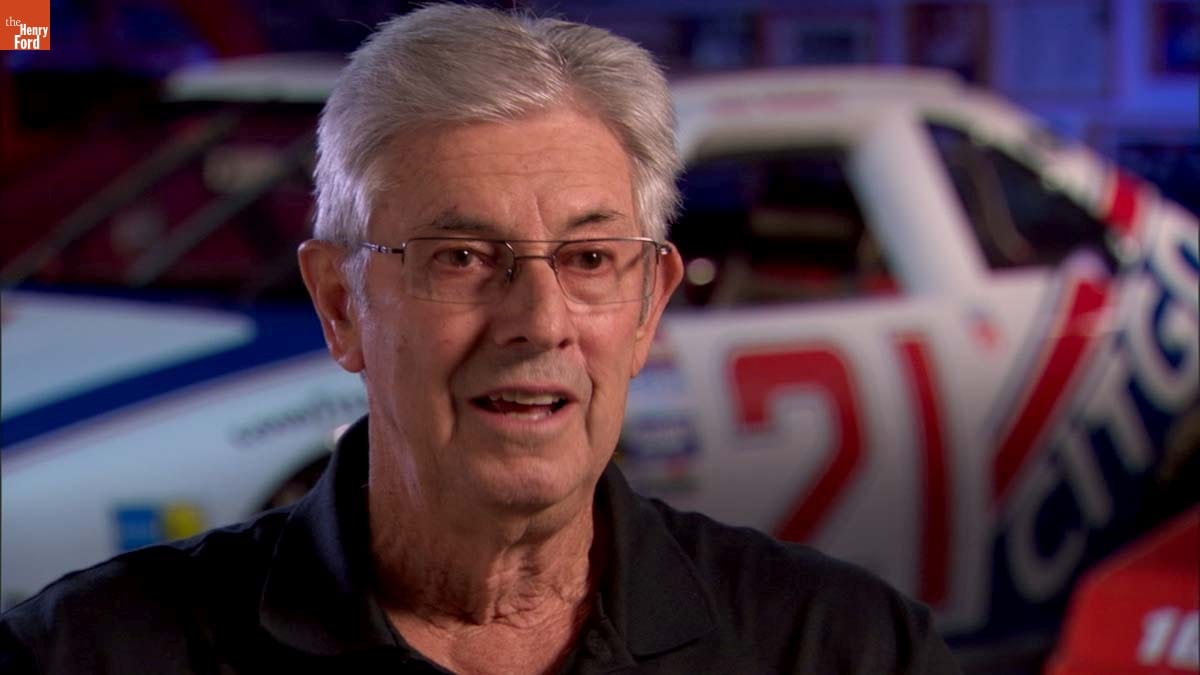
- "Innovations," Clip from Interview with Leonard Wood, October 24, 2010 - Wood Brothers Racing is the oldest active team in NASCAR. While other early teams treated pit stops like leisurely breaks for the driver, the Woods serviced their cars in a fast, choreographed procedure that helped win races and soon became standard. The Henry Ford interviewed members of the Wood family in 2010 at the team's museum in Stuart, Virginia.
- October 24, 2010
- Collections - Artifact
"Innovations," Clip from Interview with Leonard Wood, October 24, 2010
Wood Brothers Racing is the oldest active team in NASCAR. While other early teams treated pit stops like leisurely breaks for the driver, the Woods serviced their cars in a fast, choreographed procedure that helped win races and soon became standard. The Henry Ford interviewed members of the Wood family in 2010 at the team's museum in Stuart, Virginia.
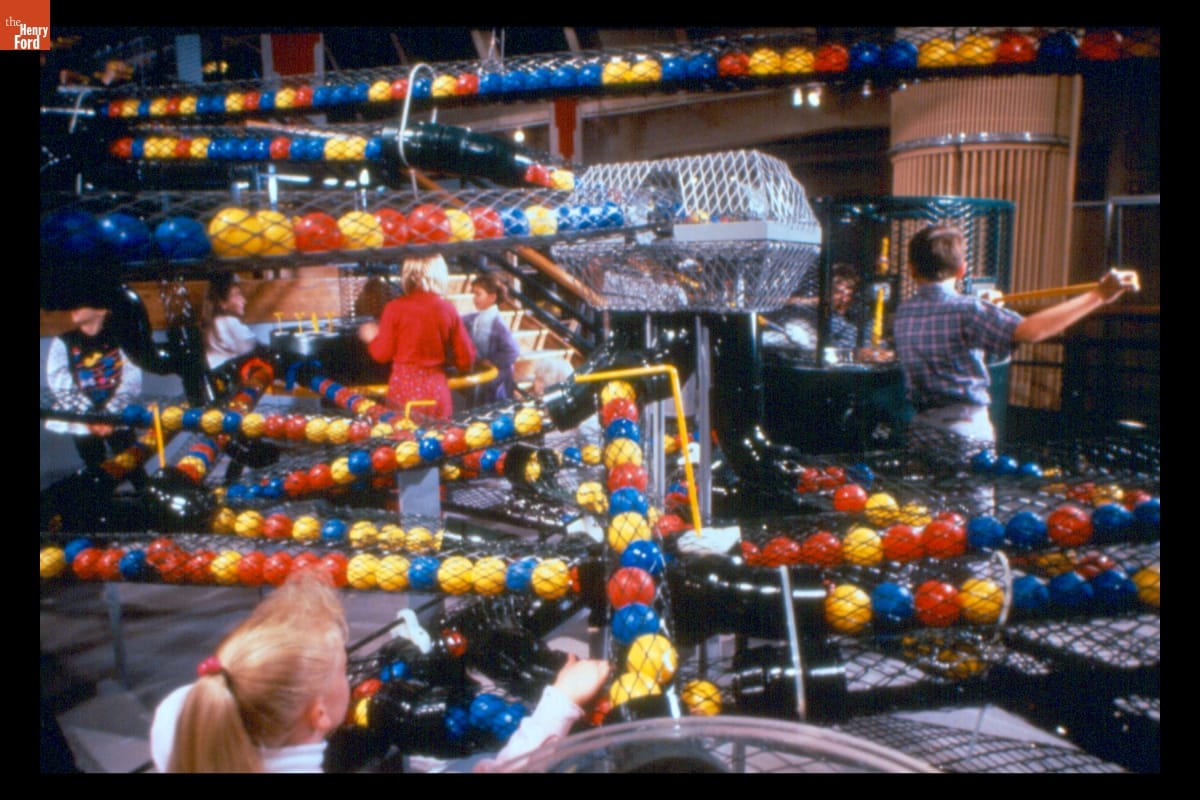
- Innovation Station in Henry Ford Museum, November 1991 -
- November 01, 1991
- Collections - Artifact
Innovation Station in Henry Ford Museum, November 1991
- We Are Innovation Nation - To help parents, students and educators during these times of uncertainty, The Henry Ford is unleashing its educational tools for people everywhere.

- March 29, 2020
- Collections - article
We Are Innovation Nation
To help parents, students and educators during these times of uncertainty, The Henry Ford is unleashing its educational tools for people everywhere.
- Innovation Nation, Season 7 - The Henry Ford's Innovation Nation, which aired for 10 seasons on CBS, showcased present-day change-makers from all over the world alongside innovators of the past whose stories are told through the archives and experiences at The Henry Ford. In Season 7, Mo Rocca explores topics on barnstorming, voting technology, and more!

- June 02, 2021
- Collections - Video
Innovation Nation, Season 7
The Henry Ford's Innovation Nation, which aired for 10 seasons on CBS, showcased present-day change-makers from all over the world alongside innovators of the past whose stories are told through the archives and experiences at The Henry Ford. In Season 7, Mo Rocca explores topics on barnstorming, voting technology, and more!
- Innovation Nation, Season 9 - The Henry Ford's Innovation Nation, which aired for 10 seasons on CBS, showcased present-day change-makers from all over the world alongside innovators of the past whose stories are told through the archives and experiences at The Henry Ford. In Season 9, Mo Rocca explores topics on tether car racing, the evolution of driver education, and more!

- December 21, 2022
- Collections - Video
Innovation Nation, Season 9
The Henry Ford's Innovation Nation, which aired for 10 seasons on CBS, showcased present-day change-makers from all over the world alongside innovators of the past whose stories are told through the archives and experiences at The Henry Ford. In Season 9, Mo Rocca explores topics on tether car racing, the evolution of driver education, and more!